

Mario Seiglie
This transcript was generated by AI and may contain errors. It is provided to assist those who may not be able to listen to the message.
We're ready for the main message now for today. I was reading in the newspaper yesterday, the Orange County Register, about the Day of Atonement. They always have a little article about the Day of Atonement, and they'll interview a rabbi to let them know what it's all about. And basically, the rabbi will say that the meaning is that at this time you have to look back on your last year. You have to examine what sins you've committed and how to reconcile with others. But as far as the ceremony is concerned, the Jews have not been able to fulfill that ceremony, which God commanded since Jerusalem was destroyed in 70 AD. And so they still have that hope of doing the whole ceremony of the Day of Atonement with high priests and with animals and sacrifices. But since they haven't been able to do so, then they just go to a more spiritual meaning of that feast. But it's basically to ask God for forgiveness of sins. For them, it's a day of forgiveness, and so that's why they take it seriously. And yet, it's so superficial in a way. It's just going through the ceremony, asking God for forgiveness, and then doing a fast. They go to the synagogue on this day. But brethren, we're so thankful that we not only understand the Old Testament meaning of this feast, but also the New Testament meaning. Now turn with me to John 4, where Christ told this American woman a very important truth. John 4, verse 21, Jesus said to her, Woman, believe me, the hour is coming when you will neither on this mountain, talking about Mount Gerizim, which was off to the north, nor in Jerusalem, worship the Father. You worship what you do not know. We know what we worship for salvation is of the Jews. It's not from the Samaritans that you learn the way of salvation. And of course, the Jews have been preserving and keeping the Old Testament as faithfully as they can. Verse 23 says, But the hour is coming, and now is when the true worshipers will worship the Father in spirit and truth. For the Father is seeking such to worship Him. God is spirit, and those who worship Him worship Him in spirit and in truth. So we're not supposed to go back to just looking at Old Testament sacrifices being done in Jerusalem like the Jews do. They still are hoping one day they will restore this. But Christ said that one day our will come when you're not going to be worshiping God either on Mount Gerizim or on Mount Zion in Jerusalem. That now there is a spirit that is in us, that God put in us, that we can worship God in spirit and truth. Here in Orange County, around the world, wherever true worshipers are God, those that have God's Holy Spirit can worship Him in spirit and in truth. And brethren, we are doing that today.
It's important to realize that the Day of Atonement, like the other six feasts during the year, have God the Father and Jesus Christ at the very center of them. I want to emphasize that today. It's not just about Jesus Christ. It's about God the Father. They are both involved in these feasts. After all, it is God's plan of salvation assigned to Jesus Christ to carry it out. The idea that it is just Jesus Christ at the center of the feast is not totally accurate. We have to include God the Father because He's not an absentee landlord that is just separated and not involved. He is intimately involved. With every one of the feasts, He's intimately involved today along with Jesus Christ, watching who are keeping this holy feast to the Lord. In other words, toward Him, to honor Him, to respect Him.
Now, I realize that most here understand and take for granted that when we talk about Jesus Christ and how He's fulfilling each one of these feasts, that we're including God the Father. But it's important to make it explicit so we always keep God the Father involved as well as Jesus Christ. They are both working together to carry out this plan of salvation. Now, I want to go to a place where you will see where it talks about that plan that God had in mind even before He created human beings. What is the plan of salvation? That's not something that we just say. It's also in the Scriptures. Turn with me to Ephesians chapter 1. Anybody ask you where you get this, that God has a plan of salvation? This is a good place. In Ephesians chapter 1, in verse 7, Paul says, talking about Jesus Christ, This is talking about God the Father.
According to God's will, God the Father's, that we who first trusted in Christ should be to the praise of His glory. I'd like to read it now from the Good News Bible version verses 9 through 11 that we just read, because King James is a bit antiquated here. But here in Ephesians 9 through 11, in the Good News Bible, it says, talking about this plan of salvation and decision. In Luke chapter 12, we see it as God's plan of salvation. Luke chapter 12 verse 23.
I'd say 23. It should be 32. Luke 12 verse 32.
It says, Do not fear little flock, addressing the church, for it is your Father's good pleasure to give you the kingdom. So it is the Father's good pleasure to give us the kingdom. So it's not just about Jesus Christ. And it's important to remember and also exalt God the Father. He's carrying it out through His Son, through Jesus Christ. So the purpose for today is to look at this day of atonement from God's point of view, as it is revealed in the Scriptures, to see the big picture about this day of atonement. And that's the spiritual knowledge that we have, which God has shown to us in the Scriptures.
It starts out again. I always use this Scripture, Genesis 1.14, where God made everything before even making man. He already set up the sun, the moon, the stars, everything in conjunction so that we could keep these feast days. Notice what it says in the new international version. Some of you have that version. It says, And God said, Let there be lights in the vault of the sky to separate the day from the night, and let them serve as signs to mark sacred times and days and years, to mark sacred times. God had all of this in mind. Another translation, the easy to read version, ERV, it says, They will be used for signs to show when special meetings begin. You like that translation? Special meetings. Well, it's talking about today, about the Day of Atonement. This is a special meeting. One of the ones he set up, even before he created man, God already had in mind these feasts. And, of course, the Day of Atonement is one of those seven feasts, one of the seven steps in God's plan of salvation. The word Atonement in the Hebrew, where it talks about Yom Kippur, Yom means day, Kippur means to cover the day of covering. It's talking about covering sins. It's forgiving sins.
And this day has to do with how God the Father in Christ planned to reconcile mankind to themselves, providing the sacrifice, the forgiveness, and getting rid of the authors of sin, Satan and his henchmen, the demons. So this is what this day represents. How God planned, along with Christ, to reconcile mankind to themselves, providing the sacrifice, forgiveness, the covering up of sin, and then eliminating those authors of sin. They're not going to always be harassing mankind, as they are now, these evil spirits. Notice in Genesis 3.15, we begin with God's promise that he would take care of Satan. That this is a temporary situation. In Genesis 3, verse 15, to the woman, God speaking, he said, I will greatly multiply your sorrow and your... Oh, in verse 15, and I will put enmity between you and the woman, and between your seed and her seed. Notice, capital S, talking about the Messiah would come. He, talking about the Messiah, shall bruise your head, and you shall bruise his heel. And so, even from now, he was saying, yes, Satan's going to be around, but God is going to take care of him. Jesus Christ is going to carry out God's will against him. Notice in Genesis 22. This is important for the Day of Atonement, looking at the big picture, what Abraham did. Genesis 22, in verse 2, God speaking said to Abraham, Take now your son, your only son Isaac, whom you love, and go to the land of Moriah, and offer him there as a burnt offering on one of the mountains of which I shall tell you. So Abraham rose early in the morning. He didn't dally. He went right ahead, obeying God, the most difficult thing he could ever do in his life. And he set out to do it. And then he goes on to say in verse 11, But the angel of the Lord called to him from heaven, and said, Abraham, Abraham. So he said, Here I am. And he said, Do not lay your hand on the land. That hand was descending already when God stopped him. Or do anything to him, for now I know that you fear God, since you have not withheld your son, your only son, from me.
Then he goes on to say in verse 15, Then the angel of the Lord called to Abraham a second time out of heaven, and said, By myself I have sworn, says the Lord, because you have done this thing, and you have not withheld your son, your only son. Blessing I will bless you, and multiplying I will multiply your descendants as the stars of the heaven, and as the sand which is on the seashore. And your descendants shall possess the gates of their enemies. In your seed all the nations of the earth shall be blessed, because you have obeyed my voice. So basically God said, Just like you were willing to do this and sacrifice your only begotten son, so am I going to do it. I'm going to pay the ultimate price for the sins of mankind. I will have my son give his life in atonement for all of mankind. And so now we go to Leviticus chapter 16, where it has the Day of Atonement ceremony described in the Bible.
Leviticus 16, starting in verse 5.
Talking about Abraham.
I'm sorry, Aaron is the high priest. Talk about Aaron, and he shall take from the congregation of the children of Israel two kids of the goats as a sin offering, and one ram as a burnt offering. Aaron shall offer the bowl as a sin offering, which is for himself, and make atonement for himself and for his house. So Aaron is a high priest. He sins. He needs an atonement. He needs forgiveness. He shall take the two goats and present them before the Lord at the door of the tabernacle of meeting. Then Aaron shall cast lots for the two goats, one lot for the Lord and the other lot for the scapegoat. In the Hebrew it's called asaso.
And Aaron shall bring the goat on which the Lord's lot fell, and offer it as a sin offering. But the goat on which the lot fell to be the scapegoat shall be presented alive before the Lord to make atonement upon it, and to let it go as the scapegoat into the wilderness. So here's several things. I know some teach that the two goats represent Christ. We don't teach that. We don't see that since, first of all, if it represented, both represented aspects of Christ, why cast lots? It's separating one role from another role, one person from another person. Also, the term asaso is never used as a term for God. Asaso basically means the expelled one, the one cast out. And it's not representing Jesus Christ. He could have mentioned many of the names of God if he wanted to use both of them to represent Jesus Christ. And notice that the second goat is not sacrificed. It is laid hands on, the guilt, and then it's expelled. It's cast out, but it's not killed. So it's not an offering that you are basically shedding blood about. Jesus Christ is not banished. He's not going to have this role. That's why we don't teach that idea. Notice now in verse 15, he says, Then he shall kill the goat of the sin offering, which is for the people. Bring its blood inside the veil. Do with that blood, as he did with the blood of the bull, and sprinkle it on the mercy seat and before the mercy seat. So he shall make atonement for the holy place. Purify it because of the uncleanness of the children of Israel and because of their transgressions. It makes a covering up, so it's no longer unclean at the time.
And then it goes on in verse 20. It says, And when he has made an end of atoning for the holy place, the tabernacle of meeting, and the altar. So that first goat does represent the sacrifice of Jesus Christ, and that one does bring forgiveness and cleanliness of sins. After you've made an end of that, then it says he shall bring the live goat. So the live goat doesn't have to do with the atoning of sins. Aaron shall lay both his hands on the head of the live goat. When you lay both hands, it is imputing something. You can either lay hands on a person to receive God's Spirit, or to be ordained, or it can impute that condemnation, and that the sins are going to be carried by this animal. And confessing over it the iniquities of the children of Israel, and all their transgressions concerning all their sins, putting them on the head of the goat, and shall send it away into the wilderness by the hand of a suitable man. The goat shall bear on itself all iniquities to an uninhabited land, and he shall release the goat in the wilderness. So it's talking about that this goat is receiving the guilt, the condemnation, and the expulsion that takes place because of the sins that it has caused mankind to produce. And then it goes on to say in verse 29, This shall be a statute forever for you in the seventh month, on the tenth day of the month that is today. On the tenth day of the month you shall afflict your soul, which means from the Hebrew, which means to humble yourself by fasting, and do do no work at all, whether a native of your own country or a stranger who dwells among you. For on that day the priest shall make atonement for you, to cleanse you that you may be clean from all your sins before the Lord. It is a Sabbath of solemn rest for you, and you shall afflict your souls. It is a statute forever. And so it's very serious. God's not suggesting this. This is part of His holy law. These are His commandments. We are to observe them and understand the meaning behind all of this.
This is the we see in this ceremony the dual role of Jesus Christ, the role as He offers His life in sacrifice and the role as the high priest, presenting it to God and the role of casting Satan out with that second goat being expelled. In Hebrews chapter 9, we see this meaning. In Hebrews chapter 9 and verse 11, we see how Jesus Christ is fulfilling that dual role as the sacrifice and also as the high priest. Hebrews chapter 9 and verse 11, it says, But Christ came as high priest of the good things to come with the greater and more perfect tabernacle not made with hands that is not of this creation. He came from heaven. He didn't come from some physical tabernacle like a high priest would here on this earth. Not with the blood of goats and calves, but with his own blood. So again, this isn't just a goat or the calves that were sacrificed at that time, but with his own blood, he entered the most holy place once for all, having obtained eternal redemption. That's how he reconciles us. He paid the ultimate price. For if the blood of bulls and goats and the ashes of a heifer, sprinkling the unclean, on about the day of atonement when it was sprinkled that way, sanctifies for the purifying of the flesh, how much more shall the blood of Christ, who through the eternal Spirit, offered himself without spot to God, cleanse your conscience from dead works to serve the living God? He cleanses everything. We don't need guilty feelings. We know once we go, confess, repent that those are cleansed and cleaned from our conscience. He says, and for this reason, he is the mediator of the new covenant by means of death for the redemption of the transgressions under the first covenant that those who are called may receive the promise of eternal inheritance. So we have a better covenant than the one made in the Old Testament. Yes, it's built on the Old Testament covenant, but it's this New Testament covenant now, just like you have a foundation and then you build a house upon it. We have a spiritual house. We have this new covenant that we are fulfilling today. He goes on to say, For where there is a testament, there must also necessity be the death of the testator. So Christ had to die before that covenant could be open for us. For a testament is enforced after men are dead, since it has no power at all while the testator lives. Therefore, not even the first covenant was dedicated without blood. For when Moses had spoken every precept to all the people, according to the law, he took the blood of the calves and goats with water, scarlet wool, and hyssop, and sprinkled both the book itself and all the people, saying, This is the blood of the covenant which God has commanded you. Then likewise, the sprinkling with blood, both the tabernacle and all the vessels of the ministry. And according to the law, almost all things are purified with blood, and without shedding of blood there is no remission. Therefore, it was necessary that the copies of the things in the heavens should be purified with these, but the heavenly things themselves with better sacrifices than these. For Christ has not entered the holy places made with hands, which are copies of the true, but into the presence of heaven itself, now to appear in the presence of God for us. So he appears as high priest and as a sacrifice. That's why he's depicted in the book of Revelation as the lamb, the slain lamb.
He says, not that he should offer himself often as the high priest enters the most holy place every year with blood of another. That's talking about the day of atonement. He then would have to suffer often since the foundation of the world, but now once at the end of the ages he has appeared to put away sin by the sacrifice of himself. And as it is appointed for men to die once, but after this the judgment. So Christ was offered once to bear the sins of many. To those who eagerly wait for him, he will appear a second time apart from sin for salvation.
So we see here how everything is being carried out. And God the Father is involved because who is doing the presenting and the offering is Jesus Christ as the high priest and as a sacrifice, but it is to God the Father. He's the one that accepts it. He is carrying out the plan of salvation. And so the other role, of course, of Jesus Christ as King, as high priest, as the Lamb, is to expel Satan from inhabiting with man, influencing mankind as he is doing now. And that is fulfilled in Revelation chapter 20.
And of course we see the sequence of the feast days in the book of Revelation. In Revelation 19 it talks about Christ descending upon the earth. It says in chapter 19 verse 16, and he has on his robe and on his thigh a name written, King of kings and Lord of lords. And so then Christ is coming to rule. That's represented by the Feast of Trumpets, which we celebrated just 10 days ago.
Well, now the next step in God's plan of salvation, what do you do with Satan and his demons? When Christ comes back, they're going to be here on this earth. So the Day of Atonement pictures this next step of salvation, which is when Satan is removed from influencing mankind. And we have that in chapter 20 verse 1. Then I saw an angel coming down from heaven, having the key to the bottomless pit, and a great chain in his hand.
Some people say, well, how can you have a chain that can hold Satan? Well, of course, we're not talking about physical chains made of iron or steel or titanium. Talking about a spirit-made chain. Satan is a spirit, too. God creates spirit as well as physical things.
So here, this angel has this chain, and he says, he laid hold of the dragon, that serpent of old, who is the devil and Satan, and bound him for a thousand years. And he cast him into the bottomless pit, which means a pit that you can't see the bottom of. It's so deep. And shut him up and set a seal on him. So he's going to be in there, just like a beast in a cage. He's going to be sealed up so that he should deceive the nations no more.
So what has he been doing now? He's been deceiving the nations. Until that happens, he quits deceiving the nations. He says, till the thousand years are finished. But after these things, he must be released for a little while. That will be explained as we go to the Feast of Tabernacles, which represents those thousand years of rule under Jesus Christ, which is the next feast that we're going to be celebrating starting Monday evening of this coming week. On Tuesday, we have not only the Monday evening services, we have services on Tuesday as well. That's the sixth step of the plan of salvation, which has to do with Christ's ruling for a thousand years. And so we're going to live a little bit better than normally.
We've been saving our tithes for this so that we can be with our families and enjoy those seven days of the feast together. Most people are going over here to St. George, Utah for the feast, but many of us are going to Daytona Beach, Florida, God willing, leaving tomorrow for it and be there with our families.
Some are going from different parts of the state, so we get together for this family reunion of God's feast of the Feast of Tabernacles. Please pray that everybody is safe, protected. We're living in dangerous times with this COVID. And please remember to ask for God's protection, not only going to the feast and coming back, but also with this modern plague that is going on right now.
It could be the beginning of the end time period. We will have to see, but it's certainly things start getting worse and worse next year. We'll know that's a sign. But in the meantime, we need to spiritually prepare. Notice what happens after Satan was cast. It says in verse 4, Satan is removed from power and his demons also, and then who take over? Verse 4, and I saw thrones, which means offices, places of responsibility, and they sat on them, and judgment was committed to them. They are able to now rule and judge. And who are they?
Then I saw the souls, which means the life, the living of those who had been beheaded for the witness to Jesus. These are the ones, the martyrs who died in the faith and for the word of God, those that were persecuted during their lives for keeping the word of God, who had not worshiped the beast or his image and did not receive his mark on their foreheads or on their hands. They did not bow to this false religious system of the world, and they lived and reigned with Christ a thousand years.
Verse 6, blessed and holy is he who has part in the first resurrection. Over such the second death has no power. They've already received eternal life. They already have been changed to spirit, and they shall be priests of God and of Christ. Notice, God the Father is involved, and they shall reign with him a thousand years.
That's the period of mentorship. That's when life really is going to get happy and joyous, when Jesus Christ will come to each one personally, and he'll say, you know, Linda, this is what I want you to do. This is where you are going to judge.
This is where you're going to educate people. This is what I want you to do. And here we have Mel, and Mel's a teacher already, but he's not going to be teaching math. You're going to be teaching about God's ways, and he says, I know every place where you're going to go, and I'm going to be your mentor. I'm going to be there and teach you so you can teach the nations around the earth.
And so it will be fulfilled on this day what it says in Romans chapter 16 verse 20, Romans chapter 16 verse 20. It says, and the God of peace, because that's what God's kingdom is going to be about, will crush Satan under your feet shortly. The grace of our Lord Jesus Christ be with you. Amen. And so here we know God the Father and Jesus Christ can't wait to inaugurate that new kingdom, to remove Satan and his influences.
They're the ones that are suffering the most, because they have all power. They're putting up with this. And so they're looking so forward to the fulfillment of this feast that we call the Day of Atonement, the fulfillment of Jesus Christ as High Priest, as a sacrifice, as a reconciler, and also who puts away Satan and his demons.
So here are three things that we can take away, as Lincoln mentioned. Number one, the Day of Atonement, like the rest of the feasts, has God the Father and Jesus Christ at its center. They're the ones that are carrying it out. Number two, the purpose of this feast is to remind us of the reconciliation being done by both God, the Father, and Jesus Christ on our behalf. So when we think about that ceremony, just think, Jesus Christ is the High Priest. He's offering himself, and God the Father is doing the accepting and the reconciling so we can go before him, cleansed and purified. And thirdly, it's a reminder that Satan will not be with us forever. He will be banished as the Day of Atonement reminds us. So we have a lot to think about, brethren, and that's why this Day of Atonement is so important to keep and to honor both God the Father and Jesus Christ.
So
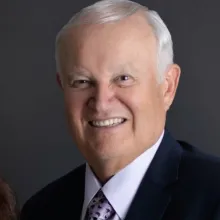
Mr. Seiglie was born in Havana, Cuba, and came to the United States when he was a child. He found out about the Church when he was 17 from a Church member in high school. He went to Ambassador College in Big Sandy, Texas, and in Pasadena, California, graduating with degrees in theology and Spanish. He serves as the pastor of the Garden Grove, CA UCG congregation and serves in the Spanish speaking areas of South America. He also writes for the Beyond Today magazine and currently serves on the UCG Council of Elders. He and his wife, Caty, have four grown daughters, and grandchildren.
