

Steve Shafer
This transcript was generated by AI and may contain errors. It is provided to assist those who may not be able to listen to the message.
Well, as the old saying goes, today is the tomorrow we worried about yesterday. And tomorrow, the tomorrow we worried about yesterday, of course, is now the day of atonement. Yeah, we only have just a few more hours to worry about, so it's not too long yet from sunset. And it's going to be great to get, of course, to get that first glass of water afterwards. But today, in this day of atonement in 2017, I want to focus on the meaning of the day of atonement from a very positive point of view. I know it was already, Mr. Sussman did that in the sermonette very, very well as well, pointing out some very positive points. I want to continue on that, because there is a very, very positive meaning to this day. In fact, there are actually several positive meanings to this day, as it was even brought out in the sermonette, many of those. But no one looks forward to fasting or to going without food or water for 24 hours. So I just got back thinking how to see what... This is my... I think it's my 54th day of atonement. I think it's Evelyn's 55th. So, um...
We've done it a few times before, made it through. But it gets a little harder the older you get, some ways. But when we look back at the tremendous meaning of the day of atonement, then this Holy Day is one of the most positive... and one of the most joyous of all of God's annual Holy Days, because it is jam-packed with very positive meaning.
Today, then, on this day of atonement in 2017, I want to look at the positive meaning of the day of atonement, what it has for all of us, the positive meaning it has for all of us, and especially the positive meaning it has for the entire world.
My title for my sermon here this afternoon is, The Day of Atonement, A Time for Great Rejoicing. The Day of Atonement, A Time for Great Rejoicing. And in looking at the very positive meaning this day has for all of us and for the entire world, I want to look at four things, four overall things. The Jews call this Holy Day, Yom Kippur. Yom, Yom being the Hebrew word for day, and Kippur being the Hebrew word for atonement.
Hence, the Day of Atonement. The Hebrew word kippur is derived from a prime root Hebrew word kafar, K-A-P-H-I-R. And that prime root word kafar gives us the first positive meaning related to the Day of Atonement. This probably should be my second point, but I'll cover it first because I feel it really is going to be especially so important to the people of the world. The Hebrew word kafar means to cover, to cover. The Day of Atonement can thus be considered to be, number one, a day of covering, a day of covering.
In addition to meaning to cover, the Hebrew word kafar also means to cancel, to cleanse, to disannul, to forgive, to be merciful, to pardon, and to reconcile. Those are all meanings of the prime root Hebrew word from which the Hebrew word translated to Atonement, as in Day of Atonement, is derived. And all those things are directly related to the meaning of the Day of Atonement, which gives the Day of Atonement a very positive and very joyous meaning when we think about it and understand it. But you might ask, when we think about that, what I just said, you might say, well, isn't that very similar to Passover?
When we partake of the Passover, are we not having our sins covered under the blood of Christ? Are they not then canceled and forgiven? And are we not cleansed by the blood of Christ as well? Are our sins not then disannulled and pardoned so we can be reconciled back to God? Don't all those things that I just mentioned there pertain to the Passover?
See, there are a number of closely related similarities between Passover and the Day of Atonement. But here's the difference. There are two physical harvest seasons. There is the early spring harvest season and the later fall harvest season. And there are two spiritual harvest seasons. There's the early spring spiritual harvest season, consisting of the Passover, the days of Unleavened Bread, and Pentecost, when the spiritual first fruits will be harvested. And there's the late fall spiritual harvest season, consisting of Trumpets, the Day of Atonement, Feast of Tabernacles, and the Eighth Day.
Of course, the fall spiritual harvest will begin with the return of Christ, as portrayed by the Day of Trumpets. Also, the net portrays, in pictures, the resurrection, the first resurrection, the resurrection of the first fruits. At that time, and with our help, God will then send out to make His truth available to and to save, give opportunity of salvation to the rest of the world, to still live through the Great Tribulation, to remain on the earth.
He's going to extend that to all of them. He's going to open up that opportunity to the whole world after Christ returns. Because, as it says in 1 Timothy 2, 4, God desires all men to be saved and to come to the knowledge of the truth. For them to be saved and come to the knowledge of the truth, they will have to have their sins covered and removed, just as all of us had. They will have to have their Day of Covering, just as we had our Day of Covering. And they will also then have to have God's mercy, forgiveness extended to them, just as God has extended that to all of us.
He wants to do that to the whole world, and the whole world is going to really, when they find out what God is really like, and when they understand His love and mercy, that's going to be overwhelming to many of them. But the Psalms are all prophetic in nature, not just for our time today, but also for the future when Christ returns, and even prophetic in nature beyond that. And they prophesy that there will be a Day of Covering for mankind. A Day of Covering with mankind's sins will be covered for all who repent.
Let's just look at a couple of those scriptures. First, let's turn to Psalm 32. Psalm 32, verse 1, going to half of verse 2. Psalm 32, verse 1, Blessed is He whose transgression is forgiven, whose sin is covered, blessed is the man to whom the Lord does not impute iniquity. This is Psalm that's prophetic, not just for us, but for the entire world when Christ returns.
This Psalm is prophetic of Him as well. Whose sin is covered to whom the Lord does not impute iniquity. In fact, that part there right there is actually quoted by Christ in Romans 4, verses 7 and 8. Let's go to second verse in Psalm, the second Psalm, I should say. Psalm 85. It also talks about the world's sins being covered. Psalm 85, verse 1, Lord, you have been fabled to your land. This is Psalm from the Son to Korah. Lord, you have been fabled to your land. You have brought back the captivity of Jacob.
You have forgiven the iniquity of your people. This is going to apply to those who win him as well. When they have their minds open and they come to repentance.
You have forgiven the iniquity of your people. You have covered all their sins.
You've covered all their sins. And then verse 7, show us your mercy, O Lord, and grant us your salvation, in which God will do that. He will show his mercy and grant opportunity for salvation to the whole world when Christ returns. So Yom Kippur, the Day of Atonement, is also Yom Kippah, the Day of Covering, when the whole world will have the opportunity to have their sins covered under the blood of Christ. And that adds very positive meaning to the Day of Atonement and will make it a time for great rejoicing. The second reason the Day of Atonement will be a time of great rejoicing. Like I said, probably should be covered first, but I want to cover it now. This has to happen first, actually before the other. I want to emphasize it as a Day of Covering first, because there's nothing that can turn people to God more than the extensiveness of his love and his forgiveness and having that come that they can have their sins wiped out and covered. Especially when those who receive that, as this Hetero Christ returns, will know they don't really deserve it. Before that can happen, something else will happen first. The David Thomas also, number two, is brought out in the sermonette as well. It's the Day of the Removal of Satan. We know that angels are created beings, Hebrews 1 and 7, and Colossians 1 and 16.
As we know, among all the angels, God created three leading angels, or archangels, Michael, Gabriel, and Hallel, all having the Hebrew word El, one of the Hebrew names for God as a part of their name. Why? Because angels were created to be servants of God, and they were created to serve mankind, as it tells us in Hebrews 1.14, where it says, Are they not all ministering spirits, sent forth to minister for those who will inherit salvation? Michael means who is like God.
Gabriel means strong man of God. Hallel means light bringer of God or brightness of God. Hallel, who was created to bring light to mankind, steady brought darkness.
What happened to cause Hallel, the light bringer of God, to become Satan, the adversary of God, to go from being an angel of light to becoming an angel of darkness? Let's go to Isaiah 14.
Isaiah 14, beginning in verse 12. This is the only place, the only scripture in the Bible where his name is given. It says Lucifer here, but that's not the Hebrew. The actual Hebrew here, which is fantastic, like Michael and Gabriel, we have his Hebrew name, which should be given here instead. It says Lucifer here, but it really should be Hallel, because that's the Hebrew word here.
How are you falling from heaven? Oh, Hallel, some of the morning. How are you cut down to the earth, to the ground, I should say. You who weakened the nations. For you have said in your heart, I will ascend into heaven. I will exalt my throne above the stars of God. I will also sit on the Mount of the congregation on the farther sides of the north. I will ascend above the heights of the clouds. I will be like the Most High. God says you shall be brought down to Sheol, to the lost depths of the pit. And those who see you will gaze at you and consider you saying, is this the man who made the earth tremble?
Who shook kingdoms? Is this the influence behind all the revolutions and wars we've had over hundreds of years? Who brought kingdoms down? Who made the world of the wilderness and destroyed its cities? Who did not open the house of its prisoners? Verses 16 and 17 tell us that damn Satan has brought our mankind. And they tell us why the day of Atonement is a time for great rejoicing as being the day of the removal of Satan. Is this the man who made the earth tremble?
Who shook kingdoms? Again, how many revolutions have there been just in the past 100 years? How many kingdoms have fallen in the 100 years because of revolutions? How many governments in the world have been overthrown by revolutions and anarchy? How many nations or kingdoms have been shaken to their core? How many revolutions even are even now taking place right now in various places around the world? A lot of them we don't hear about, but they're taking place all over the globe. There are tremendous unrest around the world, and in some countries no sooner is a new government in place than some group begins seeking to overthrow it.
Very few governments last very long. The exceptions have been Great Britain and the United States, the sons of Joseph. Why? Because we have constitutions based on God's word, based on God's laws, with the recognition of God as being our creator. But that is beginning to disappear!
Begin to lose that! What's that going to mean?
See, Satan is now at work trying to change that, both here and Great Britain.
Millions have died in wars brought about by revolutions, making the world as a wilderness and destroyed its cities.
Has Satan really done that?
Has he really made the world a wilderness in vices and destroyed its cities? Has Satan really done that?
Over the past two weeks, I don't know how many of you watched it, but over the past two weeks, PBS ran a documentary on Vietnam.
It was one of the most moving things I've ever seen. It was 10 episodes, two hours each, about 20 hours. I want to encapsulate it. How do you encapsulate 20 hours in two or three minutes? It was astounding. You wouldn't want young people to watch it necessarily if they had to say, discretionary advice, because I don't know how Ken Burns and put it together. But this past two weeks, PBS ran a 10-part, 20-hour documentary on the Vietnam War by Ken Burns and Linh Nhok. Again, I said it was very sobering and very disturbing, to say the least. It documented the revolution surrounding Ho Chi Minh and the involvement of the United States in the 1960s and 70s, especially under Presidents Lyndon Johnson and Richard Nixon.
Did not put them in a good light.
It ended up costing the lives of over 58,000 Americans and over 2 million Vietnamese, about 800,000 of whom were innocent men, women, children, and infants.
The enemy, quote-unquote, was a different kind of a war. It's not like any war we were in before.
The enemy, quote-unquote, was everywhere, and the enemy was nowhere.
And you can't even know who the enemy was, because they're all citizens of Vietnam who all looked alike. There was a demilitarized zone, but the Viet Cong were spread over the entire country in both North and South Vietnam, both sides of demilitarized zone, where they had dozens of encampments south and south part of Vietnam.
The North Vietnamese also had several POW prison camps in the hills of South Vietnam. Up in the hills, they didn't even find another way there. There was one American who was on their interview, and he'd been in that South Vietnamese prison camp for four years. And then he had to walk all the way up to Hanoi, to Hanoi Hilton, to be in this North Vietnam prison camp for the last couple years. I think it was actually prison for eight years, six in the south and two in the north.
Showed in there in the documentary how the Americans would rate a village, whether they suspected to find Viet Cong and find only old men, women, and children, and some commanders would tell those under their command to burn the village to the ground before they left. But showed that some Americans couldn't do it, because they knew all of it. These are just innocent men, women, and children. They're just citizens.
They couldn't bring themselves to do it, and they claimed their lighters wouldn't work.
There was tremendous courage and bravery on them for some, and there was also herbal atrocities on both sides. Bravery and courage and atrocities on both sides. The hills were numbered. The hills were numbered in Vietnam when they were going to take the hill. The hills were like a hill numbered 437, which meant that particular hill had an elevation of 437 feet.
American soldiers would spend hours and sometimes days climbing up the hill under terrific firepower to engage the North Vietnamese entrenched along the top of the hill. Dozens of American lives were lost in the process of taking each hill.
Then the Americans would go to the next hill, and as soon as they did, the North Vietnamese would recover and reoccupy the hill they had just lost. So it was all for nothing.
Territory gained. Territory lost. A so-called peace agreement was signed between the United States and North Vietnam in early 1973, but it was really just an agreement for the U.S. to pull out of the war in exchange for the release of U.S. POWs. After America pulled out, the war continued until 1975, when North Vietnam occupied Saigon, ending the war and leaving Vietnam as a communist nation. In October 1982, the Vietnam Veterans War Memorial was completed in Washington, D.C. It's made of highly polished black granite and is in the form of two horizontal v-shaped walls, like two giant black wings sloping downward, as if creating an opening in the earth to symbolize the gravity of the loss of the American soldiers.
Each wall is 246 feet long, New York, of a football field in both directions. On those two walls are engraved 58,286 names. The wall was designed by Maya Lin, who's an Asian-American.
When she submitted her thing, it was just a number, so they didn't know who the person was. When she identified herself, there was a lot of controversy because she was Asian, but she went before Congress and they finally accepted her design. But those 58,000 names on there are not just names. They're the sons, brothers, and fathers of families, which were devastated, which would never be the same again.
Thousands go there every year to find the name of a lost loved one and to pay their respect upon seeing the memorials. They come over the hill and see that memorial for the first time. Many of them just break down and saw them, uncontrollably.
Even veterans who go there to see it. Because the reason they saw them is they realize these people are not forgotten. We actually have a memorial for them.
If they only knew God's truth, that God has their name sealed in heaven.
And he hasn't forgotten anybody.
But no amount of bombing or killing could cause the North Vietnamese to surrender.
For every North Vietnamese soldier killed, there would be another to take his or her place.
And after all was said and done, all that was accomplished was a loss of over two million lies.
And the making of the world of Vietnam as a wilderness, along with the destruction of its cities. Yes, Satan has done that. Just as prophesied right here, as we just read.
In the future, those who see Satan will gaze at him and they'll say, is this the man? Is this the man who caused all these revolutions and who brought about all of this destruction and loss of innocent lives, who made the world as a wilderness and destroyed its cities? What about the latter part of verse 17? It says, who did not open the house of his prisoners. What is that referring to? After Christ returns, what's he going to begin to do? He will proclaim liberty to the captives, Luke 4.18. And he will continue to lead captivity captive, as began to do when he ascended on high, Ephesians 4 verse 8. And after Christ returns, he will proclaim liberty to those who have been held captive by Satan's deception and by Satan's influence. And he will lead those who have been at captivity to Satan instead to be captive to Christ.
And becoming captive to Christ will make the fulfillment of the Day of Atonement a time for great rejoicing. A Day of even greater rejoicing, as portrayed by the Day of Atonement, is brought out in the sermonette. It is a day Satan will be taken captive himself. When this Day of Atonement is finally fulfilled, the one who took the whole world captive will become a captive himself. I know Tom read this in the... Well, let's go to Revelation 20.
Verse 1, I saw an angel coming down from heaven, having the key to the bottomless pit, and a great chain in his hand. And he laid hold of the dragon, that serpent of old, who was the devil, and Satan. And he bound him for a thousand years. And he cast him into the bottomless pit, and shut him up, and set a seal on him, that he should deceive the nations no more, till a thousand years were finished. But after these things, he must be released for a little while. And I saw throng, and they set on them, and judgment was committed to them. And then I saw the souls of those who had been beheaded for their witness to Jesus, and for the word of God, who had not worshiped the beast or his image, and had not received his mark on their foreheads, or on their hands. And they lived and reigned with Christ for a thousand years. But the rest of dead did not live again, until a thousand years were finished. One major question. Why, after these things, must he be released for a little while? Why verse 7? Verse 7, now when a thousand years have expired, Satan is going to be released for his prison. Why? Why would he be released? And we'll go out to deceive the nations, which are in the four corners of the earth, Gog and Magog, to gather them together to battle, whose number is the sand of the sea. And it's going to start all over again. Why?
They went up on the breadth of the earth and surrounded the camp of the saints and the beloved city. The fire came down from God out of heaven and devoured them.
Why will Satan be released when the thousand years have expired?
You know, during the millennium, many will be born who will not be exposed to Satan's influence.
God's will be the only way they will have ever known. As it says in Isaiah 11, 9, 9, For the earth shall be full of the knowledge of the Lord as the waters cover the sea.
But God has to test everyone to know what is in your heart, whether you would keep His covenant or not, Deuteronomy 8, verse 2. And Satan can be used by God for that purpose, as we're even told by Christ's message to the church in Smyrna, where Christ said this, the devil is about to throw some of you into prison, that you may be tested, and you will have tribulation 10 days. Be faithful to death, and I will give you the crown of life, Revelation 2, verse 10. Why will Satan be released for a little while at the end of the millennium? Because everyone will have to choose between good and evil. And we'll have to choose between the way of life and the way of death. Deuteronomy 30, verse 19.
See, Satan is really no more than an instrument in God's hands.
Those who choose to follow God will be given the gift of eternal life, and those who choose to follow Satan will be destroyed. Then will come the time of Satan's permanent restraint, Revelation 20, verse 10.
The devil who deceived them then was cast into the lake of fire and brimstone, where the beasts and the false prophet were cast, and they will be tormented day and night forever and ever. Satan is going to forever be restrained and tormented along with the other fallen angels. He will be reserved in everlasting chains under darkness, Jude, chapter 6.
And that will make the day of atonement a day of great rejoicing, a day for great rejoicing. The day of atonement was also a day of affliction. On the day of atonement, we are commanded by God to afflict ourselves, as all of us are doing right now, to celebrate this holy day Sabbath by afflicting our souls by fasting or by going without food and water for 24 hours. Let's read that in Leviticus 23.
Doesn't that seem like a strange way to celebrate a holy day? Leviticus 23, verse 26. Also, the tenth day of this seventh month shall be the day of atonement. It shall be a holy convocation for you, and you shall afflict your souls and offer an offering made by fire to the Lord. And you shall do no work on that day, for it is the day of atonement to make atonement for you before the Lord your God. For any person who has not afflicted his soul on that same day shall be cut off from his people. And any person who does any work on that same day, that person I will destroy from among his people.
You shall do no matter of work. It shall be a statute forever throughout your generations and all your dwellings. It shall be for you a Sabbath of solemn rest. And you shall afflict your souls. On the ninth day of the month that evening, from evening to evening, you shall celebrate. Celebrate? Celebrate your Sabbath.
Why would God want us to celebrate a holy day by afflicting our souls?
And by bringing affliction upon ourselves.
And why would God say that any person who is not afflicted and so on that same day should be cut off from among his people? That's pretty harsh.
As a day of affliction, how can the day of atonement be a time for great rejoicing?
Just want to look at this from the perspective of one particular psalm.
One particular psalm of David from the perspective of psalm 34. Let's turn there. Psalm 34. Come on, begin first by reading Psalm 11. Psalm 34, Psalm 11. Come, you children, listen to me, and I will teach you the fear of the Lord. I will teach you how to respect God, and how to put matters into God's hands. This psalm was written by David. Now, this is very important.
This psalm was written by David before he became king. If you do a little reading, you'll find out what happened to David after he was told he would be king, but in those years up to where he actually became king, what happened?
Where did he go through? But this psalm was written before he became king while he was continually fleeing from Saul, who was seeking David's life and who was causing David to suffer many afflictions. Note the heading. A psalm of David when he pretended madness before Abimelech, who drove him away. This is the time when David was fleeing from Saul.
See 1 Samuel 21 verses 8 to 15 to get a little background. How did David begin this psalm as he was in the midst of this affliction? Verse 1, I will bless the Lord at all times. His praise shall continually be in my mouth. In other words, I will bless him even when I am being sorely afflicted and even when I am in danger of losing my life as he was at that time.
Even then, verse 2, my mouth shall make his boast in the Lord. Who are those who could bless, praise, boast in the Lord continually at all times? Who are those who are able to do that can do that? Even in times of great affliction, that they are able to somehow boast in the Lord at all times like David did. Other part of verse 2, the humble shall hear of it and be glad. The humble will understand. They'll be able to do that.
It takes humility. It takes humility, but I just realize we are nothing but we can commit everything to Godhead and he knows what he's doing. The humble will understand the value and purpose for affliction, and they'll be glad. They will greatly rejoice. Let's go back to verse 11 and go forward from there. Verse 11, Come, you children, listen to me, and I will teach you the fear of the Lord. Who is the man who desires life and loves many days that he may see good? Well, come with all desire that, to live many days and see good.
But that's not always what we experience, is it? You know, at times we experience instead a set of good, and we experience trials and afflictions, which seem to be an ongoing part of our life. But up to this point in his life, especially since he had been anointed to be the future king after Saul died, up to this point in his life, David had not seen much good.
There was more of a distant desire at that point in his life. In the meantime, what does David say we should do while experiencing afflictions? Verse 13, Keep your tongue from evil. Keep your lips from speaking deceit. Depart from evil and do good, and seek peace instead and pursue it. Those who are pursuing David were not seeking peace.
They were seeking to stake his life. Why should we seek peace and pursue peace when others are against us and may even be seeking to destroy us? Verse 15, Because the eyes of the Lord are on the righteous, he's watching us. Listen to how we're handling things, how we're reacting. The eyes are on the righteous, and his ears are open to their cry.
He's hearing what we cry out to him in prayer, in agony sometimes. That based the waters against those who are evil, to cut off the remembrance of them from the earth. But it goes even deeper than that. Verse 17, The righteous cry out, and the Lord hears, and delivers them out of all of their troubles. But wait a minute. He hears and delivers them out of all their troubles.
But as David learned, God does not always deliver the righteous out of all their troubles immediately. The righteous often have to wait for an extended period of time before being delivered. And there may be some afflictions from which they may never be totally delivered in this lifetime. It's going to have to wait until Christ returns to be delivered. And when David was delivered from one affliction, guess what happened?
He had another one. He went from one affliction, he got delivered from that, and didn't knock him another one. He faced additional troubles and afflictions after that. See, God will deliver us out of all our afflictions, but He doesn't say when or how He will deliver us, and doesn't say, asking, eliminating afflictions. You know, being delivered on affliction might at times even depend on us, on what we learn from our afflictions and how fast we learn it. Sometimes we may not be delivered until we experience a broken heart.
Is that a bad thing or a good thing? According to the next verse, it can be a good thing. Psalm 34, verse 18, The Lord is near to those who have a broken heart. When your heart becomes broken, because of afflictions and not having been delivered, God can seize that and He draws near to that person. For it is us who draw near to God, when we draw near to God, God draws near to us. The Lord is nearer to those who have a broken heart. And save such as have a contrite, humble spirit. Do you want to be near God?
Do you want God to be near to us? God is near to those who have a broken heart. So afflictions can break our hearts, but that is not necessarily a bad thing.
Why not? Because it can bring us nearer to God and it can bring God nearer to us. And it can help us to become more like Him, to become more like Jesus Christ and God the Father.
Inflictions also humble us and should give us a contrite spirit. And God saves such as have a contrite spirit, so that's a good thing.
On the day of Atonement, we are commanded to afflict our souls. Afflictions can affect our heart and they can greatly humble us to bring us nearer to God. Maybe that is why David, who was a man after God's own heart, wrote what he did in the next verse, verse 19. Many are the afflictions of the righteous, but the Lord delivers Him out of them all.
For God did not inspire David to write when or how the righteous will be delivered from His many afflictions.
Let me ask this question.
What are we just read here?
Who does this apply to more than anyone else? The next verse tells us, verse 20. He guards all His bones, not one of them is broken. This verse, verse 20, is quoted in John 19.36 and applied to Christ. It's a prophecy of Christ. Christ was by far the most righteous man who ever walked the earth. He also suffered more afflictions than any man who ever walked the earth. We're all called to walk in His footsteps. See, afflictions and afflicting our souls is a critical part of God's plan of salvation.
Go through the Bible, just sit down and list all the righteous people in the Bible, men and women. There is not one of them who did not suffer many afflictions. Why are afflictions so vitally important? Why did God say we must afflict our souls in the Day of Atonement, a risk being cut off from God's people? That's a pretty strong statement. Because throughout our lives we will experience many things that are not fair and that are not right. Every human being experiences many things that are not fair and that are not right. They suffer many afflictions. What has that done with some people? Psalms have come to doubt God's existence because of that. Because of afflictions, thinking God would... why would God allow that?
So the bottom line when it comes to the Day of Atonement being a day of affliction is this. See, God has to know that nothing could ever happen in our lives. No matter how bad and no matter how unfair, nothing can ever happen here. It has to know that nothing could ever happen in our lives that could ever cause our hearts to turn away from God. Nothing.
If you learn that lesson on the Day of Atonement, then we can rejoice. If we learn to praise God and give thanks to God even at the lowest moments of our life, when we are in a great deal of pain, then nothing that ever happens in our life will ever turn us away from God or cause us to give up. That's why afflictions can be so valuable. They can fix our heart on the goal.
That is why the Day of Atonement as a Day of Affliction is a time for great rejoicing. Now, I'm looking at the positive meaning of this day that it has for all of us and for the entire world. I want to look at one final, very important fourth thing.
It's also a Day of Repentance. A Day to humble ourselves and a Day to say, I'm sorry.
That is the lesson many Jews take from preserving the Day of Atonement. From many Orthodox Jews, the ten days from Ha'shel Sanah to Yom Kippur or from Trumpets to Atonement are called the Ten Days of Repentance. That's what the Jews call them. They call them the Ten Days of Repentance. I have a book I purchased many years ago written by a Jewish rabbi titled, The Tabestry of Jewish Time, A Spiritual Guide to Holidays and Life Cycle Events. Before I quote what it says, first let me ask this.
If we hurt someone by what we say or do, if we want to make amends so we can heal that relationship, what's the first thing we must say? What are the first five words that need to come out of our mouth? What are the first five words we need to express to show we have come to a Day of Repentance? I want to read now a quote from the Tabestry of Jewish Time by Rabbi Nina Beth Cardan. This is from Chapter 7 on Yom Kippur or on the Day of Atonement.
It says, Too often we become self-righteous or angry and thus blind to our own wrongdoings. The month of Tishri offers us the opportunity to reflect on and take responsibility for our mistakes. The end goes on. The top of the article says, I am sorry, forgive me. The first five words which need to come out of our mouth to heal a relationship. She goes on to say, these may be some of the hardest words to say. How often do we say instead, I am not responsible? They start it. It's not my fault. We renounce responsibility and therefore we renounce ownership of the deed. The problem is as old as humankind. When asked by God whether he ate the forbidden fruit, Adam replied, The woman you gave me, she made me do it. And when God asked Eve what happened, she said, The snake made me do it. Often we face tremendous temptations and pressures that seem irresistible and therefore we argue we should be absolved of guilt. The fact is that Adam and Eve were responsible for their actions and were held accountable. And so are we. Birth, upbringing, experiences can explain much about our impulses and the emotional struggles we have, but they cannot excuse our actions. Yom Kippur is a time when we are reminded that we own what we do, that over a lifetime of actions we become the fullness of what we do. To acknowledge that we have committed wrong is the necessary first step. For only by acknowledging our wrongdoing and by claiming responsibility for them can we truly be repentant. Still, it is hard to say I am sorry. Our mouths may speak the words, but our hands fidget and our eyes look toward the floor.
We say it in a very soft voice while we shout it in discomfort and anger. The act of apologizing might not be so bad if only we didn't have to be there when we did it. It is hard, but if we were never made to say I am sorry, we might never learn how much we hurt one another. We might never know the consequences of our actions. We might never care enough to even wonder about them. The Jewish calendar sets aside one day a year. In fact, the holiest day of the year is a time to focus on saying I am sorry. Forgive me. She says, certainly we don't have to wait until Yom Kippur to say I am sorry. When an appropriate occasion presents itself, we are wise to take it. But sometimes we just can't make the right time. So the Jewish calendar creates a time during the month of the tishri and during the time of the ten days of repentance. King David was a man after God's own heart, and he came to his day of repentance, didn't he? Let's turn to Psalm 51. Psalm 51, verse 1. Have mercy upon me, O God, according to your loving kindness, according to the multitude of your tender mercies. Blot out my transgressions. Wash me thoroughly from my iniquity and cleanse me from my sin. For I acknowledge my transgressions. I own them. And my sin is always before me. Against you and you only have a sin. All sin is against God. Against you and you only have a sin at an evil in your sight. That you may be found just when you speak, and that you may be found blameless when you judge. Verse 10. Do not cast me away from your presence, and do not take your Holy Spirit from me. Restore to me the joy of your salvation, and uphold me by your generous spirit. And then I will teach transgressors your ways, and sinners shall be converted to you. Verse 15. O Lord, open my lips, and my mouth shall show forth your praise. For you do not desire sacrifice, or else I would give it. You don't delight in burnt offerings. The sacrifices of God are a broken spirit. A broken and a contrite heart. Those, O God, those kind of sacrifices you will not despise. David told me it was a sacrifice, but the real sacrifice God wants us to make on this day are the sacrifice of a broken heart and of a broken and contrite spirit that is willing to say, I am sorry, forgive me. What did Christ say in his parable of the last sheep? One last verse here. What did Christ say in his parable of the last sheep? Luke 15, just one verse, Luke 15, verse 7, where he said this, So I say to you that likewise there will be more joy in heaven over one sinner who repents than over ninety-nine just persons who need no repentance. And that is why the Day of Atonement, as a Day of Repentance, is a time for great rejoicing. In conclusion, those then are four things that make the Day of Atonement a day for which we should greatly rejoice, which give it a very positive meaning. Number one is the Day of Covering, when all of our sins and the sins of the entire world will be covered under the blood of Christ, for those who repent. Number two is the Day of the Removal of Satan, when Satan will forever be reserved in everlasting change under darkness, with no more destruction of innocent lives, like men, women, and children, as has happened in Vietnam. It's also, thirdly, a Day of Reflection, to ensure our hearts will never turn away from God. And four is the Day of Repentance, to begin the healing of broken relationships by saying, I am sorry, forgive me. And that is why the Day of Atonement is a time for great rejoicing.
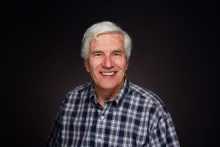
Steve Shafer was born and raised in Seattle. He graduated from Queen Anne High School in 1959 and later graduated from Ambassador College, Big Sandy, Texas in 1967, receiving a degree in Theology. He has been an ordained Elder of the Church of God for 34 years and has pastored congregations in Michigan and Washington State. He and his wife Evelyn have been married for over 48 years and have three children and ten grandchildren.
