
Greg Thomas
This transcript was generated by AI and may contain errors. It is provided to assist those who may not be able to listen to the message.
Well, again, thanks a million, Art and Jim, for your service to God's people today. Very much appreciate it.
Well, have you noticed lately that there are some unsettling and dangerous things going on in the world today? You may have perceived that or picked up on that. Are you alarmed or anxious over the events that you read in the news today? Sometimes upset you? Do they bother you? I have a client in my business, a coaching client who's not in the church, and I meet with him weekly. He's a very smart man. He runs a business, has a number of employees, but he's been experiencing panic attacks.
And part of it is because of what's obviously going on in the news today in our world.
The Holman Bible Dictionary has this definition of anxiety. Now, this is obviously from a spiritual perspective. Anxiety. Quote, the state of mind wherein one is concerned about something or someone, the state of mind may range from genuine concern to obsessions that originate from a distorted perspective of life. Jesus did not prohibit genuine concern about food or shelter, but he did teach that we should keep things in our proper perspective. We should make God's kingdom our first priority. Everything else will fall in the line after we do that. End of quote. I think that's a very good definition of anxiety. Again, that's from the Holman Bible Dictionary. Well, let's begin by going to our first scripture today. Actually, Mr. Howson touched upon it. I'm going to grill into it in a little more detail. We're going to go to Luke's version to begin with. Luke chapter 12 and verse 22. Because I can just tell by the emails that I receive, and I can tell by the conversations that I have with family and with my brothers and sisters in the Church of God, these are times in which there's a high level of anxiety for some of us even fear, concern about what's going on in the world today. And I understand that, but I want to talk about putting what's going on in the world today in a proper perspective. So let's begin. Luke chapter 12 and verse 22. Speaking of Jesus, and he said to his disciples, therefore I say to you, do not worry about your life. Boy, that's a hard statement to appreciate because we're all human. We're all physical, and frankly we spend a good part of our existence worrying about our life. And Jesus says, do not worry about your life. And then he begins to explain why. What you will eat, or about your body, or what you will put on. Verse 23. Life is more than food and the body more than clothing. So he's saying there's a lot more to a rich, fulfilling existence than what you're going to eat tonight, or what you're wearing today. Verse 24. Consider the ravens, for they neither sow nor reap, which have neither storehouse nor barn, and God feeds them. He takes care of them. Of how much more value are you than the birds and a mere raven who flies in the sky? Verse 25. And which of you, by worrying, can add one cubit to his stature? In other words, why are you worrying about things you can't change? You can't change how tall you are?
You can't change how you look? The kinds of events that we're reading about in the news today, you have, and I have, no control over. We're not influencers who can change the kind of things we're reading about in the news today. That's what Jesus is saying. Verse 26. If you then are not able to do the least, why are you anxious for the rest? So if you can't again, if you can't change your height, there's so many things you have no control over, then what value is worrying about it?
What value is there in getting all anxious and worked up, then emotional over something that a reporter says, or a politician says, or what you see in a video on the news? You can't change it anyway. Verse 27. Consider the lilies how they grow. They neither toil nor spin, and yet I say to you, even Solomon, in all his glory was not arrayed like one of these. If God so clothes the grass, which is today in the field and is tomorrow thrown into the oven, in other words, it's temporary, how much more will he clothe you, O you of little faith?
So Jesus is saying, it's all about perspective, and if we trust in faith that God is in control of the universe, that's why we give him the title God, and he is superior, and he knows everything that's going on, and he has a plan for the future, understanding that, why are we so focused on the things going on today? Let's demonstrate some faith is what Jesus is saying. Verse 29. Do not seek what you should eat or what you should drink, nor have an anxious mind. Do you have an anxious mind?
I know a lot of people in the church and outside of the church who have anxious minds, because they're listening to the news every day. They're being sucked in and manipulated by people's agenda, and they're getting all excited and fearful and anxious because of what is said from day to day to day. Verse 30. For all of these things the nations of the world seek after, and your father knows that you need these things.
Everyone that exists on this world today is concerned about food and clothing and how much money I have and what I own. Those are worldly concerns, and Jesus says that's what the world seeks after. And your father knows that you need all of those things. You need food, you need nice clothes to wear, you need a fulfilling life, you need to make a living. God understands all of those things, Jesus says, but he wants his followers to get the right perspective.
Seek the kingdom of God, and all these things will be added unto you. When you do the right things, you will be blessed. Doors will magically open before you in life, and good things will happen if you put first things first. Put God first, put your relationship with him first, and you will have blessings unmeasured. Seek the kingdom of God, and all of these things shall be added to you.
Do not fear, little flock. Wow, do we live in a world today, as I said, that's filled with fear, and filled with anxiety. For it is your Father's good pleasure to give you the kingdom. So whatever you see going on in the world today, Jesus is saying it's temporary. It'll be a footnote. If this world continues a hundred years from now, what's happening today, what's been happening in 2020, will simply be a footnote in history.
It might get a sentence or two in a history book a hundred years from now if this world goes on. Yet if we allow ourselves, we take these events and we magnify them, and we exaggerate them in our minds, and we allow them to distort our perception of what's going on, and we allow that anxiety and that fear to be created within us. Verse 33 says, sell what you have and give alms. Now, he doesn't say sell everything you have, but he's basically saying be generous and merciful. Don't be selfish like everyone else. You're tremendously blessed. God wants to give you something very beautiful, that is His kingdom.
That's what we should be looking towards. That's our future. He says in knowing that, be generous, be merciful. Don't be selfish. Provide yourselves money bags. That's investments which do not grow old, a treasure in the heavens that does not fail, where no thief approaches nor moth destroys.
This is you want to worry about an investment? Here's your number one investment. It's okay to have a 401k. It's okay to have some pension and have some savings. That's cool. That's not a problem. Shouldn't be our first priority. Shouldn't be what we're primarily focused on, but it's okay to have that.
He says, but even better than that is have an investment in our lives through building a relationship with God that's in the heavens. Because when Jesus Christ returns from the heavens, He's bringing our reward with Him. So that's where our investments should be focused. Verse 34, For where your treasure is, your heart will be also. Let your waste be girded. That means prepared for action. Here's how we're to live. Be prepared to do something.
And your lamp's burning. Let your life be fueled by the Holy Spirit because you're thinking spiritually because we're focusing on spiritual things, not just secular day-to-day physical events and activities. Verse 36, And you yourselves will be like men who wait for their master when he returns from the wedding. This is an analogy about the return of Jesus Christ, that when he comes and knocks, they may open to him immediately. In other words, they're prepared. They're ready. They're expecting the master to show up. And when he knocks, they just open the door right up. No hesitation. No, oh wow, this was unexpected. I didn't think this was going to happen. There's a parable about that. It's called the Foolish Virgins. And we don't want to be like the Foolish Virgins.
So Jesus provides an answer to what we see going on in the world today. First, He honestly asks if our anxiety or concern can change anything that's going on. So let's say I hear something going on in the news. Now it just really makes me angry. My heart starts beating faster. I start getting burned up. I start getting frustrated. Maybe I start talking to the TV set.
Does that really change anything? Is that going to change anything that's going on? Meanwhile, I'm getting apoplectic over something that I heard. And it might be contrary to my values. And I just can't believe anyone would say anything that stupid. That's the dumbest thing that I've heard them say since the last time they spoke. Yeah, that doesn't really change anything, does it?
Well, obviously the answer is no. Worrying about something and getting anxious over something doesn't change what's going on. Then He asks what the purpose is of becoming anxious over things except to generate more fear and more worry about things that we have no control over. And it becomes a vicious cycle. We start getting upset. We start getting edgy. We start getting touchy about subjects or ideas, theories, or concepts. And then it's like a burr under our saddle every time somebody mentions it, even honestly. Or without any bad intention, we get all upset and wrinkled and starts that cycle all over again.
Then Jesus offers a solution. He says, stop focusing on worldly events and conspiracy theories and ignorant contradictory opinions about everything. Shut it all off. Turn down the volume of what's going on in your head and focus on what God has planned for you in the future.
And we call that eternity. It's good for us to be aware of what's going on. And I'm not suggesting that we turn off the TV, we throw our TV sets out the window, or we stop reading newspapers. But there's a difference between awareness and we should, of all people on earth, we should be aware of what's going on in the world. There's a difference between awareness and then becoming emotionally invested into a sin, a problem, an issue, and choosing to allow ourselves to become anxious or fearful. There's a big difference between the two. Let's quickly go to Matthew 6 and verse 31. He adds something here, Matthew's account, same account that Jesus said this, and he adds a little something more than Luke said. Matthew 6 and verse 31. We'll just read a few verses here. Matthew chapter 6 and verse 31. Therefore, do not worry, saying, what shall we eat, or what shall we drink, or what shall we wear?
Living from the perspective of someone in the year 2020, we Americans have so many government programs and so many things that reading this is almost not even applicable to most Americans. Today, I realize there's hunger in the United States, and I work with an organization that helps to alleviate hunger in our communities, but compared to the history, most Americans, there's enough of resources available to provide basic housing and clothing. We have food stamps. We have lots and lots of different ways in which these statements aren't even as much of a concern as they certainly were in the time of Jesus. Verse 32, for after all these things, the Gentiles seek.
Gentiles just seek physical things. They want pleasure, they want good food, they want plenty to drink, they want the nicest things to wear, they want jewelry, they want all the physical trinkets and toys that they can possibly have. Continuing, it says, for your heavenly Father knows that you need all of these things. You need food, you need good housing, you need some basics in life. Jesus the Father understands that, but get your priority right. Verse 33, but seek first the kingdom of God, and here's what he adds to, who didn't, and His righteousness, and all these things will be added to you. So seek first the kingdom, it's okay to secondly seek something else, to thirdly seek something else, to fourthly seek to achieve another goal, maybe buy a home, get a new car, all those things are fine as long as we have our priorities right. And number one, we're seeking the right things in life. Therefore, do not worry about tomorrow, for tomorrow will worry about its own things. Sufficient for the day is its own trouble. Now Matthew chapter 7 and verse 1, it may first seem like he's changing the subject, but there's no proof that he's changing the subject in this first verse. Judge not that you be not judged. You know, originally chapters and verses were not included in Scripture. It wasn't until the 16th century was the first time a scholar added both chapters and verses before that time, some various scholars added chapters or made the Bible in the sections, but it wasn't until the 16th century, about 1550, that someone sat down and divided Scriptures in the chapters and verses. So what we call chapter 7 verse 1 is artificial. It wasn't part of the original way that Scriptures were written. So why do you think Jesus goes from the discussion about the kingdom of God and not worrying about things to judge not that you be not judged? Why do you think Jesus immediately connects judging with his comments about excessive worry? It's because both of them have the same immediate root cause, and that root cause is a wrong focus that produces a poor negative attitude. The same focus that makes us think about worldly things, visible things, is the same root cause that prompts us to start judging other people who are different than we are. This kind of an attitude makes mountains out of molehills, and it creates suspicion. It judges the motives of others. It consumes one with frustration and stress, just like is happening in our world today. As a result of the corona crisis and other events that are going on in our cities and in our communities. So why do we get so anxious or upset about the events that we see today? Why do we get so fearful sometimes? Disgusted!
Filled with anxiety over the things that we see going on on TV or maybe in our news feed or maybe a YouTube video or something we might see on Twitter. Two main reasons. Number one is we're physical. It's all we've ever known. And being physical human beings, we are naturally oriented towards the physical world. It's only natural that we would gravitate towards physical things, because indeed we are physical. So that's the reason. But God has given us something called His Holy Spirit so that we can learn and train ourselves to be spiritual beyond just thinking and reacting like the physical. The second reason, and I know this will come across as kind of strong, but I'm trying to put it in a kind way, we all live in a state of constant delusion.
Because we're physical. We live in a state, every generation, every human being, of constant delusion. We think that things should remain stable. We like things when they're the status quo.
We don't like change. As a matter of fact, study after study shows that most human beings resist change. They have a resentment towards something that was this way yesterday, suddenly being changed or re-identified to this today. And there's a natural built-in resistance to that because we deluded ourselves to think that everything should be stable, that everything should remain the same, and we get upset when our delusion is challenged. But let's look at reality here for a minute. First of all, we're all aging. I don't know about you, but every time I look in the mirror, it pretty well confirms the fact that I am aging. We have families in this congregation that had small children, and those children have grown up, and those children have left home. A new generation is always being born who do not have the same experiences and values that you have. You go back to the writings of the ancient Greeks, 800 BC. They say, oh, I don't know about this next generation. These kids don't appreciate anything. I think they're spoiled.
They don't value hard work. Just everything that we say today about the next generation has been said for thousands and thousands of years. Again, we want to live in this delusion that everything is supposed to remain the same, that everything's settled. History is settled. Everything should just be status quo. But open your mind, even the period of time that you've lived, there have been changes in society. Look at the differences in fads, fashions, customs, the way businesses operate. Almost every week, some old hundred-year-old brick-and-mortar store is declaring bankruptcy because they were too slow to get into the online business, and they continued to compete in the way that was successful in 1960. That is no longer successful today. Government has changed. It's changed dramatically over the years. Mr. Housen mentioned even some of the decisions of the Supreme Court in many of our lifetimes. Education has changed. It's become more online focused, and the classes, I can tell you today, in an average college, and I look at some of their syllabus, I just scratch my head because there's nothing like the classes that I had 40 years ago. All of these things should tell us that the world is constantly changing. That is the reality. Everything has always changed.
Things are changing today, and things will change in the future, in our world.
To look throughout history, the church has constantly had to change and adapt to the way that it has existed. And I can tell you in my nearly 50 years of being in the church, that people come into the church, people for one reason or another leave the church.
Children are born, members die. That's constant change. I've said before, and I'll say it again, if people took a picture of all of you out there today, that is a momentary snapshot in time that will never again be duplicated. Because two Sabbaths from now, not all of you will be here.
There will be some additional people. Some of you won't come that day. My point is, is that things are constantly changing. That is the reality. And to live in a delusion that everything should be stable because I want it to be. And the status quo should exist. And I'm going to pretend and act like I'm never going to die. And I just want to live in this delusion that everything is okay, and everything's going to remain the same. That's just simply not true. The world's nations and the values of people have been constantly shifting throughout world history. Things that were common 50 years ago are now considered politically incorrect. People who were honored 50 years ago are not dishonored. And that's nothing new. My point is, things are constantly changing. And again, through all of this change, we deceive ourselves into thinking that life should be stable and fixed.
I just want to give you a couple of examples to prove to you that life is never stable and fixed. Just a brief example of this history, and I'm going to take a look at the United States since it was born. If you were born in 1776, was the year of the American Revolution. First of all, you were born into a period of time as a small child in which you experienced war. You experienced a lot of horrific events as British soldiers marched in your land, maybe through your city, and people were executed, and people died in war. Again, you witnessed a lot when you were a small child. When you were 36 years old, the war of 1812 broke out. And if you were a male, you may have been impressed by the government to serve in that war. You experienced financial depression as a result of that war. The President put an embargo on England and other nations, and the economy collapsed. People went out of business, and there was a pretty severe depression, and there were other depressions that occurred around there. The White House was burned down by the British.
The British invaded Washington, D.C., and literally burned down the White House. Is that something you're a little anxious about, maybe, if you're living at that time? When you were 85 years old, a civil war broke out. It occurred over 620,000 soldiers died, and you lived at a time of great hatred within our nation. Again, in your lifetime, you also experienced numerous recessions. You saw a lot of changes in society. So, you do think that time was any more stable than what we have today? Was that time any worse than what we're going through today?
Let's say that you were born the year the Civil War started, 1861.
You were born that year. You were 53 years old when World War I started. 14 million deaths occurred as a result of that war, and there's also economic difficulties and financial recessions due to that. When you were 57 years old, the 1918 influenza pandemic, known as the Spokesman, the Spanish flu, caused up to 100 million deaths worldwide. Even greater fear than we experienced today because they didn't quite understand how to control and how to deal with the Spanish flu. You were 68 years old when the stock market crashed and the Great Depression started. Sounds like a happy lifetime to me to live in. You were 78 years old when World War II started, resulting in 75 to 80 million deaths as a result of that war. In your lifetime, you also experienced numerous recessions and societal changes, so you do think that seems any more stable than what we're experiencing today? Let's say you were born in 1945, the end of the Second World War.
If you were born that year, you were five years old when the Korean War started.
Nearly five million people died as a direct result of that war, including 33,000 American soldiers.
You were 16 years old when the U.S. military advisors began helping South Vietnamese troops leading to our involvement in the Vietnam War. As that war ramped up, if you were a male, you probably had a pretty good chance of being drafted into the U.S. military. About 3.8 million people died as a direct result of the Vietnam War, including 60,000 American soldiers.
You were 19 years old when riots broke out in major U.S. cities from 1964 to 67. I lived through those. I lived in Cleveland at the time of these riots. Trust me, they were a lot more vicious and a lot more violent than what we see going on in Portland and other areas of our country today.
You also witnessed two Gulf wars. A president was assassinated during your lifetime if you were born in 1945. Another president resigned from office. You experienced the Great Recession of 2007, and you're 75 years old today. So your lifetime, does it seem more stable then, more stable than it is today? Well, no. My point is, is that every time in history, everything is changing.
That is what's natural. Constant change in society, in people, in events, is the constant change that goes on each and every day as part of history and the human experience.
The human experience is a constant cycle of events. Let's review this cycle. Ecclesiastes chapter 3, verse 1. Please turn there with me. Ecclesiastes chapter 3, verse 1. To everything there's a season. What are seasons? Seasons are periods of change. To everything there's a season, a time for every purpose under heaven, a time to be born, a time to die, a time to plant, a time to pluck what is planted, a time to kill. You see that in our news today. A time to heal, a time to break down. Do we see things in our culture being broken down today? A time to build up, a time to weep, a time to laugh, a time to mourn, a time to dance, a time to cast away stones, throw stones. You see people throwing things today. A time to gather stones, a time to embrace, and in a nod to COVID-19, a time to refrain from embracing.
It was prophesied all along. I say that tongue in cheek, obviously. Verse 6. A time to gain and a time to lose. The sign goes forward. Sometimes cultures and societies go backward.
A time to keep and a time to throw away. A time to tear. You can see things being torn out of our culture and our value system today. A time to sow, a time to keep silence, and a time to speak, a time to love, a time to hate, a time of war, and a time of peace. Again, this is a summary of the cycle of human experience in every generation that has ever lived, including ours. I gave brief examples of someone who was born the year of the American Revolution, what they experienced in their lifetime, or the Civil War, born during that year, or born during World War II. I could have had that example from any culture or people on earth. If I knew their history well enough or read about their history, that kind of change occurred everywhere in every culture around the world, because change is constant. The journey of life proves the change is constantly happening. Each generation must face challenges and events that are unwanted or unexpected. Always has happened.
Happened in a recent past. We just saw some examples in 1776 happening today. And my dear friends, my brethren, it's going to happen tomorrow. Five years from now, 10 years from now, if this world continues, 20 years from now. Yet, if our focus is on the right thing, and that's the kingdom of God and his righteousness, meaning on spiritual things and beginning to transform our thoughts into a spiritual perspective on things, rather than just the secular, worldly events that are going on. If we're willing to do that, then we will see that we have no anxiety. We have no fear, because we believe that there's a God in heaven, that he's in control of the universe, that we are his beloved, and everything's going to turn out the way. Ultimately, he wants it, too. So the moral of the story of this scripture, Ecclesiastes chapter 3 verses 1 through 8, is that change is constant. Get used to it. Accept it. And stop diluting ourselves in the thinking, expecting that everything is just supposed to be status quo, because I don't like change. I'm comfortable, and I don't want anything to be different.
Again, in reality, change is a constant part and a natural part of human life.
Even though most of us resist sudden or dramatic changes, history and the scriptures show us the change is constantly happening.
So how can we not get caught up in the events of this world? Again, being aware of it, and of all people on earth, we should know what's going on in the world. We should be aware of things that are being said and things that are being done, and we should watch world news and watch local news and watch national news. But how can we differentiate being aware to make sure that we are not being manipulated into making an emotional investment into all this stuff that's going on in the world today? If we've been allowing ourselves to get caught up in it, how can we stop that from affecting us? Well, as John Maxwell likes to say, change is inevitable.
Growth is optional, meaning the choice has everything. The choice is ours. Each of us individually has to make the right choice. It all begins with the fact that we must change our perspective. The harsh truth is that the physical world changes constantly. We've already talked about that. So the right perspective, the spiritual perspective, is to say that I'm going to stop expecting stability and for everything to remain stable and changeless, because that's not what the world says is happening. That's not what scripture says is happening. As a matter of fact, if I go through a five-year period in my life and things are stable and status quo, I will look at that as a wonderful, unexpected gift, because that's not the way things are in our world.
Again, expecting constant stability in this world, my brethren, is delusional thinking. We've got to get beyond that. We've got to stop expecting it, and we have to start transforming our focus from all the noise that's going on out there into having a spiritual perspective.
There's only one genuine source of stability and calmness. Only one, and it's spiritual.
And if you allow it, it'll reside between your two ears.
The source is spiritual. It's a mental shift apart from focusing on the ever-changing physical events away from that and towards the spiritual principles that God offers in His Word and upcoming events. As Paul said in Romans chapter 12 and verse 16, do not set your mind on high things. Don't set your mind on politics. It's okay to have your own personal opinion of what politicians you may like and you may find in your mind are good or not good. But he says don't set your mind out of it. Don't make a priority of focusing on high things, our culture, our sports. Our politics. It's okay to have an interest in them. It's okay to follow them. But again, let's make sure our priorities are right. He says do not set your mind on high things but associate with the humble. Do not be wise in your own opinion. End of quote. And my, do we have lots of people who have opinions?
As I've said before, in everything and anything, people have an opinion. Let's go to Psalm chapter 27 and verse 1. Go to a few scriptures here from the book of Psalms and see what the Psalmist teaches us. Again, Psalm 27 verse 1.
The psalmist writes, The Lord is my light in salvation, whom shall I fear? If I'm looking to God and my focus is on spiritual things, a relationship with him, and what God has planned for me for eternity, why should I fear anything? Whom shall I fear?
The Lord is the strength of my life. Of whom shall I be afraid? When the wicked came against me to eat up my flesh, my enemies, and foes, they stumbled and fell. No matter what happens, God's on my side, he's going to protect me. And even if I say something and it ends up because I said something that I get fired from my job, well, God will open up some doors and I'll get a better job, probably a job that even pays more than what I was making before, because God is watching my back.
I'm not going to fear. Though an army may encamp against me, my heart shall not fear.
The war should rise against me. In this I will be confident. One thing I have desired of the Lord that I will seek, that I may dwell in the house of the Lord all the days of my life. I'm going to be faithful to God's way of life here on earth. I'm going to fellowship with my brethren, and I'm looking forward to that time when I'm spending eternity and dwelling in the house of the Lord in Zion. All the days of my life to behold the beauty of the Lord and to inquire in his temple, for in the time of trouble he shall hide me in his pavilion. You know, for some people, that pavilion may even be death. I have a lot of beloved brethren that I've known over the years who grew old and died, and right now they're being hidden from all the stuff that's going on today, and for many of them it's a blessing because they were quite aged that they don't have to read the news and know what's going on today. God is hiding them in his pavilion, and that's death until the time of the resurrection when they will come alive in a brand new world. In the secret place of his tabernacle, he shall hide me, he shall set me high upon the rock. Ultimately, I'm going to be a leader and a servant in his family and his kingdom forever and ever. And now my head shall be lifted up above my enemies all around me. Therefore, I will offer sacrifices of joy in his temple.
I will sing, yes, I will sing praises to the Lord. As we grow in faith, God gives us courage and resolution to meet the difficulties and the dangers that we see in a world around us. Paul was inspired to write in Romans chapter 8 and verse 31, What then shall we say to these things? Paul said, If God is for us, who can be against us?
Rather, the Holy Spirit is not the author of confusion. It's not the author of being timid or cowardly or being fearful. I want you to notice that the psalmist declares sacrifices of joy. He says, I refuse to be fearful. Even though he says, look at all of my enemies. They're trying to destroy me and there's war and people hate me and I refuse to be fearful. Instead, knowing what God has planned for me for eternity, I'm going to be joyful.
I'm going to transcend myself beyond these secular events and things that go on and I'm going to keep looking up.
Let's go to Psalm chapter 119 verse 15. Psalm chapter 119 verse 15. I will meditate on your precepts. Notice what the psalmist says. It's not I'm watching six hours of Fox News or CNN every night to find out what's going on in the world. No, doesn't say that.
He says, I meditate on your precepts, God's values, God's law, God's principles of human relationship, the way our marriages should be, the way our relationship should be in the workplace, the way our relationship should be with our neighbors and friends, your precepts, and contemplate your ways. I'm not going to contemplate and read the platform of the ex-party because frankly it's all a bunch of hogwash anyway. My apologies to hogs.
I will delight myself in your statutes. I will not forget your words. So what's the psalmist meditating on? Again, not some agenda-driven distorted news, not the conspiracy theory of the day because of a YouTube video, not because of some gossip. He meditates, he delights himself with a spiritual focus, and when he does that, rather than fear and anxiety, it allows him to be positive, to change his thinking. Psalm 145 verse 1. Psalm 145 and verse 1.
The psalmist says, I will extol you, my God, O King. I'm not going to extol some politician who's going to solve all my problems, all the problems of this nation, all the problems of this world.
I will bless your name forever and ever. Every day I will bless you, speaking about God.
I will praise your name forever and ever, great is the Lord, and greatly to be praised, and his greatness is unsearchable. One generation shall praise your works to another, and you shall declare your mighty acts. I will meditate on the glorious splendor of your majesty and on your wondrous work. So what's the psalmist thinking about? Again, what's on the newsfeed today?
What the mayor said over here? What a congressman said over here? What the president said over here? What the governor said over here? Nah. I'm sure I was aware of what was going on in the government, things going on at that time, but that's certainly not his focus. Meditation is not simply thinking, but it's reflecting and pondering on the goodness and greatness of God and his righteousness, his values, his promises to us, and ultimately his kingdom. I'll give you some examples of having a spiritual perspective, and it's a little bit outside of the box. I understand that. I'm going to try not to necessarily take a hard opinion on this, but let me give you an example. When we take a shift away from secular worldly thinking into a spiritual perspective, obviously one thing that's going on today is we can get upset seeing monuments being destroyed, monuments of maybe American founders or American heroes, and that can be very disturbing to us. So let me put on a spiritual perspective. Do you think there will be monuments to mere human beings in the kingdom of God?
In 1 Samuel 15, there's only two places where monuments were set up in the Old Testament. 1 Samuel 15, Saul set up a monument to himself after he disobeyed God regarding how to deal with the Amalekites. Hey, give myself a high five! Make a monument to myself! I'm wonderful!
All right, Samuel says, nah! Another example is 2 Samuel 18. It states that Absalom had set up a monument to himself. Well, he also rebelled against his father David, who was king, ended up getting himself killed. So again, do you think there could be monuments to mere human beings in the kingdom of God? A number of years ago, I went to the Lincoln Memorial. I think I've told you the story of... I was with my friend late Tim Swope, who was a deacon here, and we had gone to the Vietnam Memorial. He pointed out to me my name on that granite wall. I think I've told that story in service. After that, we went to some other sites, and one of them was the Lincoln Memorial. And he and I both walked up, looked at the statue in the Lincoln Memorial, and here are the words carved into the wall. Tell me what you think about this. Quote, in this temple, as in the hearts of the people for whom he saved the union, the memory of Abraham Lincoln is enshrined forever. End of quote. That's all in capital letters, by the way. Tim and I looked at that, and we looked at each other like in this temple. He's a wonderful man. He had some great achievements in this temple.
You see, as human beings, we tend to make idols out of people that we think were great or wonderful.
And we make monuments to them. But there's no biblical injunction that monuments are valuable or necessary. So when you have a spiritual perspective, you don't allow yourself to be immediately knee-jurked around by reading things on the news and seeing things that are happening.
I'm going to give you another example, and this is a little bit outside of the box. I understand.
So let's say that we're looking at the 2020 presidential election in our world today.
We're all human beings. We're all Americans in this room, as far as I can see. We all have opinions. We all were a product of our culture and society. But from a spiritual perspective, how might someone 500 years in the future in the kingdom of God perceive the presidential election of 2020? From a spiritual perspective, let's say that you're there, and someone comes up to you in the kingdom of God who was born during that time and says, hey, I can't find much in the history books about the presidential election of 2020. Can you help me? I heard that you were a physical being, and that you were there, that you lived during that time. And you respond from a spiritual perspective, looking back, divorced from your emotions now, and growing up as an American and living in our culture and sealing daily news might very well be something like this.
Well, my son, there were two political parties, and they were dumb and dumber. The difference between the two was that one wanted to run to hell in a handbasket, the other wanted to skip to hell in a handbasket. One candidate was an old white man with mental disabilities, and in a dramatic contrast, the other candidate was an old white man with mental disabilities. And this was the best out of 300 million people who were alive at that time.
These were the brightest and the best that dumb and dumber could offer the American people to lead them. And you might say, do you have any more questions? And he or she would say, no, none whatsoever. From a spiritual perspective, looking back, separating our emotions today and what we've experienced and in our lifetime and being Americans and all the things that we allow going on in our heads today. Philippians chapter 4 and verse 6. Turn there with me if you would. Philippians chapter 4 and verse 6. Paul writes to the Philippian congregation, be anxious for nothing.
Some translations say, do not worry about anything. But in everything by prayer and supplication with Thanksgiving, let your request be known to God. If you have a need, maybe you want that new home. Maybe you need a newer car. Maybe you would like to be blessed in some way. Let your father know about it.
Make your request known to him through prayer and supplication. Verse 7. What happens when we're focusing on the spiritual and we begin to look at things from a spiritual perspective and stop simply focusing on all the noise and craziness going on in our world today. Verse 7. And the peace of God, peace, p-e-a-c-e, calmness, no anxiety, no fear, the peace of God which surpasses all understanding will guard your hearts and minds through Christ Jesus. Finally, brethren, here's what our major focus should be again. Not saying we shouldn't be aware of what's going on in the world today, but here's what our major focus should be on. This should be our priority in what we're allowing to enter our heads, what we're looking at with our eyes, what we're reading about. Finally, brethren, whatsoever things are true, whatsoever things are noble, whatsoever things are just, some translations say right, whatsoever things are pure, whatsoever things are lovely, whatsoever things are of good report, if there's any virtue, if there's anything praiseworthy, meditate on these things.
And I might add that dumb and dumber does not offer any of these things. That's the truth.
That's the reality.
What we allow to enter our minds has an effect on us. What we're reading, we think about, and ultimately we react to. Positivity breeds positive thoughts. That's what Paul's saying here. Negativity breeds negative and anxious and fearful thoughts. Here's the biblical template for focusing on the kingdom of God and His righteousness.
What happens in the world today in its so-called news are mere shadows in time. Every event, every politician, and every news report that's going on today, if the world goes on another hundred years, will simply be a footnote in human history. The entire year of 2020 may get a sentence in a history book someday, and they will not even be worthy of mention in the kingdom of God.
Verse 9, the things which you have learned and received and heard and saw in me, these do, because Paul tried to set the right example, and the God of peace, there's that word again, will be with you. The antidote to anxiety is peace, and that peace is only available when we put things in the right perspective by looking at things spiritually, and not just physically, and what's happening in our news and in our world today. Continuing, but I rejoiced in the Lord greatly that now at last your care for me is flourished. Again, he was in jail, and they sent either a care package or somebody came to visit him from Philippi, so Paul was excited about that. I want to give you the context. Though you surely did care, you lacked opportunity. Not that I speak in regard to need, for I have learned, and this is something that Paul had to learn. It's something that you and I have to learn. We don't naturally focus on spiritual things. We're physical human beings. As I said before, the number one reason we struggle with those things, it's all we've ever known. We are physical, but we've been given that great gift, and that is the Spirit of God, to teach us the focus on the big picture, on eternity, and not just what's happening in the news today, or happened in Portland last night, or might happen in Cleveland a week from now. Who knows? I have learned, it is a learning process, it's a choice, that in whatever state I am to be content, because he learned the focus on spiritual perspectives, not just what's lacking, not just all the problems, not just all the negativity, wherever state I am in to be content, I know how to be a beast, and I know how to abound, everywhere, and in all things I have learned both to be full and to be hungry, to abound and to suffer need, and here's his focus. Here's what helped him to be content. I can do all things through Christ who strengthens me. I'm going to read verse 12 from the new century version.
I know how to live when I am poor, I know how to live when I have plenty, I have learned the secret of being happy at any time in everything that happens. When I have enough to eat, when I go hungry, when I have more than I need, when I do not have enough, I can do all things through Christ because he gives me strength. It's the right focus, the right perspective. Here's the aged apostle, he's alone, he's in prison, he's made joyful by a visit or care package from the congregation at Philippi. And he tells them, he responds by telling them about his ability to accept and adopt the physical changes. Let's go to our final scripture today, 2 Timothy chapter 1 and verse 6.
So you might say, okay, Mr. Thomas, yep, I've been struggling with this a little bit, and allowing myself to get upset. I've been talking back to the TV as if it can hear me or cares.
I've been allowing myself to be anxious. I have some anxieties. I'm a little fearful about what I see going on in the news today. It's affecting me emotionally, making me cranky, maybe judgmental.
Here's what Paul told Timothy. Here's something that we can all do if we have found ourselves slipping into that trap. Therefore, I remind you to stir up the gift of God which is in you through the laying on of my hands so it can be stirred up. That spirit that God gave you, you were baptized, your hands laid on you. Yeah, that spirit sometimes can go dormant. Sometimes we drift into going back and focusing primarily on the world and what's happening every day, and we allow that. We choose with that decision to allow all that to create anxiety and fear and distress in ourselves.
But we can stir up that spirit and begin to look at things from a totally different perspective.
And that is perspective of the kingdom of God looking back. And how silly and shadowy, how temporary all of this stuff will be from that perspective. As I said, even if this world goes on a hundred years from now, people are going to condemn our generation just like every generation condemns the ones before it. And they will be looking back on the way that we dress, saying, what a bunch of weirdos and freaks! Look at what they were wearing! And they'll judge us for our values because we were too hard in some ways and belligerent and intolerant in some ways, and too gutless and sisified in other ways. So that's the way that history will judge us, and it might be a whole sentence in a history book somewhere. So why allow it to affect us?
Why allow these events to make us angry or anxious or fearful? Verse 7, For God has not given us a spirit of fear. There's nothing fearful about the Holy Spirit, but of power. And that's the power to pray about things, to initiate change. The power to be able to ask God to intervene on events, to change events. That's powerful. Prayer is very powerful.
A power and of love, having a deeper love than we're capable of, and learning about the love of God and the patience that God has towards sin and dysfunction. And a sound mind, not obsessive, not compulsive, not allowing ourselves to be manipulated by the news media or jerked around by something said by a mayor, a governor, a congressman, a senator, the president, whatever.
Having a sound mind, and a sound mind means having the right perspective on our existence and what really matters. So the good news is that if we allow God's Holy Spirit to become dormant in us, if we've been dwelling on the wrong kinds of things, focusing on the wrong kinds of things, and seeing the negativity in ourselves, our loved ones, that we can stir the Holy Spirit into action again in our lives. That's a choice. And as I mentioned earlier, there's only one genuine source of stability and inner peace and calmness, and that source is spiritual. It's a mental shift away from focusing on the ever-changing physical events and towards spiritual principles and the upcoming events like God's kingdom. The choice is ours. We choose what we allow to influence us.
And if we're reading something, we're involved in something, and it's starting to upset you, you're aware of it now, but it's starting to upset you. Meditate and focus on the kinds of things that Paul told us in Philippians chapter 4 that we should be meditating on. Again, we choose what we allow to influence us. So going forward, my dear congregation, what will you decide to focus on? I encourage you to focus on eternity. Have a wonderful Sabbath day.
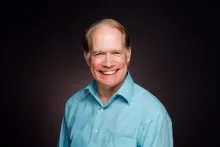
Greg Thomas is the former Pastor of the Cleveland, Ohio congregation. He retired as pastor in January 2025 and still attends there. Ordained in 1981, he has served in the ministry for 44-years. As a certified leadership consultant, Greg is the founder and president of weLEAD, Inc. Chartered in 2001, weLEAD is a 501(3)(c) non-profit organization and a major respected resource for free leadership development information reaching a worldwide audience. Greg also founded Leadership Excellence, Ltd in 2009 offering leadership training and coaching. He has an undergraduate degree from Ambassador College, and a master’s degree in leadership from Bellevue University. Greg has served on various Boards during his career. He is the author of two leadership development books, and is a certified life coach, and business coach.
Greg and his wife, B.J., live in Litchfield, Ohio. They first met in church as teenagers and were married in 1974. They enjoy spending time with family— especially their eight grandchildren.
