

Roy Holladay
This transcript was generated by AI and may contain errors. It is provided to assist those who may not be able to listen to the message.
MUSIC Oh, good afternoon to everyone. This morning I was beginning to wonder if I was going to lose my voice or not. I'm still not sure about that. I didn't sleep very well last night and found out that it seems like all night long I had a sign of strange going on.
But I survived this morning, so I assume I will this afternoon. Last Sabbath I was in Salt Lake City, and on Sunday flew over to Cincinnati, was there most of the week, and flew back on Wednesday. I attended most of the council meetings during last week. I'll comment more on that later. I think we're all aware that yesterday Zachary Stervan, Penny Martin's youngest son, died. And I think most of us are aware of the circumstances surrounding his unfortunate death. Friday, a week ago, Zachary, his brother Tyler, and Tyler's best friend were involved in an automobile accident, hit on collision.
Tyler's best friend was killed at the scene of the accident. Tyler suffered numerous injuries, broken pelvis, broken femur, various cuts, abrasions, wounds, and so on. And Zachary sustained, as we are aware, a head injury. He was hemorrhaging, his skull was swelling, and the doctors were not sure they felt he, very possibly, could have brain damage as a result of the accident, but they were not sure.
And they just felt that it was probably likely. So for a week, you have Penny and Stan have agonized over Zachary. Would he live? Would he die? What was going to happen? I'm sure that they focused on every positive sign. On Thursday, there seemed to be some positive progress. I think those of you who knew Zach, Zach was a quiet young man, but he was a very kind person. He was a lovable individual. He was one who knew what he wanted in life. He was an excellent academic student.
He was also an excellent athlete. He was a fairly proficient runner. He was one of the fastest of his age group in Hamilton County, and just excelled in a number of areas. He was a type of young man that anyone would be proud to have as a son. And we know that Penny just has to be very devastated over the loss of Zach. Tyler lives with his dad, and so therefore, they haven't been living together.
Tyler was the driver of the car, and he'll have to live with this tragedy for the rest of his life. Something that psychologically, emotionally, mentally, he will have to deal with. It seems that many times these type of situations occur in bunches. I don't mean a tragedy, but as an example, two weeks ago, we had two funerals. Mr. Charles Shannon, Linda Young, Frances Cowan had died a couple weeks prior to that.
I remember years ago in the Wheeling West Virginia congregation that we had a lady commit suicide. This is all in a week. We had a baby die prematurely. And then we had a woman who had to flee into the woods in her nightgown because her husband chased her out of the house and wouldn't let her come back in, and she had to flee for her life. We were in Chicago. Within a week, we had a situation where there were twins, young baby twins, who died.
And then a young boy was killed in an accident on the way. The family was on the way to see Mr. Armstrong, who had flown into town. Recently, I gave a sermon on why God allows trials in texts. But today, I want to talk about life and death and God's view of this situation. We all prayed fervently for Zach's healing. And I know that all of us, you know, I've had many who've called or talked to me, written to me.
And I know that when I called Norma, both of us cried over the situation, over his death. And I know that many of you did likewise. When God allowed Zach to die, undoubtedly it probably weakened some people's faith. It seems like these type of situations always have a profound effect upon all of us. We have difficulty, I think, especially dealing with the death of a child. We realize that as older people, we know we're going to die.
And as we get a little older, the realization becomes more real to us. We understand the fact that God hasn't promised that we'll live forever and that we're getting closer to death. But it's a little more difficult when it comes to a child.
We as parents are supposed to die first. That's the natural order of things. And I know that we have a number of you here who have had this situation occur. And you have very strong emotions. You can identify very strongly with what has gone on. So you and I grieve for such a precious young man. Our emotions can run through the gamut of being heart-sapping grief, to resentment, to anger. There can be various emotions that different ones have.
The suddenness of something like this, of an untimely death, and overwhelm us with shock, disbelief, sometimes utter bewilderment. We wonder why something like this happened. Well, it's natural and normal for us to feel this way. We find that God in His love doesn't intend for us to be overly morose or fearful. Sometimes in the world and society when something like this happens, people have a great unknown.
They don't understand. They don't have knowledge and realize. But even though we're in God's church and even though we have God's word, we still ask the question, Why? Why would something like this happen? Some think that maybe God isn't with us anymore. Maybe God isn't healing anymore. God looks at death differently than man does. We tend to look at it from only our own physical perspective. We know we're human. We know when somebody dies, they're no longer with us. So therefore, we have that perspective. But to God, death is a step towards fulfillment of His great Master Plan.
When God created Adam and Eve, He told them, In the day you sin, you shall die. And every human being has sinned since that time. The wages of sin is death. And so we realize that, humanly speaking, we all die. The Bible says it's a point into all men wants to die. And so we find that death does face us. And yet in God's Master Plan, God has a plan to deal with this. He has a plan to show us how to cope with it.
Let's go back to the book of Ecclesiastes chapter 3. Book of Ecclesiastes chapter 3, beginning in verse 1. And I want you to notice what was written here. It says, To everything there is a season, a time for every purpose under heaven, a time to be born and a time to die. So as they're time to be born, there's a time to die. We don't choose the timing of our birth.
Not a one of you in here decided, well, I'm going to be born on such and such a date. Well, that was up to your parents. Sometimes even they didn't know. But neither do we choose the time of our death as a rule. That's something that comes. Sometimes it can be untimely. Sometimes it happens in the natural course of things. The Bible, though, has been written to give us all comfort, to give us all encouragement. There are examples in the Scriptures that show that premature death does occur in life. And it is something that occurs, and you read throughout the Scriptures. Adam and Eve had two sons, Cain and Abel. Cain killed Abel. So Adam and Eve were the first parents, and they were the first to experience the fact that their son died prematurely.
He didn't grow up, live a long life, have multiple descendants, and so on. Abraham had to be willing to sacrifice his son Isaac. And in his mind, when he raised the knife and started to strike his son, his son was dead. He had already committed that in his mind.
And yet God stopped him at the last moment. Job lost all of his children. He had ten children. He lost them all. You might remember when Israel was in Egypt, although the male children of the Israelites were killed. They were told to take them out and kill them. Moses' parents had faith. They saved him alive, put him in a basket, and he was saved alive at that time. If you remember the example of Elijah and the widow's son, Elijah lived with them during the time of famine. And during that period of time, you find that her son died, and she became quite upset with Elijah.
Why did you come here? You would kill my son or God would kill my son. And Elijah went, laid on the sun, and prayed three times that God would restore his life. And his life was restored at that time. We know that David lost his son. David had committed adultery with Bathsheba, and as a result of that, God took his son from him. When Jesus Christ was born, all the male children in Bethlehem, two years under, were killed. He had to flee to Egypt, and God saved him. But what about all of the children in Bethlehem? They died. And God gave us his son to die for us so that we could have our sins forgiven.
I mean, just thinking off the top of my head, these were some of the examples that you could find in the Bible and in the Scriptures that deal with this particular topic. Now, let's go back to 2 Samuel 12, beginning in verse 16. Let's notice the example of David here and his son, because I think there's a lot we can learn. 2 Samuel 12, beginning in verse 16. In verse 15, it says, Nathan departed to his house, and the Lord struck the child. May Uriah's wife pour to David, and he became ill. And David therefore pleaded with God for the child, and David fasted and went in, and laid all night on the ground. And so the elders of the house arose and went to him to raise him from the ground, but he would not.
Nor did he eat food with them. So he prayed and fasted for the healing of his son, just like we would pray and fast if our son, our daughter, were sick. Then in verse 18, Then on the seventh day came the pass that the child died, and the servants of David were afraid to tell him that the child was dead.
For they said indeed, while the child was alive, he spoke to him, and he would not heed our voices. How can we tell him the child is dead? He may do some harm. So they were afraid of his reaction, what he might do to himself or perhaps what he might do to them. The NIV translates the last part of this verse, He may do something desperate. So they were afraid if he knew he might do something to himself after all of this grieving.
And yet in verse 19, When David saw that his servants were whispering, David perceived that the child was dead. Therefore, David said to his servant, Is the child dead? And they said, He is dead. And so you find the household, their concern, they were afraid of what the news might do to David, might push him over the side of the cliff, so to speak.
And yet, David, in verse 1, He arose from the ground, washed, anointed himself, changed his clothes, He went into the house of the Lord, and worshipped. And then he went to his own house, where he requested they set food before him, and he ate. Now, they could not understand this, because David did just the opposite of what they thought one would do in a situation.
He mourned while the child was ill, and resumed his normal routine after the death of his son. This was quite puzzling to all of his servants, and to those around him. And so his servants said to him, verse 21, What is it that you've done? You fastened and wept for the child while he was alive? But when the child died, you arose and ate food.
Now, notice verse 22 and 23. I think there's a great deal of comfort, encouragement, and a lesson that we can learn from this. He said, While the child was alive, I fasted and I wept. For I said, Who can tell whether the Lord will be gracious to me, that the child may live? But now he is dead. Why should I fast? Can I bring him back again? I shall go to him, but he shall not return to me. And so you find that David understood that while he was alive, God was very capable of healing him. And there are cases, like with the Elijah and the Whittle Son, where God did heal.
God actually performed a miracle. And there are situations like this where God did not. But he understood that God was capable of doing so. David understood what many other servants of God have understood down through the ages. That all is not over at death for a young person. And all is not over for Zachary, because he has a future in front of him.
There is coming for every person who has ever lived a resurrection from the grave. And at that time, God's continuation, God's purpose, for each one of those individuals. It is proper and right to mourn, but we can be comforted and encouraged by the plan of God by knowing that we will all, if we are in God's kingdom, see Zachary again in God's appointed time, when God says that the timing is correct. Let's notice in Job 14, a question that people ask all the time. If a man dies, shall he live again? That is the question. And Job said, all the days of my hard service, I will wait until my change comes. You shall call and I will answer you, and you shall desire the works of your hands. So he understood that he would die, but after this there would be a change. I want you to notice the NAS translation of verse 14. The last part of verse 14, all the days of my struggle, I will wait until my change comes. The NIV says, all the days of my hard service, I will wait for my renewal to come. So whichever way you look at it, a renewal, a release, a change, Job understood that something was going to happen after death. That God would call, that there would be a call from God, and that he would live again.
Now the Apostle Paul, over in 1 Thessalonians 4 and verse 13, had this to say, He says, I do not want you to be ignorant, brethren, concerning those who have fallen asleep, that you sorrow as others who have no hope. You see, in chapter 4 here, he goes on to explain the hope of the resurrection, that there's going to come a time when Jesus Christ returns to this earth, verses 14 and 15. And those who are alive and remain will be changed, but those who have died will rise first, as verse 16 says. They'll rise, they'll meet Christ in the air, and then those of us who are alive will be changed and will be called up to meet God. And verse 18 says, Wherefore comfort one another with these words. So we're to take encouragement and comfort and strength from what God has promised. In fact, God is very emphatic. In 1 Corinthians 15 and verse 20, we find the promise given in the Scriptures that God will resurrect every human being who's ever lived. That includes Zachary. That includes everyone. Your mother, your dad, a mate, our children. It doesn't matter who they are. They will be resurrected. We read in verse 20, Now's Christ risen. So we have the example of Christ, that it is possible to resurrect the human being from the grave. It says, Now's Christ risen from the dead and has become the first-roots of those who have fallen asleep. For since by man came death, by man also came the resurrection of the dead. For as in Adam all die. So we're all descendants of Adam. We all die. Even so, in Christ all shall be made alive. Everyone, but everyone in his own order. Christ the first-roots. So he was the first. Afterwards, those who are Christ, that is coming.
Then the end comes when he will deliver up the kingdom to God. In verse 25, And he must reign till he has put all enemies under his feet. And the last enemy that is to be destroyed is death. So death is ultimately to be conquered, and it will be conquered by the resurrection.
We read in John 5.28 that there will be a resurrection of all who have ever lived. And there will be a resurrection to life, the just, and the resurrection to condemnation or damnation or judgment. Zach died without the opportunity to live out his life, to develop his dreams, to have a family. Just as millions before him have followed that same pattern, been in the same state, the same condition. How many young men and women have died in warfare without ever getting married, or if they were married without ever having the opportunity to rear a family? How many Einstein's have been killed before they were able to do research? How many poets have died? How many writers have died? How many great leaders have passed from the scene before they ever had a chance to live? All of them will have an opportunity to live again. This is the promise that our great God gives us. And as we heard in the opening prayer, that if God promises that, it will happen. If God says it, it will take place. And God absolutely promises that he will resurrect everyone. In Revelation 19, verse 11, we have the sequence of events described here at the end time that are going to take place.
Revelation 19, verse 11, you have a picture here of Jesus Christ returning to this earth. This is yet future. And I saw heaven open, and behold a white horse, and he who sat on him was called Faithful and True. And in righteousness he judges, and he makes war.
In verse 15, out of his mouth goes the sharp sword, that with it he should strike the nations, and he shall rule him with the rod of iron. So Christ is going to come back, put down the rulers of this world, conquer the nations, set up his government, and he is going to rule over them. And all of them, verse 19, the beast, false prophet, all of those will be dealt with, and Christ will rule. Now you come to chapter 20, and beginning in verse 2, you find that when Christ comes back that he will dispense an angel, who will take Satan, the devil, and his demons, and they will be locked up for a thousand years. And he laid hold on the dragon, that serpent of old, who was the devil, and Satan, and bound him for a thousand years. So throughout the millennium, Satan is bound, and he is not free to deceive him once, mankind. And then we find, going on in verse 4, that there is a resurrection that takes place. I saw thrones. Now a throne is for a ruler, a king. I saw thrones, and they said on them, and judgment was committed to them. Well, to whom? Well, notice. And I saw the souls of those who had been beheaded for the witness of Jesus, for the Word of God, who had not worshipped the beast or his image, who had not received his mark on their foreheads or on their hands. And they lived and they reigned with Christ for a thousand years. So if they're going to reign with him for a thousand years, this resurrection takes place at the beginning of a thousand years. And so they reigned for that thousand years, or that millennium period. This is what is referred to as the first resurrection. It is a resurrection to spirit life described in 1 Thessalonians 4, 1 Corinthians 15, and begins at the beginning of the millennium. But not everybody comes up in this resurrection. This is only those that God has been working with during the last six thousand years, what's called the firstfruits.
Those that God has called, God has opened their minds and been dealing with. But let's notice in verse 5, But the rest of the dead, so there are others who are still dead, did not live again until the thousand years were finished. This is the first resurrection. Blessed and as holy is he who has part in the first resurrection.
And then, over such the second death is no power, and they shall be priests of God and of Christ, and shall reign with him a thousand years. And so the rest of the dead do not live until after that thousand years. But the rest of the dead will live, will be given the opportunity to live a normal life, have a wonderful life in the flesh. This is what we normally refer to as the great white throne judgment.
They will be given their chance of salvation. Not a second chance, their first opportunity that they've ever had. There are people who have been exposed to the truth but never had a chance to respond to it. There are people like Zachary who never had a chance to grow up and mature and make a decision in that way. Verses 11 and 12, we find that there is going to be this great white throne judgment.
And it says, I saw a great white throne, he was set on it, from whose face the earth and heavens fled away, and there was found no place for them. And I saw the dead, small and great, standing before God. And the books were opened, the books of the Bible being opened to them, their understanding. Another book was opened, which is the book of life. And the dead were judged according to their works by the things which were written in the books.
Billions of human beings will come up at that time. Among them will be children, among them will be babies, among them will be young people. There will be, elderly, all kinds of people. Young people, teens, many, well, all of them will have the opportunity to marry. They will not produce children or offspring, if we understand correctly, because at some point God has to stop the procreation process, or it just keeps going on and on and on. And you find there is a limit, a time when God says, that's it. But there will be billions of babies who have died. What about all of the babies who have died prematurely? What about all the young children who have died?
Accidents that have taken place. What about all of the abortions, miscarriages, and so on that have taken place over the years? There will be family units people will be able to marry, and here will be all these young children, and somebody will have to look after them and take care of them.
So, people will be able to, for a hundred years, or for a lifetime, be able to live, have an opportunity at salvation, be able to fulfill their dreams in the flesh, and then, at the end of their lives, be given the opportunity for salvation. Have that same hope. God will give every human being that opportunity. Let's notice in Ezekiel 37. Ezekiel 37. You find that there are many who have died, and many who have watched loved ones die, who believe that there is no hope for them, that they have died without hope.
But there is the hope of the resurrection for all who have died, who have slept. For Zach, for anyone who has died, it's like going to sleep at night. This is the way God views death. By going to sleep in your very next conscious moment. You have no consciousness of the passing of time. Your next conscious moment. Boom! You're awake. So for him, for anyone who dies, it's as if they went to sleep, they wake up, and they're alive again.
And God will do it that way. Now, I want you to notice here in Ezekiel 37, beginning in verse 10, this is the valley of dry bones. It pictures all of Israel being resurrected. But let's notice their attitude and what they have to say here. So I prophesied as he commanded me, and breath came into them, and they lived and stood upon their feet, an exceeding great army. Then he said to me, Son of Man, these bones are the whole house of Israel. They indeed say our bones are dried, our hope is lost. We don't have any hope, and we ourselves are cut off.
Therefore, prophesied, say to them, thus says the Lord God, Behold, O my people, I will open your graves, cause you to come up out of your graves, and bring you into the land of Israel. And then you shall know that I am the Lord, and I have opened your graves, O my people, and brought you up out of your graves, and I will put my spirit in you. So these are people who were not converted before. Now they are given God's Spirit. You go back and read the first part of the chapter. It is a physical resurrection that they are resurrected to. And so you find they will be resurrected to physical life, and given an opportunity for salvation.
Rather than the Scriptures have been written from many different perspectives to give us comfort, encouragement, to give us hope. The Holy Spirit is referred to as a comforter that comforts us. But there's another step that God performs in our lives, and He helps us in these types of situations. Jesus Christ in Luke 4.18 made this statement. Luke 4.18, The Spirit of the Lord is upon me, because He has anointed me to preach the gospel to the poor.
He has sent me to heal the brokenhearted. So one of the jobs that Jesus Christ has in His church today, one of His functions is to help heal the brokenhearted. And of course, this is a direct prophecy, as Isaiah chapter 61 shows, to heal the brokenhearted in the millennium and the future. All those who come out of the millennium, who've gone through the devastation for three and a half years, who've seen horrors unspeakable, that He will be there to help them.
And healing the brokenhearted is an important part of His ministry now and in the future. Have you and I ever had a broken heart? Have you and I ever suffered in this way? Do we have situations like this? Well, sure we do. And I know that Penny and Stan and family are going through this same devastation with the loss of their son. Is there hope for the healing of a broken heart? How do we deal with such powerful emotions that God has created within us?
Well, in Psalm 147, in verse 3, we read, He, referring to God, heals the brokenhearted and binds up their wounds. So it is God who heals the brokenhearted, who intervenes to help us, who gives us the psychological strength, who gives us the emotional strength, who gives us the comfort and the encouragement to be able to face the future. This is what Jesus Christ does in our life today, and this is what He will do in the Millennium, in the White Throne Judgment, because many who come up in the White Throne Judgment will have experienced all of the horrors and the sufferings of the last 6,000 years, and they likewise will need to be healed.
As we work through our grief with the loss, our pains, and our hurt, you and I will be able to help others in the future, because we're being trained to be a part of the Bride of Christ. We're being trained to be comparable to Him, to be like Him, to be on His level, to be able to extend the same help that He gives to us, to others at that time.
And so when the resurrection takes place, the millions come streaming back to Palestine, and multiple millions are resettled all over the earth. You and I will go out, and we will know what it's like to suffer pain, to have broken hearts, to go through the suffering. We will be there to help them and to encourage them. So let's never forget there's a time coming when all the hurts and the pains will pass away. Revelation 21, one last scripture, explains this. Revelation 21, beginning in verse 1.
We find here there's a new heaven and a new earth. First earth, first heaven passed away. There's no more sea. New Jerusalem comes down out of heaven, prepared as a bride for her husband. Then says, I heard a loud voice from heaven saying, The tabernacle of God is with men, and He will dwell with them. They'll be His people. God will be with them, be their God. Let's notice verse 4. God will wipe away every tear from their eyes. There shall be no more death. What we found in 1 Corinthians 15, that death is conquered by the resurrection. The last enemy to be destroyed is death. There'll be no more sorrow, no crying. There shall be no more pain, for the former things have passed away. So what we discover in this particular verse is that there's going to come a time. When there will be no more death. This is talking about a period of time in the future when every human being has had a chance of salvation. The millennium is over. The white throne judgment has passed. The incorrigible wicked have been thrown in the lake of fire. And now only the family of God is there to live in the New Jerusalem and New Heavens and New Earth for all eternity. And as such, the things that have happened now will pass away. The first things, the former things, and you find, as it very clearly says, no more death, sorrow, or crying. No more pain, for the former things have passed away.
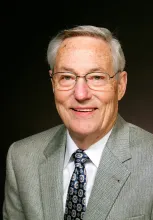
At the time of his retirement in 2016, Roy Holladay was serving the Operation Manager for Ministerial and Member Services of the United Church of God. Mr. and Mrs. Holladay have served in Pittsburgh, Akron, Toledo, Wheeling, Charleston, Uniontown, San Antonio, Austin, Corpus Christi, Uvalde, the Rio Grand Valley, Richmond, Norfolk, Arlington, Hinsdale, Chicago North, St. Petersburg, New Port Richey, Fort Myers, Miami, West Palm Beach, Big Sandy, Texarkana, Chattanooga and Rome congregations.
Roy Holladay was instrumental in the founding of the United Church of God, serving on the transitional board and later on the Council of Elders for nine years (acting as chairman for four-plus years). Mr. Holladay was the United Church of God president for three years (May 2002-July 2005). Over the years he was an instructor at Ambassador Bible College and was a festival coordinator for nine years.
