
Roy Holladay
This transcript was generated by AI and may contain errors. It is provided to assist those who may not be able to listen to the message.
We know that this is one of the most insightful times of the year, something that we look forward to. I know that all of us have been thinking about, studying, praying, asking God to be with us, show us what we need to be doing. Have you ever stopped to think what was going through God's mind at creation when He created the physical universe? God's thoughts were on His plan, His purpose.
God doesn't do anything without a purpose. He doesn't erect a building and say, Oh, why did I do this? Now, there's purpose behind it. He started a physical creation with the idea of offering salvation to all human beings who were going to be created and who would live. Let's notice in Ephesians 3, beginning in verse 8, where this is commented on. It says to me, Paul talking here, who am less than the least of the saints, this grace was given that I should preach among the Gentiles the unsearchable riches of Christ, and to make all to see what is the fellowship of the mystery which from the beginning of the ages has been hidden in God, who created all things through Jesus Christ.
So there is a mystery. The word mystery here means hidden truth. There's something that's been hidden from mankind, but God has revealed to His saints to the intent that now the manifold wisdom of God may be made known by the Church, to the principalities and powers in the heavenly places. So the angels are truly beginning to see and catch on what God is doing, what He's planned.
Notice, according to the eternal purpose which He accomplished in Christ Jesus, our Lord. So there was a purpose that was fulfilled when Christ sacrificed Himself, so in whom we have boldness and access with confidence through faith in Him. So we find that God was going to offer salvation, and the only way that salvation was going to be accomplished was that there had to be a sacrifice for the sins of mankind.
You might remember in Revelation 13, verse 8, where it states that all who dwell on the earth will worship Him, whose names have not been written in the book of life of the Lamb, slain from the foundation of the world. Jesus Christ was slain from the foundation of the world. God knew that Adam and Eve could sin. I mean, what was the odds that they would go through life without sinning? They would sin, and He provided a sacrifice. And so we find that in the plan of God, that God established both He and the Word discussed it, and the Word was willing to come to this earth, to invest Himself of His glory, His divinity on the God plane, come down and to be a human being.
The word slain here means to kill, to slay, to slaughter, to butcher, to put to death, generally by violence. And so in the plan of God, the Lamb was slain from the foundation of the world. That was always a possibility from creation. Now, look at the events of history leading up to the Christ coming to the earth. Now, we know that this was something that God planned, devised somewhere back in eternity. But then God created mankind, Adam and Eve.
They were placed on the earth. And in God's plan, it was going to be approximately 4,000 years. And then the Word would come to the earth to die for the sins of mankind.
So just stop and think what happened during that 4,000-year period. We find there was a rebellion of Adam and Eve. And then mankind, for 1,656 years prior to the Flood, becoming totally depraved. And you read in the book of Genesis 6 that man had become so depraved in his outlook that God had to destroy mankind and start all over. Shortly thereafter, you had Babylon, you had Nimrod and Semiramis, you had a false religious system, false economic system, false philosophical educational system that arose out of Babylon.
Then God began to call Abraham, Isaac, and Jacob, began to work through a certain nation, a certain people, a certain tribe, if you want to call them that. And God then chose Israel as a nation that he would work through. And God was going to reveal his way of life through them. Well, they rebelled, eventually ended up in captivity. We know that the ten tribes became the lost ten tribes. And Judah went into captivity. They came back out, and they resettled in the Promised Land. There were four world-ruling empires that arose, plus the Assyrian Empire.
And among the scene of all of this transpiring and taking place, the time came when the Father looked at the Word and said, Now's the time. Now's the time. We're going to have to work this out for you to come to the earth. And however God did that, to take the life source from the Word, place it in a woman and an egg, and you had God in the flesh.
Emmanuel, God with us. After nine months, he was born. He grew up as a child at age 12. He confounded the scholars, the priests, the scribes, the lawyers, those who thought they knew it all. He was so well versed in the Scriptures that he could sit there for three days and talk to them and amaze them at his understanding. Now we know that he came to the earth with a purpose. Again, God does not do anything without a purpose. Back here in Philippians 2, verse 5, we read, Let this mind, this attitude, this approach be a new that was also in Christ Jesus, who being in the form of God did not consider it robbery to be equal with God.
As we read in John 1, 1, In the beginning was the Word, the Word was with God, the Word was God. And so he was with God, he was God. He was from the very beginning, he was co-equal, co-existent. But, it says here in verse 7, He made Himself of no reputation, taking the form of a bondservant, of a human being, and coming in the likeness of men. Now, you just stop and think that here He was, a glorified Spirit being who had always existed, with all power, Spirit body, full of glory, fantastic mind, and is willing to come to this earth and dwell in human body, and all of the limitations of the human body.
And being found in appearance as a man, He humbled Himself and became obedient, obedient to what? Obedient to the point of death. He and the Father had created the plan, devised the plan, thought the plan out, realized all of the implications of the plan and what it was going to mean. And so, He came willingly, and He was willing to do so.
He became obedient to the point of death, even the death of the cross. And therefore, God has also highly exalted Him. He's been resurrected, given Him the name, which is above every name. And that means He's been given an office responsibility above all. So Jesus Christ willingly gave Himself as a sacrifice. As we partake of the Passover, and we will all be doing this tomorrow night, we need to be reminded and be aware of the price that was paid for our sins. What Jesus Christ was willing to do, what the Father was willing to do.
And the editorial that I wrote for the A News this week, I covered that. That's one of those things I found when I got out to the home office I'm supposed to do every week, is write something. And so, there's always generally a lot of news. I've tried to concentrate and focus more on a Biblical principle or something of that nature. And so, I covered that this week. If we're not careful, and this is true of all of us, we can begin to take Christ's sacrifice for granted.
And yet, it is something that God reminds us every year. We don't keep the Passover every five years, every ten years, once in a lifetime. We do it every year as a reminder to us of what God has done. Christ was made subject to pain and suffering, the one thing that is common to all humans. When He became God in the flesh, then He became subject to whatever the human body could be subjected to.
You stop and think of the most painful experience you've ever had. Perhaps it was a burn, a broken bone, a wreck, childbirth. Half of us here can identify with that. The other half don't. It could have been an operation. You think of going through this. For myself, it was probably the time that I roasted my hand. I poured a skillet full of burning grease over the top of my hand and just sort of fried it.
But we've all gone through things where we've hurt, we've broken something, we've hurt, people suffer from cancer, from illness, from kidney stones, from war, from starvation. You can go on and on with the litany of problems that human beings go through. Christ suffered more than any man has ever suffered. Let's notice in the book of Acts, Acts 3 and verse 14, Acts chapter 3, and we will read here beginning in verse 14.
His name and through faith in His name has made this man strong whom you see and know. Yes, the faith which comes through Him has given Him this perfect soundness in the presence of you all. Yet now, brethren, I know that you did it in ignorance, as did also your rulers, because those things which God foretold by the mouth of His prophets, Christ's sacrifice was foretold ahead of time, that the Christ would suffer He has fulfilled. Christ said He came to fulfill everything that was written in the law.
So, that Christ would suffer, you find that He has fulfilled. Isaiah 53 is one of the main scriptures. Let's just go back to Isaiah 53. We won't comment on that at this time, but we can certainly read through two or three verses here. Let's pick the story up in verse 3. Isaiah 53, beginning in verse 3, talking about Christ, here's what one of the prophets, the prophet Isaiah, was inspired to write, and he was inspired to write this by the one who was going to come and give his life, the God of the Old Testament.
He is despised and rejected by men. A man of sorrows, and the word sorrow here means pain. So, he was a man who suffered pain, acquainted with grief or with sickness, and we hid as it were our faces from him. He was despised, and we did not esteem him. Surely he is born our griefs, our sicknesses, and he's carried our sorrows, our pains. We did. We esteemed him, stricken, cemented by God and afflicted. And he was wounded for our transgressions, meaning pierced through.
He was bruised for our iniquities. The word means crushed for our iniquities. The chastisement for our peace was upon him, and by his stripes we are healed. By the beating, the stripes, he went through. And all we like sheep have gone astray. We've turned every one to his own way, and the Lord has laid on him the iniquity of us all. Christ suffered for us all. His sacrifice is something that all of us should take personally. It is something that if there was not another human being around, he would have had to die for you. So it's our sins that caused Jesus Christ to die. Let's take a look today at what Christ had to go through, what he went through, what he knew he was going to have to go through.
You have a night of the Passover, and there are all kinds of scriptures that we could read on this, but I want you to notice the night of the Passover as Christ ate a meal with his disciples, ate what would be commonly called the Old Testament Passover of the Lamb in Mark 14 and verse 22.
He changed the symbols that evening. He changed the symbols. And as they were eating, Jesus took bread, blessed and broke it, and gave it to them, saying, Take, eat. This is my body. Now he changed the symbols, and he said, This bread, this unleavened bread here that I'm breaking and I'm giving to you, symbolizes something.
It symbolizes my broken body. So he knew that his body was going to be beaten, scourged and broken. And he took the cup, and when he had given thanks, he gave it to them, and they drank from it. And he said to them, This is my blood of the new covenant, which is shed for many. So again, the wine symbolized his shed blood. So Jesus Christ changed the symbols because he knew what he was going to have to go through.
He knew he was going to shed his blood. He knew he was going to be beaten. The closer to death you come, the harder it is to deal with it in many cases. What if you knew, again, you were going to walk out of this building?
It had been prophesied that you would walk out of this building, and you were going to be grabbed by an angry mob, taken out here and kicked and beaten. The other day in Detroit, you might have seen the video of it, a man was driving down the street. There were these young individuals standing there, and they would jump out in front of a car and back, or they would stick a leg out and back.
One of them got hit, and this white man stopped. And as a result, a mob appeared, about 20 people, and they kicked and they beat him to an inch of his life. It was only last night or this morning that he had actually recovered consciousness and started talking.
But here was a situation where if you knew that was going to happen to you, would you want to walk out that door? Would you like to go out some other way, or hide, or do something different? But Christ came to the earth to die for our sins. That was his major reason for coming. Yes, he had to show and prove that he could live without sinning, but he came to die for our sins. From an early age, he knew he was going to die.
When the full weight of that was going to happen to him, really hit him. I want you to notice how Christ prayed over Luke chapter 22 and verse 39. Luke 22 verse 39. Jesus Christ kept the Passover with his disciples, changed the symbols, and then, coming out, he went to the Mount of Balaise, as he was accustomed, and his disciples also followed him. When he came to the place, he said to them, Pray that you may not enter into temptation.
He was withdrawn from them without a stone's throw, and he knelt down to pray, saying, Father, if it is your will, take this cup away. Remove it. Just let me die. I don't want to necessarily go through all of this horrible suffering. Take the cup away from me. Nevertheless, not my will, not what I want, but yours being done. Then an angel appeared to him from heaven, strengthened him, and, being in agony, he prayed more earnestly. Then his sweat became like great drops of blood falling down to the ground. His perspiration, sweat, became like blood.
He began to bleed through his pores. Now, this is a medical condition. It is called haematidrosis. It is generally something that, when a person is under great stress, the tiny capillaries and sweat glands can break. They produce weakness and shock in an individual. It was here that Jesus Christ agonized in prayer over what was to occur. He knew what was going to happen to him.
It is significant that this is the only place in the King James Version where the word agony is mentioned. The Greek word for agony means to engage in combat.
In other words, if you were a gladiator and somebody is trying to kill you, you might be frightened, but you engage in combat. Jesus agonized over what he was going through, feeling that he knew that he was at the point, the junction in time, when he was going to die. But Christ said, Father, not my will but yours be done. I want you to notice, even though he was the second member of the God family, he submitted to the Father, not my will, he said, yours be done.
Strong's expanded lexicon has this to say about this word. It means a struggle for victory. It's used in gymnastics, gymnastic exercising, wrestling, of severe mental struggles, emotional agony, and anguish. The medical term, again, has been seen in patients who have experienced extreme stress or shock to their systems. The capillaries around the sweat pores become fragile, leak blood into the sweat.
The case history of a young girl back in World War I, I found an example of, developed this condition after a gas explosion occurred in the house next door. And when there were explosions and fighting and this type of thing going on, she would start leaking blood out of her body. Another report mentions a nun who was threatened with death by swords from enemy soldiers, and she was so terrified that she bled from every part of her body and died of hemorrhaging in the very sight of her enemies because of this. So there have been documented cases of where people have gone through such terrible stress that the body breaks down, and in this particular case, the capillaries break and a person begins to perspire through and sweat blood through their pores. Now back in Luke 22 again, in verse 47, I want you to notice that Jesus Christ prayed three times to his Father. God strengthened him. He asked that if it's possible that this cup pass. God said no. And so Jesus Christ rose up, and beginning here in verse 47, you find that he was arrested that evening. And while he was still speaking, behold the multitude, and he who was called Judas, one of the twelve, went before them, drew near to Jesus to kiss him. And Jesus said to him, Judas, are you betraying the Son of Man with a kiss? He knew what he was up to. So he was arrested. Verse 54, having arrested him, they led him and brought him into the high priest's house. But Peter followed at a distance. First of all, they brought him to Annas. Let's notice in chapter 18 of the book of John, John 18. And we'll begin to read in verse 12, John 18, 12. Since then the detachment of troops and the captain of the officers of the Jews arrested him, and they bound him. And they led him away to Annas first, and for he was the father-in-law, Caiapas, who was a high priest that year. Now it was Caiapas who advised the Jews that it was expedient that one man should die for the people. Now verse 19, And the high priest then asked Jesus about his disciples and doctrines, and Jesus answered him. I spoke openly to the world. I always taught in the synagogue, in the temple, where the Jews always meet. And in the secret places, I've said nothing. Why do you ask me? Ask those who've heard me what I said to them. Indeed, they know what I said. They know exactly what I've said. Now going on, when he had said those things, one of the officers who stood by struck Jesus with a palm of his hand, saying, Do you answer the high priest like that? So whether he struck him backhanded or slapped him, and actually, when you look the word up, it can mean a blow with the hand or a blow with the rod. He may have had a rod in his hand to strike Jesus with. In verse 23, Jesus answered him, If I spoke in evil, bear witness of the evil. But if well, why do you strike me? And then, Annas sent him bound Caiapas, a high priest. So now the father-in-law sends him on over to Caiapas. Picking up the story in Mark's account, Mark 14. Let's turn over to Mark 14, verse 53. Mark 14, verse 53. Then they led away Jesus to the high priests, and with him were assembled all the chief priests, and the elders, and the scribes. And Peter followed him a distance right into the courtyard of the high priests and sat with the servants. Verse 55, Now the chief priests and all the council sought testimony against Jesus to put him to death, and found none. And many bore a false witness against him, but their testimony did not agree. So they're just trying to find somebody who would say something, you know, that this man did such and such that they could condemn him.
Then some rose up and bore a false witness against him, saying, we heard him say, I'll destroy this temple made with hands, and within three days I'll build another one made without hands. But neither did their testimony agree. And the high priest stood up in the midst and asked Jesus, do you answer nothing? What is it that these men testify against you? And he kept silent and answered nothing against the high priest, asking him, saying, are you the Christ, the son of the blessed? And Jesus said, I am, and you will see the son of man sitting at the right hand of the power, coming with the clouds of heaven. Now, Christ knew when he said that, that was signing his death warrant, because for the Sanhedrin and the Jews to claim to be the son of God, they considered blaspheme. And then the high priest tore his clothes, ripped them, and said, what further need do we have of witnesses? You've heard the blaspheme. What do you think? And they all condemned him to be delivered to death. And then some began to spit on him, and to blindfold him, and to beat him, and to say to him, prophesy. And the officers struck him with the palms of their hands. So notice, Christ had to stand there with all of these false accusations being brought against him. Ever have somebody stand out and just outright lie about you? Well, those type of things happen, and this happened here. All these accusers coming and accusing him. Then they spit in his face. Spitting is one of the most humiliating things that a person can do to another individual. So they spit. They blindfolded him, and somebody would hit him. And they'd say, okay, who hit you? You know, prophesy. If you're God, you tell us. And so then they would smack him around, and one would hit him, and knock him over this way, and somebody else would hit him again, and knock him back. Or they would hit him with rods. Isaiah 50, verse 6, I'll just refer to this, describes what happened here also. I gave my back to those who struck me, and my cheeks to those who pluck out the beard. I did not hide my face from shame and spitting. So Isaiah 50, verse 6, describes what took place. That not only did they spit in his face, but they grabbed part of his beard, and they would pluck the hair out. And so this began a night of torture, of torment, of beating, of suffering that Jesus Christ had to go through. He was formally condemned by the Sanhedrin, and then Christ was sent to Pilate, who sent him to Herod, who sent him back to Pilate. Let's go over to Luke 23. Luke 23.
You'll find that he was condemned here at the end of chapter 22 of the book of Luke. Sentence, and in verse 1 here, then the whole multitude of them arose and led him to Pilate. And they began to accuse him, saying, we found this fellow perverting the nation and forbidding to pay taxes to Caesar, saying that he himself is Christ, a king. And so you find that Jesus Christ, here early in the morning, they had arrested him somewhere around midnight, around that period of time, hauled him off, interrogated him, tried to find false witnesses, beat and spit on him, made fun of him, ridiculed him. And then in the daylight, they bring him to Pilate, who sent him to Herod. Herod was looking for some miracle or something to take place. And that didn't happen. He sent him back to Pilate. And Jesus Christ had been battered. He had been bruised. He was dehydrated. He was exhausted from a sleepless night. And then you find, turn over here to John 19, John chapter 19. If Pilate investigates Christ, he asks him, are you the Christ? And Christ says, yes, I am. And so Pilate took Jesus and scourged him.
Now, it's interesting when you read about scourging here, there was one occasion when the Apostle Paul was about to be scourged. You might remember. They took him. They pulled his tunic off. And they were just getting ready to scourge him. The account says to find out the veracity of these things. He had been accused of certain things. So in order to find out the truth, they were going to scourge him. And Paul said, wait a minute, is it lawful to scourge a Roman citizen without a trial? And Roman citizens had great privileges. And he was a Roman citizen. So here Jesus Christ, Pilate took Jesus and scourged him. And the soldiers twisted a crown of thorns, put it on his head, and they put on him a purple robe. And they said, hail, king of the Jews. And they struck him with their hands. And then notice, Pilate then went out again and said to them, behold, I am bringing him out to you that you may know that I find no fault with him.
Now what a statement. He goes through all of this beating, all of this scourging, and he says, I find no fault with him. What was the scourging like in the first century? The Romans had perfected this. They hadn't invented it, but they had carried it out and perfected it. Generally, a scourging began with stripping a person of their clothes. Their hands were tied to a post or over their head like this. And there was a man who was called a lyctor, a Roman lyctor, who was trained in the use of a whip. Now this was not what we would call, you've all seen bullwhips. Maybe you had them as a child where you flick a whip. No, this is more like a cat of nine tails, where there were anywhere between nine and eighteen leather straps. Each one had either glass, ivory, metal, nails, anything you can think of at the tip of it. And the whip was called a flagrum. And the lyctor would take that and he would, he was skilled in taking it and wrapping it around an individual and jerking it to where it would cut the skin, lacerate the body. Normally, they would beat a person to where they were just a bloody pulp. The first thing that the whip would do would cut through the skin. And then it would expose the meat, the ligaments, and eventually the bones. You would have the subcutaneous tissues and deposits that would be cut and ripped. Muscle would be ripped. Arteries would be cut. And you find that a person would begin to bleed, some profusely. Skin would hang in ribbons. A person would be an unrecognizable mass of tissue. Now, there have been a number of articles written about scourging. There was an article that appeared in the biblical archaeological book.
I won't say book, but it was not brochure, but whatever they called them.
But it talks about the medical aspects of a scourgy. It says, as the Roman soldiers repeatedly struck the victims back with full force, the iron ball would cause deep contusions. The leather thongs and cheap bones would cut into the skin and subcutaneous tissue. Then, as the flogging continued, the lacerations would tear into the underlying skeletal muscles, producing quivering ribbons of bleeding, flesh, pain, and blood lost generally, set the sages for circulatory shock. The extent of blood lost may well have determined how long the victim would survive on the cross, how long they could live after that. Notice what Isaiah 53 says. Or Isaiah 52, I should say, verse 13. Isaiah 52, 13. This is one of those what the prophets said ahead of time that Christ fulfilled.
Chapter 52, beginning here in verse 13. Behold, my servant shall deal prudently. He shall be exalted and extolled and be very high. And just as many were astonished at you, so that his visage was marred more than any man, and his form more than the sons of man. So it says that his visage was marred more than any man, to the point that he did not even look like a man. Let me read this out of two or three modern translations. The ESV translation says, as many were astonished at you, verse 14, his appearance was so marred beyond human resemblance, or semblance, and his form beyond that of the children of mankind. The net translation. Just as many were horrified by the sight of you, he was so disfigured that he no longer looked like a man. The NIV. Just as there were many who were appalled at him, his appearance was so disfigured beyond that of any human being, and his form marred beyond human likeness. And so you would describe the beating that he went through. When you come back over to chapter 53 here, and you pick up the story again in verse 4, this has a little more meaning when you understand that this is describing what Christ went through at that time. Surely he has borne our griefs, our pains. He's carried our sorrows, and we esteem him stricken, smitten by God and afflicted. He was wounded for our transgressions. He was bruised for our iniquities. And notice at the end of verse 5, By his stripes we are healed. By the beating that he went through, that you and I can be healed.
So this is what Jesus Christ went through for us. And this is what was prophesied, and Christ went through this. In John 19, let's back up to John again. John 19 verse 2, I read this earlier. They put a crown of thorns on his head. Ever been stuck by a thorn? It's very painful. You make a crown of thorns, where you've got thorns going in all directions, and you take a Roman soldier, and he just plops that down very heavily on Christ's head. He had to be excruciating pain from that. Then in verse 3, Pilate let him out and said, I don't find any fault with him. Verse 5, then Jesus came out, wearing the crown of thorns, purple robe. Pilate said to them, Behold, the man. And they cried out, Crucify him! Crucify him! And he turned them over to the Jews, and they went out, and they crucified him, or had the soldiers that did the actual crucifixion. Verse 15, they cried out, Away with him! Away with him! Crucify him! And Pilate said to them, Shall I crucify your king? The chief priests answered, We have no king but Caesar. And of course, that's a lie. Then he delivered him to them, to be crucified. So they took Jesus, and led him away. And he, bearing his cross, went out to a place called the place of a skull, which is called in Hebrew Golgotha, where they crucified him and two others with him, and on the other side of Jesus, or either on others, and one on either side in Jesus in the center. So Christ had to drag, generally, not the whole cross, but the cross beam that they would put on a state. Let me just read here from another source. It was customary for the condemned man to carry his own cross from the flogging posts to the site of the crucifixion outside the city walls. He was usually naked, unless this was prohibited by a local custom. Since the weight of the entire cross was probably well over 300 pounds, only the cross bar was normally carried, and it generally weighed 75 to 125 pounds. It would be placed across the nap of the neck, a person's hands tied on it, and then they were expected to carry that. And then, when they got up to where they were to be crucified, they would take that down, throw the person on his back, nail that to the stake, or to the pole, pick the person up, stick them on it, and then nail them to it. The Assyrians, Phoenicians, Persians had practiced crucifixion. The Greeks did. The Romans adopted it as a punishment in the first century, and they had several different ways of crucifying people, upside down, this way, over the head, just a single pole, an X, like on a wheel. They did it in different ways. Initially, it was employed as a punishment, later on as a form of execution. The revolt of Spartacus in 71 AD, there were 6,000 rebels crucified. They crucified 6,000 of them. In 7 AD, 2,000 Jews were crucified. When Titus was fighting with the Jews in the siege of Jerusalem, the Roman troops crucified 500 a day outside of the walls of Jerusalem to try to demoralize the people inside of the walls. They did that for several months.
In the biblical archaeological review, that's what I was trying to think of, you find that there was an article written that gave information concerning the fact that they have found archaeological evidence of crucifixion. In this particular case, a 7.5-inch-long nail was driven into a knot. They were not able to pull the nail out of the person who died.
So what they actually did, they cut his feet off, amputated his feet, and they left the board with the nail on it, and he was buried. And so they basically have been able to find that, and it's a, you want to call it a perfect description of what a person went through. They generally used a square nail through the wrist. The body of an individual, when you drive a nail through the hand, cannot hold the weight of the body.
It has to be driven through the wrist, through the corporal area in here. And so basically, it goes through the area where the median nerve of the wrist is, and the metatarsal bones in the feet. And many times, when they would drive a nail through that area, they would hit the nerve, and they'd go right through the nerve, so that there would be great waves of cramps, pain, and suffering that an individual would go through.
A person would normally die of muscular spasms, asphyxiation within two or three hours, unless they did something to keep them from doing that. So sometimes they would put a little seat on the stake. You could try to sit on, but it was pointed. And then they would put something that you might be able to rest a foot on. But every time a person would try to heat themselves up to get a breath, their back would rub up against the pole, the stake, that they were attached to.
And generally, they died of asphyxiation. Because when you sag down, and all your weight is on your muscles and your wrist, you can't breathe. And all you can do is breathe with a diaphragm. You just sort of pant. You can't take a deep breath.
And when you're about to pass out, if you heat yourself up, there's excruciating pain in your legs and your feet. And so, the scourging, as this article goes on to say, prior to the crucifixion served to weaken the condemned man, if blood loss was considerable, it produced an orthostatic hypotension and even a hypovolemic shock when the victim was thrown to the ground on his back. And it goes on to describe that. It describes the wrist, that the wrist was the only place that a nail could be driven through to hold the weight of the body. It would crush or sever rather large, medium nerves in the wrist.
And so, all of this was happening to Jesus Christ. They would take an iron spike, normally cross, many times cross the feet, drive that spike through the ankle bones and through that area. And their nerves, their blood vessels, we all know that in that area. Crucifixion itself was normally a bloodless, apparently bloodless, procedure, but it was the physiological aspects of the crucifixion and the marked interference with breathing and respiration, and that normally a person, again, would die from just simply being asphyxiated, not being able to get their breath.
Or they would come to the point where their body was so much in pain that they would pass out and just hang there and eventually die. So, it goes on in sort of a summary, talking about a crucifixion. Adequate breathing required lifting the body by pushing up on the feet and by flexing the elbows, and adducting the shoulders. However, this maneuver would place the entire weight of the body on the tarsal and would produce searing pain. Furthermore, flexing of the elbows would cause rotation of the wrists about the iron nails and cause fiery pain along the damaged, medium nerve.
Lifting the body would also cause painful scrapes and scourged back again along the rough wood. Muscle cramps and all of this would eventually lead to asphyxiation. And so, you know, we've all read articles, and you can go to most Indians Bible Encyclopedia, and you can find much that is written on this.
A lot of times, a person would simply die of congestive heart failure. Their heart could not put up with what they were going through. Rather than we have to realize that human beings, and their inhumanity to other human beings over the years, have devised all kinds of methods of torturing a person, killing a person. And Jesus Christ came to this earth over 1900 years ago.
Knowing why he came, knowing that at the end of his life, he was going to be faced with the most excruciating death that a human being could go through. And that all of the sins of mankind would be placed upon him, and that he would die for us. Because you see, the law demands when you sin, there is death. The death penalty has been pronounced. Somebody has to die. And Jesus Christ was willing to die for me. He was willing to die for you. He was willing to die for all of us, so that our sins could be forgiven. Let's notice in Psalm 22. Psalm chapter 22 here.
We read a chapter, and we'll begin here in verse 6. You can read through this whole chapter because it describes what Jesus Christ was thinking, what went through his mind at this time, the thoughts that he had. As verse 1 says, My God, my God, why have you forsaken me? Why are you so far from helping me? Then verse 6, But I am a worm and no man, a reproach of men and despised by the people. All those who see me ridicule me. They shoot out the lip, they shake their head, they say, Well, he trusted in the Lord, let him rescue him. Let him deliver him, since he delights in him. They said, Well, if you're the Son of God, you come down from that cross. Now, the very fact that he stayed on that stake proves that he was the Son of God. He came to the earth for that purpose. If he had come down, we would not have a Savior. But he was willing to do what he had planned, what the Father told him. Notice verse 9, but, well, let's drop down here to verse 12. Many bulls have surrounded me, strong bulls of vation have encircled me. They gape at me with their mouths like a raging and roaring lion. I pour out like water, or I am poured out like water, and all my bones are out of joint. My heart is like wax, it is melted within me. My strength is dried up like a potsherd, my tongue clings to my jaws. You brought me to the dust of death, for dogs have surrounded me. The congregation of the wicked, heaven, closed me. They pierced my hands and my feet. I can count all my bones. Christ could look down. He had been beaten to the point where he could look and see his ribs, his leg muscles, his ankle bones. He could see the arm bones exposed. I can see, or count all my bones. They look and they stare at me. They divide my garments among them. And for my clothing they cast lads. But you, O Lord, do not be far from me. O my strength, hasten to help me.
He knew that God was going to resurrect him. You see, when you go into something like this, like Christ did, he knew he was going to die. And the only hope that he had was to know that after three days and three nights, that the Father would bring him back to life again, which he did. And so, brethren, you and I are going to come tomorrow night and take the Passover. And as we do so, we need to reflect on these Scriptures, what a great sacrifice Christ did. But you know, as we go through the Days of Unleavened Bread, let's turn over to Romans 5 to sort of summarize here. Romans 5, verse 8.
As we go through the Days of Unleavened Bread, we have to always remember that Christ did rise from that grave. He died for our sins. He shed his blood. He poured out his blood. A Roman soldier took a spear and rammed it in his side, and he shed his blood so that our sins could be forgiven. He used his blood from his body, from the scourging that he went through. But he was resurrected, and today he lives in us. And it is Christ living in us that makes it possible for us to have eternal life. Notice verse 8. God demonstrated his own love towards us, and while we were still sinners, Christ died for us. Much more than having now been justified by his blood, we are made right with God by his blood, by his sacrifice. We shall be saved from wrath through him. For if when we were enemies, we were reconciled, brought into a right relationship with God, through the death of his Son, much more having been reconciled, we shall be saved. How? By his life. Galatians 2.20. Christ lives in us. So it's Christ living in us through the Spirit of God that will give us eternal life. So, brethren, the Days of Unleavened Bread follows immediately after the Passover. And it pictures the fact that we come out of this world. We can't do that on our own power. It takes the Spirit of God, the power of God. It takes Christ living in us. And so the two blend together, go together, you know, just perfectly. So let's remember as we partake of the Passover. What a great Savior we have, and what a loving Father we have.
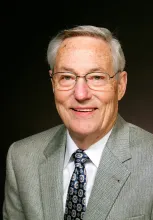
At the time of his retirement in 2016, Roy Holladay was serving the Operation Manager for Ministerial and Member Services of the United Church of God. Mr. and Mrs. Holladay have served in Pittsburgh, Akron, Toledo, Wheeling, Charleston, Uniontown, San Antonio, Austin, Corpus Christi, Uvalde, the Rio Grand Valley, Richmond, Norfolk, Arlington, Hinsdale, Chicago North, St. Petersburg, New Port Richey, Fort Myers, Miami, West Palm Beach, Big Sandy, Texarkana, Chattanooga and Rome congregations.
Roy Holladay was instrumental in the founding of the United Church of God, serving on the transitional board and later on the Council of Elders for nine years (acting as chairman for four-plus years). Mr. Holladay was the United Church of God president for three years (May 2002-July 2005). Over the years he was an instructor at Ambassador Bible College and was a festival coordinator for nine years.
