


Dan J Miller
People have blamed the devil for their mistakes since Eve ate the forbidden fruit. "The devil made me do it," we say—just like Flip Wilson made famous over forty years ago. But here's the uncomfortable truth: the devil doesn't actually make you do anything. He tempts. He influences. He broadcasts through the power of the air 24/7. But your choice? That's on you.
This message explores what the devil actually is in Scripture—not just one name, but twenty different biblical descriptions: the serpent, the accuser, the father of lies, the god of this world, the prince of the power of the air. Each reveals a different aspect of how he operates. And each points to a crucial reality: Satan's power is real, but his power over you depends on one thing—how close you allow yourself to be to him.
The Day of Atonement is more than just fasting. It's about drawing near to God so that the devil has no ground to stand on. As James puts it: resist the devil, and he will flee. Draw near to God, and he will draw near to you. But it's your choice. You have to do the resisting.
Through the fall of mankind in Genesis, the story of Bart Simpson defending the indefensible, and a tour through the twenty biblical names of Satan, this message cuts through blame-shifting and cultural excuses. It asks: Are you going to own your choices, or are you going to hide behind the same defense Eve used in the Garden? You're not a character in an old comedy routine. You're responsible.
Scripture: Genesis 3, Leviticus 16: 29-31, James 4: 6-8, Romans 1: 20, 1 Peter 5: 8, Revelation 12: 9, Revelation 20: 1-4
Over forty years ago there was a stand up comedian who had a routine in which he blamed the devil for everything that he did wrong. Perhaps some of you remember the comedian Flip Wilson and his infamous statement, The Devil Made Me Do It. Well, we laugh at that remark because people tend to blame others for their own mistakes. And when we come across the scene or some kind of disaster, and we ask a nearby person what happened here, oftentimes the first response is a defensive statement. Oh, I didn't do it. Or perhaps you've heard that from your children. When they spilled the milk or dropped the dish on the floor, immediately they disclaim responsibility, or point the blame at somebody else.
Now in the 1990s, there was an animated television series called The Simpsons, and one of the main characters was a naughty boy named Bart Simpson. And when he was accused of something bad, he had a defensive remark. And he said, I didn't do it, nobody saw me, you can't prove a thing, and I won't do it again. Well, his knee jerk defense really, but gradually, unknowingly, admitted his guilt. Well, today I'm going to cover the subject Who's Responsible for What, but the title of the message is Did the Devil Make Me Do It?
Well, in order to do that, we have to first ask ourselves, who is this devil that people are talking about? Well, today is the Day of Atonement. It's one of the holy days that God uses to depict a step in his plan for salvation of mankind. And we read about the specifics of this particular holy day in Leviticus 16. And starting in verse 29, this shall be a statute forever. How long? Forever. A very long time. In the seventh month, on the tenth day of the month, that would be today, you shall afflict your souls. And as the sermonette said, that means doing without food and water. and continuing on, do no work at all, whether a native of your own country or a stranger who dwells among you.
For on that day the priest shall make atonement for you to cleanse you, that you may be clean from all your sins before the Lord. It's a Sabbath of solemn rest for you, and you shall afflict your souls. And again it repeats, a statute for how long? For ever. But fortunately, we have a high priest who has already made the ultimate sacrifice for us. And now we're able to come before God on this annual holy day, just a few days prior to the Feast of Tabernacles. And at the Feast of Tabernacles is a time of rejoicing and feasting. Feasting and fasting are not alike, except for that letter E. Fast you do without, and feast you do with plenty.
And the Feast of Tabernacles represents that marvelous time under the leadership of Jesus Christ who is returned to earth. But just a few days before this Feast of Tabernacles is this Day of Atonement. A twenty-four-hour period in which God's people all over the world will fast. They won't drink or eat from sunset to sunset. And this day has much to do with becoming close to God, becoming at one with God. I want to turn to a pivotal scripture in James 4. In James 4: 6 we read, but he gives more grace. Therefore, he says, God resists the proud, you might say, arrogant. but gives grace to the humble.
Therefore submit to God, resist the devil, and he will flee from you. Draw near to God, and he will draw near to you. Cleanse your hands, you sinners, and purify your hearts, you double-minded. So there's hope and opportunity to resist the devil, but we must draw close to God to be able to do it. So this focus in on the Day of Atonement out of James 4. Particularly verse 7 about submit to God, resist the devil, and he will flee from you. Now, this means obeying the instructions that God gives us. And second, we're to resist the influence of the devil, and that means resisting the devil himself. And third, we're to draw close to God, who in turn can draw close to us.
It's problematic if we allow ourselves to be close to the devil and still expect God to be close to us. So, with these verses in mind, in James 4, verses 7 and 8, we have to ask ourselves this question. Who is the devil that James is referring to? Well, in today's message I want to go through the devil as recorded in the Scriptures, the Bible, and explore the different aspects of this devil, these characteristics. And we'll see why God wants us to resist this devil and how our resistance causes the devil to stay away from us.
And by staying away from us, we then can draw closer to God and enjoy the kingdom of God as a member of the God family. So let's do a little Bible research. I looked up, and there's almost two dozen characteristics of the devil in the Bible. Maybe more. But there are different names, different attributes for this devil. So I'd like to take some examples in the Old Testament. The first example I came up with, number one, was the description of a serpent in Genesis 3. The first biblical mention of a devil is in Genesis 3, where he is described as a serpent in the Garden of Eden.
And this serpent tempts Adam and Eve into eating the fruit of the tree of knowledge of good and evil, which God has forbidden them to eat thus causing their expulsion from the Garden of Eden. Well, the first direct biblical mention of Satan the devil in Genesis is with the introduction of a deceiver called a serpent. And in Genesis 3, in the first four verses, it starts out, says, The serpent was more cunning than any beast of the field, which the Lord God had made. And he said to the woman, How many serpents have talked to you lately? It's gotta be an uncomfortable thought. But this was everything was all new back then.
And the serpent said, God is indeed, you shall not eat of every tree of the garden. And the woman said to the serpent, We may eat of the fruit of the trees of the garden, but the fruit of the tree which is in the midst of the garden, God said, You shall not eat it, nor shall you touch it, lest you die. Verse 4, and then the serpent said to the woman, and here comes the big lie, you will not surely die. Well, so the woman ate, and later in Genesis 3:13, the Lord God said to the woman, What is this you've done? And the woman said, The serpent deceived me and I ate.
Well, first of all, what the woman said was true. The serpent did deceive her. But secondly, the statement is also an attempt to escape personal responsibility. Hence, ever since then we have this saying, the devil made me do it. Basically, that's what she's saying. But no, the devil doesn't make us do bad things. People make their own decisions and attempt to offload the responsibility for bad choices by blaming someone else. Now, Satan, the devil may have a hand in our decision making, but the reality is we are still personally responsible individually for our decisions.
Even today, when someone wants to depict evil, they use the image of a serpent with fangs and glowing eyes. I recall decades ago in a movie about Indiana Jones and the Temple of Doom in which the depiction of serpents displayed an evil role. In Genesis 3 and verses 14 and 15, God rebuked the serpent and said that the serpent would put enmity between the seed of the woman, ultimately that meant Jesus the Christ, and the seed of the serpent. Now, Genesis 3 is a prophecy of how God is going to deal with that serpent on the seed of the offspring of the woman or Jesus Christ was prophesied to remove the serpent.
Well, that also is a depiction of today, on the Day of Atonement. But how do we know that this particular serpent in Genesis is the same as the devil? And, as we heard in the sermonette, let's flip to Revelation 12: 9. In Revelation 12: 9, so the great dragon was cast out, that serpent of old called the devil and Satan who deceives the whole world? And he was cast to the earth, and his angels were cast out with him. This verse ties together three descriptions of the personage that is the devil.
The Bible gives us at least twenty different terms or characteristics, and perhaps more, that describe the devil. As we better come to understand what we are up against, we're better equipped to resist that devil and draw near to God. In Romans 1: 20, the writer describes it this way: for since the creation of the world His invisible attributes are clearly seen, being understood by the things that are made, even his eternal power and Godhead, so that they are without excuse. In other words, the truth is known through us, to us, through the Bible.
None of us can rightfully say the devil made me do it. We each must take personal responsibility for their own actions. Now this Day of Atonement is a marvelous opportunity to set aside worldly pursuits and focus on becoming one with God. And we're delighted that this day pictures the chaining of Satan for a thousand years. With the knowledge that God has given us about his plan for the salvation of mankind, and the hope that lies within us then is great.
So let's call upon God to give us strength for the remainder of this fast day, the Day of Atonement, that we might draw close to God, be the kind of Christians that God wants us to be. And in only a few days we will rejoice together, as we keep the Feast of Tabernacles, in anticipation of the coming Kingdom of God.
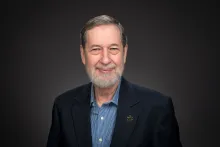
Tim Martens is the pastor of the Northwest Arkansas and Springfield Missouri congregations. Prior to becoming a pastor, he has had successful careers in business and education as well as being a newspaper columnist.
