
Roy Holladay
This transcript was generated by AI and may contain errors. It is provided to assist those who may not be able to listen to the message.
Well, in Revelation 12.9, the Scriptures are all very familiar with. Satan is called that great dragon who deceives the whole world. So what else is he called besides that? And by what means does he deceive the whole world? How does he do that? How does he get away with deceiving the whole world? Because we know the whole world has been deceived. But how does he do that? Let's turn to John 8 here in my introduction.
I want to start with a scripture there in John 8. If you have a red letter Bible, these are the words of Jesus Christ. John 8, beginning in verse 44, here is Christ. He's talking to the disciples. He's talking about Satan, the devil. And he's talking to the Pharisees. He's talking to the Pharisees. And he's addressing these comments to the Pharisees. And he tells them, You are of your father the devil, and the desires of your father you want to do. And then he said, referring to the one who was influencing them, to Satan, he said, He was a murderer from the beginning.
So he's referring to Satan there when Christ says he was a murderer from the beginning. So how was Satan a murderer from the beginning? Who did he murder? When would the beginning be? Well, the beginning of our probability would be back at the time of the Garden of Eden, just after that time, in the first few chapters of Genesis. So who then did Satan murder back at that time, the first few chapters of Genesis, the time of the Garden of Eden, just after the time of the Garden of Eden?
Well, there are only actually probably three answers to that question. And I'm going to take the last one first, the last of the three murders that took place, because there were three murders that took place at that time, and all three basically were influenced or perpetrated by Satan. Two of them took place actually in the Garden of Eden. One took place a few years later outside of the Garden of Eden after they had been banished. A few years later after they had two sons, Cain and Abel. So it was one of the murders that took place, as it was perpetrated by Satan back at that time.
Well, one murder was Cain murdering his brother Abel. After Abel and after Abony, their parents had left the Garden of Eden, had been banned. And a few years later, when they grew up to be young men, Cain murdered his brother Abel, undoubtedly influenced by Satan. Satan undoubtedly influenced that murder, influenced the mind of Cain. His influence of mind of Cain probably be filled with jealousy over his brother, anger, and then into hatred, and then into rage toward his brother. Which shows us how important it is that we all control our emotions, not our emotions good to the point where anger returns to rage, which then turns to hatred, and even murdering somebody in our mind, having that kind of hatred towards them.
But what was the second murder then that was perpetrated by Satan back at that time? And this second murder actually took place in the Garden of Eden. There was even more serious than Cain murdering Abel. The second murder was enticing Eve to eat the fruit of the knowledge of the tree of good and evil, contrary to the direct command of God.
God said, don't eat that tree, but they did. Eve did, and enticed her husband to eat with her. In other words, the second murder was enticing Eve and all mankind to sin, because that was going contrary to God's direct instructions, which is sin. And the wages of sin is what? The wages of sin is death. Romans 6, 23. Where as Paul wrote to the Church of Rome, he said, Through one man sin entered the world, and death threw sin, and thus death spread to all men, because all have sinned.
Romans 6, verse 12. So a second murder then, perpetrated by Satan, that actually took place in the Garden of Eden, was enticing mankind to sin, thus bringing the death penalty upon all mankind. But then we put a third murder then, that was actually also perpetrated by Satan in the Garden of Eden. And how could it be more serious? And this third one is actually more serious than either the first two. How could it be more serious than those two we just mentioned?
Let's read all of John 8, 44, this time, to see what the third murder was, which actually took place way back in the Garden of Eden itself. Verse 44 again, you, Christ talking Pharisees, you are of your Father the Devil, and the jires of your Father you want to do. He was a murderer from the beginning. And then it adds, and Christ says, he does not stand in the truth, because there is no truth in him. And when he speaks a lie, he speaks from his own resources, for he is a liar, and the father, or the instigator, originator of lies.
So what then was the third murder of the perpetrator of Satan? Well, the third murder perpetrated by Satan back there was the murder. He murdered the truth. He killed the truth. Now, how did Satan murder or kill the truth? By perpetrating and getting mankind to believe a lie. Why is that the most serious of these three murders that took place? John 8, verse 45, where Christ adds this. John 8, verse 45, But because I tell the truth, you do not believe me. So why is a lie the most serious of these three murders?
Because a lie can be so embedded in people's minds that they can't see the truth that stares them square in the face. It's so, of course, they might have heard it for so long. There's so many generations, and it's part of their thinking, you just can't see past it. This has got to be right, because my parents believed it, and my grandparents believed it. Everybody believes it. They think it's the truth, even though it's a lie. So with that background in mind, what is the greatest lie, and the greatest, and the most universal, and most damaging lie ever perpetrated by Satan upon mankind?
See, what one doctrine do all religions have in common? Hindus, Buddhists, Muslims, and most Christians, both Protestant and Catholic, and even many Jews? What doctrine do they share in common? Many of them. Almost all of them, I should say. What one doctrine does allow Satan to deceive the whole world? And what one doctrine does deeply embed in the minds of all who have a belief in God or in the higher power?
They still have this false doctrine and belief which they can't get past. What one doctrine does link to virtually every religion on the face of the earth? That doctrine and that lie is that man has an immortal soul. Almost everybody believes that. That's been a lie proved right or saved from the very beginning. Today, then, I want to examine with all of us the false doctrine of the immortality of the soul. Where and when did it originate? Has this false belief had any adverse consequences on mankind over the centuries?
Have other false doctrines stemmed from this doctrine of the immortality of the soul? How does it tie into the nature of man and to mankind's ultimate destiny? How does it affect that? What does the Bible really teach? That's what we want to cover today. My title is, Does Man Have an Immortal Soul?
Does man have an immortal soul? So first, then, where and when did it originate? Let's go back to Genesis 3 at the very beginning. At that time in the Garden of Eden. Genesis 3, verse 1, Now the serpent was more cunning than any beast of the field which the Lord God had made. Of course, this serpent here is symbolic of Satan the devil. And he said to the woman, to Eve, Has God indeed said, You shall not eat or eat the garden?
And the woman said to the serpent, While we may eat of the fruit of the trees of the garden, But of the fruit of the tree which is in the midst of the garden, God has said, You shall not eat it, nor shall you touch it, lest you die. Notice Satan's response. Then the serpent said to the woman, Don't believe God. You're not going to die. You will not surely die.
And that's the Satanist saying, I need you not to worry. You can't die. And if you tie in the doctrine of the soul, it says, Why life? You've got a mortal soul. You didn't say those words, but that's what the implication is. You're never going to die. You've got an immortal soul. When you die, your soul is going to keep on living. In contrast to that, what did God tell them? Genesis 2, verse 7. The Lord God formed the man of the just the ground, and breathed into his nostrils the breath of life, and man became a living being.
Then the Lord God planted a garden eastward and Eden, and there he put the man whom he had formed. And out of the ground the Lord God made every tree grow, it is pleasant to the sight and good for food.
The tree of life was also in the midst of the garden, and the tree of the knowledge of good and evil. Dropping down to verse 15. Then the Lord God took the man and put him in the garden of Eden to tend and keep it. And the Lord God commanded the man, saying, of every tree of the garden you can freely eat, but of a tree of the knowledge of good and evil, you shall not eat. For in a day that you eat of it, you shall surely die. You shall surely die. Satan said, you shall not surely die.
And God said, you shall surely die. If you eat of the tree of the knowledge of good and evil, basically what that means is deciding for yourself what is good and what is evil. But deciding for yourself what's right and wrong, whether it's listening to God and obeying God and following God's laws and directions.
So when God said, however, here, and this question has come up with some, when God said the day that you eat of it, you shall surely die, did God mean by that that they would die on that very day? Or did God mean they would then be heading down the wrong road that eventually would lead to death? Well, two scriptures, many scriptures, you can use to show what he meant, which one he meant. But let's just put two of them, one in the Old Testament, one of the new. First, let's go to Proverbs 14.12, which tells us what it didn't mean that you were going to die on that very day.
Proverbs 14.12, and there's a couple of scriptures saying this very same thing, but Proverbs 14.12 says there is a way that seems right to a man. But it's end, the end. If you keep following that way, and you don't repent and change that way, the end is the way of death.
It's going to lead to death. It's going to lead to death. So it didn't mean that they were going to die at the very moment that they did that, but if they didn't repent and change the course of their life, then they were going to eventually die. And he's talking about eternal death here, but you don't repent of it.
The other one in the New Testament is in Romans 6. Let's turn there. Romans 6 is written, of course, by the Apostle Paul to the Church of Rome.
Just two verses here. One in particular is verse 21. Romans 6 verse 21, where Paul wrote, What fruit did you then have then in the things of which you were now ashamed? You know, you're looking back on your life, and you did some things that you're now ashamed of, because they were contrary to God, and they didn't bring good results.
And then he says, For the end of those things, when you were living that way, contrary to God, by deciding for yourself what was right and wrong, and living in any way you wanted, the end of those things is death. That's going to lead to death unless you change the course of your life.
Verse 23, For the wages of sin is death, but the gift of God is eternal life in Christ Jesus our Lord. So the New Testament is consistent with the Old Testament.
God in Genesis 2.17 did not mean they would die that very day, but they would be going down a road that, unless they turned from that road, it would lead to death.
But very few religions believe that.
Instead, they believe that man has an immortal soul which cannot die, and that death is simply a separation of the soul from the body. And the soul goes on living and has consciousness, apart from the body when the body dies.
Now, where does the soul supposedly go when it dies? Well, they believe that supposedly it goes to heaven or to hell.
Or, in the case of Catholicism, perhaps to purgatory.
Although nearly all souls go to heaven, don't they? You don't hear too many being preached that they're going to hell. They almost all go to heaven. I don't think I've ever heard a sermon or a funeral marsh say, this guy's soul is going to hell. I mean, you're going to purgatory. They all go to heaven, somehow, regardless.
And when you think about that, you have to think about, let's see, Aunt Jane, she's up there in heaven.
She's got consciousness.
She's looking down.
Oh, yeah, look at Steve Shafel. Look what he's doing.
I'm not too comfortable with that thought.
But that's what many think and believe in the articulated time. You know, Aunt Jane, she's looking down on you or whatever.
But where and when did the false document of the immortality of the soul originate? It originated in the Garden of Eden when God, excuse me, when Satan told the first lie saying, you will not surely die. You're not going to die if you're about dying. You're going to get a mortal soul, in essence, and it's going to go on living forever. Now, has that false belief had any consequences on mankind over the centuries?
A nearly universal Christian belief that has been derived from Satan, Satan's lie, that you will not surely die, is the belief that individuals only need, and this is almost a universal belief in Christianity, that all you have to do is accept the name of Jesus Christ and you shall be saved.
Now, you do have to do that. You have to accept His name, and you have to understand what that means. But is that all there is to it?
Any of them try to, because I've experienced this, many try to get people then, they figure, well, I just got to get them to confess Jesus Christ as their Savior before they die, make sure they're not going to go to hell.
They can go to heaven when they die. I had a niece who was that way, and my mom was not going to church. My mom and dad, they both lived in God. They both lived very Christian lives in his answers. They didn't understand the truth, but they lived virtuous lives, and they were faithful to one another over 50 years of marriage, and they believed in godly values. But they never were religious in the sense that they went to church every day. They went to church maybe a couple times a year.
But they were my niece. She thought, I got to get my mom before she dies to accept Jesus Christ as their Savior, because I'm afraid she hasn't done that. So she wanted to make sure she, mom was about 98 at the time. She lived to be 99, almost 100. But when she was about 97, or somewhere in her 90s, my niece went to her, and she just had to talk to her, and get her to confess Jesus Christ. Well, mom, just to satisfy my niece, she did.
Well, she didn't think that way. But anyway, my niece said, you had to get somebody to confess the name of Jesus Christ before he died. Otherwise, you might not go to heaven.
So many try to get people to confess that before they die, and to make sure they're going to be saved.
However, millions who die every year, millions die every year, thousands do, haven't even ever believed in Jesus. And there are people around the world that have never even heard of the name of Jesus. What about them?
Have they lost them, because they've never heard of Jesus, never had that opportunity, never had the truth ever preached to them?
That's why we have a lot of people of anxious they want to go around the world and get as many people as they can to confess Jesus before they die, even though they're maybe in who knows tribes or whatever.
Yet Paul wrote, that's contrary to what Paul wrote, because Paul wrote that God, our Savior, desires all men to be saved and to come to the knowledge of the truth. 1 Timothy 2, verses 3 and 4. So if God desires all men to be able to come to the knowledge of the truth and to understand that His Son, Jesus Christ, died for them, and we will accept that and understand that, and have that opportunity to have eternal life, then obviously God has a means and a plan for accomplishing that.
It doesn't depend on mankind getting to somebody before they die to get them to confess the last second.
God has to have a plan.
So the idea that one had to accept Christ in this lifetime in order to be saved was broadened back a long time ago by the Catholic Church during the Middle Ages to mean that one had to accept back then, that the Catholic Colossum was a dominant religion, and basically back then in the Middle Ages the person had to accept all the doctrines and teachings of the Catholic Church. And those who didn't were considered to be heretics. That's the way it was one time hundreds of years ago, which led to the inquisitions, whereby those considered to be heretics and they refused to repent were sometimes sent to prison, sometimes tortured, or sometimes even burned at the stake.
Because they failed to be better to do anything they could to get that person to accept Christ as their Savior before they died than to suffer in hell forever and ever. We better to hurt their body now, torture them or whatever it was to get them to confess that so they could be saved, than to suffer in hell for all eternity.
Thousands died during that period for not regarding, not recanting their beliefs and not accepting all the beliefs of the Catholic Church.
Have other false doctrines stem from the doctrine of the immortality of the soul?
Well, a number of them have. Heaven, the doctrine of Heaven, the doctrine of Hell, the doctrine of the Catholic doctrine of purgatory.
Dr. Ward called, we've got a squirrel back there, and what Dr. Ward called reduction theology. He calls this, he gave a lecture recently, he calls it reduction theology, which is reducing the gospel of Christ to one overall belief that you only have to confess the name of Jesus Christ to be saved. That's reduction civility. Just everything is just that one belief, except Jesus Christ needs to be saved. That's what Dr. Ward called reduction theology.
But how does the doctrine of the immortality of the soul tie into the nature of man and to mankind's ultimate destiny?
You go and do a little bit of research, you realize that there are two views regarding the nature of man, what man actually is.
And what man consists of.
One is called a dualistic view.
The other is called a holistic view, holistic spelled H-O-L-I-S-T-I-C.
Now, nearly all religions, the world over hold to the dualistic view.
They believe in what's called dualism.
That man then is basically a mortal body and an immortal soul. That's a dualistic view. There's two things. Man has a mortal body. One, two, it has an immortal soul. That's a dualistic view of what man is. He's a body with a soul, a mortal soul.
Well, dualism then defines death as the separation of the soul from the body.
That's what death is. It's not death as the Bible would define it, but it's death as the separation of the soul from the body.
Now, how does that view affect mankind's ultimate destiny?
Well, with a dualistic view, mankind's destiny, that is the destiny of the soul upon the separation of the body, becomes either one of two things, usually heaven or hell, or in the case of Catholicism, purgatory or being a limbo.
You know, I just thought about this. I was going over this again this morning, but this hasn't been taught by the Catholic Church, I don't think, for a long many centuries. Back in the Middle Ages, there was a time when the Catholic Church practice was called indulgences.
In other words, their belief was that if your loved one was in purgatory somewhere, he had to somehow, the Pope had to pray for him to get him out of purgatory. And even curious, so far, there were some Popes, not all of them, but there were some back then in the Middle Ages, who actually, you would pay some money to the Pope, and the Pope would then pray for your loved one to be out of purgatory, depending on how much you paid him.
The further closer he could get to being out of purgatory, if you had enough money, you paid him enough, he'd go right to heaven.
Otherwise, he might go, oh, he was down here, now he's here, he's here, and just a little bit more, we'll get him to heaven. That was the doctrine of indulgences of the Catholic Church way back in the Middle Ages. There was some Popes, not all of them, but a few of them. That hasn't been a belief of the Catholic Church for many, many years now, but there are many decades. Anyway, that was at one time, they even got to that particular state where they had indulgences.
So, but since man's destiny is then determined to be where the mortal soul goes, saving souls becomes more important than saving people's physical lives, than saving bodies.
So, that false belief has caused thousands to lose their lives over the centuries.
There was a movie that came out about 19, about 20 years ago, 1998, it was called Elizabeth. It was a biographical movie, two movie, as it was depicting to what truly happened.
It was a movie Elizabeth, which was a biographical portrait of Queen Elizabeth I, who was the Queen of England from 1558 to 1603.
Of course, she was a daughter of King Henry VIII by his second wife, Anne Bois, who went into the eighth, executed two and a half years after Elizabeth was born, so he could marry Jane Seymour. He was the six wives of Henry VIII. You probably know him by that story.
But Henry broke from the Catholic Church, because the Pope would not allow him to divorce his first wife.
So, he then made himself the head of the Church of England, and he divorced his first wife, so he could marry then Anne Bois.
But his only heir by his first wife, who was Catherine of Aragon, that survived to adulthood after his death, was his daughter, Mary.
She converted England back to Catholicism. He tried to get away from Catholicism. Mary, when she became queen in 1553, I think it was, she converted England back to Catholicism, and even had her sister Elizabeth, her older sister Elizabeth, put in prison.
How soon was it?
I guess that was the younger sister. She was younger, so not older, I believe. But Mary executed over 300 Protestants because they were so-called heretics because they would not convert to Catholicism.
And because of that, Mary became known as Bloody Mary, and she reigned for five years from 1553 to 1558.
The movie Elizabeth, if you ever see it, it begins in 1554 during the reign of Queen Mary by showing three Christian Protestant heretics being burned alive at the stake. So it's very dramatic beginning to the movie.
But again, like she actually burned 300 Protestants at the stake during her five-year tenure as the queen.
All because of the belief that saving souls is more important than saving physical lives.
It's important to note that the Protestant Reformation did not really change the major dognoblies of the Catholic Church.
All it did mainly was to acknowledge that the absolute...
acknowledge that the pope was not the absolute authority of the church and did not recognize the pope as being the head of the church. That's all Protestantism really did. It didn't change a lot of the doctrines. Of course, from that, then, over the years, many flavors of doctrines have stemmed from Protestant Reformation.
But you need to stop and you think. That would have been a horrible time to live back there during that time, middle ages, back in the 1550s.
Good thing I thought it would happen again.
Could Christians again be martyred, as they were, under the reign of Queen Mary? Well, I hope not, but there's a scripture that indicates that possibility. It's in Revelation 17. Let's turn here real quick just so we can read one scripture. Of course, a woman in Revelation is symbolic of a church.
And you can all read what's in capital letters in verse 5. I just want to read verse 6.
Whereas, I saw the woman, this is then symbolic of a church, I saw the woman drunk with the blood of the saints and with the blood of the martyrs of Jesus. And of course, again, a lot of people have been martyred over the centuries because of not accepting certain beliefs.
And when I saw her, I marveled with great amazement. But this is a prophecy for the time leading up to the return of Jesus Christ, so it indicates that maybe possibly something like this could begin again. That's why it's dangerous to bring together politics and religion, and get absolute authority to a religious leader. It's dangerous, because that's what happened back then. But at some point in the future, history could repeat itself, and there could be many more martyrs because of the erroneous belief in dualism and the immortality of the soul.
Because thousands have been martyred in the past, and maybe more likely to be martyred in the future, all because of a wrong understanding of the nature of man, and that man has a moral body that houses, you could say, an immortal soul.
So that, then, is how the doctrine of immortality of the soul ties into the nature of man and to mankind's ultimate destiny, according to the dualistic view that almost all religions, all Christians have a belief in, and all religions around the world, even.
But I said earlier, there are two views regarding the nature of man, and the other is the holistic view.
Now, how does that view tie into the nature of man and to mankind's ultimate destiny?
It's quite a difference.
Because the holistic view is, in reality, the biblical view. It's a true view.
The biblical holistic view regarding the nature of man is that man now consists of a physical body, and is what the Bible calls, in several places, a spirit in man.
That both of those two things are an indivisible unity. They don't separate, and they're together.
That there's a spiritual component in man, but that it has no consciousness of and by itself, that one does not have a conscious existence apart from the other.
That's their unity.
So how does that view then affect mankind's ultimate destiny? Well, it's very interesting, because with the holistic view of mankind's ultimate destiny, then mankind's ultimate destiny depends on his or her relationship with other people, and his or her relationship with God.
It goes far beyond just accepting Christ as your Savior. You have to keep God's laws in your relationships.
And the ultimate destiny depends on our relationships that we have with God and with one another, and it depends on a future resurrection when it's going to occur.
So what does the Bible really teach? And what do scriptures say? What don't they say?
I remember, all of you, me, go back, remember listening to the World Tomorrow broadcast many, many years ago when Mr. Armstrong had the broadcast. I remember when I first started listening, I started listening back in about 1962. But I remember from time to time, he would be talking about this, and he actually, I remember he actually made a, put on with it probably several times, he would offer anyone $1 million that they could find the words immortal soul together in the Bible. He said, you could find in the Bible, or it says immortal soul, those two words together, he said, I'll give you a million dollars. Well, you never got any tickers, because those two words don't appear in the Bible.
The English word soul appears over 400 times in the Old Testament, but there's not even one single place where it is designated as being immortal.
The evil word translated soul is nefesh, N-E-P-H-E-S-H, which slowly means a breathing creature.
Nefesh is first translated soul of Genesis 2-7.
Let's go to Genesis 2, verse 7.
First place, the word nefesh appears. It's not the first place where the word nefesh appears. First place where it's translated soul. Excuse me.
Galatians 2, verse 7. And we just read this earlier, but let's read it again. And the Lord God formed man in the desert of the ground, and breathed into his nozzles the breath of life, and man became a living being, which is the new King James, which is a more corrector rendering the old King James, which is translated, and man became a living soul, or a living nefesh, a living breathing creature.
So that means a living being.
But, you know, animals are also living creatures. They're living souls.
Although Genesis 2-7 is the first place nefesh is translated soul, it is not the first place where that word nefesh appears in the Bible. And go back to Genesis 1, verse 20, which is the first place where it appears.
Genesis 1, verse 20, and God said, Let the waters abound with abundance of living creatures.
And my margin has a little T there by creatures, and it margins his souls, because it's the word nefesh. Let the waters abound with abundance of living nefesh's, living souls, living creatures.
And that's used again in verse 21.
So God created great sea creatures. That word creatures is nefesh. Great sea souls, if you will, if you want to translate it souls.
And every living thing that moves in the waters. And that's used again in verse 24 of Genesis 1. Then God said, Let the earth bring forth the living creature, the living nefesh, the living soul, if you will, according to its kind, cattle and creeping things, and beasts of the earth, each according to its kind, and it was soul.
So here in nefesh, our souls are cattle, creeping things, beasts. See, all animals are souls, or nefesh.
They are living creatures.
And they're all subject to death.
Does the Bible confirm that souls, nefesh, are subject to death? And of course, while you know that's true, several places, let's just turn to Ezekiel 18 and read it for ourselves very plainly.
Ezekiel 18, look at verse 4, where the word nefesh is used several times here. Behold all souls, it's translated souls, behold all souls are mine.
The soul of the Father, as well as the soul of the Son is mine. And then, the latter part of verse 4, the soul who sins shall die. It's not immortal. Don't have an immortal soul. They can keep on living. The soul who sins shall die.
Do whether we live or die depend upon our relationships. Verse 5, But if a man is just in his relationship with God and with others, and does what is lawful and right in relation to other people, in relation to God, if he has not eaten of the mountains and have flipped his eyes to the idols, nor defiled his neighbor's wife, or deproached a woman during her improvement, he has the right relationship, according to God's laws, with God and with his fellow man, then it's going on to verse 9. If he has walked in my statutes and kept my laws, my statutes, my judgments concerning his relationship with mankind and with his relationship with God, then it says, What? He is just. He shall surely live, says the Lord God.
What about those who do iniquity and don't repent?
Well, they die for their iniquity. Ezekiel 18 verse 18. Ask for the Father, because if he poorly oppresses, or robbed his brother by violence, and didn't live by my laws and his or her relationships, and did what is not good among his people, behold, he shall surely die for his iniquity. Not to live forever. He shall die.
So, does it matter about our relationships? Does whether we live or die depend on our relationships? Yes, absolutely. It depends on our relationships. It depends on our relationship with one another and our relationship with God.
Not on whether or not we have an immortal soul.
Now, earlier I said that the biblical holistic view regarding the nature of man is that man now consists of a physical body and a spirit in man that are in indivisible unity.
What does the Bible say regarding this spirit in man? I'm just going to touch on it briefly because I've mentioned several places, but let's look at a couple scriptures. One is in Job 32.
Job 32 and in verse 8. This is actually Job's friend, Elihu, talking here, but it's true. And the Bible is mentioned in other places as well. And Dr. Reed, Paul, refers to it here just in the New Testament as well. But Job 32, verse 8, it says, there is a spirit in man. In other words, man is not just all physical. There's a spiritual essence to man and to mankind. And the breath of the Almighty gives him understanding.
So this spirit of man helps man to understand things. That's the implication here.
Does it possible confirm this and give us more insight into what it is? Let's go to 1 Corinthians. Paul's first letter to the church at Corinth.
And just look at one verse here. That's 1 Corinthians chapter 2 and verse 11.
1 Corinthians 2, verse 11. Where Paul writes, For what man knows the things of a man, except the spirit of a man, which is in him?
Referring to the spirit of man. How can you know the things of man except for the spirit of man that's in him? Even so, no one knows the things of God except the spirit of God.
So the spirit in man, according to what Paul wrote here, enabled us to know the things of a man.
Separates us from animals and allows mankind to think, reason, plan, create, build, and to remember things and to learn. He's got a mind where he can remember the past and he can learn from the past. So, you know, wait, I did it this way. It didn't work out so well. Maybe I'll listen to God and do it his way.
You can remember, and then you can try to learn from your past and know the things of a man.
Also, the spirit of man gives each of us a unique personality. We all have a personality that's unique.
All because of the spirit of man.
So, it gives us a mind instead of just a brain.
Makes us a part of... Basically, what it does, it makes us a part of the God-kind. It puts on a different level. We're on a plane with God. We're a part of... What is the animal kind? They have one kind. That's a different plane. We have a God-plane relationship. We're made in God's image.
We're a part of the God-kind, in essence. So, we have the potential to become like God and to be a part of God's family.
So, when using the spirit of man, which is in us, what is one of the main things we should remember?
Because that gives us an opportunity to remember, to learn from our past. What is one of the things we should remember? And where does the spirit of man go when we die?
What kind of Ecclesiastes he answers that for us? Let's go to Ecclesiastes.
Ecclesiastes 12. Ecclesiastes 12 tells us what we should remember. Where we're living in this life, here's one thing. Very important for people to remember. Most people don't. They get too busy. They live their lives. They don't even think about it.
They don't study into it. That's one of the most important questions in life to think about. I know a very young boy.
I used to think, what's the most important question I could ever learn and understand?
And I thought about it. I wasn't brought up or very religious, but I got a point for some reason. I didn't believe God was working with me. I thought, well, the most important question that could ever be answered is, is there a God?
Does God exist? Because if he does, there's got to be a purpose for life. There's got to be a reason why I'm here. A reason why I was given the gift of life.
So it'd be the most important thing to do, to know whether or not was I created? Did I evolve from monkeys?
Does God exist?
I thought, that's the most important question anybody could ever really come to know the answer to. And I even asked some people, you know, that, and they said, well, you have to just believe that. You can't prove it. You can't know it for sure. Then I turned on Mr. Armstrong, and I heard Garner Tedder, whoever it was, that you can prove whether or not God exists. You don't have to just accept it on faith. You can prove it. I thought, wow, you can?
And so I wrote for the book list. Does God exist? And seven proofs God exists.
And when I read that, that convinced me, you can't prove that God exists. But here it says, in verse 6, Ecclesiastes 12, Remember your Creator before the silver cord is loosed, or the golden bowl is broken, or the pitcher shattered at the fountain, or the wheel broken at the well. Very poetic language, describing, you know, remember your Creator before you die, before your life is shattered, and before it comes to an end, before your life becomes broken.
Well, if the spirit of man have any consciousness, or excuse me, let me ask you that first.
What's going to happen when this comes? What happens to the spirit of man when our lives become broken, or our physical body is down when we die? What's going to happen to the spirit of man? Verse 7, Then the dust returned to the earth as it was, because our body was made of dust, it's going to go back to dust.
What's going to happen to the spirit of man? And the spirit, the spirit in man, it's referring to in the other part of verse 7, will return to God who gave it.
Will this spirit and man have any consciousness?
We'll just go back a little bit to Ecclesiastes 9, verse 10.
Ecclesiastes 9, verse 10.
It says, Whatever your hand finds to do in this lifetime that we've been given, do with your mind. Put your heart into it. If it's right and good, put your heart into it. Do with your mind. For there's no work and no device and no knowledge or wisdom. There's no consciousness that goes on in the grave where you're going. You know, the spirit of man goes back to God, but it doesn't have a consciousness of him by itself, because when you die, you don't have any consciousness of God.
All that's gone.
So the spirit of man has no consciousness of him by itself.
When then does it return to God who gave it?
Or, excuse me, why then does it return to God who gave it when we die? What's the purpose for it?
Let's go to Job 14.
Go back to the book of Job, or this time go to Job 14.
And this is very exciting. Job was actually probably the earliest... It's far from going back in time. I mean, the books of Moses were before that, but Moses wrote probably after Job did. The book of Job might be your very earliest book, as far as when it was actually written.
Obviously, the book of Genesis contained documents that go back before the flood, but they were written by Moses, put together and compiled by Moses, after the book of Job was probably written. Job 14.10.
Job here, you know, at the time Job wrote this, as we know, he was very, very sick. He was very close to death. He did this horrible boils that came over his body. He was in a lot of pain.
You know, he'd been going on for a long time, and all perpetrated by Satan, and kind of a wager with God, if you will, see if he would turn from God, which he didn't. But in Job 14 verse 10, Job was facing death. He thought he was going to die, and he was in agony and pain. Probably wished he was dead.
But he asked this question, Job 14.10, but man dies because he's thinking about death. He's close to it. And he's laid away. Didi breezes last.
Where is he? What happens?
What happens after death?
So, all these good scriptures to use during the memorial service or funeral to explain to people what the Bible says. Verse 11.
And he says, As water disappears from the sea, and as the river becomes parched and dries up, so man lies down, and he does not rise. That seems kind of fatalistic, doesn't it?
For he doesn't have a mortal soul, because he lies down and he doesn't rise up. He doesn't have a soul that rises up and goes to heaven and goes to hell when he dies.
Then it goes on to say, Then, after that, Till the heavens are no more, that when a person dies, they will not awake, nor be roused from their sleep.
Underline the word sleep.
Because in the Bible, what does God call death?
He calls it going to sleep.
That's really very encouraging. He likes us just being in a very deep sleep, from which only God can awaken you out of that sleep.
It's clearly indicated here by Job in the following scriptures.
Going on to verse 13. Although you would hide me in the grave, that you would conceal me until your wrath is passed, and he thought what was happening to me was because of God being displeased with him, that you may appoint me a set time and then remember me. It's amazing. Job understood the truth when it comes to death.
Because then he asks the question in verse 14 that everybody asks when they get to that point, or a lot of people ask when they're having, they lose a loved one, then they have the memorial service or funeral service. They're asking this question. If a man dies or a woman dies, so he or she live again.
Job answers the question. Verse 14. All the days of my hard service, I will wait in the grave asleep until my change comes.
So what's Job saying here? He's saying that God would conceal him in the grave until his change would come. That God would appoint him a set time and then remember him.
What's going to happen when that set time, for God to remember the person who's died, when that set time comes. What's going to happen? Verse 15. You're going to call, going to call my name, and I'm going to answer you. I was going to call your name and you're going to come up, resurrect back to life out of that grave.
Why?
Out of part of verse 15. Because you shall desire the work of your hands.
See, every person is the work of God's hands, becomes the work of God's hand at some point in his or her life once God calls them.
And he wants all people to end up having that opportunity to work of his hands eventually. So we are all a work of God's hands. And it's God's desire then to pursue the work of his hands, which is why even as it says, and it's interesting, but Christ uses it now in Matthew 10 verse 30. He says, even the very hairs of your head are numbered. It's not because God is interested in how many hairs we have on our head or don't have on our head, but it shows he's interested in every minute detail of our life, every aspect of our life, and all that is good, I'd like to look at that way, all that is good he wants to preserve. He wants to preserve so he can use those precious things that we have learned that are valuable to train and teach others. He wants to use that in the future, in his plan to help other people.
So he wants to preserve all aspects of our life for a future resurrection. And that's what it is, going to be a future resurrection. Let's go finally to 1st Corinthians 15, which is often just referred to as a resurrection chapter, because that's what it talks about. It doesn't talk about a person having a mortal soul that lives forever. We're going to die, but then if we have a proper relationship with man and with God, and we learn from that, then there is going to be a future resurrection. There's going to be a resurrection course to physical life for those who never had an opportunity now, and for those of us who have learned and accepted Christ and repented and hung in and remained faithful, there's going to be a resurrection to eternal life.
1st Corinthians 15, verse 20, But now Christ is risen from the dead, and has become the firstfruits of those who have fallen asleep. Again, we like any death here to just having fallen to a deep sleep from which God can awaken us.
For this by man came death by man, man capitalized there because he was referring to Jesus Christ, also came the resurrection of the dead. For as an Adam all die, even so in Christ, all shall be made alive at some point in the future. But there's going to be an order to it. There's an order in which that's going to take place, each in his own order. Christ, the firstfruits, he was the first one who died and was resurrected. Afterward, those who are Christed is coming, those who have had their minds open now, who follow through and live by faith, remain faithful to the end of their lives.
At his coming, then they're going to be resurrected to eternal life.
Then comes the end when he delivers the kingdom to God, the Father who puts an end to all rule and all authority and power. That is when he puts an end to all rule and all power and authority of mankind.
And when he puts an end to the false doctrine of the immortality of the soul and to all other false doctrines that have stemmed from that. Verse 25, For he must reign, Christ, referring to Christ, he must reign till he has put all enemies under his feet, and the last enemy that is going to be destroyed is death.
When this last enemy is destroyed, and when all shall be made alive again, by the resurrection of the dead, what is our image going to be? 1 Corinthians 15, verse 47.
The first man was of the earth made of dust. That's us. The second man is the Lord from heaven, Jesus Christ.
As was the man of dust, so also are those who are made of dust.
All of us who are made of dust, we have a certain image.
I mean, God's image, but we all have a certain image.
And as a heavenly man, so also those who are heavenly. And as we are born in the image of the man of dust, physical men and women, we shall also bear the image of the heavenly man. I can be talking spiritually, but also be talking about, you know, what we're going to have spiritual bodies.
I mean, the spiritual body, what kind of an image does Christ have as the heavenly man? What is his appearance? I'm not going to have this kind of appearance altogether, but we're going to be glorious. But his appearance is presented and is given in Revelation 1, verses 12 to 16.
Heavenly man, as I turned to see the voice that spoke with me, and having turned, I saw one like the Son of Man. This is what Jesus Christ looks at in glorious spiritual form.
Cold with a garment down to his feet. His head and hair were white like wool, his eyes like a flame of fire. His feet were like fine brass, his voice like the sound of many waters. His cotton is like the sun shining in his strength. Revelation 1, verses 12 to 16.
And as we have borne the image of the man of dust, as said here, with him, we shall also bear the image of the heavenly man.
So we're going to have spirit bodies, even as Christ now has a spirit body.
Will we know and recognize one another?
Well, we will know and recognize one another now. So I would have to say, we will learn that Christ's Kingdom will know and recognize one another.
Only the emerald have spirit bodies that are not subject to death. Going on, including here in verse 15, verse 50. This I say, brethren, that flesh and blood cannot inherit the kingdom of God, nor disruption inherit the incorruption. Behold, I tell you a mystery. We shall not all sleep, but we shall all be changed. In other words, some are going to be alive when Christ returns and be changed right then and immediately, and I have to go to sleep first.
And when they are and that happens, those who are alive at Christ's return, they're going to be changed in a moment and took them and I at the last trumpet. For the trumpet will sound, the dead will be raised incorruptible, and we shall all be changed. This corruptible must put on incorruption, and this mortal must put on immortality. And when that happens, verse 54, then shall we be brought to pass the same that is written, Death is swallowed up in victory. O death, where is your sting? O Hades, O grave, where is your victory?
So in conclusion, then, what does the Bible really teach? It teaches that we are physical, subject to death, that we also have a spirit component called the Spirit in Man, which goes to God upon our death, to preserve every aspect of our life for future resurrection.
And it teaches that man is not dualistic in nature, that is, man does not have a dual compulsive or physical body and an immortal soul that continues to live after the body dies.
That doctrine stemmed from Satan's first lie in the Garden of Eden, where he told Eve you shall not surely die. So the Bible then teaches that we are not dualistic in nature, but that we are holistic in nature, that our body and our spirit in man are indivisible, but you really basically can't have one without the other when it comes to having life. So Satan's greatest murder was the murder of the truth, by perpetuating the lie that man has an immortal soul. But now we know the truth, and the two who said it is free from that false doctrine of the false doctrine of the immortality of the soul.
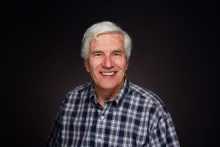
Steve Shafer was born and raised in Seattle. He graduated from Queen Anne High School in 1959 and later graduated from Ambassador College, Big Sandy, Texas in 1967, receiving a degree in Theology. He has been an ordained Elder of the Church of God for 34 years and has pastored congregations in Michigan and Washington State. He and his wife Evelyn have been married for over 48 years and have three children and ten grandchildren.
