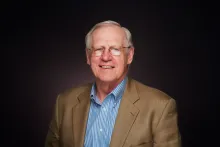

Rick Shabi
This transcript was generated by AI and may contain errors. It is provided to assist those who may not be able to listen to the message.
So, let's get right to the sermon. Sometimes it's good to ask a deep question about yourself.
You could ask this question, ask, Who am I? What do I stand for?
Maybe in one or two words, what defines me? Or what defines you? I think it would be good to ask that question. What defines me? Or what defines you? They're playing tricks on me already. See, they've got this clock set for four o'clock. See, they think you're going to fool me.
I'm on to you guys. I know it's only three o'clock or five after.
Time zone. Daylight saving. Okay. Tell you, you got to keep this. So, anyway, let's move. Sorry about that interruption. I kind of have a little panic here. You started my sermon and it is four o'clock. But let's get back to the question of the day, and that is what defines me. Who am I? Really? What one or two words do you make up me? What am I? Who am I? Someone might say, well, I'm a wife and I'm a mother. And someone might say, well, I'm a pipe fitter. I work in construction. I'm a pipe fitter. But on the spiritual side of things, each one of this room should take the time to think about what defines us. What defines me? What defines you? Someone might say, well, I can be defined in one word and that is faith. That would be a very good definition of a person's belief. You know, faith. Another person said, would say truth. Truth is what defines me. My bottom line is to seek the truth. Well, I have personally two positive areas that define me. And one is that I want to please God. You know, I want to be pleasing to the great God. But even that is not deep enough. That's not deep enough of an issue because how do I please God? How do I go about pleasing God? How do I go about honoring and glorifying the great God? I mean, how do I accomplish anything that is any lasting value? So, my bedrock area that personally defines me is prayer. Because it is true prayer that I'll please God. It is true prayer that I will give God honor and glory. So, at least for me, my bedrock definition is prayer. So, if we could at this time maybe get at least the machine warmed up and we'll be talking something about something in the Old Testament, pre-school, once we get it all warmed up. But as far as again what defines me, in Psalm 109.4, I'll just read the last part of this verse where David said, but I give myself unto prayer. And that was his bottom line. He says, enemies are chasing me, enemies are trying to kill me. I've got all kinds of problems. But he says, I give myself unto prayer. And it's quite obvious that in reading through the Psalms, it's quite obvious to see that David was indeed a man of prayer. Now, we've been going through or at least starting in both churches. Okay, now we want to focus. I guess there's no way to make this part here bigger, if we can. I don't know if we can or not. But if we can, fine. If we can't, that's fine. We'll have to see if you guys can work on that. We don't need the wording. We just need the diagram to be a little bigger. But we've been going through or starting anyway the youth Bible lessons, the youth instruction lessons, and the parents and as well as church members have been making some really good, I think, quite profound comments as we go along. And we've been studying with our teenagers and preteens about God. How do we know God exists? Well, we can prove that God exists by scientifically because He either exists or we evolved and you can easily disprove evolution.
But one of the parents who herself was a teenager at one time, and she made this very profound statement. She said, someday you will pray to God and then God will answer your prayers. She's speaking to the young people. God will answer your prayers and then you will know God exists.
I'd like to repeat that. God indeed is a profound statement. Someday you will pray to God and then God will answer your prayers and then you will know God exists, which would be one of the greatest proofs, you know, which is the greatest proof of all. So, let's turn now to Exodus chapter 30.
And we're going to learn a lot about prayer here in Exodus chapter 30. And we're going to draw the analogy between the incense or the sweet smoke that was burned, you know, that was burned there at the tabernacle with prayer. Now, you might think that's a, you know, you might not see the connection right away, but incense is the sweet smelling aroma, has a sweet smelling aroma to it. And it's very sweetly, very, very sweet aroma, and it is likened to our prayer life. So, this is probably about as good as we're going to get it, which is just fine. It'll kind of give us, this is where it pays to be in the front row, a bit of a look at the tabernacle of God that was made, you know, in the Old Testament times. And you see this side is the east side and that side is the west side over there, and S stands for south, and then above that would be north. So, if you were to go into the tabernacle area, you would see basically a rectangular, you know, tabernacle, but you would see seven key furnishings, seven key items that the Bible spends quite a bit of time on. Exodus 30 verse 1, you shall make an altar to burn incense on it, and you shall make it of acacia wood. And this altar, well, let's start on the east side. Okay, you walk going from east to west. The first square you come to would be the altar of burnt offering, and the altar of burnt offering is found and described in Exodus 27, and that's where they tied the animals to, and that's where they sacrificed the animals on a regular basis. Then you come to this bronze laver or bronze bason. That's that black round big round dot, and that's where the priests would wash their hands and their feet. And this, by the way, all of these main seven implements or furnishings, great spiritual depth and analogies you can draw from them, because in Hebrews 8 and verse 5, we were told that this tabernacle, and then later the temple, Hebrews 8, 5, was patterned after the heavenly things. Patterned after the heavenly things. Now, so, but let's look at this laver. This has really got some interesting history to it. Let's go to, we were told they were told to make a laver or wash basin. What did they make it out of? Well, they made it out of bronze. I think bronze, I should say, I think the King James has brazen, but in chapter 8, Exodus 38, verse 8, he made the laver or the basin of bronze, and it's based of bronze from, from what? From the bronze mirrors of the serving women who assembled at the door of the tabernacle of meeting.
Now, I think there's quite a bit to that particular verse. Obviously, the women of Israel got these mirrors. You know, they were mirrors, so they could look at themselves, and they got them from Egypt, and they were highly, they were so highly polished you could see your face in it.
And so they got them from Egypt, and yet when it came to the service of the great God, these women were willing to turn them over to the bronze smith, and he made a basin of bronze. They took something that was very, very valuable to them, and they gave it to God. They gave it to the service of God. And when you look up the word, the women who assembled at the door of the tabernacle, it, you know, what did it mean? Some commentaries would say, well, they sang there. Others say they served as in cleaning and straightening. Others talked about, you know, prayer and the worship of God. But it is quite interesting that where this particular bronze basin came from. Then you'd go into the tabernacle itself, and I know you probably can't see this, but on the very top is a black rectangle, and that would be where the table of showbread was, where the 12 loaves were. And they were fairly large loaves. I've seen pictures of them that each loaf could have been maybe this big. Again, depending on which book you study.
Then right way down below it would be the golden lampstand, which would be the seven, the menorah, or the seven candlesticks. And again, the Bible has great meaning in that. And then that square, that black square, that is the altar of incense.
That is what we're talking about here, specifically the altar of incense. And if you just, again, remember that incense is likened unto prayer. Okay? Likened unto prayer. Then if you were the high priest, you could go through the veil, or that curtain, and then you'd be into the holy of holies. And you see in that particular, that's towards the west side or your side over here, you know, the Ark of the Covenant.
And inside the Ark of the Covenant, you had Aaron's rod that budded, you had the manna, and you had the Ten Commandments. You might have been one or two other items I can't recall right now, but you had the Ten Commandments, and this was a type of God's throne.
And of course, what was on top of the Ark of the Covenant, anybody remember what was on top of the Ark of the Covenant? It was the mercy seat, pure gold, solid gold, and represents God's throne. And God administers His law with mercy. And that's the whole point. His law is in the Ark of the Covenant, Ten Commandments in the Ark of the Covenant, and He administers it with His mercy.
So this rough diagram, I think it gives us kind of an idea of what was about to take place. I do want to turn, we're next to this 30, and I want to stay there for a while, but let's go to Revelation 5 and verse 8, because we've got to understand this connection here.
Revelation 5 and verse 8. And we see, now, when He had taken the scroll, the four living creatures and the 24 elders fell down before the Lamb, each having a harp and golden bowls full of incense, golden bowls full of incense, which are the prayers of the saints. So it's a physical lesson to us. It's a physical analogy for us. Just as you have bowls of sweet-smelling incense, you have the prayers of God's people, the sweet-smelling prayers of God's people.
And that's where we're heading, and that's where we're going in this. So getting back to the Ark, and the only thing on the altar of incense, they didn't burn animals on that, they just burned incense. It was not a very big altar. Exodus 30 and verse 2, a cubit shall be its length and a cubit is width, 18 inches by 18 inches. That's about 18 inches this way and then 18 inches that way. And it shall be two cubits shall be its height, so it stood three feet off the ground.
And its horn shall be of one piece on it, it had horns or raised corners you might stand on each of the raised structures on each of the four corners. You'll overlay its top and its side all around, verse 3, and its horns with pure gold.
Gold has always been the symbol of righteousness and specifically, you know, God's righteousness. And you make for it, you shall make for it, Exodus 30 and verse 3, you shall make for it a molding of gold or a border of gold or a cornice or a little cap. You might say not a total cap, but a just a molding of gold all around it. Two gold rings you shall make for it under the molding on both of its sides. They had these two rings running parallel to each other on two sides, and you shall place them on its two sides and they will be holders for the poles with which to bear it.
You shall make the poles, verse 5, of Acacia wood and overlays them with gold. So when they had to move the tabernacle, they would just slide these poles through the rings and then one on one end, one on the other, and pick them up and carry the altar of incense. Verse 6, and you shall put it right before the... I'm using that word right, but that's certainly the indication. You shall put it, you know, before the veil, right before the veil, that black horizontal line there, that is before the ark of the testimony and before the mercy seat that is over the testimony, where I will meet with you and Aaron shall burn on it, for whoever the high priest was, sweet incense every morning, which he...
when he tends the lamps, he shall burn incense on it. And again, incense is likened to prayer. That's what the analogy is. And so you see that every morning they were praying.
And we find... let's just turn to Mark 1 and verse 35. It is the time of morning prayer.
It's a good time to pray. Now in the morning, Mark 1.35, having risen a long while before daylight, he, that is Jesus, went out and departed to a solitary place, and there he prayed.
So Christ himself went to a solitary place, and there he prayed in the morning. So we see the analogy of burning incense in the morning, you know, praying in the morning. And so he shall burn, again, Exodus 30 verse 7, sweet incense every morning when he tends the lamps. He will burn incense on it. And then when Aaron lights the lamps at twilight, he shall burn incense on it, perpetual incense before the Lord throughout your generations. So I would say it's a pretty good idea to pray to God before you go to bed at night, before you fall asleep. Again, that's what they did. Every morning and every evening, they were burning incense, and incense is likened unto prayer. Psalm 88 and verse 1, of course, we know the Bible speaks of prayer three times a day. We know the Bible speaks of prayer, you know, never sees praying. But in Psalm 88 and verse 1, Psalm 88 and verse 1, O Lord, God of my salvation, I have cried out day and night before you, that my prayer come before you, incline your ear to my Christ. So if there's anything that we could learn from this, not a bad idea to pray in the morning and to pray in the evening.
You know, that's again the analogy that we see here. And again, this was sweet incense. This was a sweet smelling aroma to God. So going back to verse 8 of Exodus 30, going back to Exodus 8, I should say Exodus 30 verse 8, When Aaron lights the lamps at twilight, he shall burn incense on it, a perpetual incense before the Lord throughout your generation. So as long as that tabernacle was standing, they burned incense on it, on that altar. As long as the temple was standing every day, morning and evening, they burned incense on it. Perpetual incense. Do we ever stop praying? I mean, that's the question to ask. You know, say, well, I've been to church now, maybe I've been to church three years, I prayed every day for three years, I don't have to pray anymore. No, I don't think so. Perpetual means we stay at prayer. We continue to pray. That is why we see that word, perpetual. Verse 9 is very instructive as well.
You shall not offer strange incense on it, or burnt offering, or meal offering, nor shall you pour a drink of offering on it. God gave the recipe or the menu, I guess recipe would be a better explanation of it, just exactly what He wanted in this kind of incense. He spelled out the various ingredients. He said, use these. Don't use any other ingredients. Just use these. And likewise, God has told us what kind of prayers He wants from us. He doesn't want us to come up with our own ideas. We don't want to make, you know, well, we want to pray to God on God's terms and not on our terms. And people have always found or tried to find a way to improve on God's instructions for prayer. They may use prayer wheels. They may use various ideas. But God just says, stick with the plan. Stick with the recipe. And don't offer any strange ideas, strange concepts about prayer. Just stick to the basics. Psalm 31, we just see some more of the heartfelt attitude that David certainly had when he was to pray. Psalm 31, in verses 1, 2, 3, 4, 5.
In you, O Lord, I put my trust. Let me never be ashamed. Deliver me in your righteousness. This is Psalm 31, verse 1. He doesn't say, deliver me in my righteousness. He says, deliver me in your righteousness. Bow down, you ere to me.
Deliver me speedily. Be my rock of refuge, my fortress of defense, to save me. For you are my fortress. Therefore, for your name's sake, lead me and guide me and pull me out of the net, which they have secretly laid for me. For you are my strength. And into your hand I commit my spirit. Verse 5, you have redeemed me, O Lord God of truth. He was continuing to have this kind of an attitude all of his life. In 1 Thessalonians 5 and verse 17. Let's go to that one. 1 Thessalonians 5 and verse 17. He tells us this. Pray without ceasing. So, perpetual incense. Pray without ceasing. Psalm 116. Again, we see this attitude of prayer. 2 I love the Lord because he has heard my voice in my supplications. Psalm 116. I love the Lord because he has heard my voice in my supplications. 3 He has inclined his ear to me. Therefore, I will call upon him as long as I live. I'll call upon the great God as long as I live.
So, these are some of the scriptures that talk about our attitude in prayer. Again, we come to God not on our terms, but on God's terms. Obviously, obedience to God's laws are crucial. I will just read to you Psalm 28 and verse 9. He that turns away his ear from hearing the law, even this prayer, shall be an abomination. So, people that want to do away with the law, and they try to pray, we see what God says about that. Proverbs 28 and verse 9, it's an abomination to turn your ear from hearing God's law and then thinking you can pray and be heard. Again, we don't offer strange incense. We pray to God only on God's terms. Exodus 30, again, and we'll look at verse 10. Aaron shall make atonement upon its horns once a year with the blood of the sin offering of atonement. Once a year he shall make atonement upon it throughout your generations. It is most holy to the Lord. So, once a year he would actually sprinkle blood on this altar there, the one that's kind of in the middle of that picture, on the altar of incense to sort of cleanse it. Well, not just sort of, but that was the point, to cleanse it once a year.
What day was that? Ah, Day of Atonement. Exodus 16. I should say Leviticus 16. Leviticus 16 and verse 12.
And it talks about the Day of Atonement. Then he shall take a sensor or a container that holds the incense full of burning coals of fire from the altar before the Lord with his hands full of sweet incense, beaten fine, and bring it inside the veil. And he shall put the incense on the fire before the Lord that the cloud of incense may cover the mercy seat that is on the testimony lest he die. And then, of course, he was to take the blood of the bull and spread it, you know, on the mercy seat as well inside. But this was a once-a-year occasion when he would offer this blood of the atonement upon that area there. Now, they were only able to do it once a year. They were only able to, they, I should say the high priest, was only able to enter the Holy of Holies in a once-a-year. But let's look at Hebrews 4, Hebrews 4, and verse 14.
Seeing then that we have a great high priest, that of course is Jesus Christ, who has passed through the heavens, Jesus the Son of God, let us hold fast our confession, for we did not have a high priest who cannot sympathize with our weaknesses, but was in all points tempted as we are yet without sin, and let us therefore come boldly to the throne of grace. We may obtain mercy and find grace to help in time of need. Again, the high priest had only entered the Holy of Holies once a year for the cleansing, you know, just once a year, and we can come to the throne of grace anytime we have that need to, anytime we have that need to. Let's go to Exodus chapter 30 again, and look at verse 34, Exodus 30, and verse 34, because he gives us the ingredients to this incense.
And there's been some, I would say, speculation. Some people say, well, we know exactly what these spices are. Some say, well, we're not too sure, but from the best that I could determine up to this point, the Lord said to Moses, take sweet spices. It says that, verse 34, stocktae. They say that was an aromatic gum resin, ointia, or ointa, which is a form of a seashell. And somehow they ground up, maybe the inside of it or whatever, and it would also have a very sweet aroma to it. And then galbanum, which is gum resin, and then, of course, pure frankincense with these sweet spices, and there shall be equal amounts of each. So they knew exactly what these spices were, and they knew where to get them from, where to buy them, where to harvest them, whatever. And they mixed it with frankincense, and these were equal amounts of each. And you shall make of these an incense, a compound, because they're mixing it together according to the art of the perfumer. And it says, salted, pure, and holy. Salted, pure, and holy. Very clean spices, and also salted, and they were pure and holy. And so we can again see something here, because salted, pure, and holy, that's the goal of our prayer life. Let's turn to Matthew 5 and verse 13. Matthew 5 and verse 13. And we see what God says here. Matthew 5 and verse 13. You are the salt of the earth, but if the salt loses its flavor, how shall it be seasoned? It has been good for nothing but to be thrown out and trampled underfoot by men. And so God's people are the salt of the earth. It becomes almost a metaphor for us, you know, that you're the salt of the earth. But, brethren, you really are the salt of the earth. And it's a great blessing to work with God's people, because you truly are God's people. You truly are the salt of the earth. What a blessing it is to work with you people. And then, as far as I said, salted, pure, and holy. Matthew 5 and verse 8. Blessed are the pure in heart, for they shall see God. So we have that covered there. And then it says salted, pure, and holy. What about holy? Let's turn to 1 Peter chapter 1. 1 Peter chapter 1 and verse 15. 1 Peter chapter 1 verse 15. But as he who has called you as holy, you shall also be holy in all your conduct, because as it is written, be holy, for I am holy. Now, this is a goal that we need to have, a goal that we need to strive for, is holiness. So we come to God in this approach, salted, pure, holy. We come with a sweet aroma before the great God. Matthew 5 warns us. We see here in Matthew the fifth chapter and verse 21. You have heard that it was said to those of old, Matthew 5 21, that you shall not murder, and whoever murders will be in danger of the judgment. But I say to you that whoever is angry with his brother without a cause shall be in danger of the judgment. Whoever says to his brother, Raka, shall be in danger of the counsel. Whoever says you fool shall be in danger of hellfire. Therefore, if you bring your gift to the altar and you remember that your brother has something against you, leave your gift there before the altar. Go your way. First, be reconciled to your brother, and then come and offer your gift. Life is too short to hold grudges, especially against the brethren. And so God instructs us here in this way. So this incense has a beautiful, had a beautiful sweet aroma as it was burned before God. And when the priest came into the Holy of Holies, you know, on the Day of Atonement, it was apparently the room was filled with the smoke, the sweet-smelling smoke of the burning incense. And it's likened to us who come to God.
Hopefully we're filled with the right attitude and the right heart. Sweet, pure, and holy. Salted, pure, and holy. Our prayer should be that way before God, and we should live a life of that way before God. Now let's go to Exodus 30. And again, verse 26. Exodus 30, and verse 36. And you shall beat some of it very fine, and put some of it before the testimony of the tabernacle of meeting, for I will meet with you, and it shall be most holy to you. So people have commented and have made the point that the incense was to be beaten very fine, just like our prayers are supposed to be beaten very fine in the sense that, you know, we shouldn't be too general. We shouldn't say, oh Lord, just bless everybody, and that's fine. You know, I mean, we want to be more specific than that. We want to try to either remember the names of those who are sick, or write down the names of those who are sick, or get a list of the names of those who are sick, from myself, or Mr. Giddens, and mention these people by name, and break down our prayerful incense very fine. That's a lesson there. And again, it shall be most holy to you. Verse 37, but as for the incense which you shall make, you shall not make any for yourselves, according to his composition, it shall be to you holy to the Lord, whoever makes any like it, to smell it, he shall be cut off from his people. This was only to be used at the tabernacle, or later the temple. This was not to be used at any other occasion. As beautiful as an aroma as it had, that it was most holy to the Lord. And this is the purpose, brethren, again, of our prayer life, to become most holy to God. I'd like to turn to Psalm 141. Psalm 141. And David references this as well.
Lord, I cry to you, make haste to me, give ear to my voice, when I cry out to you, let my prayer be set before you as incense, lifting up my hands, lifting up of my hands as the evening sacrifice. Now, Tom Robinson did a very good commentary on this in the Bible reading program. Incense was burned on the golden altar within the tabernacle, which is what we've seen here. And then later the temple, and it was done so every morning and evening, to infuse the sanctuary with a sweet smell. Now, if enough of us are praying in the morning, I mean, around the world, don't you think that maybe God's sanctuary would be in heaven, would be infused with the aroma of the prayers of the saints? That's clearly what Book of Revelation is talking about.
You know, so just as it filled the sanctuary with a sweet smell, that's what hopefully the prayers of God's people around the world will be doing. Furthermore, frankincense was included with burn offerings, adding fragrance to the savor of the sacrificial meat. So frankincense was used in more than just this one case. Later in Scripture, the burning of incense is said to represent the prayers of God's people ascending to Him. And this whole point, this whole lesson here, is simply driving home the point of regular and ongoing perpetual devotion to God. That's the point, I think we can all see very, very clearly. Let's turn to Luke, Chapter 1. Zachariah was the priest, officiating at that time. Luke, Chapter 1, Verse 9. Luke, Chapter 1 and Verse 9. And quite a scene here. Zachariah is in the temple. He's in the course of Abijah. His wife, Verse 5, was of the daughters of Aaron. And so she came from the priestly line, too, the daughters of Aaron. And her name was Elizabeth. They were both righteous before God, walking in all the commandments. And ordinances of the Lord blameless. Of course, she had no child. And she were both very well advanced in years. And he was serving as a priest before God, Verse 8, in the order of his division. According to the custom of the priesthood, his lot fell to burn incense when he went into the temple of the Lord. So this is his job. He's going into the temple. He's going into the holy place. Not the holy of holy, but the holy place. And he's going to burn incense before God. And the whole multitude of the people were praying outside at the hour of incense. So again, remember, they had an hour of incense in the morning, and they had an hour of incense in the evening. And so they had the right time. And so he's in there offering this incense while people outside are praying. So again, the connection between prayer and incense is very clear here. And then something interesting happened. Okay, so he's facing that curtain. He's facing west, okay? He's facing west. He's standing over the altar of incense. And right behind him is that big, heavy curtain. And behind the curtain is the Ark of the Covenant. And so he's praying away and offering incense. And all of a sudden, he looks to his right, kind of where the table of showbread would be, or maybe in that little empty space there. And the angel of the Lord appeared to him, standing on the right side of the altar of incense. And that'd be kind of a scene, wouldn't it? Here you are, you're a priest, you're offering up this incense, doing everything you're supposed to do. And you look and you see this great angelic being standing to the right of you. And when Zacharias saw him, he was troubled and fear fell upon him. And the angel said to him, do not be afraid, Zacharias. Your prayer is heard. You and your wife, Elizabeth, will bear you a son.
And he used to call his name John. Kind of an interesting point for many, many ways. The Bible says nothing is impossible with God. The Bible says with God all things are possible. Here they are way beyond childbearing years. They're way advanced in age. And speaking for God, the angel said, don't worry about it. Your prayer has been heard. Your prayer has been heard. Doesn't make any difference how old you are or how old Elizabeth is. Your prayer has been heard. And you shall call his name John. You will have joy and gladness, and many will rejoice at his birth.
And so nothing is impossible with God. Nothing is too hard for God. Even though they were well advanced in years, the angel said, don't worry about it. You prayed for 20 years that you'd have a child. You're going to have a child. His name is going to be John. He'll be the greatest of the prophets.
So I just thought that was kind of interesting. All those things that take place. Revelation again 5 verse 8. Let's go back and reread that one. Revelation chapter 5 and verse 8.
Now again, when he had taken the scroll, the four living creatures and 24 elders fell down. We fell down before the land, each having a harp and golden bowls full of incense, which are the prayers of the saints. Revelation 8 verse 3.
Revelation 8 and verse 3. Then another angel, having a golden censer or a container to hold incense, that's what that means, came and stood at the altar. And he was given much incense that he should offer it with the prayers of all the saints upon the golden altar, which was before the throne.
And the smoke of the incense with the prayers of the saints ascended before God from the angel's hand. And so we see again how incense is likened unto prayer. Now, here is a list of conditions for answered prayer. I won't read all of them, but it's from the booklet Tools for Spiritual Growth, one of the latest booklets that the church has put out.
So God does have conditions for answered prayer, and one of them is obedience. Obedience to God is a vital condition for answered prayer. 1 John chapter 3 and verse 22. And whatever we ask, we receive of Him because we keep His commandments, and we do those things that are pleasing in His sight. So obedience to God is, you know, we must strive to be obedient to the great God, to obey the Ten Commandments, as well as other of God's commandments that He does have. Another one is to confess your sins to God, so that your sins will no longer stand in the way. Psalm 32, Psalm 32, David again writes this. Psalm 32 verse 5, I acknowledge that you are not a good person, but you are a good person.
Psalm 32, David again writes this.
Psalm 32 verse 5, I acknowledge my sin to you, my iniquity that He had not hidden. I said, I will confess my transgressions to the Lord, and you forgave the iniquity of my sins. So confessing our iniquities to the Lord. Another condition is that our motive in prayer should not be selfish, it should not be greedy, it should not be trying to impress others.
James chapter 4, James chapter 4, and verses 2 and 3, He said, You lust and you do not have, you murder and covet and cannot obtain, you fight in war and you do not have because you do not ask, and you ask and you do not receive, because you ask amiss, that you may spend it on your pleasures.
So asking amiss or asking for the wrong motive. Now what if a minister of the church were to pray like this, Lord, make me a faith healer, so that whoever I lay hands upon will be instantly healed, so that the world will know that I am a faith healer.
That would be, I think the motive you could see would be wrong. I mean, it would be nice to go to children's hospital and empty the hospital. I mean, that would really be nice. It would be nice to go to Cardinal Glennon and empty that hospital. That would be nice. But if a person was doing that for their own glory, you know, no good. No good. Now one of these days, the hospitals will be empty because of God's mercy and Christ's mercy, but it's not about us, it's about God. You know, we don't and we don't want to bring people to us. We want to bring people to God because it's not about us.
If we can point the way to God and His Son Jesus Christ, you know, we've done our job. We've done our job. So that's, you know, our motives in prayer must be pure and clean.
Another point is to study the Bible so that we will know what God's mind is and what God's will is. Let's go to 1 John 5 and verse 14. Now this is the confidence that we have in Him that if we ask anything according to His will, He hears us. And we know that He hears us. Whatever we ask, we know that we have the petitions or we know that we have the requests that we have asked of Him. A parallel to that is John 15. John 15. And let's turn to that.
If you abide in Me and My words, or the Bible, abide in you, then you will ask what you desire and it shall be done unto you. Now that word abide means to stay, to stay, or to remain, or to live.
So if we stay in Christ, if we remain in Christ, and we live in Christ, then we ask what we desire. It shall be done for us. Another condition to prayer, answer prayer, is thankfulness.
Thankfulness. Now Mr. Giddens gave a sermon about a month or two ago and sometimes you hear something in his sermon, it just doesn't ever leave you. And he mentioned that Mr. Armstrong had said early on that 90% of his prayers were prayers of gratitude. And I kind of remember that, I kind of have that in a general sense, but I didn't remember the 90%. And that has stuck with me because am I anywhere near that? No. But what if we were 90% of our prayer life being thankful for all God has done for us? Philippians chapter 4. I mean, that is something to really think about. How much of our prayer life is gratitude? We did hear some wonderful messages over the last week. Darrell Tricky, you know, I hear their visiting relatives there, in Kentucky. Wonderful sermonette on thankfulness. Just a wonderful message. And the one I heard in Troy was out, the sermonette was out thanking. Very good messages. And it just gets you thinking, how much time in prayer do we spend thanking God? Philippians.
You know, Philippians chapter 4 and verse 6. But I will say that point that Mr. Giddens raised a month or two ago really has got me really, really thinking. Philippians 4 and verse 6. Be anxious for nothing but in everything by prayer and supplication. Prayer and deep, deep, you know, deep prayer. With thanksgiving, let your requests be made known to God.
And Colossians chapter 4 and verse 2. Colossians chapter 4 and verse 2 continue earnestly in prayer, being vigilant in it. So we have to be vigilant in prayer with thanksgiving.
So I think that's a very good point there. I know what it is. 1st Thessalonians 5 verses 16 and 17 and 18. Rejoice always. That's 1st Thessalonians 5 verse 17. Pray without ceasing. I think we covered that one already. And in everything give thanks. For this is the will of God in Christ Jesus for you. I really believe that if I or we spent a lot more time thanking God, we would see some very positive changes in our own personal character, in our own personal life. I think we really see some good changes.
We need to believe, have full faith in God's love and His mercy. Mark 11 verse 24. Mark 11 and verse 24.
You see this. Therefore I say to you, whatever you ask when you pray, believe that you will receive them and you will have them. Believe and have faith in God's love, mercy and God's promises. We are to be fervent and wholehearted in our prayers. Psalm 9 verse 1. Psalm 9 verse 1.
I will praise you, O Lord, with my whole heart. I will tell of all your marvelous works. I will be glad and rejoice with you or in you. I will sing praise to your name, O Most High. The songs that we sing could be a part of the spiritual growth and spiritual experiences that we have in church. Not just ho-hum prayers or songs, but singing praises to the name of the Most High. We are to be led by God's Holy Spirit, Romans 8 and 17. I'll just refer that to you. They that are led by God. Let me go back to Romans 8 and verse 1. For as many as are led by the Spirit of God, these are the sons of God. Let's make sure that we really are led by God's Holy Spirit. I've got two basic approaches in prayer. The first approach I just want to touch on is child to father. I really have this approach when you go to God in prayer. Child to father. And we see many, many examples of the child going to the father. Matthew 6 and verse 9.
In this manner, therefore, pray, our Father in heaven hallowed be your name, or holy be your name. The child is going to the Father in heaven. Matthew 6 and verse 26. Look at the birds of the air, for they neither sow nor reap nor gather into barns. Let your heavenly Father, yet your heavenly Father feeds them, or they have not much more value, or you have not more value than they. It's amazing how many times the word father is found in the Sermon on the Mount.
Matthew 7 and verse 7. Asking it will be given to you, seeking it will find, knocking it will be opened unto you, for everyone who asks receives, and he who seeks finds, and he who knocks, it will be opened. For what man is there among you, who if his son, a child, you ask for bread, will you give him a stone? Or will you ask for a fish? Will you give him a serpent? If you then, being evil, know how to give good gifts to your children, how much more will your Father, who is in heaven, give good gifts to those who ask him? So again, the child to the Father. I won't turn to Luke 12 and verse 32, but it does say, Christ said, fear not, little flock, it is your Father, it's good pleasure to give to you the kingdom. Jesus Christ kept wanting to point us to the Father, and he kind of introduced us to the Father. He really did introduce us to the Father that they never understood before, not all through the Old Testament. The book of Luke, chapter 15, half of that chapter, the Father to the prodigal son, and how the Father treated his child. So the child to the Father, Psalm 103 and verse 11, Psalm 103 and verse 11. For as the heavens are high above the earth, so great is his mercy toward those who fear him. For as the east is from the west, so has he removed our transgressions from us. As the Father pities his children, so the Lord pities those who fear him. He knows our frame, he remembers that we are dust.
So again, we see the situation here.
James 1 and verse 17. It's amazing how these various myths have come up about where do you get gifts from? Where do you get gifts from? It's always mysterious, isn't it? The tooth fairy, right? The Easter bunny, Santa Claus, all these myths, you know, where you get these presents from. God says here in James 1 verse 17, every good gift and every perfect gift is from above and comes down from the Father of lights with whom there is no variation or shadow of turning. Where do gifts come from? Every good and every perfect gift comes from our Father.
So the approach in prayer needs to be child to Father. Another approach in prayer would be friend to friend. God wants to be our friend too. Exodus chapter 33 and verse 11.
So the Lord spoke to Moses face to face as a man speaks to his friend.
I'll read to you this scripture. You don't necessarily need to turn to it, but I'll read this to you from Matthew 11 verse 19. The son of man came eating and drinking, always in moderation, and they say, they accused, behold a man gluttonous and a wine river, which he never was gluttonous. He never was a wine river. But the next phrase, a friend of publicans and sinners, Christ never denied that he was a friend of publicans and sinners. He came to die for his friends. Greater love has no man than this, and a man lay down his life for his friends. So friend to friend is another approach that we do with God in prayer. What do we do when we find that we are sputtering and muttering in our prayers?
Sometimes you know, you've thought to a brethren and he'll say, well, I don't think my prayers are getting higher than the ceiling. That's okay. They, how many people do feel that way? And they should not feel that way. Romans chapter 8, Romans chapter 8 and verse 26.
Romans chapter 8 and verse 26. Likewise, the Spirit also helps our weaknesses, for we do not know what we should pray for as we are. We just can't quite get the words out. We may not quite know what to say, but the Spirit itself makes intercession for us with groanings which cannot be uttered. And verse 27, now he who searches the hearts knows what the mind of the Spirit is because he makes intercession. Jesus Christ makes intercession for the saints according to the will of God. And over here in verse 34, who is he that condemns? Who is he who condemns? And it's Christ who died, and furthermore has also risen, who is even at the right hand of God, who also makes intercession for us?
Christ is still on the job making intercession for us. Well, we have a lot of things to be praying about. We should be praying obviously for those who are sick. And I do encourage you to try to write down their names and pray for them by name. And also we should be praying for more laborers into the fields in Matthew the ninth chapter, Matthew chapter nine, and in verse 35.
Pray for laborers into the, you know, to go into the field. He said, well, we'll just go to verse 37. Well, verse 36, he saw the multitudes. He was moved with compassion for them because they were weary and scattered, like sheep having no shepherd. And sheep can scatter pretty quickly. I think we've all seen that. They scatter quickly. And they said to his disciples, the harvest truly is plentiful, but the laborers are few. Therefore, pray the Lord of the harvest to send out laborers into his harvest. That certainly is a prayer I hope you take very seriously because, you know, the ministry is getting older. We have an aging minister. We just have to face the facts. The ministry is getting older and we need to have more laborers sent into our into into God's harvest. So what, brethren, is that one word that defines you?
Just want you to think about it. That's something for you to decide, you know, not for me to make up, but for you to decide that one phrase, that one simple word that describes who you are and what makes you tick. I want to conclude by going to Psalm 42 and Psalm 42 and verse 8.
Because, at least for me, my success, I've told you where my spiritual success comes from. The Lord will command, to Psalm 42, verse 8, his loving kindness in the daytime, and in the night his song shall be with me, a prayer to the God of my life.
