

Aaron Dean
This transcript was generated by AI and may contain errors. It is provided to assist those who may not be able to listen to the message.
This is my first sermon to the congregations of Seattle and Cedric Woolley. As pastor, I would like very much to let you know that my life is dedicated to you being in the first resurrection. That's all I want for you to be in the first resurrection. That is all God the Father wants. That's all He wants by sending His Son Jesus Christ to live and die for you as potential firstfruits in their family. That's what the apostles lived and gave their lives for. That's what Paul devoted his life and was really eager to go through whatever it took in order that those who God would choose would be in the kingdom. And the one enemy of all who have been the prophets, the teachers, the apostles, the evangelists, the pastors, is Satan the devil.
Satan the devil wants the opposite. He wants you dead. He's got a way figured out to kill you by having God do it in the lake of fire. He wants to deceive us. He wants to get us to eat off of a tree that is exciting, feels good, it's convenient, it's tasty, it's self-exalting, it's comfortable, it works for me. This church, as we know it, goes back all the way to God the Father, who created with his Son humans in their image. And this is the church of God, referring to God the Father. Jesus said, keep through your name, Father, those that you have given me. You can't separate one from the other. They are one. They work together.
We're not only the church of God, we are heading for the kingdom of God, God the Father.
To that end, God sent his only begotten Son, that whoever leaves in him, believing, not just believing, but faith without works is dead. So with works, as developing righteousness, will be granted entry into that kingdom of God. That's what we exist for. Today, I want to go back through a little bit of history, and I don't want to just make this my sermon. I want to make it our sermon. I want to make it our message. Yes, I'm going to give you a little bit of background of who I am and who Mary is, but I want you to transpose yourself into that when you came into the church, when you were called into the church, and your walk along the way as well. And then we'll pull this all together and go forward as we progress as a team from there. There was a time in the 1930s when God called this woman, Loma Armstrong, to understand the truth. Her husband was a Protestant, and he didn't like the truth. He didn't see the truth. He didn't want the truth. He didn't want anything to do with it. So he set out to prove her wrong. And through that process, God brought him to repentance. And God brought him to the place where he was able to become a teacher, a teacher of truth. This is not Herbert Armstrong's church. This is God the Father's church and his son, Jesus Christ. But as one instrument along the way, an imperfect man, just as I and you are, this man developed a passion for feeding people God's work. He spoke of a different religion. In fact, he began to show how there was a false Christ. There was a false mystery religion that had captivated humanity and was parading and masquerading under the name of Jesus Christ. It was about somebody born in another time in a different part of the year that predated Christ by 2,000 years. In this whole mixture, he began to separate for people and show a true gospel of a kingdom of God. He revealed the truth, and it was exciting. Many people began to understand it. One such individual was called and baptized in 1948, right after Mr. Armstrong had moved to Pasadena and bought some old property that was really cheap after the Depression.
Some big old houses from tycoons had collapsed in value, and there just wasn't much available in the 1940s of money to buy or even support something that had servants and all these big spaces. So he moved down there. But the one thing he needed after the first year, he found, was he needed someone to teach math, and he needed an engineer to help develop the campus.
Jack Elliott was brought from Gulf Oil near Houston, Texas, along with my mother, Ann, to come out and teach at the college in the second year. Dad was made the Dean of Students, and he was made the Director of the Buildings and Grounds. So these humble old shambles of big buildings were up on a hill above a shanty town with a railroad track running through them, kind of a collapsing part of town. And there, during that time, my father worked side by side with Mr. Armstrong. They actually had offices next door to each other.
If you can see in this photograph, two photos, the one on the left, or the one on the right, is Mr. Armstrong's car. The one on the left is my dad's car. And their offices were just to the right of that in this building. This building became known as the Library Building. Those are my two older brothers, Steven and Mark, possibly on a Sabbath. The church met right up here in this building. And it was a small church. We might have had 35 people when I was born. I was one of the kids that was in my mom's tummy, growing bigger and bigger. And, you know, in a small little congregation like that, everybody was expecting this baby to pop out that they had hoped was a girl.
After having two boys, they were ready for a girl. But that's where church was. That's where Mr. Armstrong did the radio broadcast back in the days. And the television went out from there.
The offices were there. Students were taught there. Eventually, a library was formed there.
Remember that building, if you will. We called that the Library Annex at some point in time.
But that building was, if you saw the front of it, where the two cars were parked, that's where the college and the church really grew. That's where the Plain Truth was published and mailed out.
Those were the early days of the work growing. In 1951, they had another child.
And great disappointment, my mother cried when I was born and the doctor said I was a boy.
But then when I cried, she developed sympathy for me and has had it ever since, thankfully.
Wonderful mother, Ann Elliott. She actually, today, is the member of the Church of God community who has been baptized the longest.
Everyone from the feast back in, where did we first go?
Belknap Springs in Oregon. Everyone who was at the feast, baptized, has died that was baptized before her. My father preceded her in death about two and a half years ago. But nevertheless, in this particular photograph, I'd like to have a little bit of audio play. This is the sermon on the day I was born in that building that you were looking at well ago.
If I believe that a certain authority has been vested in me, so I will then put an authority in them. And I think they will be well aware of that authority. And I believe that they will have the wisdom of God in rightly and justly exercising it, and what they bind will be bound in heaven. Not because God will jump around to the whim of our wills, but because we are only instruments in His hands carrying on His will. And because when it binds anything, it's according to the will of God, it's because we have the revelation of God.
Why, I have no more thinking of trying to bind something on her unless I have the will of God to back me up in it. And I have the will of God, it's customizing, and I know it's God's will.
That was my pastor growing up. Mr. Armstrong knew me since I was a little kid. I'm not sure what happened here, but let's go back. We can get there. All right. He knew me from a child and growing up, just like some of you children are here, and we'll know each other growing up. He was a good teacher. One thing he was, he was very concerned. He was very friendly. He was a wonderful man, as far as being zealous, but also very concerned and very friendly. Had two older brothers, and we grew up in Pasadena. At the same time, in a place called Kent, Washington, there was somebody else growing up, the girl in the middle. We wouldn't know each other, but up here there was a church as well, and God's way was being taught faithfully by ministers around the world.
The college was inheriting—I shouldn't say inheriting—the college was purchasing some of these big old buildings that became classrooms, became dormitories, and my father's work with Mr. Armstrong was every day, except for the Sabbath, and sometimes even on the Sabbath, they would walk together. I had opportunity at times to walk with them, as it would survey things under construction or plans that Mr. Armstrong had. I participated in the construction of some of the models of the existing buildings, even in Pasadena, that we were going to buy, and I would go around in a car and draw drawings, and then go back and build the buildings to scale so that some of those architectural models were available for planning purposes.
It was quite an exciting time. It was an interesting time to grow up.
Some of the things that happened were where we lived. At three years old and on, I was living on campus. I grew up on Ambassador College with the students. All the students who ever came to Ambassador College in the old days, I knew who they were. I didn't know who we were.
Sometimes it was a kid, sometimes it was growing up. But this house right here, 250 Terrace Drive, is where the gymnasium now stands. The wrecking ball came regularly to the campus, and that was just part of our life growing up. Here's my father and my brother, standing in front of that house, which would later be torn down, which looked right at the girl's dorm across the street in the men's dorm. Again, it was a central role to watch and see and observe, and to go up to dad's office and be around the administration and the inner workings of the church from childhood up. It was quite an interesting blessing, quite an interesting opportunity. Meanwhile, up in Kent, we had another child that was born up here, and it's pretty exciting, though I didn't know it. And a young man, Mr. Robert McCann, was the father of that child. Back in Pasadena, I didn't grow up with an allowance and toys.
We made our toys. My dad gave us full access to his tool chest, and we developed and made things. Now, this speaks to part of who I am today. Plumbing, electrical, mechanical, things we want, renovations, buying old things, fixing them up, because we don't have a lot of money in my career, but we end up with a lot of things if you can fix and repair, etc. And we had a blast as kids.
And that was an enjoyable part of life, part of the things that we did. And I'll also say that up here in Washington, Mary was growing up and doing some pretty exciting things as well.
Back down in Pasadena, I was trying to keep up. Not doing so well.
But as I said, Mr. Herbert Armstrong was my pastor. And one thing he was always doing was searching for God's truth. And he was resolute about it. He was unbending. But don't get the idea that the churches it grew was unbending and so resolute. Because, you see, the church, if you want to look at it as a building, has many portals. It has a front door, a back door, windows, side doors, vents. Other things can get in all the time, and they always did. But Mr. Armstrong was a person who with strong principles. I remember as a teenager in the gymnasium when it was finally built, that's where we moved because there were a thousand people in the church by then.
And he put up the automatic basketball goals, would go up, and had this big wall behind. He put up a stage, and the ministry would teach and preach. And one day Mr. Armstrong was giving the sermon, and he took it very, very seriously that this was God's holy day. He taught us, being the ambassador college students, even when I was a child growing up, prepare for the Sabbath. Have a fresh shirt ready prepared for the Sabbath. Have your shoes shine for the Sabbath. We were a church that appreciated God's Sabbath. We appreciated his feast. We prepared for those things, and he prepared for those things. I remember one Saturday night they began a thing called movie night, and the church got a big projector, and they would rent some movies, you know, feature film movies, and things like sound of music, you know, it's kind of exciting. And I think the first or second film they showed, now see this from Mr. Armstrong's perspective. Yes, it's a gymnasium, but today it's the church building. Today it is where we are worshiping God. Today we are giving God the credit from this stage. And a few hours later, after the sunset, the movie that night was about false religion in a nice, pleasant way with a nice, invented theme and some things going on that were really sweet and nice, but it had the visages of false religion in people in costumes of a false religion that were that was up there.
And I remember Mr. Armstrong standing up and leaving the room. And that made a big impression on me. Sorry. Mr. Armstrong was a person of principle. I have tried also to follow Jesus Christ and God the Father as being a person of principle. I miss him. I'm sorry, but I do. I never worshiped him, but I miss him. Mr. Armstrong would eventually run into some problems with the church. In fact, people tried to take him out, literally, time after time, replace him. Finally, somebody even got a hold of the government of California and got the government to step in and take the church in a receivership in 1978, early 1979.
I talked to Mr. Armstrong backstage before the General, the sorry, the Ministerial Conference of 1979. I'm fast forwarding here a bit, but he had been through so many people who had let him down. The top executives, one after the other, who had strayed, had let him down, had swallowed other things. He was a man who was just tired and beleaguered. He said, John, I want to tell you something. Jack Elliott served me more faithfully than any other man. Now, we were alone, back behind the stage, before he went out and talked. But that's the kind of principle he ended up appreciating.
And that's what God wants. He wants us to serve him faithfully. That's what Jesus Christ wants. He doesn't want any and everything and people being pulled apart. He doesn't want things from the outside coming in and mixing in. He wants us to follow him and be loyal to him. Mr. Armstrong used to say, don't believe me, believe your Bible. And I think too often we get away from our Bibles.
And people back then got away from their Bibles. He worked the hardest to first disprove and then keep Protestantism at bay. It's a very difficult thing to do because it masquerades with the same names and a similar theology, more of a Pauline theology, which is an invented theology. And it's very difficult to keep that out of people's minds and keep that out of the church. But that's what he worked at. And that's what he worked very, very hard at. He fought all his life to do that. And at times he succeeded. At times it ebbed. As the college grew, more and more buildings were created.
We see here on the right the Science Lecture Hall. There are actually many buildings in the Science Department on the right. On the left is the Fine Arts Center. And in the basement of that is a small auditorium for the performance of fine arts. In the back is the reverse side of that mansion that we saw looking before. And all these grounds had to be developed. And my father and Mr. Armstrong worked constantly with other big corporations that helped develop and create and build the final products. As time went on, graduation took place. It was an honor to graduate from Ambassador College.
My wife and I had finally met a few years before. What had happened was, during the construction of all of these buildings, man power needs grew. My father needed more and more workers, some in electrical, some in engineering, some in drafting, some in carpentry, some in various types of maintenance for the physical plant. And so Dad ended up hiring some people from Washington.
People I remember include Robert McCann, Bob Ashland, Paul Bird, and there were many others who came down and served in various other capacities, in television, in various other ways. But these individuals brought a certain young lady down. And happy that that was us as I graduated from college. We got to spend time together in England, where I spent two and a half years of college. Then I was in the field for a year, and then back to Pasadena for our final year.
We finally linked up in Pasadena and spent her third year and my fourth year together. And we were blessed to be married by my pastor. And within weeks we were serving in the field ministry in British Columbia.
I had no intention of getting emotional. I don't know where that's coming from. But I just thank you for marrying me, Mary.
You know, God in your life and God in my life has certain things that He will work out for us, if we're faithful. He won't be leading us, not just supporting us and supporting what we're doing. I've come to see in my life that's been a fallacy. That's been a flaw. I don't ask God to support me. I ask God to help me support Him. Amazing things take place as that happens.
Not too long after that, we were blessed with our first child. This is an interesting photo because this is in Oak Bay in Vancouver. And from the direction that we are looking, this is looking towards Seattle. It's looking over here where, in one sense, we've come full circle.
You know, we started out, my wife grew up here, we started out in the ministry in this area, pastored the Abbotsford congregation. Some of our members came from Bellingham back in the 1970s.
And now we have come, as it were, full circle again. In our private family, we've had three daughters. And there's a picture of them with my mother. And it's been a real treat and a pleasure to have three girls. I wish all of you gentlemen would have had three daughters. Those of you who have four, I think, are luckier than me. More blessed than me, I guess. But our daughters have grown up in the faith and we're very, very thankful for them. Now, along the way, I'm sure now you have a family, you have children, you have grandchildren as well. So let's go on forward.
Mr. Herbert Armstrong, about this time, became involved in going overseas, visiting leaders of various countries. He was quite an interesting man. You know, people didn't really know much about Herbert Armstrong, but he was a lot like you, probably, in that a person with principles and a person with convictions that are based on truth is a person that's irrefutable and therefore respectable, even if you don't agree with him. You find that probably with your neighbors or with your family. They're not believing what you believe, but there is a certain respect that comes from light in the darkness. And so it was that as Mr. Armstrong went from place to place, he was appreciated by people in a unique way. If we look, for instance, at this one example, here he is meeting Prince Hussein of Jordan. It's an interesting photograph because, as Aaron Dean told me just two weeks ago when we were in Kenya, so when this took place, he was, Mr. Armstrong was given a five-minute window to go in and meet with King Hussein. I said, Prince is King Hussein of Jordan. Five-minute window, and sitting in the lobby, the waiting room was the ambassador of Egypt waiting to see the king. And the ambassador was highly irritated by the fact that Mr. Armstrong got five minutes with a king in front of him.
Two hours later, Mr. Armstrong emerged from his meeting to a rather indignant ambassador from Egypt. That's what Mr. Armstrong was like when he talked to people on their own terms, and he showed them what a person of character he was, and then he would explain to them, we want to help, we want to be involved, what is it we can do, how can we be helpful? One thing he found was there was a need, a real need in Thailand, and the king and queen, Bumipal, needed some assistance. They needed some help. They went out of their way to take Mr. Armstrong to this area and show it to them.
Mr. Armstrong and the team from Ambassador Foundation were able to do something that was supportive and helpful, that really was a blessing to the king, and that was to take the opium growers and transfer them into farmers, and to break that horrible cycle in his country of dependence on drugs. And they had to do that against the drug lords. So it was a very tough situation, and yet it was highly successful. And so when Mr. Armstrong came to Kenya and met with President Jomo Kenyatta, and he would go to Ethiopia and meet with Haile Selassie, they were individuals who were engaging, and they could speak, and they could share.
And Mr. Haile Selassie, or King Haile Selassie, and Jomo Kenyatta and Mr. Armstrong were all born the same year. They were all the same age. So they kind of had that in common, and so they felt as they were aging leaders, respectable aging leaders, they could visit with each other, and they could talk. And one thing that Mr. Jomo Kenyatta, President Jomo Kenyatta told him, he said, you know, I want to start a university here. We need an agriculture university, and I don't know what to do. Mr. Armstrong says, you know what? We're doing something very, very well in Thailand with agriculture. How about if we help you start a university here?
Mr. Armstrong actually planted a tree and donated a small amount of money. And then Japan, Mr. Armstrong had met Hirohito, and ten members of their, you might call it, Congress, the Diet. Ten young junior members had respected him, and they had come with him to Kenya. And they said, hey, yeah, you want a university, and you've got this other model, you know what you're doing, let's let us pump 49 million dollars and build a university here.
Two weeks ago, Mr. Arrendine, Monique Knudsen, and myself, and our local pastors in Nairobi, visited that university and spoke to a representative of the Vice Chancellor.
And they were just having a big anniversary for the founding of this college. And the one thing they didn't know was, why did the Japanese donate all this money? Nobody knew. Mr. Dean pulled out the Ambassador for World Peace brochure and showed them right there. It was Mr. Armstrong and Jomo Kenyatta in photos they could see. He planted the first tree here, and it was because of his reputation. It's because of the respect for the religion, the principles that he had. They were willing to open their pockets and fund in two waves, which Mr. Arrendine assisted with.
These are part of a legacy that goes back in your life and mine, because this is part of who we are.
We're people of principle who are different. We're the ones who go to the feast, remember, and they say, nice people, weird religion. They can never connect the two dots, as it were. And the world leaders didn't as well, and people today won't. We don't expect them to. We're not trying to get everybody, but we are being a light to the world, and we are preaching the gospel, and those whom the Father is drawing will respond. In 1974, the construction phase of Ambassador College in Pasadena concluded with the building of the auditorium, a beautiful, beautiful structure, and it was on its walls, or inscribed, dedicated to the great God. Mr. Armstrong really felt that his life, this church, was all about God, and he wanted to have something that really radiated an honor to God that the church met in for church services and represented the church of the world. This is the lobby, the foyer, of that auditorium, once again from beginning to end. It was built where some old buildings were that we met in as a high school that got torn down, and we watched this thing go up, and I walked through it with my dad, with Mr. Armstrong, been up in the ceilings of it, and as the thing took place, we'd never seen anything like it. None of us had ever seen anything like it. It was just an amazing building. While Mr. Herbert Armstrong was away on some of his trips, others were given leadership roles, and what came in was liberalism. Liberalism that stemmed back to 1955, when one man in particular came back from the Navy, and he liked things that were not of the Bible, and had a difficulty bringing Bible into his life. I once worked for the man and concluded that I didn't feel he even had God's Holy Spirit. He didn't like God's word. He didn't like God's way. He loved drunkenness. He liked to be loose in obeying God's laws. He liked to gamble.
He was very promiscuous. And so Protestant concepts came in. We had actual Protestant teachers hired to teach at Ambassador College, and it was a very, very trying time. It went into what Mr. Armstrong began to call a period of liberalism. There was a systematic theology project that was aimed to undermine and began to loosen up the teachings of the Bible.
There was laxity with keeping God's commandments, with tithing, with fornication, with adultery, with theft. We had a leadership that went carnal. After that period, Mr. Armstrong dismissed many of those people. Actually, the Pasadena campus would be closed down. And he went through a period of trying to put the church back on track. Many of you will remember that. I'm going to put the church back on track. Half of you don't get it. What he didn't realize was 85% weren't getting it. He wrote 18 restored truths and then added two more to them. If you ever pick up the United Church of God booklet, Fundamental Beliefs, those are the 20 restored truths that Mr. Armstrong worked vigorously to reinstate in the church. And by then, it was a real uphill battle. Finally, he died in 1986, and the wolves simply devoured the flock. 85% were led off into a liberal evangelism type of Protestantism. It's called evangelical, but it's a very, very liberal form of evangelical Protestantism. And essentially, what it is, is you can do anything you want. God wants you to just live your life any way you want, sin as much as you want, do anything as much as you want. That's better than obeying God.
Above all, don't make sure you don't do anything he says, because that would not be self-expressive. That would be doing what someone tells you to do. 20 years ago today, there was no structured church left. There was nothing. I remember going back to the church I had been deep-pastored from, had to resign from, because they were firing me, and they were heading towards Sunday and Christmas. And going back and sitting there, and the person began then to teach Protestant theology from the pulpit. And I sat there with my wife on the back row and read the scripture that said, when someone teaches these things, withdraw yourself. And I said, we just can't stay. This is it. I love this congregation. I've given myself for these people, but they have itching ears for something else. And so the following Sabbath, we were just in our home, and we didn't know where things would go. Then there was an Indianapolis conference that was formed, and we attended that. And the rest is kind of history. The United Church of God was formed.
But you see what Mr. Armstrong worked so hard at? What Jesus Christ worked so hard for? Disappeared, as we heard in the sermon at today. You strike the shepherd and people get offended, and they flee. They depart. That's not what God has called us to. He's called us to stand, and above all, to stand, as Paul said, to endure to the end and be saved.
This church is not immune to outside influence. You know we've had two splits so far.
We've passed first, second, and third cuts, is the way I like to say it. We have to think of it in the terms that Satan is never finished. If we close the front door and the windows, there's the back door and the vents. You know, if we go close those, the front doors is open again. It's coming. It's always coming. You and I need to be not survivors. We need to be treasurers of this faith, treasurers of this way of life, because Satan the devil wants to stomp this church out. And Jesus warns that there are things that are going to become so seductive and so logical to human nature that perhaps even the very elect could be deceived. That's the intent. Even the very elect. That many are called, he says, but few are chosen. We all want to be part of the few. We all want to be growing and going forward. Again, this isn't a legacy about buildings. It's not a legacy about a man other than Jesus Christ and God the Father.
Here's a picture of that campus backed off a ways. Eventually, Protestantism took it over. Consider that the building here on the right is the Maranatha High School today, Protestant organization. This is the Harvest Rock Church today, Protestant church. It's gone essentially all the way. Everything that once was worked for and braced against and resisted finally collapsed. And it should be a lesson to all of us that we have something that's precious. And as you look at the size of your congregation, look how small it is.
You know, we're a tenth of what we used to be, and that might be generous. A tenth of what we were when Mr. Armstrong died. Consider that that first building or church services was held.
Remember that one? It went down. It was torn down. It doesn't exist anymore. It was recently removed to build some condos. Remember the science building? Well, the formal arts building, fine arts center? They're down. Torn apart, broken down, more condos.
Deception of a religion that looks like ours, sounds like ours. The Bible talks about a harlot and daughters, a mother of harlots that come out. And just because it doesn't have a certain main person's image with a certain costume on it that's talking about mystery religion, doesn't mean that they're not out of the same mold. One is just the same in protest.
And the mother church is always trying to get the children back. Deception, through Protestant concepts, is always pressing on this church. And sometimes it succeeds. It's the fruit, you see, of a logical tree. You and I think like that. We think like that. It's about self-ease, even concerning things like the Sabbath or concerning things like the laws of God. It's, well, what's easy for me? What's easiest for me? What is most convenient for me? What feels the best?
It's about self-promotion. What will exalt me the best? What will promote me the best? Maybe not among others, but even among myself. Self-acceptance. And above all, it's self-directed. The lure of religions around the world is that you can join them and have a certain amount of self-direction. It's a personal independence. Personal out-choose from the tree of the knowledge of what is good and what is evil. I will decide what is right. I will decide what is wrong. I'm wise. I know. I know it feels good. I know what's logical. Pretty soon, we're like Eve. Let's notice in Genesis chapter 3, because Mr. Armstrong was always talking about the two trees. And after Eve 8 and Adam 8 of that true of that false tree, the tree of knowledge of good and evil, notice the woman saw that the tree was good for food. It was pleasant to the eyes. It was, as the margin says, a desirable thing to human logic. It makes sense. You know, it really does make sense to our human logic. And a tree is desirable to make me wise. It's about me. This is going to be beneficial for me.
The eyes were open, you see, and so you head down a personal path. It's sort of a personal, religious encounter. If you look in the Bible and look up the term high places, you'll find that the high places were something that were part of a communal existence. It wasn't just in Israel. It was everywhere. The high places were things where people conducted business. They did transactions. They went and discussed wise things and community decisions. They recorded deeds there.
They had local gods and goddesses, especially Ishtar, especially Simramus, her fake son Tamaz, her husband Nimrod, and that religion that seeped into Egypt and seeped over into Babylon. It was always ever-present in Israel. The high places were always there. Just read. From the beginning to end, the high places were there. In fact, in the beginning, the high places were used. Only one king that I've seen tore him down and the next king rebuilt him.
That was what was wise. It was what was convenient. It was what was done. It was very difficult to get rid of it. Similarly, in Ezekiel 8, verse 14, let's notice what was going on in concert with worshiping God at the temple. In concert with sacrifices, in concert with the religion of being God's people, God says to Ezekiel, come by by vision, and I want to show you something.
So he brought me to the door of the north gate of the Lord's house, and to my dismay, women were sitting there weeping for tamas. In verse 16, at the door of the temple, between the porch and the altar, were about 25 men with their backs toward the temple. They were there to worship at the temple. They're part of the church, but they also had their backs to the temple, and they had their faces toward the east, worshiping the sun. You know, the sun worship appeals somehow to us as humans, and some of the customs and traditions get reinforced culturally, locally, within families, within society. These things are hard to give up. On the Apostles' Day, they battled, they lost ground against a host of religious ideologies. Gnosticism, Judaism, on and on. It came through and trashed the church. I wonder if there was a tenth left. By the time you get to 1st, 2nd, 3rd John, Jude, and Jesus Christ talking in Revelation 2 and 3 to the church, was there really anything left of the church but a skeleton? It's hard to know. Jesus himself battled false religious teaching in his day and lost ground to the point where they killed him.
But we might say, well, I'm smarter than that. I'm wise. But that's what this false religion spawns. It spawns, first of all, lawlessness. A gradual laxity with God's Word, a certain liberalism with God's commandments, a certain sliding over to Pauline theology that says, well, I'm not under law, I'm under grace. Not realizing that he's saying, I'm not sentenced to the lake of fire because I'm in the process of conversion. That's what the word means that's translated grace in one of its prime meanings. Just look it up in Thayer's lexicon or Strong's Concordance. That word, carous, is very important. But you see, agape-less-ness is lawlessness.
We have to be careful about feeling him wise, in my opinion matters, because the whole book of James, if you take a Bible study sometime, look at the book of James from this viewpoint. We'll do this sometime. Self-demotion. That's what he's saying. Get your mind off yourself. From the first chapter to the last, it's not some recipe of how to get healed or how to do better. It's a hey, get your mind off yourself, your problems, your illness, your blessings, your service.
Get it off of there because there is a mindset. There is a spirit.
There are talents from a spirit that is in dark places, he says. These things don't come from above, but below, and they're demonic. So we have to battle that. You and I have to battle that. That's why we're here. Read in Revelation 2 sometime. Jesus warns you've got Jezebel, that woman who seduces my servants to commit sexual fornication or adultery. You've got this woman in the church. You've got this another false religion is in the church. Always has been.
Always has been. In chapter 18, Jesus said, you know, he said in chapter 2, I've given her time to repent. I'm going to come back and kill her and her children. And he does in chapter 18. He comes back and this thing that so many people think is so wonderful and so mind opening, gets clobbered by Jesus. He eradicates it as it fights him to the death.
In the model prayer, Jesus says that Satan has a grip on you and me. You know, he didn't just come into this room. He comes into your mind and my mind. According to Jesus, who would know? Because he battled Jesus every day. He says he's got a grip on you and me. And we think, oh no. He's, then why did he say, pray, deliver us from the evil one if he doesn't have a hold on us? Why are we? Every day, you see, our mindset can slip away a little liberality, a little less of God, not putting God first, not reading his word, going to other philosophies, other ideas, borrowing ideas from other books and other, you know, TV shows and people who inspire us and music and everything else.
Paul says we've got to fight this. We've got to use God's armor. Let's go to Matthew 13, 24.
Notice Jesus is warning us about a false Christianity growing in the church. Matthew 13, 24. It looks like the real thing through one lens, but it's quite the opposite through another. Matthew 13, 24 says, another parable he put forth to them, saying, the kingdom of heaven is like a man who sowed good seed in his field.
Liking this to the church of God. Good seed. Good seed. It's fun to watch grow. But while man slept, his enemy came and sowed tears among the wheat, and he went away.
That one didn't care. It just sowed tears. When the grain had sprouted and produced a crop, then the tears also appeared, and the servant said, sir, did you not sow good seed in your field? How then does it have tears? And he said, an enemy has done this. Well, do you want us to go gather them and burn them? No. Lest while you gather up the tears, you uproot the wheat with them. Let both grow together until the harvest. Now, that's for you and me to consider.
It's not there because it can't be changed. It's there because we can change it. Sometimes we can be a little more tear than wheat, or a little more wheat than tear. But you and I are called to transition from tears to wheat, to go through a process of conversion. We're all tears to begin with. We can't point our finger at anybody. But he'll say to the reapers, first gather together the tears and bind them in bundles and burn them, but gather the wheat into my barn. The point here is, as we look at things like this, we see there is a certain fallacy to thinking that we're fine. There's no problems when, in fact, Jesus Christ warns us of quite the opposite.
You're blessed to have a family. Mary and I are blessed to have a family.
Our three daughters are all married. One to a deacon, one to an elder, and one to a pastor.
We have eight grandchildren. It's a real blessing, again, from God. Don't take any credit for ourselves. Don't know how all this happens. Just put one foot in front of the other, be absolutely loyal and devoted to God, let him lead, and it's amazing what happens, including coming to a beautiful place like this, with people like you. But this is really us. This is us. You are most important, not my physical family, because we are God's family, a spiritual family. But we are surrounded by a society of Satan. This is Satan's age. It's an evil age. We are in a society that resists the true God. It's without the water of the Holy Spirit. It's a dark age, is another way to put it. It's darkness when we are to be light. Satan will crush this church. He will crush it.
He'll crush you. He'll crush us all the time in any possible way, if he's allowed to. He'll just choke us out. But look at that. There's water. There's life. There's a small community. You and I need to be pushing back. We need to be pushing sand out. The question is, are you for God's family succeeding? This is what it's about. You know, Satan is about to pull out all the stops. He's about to let families even go after each other and start turning people in. He's about being so voracious against the church that the church, part of it, will be taken to a place of safety.
Those that said in Revelation chapter 3, for instance, I know you. I know you're persevering endurance. I know that you have been tested, you see. We want to be tested now, not later.
Satan is going to go make war with the remnant of her seed. And that's described in Revelation as well. The power of the holy people, Daniel said, will be completely shattered. This might be a nice day, and it is. It's a beautiful day. It's a nice time in life, but it's not going to last.
It's not going to last. Right here off the coast, underneath the water, the ecosystem is so failing. It's so falling apart so fast. Oregon just declared a moratorium on any more fishing this year on the small fish, the feeder fish, the sardines, what everything out there lives on, from the sea lions, which are decimated up and down the coast, the tuna, which can't even find anything, and the tuna is falling off so rapidly. The salmon can't find sardines to eat and are wandering all over the place. Sharks are now going hundreds and a thousand miles trying to find food because of the die-off in the animals that they eat. I mean, we're on the edge of a collapse that nobody's even talking about. I saw one chart yesterday of the population of sardines that used to be, let's say, 30,000 in this registered group, measured group. Now it's 650 in the same group. And yet that's nothing compared to one event that could happen in an hour and a half. Simply someone like Iran that Russia declared this week as sending long-range missiles to just sends one nuclear weapon over the United States and poof. Magnetic pulse. Your car will never run again. No electricity will be available in the United States. No water. Nothing. No communication. No television. No telephone. You will simply be on foot. And no, we won't be meeting here because I don't think you'll want to walk here from your house through gangs of people ranging around trying to stay alive. You know, these things are fragile. More fragile than you and I ever think about. What we need to be is in the place of safety. What we need to be is people that are really keeping the sand out. So, the question here is here. Will you help me, as part of this body, do your part? Daily, will you push back the sand in your life and encourage one another to push back the sand? I need your help in this. God sent me here. I'm here to be helped by you as well. But the daily choice is up to each of us. Will you be wheat? Will you be a tear? That's the question that you and I have to ask. Let's look. Will you be a sheep or will you be a goat?
There they are, half and half. They look similar, don't they? It's hard to tell them apart.
Let's go to Matthew chapter 25 and verse 31. You know, things can come in through any door.
I've got something here on contemporary worship music, and it's a setup that goes back to the 60s and the 70s when people began to adopt things. In terms, you and I have replaced God.
We have replaced any formal reference to God whatsoever, demonstrating a friendly, informal, charismatic theology. It's intended to bring personal relationships and feelings, free expression, personal relationship, some kind of a feeling of being and interacting on a one-to-one basis, kind of pulling down in a very passionate, physical language, evokes a sense of encounter with God, an emphasis on emotion and hype. Pope John Paul wrote of this, the requirement of those performing it or writing it should be a work that is inspired, expresses the mystery of faith in sound. Contemporary worship music songs often reflect the social climate of individualism. I mean, I'm just asking you, brethren, on every level, let's begin to look at what we do. Let's begin to look at what we enter into our mind. Let's look at what we bring here to church, into our lives, into our mind, and let's start making it first and foremost the Word of God. Let's listen to our Father. Let's listen to our Son.
Let's be people of God's Word. I'd like to close by reading Matthew chapter 25 verses 31 through 34. Matthew 25, beginning in verse 31. When the Son of Man comes in His glory, and all the holy angels with Him, then He will sit on the throne of His glory. It's going to be an exciting time.
Then all nations will be gathered before Him, and He will separate them one from another, as a shepherd divides his sheep from the goats. Well, there we are. We might think we're the same. This is the way goats and sheep run in Africa. Huge herds, sometimes hundreds of them together.
And visitors can't tell them apart. It's easy. It's real easy when you learn how.
Goat tails go up, sheep tails go down. And that's how you distinguish them. But He says here, He will separate them. He'll put the sheep on His right hand and the goats on His left. And then the King will say to those on His right hand, Come, you blessed of my Father, inherit the kingdom prepared for you from the foundation of the world. God has been working on this for a long time. He's working very hard to get His truth and His sheep to follow Him. And Jesus said, My sheep will hear My voice.
Verse 46, The righteous will go into eternal life.
That's what God sent Me here to help you with. Will you let Me? I need your help.
This isn't Herbert Armstrong's sermon. This isn't John Elliott's sermon. This should be our sermon. Our sermon together as a family, we all need to feed on the tree of life.
That's our source of life from God, not the tree of good and evil. We need to feed on the bread of life. It's in the model prayer outline. Give us this day our daily bread. We need to feed on God's Son, Jesus Christ. Feed on the written word and the living word. We need to guard the doors, the windows, the cracks of our mind. And we need to push the sand back from the oasis.
I'm here as an agent of that. I have a long history involved in that. There's only a few, really, on earth that are still doing that. Please, join with me and let me join with you. Let's all be agents of living off the tree of life.
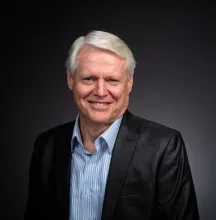
John Elliott serves in the role of President of the United Church of God, an International Association.
