

Paul Moody
This transcript was generated by AI and may contain errors. It is provided to assist those who may not be able to listen to the message.
Although we didn't have an announcement on this, I think it would be negligent for me not to say so.
I'd like to thank all of you. If you would have to have been hiding somewhere in a cave, not to know that they're getting married. Just to remind everyone, this is something that we're looking forward to. I know that they truly are. Quite a blessing. Brethren, throughout the history of the Bible, there's a group of men that God has used to help govern, teach, and make judgments as far as his people are concerned. You might remember God chose Moses to lead Israel out of Egypt to the Promised Land. Get back in Exodus 3, verse 16. After God had appeared to Moses in the burning bush, God told Moses this, Go and gather the elders of Israel together and say to them, The Lord God of your fathers, the God of Abraham, Isaac, and Jacob, appeared to me, saying, I have surely visited you and seen what is done to you in Egypt. So God told Moses to go talk to the elders. The elders were the leaders in Israel.
Moses worked through the elders to organize and guide Israel on their journey. Turn over to chapter 12. You find another reference in verse 21. It says, Moses called for all of the elders of Israel and said to them, Pick out and take lambs from yourselves according to your families and kill the Passover Lamb. The elders of Israel were responsible for the various tribes and sub-tribes and families, and so therefore they passed on to the people from Moses what the proper procedures were for the Passover. They were part of the government structure in that sense. Now in Numbers 11, we have another example here in the Old Testament, beginning in verse 16. Numbers 11 and 16. So the Lord said to Moses, Gather to me seventy men of the elders of Israel. Out of all of these elders out there, and there could have been hundreds of them, He said, You select seventy men whom you know to be the elders of the people and officers over them. Bring them to the tabernacle of meeting, that they may stand there with you. And then I will come down and talk with you there, and I will take of the Spirit that is upon you, and will put the same upon them. And they shall bear the burden of the people with you, that you may not bear it all yourself, or you may not bear it alone. So they helped to carry the burden of the people. In verse 24, Moses went out, told the people, the words of the Lord, He gathered the seventy men of the elders of the people and placed them around the tabernacle. And the Lord came down in the cloud and spoke to him, and took the Spirit that was upon him, and placed the same on the seventy elders. And it happened that when the Spirit rested upon them, that they prophesied, although they never did so again. So it was sort of like on the day of Pentecost, when they spoke in tongues. Here, they prophesied and was a sign that God was working with them, that God had given them His Spirit. As you read through the Old Testament, through the period of the Judges, through the period of the Kings, period of the Prophets, you will find the elders of Israel mentioned constantly. They were the ones who would sit in judgment in the gates. They would answer questions. They were supposed to know the law. They were the ones who had been around and supposedly had the experience and could teach the people. According to Baker's Encyclopedia of the Bible, here's a quote on the term elder. Persons who, by virtue of position in the family, the clan, or the tribe, or by reason of personality, powers, or stature, or influence, are through a process of appointment or ordination, exercise leadership and judicial function in both religious and secular spheres in the ancient world, both among biblical and non-biblical people. The roots of the development of the presbytery are the group of elders we find in the New Testament, and the post-apostolic church originated in Judaism and in the Old Testament. The idea of having elders in the New Testament rose out of what we see back here in the Old Testament. It says, though the figure of elder, our groups of elders can also be found in the world surrounding ancient Israel and the Greek-Roman world of the New Testament period. Now, with that in mind, let's go over to 1 Peter 5, verse 1. We could spend the whole sermon in the Old Testament. If you want to do a study, you have a concordance or you have one on your computer, just type in the word elder. Go through the whole Bible and study it, and you will find all of the scriptures that relate to this. Here in 1 Peter 5, beginning in verse 1, we have the Apostle Peter writing to the ministry. He says, the elders who are among you, I exhort. I am a fellow elder. Even though Peter was an Apostle, he was also an elder.
I am classified as a pastor, a church pastor, but I am also an elder. So you find, it says here, the elders who are among you, I exhort. I, who am a fellow elder, and a witness of the suffering of Christ, also a partaker of the glory that will be revealed. The word elder here in the Greek is where we get presbytery from, as far as the English language. It means an old man or an ambassador. No, I am really old. An old man or an ambassador. It means older, aged, an elder, or a senior. When it is applied to the ministry, the elders of the Christian Church are the presbyters, to whom it was committed, the direction and government of individual churches, and it is also equal to the Greek word, the episcopos. The word episcopos is translated, overseers are a bishop, in the New Testament. Wherever you read the word overseer or bishop, it is episcopos. We have taken the word elder, not to mean that you have to reach 60 or 70 years old before you can be ordained, but one who is older in the faith, one who is spiritually mature in the faith.
In verse 2, you'll notice, he says, To the elders, shepherd the flock of God, which is among you, serving as overseers. The word shepherd means to tend or to care for. So the job of a shepherd is to care for the flock. The job of a minister or an elder is to take care to tend, to look after that flock that has been given to their care. It says, The word serving as overseer, again, comes from the basic word episcopos. It means to regard, give attention to, to look upon, to examine the affairs of, to look after, to oversee. To oversee the health of the flock. A good shepherd looks at his sheep. If one is limping, what's wrong? Maybe it's got a rock stuck in its foot or cut itself. There's some other problem. So you look after, you oversee.
And from this word, we get the word that is translated, the office of a bishop. Now, you'll notice here, it says that you are the shepherd serving, not by compulsion, not because you're just forced to, but willingly, and not for dishonest gains, but eagerly, not in it for the money, not as being lords over those entrusted to you. Now, notice, you're not to lord it over the flock. Isn't that what Jesus Christ said when he said that he came as a servant? If you want to be great, serve. You're not to lord it over the flock.
And he talks about those who have been entrusted to you.
Brethren, you are the church of God.
Now, I want you to notice that name. Who do you belong to?
You belong to God. You are God's flock. But yet, as a church pastor, I have been entrusted with your care.
That means that God trusts me to look after you, to take care of you, to speak to you, teach you, guide you, to lead you. The word in the Greek means what has been assigned to someone's responsibility to take care of. And so, there are those that I've heard talk about, well, these are my people, my flock. Well, no, you're God's flock. You've been entrusted to my care. And when the chief shepherd appears, you will receive the crown of glory that does not fade away.
So, we have the responsibility to watch over the flock, to protect the flock, to tend the flock, to feed the flock, to care for the flock. That's part of the job description. This is my job description. And you know what? You have the right, when you look at those that God has set, as elders, or pastors in the church. Not just pastors, but elders. We have three of us here. Mr. Cowan, Mr. Martin, myself. We're all elders. You have a right to expect that the elders will watch after you, your spiritual health. That they will look after you, tend to you, protect you, feed you, take care of you. In chapter 20 of the book of Acts, verse 28, chapter 20, verse 28, Paul told the elders in Ephesus, Therefore take heed to yourselves, and to all the flock, among which the Holy Spirit has made you overseers. So it is the Holy Spirit that calls and places a person in that responsibility, that job, that duty, that says, among whom the Holy Spirit has made you overseers, the shepherd, the church of God, which he purchased with his own blood. So you and I are members of that body, of that church, because Jesus Christ made it possible. The word overseer here, again, is episcopose. It means a watchman, a superintendent, or an overseer, one who oversees, who watches. In the New Testament, the word bishop, episcopose, and the word elder, from which we get the word presbytery, are two names that identify similar office, similar job. The word shepherd here means to shepherd or to tend, just like a shepherd. Rather than you will find that there are four major responsibilities that elders have in the New Testament. We want to cover those today. We want to take a look at them. These are the standards that God will be judging us by. This is the standard that God judges me by. This is the standard that you have the right to hold the elders to, because this is what we are supposed to be doing. Let me cover these with you here quickly.
These are the job descriptions of an elder in the New Testament. Let's go back to John 21. John 21, verse 15.
Peter said he was an elder, just like all of the other elders. In 1 Peter 5, we read in verse 1. Notice Christ's instructions to Peter here. John 21, verse 15.
Christ said this. Notice, when they had eaten breakfast, Jesus said to Simon Peter, Simon, son of Jonah. Do you love me? That's from the basic root word from which we get agape, talking about godly love. Do you love me more than these?
Now, when you were baptized, same question was asked you. Do you love God more than all of these? More than anything, do you love God? That's what he was asking Peter. He said to him, yes, Lord, you know that I love you, filio. You know that I love you. He said to him, feed my lambs.
Peter used the word filio, which generally means affection for someone. So he said, yes, you know I have affection, I have love for you, you're my friend, you know, we get along, you're great. Now, I want you to notice what he said here. He said, feed my lambs.
Now, he uses the word lamb here. The word feed comes from the Greek word bosco, B-O-S-K-O, and it means to feed sheep to pasture or tend while grazing. It's used metaphorically of Christian ministers for teaching or for instruction. You might remember in the Old Testament, every Sabbath, there were 12 loaves of showbread. Every Sabbath, those were replaced. They were put on the table in the tabernacle. Those loaves were there, and symbolically, that first room, the Holy Place, not the Holy of Holies, but the Holy Place, in which was the candlestick and the table of showbread, that is the type of the church.
We are God's Holy Place. We are where God dwells on earth today. He dwells in heaven, which is what the Holy of Holies symbolizes. But you find every Sabbath that bread was changed. Every Sabbath you come to church, and you have the bread of God given to you, the Word of God, taught to you.
Just hold your place here. Don Ward emphasized this several times. I think I need to remember it. John 6, verse 63, but John 6, 63, it is the Spirit that gives life. The flesh profits nothing. The words that I speak to you are spirit and are life. So the words that we speak out of this book are spirit and their life. These are not just human words. These are the spiritual words that come from God.
They convey life, the way of life, the way of life that God wants us to live. This is what we are to practice. In verse 16, I want you to notice verse 16 and 17, he said to him again a second time, Simon, son of Peter, or son of Jonah, do you love me? Do you agape me?
He said, yes, Lord, you know that I love you. You know I have affection for you. He said to him, tend my sheep. In one place, he says, feed my lambs. In the other place, he says, tend my sheep, or shepherd my sheep. Then in verse 17, he said to him the third time, Simon, son of Jonah, do you love me?
This time he said, do you have affection for me? He said to him, Lord, you know all things. You know that I love you. You know I have the same affection for you. Jesus said to him, feed my sheep. Now, it's interesting, quoting from the complete word study dictionary of the New Testament here, what it says about verses 15-17 summarizes it and puts it all together. In John 21, 15-17, the Lord commands Peter to feed, first, the lambs. And secondarily, the sheep, perhaps representing the young and the old, those who are newly converted. Those who have been around for a while. You feed the new lambs, you feed the sheep, both of whom need feeding.
Although it's possible to understand the latter as a term of endearment used to intensify Jesus' appeal. In verse 16, however, the Lord did not use the word feed, B-O-S-K-E, bosque, again, but shepherd my sheep, which involves the total care of the sheep. So in verse 15, he says, feed my lambs. Verse 16, he talks about tending or shepherding the sheep. It says in the spiritual realm, the Lord wants to teach Peter that caring for the older Christians involves more than just caring for lambs, representing the younger Christians.
In verse 17, the Lord repeated the commandment to feed because he wants to make sure that feeding is included in the shepherding. So if you're going to shepherd the sheep, you need to feed them. If you're going to look after the lambs, what is it that normally a brand new person, remember back when you were brand new and you were just learning the truth, how eager you were to learn, couldn't get enough of reading the magazine, the booklets, the articles, you'd have a visit. I remember once Norma and I went out to visit a lady, and she said, I've got a notebook full of questions.
We sort of laughed at her because I had a lot of people say that. Maybe they'd have half a page. This woman had a notebook full of questions, and we covered a page or two, and every time we'd go back, you got your notebook, and we'd cover another page or two. I don't know that we ever got through her questions. I hope that as she began to attend, she got her own answers, new from studying and hearing sermons. So the same thing is true here. The ministry, and Peter, as an elder in the church, was told to feed the flock, look after that flock, tend it, care for it, and take care of the lambs as well as the sheep.
Second Timothy, actually should be First Timothy, First Timothy chapter 3 and verse 2. We have listed here the qualifications of an elder. First Timothy 3 verse 2. It says, A bishop must be blameless, the husband of one wife. That means a one wife or a one woman man. Temperate, sober-minded, of good behavior, hospitable, able to teach.
You cannot be an elder and not be able to teach. It doesn't say preach, it says teach. You have to be able to teach the Word of God. Explain it, expound it, convey it, answer questions. So you have to be skilled in teaching to educate and to nourish. If you go on down and read the qualifications of a deacon, you'll notice that the qualifications of an elder and a deacon are strikingly similar. You know what the one difference is? Able to teach. An elder is to be able to teach.
One of the requirements is to be able to teach, educate, nourish, convey to the people of God. Titus chapter 1 verse 7, again we have the qualifications of an elder outlined here.
Beginning here in verse 5, it says, It says, Now it's amazing you will find, just a side note, Apostle Paul would come in and raise up a church. He had men like Titus and Timothy who traveled along with him, who observed what he did. A lot of times he would leave one of them in an area to pass through the church for a while to build it up. And then in every city, they went around and ordained elders. Now how could they do that so quickly? They did it a lot quicker than we do. Now of course, in many of these areas, they were ordaining people, had a biblical background, maybe a Jewish background. They knew the law, knew the commandments, and just didn't know about Jesus Christ. But they did ordain elders quite quickly. It says, For a bishop must be blameless, a steward of God, not self-willed, not quick-tempered, not given to wine, not violent, not greedy for money. You can go on and read all of this. But in verse 9, He is to hold fast the faithful word, as He has been taught. He is to teach, as He has been taught, that He may be able by sound doctrine, both to exhort and convict those who contradict.
So by sound doctrine, by teaching, instructing those who come up with strange ideas, wrong teachings, that He would be able to show them the error of their way and teach them and exhort them that go in the right way. In 1 Timothy 5 and verse 17, remember, we're talking about one of the qualifications of an elder is to be able to teach, to feed the flock. 1 Timothy 5 and verse 17, Let the elders who rule well be counted worthy of double honor, especially those who labor in the word and the doctrine, who do the teaching. And then in Acts 20 verse 27, we'll come back to Acts 20 quite often, but Acts 20 and verse 27, the apostle Paul told the elders in Ephesus, I have not shunned or avoided, I have not neglected, I have not shunned, to declare to you the whole counsel of God. I've laid the whole plan out. I've told you everything. I've instructed you. And so Paul taught them. So, brethren, one of the duties of an elder is to teach. And I think to a certain extent, especially if you're going to be a pastor, you have to be able to preach. If you can't preach, you've got a problem, because that's one of your main duties and responsibilities. Okay, the second duty of an elder is to lead the flock. He is to be the leader, the guide of the local congregation, the flock.
Take a shepherd, a flock. You're out here on the hillside. Shepherd wanders off. He's nowhere around. What's going to happen to the flock? They're going to be scattered. They're going to be wolves who will come along. There will be all kinds of problems that might develop. You know, they get scattered. They start looking for water and food. In 2 Samuel 5 and verse 1, we have the example of David mentioned.
2 Samuel chapter 5 and verse 1. David was known as the shepherd king. He had been a shepherd growing up, and he became king. In verse 1 says, All the tribes of Israel came to David at Hebron, and spoke, saying, Indeed, we are your bone and flesh. And in time passed when Saul was king over us, you were the one who led Israel out and brought them in. And the Lord said to you, You shall shepherd my people.
You're the one who's going to shepherd the people, look after the people, lead the people, guide the people. You shall shepherd my people Israel, and be ruler over Israel. Therefore the elders of Israel came to the king at Hebron, to King David, and made a covenant with them at Hebron before the Lord. And they anointed David king over Israel. So even though David was king, it was the elders who anointed him to be king and to be a shepherd over Israel.
What practice do we find today? When a new elder is ordained, there are the pre-existing elders who anoint him. We don't anoint him, we lay hands on him. Back then they would take a curse of oil or a vial of oil and break it over his head. They would lay hands on him. They would set him aside.
In Psalm 23, we're all very familiar with the 23rd Psalm. Notice what David said about the chief shepherd. And yet this would apply to David, and this should apply to any man who is an elder in the church. But notice he says, the Lord is my shepherd.
I shall not want. He makes me to lie down in green pastures. He leads me beside the still water. The shepherd is the leader. The shepherd is the guide to lead the flock, to direct the flock. He restores my soul. He leads me in the paths of righteousness for his name's sake. And yea, though I walk through the valley of the shadow of death, I will fear no evil, for you're with me. So when there are problems, the shepherd is to be right there, to look after that flock, to take care of that flock. Then you prepare a table before me in the presence of my enemies.
You anoint my head with oil. And he goes on to talk about it. The 23rd Psalm is a psalm I read to know what God says he will do for me, but also what I, as a shepherd who has been entrusted with the flock, should do for you. And so it works both ways. An elder in the Church today has the responsibility to lead, to organize the Church, to manage the Church, to oversee the Church, to make sure that all of the duties are carried out, the organizational chart, the socials, responsibility, finances, everything is taken care of. It doesn't mean that you have to do everything, but you have to oversee it.
You've got to look after it. You've got to make sure that it gets done. He must have character and integrity to be trusted to handle people in the right way. You don't want to put a shepherd in charge of the flock who doesn't like sheep. And so when the sheep maybe begin to stray, he takes his club and he goes over and beats him over the head with it. That's not the kind of shepherd you want. You want one who will, hey, come back here and lead them in the right way and feed them and gently guide them.
David did this in 2 Samuel 8, verse 15. You find about David how he ruled ancient Israel as a shepherd over Israel. In verse 15, David reigned 2 Samuel 8, verse 15.
Not to the elite, but to all the people. Brethren, in the kingdom, jot down Isaiah 9, verse 7, because in the kingdom of God, when Christ comes back, in the millennium, we find that he will administer judgment and justice to the whole world at that time. And you and I will not be there unless we learn how to administer judgment and justice. And so you have to be able to do that. Titus 1, verse 5, one other scripture here about leading the flock.
The local congregation has every right to expect that things will be organized and run smoothly in order. But let's notice here in Titus 1, verse 5, It says, It says, The things that are lacking appoint elders in every city. Verse 7, The word steward means one who is an administrator, a person who manages the domestic affairs of a house or a business, or a miner or a treasurer or a chamberlain of a city, a house manager or an overseer. A steward. So in this particular case, an elder, a pastor, is one who oversees the church. He manages the church. He overlooks the family, the flock that God has given to us. So the second duty of an elder is to lead the flock, to guide the flock. Thirdly, the job of an elder is to help meet all of the practical needs of the flock. There are other things that don't just fall under what we were talking about here. But to meet the needs, you could summarize it, of the flock. And I would say to meet all of the practical needs of the flock. There are physical needs. There are emotional needs. There are spiritual needs that the flock has. This involves spending time with your sheep, visiting, counseling. If someone is sick, you know, I don't know that we say this at all, but if somebody is sick, they call us any hour of the day because we're here to help and to serve. If somebody is sick, they call for the elders, as the Bible says. Serious problems or sicknesses, people generally call for the pastor of the church first. We have to comfort the bereaved when somebody has died. We have to perform funerals. One of the saddest times I've ever had, as far as funerals, is to bury babies. A child stillborn or a child that dies at an early age, and to have a funeral. Those are times when people ask why. Or if somebody is terminally ill, they have cancer or some serious problem, and they're not healed. Whether or not they're healed immediately, and they're going through this trial, or this test. Major tests and problems and difficulties come up. You have to help those individuals. We have needs. Sometimes it might just be physical needs. Ministers are servants, and we are to look after the needs of the people. We have to be people-people. You type that on the page, and the computer says error. You've got two words, same words, following each other. So you have to put a little dash in between it. So we have to be people-people. We have to be people who love people. Now, as one minister years ago said, this would be a good job. We didn't have to worry about people. Well, that is the job. You look after the sheep. You tend the sheep. You care for the sheep. You comfort the sheep.
We have to be good with people. If you're not, you need to be doing something else. Not everybody is cut out for that. Let's notice in Acts 20, the apostle Paul's instruction, again here to the elders in Ephesus, beginning in verse 33.
In verse 33, Acts 20, Paul said, I have coveted no one's silver or gold or apparel. Yes, you yourselves know that these hands have provided for my necessities and for those who were with me. So Paul was a tent-maker, and he didn't try to take the tithes and offerings and he was accused of being in it for the money. He made tents and took care of others. I have shown you that in every way and by laboring like this, that you must support the weak. As an elder, you have the responsibility of supporting those who are weak. Sometimes a person is spiritually weak. Sometimes they can be physically weak, and they need help. Remember the words of the Lord Jesus that he said, it is more blessed to give or to be giving than it is to be receiving. So it's more blessed to give than to receive.
So you have the right to expect that the ministry, the elders, will help take care of your needs when you have those needs. And then, fourth, we could give sermons on each one of these, but I'm trying to give you a summation for several reasons. One, so you know what's required of an elder. Anyone who does that or a pastor. And also, a reminder to myself of what I need to be doing as such. Number four, the job of an elder is to protect the flock. To protect the flock. One way to protect the flock is to immunize or to inoculate the congregation with good teaching.
To give everyone a basis through good teaching, to make judgments, to be able to evaluate, to know right from wrong. Let's go over to 1 Timothy chapter 6. 1 Timothy, the sixth chapter. As I mentioned earlier, 1 and 2 Timothy and Titus are books that are written to young evangelists. Telling them how to carry out their jobs and their responsibilities. Beginning in verse 3, he had just gotten through telling Titus or Timothy here what to teach the people. Last sentence of verse 2, teach and exhort these things. And if anyone teaches otherwise, it does not consent to wholesome words. The word wholesome here means sound or health giving.
Health giving words. Words that give and help your spiritual development, your spiritual growth. Consent to wholesome words, even the words of our Lord Jesus Christ, and to the doctrine which accords with godliness. If he is not willing to do that, he is proud, knowing nothing, but is obsessed with disputes and arguments over words, from which come envy, strife, reviling, and evil suspicions.
Whenever you see disputes and arguments over words, envy and strife, evil surmising, evil suspicion, that's not of God. That's not the right way. Useless wrangling of men, of corrupt mind, and destitute of the truth, who suppose that godliness is a means of gain from such withdrawal yourself. Now godliness with contentment, he said, is great gain. You know, there are some foods that you can eat that will build your health, will strengthen you. Some foods you eat, they're going to hurt you. If all you eat is a fast food diet all the time, you go to... I won't mention any place, but to the max and to these places, and you just make that your steady diet, guess what? You're going to hurt your health eventually. You need to eat wholesome food. Food that has a little life to it, hasn't been processed to death, hasn't been genetically engineered, where we don't know if it's food or it's not food, whatever it might be. So, it's important what you do listen to. Spiritually speaking, it's important to what you study, what you allow to come into your mind, what you hear, what you listen to, because there are things that can lead you astray. I will guarantee you, you can go out on the Internet, and there will be a thousand different churches out there that you can study what they have to say, and they will lead you right out of the church, because they will have their own brand, their own ideas, their own philosophy of teaching. Back here in 1 Timothy 1 and verse 3, Paul told Timothy, As I urged you, when I went into Macedonia, remain in Ephesus, that you may charge some, that they teach no other doctrine, nor give heed to fables and endless genealogies, nor cause disputes, rather than godly edification, which is in faith. Now, the purpose of the commandment, the purpose of this charge, is love from a pure heart and a good conscience, and from sincere faith, which some, having strayed and turned aside to idle talk, desiring to be teachers of the law, understanding neither what they say nor things which they affirm. So you and I are not to teach or believe any other doctrine. What we have learned, what we know is fundamentally true, what we see in the Scriptures, this is spirit and this is life. We don't want to give that up. Chapter 4, 1 Timothy 4, beginning in verse 1, Now the Spirit expressly says that in the latter time some will depart from the faith, giving heed to deceiving spirits and doctrines of demons. And people will speak lies in hypocrisy, having their own conscience seared with a hot iron. Verse 6, If you instruct the brethren in these things, you will be a good minister of Jesus Christ, nourishing the words of faith, and of the good doctrine which you have carefully followed. So one way of protecting the flock is to inoculate the flock with good teaching. Now let's back up. There are several other Scriptures we could cover, but we're running out of time here. Let's back up to chapter 20 again, the book of Acts. Acts chapter 20, verse 17. Chapter 20, verse 17.
From Myeletus he sent to Ephesus and called for the elders of the church. So all of the elders in Ephesus came to Paul, and Myeletus, or Myelita. Verse 25, he says, Indeed now I know that you all, among whom I have gone preaching the kingdom of God, will see my face no more.
This is probably the last time you're going to see me, he said. Therefore I testify to you this day that I am innocent of the blood of all men. For I have not shunned to declare to you the whole counsel of God. You can't come back and say, well, Paul didn't tell us the whole story.
He said, I've laid the whole load on you. I told you everything. Therefore, verse 28, Take heed to yourselves, and to all the flock among which the Holy Spirit has made you overseers. Bishops, to look after, to watch, to shepherd the ten, the flock, of God, the church of God, which he purchased with his own blood. For I know this, he says, that after my departure, savage wolves will come in among you, not sparing the flock. You look the word savage up, and you will find the word savage means vicious or cruel. Vicious or cruel?
Fierce. In other words, a wolf, a panther, a bear, a lion attacking the flock doesn't care for the flock. He's just out to devour. He's out to destroy. He won't care for the flock. A wolf will not. He won't love the sheep. He won't help the weak. Basically, you find today, in so many cases, what they want to do is to merchandise God's people. Take God's people for the money, for what they can do for them, what they can give to them.
And the motives are wrong. And so he says, look, you need to be careful. This will happen. You'll have those who will come in, and they will not spare the flock. He's very pointed. And when I, as a pastor, look at my flock, and I see people who begin to do that, I become very protective.
I become very concerned. And I've had people say, well, you shouldn't get so upset. What do you mean you shouldn't get upset? What did David do when he saw a lion come and grab one of the sheep? He said he went up and grabbed it by the beard, pulled the sheep out of its mouth, and he smoked the thing. And the bear, when the bear did the same thing, he grabbed it, got the lamb back, and he smoked the lamb.
And when they attacked him, he killed them. And so you find that David had very clear picture what the job of a shepherd is. And as a shepherd, you never know when a wolf is around, or a lion, or a bear. Some type of predator is lurking in the bushes. You don't know. But when they strike, that's when you have to come to action. So you can't be lazy. You can't be someone who just doesn't care.
You've got to always be on guard. And when it happens, you take care. And so, going on in verse 30, he says, The word perverse means misleading things, to mislead people. The Greek word means to call someone to depart from correct behavior, and thus engage in serious wrongdoing. To lead astray, to pervert, or to mislead. And why would they do this? Notice. Rise up, speaking perverse things. What is their motive? To draw away the disciples after themselves.
That's why they want a following. They want somebody to follow them. So they want followers, they want the money, they want to get a following after themselves, to feed their own pride and their own ego. So the ministry must protect the flock at all costs. We do not allow wolves in our midst.
When we find them, we tell them, If you're going to teach false doctrine, you're not welcome here. That's very plain. We don't distribute other people's literature here. We teach what we've always been taught, how to God's word. And if somebody wants to go off and do something different, they're not going to do it here, to lead God's people astray.
If the apostle Paul, and just a theoretical question here in verse 30, if the apostle Paul came back to the city of Ephesus, and some of these elders were drawing away disciples after themselves, would Paul say, that's okay? Would he say there's no difference between us?
Or would he say, don't follow these men? I mean, isn't that exactly what he's saying here? He's explaining ahead of time what's going to happen, so that when it happens, you're not ensnared by it. You're not entrapped by it. So the same is true for us today. David realized that with the flock, if a wolf got in among them, a lot of times lambs have no protection whatsoever. They're easy prey. They don't have a staff, they don't have horns, they don't have a way of fighting. They depend upon that shepherd to look after them, to take care of them, to love them, to feed them, to protect them.
You cannot negotiate with predators. A predator comes along, out. You don't negotiate with them. The same thing is true today. There are a number of scriptures you could cover. Jesus Christ said that if you're a hireling, when the wolf comes, the hireling flees. That a shepherd must stand there with his flock. If a bear is attacking, he goes down with the bear. He protects that flock. He guides and directs. I want you to notice Jesus Christ at the very beginning of his ministry in chapter 7 of the book of Matthew.
In verse 15, the Sermon on the Mount is some of the very beginning of the teaching of Jesus Christ. Instruction to his disciples. I want you to notice what he taught here. Beware of false prophets. In the very beginning of his ministry, he said, you've got to beware of something, of false prophets, who come to you in sheep's clothing.
They're not going to come dressed up like wolves. They're going to come in among us dressed up like sheep. But they are ravenous wolves, and you will know them by their fruit. So, brethren, you and I need to realize that there are those who do this. God has given us as shepherds the responsibility to look after the flock, to watch out.
God has placed elders in the church to shepherd the flock, take care of the flock, to love the flock, to look after the needs of the flock. There are four major responsibilities that I've covered here. There are probably many others, but you can sort of classify almost everything under these. To feed the sheep, to lead the sheep, to meet the needs of the sheep, and to protect them. So, brethren, these are the standards that God holds all of us to. And again, these are the standards that you can expect all of us to practice, to live by, and to display in our service to you.
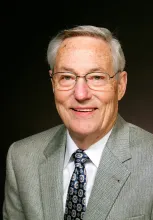
At the time of his retirement in 2016, Roy Holladay was serving the Operation Manager for Ministerial and Member Services of the United Church of God. Mr. and Mrs. Holladay have served in Pittsburgh, Akron, Toledo, Wheeling, Charleston, Uniontown, San Antonio, Austin, Corpus Christi, Uvalde, the Rio Grand Valley, Richmond, Norfolk, Arlington, Hinsdale, Chicago North, St. Petersburg, New Port Richey, Fort Myers, Miami, West Palm Beach, Big Sandy, Texarkana, Chattanooga and Rome congregations.
Roy Holladay was instrumental in the founding of the United Church of God, serving on the transitional board and later on the Council of Elders for nine years (acting as chairman for four-plus years). Mr. Holladay was the United Church of God president for three years (May 2002-July 2005). Over the years he was an instructor at Ambassador Bible College and was a festival coordinator for nine years.
