

Peter Eddington
This transcript was generated by AI and may contain errors. It is provided to assist those who may not be able to listen to the message.
Have you ever watched a nature show in which wild animals, like a wildebeest or caribou, give birth to a live calf or whatever they're called in those species? Have you ever seen a little calf born or a horse if you grew up on a farm? It usually takes place for a wild animal and sometimes even for domesticated animals in an open field and in a barn for a domesticated animal. Mother doesn't go to the hospital. They don't have a doctor hovering over them. They don't have all kinds of equipment hooked up to them, looking at their blood pressure and all of this stuff. No one is there generally to help an animal. They just give birth. Little animal comes into this world by instinctive natural processes. Almost immediately you will see an animal like this start struggling and they're standing on their feet. In fact, I remember seeing a nature show where the wildebeest, there were just thousands, tens of thousands of bees moving along. And unless the little, we'll call it a calf, got up on its feet and was able to run, it would be killed by lions and other predators. Same thing with the caribou and wolves, you know, any other type of predator. They may stand up, be a little wobbly to start with, but in a few minutes it's on its feet. Nobody teaches it how to walk. Nobody teaches it how to run. It just comes natural. Doesn't have to wait a year to learn how to walk and hold the table or the couch or chair while it's trying to learn to walk. Now, they don't have to wait for food either. For some reason, there seems to be an instinctive radar. It's almost zap back here, and they go for the food, and they know where the food is. No newborn child knows that much, yet human infants have something that animals don't possess. Humans have a mind, and a human baby has a mind. Humans grow up, they learn, and they're taught. One of the basic things every human being needs to learn so vitally as it grows up and as it matures is emotional maturity. Now, there are many areas that we have to grow in, but the human mind is something that can grow and develop. The human mind has something that's important when it comes to our human emotions. Our emotions need to be understood, they need to be taught, trained, and controlled by the mind, and not just left to run amok by themselves. No one is born with emotional maturity. You have to learn it, it has to be developed, and it's something that a little baby, when it's born, is helpless, it knows nothing at birth, and it has to grow, and it has to mature. So when I use the word emotional maturity, what do I mean? What does emotional maturity mean? What does it mean to you? If you know the meaning of the term, and yet it's really one of the real secrets of happiness and of life, I think we can know if we're emotionally mature or not.
Now, the question is not just what is emotional maturity, the question is, are you, am I, emotionally mature? And does it have a spiritual element? Well, I find I fall far short. When it comes to having the real type of maturity that we should. No one is truly grown up, is really mature, until he or she has not only attained physical maturity, mental maturity, spiritual adulthood, and emotional maturity as well. So where do you find this talk? When you go to college, do you take a course on emotional maturity? Going through high school, grade school, are there classes on maturity? And, you know, different levels of emotional maturity. Where can you go to learn how to be emotionally mature? Let me illustrate what I'm talking about.
One time there was a veteran teacher who was certain she was going to get a promotion. Because she had seniority on the job. She had 20 years of teaching, and she outranked all the other teachers by her seniority. When the appointment came, they gave it to another teacher who had less experience than her. And she blew up over this and became very irate. Went and talked to the chairman of the school board. And he responded to her in this way. Dear lady, you haven't been teaching for 20 years. You've taught one year 20 times.
Now, we need to ask ourselves the question, are we the same way? Are we just living every year exactly the same? Does your maturity, does my maturity, match our chronological age? Do we grow a little wiser, a little more mature with each year of life? Do we learn more? Are we able to change? To find out if you're growing or just getting older, consider some of the following measurements of age. And there are a number of ways that you can look at age.
Number one is chronological. Chronological age is measuring the time a person is lived. So how old are you? So you're five, 10, 15, 60, 70, 100. How old are you? Physiological age refers to the degree which systems of the body have developed relative to chronological age. So you're growing up, how's the health of your lungs? Are they working properly? What about your kidneys, your liver? Main one is the brain. How are the various systems of your body really functioning? Intellectual age refers to whether a person's intellect is below, above, or equal to his chronological age. So when a child goes to school at age five, they say, well, he should know so much. Age seven or age 10 or age 12. So they begin to evaluate you on your intellectual age. Sometimes, you know, they try to figure IQ into that. And, you know, so you come up in intellectual age. Social age. Social age compares social development with chronological age. It asks the question, does the person relate as well socially as he should for his age? Do you act like a child, even though you are an adult?
We've all seen children throw temper tantrums, lie on the floor and kick their feet and scream and yell. Sometimes, adults do the same. It doesn't come out in the same way, but, you know, they throw temper tantrums. What about emotional age? Emotional, like social age, compares emotional maturity with chronological age. It asks the question, does this person handle his emotions as well as he should for his age? You don't expect a two-year-old to act like a 20-year-old. And perhaps a 20-year-old doesn't act like a 70-year-old. So, you know, there are differences in them. And then finally, there is spiritual maturity. That's the one we're all truly striving for. Spiritual maturity compares our maturity and our conversion experience. It asks the question, does this person handle himself in a godly manner as well as he should for his spiritual age?
How long have you been in the Church? One year? Two years? Five years? Ten? Twenty? Fifty? Okay, how do we handle ourselves for the number of years that we've known the truth in God's way? How are we responding to it and living by it? Now, we have very little control over chronological age. You're not going to reverse that. Only minimal control over intellectual and physiological age. However, we can choose our spiritual age, our social age, and our emotional age. That is something that you have the opportunity to work on. Learning appropriate social skills, developing emotional and spiritual maturity, are choices that are afforded to every person. Every one of us has a choice in those areas. Just because somebody has grown up chronologically doesn't mean that they're grown up emotionally. In fact, many times the two are nowhere near. Here's a chronological age. Here's the emotional age. There can be a wide gap between the two. Most people give little or no thought to the matter of emotions. Humans start lives as babies. We have to grow up. But to fulfill the purpose of life, we have to grow not only physically, but we have to grow mentally, spiritually, and emotionally. All of these have to work and unite together.
Do you ever stop to think about how many people think primarily only of obtaining physical age? You know, young people, glory, and their physique or their skills or their abilities.
You know, when it comes to sport or any activity that's affected by size and strength, if you're a 12-year-old and you are already started through puberty, and the rest in your class have not, guess what? You're probably bigger, stronger. You're growing hair on your chest or your face. When it comes to playing football, basketball, any of these type of sports, hey, you're way ahead. You just run through, knock over, run down, you can shoot better, jump higher, and do all of this. But you find that people look at that. Young girls, as they begin to mature and blossom into a young adult, you begin to look at themselves. And we begin to evaluate ourselves on our looks, and our values begin to, let's say, focus on those type of things instead of the real values. Because guess what? Eventually, everybody's going to grow older, and we're all going to chronologically mature, some at a little slower pace than others. But the real values are what we need to focus on. Do most people really give a lot of thought to spiritual growth? See, no person can achieve true emotional maturity unless he attains spiritual maturity as well as physical growth. A two-year-old is not going to have the emotional maturity that he needs or the spiritual maturity until he grows older. So just what is emotional maturity? Well, let me give you the definition I'm going to work with today. You could probably go out there and find dozens, maybe hundreds of definitions. But I like this one. One author stated it this way. Emotional maturity is development from a state of taking to a state of giving and sharing.
Moving from taking to giving to sharing.
As we know, there is a spiritual principle connected with this and involved with this. Developing from natural impulses and responses, human nature tends to be the principle of loving one's self. Whereas the Bible says we should love our neighbor as ourself. That's not natural to human beings. We have to learn that. It's something that we have to be taught that this is the way that God expects us to live and that we need to begin to consciously try to live that way. And we need God's help to be able to do it. It's not something that is instinctive. The baby is not born with that. Human nature is contrary to it. God's law is based upon the principle of giving. That's the basis of God's law. It is its basis is love. Love is outgoing. It's an outgoing concern. Human nature is a magnet and it pulls in the direction of the self. That's what human nature is all about. It revolves around the self, me and I, instead of being concerned for others. The key indicator of spiritual maturity. You want an indicator? You want something to look at yourself? It is the ability to love in a godly way.
The ability to love in a godly way, to be spiritually mature, is to be like God. We have been called to imitate Him. Notice what Paul wrote over here in Ephesians chapter 5 and verse 1. Ephesians chapter 5 and verses 1 and 2. I therefore be imitators of God as dear children, and walk in love as Christ also has loved us and given Himself for us as an offering and sacrifice to God for a sweet-smelling aroma. So, you and I are told to be imitators of God. If we find out that this is the way God thinks, if this is His view, if this is the way He wants us to live, that's what we're supposed to do. You might remember the Apostle John back in 1 John 4 and verse 8. We read, whoever does not love does not know God because God is love. That's what God is. He is love. To know and to be like God is to develop a capacity for godly love. The Spirit of God influences us to love. It stands to reason that the more of God's Spirit we have to guide us, the greater will be our capacity and our inclination to love in a godly manner and to imitate God and to be more spiritually mature. Romans 5.5 tells us that hope does not disappoint because the love of God has been poured out in our hearts by the Holy Spirit who was given to us. So where does the love of God come from? It flows from God's Spirit. It's not something that we have naturally. It is a gift of God. Now, we humans are equipped with emotions. You know, anger. We get upset. We can be happy, joyful. You know, we can get excited. You know, there are all kinds of emotions. And many times there's an important truth that many in society especially overlook.
While animals are guided by instinct into the course that they do, you know, every year birds come back to the same area and they build their nests. They migrate. They come back. We know that wild animals do certain things. What makes a good deer hunter? You know the pattern of deer. You find out where they travel. You find out where the rubs are. You see where they bed down. You know what they eat and what they feed on. And so therefore you put yourself smack dab where that is and your chances increase exponentially. If you just go out and sit in the edge of wood somewhere, forget it. You know, maybe something might come along. Well, that's the way animals are. But God has made man with much higher potential and with power and you giving man certain powers and potential. God has given to us, and I spoke on this, gave a couple of sermons, on the spirit in man. That has been implanted in our brains and it gives us the power of a human mind to be able to reason and to think. It gives us intellect and it even imparts certain spiritual qualities.
Animals cannot appreciate a Gainsborough or a Rembrandt or a Goya painting.
They cannot appreciate Beethoven's Sonata or Schumann's Concerto or the literature of a great author. They don't know anything about that. They can't judge scientific knowledge, weigh facts, make decisions, render judgments, exercise self-discipline, or even develop character. Animals cannot attain access to Almighty God the way we human beings do. They cannot be begotten of God. They cannot be children of God. They cannot enjoy a relationship with God. They cannot have their minds open to understand the truth of God, read the Bible, come to change their life. They cannot comprehend spiritual truths and become born of God into his family. Man was put on the earth to attain something infinitely higher than animal destiny. I remember when I went out to Pittsburgh as a trainee. Back in 1963, one of the first questions I was asked, is God going to allow my little dog to go to heaven?
Will he be resurrected? That type of question. I think there was a situation with a horse where the individual wanted us to anoint their horse. I forget what the particular problem was, but people become so attached to their animals, they can't think of being in the resurrection without that animal. Man was intended to develop spiritual godly character to become like the supreme god. This all comes through the marvelous human mind that God has given to us. We come to the knowledge of God's way through the mind. Not only spiritual development, but emotional development is developed through the mind. Emotional development comes about because of right knowledge, creative thinking, making right decisions, using the will, applying self-discipline, and through the Spirit of God, dwelling in us. To rightly direct our actions is one of the main reasons and purposes of life. God wants us to direct our actions according to His way. Notice Psalm 119. Psalm 119. Verse 105.
We read this. Psalm 119.105. Your word is a lamp to my feet and a light to my path.
The word of God is like a lamp to illuminate the way that we should go. God's word directs us. It directs us not only in just customs and traditions, but it shows us how to think. It shows us what God's Spirit will do for us once we have that Spirit. Unfortunately, we live in a secular age today in the world, which most people assume humans to be the highest of the animal kind. I think, as I mentioned here recently, I'm not an animal. Neither are you. We are human beings. We were created with the potential of becoming God. They fail to realize or comprehend the magnitude of human potential. Many people allow themselves to act thoughtlessly on impulse, on feelings, moods, emotions, being swayed and buffeted about by troubles, tragedies, sufferings, trials, and irrational actions. They don't think there's anything wrong with that. One is not really mature until emotionally and spiritually we grow up, as well as physically and mentally. This is where, if you are a parent and you still have children at home, it's your responsibility to help train your children to begin to develop emotional maturity, to teach them to control their tempers, their impulses, their feelings, their anger, their moods, to teach restraint of selfishness and vanity, to teach them to have outgoing concern for others, to have outgoing love for others. We've got to teach them these things and provide opportunities for them to experience this. Remember, the key indicator for spiritual maturity is one's ability to love in a godly way. Again, you can't emphasize it enough. No person attains true emotional maturity until he obtains spiritual maturity.
We need to keep in mind that emotional maturity does not mean emotionless maturity. It doesn't mean that. The truly emotional mature controls these emotions, but he does not anesthetize them. You don't kill them. They're not so under control that you're not able to express them. You do express them the right time and the proper degree, the enthusiasm, happiness, joy, excitement that you should. They're attributes of God's Spirit. They do feel deeply, and we should feel deeply, have deep gratitude to God, have deep reverence for God, natteration, and our worship of God. We should feel compassion towards others, have sympathy towards others, empathy for what people are going through. Emotional maturity does not crucify emotions. It controls and guides them according to right knowledge and true wisdom. Emotional maturity develops hand in hand with physical, mental, and spiritual. The four of these blend together and make for a well-balanced individual. Now, let's look at three categories into which most people generally fall when it comes to emotional maturity. Again, these are general. You can't just peg everybody into them, but in most cases they do. Number one is emotional extremes. People who go to emotional extremes, their mere babies, emotionally, never occurs to them to put any checks or controls, balance on their emotions. Many times their feelings are worn on their cuffs, and their tempers fly uncontrolled. They flatter, they gush, they exaggerate, they compliment, they seek praises of others. And there are a lot of religious sects that deliberately appeal to the overly emotional.
Number two are those who go to the opposite extreme of stifling emotions. So you have those who are emotionally extreme, then you have those who stifle their emotions.
Often these are the intellectuals of society. So you might say, well, that doesn't include me.
But the intellectual, the highly educated, though they're usually miseducated, they control their emotions with their minds to the extent that their emotions have been stifled, in many cases put to death. They don't express anything. They no longer feel deeply about anything. We should be able to be moved and feel deeply. They're to utterly devoid of real sincerity and depth of gratitude, any feeling or compassion or real sympathy. And thirdly, there are those who either choke off their emotions with mental control or exert energy in generating them.
Let me read that again. They neither choke off their emotions with mental control nor exert energy generating them. They are listless, indifferent. I've heard people say quite often that the opposite of love is hatred. Now, the opposite of love is indifference. If you love somebody, you're not indifferent to them.
Love is an outgoing concern. You're not indifferent. They feel no purpose in life. They have no ambition. They have no spark. They do not radiate. They have no personality. There isn't enough life in them to generate a spark. So, that's just the way they are. However, there is a fourth category, and this is what we want to strive for.
It is an emotionally mature person who handles his or her emotions properly without going to either extreme, who's yet able to generate enthusiasm, purpose in life, and excitement. Let's notice in Ephesians 4. Ephesians 4 and verse 15. Ephesians 4.15. We're told here, speaking the truth in love, that we may grow up in all things unto him who is the head of Christ. We know that we are to grow up. That means that we are to mature. We are to become mature Christians in knowledge intellectually and understanding application of that knowledge. But isn't growing up part of growing up to grow up also maturely, emotionally?
That we are to be emotionally mature? Emotionally mature individuals generally find that they enjoy things in life that include other people. And emotionally mature people are more enjoyable to be around. They're less chaotic than people who are emotionally immature. Now let me give you some of the characteristics of emotionally mature people. Let's get down to some brass tacks here. How can we tell, perhaps, if we're emotionally mature or not? Number one, the ability to give and receive love is one sign of being emotionally mature. The ability to give and then conversely to receive love. When you give and receive love, guess what? You open yourself, permit yourself vulnerability.
You show your vulnerability by expressing love to your mate or to your children or to another human being. And you know that they can reject that or they might react in a certain way. So that opens you up. There is a certain vulnerability when you do that.
So the ability to give and receive love is one. Number two, the ability to face reality and to deal with it. The face reality. Mature people face reality knowing the quickest way to solve a problem is to deal with it. Don't put it off. Don't just kick the can down the road somewhere. Maybe one day our financial problems will be all over. No, you can't kick the can.
You've got to deal with problems. A person's level of maturity can directly relate to the degree which they face their problems. Immature people avoid problems. Not willing to face up to them. Number three, just as interested in giving as receiving. A mature person's sense of personal security permits him to consider the needs of others and to give from his personal resources. Whether it's money, time, effort to enhance the quality of life of those. Now notice, I think a very important principle, immaturity is indicated by being willing to give but unwilling to receive.
How often have I found people willing to give to others but when they come up to where they have needs, uh-uh, they won't take anything from anyone. Or willing to receive, oh yeah, I'll give it to me, and trying to always get but unwilling to give. That's a sign. Number four, the capacity to relate positively to life's experiences.
We all go through life. Things happen to us. Health problems occur. We lose our job. All kinds of difficulties. Some of those can be positive, and when they are, we generally jump up and down, rejoice, we're happy, excited, but guess what? Some of them aren't so happy. They can be negative, and we have to learn from those negative. We have to look for opportunities to succeed. We have to look at things from a different way. The immature person curses the rain. The mature person sells umbrellas. One of them is looking at the, oh no, it's raining. The other one says, hey, this good chance people may need umbrellas. So they go out and sell umbrellas. So we need to take advantage and learn from our life's experiences. Then the ability to accept frustrations. A mature person accepts what he goes through, considers another approach, going another direction, moves on with his life, but we're all going to be faced with frustrations. There are going to be things that we're going to say, well, this did not go the way I thought it was going to go. Things didn't turn out the way I thought they were going to turn out. And so how do we deal with those? How do we handle those? And then finally, the ability to handle hostility constructively.
How do you take correction? We know that correction is one of the hardest things for a person to take. When frustrated, the immature person looks for someone to blame.
You've got to find somebody to blame. The mature person looks for a solution. The immature person attacks people. The mature person attacks the problem.
So you have... how do you handle these hostilities?
Now, where do you find the right examples of a really, truly mature person? Well, I think the ultimate example is Jesus Christ Himself.
Where will you find the right teaching on emotion? Well, you find it in God's Word. See, God's Word reveals to us the way of life. In God's Word, it's His way that He's giving to us. The Bible teaches us that relationships with God must completely dominate our life. Right? Our relationship with our Maker should color everything that we do in life, every aspect of our life, until it simply is our life. That's the way we are. The people can know that we are an individual who is a Christian, who walks and talks with God, and has a right relationship with Him. Now, Jesus Christ is our example. And Jesus Christ was capable of feeling deeply about situations and to be moved. Let's notice in Matthew chapter 23, beginning in verse 37 here. Matthew 23, verse 37. Jesus Christ was about to be crucified. He knew the prophecies about what was going to happen to Jerusalem, to the Jews, to His people. And notice what He said here. O Jerusalem, Jerusalem, the one who kills the prophets and stones those who are sent to her. How often I wanted to gather your children together as a hen gathers her chicks under her wings, but you were not willing.
He expressed emotions here, feelings.
But it was not just emotions or an expression of feeling without direction. It wasn't unthinking. He guided it. He was filled with deep meaning. He expressed the fact that there were many times that He would have liked to have just reached down and said, Come here and protect them just like a chick brings its young chicks under its wings and protects it. And yet they were not willing to do so. He was grieved that they had rejected the truth, and happiness, and salvation, and eternal life, and chose cursing and suffering and death. So He wanted them to go in the right way.
Should we ever feel deeply about things? Well, again, Jesus Christ did. Notice in Luke 22 and verse 43.
Before the mob that Judas led up to take Christ captive, notice what Christ did. We know He went out into the Garden of Gethsemane and prayed for three times an hour each time. We find in Luke 22 and verse 43 that an angel appeared to Him from heaven, strengthening Him. Being in agony, He prayed more earnestly. Then His sweat became like great drops of blood falling down to the ground. So Jesus Christ felt very deeply about what was going to take place. He knew what was going to happen to Him. He was going to be scourged. His skin flayed off of His body. He was going to be crucified. He was going to die a horrible death. He cried out to God for strength. So He was not an emotionless being or God in the flesh. Notice the Apostle Paul. The Apostle Paul raised up a number of churches. He was very concerned about the spiritual maturity of the churches that came under his care. It's reflected in what he wrote to them. Notice in 1 Corinthians 13 and verse 11.
He says, When I was a child, I spoke as a child. I understood as a child. I thought as a child. But when I became a man, I put away childish things. When I was a child, I grew up. You don't remain a child forever, do you? You grow up. He matured.
He says, For now we see in a mirror, darkly, or dimly, but then face to face. Now I know in part, but then I shall know just as I am also known. Now abides faith, hope, and love, these three, but the greatest of these is love. Consider a little child. The smaller the child, the more self-centered it tends to be.
A baby can only think of its own needs. I'm not saying that's wrong, but that's what he's thinking of. I need to eat. I'm hungry.
Change my diaper. Whatever it might be. He's thinking about his needs. A child is a black hole of self.
Everything gets sucked and revolves around him. That's just the way he is. As the child grows up, guess what? It becomes aware that there are other people around. And that other people have needs. That there are needs outside of himself. And he sees that all toys are not his own toys. If you've ever seen two little kids, you put them in the room with toys. And it doesn't matter that there are a ton of toys there. One child picks up a toy and mine. They'll grab that toy away. And they'll gather all the toys up. And they don't want to share. Well, later on, they grow up and they realize, hey, I don't need all these toys. And they share them.
Gradually, his world opens up and expands. And he realizes that the world does not revolve strictly around him. And he begins to grow. And he begins to mature.
So it is, with us. We have to grow and mature.
How about arrested spiritual development?
Is it possible that our spiritual development has been arrested? I don't mean locked up in jail by that. Children who freeze their emotional development and intellectual progress at a certain level are said to be victims of arrested development. We've all known men and women who appear to be emotionally adolescents. They act like little children. We find Christians who have been baptized for decades, behaving as though they are baby Christians.
Probably what we're looking at is a case of arrested spiritual development. We find ourselves fighting the same old fights, same old problems we were when we were first converted. We may be suffering from arrested spiritual development. There are some ways of testing for arrested spiritual development.
Let's look at those. Do you still have the big problems, such as with your temper or anger when you were first converted?
Is that something that you do? Do you feel spiritually powerless?
Do you have long dry spells that seems nothing is going on between you and God? It just seems like you keep hitting a wall. There, nothing is happening. Are you unable to generate true love and compassion and care and concern for other people?
Do you find that you are fundamentally self-centered and ego-driven? Do we still try to manipulate and control others through tantrums, emotional blackmail and negative approaches? Is everything all about you, about yourself? Do you get angry, have hatred, jealousies? Do they play an inordinate amount in our lives? Every human being is faced with these types of things, but do these dominate? Do we put others down so that we can look better?
Does your life reflect more of the works of the flesh than the fruits of the Spirit? If so, there could be arrested spiritual development.
It is clear that the Apostle Paul, especially in dealing with the Church in Corinth, was very disappointed with them. Let's back up to chapter 3 here. 1 Corinthians 3, verse 1.
I want you to notice that he was concerned about their spiritual development and maturity.
He said, I, brethren, could not speak to you as to spiritual people, but as to carnal, as to babes in Christ. So he referred to them as still being spiritual babes. I fed you with milk and not with solid food. Now, a baby cannot take solid food.
You can't give a two-month-old baby a steak. They just cannot eat solid food. It may go in and it may come out, but they're not able to digest it yet. For until now, you were not able to receive it. Even now, you are still not able. For if you're carnal, for whether there are envying and strife and divisions among you, or you're not carnal and behaving like mere men.
So if you want to know if people are behaving like babies, well, envy, strife, divisions.
Paul said, the brethren said, brethren were as adults who needed to be fed with a bottle. They were still like babies needing milk because they had not yet grown up. They had not yet matured. Over here in the book of Hebrews, chapter 5, in verse 12, Hebrews chapter 5 and verse 12. For though by this time you ought to be teachers, Paul said you needed someone to teach you again the first principles of the oracles of God. There was a fundamental basic milk of the word. And you've come to need milk and not solid food. For everyone who partakes only of milk is unskilled in the word of righteousness, for he is a babe.
But solid food belongs to those who are of a full age, that is, those who by reason of use have had their senses exercised to discern both good and evil. Now going on in chapter 6, verse 1, notice. Therefore, leaving the discussion of the elementary principles of Christ, let us go on to perfection. We're no longer to just stay with the elementary things. We're to grow up. We're to go on to perfection. That word perfection means maturity. We're to mature, not laying again the foundation of repentance from dead works of faith towards God, of the doctrine of baptism, laying on of hands, of the resurrection to the dead, our eternal judgment. These people were in a state of arrested spiritual development. They knew about God's law, but yet they had not come to the deeper understanding. You know, Paul pointed out that there was a three-fold profile of a spiritually mature person. If you remember back here in verse 14, notice. Number one, they are able to digest solid food. Now, people can hear a sermon that may have solid food or meat in it, and they can say, well, boy, that was interesting, but they don't know how to take it and apply it and digest it and use it. Secondarily, they are able to teach others. Remember, he said, by the time that you ought to be teachers, you have one to teach you again, the fundamental principles. So, they should at least be able to explain God's truth and the application of it to other people. And thirdly, they are able to discern good and evil. Good and evil. This refers to the development, the ability to appraise every area of our lives that we're living from the perspective of God's Word. Render a verdict on it. Is this right or wrong? Am I doing things the right way or the wrong way? And, you know, where we seek to follow God. Now, spiritual maturity comes about through the Spirit of God. And I want you to notice what the Spirit of God gives us the capacity to do. I've already read to you Romans 5.5, that the Spirit gives us the capacity to love as God loves. The Spirit of God imparts the love of God to us. The influence of the Spirit of God in a spiritual, immature person is like a flickering amber. It's like a fire in a fireplace that's about to go out. There's a little coal down there. It's still burning, but it's not a raging fire. A spiritually mature person, God's Spirit is a raging flame in him. Let's go over to Ephesians chapter 3 and verse 14.
Ephesians 3, 14. And notice that the Spirit of God also gives us the capacity to obey God. It gives us the capacity to obey. Verse 14, Ephesians 3, For this reason I bow my knee to the Father of our Lord Jesus Christ, from whom the whole family and heaven and earth is named, that it would grant you according to the riches of his glory to be strengthened with might through his Spirit in the inner man. So God's Spirit strengthens us in the inner man. That's the spiritual man. That Christ may dwell in your hearts through faith, that you being rooted and grounded in love may be able to comprehend with all the saints what is the width, the length, the depth, and the breadth, or the height, to know the love of Christ, which passes knowledge, that you may be filled with the fullness of God. To thank God, we can be filled with God's fullness to be like him. So the Holy Spirit imparts the power of God to the people of God. It changes our very nature, transcends our human nature, and gives us the capacity to obey and to do what is right. So the more of God's Spirit that is active in our life, the quicker we obtain spiritual maturity. The less, the less we will have.
Now, the Spirit of God will lead us through various stages of spiritual maturity. The Apostle Peter in 2 Peter 1 and verse 5 enumerates what these are. Remember Peter had to grow up. What happened to Peter at the Passover? Peter said, If everybody denies you, I will not deny you. Christ said, For the rooster crows tonight, you will deny me three times.
He denied him. He went out and had to bitterly repent. Yet on the day of Pentecost, he stood up and preached a powerful sermon. There were 3,000 people converted. He wrote the book of 1 and 2 Peter. By the time we get to 2 Peter, it's obvious that Peter has matured. That Peter has grown. Notice verse 5.
But also, for this very reason, give all diligence, add to your faith virtue. So we are to start out with virtue, doing what is right, and to virtue knowledge. To knowledge, self-control. These build on each other. Virtue, knowledge, self-control. And to self-control, perseverance. You come up with virtue, you have knowledge, you exercise self-control in that knowledge, and then you persevere in it. You do it. You don't just do it once, you do it for the rest of your life. And to perseverance, godliness. So you are trying to live like God would. And to godliness, brotherly kindness. So you love your brother, your neighbors, yourself. And to brotherly kindness, love. The love of God that comes through the Holy Spirit. For these things are in you, and abound. Not just there, but they abound in you. You will be neither barren or unfruitful in the knowledge of our Lord Jesus Christ. For he who lacks these things is short-sighted, even to blindness, and has forgotten that he was cleansed from his old sin. Notice, if we don't have these things, we are very short-sighted, and we are lacking.
Therefore, brethren, be even more diligent to make your call and election sure. For if you do these things, you will never stumble. You and I will never be offended, we will never fall, we won't stumble, we will keep going. For so an entrance will be supplied to you abundantly and to the everlasting kingdom of our Lord and Savior, Jesus Christ.
So, brethren, we need to grow. The spiritual maturity involves unselfish sacrificial living. It is saying no to the self, yes to God. It is trying to please God always, and not just trying to please the self. You see the progression here.
Brethren, we have to develop in this way, and the ability to do so depends on what we read back in verse 5. Notice, we must give all diligence. That's the key. We have to be diligent to do these things. One of the things that I find in my own life, and perhaps you find in yours, reflected is that I hear things and say, yeah, that's what I need to do.
I'm zealous for it for a while. Guess what? I'm not diligent enough. I don't continue to follow up on it. I don't continue to do it. After a while, it just fades into the background. A year later, you might hear something or read something else. Oh, yeah, I remember I was working on that. We need to be diligent. If we discover something about ourselves, write it down somewhere so that you don't forget about it. Come up with the plan of action. Do something and move forward. Remember, you and I must never become dull of hearing. And what we do. Remember when you had small children, you told them to clean the room? Came back later on, the room wasn't clean. And you asked them why? Guess what the normal reply is? We didn't hear you.
Okay, do you need to take them to have their ears examined? Is that the problem? No. The problem is they didn't want to hear. They didn't want to do it. So, therefore, they conveniently, you know, just didn't do it. Well, we don't want to be like little children. If we hear the Word, if we see the Word, if God inspires the Word in our minds, in our hearts, then we need to obey Him. We need to do what He says. And brethren, if we truly want to grow and be spiritually mature, am I saying that there's nobody in society who's mature? Well, sure, a lot of people have a balance when it comes to maturity, emotionally. But to reach perfection, to reach the zenith, to go where God wants us to go, to go where no man has gone before, so to speak, we need to become spiritually mature right along with the emotional maturity. So, if we do learn to live by every word of God, by God's instruction book, we will learn to guide emotions intelligently. We won't suppress them. Neither will we let them run rampant and uncontrolled where they ought not to be. Jesus Christ, at age 33 and a half, was the most perfectly developed man physically, mentally, spiritually, and emotionally who ever lived. He was fully mature. He blended these four areas of his life harmoniously into one perfect whole man. You and I need to study his life. You know, that's the reason the Gospels are there. They're there to study his example. They're there to study his teaching. How did he do things? How did he handle things? To grow more emotionally mature is to search for a greater meaning in life that's bigger than you, not to narrow our focus down in life only on ourselves, our mere interests, who we are, but to become interested in others. Expand that to the church, expand that to the world, and to become interested in others. The ultimate test of the sense of meaning in life is this. Does it enhance and enrich not only our lives, but the lives of others? Does how we live, how we think, does that impact others in a positive way? That's what God is looking for.
Everything I mentioned today sounds like a lot of work, doesn't it? And guess what? It is. It is a lot of work. Spiritual maturity doesn't come easily. It doesn't happen overnight. It takes a lot of effort, a lot of work, a lot of concentration. But the fruits, the rewards, are monumental. Notice I'll just quote Psalm 1, verses 1 through 3, because it describes a man who becomes spiritually mature. It uses the analogy of a tree. A tree. A tree. A tree. A tree. A tree. A tree. A tree. A tree. A tree. A tree. A tree. A tree. Blessed is the man who walks not in the counsel of the ungodly, nor stands in the path of sinners, nor sits in the seat of the scornful. But his delight is in the law of the Lord, and in his law he meditates day and night. He shall be like a tree planted by a river of water that brings forth its fruit in its season. That's what God is looking for in us. The river of water is God's Spirit. A tree that's planted close to water, and its roots go down, they're going to head towards that water. It's going to suck up all that nutrition, all of that water. It's going to flow through it and help it to grow. So we are, as we say close to God, and we have his Spirit coursing through us.
We will bring forth fruit in its season, whose leaves also shall not wither, and whatever he does shall prosper. So rather than we think a lot through various stages of our life about physical maturity, we think about sometimes mental intellectual maturity. We know that we should be socially mature, but let's see if we can reflect and think on one area of our lives that we get very little thought to, and that is to become much more emotionally mature.
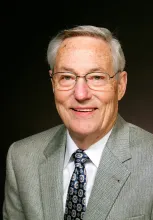
At the time of his retirement in 2016, Roy Holladay was serving the Operation Manager for Ministerial and Member Services of the United Church of God. Mr. and Mrs. Holladay have served in Pittsburgh, Akron, Toledo, Wheeling, Charleston, Uniontown, San Antonio, Austin, Corpus Christi, Uvalde, the Rio Grand Valley, Richmond, Norfolk, Arlington, Hinsdale, Chicago North, St. Petersburg, New Port Richey, Fort Myers, Miami, West Palm Beach, Big Sandy, Texarkana, Chattanooga and Rome congregations.
Roy Holladay was instrumental in the founding of the United Church of God, serving on the transitional board and later on the Council of Elders for nine years (acting as chairman for four-plus years). Mr. Holladay was the United Church of God president for three years (May 2002-July 2005). Over the years he was an instructor at Ambassador Bible College and was a festival coordinator for nine years.
