

Don Ward
This transcript was generated by AI and may contain errors. It is provided to assist those who may not be able to listen to the message.
The title of the sermon, Essentials of Passover Preparation. The time to partake of the Passover draws nigh. So what are the essentials for eating and drinking the Lord's Passover? We find the answers to that question to a large degree in 1 Corinthians. Paul's epistle to the Corinthians have a Passover and Unleavened Bread theme. The Corinthians were divided on many issues from their calling to the resurrection. In view of all these divisions given in 1 Corinthians, the great rhetorical question is recorded in 1 Corinthians chapter 1 and verse 13. In 1 Corinthians 1 and verse 13, Paul says, writes, Is Christ divided? In view of all the divisions that are enumerated from chapter 1 through chapter 16, nearly every chapter talks about some division within the church at Corinth and also then Paul's resolution, his solution to the problem. And the answer is always centered around the answer to this question, is Christ divided? Of course, the resounding answer time after time is no, Christ is not divided. From that point on, after that rhetorical question in Revelation 1.13, Paul, in the inspiration of the Holy Spirit, shows that Christ is not divided. He boldly tells them that Jesus is our Passover. Let's read that verse. As I said, 1 Corinthians has a Passover and unleavened bread theme to it. In 1 Corinthians 5, we'll read 7 and 8. 1 Corinthians 5, 7 and 8. Purge out therefore the old leaven. And the old leaven is talking about spiritual leaven. They had purged out the physical leaven, apparently. Purge out the old leaven that you may be a new lump, a new lump spiritually, as you are unleavened. That is, they were unleavened physically. Oh, it's easy to put out the physical leavening. Some say it's not so easy, but especially reaching the top shelf.
It's a physical thing that can be done, but it has great symbolism to it.
For even Christ our Passover is sacrifice for us. Therefore, let us keep the peace, not with old leaven, neither with the leaven of malice and wickedness, but with the unleavened bread of sincerity and truth. Understanding the essentials for taking the Passover heals all divisions. Once again, understanding the essentials for taking the Passover heals all divisions. In 1 Corinthians chapter 11, Paul challenges them with the instructions he received from Christ on the essentials for taking the Passover. So let's go to 1 Corinthians 11, and we'll go down to begin with in verse 25. So once again, Paul challenges them with the instructions he received from Christ. See, Paul was taught in the Arabian wilderness for apparently three years directly by Jesus Christ in one of his defenses of his apostleship. He said, Have I not seen the Lord? And Christ did teach him. And so let's note 1 Corinthians 11 and verse 25. After the same manner, also he took the cup when he had supped, saying, This cup is the new covenant, Diathice. This is the new covenant in my blood. This do you as off as you drink of it in remembrance of me.
And I am Gnasis. And I am Gnasis is the word for remember. So it is a memorial. If you go to a memorial service, a lot of times in today's world, they say we're going to have a memorial service and some say we're going to have a celebration of life service. But if you're going to a memorial service to remember the death of someone, it is quite a different matter. So we must remember that Christ paid the price for our sins through his sacrifice. It required his death. And then in verse 26, For as often as you eat this drink and as often as you eat this bread and drink this cup, you do show the Lord's death till he comes. Now the word here that is translated, you do show the Lord's death till he comes, is the Greek word katangelo. It means to announce, to declare, to make known the Lord's death. So you must recognize that Jesus Christ died for your sins. You're remembering that. It's an announcement. It's a declaration that you recognize that he died for your sins, that he went in your stead. He paid the price for you. In other words, it is a solemn, sober occasion. It is not a time of festive frolicking. And this is reinforced by verse 27. In verse 27, I would that we could all in the church come to understand this word. In verse 27, Wherefore whosoever shall eat this bread and drink this cup of the Lord unworthily. Now this Greek word that's translated unworthily here means irreverently. Whosoever eats and drinks this cup irreverently shall be guilty of the body and blood of the Lord. Those who do that, who take it irreverently, are not discerning the Lord's body. They're not discerning their fellow brethren in the church. They're not discerning the Word of God. They're not really examining themselves.
On the one hand, we should come to pass over with rejoicing, knowing that Christ has redeemed us and brought us back from sin and death. So there's that aspect of liberation. But on the other hand, it is a solemn time in that you're remembering that we have been set free from sin and death, which required the death of Jesus Christ the Messiah. He went in our stead. He paid the price for it. The wages of sin is death, and the death penalty was on all of our heads. But he paid the price in our stead, and not only for us, for all the world, past, present, and future. So why was Paul warning the Corinthians not to take the Passover irreverently? Because they were treating it irreverently with some even getting drunk, as we'll read in just a moment. They were not discerning the body of Christ. They were not discerning his physical body that was given for the sins of the world. They were not discerning the members of the church, the brethren. They were not discerning the scripture, which is the bread of life. They were acting on their own. So let's go back and pick up from verse 17 in this chapter and show how they were taking it irreverently. 1 Corinthians 11-17. Now, in this that I declare unto you, I praise you not that you come together not for the better, but for the worse. I mean, if you don't come to Passover for the right reason in the right frame of mind having properly prepared, that's not a good thing, as we shall see. For first of all, when you come together in the church, I hear that there be divisions among you, and I partly believe it. Well, they had divisions from their calling to the resurrection. They argued over who was the greatest minister. They argued over so many different things. They argued over, was Paul an apostle? They argued over should he have paid tithes and required it of them. It just goes on and on. Some of them even said there was no resurrection from the dead.
All of that and much, much more is in 1 Corinthians.
Verse 19, for there must also be heresies among you that they which are approved may be made manifest among you. Sooner or later, wherever the heresies are, they're going to be known. They'll be made manifest. God already knows. I mean, He knows already. We may not know. And I could tell story after story of people who during that last from January, February, March, in 1995, that feigned to be standing fast with the truth, who at the last moment after they heard certain sermons and certain doubters changed completely, like overnight.
When you come together, therefore, into one place, it is not to eat the Lord's Supper. It is not to eat the Lord's Supper. Now, this refers to love feasts. These were social meals that developed according to Greek custom. We'll notice this. If you look at 2 Peter, you can hold your place there. Look at 2 Peter 2.13. 2 Peter 2.13, we'll see one of these references to a love feast. 2 Peter 2.13.
And once again, what did Paul say? When you come together, it is not to eat the Lord's Supper. It's to take the Passover. 2.13, 2 Peter, 4.13, and shall receive the reward of unrighteousness, as they count it pleasure to riot in the daytime spots they are, blemishes, sporting themselves with their own deceiving, while they feast with you.
And so many of the people that claim to be with it really are not, and sometimes you wonder, does a tear really know it's a tear?
I don't know at times. It's almost like it's imperceptible, but surely they do know. Or maybe they haven't really read what the Bible says. Now look at Jude. Jude also refers to these love feasts. In Jude 12, these are spots in your feast of charity. Charity is love. Love feast. Spots in your love feast. When they feast with you, feeding themselves without fear, clouds they are without water, carried about of winds, trees whose fruit withers without fruit, twice dead, plucked up by the roots. That's pretty bad. Twice dead? Well, that second death, from which there is no resurrection, is one we don't want. So in view of these divisive practices that had developed in Corinth, when you eat and drink the Passover, you do it in the remembrance of the death of our Savior, as we've already noted. To eat and drink without showing regard and understanding of the solemn significance of this event is to be guilty of the body and blood His sacrifice of Jesus Christ. It is a very serious matter. Now, for years, and I think this has pretty well been abated. I have hammered on this for close to 40 years. For years, church members labored under the assumption they had to be worthy enough to take the Passover. What do you mean, worthy enough? None of us are worthy enough to take the Passover, because none of us are worthy in one sense. But if you have gone through the essentials for keeping a Passover, you have been liberated, you've been set free, and you can take the Passover reverently, not irreverently. Remember that unworthily is the great word in axios, a-n-a-x-i-o-u-s, which means irreverently. So no person is worthy enough, but each person can take the Passover in the manner that Paul prescribes here, and that prescription was delivered to him from Jesus Christ.
A person, now we go to 1 Corinthians 11, 28, a person must examine himself. We'll talk about how you examine yourself. A person must examine. The word examine is dokemazo. It means to test, to prove, to scrutinize, to see whether or not a thing is genuine or not, as you might test or scrutinize a gem or a precious metal. Is it the real thing? Are we the real thing? The verse 29, for he that eats and drinks unworthily, that is irreverently, eats and drinks judgment to himself, not discerning the Lord's body. Now this word judgment here, not judging the Lord's body. This word judgment is crema, since he does not discern the Lord's body.
Now this word discern is a very interesting word, the word discern is diacrino. It means thorough judgment. You know in geometry, you have the diameter that's all the way through the circle. And so if you have diacrino, it is all the way judgment, thorough judgment, not discerning, so what is the great word for discerning? Diacrino, thorough all the way judgment, not discerning, not thoroughly judging the Lord's body. So what bodies are to be discerned?
There's more than one, which we've already noted. Of course, first and foremost, the body of Christ represents the body that must be discerned first and foremost, the literal body of Christ. Let's look at John 6.33. John 6 and verse 33. John 6 verse 33. For the bread of God is he which comes down from heaven and gives life unto the world. Then said they unto him, Lord, evermore give us this bread.
And Jesus said unto them, I am the bread of life. He that comes to me shall never hunger, and he that believes on me shall never thirst. But I said unto you that you also have seen me and believe not.
All that the Father gives me shall come to me, and him that comes to me I will in no wise cast out. So you have to discern the body of Christ. He is the bread of life. And then as we've already read, I'll just quote now, 1 Corinthians 5.8, for even our Passover, Jesus Christ, is sacrificed for us.
So you have to discern that body. Now continuing here in John chapter 6 and verse 47, John 6, 47, Verily, I say unto you, he that believes on me hath everlasting life. I am the bread of life. Your fathers did eat manna in the wilderness and are dead. This is the bread which comes down from heaven that a man may eat thereof and not die.
You have to discern a literal body of Christ. The bread represents his body, of course. I am the living bread which came down from heaven. If any man eateth this bread, he shall live forever. And the bread that I will give is my flesh, his literal physical body, which I will give for the life of the world. The Jews, therefore, strove among themselves, saying, How can this man give us his flesh to eat? Now, the Jews were familiar with figures of speech, and when one thing represents another, he was speaking figuratively about eating and drinking of the bread of life.
Then Jesus said unto them, Verily I say unto you, Except you eat the flesh of the Son of Man and drink his blood, you have no life in you. Whosoever eats my flesh and drinks my blood has eternal life, and I will raise him up the last day. For my flesh is meat indeed, and my blood is drink indeed.
represented by the bread and wine. He that eats my flesh and drinks my blood dwells in me and I in him, as the living Father has sent me, and I live by the Father, so he that eats me even he shall live by me. So we have to discern the Lord's body. We have to discern also the body of believers. See, in Corinth, they were not really discerning the Lord's body, the church, the membership, because they were faring fancifully. I don't guess I read all of that.
Let's go back to 1 Corinthians 11. 1 Corinthians 11 is left off there with the love feast. This is not to eat the Lord's supper. Now 1 Corinthians 11 21, for in eating everyone takes before other his own supper, one is hungry and another is drunk. So there's no regard for the body of Christ, the church of God, and the members thereof.
What have you not housed to eat and drink of, or despise you, the church of God, and shame them that have not? What shall I say unto you? Shall I praise you in this? I praise you not. For I have received of the Lord that which I delivered unto you, that the Lord Jesus, that same night in which he was betrayed, took bread, and when he had given thanks, he broke it and said, take heat. This is my body which is broken for you. This, do in remembrance of me. So you have to discern the Lord's body. You have to discern the brethren, the church of God, because now we go to 1 Corinthians 12.
1 Corinthians 12. We try to lay this out as linearly as you can from one point to another, but in line upon line precept, precept it's difficult to speak in a completely linear fashion. In 1 Corinthians 12, 12, For as the body is one, and hath many members, and all the members of that one body being many, are one body, so also is Christ. See, is Christ divided? No. For by one Spirit we are all baptized into one body, whether we be Jew or Gentiles, whether we be bond or free. What body are we baptized into? The church of God, the spiritual organism, and have been made all to drink into one Spirit. For the body is not one member, but many. And Paul goes on to show that we should have the same love and care and concern for one another, which we'll come back to if we have time later. So we have to discern the body of Christ, the body of believers, and also we must obey and discern what the Word of God says, the unleavened bread of sincerity and truth. So once again, if you'll turn back there, let's read it one more time, we might read it once again after this. 1 Corinthians 5 and verse 8, Therefore let us keep the feast not with the old unleavened bread of malice and wickedness, but with the unleavened bread of sincerity and truth. And of course, John 17, 17, defines what is truth. Truth is the Word of God.
So they were not having the same love, care, and concern for one another at Corinth.
This led to them not discerning the body of or sacrifice of Christ, which was given for their sins, and they were not discerning what they were doing to the body of believers.
So continuing now back in 1 Corinthians 12, so the body is not just one member, it has many, and so is the Church of God. There are many offices in the Church of God, there are many members, and they all have been called and given certain gifts to perform. And God expects us to use those gifts. Now in 1 Corinthians 12 and verse 24, For our calmly parts have no need, but God had tempered the body together, having given more abundant honor to that which lacks. And so as we dress, most of our body is hidden because it contained it has to do with bodily functions and reproduction and other things. But without that, we couldn't exist, and the human race could be maintained. In fact, the birth rate dropped. One article I read, the birth rate dropped virtually every county in the United States in this past census, that there be no schism in the body, but that the members should have the same care, one for another. Just like if your little finger hurts, it affects the whole body, or your big toe, or whatever it is.
And whether one member suffers, all the members suffer with it, or one member be honored, all the members rejoice with it. So that body, the Church of God, has to be discerned, and the Word of God has to be obeyed. In Hebrews chapter 1, verse 1, it says, God has spoken to us by His Son. Verse of all, it says, in times past, God spoke to the prophets in dreams and visions. But in these last days, He has spoken to us through His Son.
That's Hebrews 1, verses 1 and 2. He has spoken to us through His Son.
Are any of His words less than His person? Now, what we're in a little side trip we're about to take now is very important, so follow it. Are any of His words spoken less or less important than His person? In John 1.1, it says, in the beginning was the Word.
Have you turned there? I don't know. You've written it down. John 1.1, in the beginning was the Word, and the Word was with God.
See, in the beginning was the Word, showing existence was the verb to be. And the Word was with God, showing relationship with God. And the Word was God. So He existed as God. It was on the same plane of existence as God of fathers. In verse 14, it says, And the Word was made flesh and dwelt among us.
So is the Word just a metaphor in John 1.1 or John 1.14?
In other words, what I'm saying is, are we discerning the Word of God and what it really means and what it really has to do with? Because people talk about the unpardonable sin, and they think it's some mystical kind of thing that is hard to define. As we shall see, when you blaspheme the Holy Spirit, by disobeying. You can repent of that. But, as Christ said, how many times over the past 10 or 11 years here have you heard me and before that, now into 50 years, the words I speak, they are spirit and they are life. So we say the Bible is the living Word of God.
So let's look at John 5 verse 24.
John 5.24, Barely, barely I say unto you, he that hears my words and believes on him that sent me hath everlasting life, and shall not come into condemnation, but is past from death to life. Barely I say unto you, the hour is coming, and now he is when the dead shall hear the voice of the Son of God, and they shall come forth. Now you look at John 5. Look at John 5 verse 30. John 5 verse 30. I can of my own self do nothing, but as I hear I judge, and my judgment is just, because I seek not mine own will, but the will of the Father which has sent me.
If I bear witness of myself, my witness is not true. There is another that bears witness of me, and I know that the witness which he witnesses of me is true. And so on, when Christ was baptized, there was the Holy Spirit descending in the form of a dove that lighted upon him, and said, This is my beloved Son, in whom I am well pleased. And then at the mount of transfiguration, where Jesus took James, Peter, and John, and they had a vision of Jesus Christ coming in the kingdom.
And there was a voice that said, This is my beloved Son. Hear him. Listen to him. So, do we have the Word of God abiding in us? If we have the Spirit of God abiding in us, because Christ said, the words I speak, they are spirit and they are life. The Scriptures do not give life in and of themselves, but they were given to sustain life.
So, how do we know what to do? We know it by reading the Scriptures. The Scriptures reveal the mind of God in Christ. So, look at verse 39, John 5, 39. Search the Scriptures, for in them you think you have eternal life, and they are they which testify of me. But the Scripture in and of themselves won't save you. But at the same time, as we shall see, they have to be obeyed.
And what did Jesus say then? Verse 40, You will not come to me that you might have life.
So, you can memorize the whole Bible, and you could do all kind of wonderful works. But if you will not discern Jesus Christ and what He has done for you, it is of non-effect. Because that's the only way that your sins can be remitted. Because, as it says in Romans 3, 23, all have sinned and come short of the glory of God. Now, look at Galatians 3, I think it's verse 21. Galatians 3, 21.
In Galatians 3, 21, it is the law then against the promises of God. God forbid, if there had been a law given which could give life. See, the Scriptures don't give life, but they were given to sustain life. See, what is sin? Sin is a transgression of the law, 1 John 5, 3. So, if a law had been given which could have given life, barely righteousness should have been by the law. But the Scripture hath concluded all under sin that the promise by faith of Jesus Christ, faith in Jesus Christ, right translation, might be given to them that believe. So, how do we judge ourselves? We judge ourselves through the perfect law of God, because it is God's perfect spiritual mirror. So, look at Hebrews 4.12. Hebrews 4.12. We judge ourselves to see whether or not we are walking in the word, and we judge ourselves through the word. In Hebrews 4 and verse 12. Hebrews 4 verse 12.
For the word of God is quick and powerful, sharper than any two-edged sword, piercing even to the dividing of the center of soul and spirit, and of the joints and marrow, and is a discerner of the thoughts and intents of the heart of man.
So, we look at that perfect spiritual mirror, and that perfect spiritual mirror will allow us to judge ourselves.
As we have noted, the scriptures do not give life, but they are ordained for life. In other words, to sustain life. But if you break the law, the death penalty is on your head, and the only way it can be removed is how? Through the sacrifice, faith in the sacrifice of Christ.
The scriptures were ordained for life, and you have to have the word of God, which communicates the will of the bread of life to your mind abiding in you, to know the mind of the Spirit. We want to know the mind of the Spirit. We want to obey the mind of the Spirit.
The Holy Spirit is enabler, but it doesn't speak of itself. Look at John 16 verse 13. The Holy Spirit is the enabler, but it does not speak of itself.
John 16, 13. Howbeit when he, it, the Spirit of truth, has come, it will guide you into all truth, for it shall not speak of itself. What does it speak? It speaks the words of God in Christ. The words I speak, once again, John 6, 63, they are spirit in their life.
For it shall not speak of itself, but whosoever it shall hear, whatsoever it shall hear. So what does the Spirit hear? Does the Spirit hear rumor and false teaching? No. The Spirit hears the truth.
That shall it speak, that is, the truth, and it will show you things to come.
Now we go to Romans chapter 7.
And time after time, we've gone to Romans 7, and it seems we can glean a little bit more, or maybe we can understand it for the first time, in Romans 7. In Romans 7, Paul describes the battle that goes on in the mind between that which you ought to do and that which you do. And there is a struggle, the mind of the Spirit and the mind of the flesh. Some take it that Paul is excusing sin by talking about the mind of the flesh.
In Romans chapter 7 and verse 9, I was alive without the law once. Well, how could he say that? Because he didn't really know what sin was until he read the law, and it says the wages of sin is death.
But when the commandment came, sin revived, and I died. Why? Because the wages of sin is death. And the commandment, which was ordained to life, as I said, is to sustain life, but it doesn't give life. Search the scriptures. In them you think you have eternal life, but you will not come to me.
And the commandment, which was ordained to life, I found to be unto death, because the wages of sin is death. For sin, taken occasion by the commandment, deceived me, and by it slew me. Wherefore, the law is holy, and the commandment holy, and just and good. Was then that which is good, made death unto me, God forbid. It wasn't created to kill you, but to show you sin. But sin, that it might appear sin, working death in me by that which is good, that sin may be, that sin by the commandment might become exceeding sinful. For we know that the law is spiritual. If the law is spiritual, then it cannot be done away with by any shenanigans or arguing of men. But I am carnal. I'm of the flesh, sold under sin. For what I would do, I allow not. For what I would that do, I not. But what I hate that I do. And he goes on talking about the struggle that goes on, and we all have that struggle.
But you can blaspheme the Holy Spirit by not obeying it. The words I speak, their spirit and their life. And before Passover, we want to repent of our sins. Now we come to verse 24, wretched man that I am, who shall deliver me from the body of this death. I thank God through Jesus Christ, O Lord. So then with the mind, I myself serve the law of God, but with flesh the law of sin.
I mean, the flesh is always there. It's going to always war. And you have to rule over it. Now verse 1 of chapter 8 is what keeps me going.
There's therefore now no condemnation, judgment to them which are in Christ Jesus, who walk not after the flesh, but after the Spirit.
So you can go before God and ask for forgiveness and be forgiven for the law of the Spirit of life in Christ Jesus has made me free from the law of sin and death. Because if you repent, exercise faith in the sacrifice of Christ, you have been liberated. For what the law could not do in that it was weak through the flesh, God sending his own Son in the likeness of sinful flesh, and for sin condemned sin in the flesh. How did he condemn sin in the flesh?
By keeping the law perfectly, he showed that you could live in the flesh and keep the law.
How did he do it? He had the Holy Spirit without measure. He was in constant contact with God the Father.
That the righteousness of the law might be fulfilled in us who walk not after the flesh, but after the Spirit. For they that are of the flesh do mine the things of the flesh, but they that are after the Spirit, the things of the Spirit. So that's sort of it in a nutshell. And then you have verse 13, which there's a lot more, for if you live after the flesh you shall die, but if you do mortify the flesh through the Spirit, you shall live. Yeah, you can eventually commit the unpartable sin by habitual disobedience. When does that happen? I don't know. I've used a rubber band in the past. You can stray from God. I don't know how far, but eventually that band is going to break just like a rubber band will. And when it does, there's no way back. There's no way back. And then you see, and that's in Hebrews 6, that those who have tasted a good gift and turned from it, there is no way back.
We must examine ourselves and judge ourselves. So the Holy Spirit is an enabler. It does not speak of itself, but it enables the word to convict, to guide, to lead, to pull, to tug, but never forces. The Holy Spirit. So I wish the Holy Spirit just make me do it. This would obviate human responsibility and make sin the fault of God. So if you didn't do it then and you still sinned, it would be God's fault. But it's voluntary.
God leads you through His word, leads you through His Spirit. The word of God cleanses us if we allow it to wash our minds and our hearts. Let's look at John chapter 15, and this will be read on Passover night. John 15 and verse 1.
I am the vine and my father is a husband.
The husband is the one who prunes, the one who exercises discipline. Every branch in me that bears not fruit, he takes away. So you can sit there on whatever gift and whatever thing that God has given you and refuse to share it and do whatever. I'm just reading the word of God, what it says. Every branch that bears fruit, he purges it that it may bring forth more fruit. Now, you are cleaned through the word which I have spoken. So how do you clean yourself up? How do you prepare through the word which I have spoken? Abide in me and I in you, as a branch cannot bear fruit of itself, except it abide in the vine.
No more can you accept you abide in me. When you're cut off from the source, you cut a branch off of the tree. That branch that you cut off will not bear fruit. It may have fruit on it, but that's it. Whatever you pick off of that, that's it. I am the vine, you are the branches. He that abides in me, I in him. The same brings forth much fruit. For without me, you can do nothing. So the word of God cleanses us if we allow it to wash our minds and our hearts. The blood of Christ justifies us, but it is the life of Christ that saves us. So we want to look at that as well. Romans 3, 23. I quoted Romans 3, 23 earlier, all have sinned and come short of the glory of God. Let's read it here. Romans 3, 23.
Romans 3, 23. All have sinned and come short of the glory of God, being justified freely by his grace through the redemption, the buying back power that is in Christ Jesus, whom God has set forth to be a perpetuation, meaning he went in our stead through faith in his blood to declare the righteousness for the remission of sins that are past, which will, even after you're baptized, receive the Holy Spirit, you will sin. And you will go before the Father in Christ and ask for forgiveness, and if you truly repent, they will forgive you. To declare, I say at this time, his righteousness, that he might be just and the justifier of him which believes in Jesus. So even keeping your commandments perfectly will not justify you. You have to keep the commandments and repent, but you also must exercise faith in Jesus Christ as well. Where is boasting then, as it excluded? By what law of works? No, but by the law of faith. Now look at the last verse.
Do we then make boy the law through faith? God forbid, yes, we establish the law. How do we establish the law? Because if the law were not in effect, we would not need a Savior. But because the law is in effect, we establish faith. Because it is through faith in Christ, it's the only way that sins can be remitted. The Spirit of God, the life essence of God, is shed on us through the life of Jesus Christ. Now we turn forward and we'll read this from Romans 5. I just paraphrased Titus 3. But in Romans 5, verse 6, For when we were without strength in due time, Christ died for the ungodly. For scarcely for righteous men will one die yet per venture for a good man some would even dare to die. But God commands his love toward us, and that while we were yet sinners, Christ died for us. Much more then, being now justified by his blood, we shall be saved from wrath through him. For when we were enemies, we were reconciled to God by the death of his son. This is a reconciliation where the death penalty on our head is paid for, much more being reconciled. We shall be saved by his life. It was necessary that Christ be raised from the dead, ascend to the heavenlies, and have the Holy Spirit sent to us. I won't go to Acts 2 and read the account of how that is done. Jesus proclaims once again that the words he speaks are spirit and life. The words are not to be written on our inward parts of the heart. Thus, to disobey those laws are the same as blaspheming the Holy Spirit.
The 11 bread of sincerity and truth provides communion with God and Christ. The words of Christ communicate the will of God to us. So it is through the word of God that we can have continual communion with God and with Christ. Look at Ephesians 5.25. Ephesians 5 and verse 25 and thereafter we shall read. Ephesians 5.25-26. Ephesians 5.25. Husbands, love your wives, even as Christ loved the church and gave himself for it, that he might sanctify and cleanse it. How? With the washing of water by the word. That he might present it to himself a glorious church, not having a spot, a wrinkle, or any such thing, but that it should be holy without blemish. It has been washed in the word of God. So we must examine ourselves, judge ourselves in God's great spiritual mirror.
The judgment or chastening is not always done because of sin, because what we read from John 15, what did it say? That we might bear more fruit. He prunes every vine that it might bear more fruit. Now we go back to 1 Corinthians 11. 1 Corinthians 11 verse 32.
Hopefully with those things in mind, 1 Corinthians 11.32.
I want to read in that from verse 30. For this cause, what cause? Because they did not examine themselves, they did not discern the Lord's body, His physical body, they did not discern the church, they did not obey the word of God. For this cause many are weak and sickly among you, and many are dead. But if we would judge ourselves, we should not be judged. So how do we judge? We've read it. Hebrews 4.12. The word of God is sharper than any two-edged sword, dividing us under the thoughts and intents of the heart of man. But when we are judged, we are chasten of the Lord. He prunes every vine. Sometimes it is because we need to get back on course, sometimes just so we can bear more fruit. But we should not be judged with the world. And as I've said many times in sermons, God would rather see us dead than miss out on His kingdom. So His pruning, His bringing us to attention might result in us going through some terrible trials that end in death. Jesus Christ was faithful unto death, and He learned obedience through the things which He suffered. In other words, He set the example that He went through that agony all the way to death and remained faithful. So wherefore, my brethren, when you come together to eat, wait for one another. So after we have examined, we should now understand that there are four absolute essentials for taking the Passover. And if you don't get anything else, all the ramblings here today, get to us. We must judge ourselves in God's great spiritual mirror the Word of God.
That's number one. And all of these are not, they're interrelated. Number two, we must be reconciled to God the Father.
Number three, we must be reconciled to Jesus Christ, our Redeemer, our Savior, who is our Passover. We must thoroughly discern what He did for us. And we must be reconciled to each member of the body of Christ. This is one of the greatest weaknesses of the Church through the ages, not yesterday or 100 years ago, but a circuit 2000 years ago, and it continues to be. So do not think to yourself that God is not aware of what areas of His Word you choose to neglect. Is God not aware of where you stand with Him? Is Christ not aware of where you stand with Him? Do you think that God and Christ are not aware of each one of us, and where we stand with each member of the body of Christ?
One of the main reasons that people think they can stand blameless before God and really not repent is they come to think that God is just like them. But God is not like us.
Look at Psalm 50 and verse 14.
Offer unto God thanksgiving, pay your vows unto Him most high, and call upon Me in the day of trouble I will deliver you, and you shall glorify Me. But unto the wicked God says, What have you to do to declare My statues, or that you should take My covenant in your mouth? Seeing you hate instruction and cast My words behind you.
See, you can hear the sermon after sermon and you say, that's just His opinion or whatever. Is it the Word of God or is it not? When you saw a thief, you consented with Him. You have been a partaker with adulterers. You gave your mouth to evil and your tongue framed deceit. You sat and spoke against your brother. You slandered your own mother's son. These things have you done and I kept silence. You thought that I was altogether such a one as you. But I will reprove you and set them in order before your eyes. See, God is aware. So the closing there is, consider your life and repent.
So God won't have to step in. Another reason is Ecclesiastes 8-11, which says, because sentence is not executed speedily against an evil work, therefore the hearts of man is continually set on evil.
So these scriptures show us clearly what the essentials and what the absolutes there are. There is no equivocation with God. That means it is not up for you to decide. There is no such thing as halfway or partial obedience. We cannot play games with God. I can't, you can't, no one can. As I have noted, Paul uses the analogy of the human body to illustrate what I have said. We are members one of another, just like in Paul's analogy of the whole body. I'll look at Romans 12, verse 4. Romans 12, verse 4.
First part of Romans 12 says, become a living sacrifice.
Romans 12, verse 4, For as we have many members in one body, and all members have not the same office, so we being many are one body in Christ, and every one members one of another. If we have the Holy Spirit, we are all joined together by that Spirit. We are members of one another, the body of Christ, the spiritual organism. And so when we take the Passover, if you go to 1 Corinthians 10, this will summarize to a large degree what is said, and we'll close with this. In 1 Corinthians 10, verse 14, Wherefore, my dearly beloved, flee from idolatry. I speak as the wise man judge you what I say. The cup of blessing which we bless, that is, the cup, the wine that represents the blood of Christ, is it not the communion of the blood of Christ? The bread which we break, is it not the communion of the body of Christ? For we being many are one bread and one body, for we are all partakers of that one bread. So, brethren, we must take the Passover without any grudge or any hard feelings or any such thing. And we are affirming what I've just read here when we take the Passover. So, what about you? What about me? Are we able to eat and drink on the Lord's Passover?
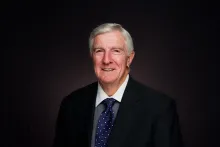
Before his retirement in 2021, Dr. Donald Ward pastored churches in Texas and Louisiana, and taught at Ambassador Bible College in Cincinnati, Ohio. He has also served as chairman of the Council of Elders of the United Church of God. He holds a BS degree; a BA in theology; a MS degree; a doctor’s degree in education from East Texas State University; and has completed 18 hours of graduate theology from SMU.
