

Paul Moody
Today, we will explore the Pareto Principle to help us prioritize what matters most in our walk with God. Discover how small, consistent efforts in prayer, study, and service can yield a big harvest in your spiritual life—and how each of us can contribute to the Body of Christ. How can you serve, and help the Church to grow in unity and in love?
Well, thank you, Mr. Janisic. Once again, good afternoon to all of you. Appreciate the opportunity that we have to get together on this Sabbath. It's so nice to be able to be with one another and to have the opportunity to connect and have the opportunity to worship God in this way is certainly a wonderful and an incredible blessing.
Brethren, there's a principle in business that's known as the Pareto Principle. It's known as the Pareto Principle. Who's ever heard of the Pareto Principle? Raise your hand. Not too many. Not too many. Okay. So, I get a chance to educate a few people.
Everybody else is going to be a little bit of review, so my apologies. This particular principle was first defined by an Italian gentleman named Vilfredo Pareto. Vilfredo Pareto was an Italian economist in the early 1900s, and he had an interest economically in wealth distribution. According to the story, and honestly, this story is probably a little bit apocryphal. It's probably a little bit of legend here mixed in. But according to the story, Vilfredo was also an avid gardener. That was how he let off steam as an economist, was he went out into his garden and he grew vegetables.
Well, one season when Vilfredo was harvesting his peas, he noticed a pattern. You know, that's the curse of economists. You see patterns in everything. So he noticed a pattern. What he found was that a small number of pea plants accounted for the vast majority of his pea pods. There were certain plants in his garden that were just prolific. And they put on tons and tons and tons and tons of pods, and then other plants maybe were not as prolific.
Now, being an economist, he decided to keep track of the numbers. What are you going to do? You can't take the math out of the economist, it turns out. You can put him in a garden, but you can't take the math out of him. So he started calculating these things. He started looking at these things. And what he discovered was that about 20% of the pea plants accounted for about 80% of the viable pea pods that he had harvested. Wondering if this ratio held up in other areas, which to be honest isn't the best science in the world to go looking for it, but he did.
He went looking for it. What he found was it did. It held up in other areas. He observed at the majority of Italy's land wealth, so those who owned property in Italy, the majority of them, approximately 80% of that land was held by around 20% of the population.
He thought, well, I wonder if this is just an Italy thing, or if this is something that is around the world as well. And so as he surveyed other countries around the world, he found that percentage was pretty similar regardless of where you looked. So it's fairly similar regardless of where you looked. And this observation, this general distribution pattern became known as the Pareto Principle. Now many of you are probably more familiar with this idea through its common name, which is the 80-20 rule.
Many of you have probably heard it described as that. It's a simple concept, but it's one that's been observed in a multitude of scenarios across a wide variety of industries. And what the principle essentially describes is how 80% of your consequences come from 20% of the causes. So 20% of the causes lead to 80% of the consequences. So what does this look like in variety of things?
20% of your salespeople account for 80% of your total sales. Approximately 20% of your salespeople in some companies account for 80% of your total sales. 20% of criminals account for around 80% of committed crimes. Unfortunately, people are prolific in crime as well. 20% of your roads, I-5, contain around 80% of your traffic.
Think about your main arterials. It's only 20% of the roads. Those are the ones that are frequently backed up. About 20% of the words in a language account for around 80% of the conversations which take place in that language. 20% of your clothes in your wardrobe are worn 80% of the time. Think about how many clothes you've got in your closet. Only about 20% of those get worn the majority of the time. So caveat here, we want to make sure we recognize it's not a hard and fast 80-20. Sometimes it's 90-10, sometimes it's 75-25. Point is, this particular generalization describes an uneven distribution and an unequal relationship between the input and the outputs that come as a result of those inputs.
Another one that frequently happens is we tend to focus 80% of our personal time on the same 20% of people. And that's why I would like to talk about this particular message today. I've come across this particular concept in a number of books over the years. Most recently, I came across this principle described and expounded upon in James Clear's book Atomic Habits. Some of you have read Atomic Habits, I know we've talked about it. But in the book, Mr. Clear advocates for leveraging the Pareto principle in our lives and living what he calls the Pareto lifestyle.
Now, I don't agree with everything that Mr. Clear describes here, but he advocates for placing an increased focus on 20% of the things in our lives that have the greatest payout. The 20% of the things in our lives that will ultimately pay out the 80%. And his claim, again, Mr. Clear's claim, his claim is that we should focus and invest in the 20% of the relationships that make the greatest positive impact in our lives. He advocates that the 20% of actions which have the greatest positive impact on our day should be the actions that we focus on.
The sources from which we learn the most, we should place our focus on those things. And finally, this is one of the locations that Mr. Clear and I disagree, eliminating the greatest 20% of things that cause 80% of your stress.
I'm not quite sure how that last one works. Your job, your co-workers, your family, maybe your pastor, like, I don't know, they're suddenly gone. Maybe it does work, I don't know.
It's an interesting concept, though, this Pareto principle. And once you begin to see it, once you begin to kind of notice this distribution and this unevenness of this distribution, you'll see it in a lot of different locations. You'll see a lot of different places in which this tends to be the case. Today what I'd like to do is take the time in this second split to explore this concept and to think about how it relates to our individual and our collective calling and service. So we're going to look at three specific places. We're going to look at three things in which the Pareto principle can be applied and how we can consider how to maximize our impact of what God has called each and every one of us to do. The first of those things that we're going to look at today is the idea of stewardship. Stewardship in particular of our time and ultimately of our activities. The second thing we're going to look at is personal growth.
And the third thing we're going to look at is service. So stewardship, personal growth, and service. And the title of the message today, this second split sermon, is every member, every talent. Every member, every talent. And that's taken from the concepts found in Ephesians 4 verses 15 to 16 relating to the body. How we're all growing up into these things to him who is head. How this body which is joined and knit together by what every joint supplies, according to the effective working by which every part does its share, causes growth of the body for the edifying of itself in love. You know, as we come out of the day of Pentecost, as we come out of the day of Pentecost just this past Sunday, I continue to be inspired by the example of the early church that's found in Acts 2 verses 40 to 42. As this church continued steadfastly in the Apostles' doctrine, they continued steadfastly in fellowship, in breaking of bread, and in prayers. They were all together. They believed the same thing. They had all things in common. They continued daily with one accord. They praised God. They had favor with the people. What does this take?
What does this take? How do we get here as a church? How do we get here? Well, the answer, like most things, is individual and also collective. It's a collection of what we all individually do together. So let's dig into this concept a little bit today, and let's look at some practical ways that we can maximize our stewardship, maximize our personal growth and service, kind of as this Pareto principle involves. Number one, stewardship of our time and our resources. Have you ever caught yourself saying something like the following? There just aren't enough hours in the day! Me too. I've said it too. And you know, I'm guilty of that exclamation, and while usually that exclamation is an indication of either too many things on the plate or an inefficient use of one's time, it's also true. Time is finite, right? There's only literally so many hours in a day. There's 24 hours in each and every day. And by the time you're asleep, at least the amount of sleep you're supposed to get is taken care of. 24 becomes 16. When you delete work from that equation, 16 becomes eight. Eight hours. Eight hours to get in everything else that has to get done. Eight hours for your prayer, your Bible study, to be able to listen to a sermon, to read, to study for school, to get in any needed chores, to do the laundry, to scrub the toilets.
To meal prep, to work out and get exercise, to run errands, to drive to and from work or school, to spend time with your kids. And maybe if there's some time left at the end of it all, entertain yourself in some capacity. There's certainly more time available on Sundays, but projects and recreation and other needs typically fill those hours. Frequently what happens is we cheat our sleep in order to get a little bit more done. Sometimes we try to multi-task, trying to do one or more things at the same time to stack it so we can be more productive.
And I don't know about your experience, what that typically does for me is mean that I do two things poorly. That's usually what ends up happening when I try to stack those things.
The truth that none of us really want to admit to ourselves out loud is we really don't have enough time to do everything that needs to get done. That's just the reality. That's just the reality of the lives that we lead today. And because of that, prioritization becomes absolutely critical. And you've probably experienced this. I know I have. Unfortunately, time is a lot like money. If you don't budget it, it disappears. It's just gone. You look up and you realize, well, where that all went. God expects us to be good stewards of the resources that He has provided us. And some of those resources He has given us are time, our abilities, our talents, our opportunities.
And there's an expectation that God has given us that with that time, with those abilities, with those talents, with those opportunities, that there will be a return on investment.
That there will be a return on investment. Let's turn over to Matthew 25.
Matthew 25 is we consider this concept of stewardship. Matthew 25, immediately following the parable of the virgins, Christ builds on the concepts that He brought out in that parable. We're going to pick it up in verse 14 of Matthew 25. But if you want to follow along with the story of the parable of the virgins here, I'm going to do just a quick recap because it's important to consider because I think these two concepts as we get into verse 14 are connected. At least in the way that Christ is thinking about them, they're connected. So immediately after the parable of the virgins, so Christ begins to build on these concepts that He brought out in that parable. In the parable, 10 virgins all awaited the bridegroom's return. Five of those virgins, those who were considered to be wise as it describes, they had oil for their lamps. They were prepared. They were ready. And the unwise virgins had none. The bridegroom we see was delayed. He did not return when they thought he was going to return. And while he was delayed, it says, all the virgins, all 10, slumbered and slept. Slumbered and slept. Slumbered, if you look in the Greek, means to get drowsy. So it means they got drowsy. They started falling asleep. Started going one by one by one, right? Started dropping like flies. But they all became drowsy, and they fell asleep. At midnight, we see the cry went out that the bridegroom had come, and you can imagine the activity in the room. All of you have been to a wedding. You can imagine the activity. People buzzing around all over the place, trying to get this done and that done, and everything else. All the virgins got up. They trimmed their wicks. And those who had oil in their lamps got ready to leave to go and meet their bridegroom. In the meantime, the unwise virgins were looking in their lamps going, they're empty! What are we gonna do? You imagine the panic as they're running around trying to figure out how we're gonna do this. Well, we could go and buy some from the person that sells oil, but that guy's closed because it's midnight. And what? I've got it. You, you guys, you have extra. Give us some of yours. Give us some of yours.
We see that the wise virgin said no, because there won't be enough for the both of us if we give you what we have. And so they began to beg of those wise virgins. The parable speaks to the importance of our work and our efforts to prepare. It speaks to our remaining vigilant for the return of Jesus Christ so that we are able, when he returns, to just get up, trim the wicks, and go to meet him.
Right? There's a preparation that needs to take place for that. But immediately following this particular parable, Christ defines his expectations for his people. And that's in verse 14.
Verse 14 of Matthew 25. Matthew 25 verse 14 says, for the kingdom of heaven, that's the way Matthew describes the kingdom of God, the kingdom of heaven is like a man traveling to a far country who called his own servants and delivered his goods to them. And to one, he gave five talents to another two and to another one. To each, according to his own ability, and immediately he went on a journey. Then he who had received the five talents went and traded with them, made another five talents. Likewise, he who had received two gained two more also. Verse 18. He who had received one went and dug in the ground, and he hid his Lord's money. After a long time, the Lord of those servants came and settled accounts with them. And so what we see in verse 20 is we see the beginning of that settling of those accounts. The master in this case provided for each of those servants. Now he'd given those servants varying amounts. It does say he gave them varying amounts based upon their ability, but all of those servants had the same expectation.
They had the same expectation. He who received five gained another five. He received two gained another two. Both, it says, were faithful over little and were told that they would then be entrusted with many things. The servant, however, that buried the talent, even though he gave back to the master what was his without loss, was admonished for his wickedness. The expectation of that master was growth. The expectation of that master was a return on his investment.
When we think about time, think about the resource of time which God has given us, or we think about perhaps other resources, other talents, other opportunities which God provides, we really need to consider those things as something which has been provided to us to invest, so to speak, on God's behalf. That we invest those things so that God receives a return.
Brethren, how will we increase what he has given to us? How will we increase what he has given to us?
The Pareto principle indicates that 80 percent of the output comes from 20 percent of the input.
And as such, then, the prioritization of the most critical 20 percent of things in our life, that which has the greatest outcome, cannot be overstated. Prioritization of those most critical 20 percent will have an 80 percent payoff based on this principle. Matthew 6 and verse 33, you can turn there if you would like. Matthew 6 and verse 33, just a couple of pages back, we see Christ instruct those that are gathered to seek the kingdom of God and his righteousness.
And his righteousness. And he tells those gathered, not as we have time, not necessarily as we think about it, he says, but to seek it first with the primary priority, to give it that first focus.
Instead of spending our time and our energy worrying about the other things, all the other things surrounding those things, as it discusses in these other passages, God says focus on that most critical 20 percent and it will pay off with dividends. It'll pay off with dividends.
Now, remember when our children were young, we were exhausted constantly. I mean, those of you that are young parents, you understand this. We were exhausted constantly from lack of sleep. You know, the kids, it seemed like the kids took what felt like 100 percent of our time. I'm sure it really wasn't 100 percent of our time, but it sure felt that way sometimes. I had every excuse. I had every excuse, and sometimes I even used it, to skip Bible study and prayer.
I'm just too tired. I'm just wore out. I can't even think about it. I can't even get it in right now, because now this kid's gone off, or that kid's gone off, or this is whatever. I had every excuse in my mind and every reason.
I remember we went for what felt like years without hearing a sermon all the way through.
I think it was years. It actually was years by the time the way we spaced them out. But I'm saying beside the point.
It was difficult to have people over. It was difficult to go anywhere, because the kids made it more challenging. I love my kids. I feel like I'm bagging on them. I'm sorry. I love you, guys. Please don't take this the wrong way. But it was difficult, and we're in a different stage of life now. We're in a different season of life now, and it's certainly a very different thing. What I found, though, as I went through this, was that by not doing these things, by kind of giving in to my excuses, I was only compounding my problems.
I was only compounding my problems. When I did focus on Bible study, when I focused on prayer, when I got it in, even if it was 15-20 minutes that I had time, even 15-20 minutes during a quiet period of my morning, it set my day. It would adjust my attitude. It would change the way that I looked at things. It shaped my day. It shaped my attitude. It caused me to be more focused on God throughout the day, which helped me to respond more appropriately as things came up and challenges came up. The kids would see in the morning at times me reading my Bible. That sets and reinforces an important lesson for them as well. When I did have opportunity to reach out to others or we had a chance to plan kind of meaningful fellowship opportunities around the chaos, I found that I was more invigorated when people went home rather than drained as I would have thought I had expected.
Those 20% things, those 20% things, had a significant yield way above and way beyond what I had invested. And sometimes I think we feel as though we have to get it all taken care of, that we have to make sure we get it all in. And when you look at the size of an average to-do list these days, it's overwhelming. It can be difficult to focus on any one thing, and so as a result, we're maybe not as productive or focused as we could be. And what it can do is it can cause us to take a look at an example like Acts 2. Like Acts 2 verses 40 to 42, and ask ourselves, how does anybody have time for that? How does anyone have time to go house to house and break bread with one another and to be constant in prayer and to do all of these things? How does anybody have time? I have a job. I have kids. I have family. I have my own interests. I have my own pursuits. And what happens is we pull back instead of leaning in. We pull back instead of leaning in.
In reality, if we can leverage the 20 percent of the things in our lives that yield 80 percent of the output, we lay a foundation that enables us to have consistent personal growth, which is a crucial element of our spiritual journey. Let's talk about that. Point number two, personal spiritual growth. You know, these small, consistent efforts like Bible study and prayer and meditation and fasting, these spiritual power tools, you know, these provide a great deal of payout in our lives. Each time we pray for someone else, each time we reach out to connect by phone or send a card when we connect to visit, can produce an abundant harvest of spiritual fruit in our lives.
Mr. Miller spoke on the Sabbath before Pentecost of the importance of sowing, and he gave a great, great message on sowing and reaping. I'd like to turn over there briefly to Galatians 6, kind of just reinforce what it is that he spoke about during that time period, because there's a lot there with regards to how this connects with us spiritually as well. Galatians 6, we'll pick it up in verse 7. Galatians 6 and verse 7 says, do not be deceived. God is not mocked, for whatever a man sows, that he also will reap. For he who sows to his flesh will of the flesh reap corruption, but he who sows to the spirit will of the spirit reap everlasting life. Verse 9, let us not grow weary while doing good, for in due season we shall reap if we do not lose heart. Therefore, as we have opportunity, let us do good to all, especially to those who are of the household of faith. What's beautiful about the law of sowing and reaping, it's a natural law that, you know, it's most basic, it's a true principle regardless of your application. You know, that's the beauty of it. You will get out what you put into something more often than not.
If we plant corn, we will harvest corn, right? You're not going to expect to walk out if you've planted corn and walk out and harvest peas or onions. If you put in corn, you're going to get corn. That's kind of one of those deals. On the kind of inverse of that, I guess, we can't expect to harvest corn if we don't plant corn. If we plant peas, we can't go out and go, where's the corn? Unless you're in the movie Secondhand Lions, in which case every single thing you plant comes up corn. For those that haven't seen it, they bought a bunch of seeds from a traveling salesman and the guy just sold them a bunch of bags of corn with different vegetables labeled on it. They planted it all and suddenly it was rows upon rows upon rows of corn. But in that sense, we can't expect muscle growth unless we put in time at the gym. We can't expect financial increase if we don't do something to invest, either through work or through some other vessel. We can't expect to change if we don't plant the seeds of change in our life. And brethren, as such, we can't expect to experience the kind of connection that's described in the book of Acts in the early church unless we plant the seeds for fellowship, for unity, for prayer, for one another. We don't plant those seeds of connection if we don't plant those seeds of caring for one another. Again, it's a natural law that we get out what we put in, and often, in accordance with the Pareto principle, we get out more than we put in, especially if we invest in those things that have the greater output. That initial investment will build, it'll grow, 20% goes in, 80% comes out. You plant one kernel of corn, and how many corn do you get on a plant when it's done? I don't know math in that way. It's not a bushel, I don't think, from a single plant, but you get an awful lot of corn off of a single kernel in that sense. Israel struggled with righteousness. They struggled throughout the period of the minor prophets as they dealt with challenges of idolatry, and they dealt with challenges of wickedness in that latter kingdom period. If you turn over to the book of Hosea 10, and we're going to pick it up in verse 12. Hosea 10 and verse 12, as God uses this kind of analogy with Israel for them to be able to understand what it is that they needed to be focused on, what it is they needed to be doing. Hosea 10, we'll pick it up in verse 12. I kind of get a picture of these things that Israel needed to focus on as a whole. God tells Israel through the prophet Hosea, so for yourselves righteousness, so for yourselves righteousness, reap in mercy, break up your fallow ground, for it's time to seek the Lord until he comes and he reigns righteousness on you. You know the goal of our lives is a harvest of righteousness.
That's the goal that we plant in one season, we harvest in another. James 3 and verse 18 talks about a harvest of righteousness from what is sown in peace. But harvesting righteousness can only take place if we sow righteousness. If the things in which we put in the ground on the front end are righteous things, things that little by little by little will grow and develop a full crop. Hosea also speaks here of fallow ground. Do we have any fallow ground in our own lives? Do we have any fields that right now just haven't been disced, haven't been planted? Maybe they're lying dormant. Places that we could plant seed, places that we could develop, things that we could produce a crop, so to speak. You know, as part of agriculture in Israel, crops were rotated through certain fields to allow that ground to become more productive later, as you know the ultimately everything wasn't being used all the time, all at once. Do we have areas of our own life that are fallow? And there are seasons, there are seasons in life. You know, as we go through life, there are seasons in life. Sometimes certain fields do need to lay fallow for a time. It's just what it is. But do we have places in which they're not being used? Seeds are not being sown or crops being tended to. Hosea says to Israel, and ultimately to us down through time, break up the fallow ground.
Break up the fallow ground. Disc that field and plant it. So righteousness, seek the Lord, grow a harvest of mercy, a harvest of righteousness. Place something in that ground that will yield five, ten, or a hundredfold. You know, sometimes I think we think based, we're kind of conditioned by the world around us in some ways, that things need to be huge and flashy to be effective and influential. Right? It needs to be something major. We got to go from zero to sixty. There's no no 10 miles an hour in between. Zero to sixty, right off the bat. The reality is, most of life is a little here, a little there. And with small incremental moves, you build momentum. You build momentum. That's how Christ described the growth of God's kingdom in a number of places. I'm going to reference these. We're not going to turn there. Mark 4, verse 30 to 34. Christ describes the kingdom of God as a small mustard seed, this little itty bitty seed, that when it's sown is smaller than all the other seeds, but when it grows, it becomes bigger than all the other herbs, so large that birds can alight in its branches. Right? This little teeny tiny mustard seed becomes this large, large bush.
Mark 4, verse 26, just a couple of passages before verses 30 and 34. Mark describes a man who scatters seed on the ground, and the seed sprouts and grows, becoming a full field of grain that can then be harvested. Luke 13, verse 21, he likens the tiny amount of leaven, just that little bit of leaven that goes into a dough, causing that whole entire loaf to become large and fluffy, airy, and pleasant. And one of the times in scriptures where leaven is not used in the negative context, right? But it shows how it spreads in this way. Luke 13, verse 21. The point that Christ is making with all of this is that the kingdom of God, its attributes, its characteristics, its actions in one's life and society, begins with yielding to the spirit of God dwelling in us, but then small, specific choices, growing consistently in a believer's life before eventually becoming all in all in the full expression of God and Christ through us, little by little by little. And that momentum builds. We can never underestimate small, consistent daily efforts in our lives because those small, daily individual things causes a collective shift in the whole body. If we're all doing these things, the whole body consistently will shift because that personal growth better equips us to serve and to contribute meaningfully to the work that God is doing through his people. Our third point today is service in the body of Christ. As I pointed out in my sermon on Pentecost, we are the church. You and I, we make up the body of believers, the ecclesia who have been called out of this world, who have been called to serve God and Christ. And as such, the work that God has tasked us to do, we all play a part in doing. In some cases, that may mean supporting that work through our tithes, through our offerings, but in other circumstances, particularly at the local level, that frequently means doing the work that's necessary to operate, and in some circumstances, to grow the congregations.
In Acts 6, the office of Deacon was created in the early church. Again, you can feel free to turn to Acts 6. I'm just going to summarize the story here. But in Acts 6, we see the office of Deacon created in the early church. There were a number of Hellenistic widows that were getting missed in the daily distribution. So there were a number of Hellenistic Jews who likely, according to a number of the commentaries, likely had left Jerusalem during the Diaspora and who in their older age had now returned to Jerusalem. And it created a pretty significant load, so to speak, on the church in Jerusalem, trying to ensure that their needs were taken care of. And this was a time during there were famines or other things going on. There were collections being taken up in other far-flung churches to send to Jerusalem for support. I mean, all these things are factors in this process. But what they found was there were a number of people who got missed.
It didn't get taken care of. It needed to, and it just didn't get done. In those days, the early church, the apostles were doing a lot of heavy lifting to care for the congregations at that time. And as the numbers grew rapidly, there became a significant clear need for help. I mean, put kind of just picture this for a minute. Salem, if we're all here, like if everybody's here, nobody's traveling, nobody's homesick, we're about 120 people. If we're all here, we're about 120 people. That was the number of people that met before Pentecost in the house. After Peter's sermon, that 120 people became 3,000. Can you imagine for just a minute, if we left this Sabbath with 120 people, and next Sabbath we came back in here with 3,000? What an awesome problem to have!
But what would we do? Yeah, outside. We have services outside on the playground, right? Kids are like, yes! But no, what would we do? Really, I mean, what would we do? So, you know, that's the issue the apostles were up against. And as that church continued to grow and numbers continued to come in, it became very clear that something needed to be done. And so the multitude there selected seven men, all of them, their Hellenistic names or Greek names, recognizing the apostles had other work to do and other things to do to grow and care for the church spiritually, and that these men could then ensure the day-to-day needs didn't get missed. Likewise, we have deans or dee-deans, deacons and deaconesses. We have a dean, too, for the same purpose. We have that for the same purpose, to assist us to make sure local needs get taken care of. In addition to deacons and deaconesses, we have crews of people to help with a variety of things. We have a sound crew, sound and video. We have set up, we have tear down, we have snacks, coffee, music. We have a wide variety of things that are necessary to be able to allow for services to take place, to be able to allow for the best possible experience for those who attend. You know, currently our congregations follow a pretty cut-and-dry Pareto distribution. They do. They follow a pretty cut-and-dry Pareto distribution. About 80% of the setup and the organizational work is done by about 20% of the membership. It's just what it is. The issue is there's so much more that needs to be done.
There's so many more things that need to be done, and we've nearly maxed out those who are serving in those capacities, so that adding to their plates is a difficult prospect. Some of the things that need to be taken care of. We have members who deal with extreme loneliness, extreme loneliness.
We need people to help visit, to make phone calls, to send cards, to check in on people. We need a few more people on our various crews. Soundcrew, we're always recruiting. Soundcrew is always recruiting.
We need people serving on and engaged in some of the various committees. We need to begin doing more outreach in the community. We need to be sending out mailing campaigns and seminars. The list of things that need to be done is daunting. It's daunting. Turn over to Ephesians 4, please.
Ephesians 4. In Ephesians 4, Paul is describing the body of Christ, and ultimately, in that process, he's describing the effect of unity in the body, of a body of believers that are then walking worthy of their calling, with humility, with gentleness, with patience, bearing with one another, in love. Verse 11 of Ephesians 4. Ephesians 4, verse 11, says, He himself gave some to be apostles, some prophets, some evangelists, some pastors and teachers, for the equipping of the saints, for the work of ministry, for the edifying of the body of Christ, till we all come to the unity of the faith and of the knowledge of the Son of God, to a perfect man, to the measure of the stature of the fullness of Christ, that we should no longer, verse 14, be children, tossed to and fro, and carried about with every wind of doctrine by the trickery of men, in the cunning craftiness of deceitful plotting. But speaking the truth, in love, may grow up in all things into him who is the head Christ. Verse 16, from whom the whole body, joined and knit together by what every joint supplies, according to the effective working by which every part does its share, causes growth of the body for the edifying of itself in love. We see Christ placed some in the body with different roles, not ranks. We misunderstood that. Not ranks, roles, service in the body. Some apostles who oversaw the spiritual health of the congregations, prophets who brought messages from God to the congregations, evangelists who went out and were bringing a message of the gospel of the kingdom of God to those in the world and introducing people to Christ. He gave some to be pastors overseeing congregations and caring for their needs, teachers instructing people in the word of God. And these roles of service were intended that the brethren would be edified, the body would be edified. As with all things, the gifts and the talents that God gave, they were to be invested, they were to be grown, but not for the edification of the individual or for the self, but for the edification of the body, the building up of the church. And so Paul concludes with this incredible statement that the whole body joined and knit together by what every joint supplies, according to the effective working by which every part does its share, causes growth of the body for the edifying of itself in love. Edification, building up through love, through care for one another, through service. Brethren, what is your gift? What is your gift? What is your talent?
What is that thing that you can do and you think to yourself, if I can do it, anybody can do it?
What is that thing? Maybe your gift is encouragement. Maybe it's comfort. Maybe it's being constant in prayer. Maybe it's organization. Not me. That is not my gift, organization. Maybe it's service. Maybe it's hospitality. Maybe it's generosity. What Paul is getting at here is that every part of the body supplies their gift and their talent, and the body can only function at full capacity when the whole body is using their talents and their gifts together in synergy to move the body forward. Every member, every talent. And maybe that talent and that gift is not maybe fully developed yet. Maybe it's a baby talent. Maybe it's not fully developed yet. How can you develop it more fully? By using it. By using it.
Many of these talents, many of these gifts can only be developed through regular use, and as you use it, you become more effective. You're more able to use it in service to others. I don't know if I've ever told this story before, but it came to me while I was giving this message down in Eugene. When I was probably 12, 13 years old, I was one of the shyest people that you would ever meet. I didn't like to speak. I liked to talk. At least not in front of people. I talked constantly to myself in class, which actually led my fourth grade teacher to tell me that I was either going to be a politician or a preacher. That was kind of hilarious. Wouldn't mind finding Mrs. Munson and letting her know you know you weren't wrong, turns out. But anyway, enter middle school, and I was still scared to death of speaking in front of people. I absolutely hated it. I still don't love it today, to be quite frank. Kind of ironic, given the role that I'm in. But I ended up in the future business leaders of America. You may be familiar with FBLA, and my school put on this massive thing called the business conference. Basically, it took our FBLA chapter and a bunch of other FBLA chapters. They stuck them all together in this hotel for three days. That's the only reason I wanted to go do this, because I didn't have to be in class. I got to go do this business conference thing, and I thought I could just go hang out and have fun. That was going to be it. Nope.
What they did was they take your group in there. They would pair you up with different CEOs of major businesses around the Spokane area. Then your job, they gave you a city, and your job was to sell that company on your city and present why ours was Dallas, Texas. Why the CEO of Tidymans— anybody shop at Tidymans in Spokane before? Nobody. All right, I don't think they're even around anymore. But the CEO of Tidymans was our business liaison. We were supposed to sell Tidymans on why they should move from Spokane, Washington to Dallas, Texas, because it was a better business opportunity. Part of that was we did all the research, which I loved. I loved doing the research. That was fun. I talked with my team. We had all this thing set up. But then, you guessed it, it came time for a presentation. And the guy from Tidymans says, who's giving your presentation?
Guys, no joke. Every finger went to me, except mine—that guy. Anybody but me. And he said, okay, there it is. And I'm like, but, but, but, but, but, but— he said, you're up. You're going to have to do this. So we put this thing together. And my very first speech in front of anybody was in front of 500 CEOs and other business leaders in the Spokane area trying to pitch Dallas, Texas, as a reason why they should move. And it went great. It went fine. It went good. I didn't die. You know, nothing happened. It wasn't—it was fine. A little bit of practice here and there and there and there. And eventually, it just becomes second nature. It becomes natural. It becomes something that you look at and you go, well, if I can do it, anybody can do it. Right? What is your talent? What is your gift? What is the thing that you can use to serve? You know, we have a need for people to help with congregational outreach. We have a need for people who can post articles on our social media to keep our social media updated so that people see it. You know, it's the world in which social media is a need. We need people who can assist with a wide variety of things—in person, online, collaboratively, individually. This week—I know you're going to be so happy—another survey. Yay! I'm going to be sending out a brief survey—and my definition of brief—to all of our members and outlining the different committees we have available that you could serve on, different things that you could be involved in, specific areas, and especially areas that might need additional help. If you see something on there that you think, you know what? I've got a skill set for that. I could do that. That's something I could do. Just respond. We're going to put you in touch with the person that's the chair on that committee and try to find a way to integrate you into that work. Because the reality is there is so much that has to get done. There is so much that needs to get done. And the reality is you don't have to do everything, but if everyone does something, the body can work so much more efficiently.
As we begin to close today, if you would turn over to Acts 2, I want to look at this example one more time. I want to read through this example one more time. Acts 2 will pick it up in verse 41, just to kind of look at verses 41 through 47 here as we see this example, to consider what we're shooting for, what we strive for, how we can manage as a congregation to be together in these ways.
Acts 2 and verse 41 says, then those who gladly received his word, speaking here of Peter's sermon on Pentecost, were baptized, and that day around 3,000 souls, or about 3,000 souls, were added to them. They continued steadfastly in the apostles' doctrine and in fellowship, in the breaking of bread, and in prayers. Then fear came upon every soul, and many wonders and signs were done through the apostles. Now all who believed were together, and they had all things in common.
They sold their possessions and their goods, and they divided them among all, as anyone had need.
So continuing daily with one accord in the temple, and breaking bread from house to house, they ate their food with gladness and simplicity of heart, praising God and having favor with all the people, and the Lord added to the church daily those who were being saved. You know, the vision of this church is inspiring. You see them coming together in this way, in one accord, going house to house with one another. Together, there was no Pareto distribution here. This was 100% of the membership doing 100% of the work, working together to make this happen. The Spirit of God brought them together. They made the unity and the growth possible. Brethren, each and every one of us has a unique role to play in the work of God. Every member, young and old, has a part in strengthening the church with their talents and with their gifts as they yield to the Spirit of God dwelling in them.
What is your gift? What is your talent? How can you serve? Let's work to move beyond the 20% of the people that we spend 80% of our time with. Let's connect more purposefully with one another, in fellowship and in love. Let's be constant with one another in prayer, interceding on behalf of our brothers and sisters. Let's be hospitable. Let's be of one accord, praising God, having favor with all the people, both in our congregation and outside of our congregation.
Small investments pay big dividends. One last scripture as we close here today, and that's 1 Corinthians 15 and verse 58. Paul writes, Therefore, my beloved brethren, be steadfast, be immovable, always abounding in the work of the Lord, knowing that your labor is not in vain in the Lord.
It is absolutely work. It is absolutely work. There's no way around that. There's no way around that. It is work. There's so much to do, and in order to make everything happen. But that labor, when it is for the Lord, is never in vain. That work is never in vain when it's God's work. There may not be enough hours in the day to do it all, but when prioritization takes place, when we really prioritize what is truly important, when we invest in the 20% of the things in our lives that have the biggest payout, not neglecting the other 80%, mind you, but through the Spirit of God, placing a greater effort on the 20% that provide 80% of the benefit, we can grow spiritually. We can serve one another more effectively, leveraging the Pareto Principle in order to thrive. Every member, every talent.
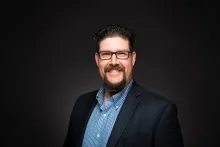
Ben is an elder serving as Pastor for the Salem, Eugene, Roseburg, Oregon congregations of the United Church of God. He is an avid outdoorsman, and loves hunting, fishing and being in God's creation.
