
John Elliott
This transcript was generated by AI and may contain errors. It is provided to assist those who may not be able to listen to the message.
Humans cannot see spirit things, spirit matter, spirit beings. Humans cannot hear spirit voices. Humans cannot have a personal awareness of the unseen. And so, consequently, we focus on that which we can see and that which we can perceive using our five senses. And yet, we are offered promises from an unseen God for altered behavior or death if we choose not to alter that behavior.
The only thing that you have as a human being is your life and your thoughts for a short time.
And we are presented with a challenge from God to give up, to die, to that which we are accustomed, that which we are attached to, that which we cling to, which is our self and the promotion of our self. But we are provided with these promises by a God that is unseen and with a future that is unattainable by humans. Humans, an article said, depend on sight for understanding their environment. But while chief predators have excellent eyesight in the dark, humans have very poor night vision. We really, in our own realm, see in the daytime we like to be indoors at night. We like to feel something safe. We like to be where we can have light because we don't see in the dark. And yet the predators, the top predators on this planet, see excellently with night vision. In fact, they do some of their biggest work when you and I can't see.
Even so, humans rely on their sense of sight, even when they can't see. They don't want to trust anything else or anyone else. And even with very poor or non-existent eyesight, they're very reticent to give the power, give the authority to someone else to tell them where to go, where to walk, where to step. You and I live in a world of spiritual darkness.
We can't see the spiritual realm. We can't see which way to spiritually walk.
And yet, as we saw in part one of this sermon series, we tend to want to retain the personal control and set the direction of what is best for us in an age of total darkness.
We have in this dark world an adversary who has spirit. He sees in the dark. He has perfect night vision. He operates there. He's seeking whom he may devour, and that person is you.
Humans have a desire for eternal life inside, but his whole quest is to prevent that from happening. We have this desire as humans for living forever, and so consequently, being religious is very common. Religious, and being religion, means I retain myself to choose and to know and to decide what is right, what is wrong, what is best for me in the spirit realm in which I cannot be.
And that's why all religions, except for this one, are human-devised. They are human-created.
They are from the machinations of the minds of men, just as created as the road to heaven written on the walls of the tombs of the pharaohs in Egypt.
Humanity has created religions for all of its people, including modern Christianity, that is pure invention from imagined, created, self-devised processes.
Some of them borrow names and stories, but they do not give up control. They do not trust that which is unseen, because humans can't see spiritual things. They don't trust that which they cannot see.
They don't trust that which they cannot see.
Religions, however, are sight-based. They don't get you anything spiritual. They don't take you to the right destination. As foolish as those drawings are on the walls of the pharaohs' tombs is the concepts and the teachings of any religion in the world. Just as big a fallacy, they are sight-based. If you see this individual, if you see this temple, if you see this statue, if you see this symbol, if you do this thing, if you go to your priest or you go to your leader, if you can have a picture of your God, if you can somehow devise your future, whether it's in heaven or it's in hell or if it's reincarnation or if it's some star or some planet, you've got to be able to envision it, touch it, see it, sense it somehow in order to believe it.
Humans can't trust God. They can't have faith in God. In Titus chapter 1 and verse 16, it says, they profess that they know God, but in their works they deny Him. Yes, we know God. We'll praise Him, we'll jump and we'll sing and we'll bow and we'll sacrifice, we'll do whatever it is. We believe there's a God, but we don't trust Him. And by what we do, we will not do what He says. You see, I can't trust somebody to direct my steps that I can't see and to do things that I don't think are wise. And so they deny God while professing that they know Him. Walking in faith requires absolute trust in an unseen dimension and unseen gods in an unseen dimension and unseen rewards that will not be given in this lifetime. That is what walking in faith requires.
It is the trust that becomes a substance to us. It becomes the thing. It becomes that which others have to taste, touch, feel, and see. But for us, it becomes that. It's a trust that is that strong. It is the substance of our faith, our faith in Christ, our faith of Christ in us.
Now, Jesus Christ is returning. We believe it soon. We don't know how soon it is, but we always think it soon. Let's ask a question. We always think of it from our perspective. Oh, He's going to come. I hope to rise and meet Him in the air. That's the reward. We look for the reward. Let's flip it around. What's it like for Him? He's in heaven getting ready to come. What must it be like for Him? What is He coming? What is He expecting? What's on His mind as the one who is bringing the reward, as the one who is coming to rule? What do you think is in His mind, is the expectation? We're expecting to live. What's He expecting? In Luke, chapter 18 and verse 8, He tells us, when the Son of Man comes, shall He find faith on the earth? He's coming and looking for faith. That's funny. You and I tend to think, oh, He's coming to look for this or that or how much I know or how brainy I am or how much prophets I understand or what special little doctrines I knew or who I knew or who I was with or who was my leader or what my church name was or you know, whatever, something. We think, oh, we're going to get in and He's coming looking for faith.
What's with that? What's with that? Well, it turns out that living by faith, not by sight, is required for all who will enter the kingdom of God. Now, you and I will tend to think, well, no, it's really about commandment keeping. Those who get in the kingdom, and it is about commandment keeping, but it's really about knowledge. It's really about living. Well, it is about those things. It's really about giving. It's a serving. It's something. Well, it is all those things, but you can't do any of those things properly without trusting God, trusting that God is and that He is a rewarder of those who diligently seek Him.
And so, will He find faith on earth? Kind of ask the question. I'm not sure.
I'm not sure, because all of these people are so adamant about walking by sight, about not trusting me, about not trusting God. We're going to do it our way. They're going to be knocking on the door after I close it, saying, let me in, let me in. You don't have faith. Yeah, but we've got something else. We've got some other special stuff. You'll like it better.
Living faith is required of all who will enter the kingdom of God. Hebrews 11, verse 6, makes it very clear, without faith, it is impossible to please Him. But whatever else you want there, of course, faith without works is dead. You have to have the works. But works without faith is also dead, and you're dead, and I'm dead. Without faith, it is impossible to please Him.
We often read through this quickly, and we get on to other things that we're more comfortable with. In other words, without closing your eyes and walking a narrow, difficult path to a real, small, narrow door, trusting God to tell you what steps to take in all of this danger, you can't be in the kingdom of God. We say, wait, wait, wait. There's this white highway where we can see. I'd rather go that way. That leads to destruction, it turns out. He who comes to God must believe that He is. Wait a minute. Where's the proof? Where's... Do I get an idol, at least? Do I get a picture?
Do I get to fall on the ground and babble in some, you know, tangible language? Don't I get some sign? Can I have a sign? No. You must believe that He is, and it gets more challenging.
He is a rewarder of those, and only those, who diligently seek Him, seek the unseen God. The one who hasn't spoken, hasn't shown up, won't be showing up in your life, kind of give you this special sign and walk and talk with you in the garden, etc., etc. That's not going to be happening.
So you and I are kind of in an interesting situation. We're offered the universe, literally, but we have to do it by trusting God fully.
Part one, we examined a caveat to faith, which is sight.
Next, next now, let's examine a requirement by God of all who will enter His family in Faith and Works Part 2, the necessity of faith. Today, I want to be clear, we're not talking about the opportunity to have faith, or the possibility to have faith, or it's a good thing to have faith, but rather, as we've just seen, the necessity of it. It's something that you and I might bypass in the Scripture and not pay attention to, and yet it's everything to the God family. It really is.
It is everything, and it's something that they have to have in their potential children in order to create them as spirit beings in the God family. Let me ask you a question. Start out here with a little brain teaser. What do the following authorities have in common as far as a specific need?
What specific need do the following authorities have in common? An airline pilot, a cruise ship captain, a skydiving instructor, a king, a husband, parents, and God? Can you think of something? My answer is an absolute need to be obeyed. Every one of those individuals is responsible for the life and the well-being of others, and in order for them to be able to give protection and direction and well-being, they must be obeyed. Take the parent whose child wants to run into the street must have absolute obedience from that mother or that father. A husband who has covenanted with his wife to care for her and be a blessing to her and help her has to have her support and has to be the authority in order to do that, or he cannot. Especially these things come down into when there are trials and emergencies. When we think of the need for those authorities to have absolute obedience, let's look at what we get in this world with all of those individuals. With airline pilots, cruise ship captains, skydiving instructors, kings, husbands, parents, gods, do they get absolute obedience? No. Why not? Because the subject knows better. In every case, people are told, sit down, it's time to land. No, we're not going to do that. How can the pilot protect the passengers if they're not buckled in when you hit turbulence? How can a cruise ship captain get everybody safely off the boat into the life rafts when people are not able to get off the boat?
People say, no, I think I'll stay on the ship.
One case, an airline pilot told everybody to get off the airplane and into the life rafts, but they thought it better to stay on the airplane. And they all went down with the airplane.
And the life rafts were empty. You can't, you see, if you don't get obedience in times where things are chaotic and you don't really know and you don't really trust, you see, and sometimes pilots and captains and instructors and kings and husbands and parents and god don't get followed. Because humanity's god is promoting rebellion to those overseeing them, and those who are trying to care for them, and those who are trying to help protect them and their future. Satan breeds distrust of authorities, rebellion to authority, disobedience to authority. It's common everywhere. Some of us fly in parts of the world where once the plane hits the ground, everybody stands up and starts taking baggage out, while the plane's still landing. It's just common. Now, people who rebel and disobey do so to their own demise, often.
And those responsible for safety and direction and protection and guidance get ignored. I know better. I've got eyes and ears and my own brain and I'll direct my path. And what's the state of society today? What's the proof? Is it getting better? No, it's not. It's not. One way of getting people to disobey authority is to get the authorities to corrupt themselves. So you have examples. Well, look at this cruise ship captain. Look at that airline pilot. Got on drunk.
Look at this king. Look at that husband. Look at this individual. Look at that. Look at this parent.
We're going to have to obey these people. We can find faults.
So who trusts authority anymore? And yet the authority is there for a person's safety and for saving them. That's what God is trying to do for us. He's trying to help us, protect us, and eventually save us. On a flight one time, and some of the flights get long, up to 16 hours, so you have time to mull around and talk with some of the staff. And I was asking one of the flight attendants, or I was just talking to her, and she talked about something about training. Going in for recurrent training. Three days of recurrent training. Training? You know, you're serving meals and some beverages. Why do you have to go training? She says, well, we're not really about meals and beverages. That's not our function. Our function is safety officers. We're all safety officers. We train for when this plane crashes on the ground or crashes in the water, how to evacuate people, all the systems, how to deal with terrorism, how to deal with all the safety systems on board and all the stuff behind the walls that you don't see and know. That's what we're here for. That's what we deal with. All the food and stuff is just, yeah, as long as we're here, we'll feed you. When the plane goes down and everybody follows the rules, you remember Captain Sully and the plane out in the river and everybody's standing on the wings? Everybody's fine. But when people don't follow the rules and the captain says, everybody get out in the life boats and they say, I don't know, the water looks kind of choppy. I'm staying here in the big plane.
They all went to the bottom of the ocean. And you've got to understand sometimes that it's not as simple as just following orders because if you don't like big deep dark oceans with big waves and there's sharks out there, you're going to say, I don't think the captain's decision is a very good one. I'm staying here where it's safe. We have that same situation with God.
Think about a skydiving instructor. That's a pretty serious thing. On Thursday, Ryo Kanutsun and I had skydiving instructors for the first time ever. Now, I've been a pilot for 35 years since 1977. I've been flying planes. And my job is to fly them safely and get passengers in safely. First of all, to check all the safety systems of the plane before every flight. Make sure every bolt, every tire, every brake lining, every part of the engine, the interior is all right. Put the people in. Get them strapped in. Make sure the doors are all locked. Everything's just right. Okay. This is an important part. Fly the plane. Check the weight requirements. Load and balance. Weight and balance.
Etc. Now, it's difficult when you know something. Think about whatever it is you know. Maybe you wives or your children. You just know certain things in life. You come out to the skydiving instructor and say, come on out to the plane. They've got your harness on here. Five guys heading out to some plane. And a joker cameraman says to us, walks over to a plane that's kind of old and small and kind of reaches for the door and then says, oh, I guess we're not taking this nice plane, are we?
I didn't know what he meant. We went over and found this tin can of a little plane that had just been baked to death in the Arizona sun. And the door opens up on the side, exposing the side of the airplane. And we're going to fly in this one. And I thought, guys, I don't think so.
It's a four-seat plane. There's five big men here, plus all the backpacks. We're not getting in this plane. It ain't going to fit. Door opens up, climb in on the floor. There's no seats in the plane, except one for the pilot. There's no walls. I mean, they've stripped the plane bare down to the aluminum skin to make room for enough weight and enough space for people to gee-dee in and sit on the floor. It was very awkward. Very awkward. Just didn't feel right. Nothing like I'd ever experienced.
So this guy's feet are up here, and Rio's knees here. I've got some guy behind me with his knees. And I'm sort of in the middle. I'm supposed to sit up. Nothing to lean on. My body doesn't sit up like you. People kind of sit there cross-legged. I've got to lean on something. And that was awkward because I couldn't lean on anything. Couldn't lean back in this guy's lap. Couldn't lean on this door that was supposed to go up because he had it open as we went along down the runway. I mean, taxing. But this is just unsafe. The whole thing. Just it was awkward. So I kind of wrapped my arm around Rio's knee, and he planted his arm on top to hold his head.
And I just felt like telling him, you know, this isn't how you do it. About that time, they're banging, trying to get the door closed as we're taking off. And the pilot yells back, there's another lever up there. Got open. Oh, got the door shut. We rattle off into the air. Sure enough, it does fly with five big guys in packs. So I was wrong about that. And now I'm back in the floor. We're back in the floor, all of us. Kind of like this, feeling weird, looking out the windows, sort of like that, because we're not on seats. We're climbing up to 10,000 feet.
I'm not feeling real good about this. Just out of the element. I just wanted to tell the pilot a few things. And this guy, I was sending straps behind me, start tightening me up. Now I really feel weird. This guy's behind me, he's got me tightening up to him. It's like he's getting pregnant, and I'm the 190-pound baby, you know? Strapping on here. And I thought, I don't think this is going to work really well. Just feeling really weird about the whole thing.
And I began to realize that he's the guy with a parachute on his back. I don't have one.
And I hope mommy doesn't deliver before we get down to the ground.
And so, about that time, this door thing slams up against the wing, and it's all open right beside me. There's nothing there. Just all the way down. And I immediately thought of safety. Okay, I'll grab the handle. There's no handle. I'll buckle my seat belt. There's no... I'll do something, you know? I could fall out of this plane. Easy. This is not good.
And then he said, there are three things that I require of you. He told this to Rio and me. Three things. Number one, when I tell you you'll put both feet outside on this little bar of metal, about that big, sticking out the side of the plane. Put both feet on that. Second thing is, you'll put your hands across your chest. Third thing is, put your head all the way back like that.
Must do that. Well, that's kind of weird. Putting your feet outside a plane in 105 miles an hour wind, trying to put them on a bar. Secondarily, crossing your arms when you want to hang on to something. Only thing I could see was Rio's shoelace, but I didn't really think it was going to be helpful.
And the third thing is, oh yeah, put your head back. This is just really awkward. And I'm wondering, I'm going to tell this guy something, because first of all, I've got one leg out. I've got the opening, but it's right here. My other leg is in the plane. My legs don't bend. I won't be able to get my leg past this thing, because you're right behind me, and you're stuck on the passenger, on the pilot's seat.
About that time he reached up, grabbed my ankle, shoved my knee to my chest, rotating me sideways.
Well, I guess I could be wrong about that, too.
Put both feet on that little thing sticking out down there. A little step. A little bar about that way.
Now I thought this is kind of ridiculous, because first of all, it's hard to get my feet on there, and you're behind me. You're going to have, I don't even, I don't see any room for your feet. I was going to explain to him, we both can't sort of stand up on this bar out there and do our dive.
I figured, well, I wouldn't say anything because, well, he'll just have to find out. So I put my little feet, my big feet, out on this little bar, and about that time, the pilot took the plane and turned it on its side. Now the opening is the floor of the plane, or where the floor of the plane should be, and I'm falling through space, tumbling! This is really awkward, tumbling. I don't know where we're going or what's happening. I can't see anything behind me. We're just out there. And then I get this, bam bam, which is the sign to do that. Okay, I'll do that. And all of a sudden, it all smoothed out. All of a sudden, I'm looking at Arizona down below, and it feels really nice. You know, you're probably doing 130 miles an hour. There's enough friction from the air, kind of feels like you're in water. Looking around, lots to see. Comfortable at last. Stretch those legs. Yeah, okay, this is good. Then he did something that really upset me. After only 30 seconds of where I finally liked it, and enjoyed seeing things come up, and the ground was coming up nicely, I was really starting to look around and enjoy the ground. He jerked us into a vertical position. And I really was upset. I just wanted to turn around and say, I liked the previous position, finally, thank you. What are you doing? And I looked around, and I looked up. Oh, there was a parachute up above us. I wouldn't have thought about the parachute, actually. I never thought about it. I was surprised when it was a little bit more than I thought.
I was surprised when it was there that it jerked us vertically. I forgot.
I guess I thought I was Superman. We were just going to keep doing this.
And up there, it was all tangled up in a ball, just kind of going, oh, that's kind of curious. And gradually the ball kind of untangled and whoosh!
And we're hanging. Okay. I didn't like the hanging part. I like this part. I want to go back to that part. If I had done it my way, see? I don't know where I'd been up there. If I'd done it my way, I would have... Oh! Should have pulled something.
You know, he was there to be obeyed, and I did obey him. But I didn't agree with him. I didn't agree with anything he told me till we got on the ground. And I thought back about it. I thought, you know what? This whole thing was really awkward. If I'd done what I felt comfortable doing, I wouldn't have gotten suckered for putting two feet out the door in my arms like this so I couldn't grab anything when the plane dumped me out. I would have forgotten to pull the chute.
I'd be some... well, just put the gravestone there, because I'm already buried. That's what it's like in Part 1, dealing with sight. Trusting somebody when you know better. Trusting somebody when all that you've experienced in life tells you this is not the way to do it. This is too awkward. This is too weird. I'll do it my way. And yet in the end, it was the right way. And it worked out.
Why do you think God sent his Son to this earth besides to die for us? He said in Mark 11, in verse 22, a short sentence, he said, Have faith in God. Have faith in God. Do you remember that passage? Does that pop out into your mind? It doesn't pop out into my mind. I tend to forget that one. But when you think about all the miracles he did, oh, I'm in for that. I'll take a sign, I'll take a miracle, take healing, take some barrels of wine, cast out the demons, heal the sick, feed the 5,000, feed the 4,000, we like that stuff.
He didn't come to feed people. He didn't come to heal people. He came to help people who walk by sight begin to have an experience whereby they can trust in something unseen. And a miracle can help a preschooler in the faith begin to learn about God. In Mark 9, verse 19, he answered a man and said, O faithless generation, how long shall I be with you?
How long shall I bear with you? From God's perspective, that's what the challenge is. People who don't trust, they don't have faith, they don't let God lead. How long does he have to bear with us? And so not only are we a members of us who won't do what he tells us for our own good. A central purpose of Christ's ministry was to promote the development of faith. That's really why he did so much, he encouraged the development of faith in humans. He said, in verse 23 here in Mark 9, All things are possible to him who believes.
All things are possible. Go back two verses before that. For she had said to herself, If only I may touch his garment, I shall be made well. Jesus turned around. It wasn't about the healing. He turned around because he sensed something that was exciting to him. He turned around and when he saw her, he said, Be of good cheer, daughter. Your faith has made you well. Those were about developing initial faith, initial trust. I hope you've had some experience in your life where God helped you initiate faith or belief in him through a miracle, through a healing, through an event, through something that you know.
You just look back and say, I know that God did that. That could not have happened without God doing that. And that's where we start off in kindergarten. And that's very helpful. But we humans as we go along, we don't tend to pick up what's important to God and what was important to Jesus Christ on the earth. We see it, but we diminish its importance and we sort of push it aside and we see the miracle.
We see the thing in our life. But, oh, that was good. Can I do that again? Can I have another healing? Can I have another sign? Can I have some more interaction here? One among us who was recently diagnosed with terminal cancer told me, Is the age of miracles past? Because I'd like to be healed.
I asked her on Thursday, Do you need to be healed in order to trust and believe in God? Absolutely not. But I'd like to be healed. We mature and we grow to a place where our faith develops, to where we're absolutely trusting and believing in those unseen things. And we are compelled and nothing can take from us our conviction to pursue the unseen, to be riveted on invisible promises and invisible future bodies and dwellings.
That's what God wants us to grow in. Jesus's followers, however, were young and they were new and they wanted to see more miracles. They wanted to see more healings. But his focus was on the kingdom of God and developing faith and walking the walk without sight, being children in his family, having that wonderful blessing.
But in order to have that blessing of eternal life in the family of God, faith, absolute trust in the unseen is required. Miracles involve sight, physical things like the wine, the healing, the loaves, the fishes. But the Bible says the kingdom of God is not about food and drink. It's not about physical things and miracles and proof. It's about faith. There's a lesson that we can learn from the Apostle Paul.
He had a dramatic miracle when he was young in the faith. Let's look back in 2 Corinthians 12 verses 7-10. If you remember, in the book of Acts, Saul of Tarsus was busy getting members of God's church killed. And God provided a miracle to show him that there is a God, that I'm here, and start developing faith.
Do you remember what the miracle was? God struck Saul blind, the one who had become the Apostle Paul. He struck him blind. He took away his sight. It's an interesting thing, isn't it? Paul could no longer rely on that which he knew, that which he could see, that which he could feel. He was carried on to Damascus. He was taken to the true disciples. And he was told what would happen, what he should do.
Then his sight was restored. By a miracle! It's a miracle! Paul could see again. God gave him eyesight, probably 2010 eyesight. Some of the... when God heals your eyesight, it's going to be good, right? Paul could really see. Paul's faith was initiated through those miracles, being blind and then being healed. Now we pick up the story in 2 Corinthians 12. Paul is now an older man. He's a wiser, seasoned Apostle. He's been through all kinds of things. Paul is on his way to go to Jerusalem and then on the way to Rome and he's going to get killed at some point. Paul says in verse 7, 2 Corinthians 12, Unless I should be exalted above measure by the abundance of the revelations God has given me, a thorn in the flesh was given to me, a messenger of Satan to buffet me.
Lest I be exalted above measure concerning this thing I pleaded with the Lord three times that it might depart from me. What was this thing that Paul wanted, maybe was anointed for three times? It was eyesight, as far as we know. His eyesight failed. That which God had healed went south. He said in one place, see with what large letters I've written this epistle to you. Evidently it was failing him and he pleaded with God three times.
How can I be an apostle? How can I write the epistles? How can I do my job if I can't see? And God said, no, no. You don't need it. You've grown. In verse 9, my grace is sufficient to you. There comes a time when we need to move up from miracles. We need to move on from healing. There comes a time when we have to walk in faith. And if we still need a miracle, if we still need a healing, if we still, notice my words, need a healing in order to trust that there is a God, then we're still in kindergarten.
Nothing wrong with wanting a healing. I get anointed when I get sick, like the Bible says. I anoint people all the time. We pray for one another, but do I need a healing? I do not. No, thank you. I don't need a healing. Paul didn't need a healing. In 2005, I'll give you a person of the sample. Here in Phoenix, I took second place in the Arizona Senior Olympics in the 10K. The following year, 2006, I was set, as I was improving my times, to take first place if the same people entered.
That year at the feast, some of us got malaria. I've also got Africa tick bite fever. And some muscle degeneration set into my body. It's with me in all of my muscle groups, in all of my tendons leading to joints. And within a year, I was unable to walk to my neighbor's house. And you know how close together the houses are here in Phoenix. That's as far as I could walk. I couldn't run anymore.
I had run 12 miles without stopping. You know, at that point, you tend to wonder. You get anointed. You go to the doctors. You check it out. You hope. You try to figure this stuff out. But after batteries of blood tests and all this stuff, there comes a point when you just say, you know what?
This isn't too bad. I'm better. Move on. It's just the way life is. It gives us the opportunity to understand what other people are going through. And I don't need to be healed anymore. I don't seek any solution to the matter. Now look what Paul says. You know, it's okay not to be healed. It's okay to focus on the kingdom and the work of God and serving others. He says, therefore, in verse 9, therefore most gladly, he didn't get healed of his eyesight, therefore most gladly I will rather boast in my infirmities.
I'm glad to be blind. I'm glad to have aches and pains. They're good for me. That the power of Christ may rest upon me. The unseen power. The direction, the power that you and I are supposed to rely on. Trust in the Lord. Trust in the Lord and the power of his might. Verse 10, therefore I take pleasure in infirmities. How do we get to there? It's a long way from, oh, I need to be healed. Heal me. Fix me. To taking pleasure in infirmities, Paul says.
I'm not there. I don't take pleasure in infirmities yet. That the power of Christ may be on me. I take pleasure in infirmities, in reproaches, in needs, in persecutions, in distresses for Christ's sake. For when I am weak physically, and I can't do it myself, and I can't rely upon myself, and my body lets me down, and my own mind lets me down, and my own knowledge lets me down.
When I'm weak as a human being, then I'm strong spiritually in Christ. I'm looking, I'm relying now on an unseen being who has me and you in his hand, who is letting all things work out for the good in the long run if we trust him. We like to see, we like to hear, but being upgraded to a spirit being at the return of Christ involves faith, a transfer from proof to faith. 1 Corinthians chapter 2 verses 9 through 13 is very helpful against the Apostle Paul telling us, 1 Corinthians 2 verse 9, But as it is written, I has not seen, uh oh, see how we're getting weaned away from that which we can perceive and know on our own?
Nor ear heard, none of the five senses, none of the perceptions that you and I have are going to get us where we need to go. Nor has it entered into the heart of man. We can't even come up within our own brilliance the things that are of God, the things which God has prepared for those who love Him. We have to trust Him. I had no idea on that plane what we were doing the whole time.
I really didn't have a clue. You know, you just imagine what it'll be like and nothing that was going on was anything like it was imagined. And so, like He had prepared for Rio and I something, but it hadn't entered into our mind what it was going to be. And so it is with God. But God has revealed to us by His Spirit, not through eyes and ears, but by His Spirit. For the Spirit searches all things, yes, the deep things of God, of the Spirit realm.
For who among men knows the things of a man except the Spirit of man within him? And that's what we tend to rely on. So also no one knows the things of God except the Spirit of God. That's what we must transfer to rely on. We have not received the Spirit of the world, but the Spirit from God so that we might know. We don't have to be in the dark. We can know if we let and trust God to show us the things that are freely given to us by Him. Okay? We understand that. I hope we all can grasp this.
That's maybe a more mature stance now, but that's not good enough. We need to move up even more from there. What? This is really getting uncomfortable. Verse 13, These things we also speak not in words which man's wisdom teaches but which the Holy Spirit teaches. Comparing spiritual was spiritual. Moving on up from the human mindset, even the human realm, and now spiritual unseen was spiritual unseen and we're comparing at that level. That's where we are destined as we grow in our faith in God.
But the natural man does not receive the things of the Spirit of God, for they are foolishness to Him, nor can he know them because they are spiritually discerned. But he who is spiritual, you've progressed to this plane where you are now receiving the mind of Christ, you are operating on that plane, he who spiritual judges all things. Notice that word, judges all things. Jesus said, by their fruits you will know them.
And now we have a dire responsibility that we can't just take anything spiritual that comes to us. But we have to test the spirits of all things. How do you test a spirit? You have to test it with spiritual, don't you? And we have to judge and test.
Verse 16, For who has known the mind of the Lord, that he may instruct him? But we have the mind of Christ. We really can progress in faith to the point of having God's mind in us, having the faith of Christ, as the Bible says in one place. Comparing spiritual with spiritual, fully walking with God. Now ask yourself a question. Do I want proof? Do I want miracles? Or do I want the mind of Christ?
Because that's the option. The mind of Christ is on a spiritual plane. It is dealing with spiritual. It's not concerned with physical. Which do you want? Do I want healing? Healing? Healing? Healing? Heal me? Got sick again? Heal me? Got sick again? Heal me? I'm getting older. Heal me? Heal me? Heal me? Heal me? Heal me? Is that what we want? Or do I want the faith required for salvation? That's the title of this sermon. That's where we need to be going. The faith required for salvation. That type of faith that the faithful had in Hebrews 11, where they could not be healed, but sawn in to, persecuted, killed with the sword, etc., etc.
Our mentality must change. We must come to rely on another unseen helper. We must rely on a force that cannot be seen. It's like the wind. It's clear. We must rely on the church. Yes, the Church of Jesus Christ. It's a requirement. Jesus did not organize the Church in a manner that provides me with proof of all things. It requires trust. Trust in God. Trust in Jesus Christ, the head of the Church, a reliance on God, a reliance on the Holy Spirit, a reliance on His Word.
All those things become the guide to us, poor blind humans in the spiritual sense. We can't see the spirit world, so they become our light. They become our eyes. They become our path. They direct our steps. Let's look in Romans 10 and verse 17. Romans 10 and verse 17. So then, faith... Where do you get this faith? You just draw it out of thin air and it's a me and God thing.
No, faith comes by hearing and hearing by the Word of God. Wow! Faith, then, is something we can't just get on our own. We're going to have to trust somebody else. So on the one hand, Jesus Christ makes us rely on the ministry for sound doctrine. On the other hand, He warns us that some of the ministry will be false teachers.
And we must know the difference. Here in the middle are each of us with our own responsibility for choosing. Now both offer the kingdom. The false minister offers you the kingdom. The true minister offers you the kingdom. Get the kingdom. What are you going to choose? One always appeals more to carnal human nature than the other. One appeals a little more to human logic, a little more to the sight, a little more to the ears, a little more to the self-direction, a little more to this makes sense, based on this, based on that.
Here are some things that you as a human being can really relate to. Go this way. We're real comfortable with that. I've never seen in the history of the church any split or departure that didn't have a carrot for human nature to say, ha, I like that. I appeal to that. I can trust that. There's something about it that appeals to me. It appeals to my humanity, my humanness. And the other way is clear, unseen, the hard road requires a lot of trust. I'm uncomfortable with it. It feels awkward. I've got to repent. I've got to keep finding sins in my life.
It's uncertain. See? This one's promising me the place of safety, guaranteed. And I can see the people, and I can see the buildings, and I can see the stuff. This one is a little more faith-reliant, a little more challenging, a little more... I'm not sure I can just trust. What are we told? What are we told in the Scripture? Ephesians 4, the ministry was given for doctrine so that the human imaginations, me deciding what's right, the winds of doctrine that blows through all of us all the time, will be established, the true doctrine will be established, and we will say, you know, that which I trust, I'm going to set aside and I'm going to trust something that feels a little bit awkward.
But I can see by the fruits, Jesus said, by their fruits, not by their voice, not by what they look like, by their fruits you will know the true teachers. And it's going to be a challenging path. So we mature to the point where we have to trust, even in the church. Now, teaching from the ministry, or trust my knowledge, which do I feel comfortable about? Well, do you trust Jesus Christ as the head of the church?
Do you trust the Holy Spirit to be strong in you? You should instantly know when false teaching. It should smack you just like that, just like the man who told me before he died, I got this letter in the mail and by the second sentence I threw it in the trash. That's, you see, because why?
Really appealed. My carnal side was saying, oh yeah, that's the way it works. That's the way it works.
In Romans chapter 10 and verse 13, whoever calls on the name of the Lord will be saved. Great. Call on God's name and will be saved. Sounds easy, doesn't it? But verse 14 says, How then shall they call on him in whom they have not believed? No faith yet.
How shall they believe in him of whom they have not heard? How shall they hear without a preacher?
How shall they preach unless they are sent? There's a clue. Verse 16, But they have not all obeyed the gospel. For as Isaiah says, Lord, who has believed our report? It's one thing to teach it. It's one thing that is believed and obeyed. Verse 17, so now we see where this statement fits in context. So because of these things, because of the church, faith comes by hearing and hearing by the word of God taught correctly. And we then come to the point of relying on unprovable ministers. Did anybody see God ordain me? Did you see Christ put his hands on me? No. But I'm presented as a pastor, aren't I? You have to take that on faith, or you have to judge that. You have to test that, don't you?
You have to teach us what I would call an unprovable Bible, in the sense that, as one of the great Christian religions has said, evolution is probably true. This is probably false. Most people today can't trust on this as they look more and more with sight. So you could call an unprovable Bible. The people in the Bible are hard to find in antiquity. The locations are difficult to actually go put your finger on. This is often called just a collection of writings by humans. So you have this minister who's using a Bible that's, quote, unprovable in the minds of some.
And you're developing a faith in an unseen God, resulting in obedience and believing in promises that you'll never receive in this physical lifetime.
All the time working to dwell in a spiritual realm, which you and I can't even know exists. Can't see it anyway. We can't get there. Flesh and blood cannot inherit the kingdom of God. You see what God is asking of us? Blind faith in a sense, but not really. It's really living faith. We're blind because we can't see the Spirit, but God is living in us with His Holy Spirit. He is giving us the faith. He's giving us the trust if we will really trust Him. In 2 Timothy 2, verse 11-15, 2 Timothy 2, verse 11, this is a faithful saying. How do you know? You can't prove it.
It's a faith-based saying, but He's saying you can depend on it, even though it's clear air.
This is a faithful saying, for if we died with Him in baptism, we shall also live with Him.
Can you prove that? Well, I guess in time you can, but can you prove that today?
That's what we believe, though, isn't it? We will live eternally as a Spirit being with Him.
Verse 12, if we endure, we shall also reign with Him.
We can't see that now, but what happens if we don't believe? The caveat is, if we deny Him, He will also deny us. There's the caveat.
You're not going to get to see it. You're not going to get to taste it or touch it right now.
And if you deny it, you won't be part of it. Verse 13, if we are faithless, He remains faithful. He cannot deny Himself. He will remain faithful.
Remind them of these things, charging them before the Lord, not to strive about words to no profit, to the ruin of the hearers. Don't get your sights down in the physical realm, arguing about things in the physical plane, to the ruin of the hearers, to the breaking down of trust of God. Elevate your eyes. Verse 15, be diligent to present yourself approved to this invisible God, a worker who does not need to be ashamed, rightly dividing the word of truth, that you believe is truth because you believe it's truth.
And how we reach this point is the development of faith through Jesus Christ.
Hebrews 12 too says, looking unto Jesus, the author and finisher of our faith.
That's where faith comes from. That's where it is completed. That's where it grows. It's in our Lord Jesus Christ, whom none of us have seen, but He is developing it in us. He wants it. He wants to find faith when He returns. He wants us to grow in faith. He's working to build faith in us. He appeals to us to have His faith.
He is the author and finisher of it.
In conclusion, let's read Hebrews 10, verses 22 through 24. So we look at this concept of the requirement, the necessity of faith. You see now that it is absolutely a necessity. It has to be there.
We then see how important it is to God and how we must get into something that's a little bit sometimes awkward feeling, a little uncomfortable, out of our comfort zone as a human being, out of that which we automatically can sense and trust as we walk this way towards the kingdom of God, and we let something else be our eyes and our light, and that is Jesus Christ, no human. He says here in Hebrews 10, verse 22, Let us draw near with a true heart in full assurance of faith.
Full assurance of faith. Nothing lacking, nothing wavering. Absolutely trusting.
Just like the blind man who's climbed the summit of the tallest mountain on every continent, hasn't seen a thing, absolutely trusting where to put his foot, you and I can climb our mountains if we rely on Jesus Christ and truly sort out who his helpers are and who they're not, and really rise into comparing spiritual with spiritual and walking this path very seriously, very seriously. Then we can draw near to him with full assurance of faith, having our hearts sprinkled, washed from an evil conscience, and our bodies washed with pure water. Let us hold fast the confession of our hope without wavering, for he who promised is faithful. And then he goes on to say, and let us consider one another in order to stir up love and good works. So the next step is, with faith, we are to go on to love and good works. Next time we'll go to part three of Faith and Works, zealous for good works.
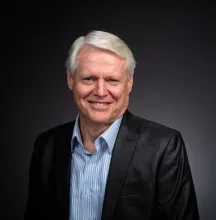
John Elliott serves in the role of President of the United Church of God, an International Association.
