
Darris McNeely
This transcript was generated by AI and may contain errors. It is provided to assist those who may not be able to listen to the message.
I thought it was very fitting that one of the songs that Brad had us sing during the first three songs this morning, or this afternoon, was, Great is Thy Faithfulness. Because the next one of the fruit of God's Spirit that we're going to cover, actually we're going back one because I skipped it, and went forward to one. But the one that we will be covering today is faith, or faithfulness, which is a fruit of the God's Spirit mentioned there in Galatians 5.
I would say, suggest that if we look around at our society, the one thing we don't see a lot of today is true faithfulness. Loyalty, trustworthiness, or a number of other things we will discuss that are equivalent to being faithful.
And yet the one characteristic that you and I depend upon God having more than many others is that God is faithful to His promises, and that Christ is faithful in what He promised to do to us and for us. It's interesting that Paul concludes in Galatians 5, verses 22 and 23, about these nine fruit of the Spirit, and he says, Against such there is no law. Well, obviously there wouldn't be any law against being like God, because what we are saying in Galatians is that we are becoming more and more God-like in our behavior, in our thoughts, in our life, how we think and what we do. But it's interesting about faith and faithfulness, that it does come through hearing, and it does come through knowledge.
If we go back to the book of Romans, chapter 10, for a minute, in Romans, the 10th chapter, where Paul was talking to the Romans, and Romans 10, and beginning of verse 17, where he says, So then faith comes by hearing, and hearing comes of the word of God. There are things that we need to do, that we can bring circumstances about, that our faith will be increased, and our understanding will be increased.
So not only do we need to have hearing of God's word, but he also says in 2 Timothy 2, that we ought to study and have knowledge of the essential elements of faith. The spoken has an equivalent to faith in some places, like over in John chapter 10 and verse 38, where knowledge and faith are actually kind of corollaries to one another.
However we look at it, faithfulness is an essential part of being what God wants us to be.
Being faithful. Faithfulness, loyalty, is an essential element that each and every one of us must possess in order to have the crown of life. Because it tells us in Revelation 2, showing the importance of being faithful.
Because in Revelation 2 and verse 10, he says, And then he goes on and explains for 10 days, because he was talking about individual individuals.
And then he says, And that was the covenant that you and I made as we were being baptized and as we made that commitment to God, we made a covenant that we would be faithful to death.
Whenever and however that might come.
Now it's just interesting that in the last few weeks we've had a number of baptism counselings, and the one thing I stress over and over and over again is what Christ said in Luke chapter 9 and Luke chapter 14.
That we must count the cost and we make a covenant with God.
That you will be faithful even though you may die, or you may go to prison, or you may have sickness, or you may have all kinds of other problems that come up. What God wants us to be is faithful in what he wants us to be.
Now it's interesting that faithfulness, or faith, and some of the definitions we will get to, because it comes from the Greek word pistis, P-I-S-T-I-S in the Greek.
And I want to spend a little bit of time in going through what the word faithfulness is in the Greek.
In the New Testament, King James version of the Bible, the word pistis, translated faith or faithfulness, is used 244 times in the King James New Testament of the Bible.
It primarily means to have a firm persuasion, which is usually gained from having a conviction based upon hearing.
And it is used in the New Testament to mean faith in God and or Christ or things spiritual.
That comes from Vines' expository dictionary of biblical words in the New Testament.
So it's very interesting that we think about faithfulness. So what is that? What does God want us to be?
And out of these 244 times that this word is used, it primarily means of a firm persuasion.
No drawing back, no doubt, no double-mindedness, no questions about things. It is that you have committed yourself firmly to what God has called you to.
And it is based upon a conviction as we read and study God and His word.
I want to go on then in Vines' dictionary, or Vines'...it goes on a little bit farther and read a couple of other paragraphs regarding what Vines says from this Vines' expository dictionary of biblical words.
And he says, quote, The main elements in faith, in its relation to the invisible God as distinct from faith as in man, are essentially brought out in the use of this noun and the corresponding verb, pistul, P-I-S-T-E-U-O.
And here are some of the distinctions. He says, number one, a firm conviction producing a full acknowledgement of God's revelation or truth.
So, Vines goes on and he talks about the first thing that understanding what kind of faith God is talking about, the first element of that faith is that it is a firm conviction producing full acknowledgement of God's revelation and truth.
That we must. It is a full understanding. The second difference in what it brings about is, number two, a personal surrender to Him. A personal surrender to Him.
You can read about that in John 1, verse 12, if you want to take that scripture down.
The third thing that Vine says is that it brings about a conduct inspired by such surrender.
It changes our conduct. It changes our behavior. It changes our thinking.
All inspired by that surrender that we first made to God and to His Word.
Remember that scripture back in 2 Corinthians, chapter 5? We read it pass over time, but I'll just quickly go back and quote this in 2 Corinthians, chapter 5 and verse 7.
That it is based upon our surrender, our commitment that we have made. 2 Corinthians, chapter 5 and verse 7 says, For we walk by faith, not by sight.
You know, that would be hard to do.
And I think for anybody who has had to deal with that, I was watching a program not too many months back where this girl had lost her eyesight.
And she was only, what, maybe 16 years of old, and all of a sudden, here she was totally blind.
And having to start all over again based upon confidence that she was able to do things without sight, and she could not see where she was going, what she was doing.
And it was an aspiring story about how, through education and through knowledge and through experience, that this person could become totally confident in their ability without seeing anything.
By using other qualities of the mind and the other things that would be exercised, she became so confident that she could go where she wanted to go, do what she wanted to do.
She didn't need anybody leading her around because her knowledge level of where she was and using her other mental capacity, she was able to do that.
Well, that's what God wants us to be in this situation where we, as it says in verse 7, for we walk by faith. Now, unfortunately, most of us don't become blind and start all over again, do we? The problem that we wind up with in the churches with our physical eyesight is to become blind and allow God's Spirit to lead us spiritually.
We like to still make some of our own decisions, don't we? We like to make some of our own circumstances. But Paul says very clearly that we ought to walk by faith. Faith in God, faith in His truth.
So those are the three qualities that God wants us to recognize in what faith or faithfulness is. Number one, a firm conviction. Number two, an inspired conduct through surrender.
And also, number two was a personal surrender to Him. Firm conviction, a personal surrender, and an inspired conduct. So what we need to do is think about our lives with God's Spirit and ask ourselves, do we have that kind of faithfulness that God is talking about through pistas of those three basic qualities? Now, he says the word, going on with a little bit more in Webster's dictionary, he says the word is further defined as steadfast adherence to a person or thing, to which one is bound as by an oath or an obligation, such as marriage or any other commitment that people make toward their partnership or a relationship or whatever, whether it be as a member of the body of Christ, a commitment, but a steadfast adherence to a person or thing by an oath or an obligation, marked by or showing a strong sense of duty and or responsibility, a conscientious, reliable individual.
All these qualities that, as I was preparing, I began to ask myself, boy, can I truly say that I have that kind of faith, that kind of faithfulness to God, to where I have allowed Christ to, through that fruit of his Spirit, to become that kind of a steadfast person. Now, we find over in the book of Hebrews, interesting, in chapter 11 of the book of Hebrews, he goes on in Hebrews 11, and he gives a little bit more of definition of what faith and faithfulness are, and he says, now faith or faithfulness, and they are the same Greek word, pistas, faith or faithfulness.
Now, faith or faithfulness is the substance of things hoped for. Now, it's interesting that faith has substance. Number one, it has substance to it. It's not a theory. It's not kind of a dream. It's not lacking in reality. But according to what it says here in Hebrews, it has two elements.
There is an element of confidence, and there is an element of conviction. The meaning then of faithfulness or faith is to make clear when this is understood, that it is a confidence in things hoped for and a conviction of things not seen. It is a confidence in what you have committed yourself to hoping for, but then it is a conviction of what you know will come to pass.
So bottom line is, faithfulness is not a fleeting thing that is based on momentary pent-up emotions. Faithfulness has a substance. That substance is what comes by hearing. In other words, it adds to the substance of your relationship. It puts the meat on the boat, on other words, right?
It puts the real importance of what God is doing. So we have, then, true faith, this faithfulness. It's an essential grace, as we find in Galatians 5. It is the main spring of a Christian life, the main step of a Christian life. It is this faithfulness that helps us overcome the world. It helps us overcome the flesh, and it helps us overcome the devil. And it results in the crown of righteousness. Over in 2 Timothy, Paul is talking here in 2 Timothy 4 and verse 7.
Back up to verse 6, he says, For I am now ready to be offered, and the time of my departure is at hand. Now, I'm not... I don't know exactly how Paul thought about things, but are you ever ready to be offered? I don't know. He had come to the point to where he had said, even over in the Philippians, that for him it would have been better that he die, but for the people it was better that he stay alive, right? I haven't gotten to that point where I want to die yet.
But it is very important that we understand that the time will come. But Paul says, I am now ready to be offered, and the time for my departure is at hand. I have fought a good fight. I have finished my course. I have kept the faith. Or I have remained faithful all the way through my life. And henceforth, because of that, he says, because of my tribulation and iconium, because of my experience in Derby, because of my experience in Galatia, or what happened to me in Ephesus, or what occurred to my life in Corinth, or any number of other places, because of those years of experience, he says, I know there is laid up for me a crown of righteousness.
That faith has now become so strong, and that commitment has become so indelibly printed in my mind. And I know, I hope all of us can, to one degree or the other, have come to the place to where we can say also that, based upon our experiences in our Christian life, whatever they might have been, whether it's severe sickness, or whether it's financial difficulties, or whether it's marital problems, or whatever may have been our tribulations and our trials, that we look at those things as Paul looked upon his course and say, based upon those events, I now have become faithful to the point of death.
And I know that there is a crown of righteousness, which the Lord, the righteous judge, will give me at that day, and not to me only, but on to all those who also love his appearing. That it is a fact that God wants faithful individuals. But, you know, it's not such an easy quality. It's not readily abundant around. Over in Proverbs 20, remember the wisest man who ever lived, physically at least, in Proverbs, chapter 20.
Faithfulness is not a really abundant quality around in the world today. I guess I look at a lot of the things that are being said on television and things, and they have made such a fuss about, you know, President Trump, in quote, having asked Comey, FBI Director Comey, that I need your loyalty. I said that was some horrible crime for a president before he put a man into that office to say, hey, I would like to know I have your loyalty. You know, I wouldn't thought any president would have been stupid not to ask, you know, for the loyalty of somebody who was putting in that position.
But they make it sound like asking if somebody will be faithful is awful. Awful. But here in Proverbs 20, we are told that it's not such an abundant quality in verse 6.
It says, most men will proclaim everyone his own goodness. You know, that's not hard to do. Most of those people I hear alike on the network, cable, television, or anywhere else, most men will proclaim their goodness, all right? But a faithful man, who can find a faithful man? I mean, why is it so sad? I've been reading a book in the last few weeks. My daughter sent me for Father's Day gift, a book by David Clark.
You remember David Clark, who is the sheriff with Milwaukee County up in Milwaukee? And he's a very strong law and order man. And he was writing a lot of things in this book that were quite interesting. But he talks about the breakdown of values, the breakdown of standards in our society today. And he looks at it specifically regarding a, because of his own upbringing and relation, that the breakdown of the family relationship among the black community had led to no end problems.
It's just horrendous what it had led to. And he was talking about what we need to do is get back to the true Christian values of which one is faithfulness and fidelity. When we make a covenant or when we give our word, when we make a decision, we always hold true to what we have committed ourselves to. We are never double-minded. We will always be faithful in fulfilling our responsibilities. That's not an easy thing, and it's not readily available, as Solomon was saying in Proverbs 20, who can find a faithful man? It's not there.
Over in Proverbs 25, it's interesting, he says in Proverbs 25 and verse 13, he's talking about a faithful messenger. But he says, as the cold of snow in the time of harvest, a faithful messenger to them that send him, for he refreshes the soul of his masters. If you have sent somebody to do something, to have it done perfectly and fittingly, it's like a breath of fresh air.
It's like a snow in the midst of the summer. So we need to be faithful. I want to go back to the book of Romans again. We want to look at a few examples of faithfulness. But in Romans chapter 15, beginning with verse 4, he says, for whatsoever things were written aforetime, that's what we would call the Old Testament. Back in those old days, right there, they were written for our learning, for our understanding, for what we know to be true.
They were written for our understanding, for our learning, that way through patience and comfort of the Scriptures might have hope. So we're going to look at a couple of three examples in the Old Testament, and we're going to look at a few other things. But I wanted to give a quote from Matthew Henry. He gave this quote after having looked at all of the sacrificial laws in the Old Testament in the book of Leviticus. And it kind of gives a summary of what does the book of Leviticus and all of these sacrificial laws, what do they tell us of the kind of person God wants?
And he summarized it in a couple of sentences, actually, from Matthew Henry, and he says, We have every one of us a charge to keep, an eternal God to glorify, a life to provide for, a needful duty to be done, our generation to serve, and it must be our daily care to keep this charge, for it is the charge of the Lord our Master.
Now, that's kind of his summation of all that was written in the book of Leviticus. What are the things we, as Christians today, we don't sacrifice animals. We don't go to elders. We don't do a lot of the things, but what's the thing that it says to us, and that is that you and I have a personal commitment, a duty to do, that is faithful to God and faithful to the job that he has given us to do.
Remember what Ecclesiastes says at the end of the book? It says, the full duty of man is what? To fear God and keep his commandments. To be faithful and to be loyal and to be trustworthy.
So, we look at some of these examples, then, of the Old Testament, of what God is doing and what he has done. And I want to just do three of the ones in the Old Testament. But before we get to that, I would like to talk about a couple of other more important ones, and that is the faithfulness of God, of what he is and what he has said, and what he wants us to do. God is faithful, and we read about it all the time. We'll go back to the book of Deuteronomy, chapter 7 and verse 9, where God tells us what kind of nature he had. What kind of nature does he have? Verse 9, he says, Know therefore that the Lord your God, he is God, the faithful God, which keeps covenant and mercy with them that love him, and keep his commandments to a thousand generations. Now, that's pretty faithful. He doesn't forget what he has said he will do. He doesn't let it kind of go out one ear and out the other one, or in one ear and out the other one. God is faithful toward his people. He has been faithful to Israel all the way from the time he called them and will continue to be faithful to them to the very end, to the very end. Over in Psalm 36, the 36th Psalm, interesting what we read in the 36th Psalm, and verse 5, it says, Your mercy, O Lord, is in the heavens, and your faithfulness reaches unto the clouds. That's pretty high up. God's faithfulness reaches to the sky. God is faithful. He says that he will not allow us to be tempted beyond what we are able in 1 Corinthians 10, verse 13. He will protect us. He will be faithful in keeping his wings over us. We find in 2 Thessalonians 3 and verse 3 that he will protect us from the evil one. We find in 1 Thessalonians 5 and verse 23 that he will complete his work of salvation. He will complete it. So isn't it great that we know that God is trustworthy? We don't have to question it. We don't have to even doubt it at all. We know that he will be faithful to the very end. That's dumb. That's who God is. That's who he wants us to be. I want to go back and pick up a little bit. What about Christ? What about our high priest? How faithful do we find he is? Let's pick it up over in Hebrews. Hebrews. I'm always inspired every time I read the words in the Hebrews, the first few chapters, about your elder brother and mine, about who this individual is, the faithfulness of Christ in our lives. Let's pick it up in chapter 3 and verse 1 and 2, where he says, Wherefore, holy brethren, partakers of the heavenly calling, consider the Apostle and high priest of our profession, Christ Jesus, who was faithful to him that appointed him. Who was God? God appointed Christ to do a job. Christ was faithful to make sure he did it all. Verse 2 says, Who was faithful to him that appointed him as Moses was faithful in all of his house? And then he goes on talking about the responsibilities of Christ and what he did and what he was willing to do. He was faithful to his Father. Let's go back to the book of John. I don't think we can even begin to understand, really, in grands.
The relationship that Christ had with his Father. Unfortunately, it is so different than so many of us have with our own physical fathers. That is totally on a different scale. But in John 4, verse 34, Jesus said unto them, My food is to do the will of him that sent me. And to finish his work, I signed a job application to do a certain thing. And that I am going to fulfill, and I will do it.
So he was willing to finish the job over in chapter 5, verse 30. Chapter 5, verse 30. I can of mine own self do nothing, as I hear I judge, and my judgment is just, because I seek not mine own will, but the will of the Father which sent me. Talk about faithful. I can't say that about my growing up, but in my own physical family. I didn't always want to just do what my Father said. Maybe some of you did, but I doubt it. We all are human. Over in chapter 6, verse 38. For I came down from heaven, not to do mine own will, but the will of him that sent me. Faithful to who God is and what he wanted. And chapter 8, verse 29. Again he says, And he that sent me is with me. The Father has not left me alone, for I do always those things that please him. As he spoke these words, many believed on him. Why did they believe on him? Well, just taking the words for what they say, they believed on him because they saw his faithfulness to his Father. And the relationship, a family relationship that there was there. And that inspired many people to believe and fulfill the differing responsibilities. Back in Hebrews chapter 2, verse 17 and 18, again, he talked about being a high priest and the responsibilities that that brings about. In Hebrews chapter 2, just before we were reading a while ago, verses 17 and 18 where he says, Wherefore in all things it behoove him to be made like unto his brethren, that he might be a merciful and faithful high priest, in things pertaining to God, to make reconciliation for the sins of the people, that he was a faithful high priest. He understood the responsibilities of a priest and that relationship he has with God on your behalf and money. It's pretty important about that. Over in chapter 4, it says, again, about Christ over in 4 and verses 14 and 15, it says, Seeing then that we have a great high priest that is passed into the heavens, Jesus the Son of God, let us hold fast. Now, isn't that saying the same thing as, Be committed? Be reliable? Be trustworthy? Be able to make a commitment and never back down from it? Even to death? So what he says here, that we have a great high priest that is passed into the heavens, Jesus the Son of God, let us hold fast our profession. We need to be and have pistons, faithfulness, trustworthiness, fidelity, loyalty, to be totally loyal to that calling that he has called us to. Very important. In verse 16, he goes on and says, So let us therefore come boldly unto the throne of grace, that we may obtain mercy and find grace to help in time and need.
You know why you and I can go boldly before God? It's because he is faithful. Christ is faithful. He doesn't forget us and never will. So we need to understand what Paul is talking about there in Galatians and recognize what he wants us to be. I wanted to just cover briefly about three different individuals. The book of Hebrews 11 goes through a long, long list of individuals who have been faithful down through time. I'm only going to read and mention about three of them quickly. The first one is Abel. Abel. And it says in Hebrews 11 and verse 4, By faith Abel offered to God a more excellent sacrifice than Cain. Now you can put in the word, by his faithfulness, Abel offered to God a more excellent sacrifice. Though through which he obtained a witness that he was righteous, God testifying of his gifts, and through it he, being dead, still speaks. Abel's faithfulness still speaks to us today. Now what did Abel do that shows his faithfulness? And this was kind of my interpretation of putting a few things, other places, together. But first of all, what Abel proved was that he heard God and was willing to listen to what God said. Now you cannot convince me that Cain and Abel and Adam and Eve had not been given some fairly in lengthly communications with God. And a lot of things have been explained by God to Adam and to Eve and to Cain and to Abel. Probably among those things that have been explained was about sacrificing and what the sacrifices were to picture and why it was important. And so what we get out of when it says that Abel offered to God a more excellent sacrifice is that probably he was willing to listen to what he had been told about why they were to do what they were going to do. And he understood that. Whereas Cain may not have listened as much as he should have. That he may have not comprehended all that God had explained to them. Maybe he was a little bit dull of hearing, which, by the way, being dull of hearing leads to unfaithfulness.
Being dull of hearing leads to being unfaithful. We must listen to what God said. You know, and we'll go back and read the whole story in Genesis 4, verses 3 and 4, and Genesis 4 and verse 8. I'm not going to go back there, but what Abel heard, he put into action.
That's what faithfulness is. What you hear, you put into action and carry out. He was faithful in carrying out what he understood that needed to be done. The second individual was Noah. It says, By faith Noah, being divinely warned of things not yet seen, moved with godly fear. And he prepared an ark for the saving of his household, by which he condemned the world and became heir of the righteousness, which is according to faith.
Hebrews 11, verse 7. Now, the word Noah means comfort. Do you think that Noah's message was not a message of comfort? Unfortunately, they didn't heed most of them, did they? It was certainly a comforting example for us today. He was and is described as an heir of righteousness, which is by faith.
Noah, I can't imagine his faithfulness to be able to start to build an ark when there had never been a deluge on the face of the earth. Man had never seen waters that deep. Man had never seen the wickedness of man as corrupt as it was. He remained faithful during all of that and then acted upon what God's word was when he said, Start building me an ark! Can you imagine being out there, no rain, no water, and here this man and his family were building an ark.
According to most measurements, it would be about 525 feet long, about 87 feet wide and about 52 feet high in the middle of nowhere. And here they were slaving away every day, building this ark in the presence of all these people. And they thought he was crazy, didn't they? Well, they probably think we are, too. But he endured the sarcasm and he pressed on. And the day finally came when the rain did come. And it was his faithfulness to God's word that saved his family and all humanity. A faithful individual.
I have a lot of respect for Noah, for what he did. He must have got sneered out, laughed at, scoffed at, criticized. Then he had a third individual, Abraham. He says, by faith Abraham obeyed when he was called to go out of the place which he would receive as an inheritance. Then he went out, not knowing where he was going. Most of us don't usually start on a trip where we don't know where we're going. Right? We tend to look at a map and we want to know which direction or which routes and where we're going.
Abraham was called from a, according to the best estimates now, of a city of about 500,000 people of Ur of the Chaldeans. He was a big metropolis. He was a man of the city, brought up in the city. And all of a sudden here he's told, leave this big metropolis and become a nomad. So where you don't even know where you're going, you don't even know which way to go, and you don't know what's going to happen.
But he left, and he went, and he obeyed. He left his home. And I don't know what kind of a home. According to some secular sources, it says that Abraham was a very renowned scientist, that he probably was an astronomer who was a very scientifically, a scientific, knowledgeable person in the city of Chaldeans. But he was willing to put God first. And then it came down to his willingness to sacrifice his own son, who was the very source of the blessing that God had promised that he would have. God said, I will bless you through your son. And then he turned right around and says, now I want to take that same son, and I want you to sacrifice him on this altar.
What are you trying to do? And God, but Abraham knew what God was going to do, and knew that he would see it through to the very end, and he would accomplish what he wanted it to do. So there were probably many times in the life of Abraham that his faith was put to a test. But here, I want to just show four qualities of Abraham's faithfulness. Number one, he acted promptly on what he heard.
One of the qualities of faithfulness is acting promptly upon what we hear. No dilly-dallying around, no putting off, don't wait for tomorrow. You know when God told Abraham to sacrifice Isaac, guess what it says? And he rose up early the next morning, didn't he? Early! Now what if you and I had been there, we probably would have said, well, I think I'll sleep in a little bit before I take my son over there. Let's not rush this thing. But he got up early and wanted to do what God had told him. So he acted promptly on what God had told him. He prepared thoroughly for what God had made. Remember the story? He took all of the wood, and he took all of the requisites of a sacrifice, didn't he? He had everything ready, loaded his donkey, and he had it all to go. So he prepared thoroughly to go and do what God had said. The only thing he didn't have was the lamp. That he didn't have. Number three, he had confidence in God. So even the severity of the command did not destroy Abraham's faithfulness to God. And finally, number four, he showed complete obedience. Complete obedience for what God wanted. A faith that grew to maturity. A faithful man.
You can read what it says over in the book of James. He had faith and works, and you put the two together, and he was a faithful individual.
So what do these three examples show us? That faithfulness of God. The faithfulness of an Almighty in God. Faithfulness is how it was exhibited in the lives of Abel, Noah, and Abraham. It's our turn now that we understand what we ought to be doing in our lives today.
How can we become more faithful to do what God wants us to do? Turn to the book of Hebrews, chapter 10.
10, verse 35.
Cast not away, therefore your confidence. Just another word for faithfulness.
Do not cast away your confidence, or your reliability, or your trust, your faithful attitude, which has great recompense of reward.
For you have need of patience, that after you have done the will of God you might receive the promise.
For yet a little while then he shall come, and will not carry.
Now the just shall live by faith. But if any man draw back, draw back is a sign of unfaithfulness.
To turn back. To shrink back.
Says, But if any man draw back, my soul shall have no pleasure in him.
But he, we are not of them who draw back into perdition, but of them that believe, trust, have confidence in that God who will save our souls.
We must live by faith. The faith that God will give to us.
We find a little later on over here in verse 6 of Hebrews 11.
But without faith it is impossible to please him.
For he that comes to God must believe. That's faith. That's faithfulness.
Must believe that he is, and that he is, a rewarder of them who diligently seek him.
We must lay aside every weight that so easily besets us, as it says in chapter 12, verse 1.
Wherefore, seeing we also are encompassed about with so great a cloud of witnesses, let us lay aside every weight that keeps us from being faithful, that keeps us from being loyal, that keeps us from wanting to put our trust in God.
And you know what? There is a Satan out there who will throw every wrinkle possible to erode our confidence in God.
If there's one thing that's true of this day and age in the world today, God was put out of the picture a few years ago. God doesn't even enter into most conversations nowadays of what would God want. People don't care what God wants.
That's one of the things David Clark was bringing out in his book, that God became an absent God, probably back in the 60s and 70s, but he certainly is absent today.
In people's lives. We don't have that confidence. So we must then be confident. We must live by faith.
We must act upon what God tells us to act upon. Because we have before us, as it says here in chapter 12, verses 1 and 2, such a cloud of witnesses, he says, "...and let us lay aside every weight of that sand which does so easily beset us, and let us run with patience the race that is set before us." And we must look then unto Jesus, the author and finisher of our faith. He's the one who will give us the faithfulness, the trustworthiness, that we will finish the job, finish the work, because Christ is the author and finisher of our faith.
Sadly, to say, many Christians today, many people today, have what I would call an evaporating faith.
It kind of just evaporates in times of need, in times of trouble. It just kind of disappears. An interesting analogy in the book of Hosea, chapter 6, back in the Old Testament, here in the minor prophets in Hosea 6, in verse 4, where he says, O Abraham, what shall I do unto you? O Judah, what shall I do unto you? For your goodness, and one of the translations says faithfulness or faith, is as the morning cloud, and as the early dew, it goes away.
It evaporates, right? As the heat comes up and as the air gets more warm, that all of this faith kind of evaporates.
We cannot be that kind of people. But we must then strive to have a greater and stronger faithfulness to our God, so that we will develop a greater and stronger faithfulness.
How do we do that? By trusting what God promises and reading His words, believing His words, and acting upon His word.
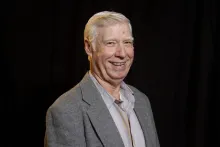
Leroy (Lee) Cole (1939-2018) served in the ministry of Jesus Christ with his wife, Laura, for 52 years.
Mr. Cole was born and reared in the central Willamette Valley in Oregon. He was brought up in a Sabbath-keeping church. Being reared on a small farm gave him the opportunity for a broad range of knowledge and skills. He attended Ambassador College in Pasadena, California, after graduating from high school in Oregon, with a degree in theology and history. Leroy married fellow Ambassador College student Laura Jean Counts in 1962 and moved to Australia where he was ordained a minister. Leroy and his wife Laura pastored churches both internationally and nationally. Pastoring churches in Australia and Southeast Asia gave them great experience of travel and knowing how other cultures live. They returned to the U.S.A., along with their three daughters, in the fall of 1974. They pastored many congregations in the U.S. from the west coast to the east coast.
