
Jay Ledbetter
This transcript was generated by AI and may contain errors. It is provided to assist those who may not be able to listen to the message.
As God's kids, no matter what crisis we may face, we've got good news. And that good news is that we've got a loving Heavenly Father, who's got the power and the resources to be able to deliver us from situations where we don't know what to do, we know we don't have the wisdom or the ability or the talent or the coping mechanisms to deal with things. God will help us through all of that. And today we're going to take a look at such a story. It's a story people don't read much about in the Scriptures, but to me it's always been a very fascinating discussion. I gave this sermon in Chicago probably about a month ago, and I felt it would be good, after coming back from the feast, to discuss this with you. As we're back home from the feast, we've been very much inspired by the feast. We want to continue on with a spiritual high, and so we're going to take a look at this particular story, which I hope will do just that for you. The title for this sermon, if you'd like to take titles down or write something across the top of your page, as you're taking notes, is this. The fast of Jehoshaphat. A fast that saved a nation. Jehoshaphat. J-E. H-O-S. P-H. A-T. Let me say that again. I don't know if I spelled it right for you. J-E. H-O-S. H-A. P-H-A-T. Jehoshaphat. We find a story over here in 2 Chronicles, chapter 20. So if you turn over to 2 Chronicles, chapter 20. Interesting story. Now Jehoshaphat lived roughly 100 years after David, about 60 years after Solomon. That's when he was ruling. Jehoshaphat was known as one of the best, most righteous, and most prosperous kings that Judah ever had. He showed himself zealous in following God and obeying God's commandments. He did what he could to put down idolatrous high places. He even fashioned a program where the Levites went around the nation instructing people in the truth of God. So he was very much an individual who wanted people to be close to the great God. I want to quote you something here from the International Standard Bible Encyclopedia. I quote, So quite a fella, quite a fella in terms of his walk with God. He was not perfect. As a matter of fact, there was something in Scripture here that we're not going to take a look at that he regretted till the day of his death. So he was a human being just like we are. But we're going to see as we look at this example, I think a lot of things in our life that we can relate to. One of the things we're going to take a look at, and one of the things you and I need to be aware of, if we want to continue on as having the same kind of spiritual high that we received at the feast, there are tools at our disposal we need to put into play. I spoke, Mr. Bradford spoke about Bible study, a good bit. Mr. Bradford made mention of fasting. This sermon deals more with that subject, the subject of fasting. I gave this just prior to the Day of Atonement in Chicago. We're going to take a look at a number of keys to a proper and a healthy fast. So let's take a look here, beginning in 2 Chronicles 20. Let's read verses 1 and 2 to begin with. It happened after this that the people of Moab, with the people of Ammon, and others with them besides the Ammonites, came to battle against Jehoshaphat. Then some came and told Jehoshaphat, saying, a great multitude is coming against you from beyond the sea, from Syria. And they are in Hazar-Azam, Tamar, which is in Gedi. Okay. What we have here... Let's pause for a moment. Let's put ourselves in Jehoshaphat's place. We have an unexpected trial. Have we ever had one of those? An unexpected trial?
At an unexpected time, and coming from an unexpected direction. Unexpected direction. These armies were coming at Jehoshaphat from the south. That was a little used route. Most armies wouldn't have approached Judah from that direction. And so it was an unexpected trial and an unexpected time from an unexpected direction. And I'm sure all of us have found ourselves in that situation in times past. And I'm sure probably in times to come. Also something that we need to appreciate is that Jehoshaphat was alone in this. It didn't have a lot of alliance. It was just a nation of Judah against these three large nations that were coming against them with a very large force. A very large force. In verse 2, in My New King James, it says it's a great multitude. The Bible in basic English called it a great army. The Holman Christian Standard Bible called it a vast number. Now, Jehoshaphat had an army himself. And his army, the army he had, was no small army. I'm not going to turn there, but 2 Chronicles 17 shows that Jehoshaphat had an army of 1.1 million people. 1.1 million soldiers. So he had a fairly decent army. And yet what was coming up against him appeared to be more substantial than that. Now, a point in passing, people want to look at 2 Chronicles 17 at Jehoshaphat's army and say, his army couldn't have been that large. He couldn't have had 1.1 million soldiers in his army. Well, that's what some scholars say. So I guess you can take either what the Bible has to say or what scholars have to say. I'll take what Scripture has to say. But you know, in 2 Samuel 24, it talked about how David, 100 years earlier, had an army of a half a million.
So the numbers don't seem to be out of line. So here's a man who had a million-man army to himself, and yet he is really concerned about the army that's facing him. Let's move on to the story here. We come now to Principle 1. If we want to have a proper fast, a fast that's effective, Principle 1 when we fast. Look to God's power, not our own. Look to God's power, not our own. Remember, he was facing something that he didn't know how he could cope with it, deal with it, handle it, a king with a million men at his disposal. That's saying quite something. So let's take a look at Verse 3 and 4, and we're going to see how he looked to God's power and not his own. Chapter 20 here, Verse 3. And Jehoshaphat feared and set himself to seek the Lord, and proclaimed a fast throughout all Judah. So Judah gathered together to ask help from the Lord, and from all the cities of Judah they came to seek the Lord. So in faith, here we see the king looks to God, doesn't look to his own army, doesn't look to deliver himself. So again, this is something for us to appreciate. When we're facing what we think are incredible odds, a situation we feel we have a hard time coping with, we go to God with that situation. Now we see in Verse 3 here three very important things that he does, right from a very good go.
Verse 3. And Jehoshaphat feared. Now I'm sure that he was anxious about the armies that were facing him, although I don't think that's what it's referring to here. It could be referring to that, or it could actually be dual in nature. I think Jehoshaphat, as he saw what was facing him, remembered who God was, and he had a proper fear of the great God. Secondly, it says, he set himself to seek the Lord. And thirdly, he proclaimed a fast throughout all Judah.
I've used this phrase in the past. I'll use it here again. I think I was a teenager going through driver training when they were showing us some films about driving a car and so on and so forth. And they quoted one gentleman, and I forget exactly the context where this came in, but I remember the quote. They quoted this one gentleman. He happened to be a priest. And the priest said, attitude is the father of action. And that just really struck me, and I've never forgotten that. Attitude is the father of action. Attitude are our mental blueprints. And with those mental blueprints, we build action. We do things. And here we see the attitude of Jehoshaphat. And upon that attitude, he built his actions.
It said here, he feared. He feared. He feared the great God.
Let's take a look at Isaiah 66. Put a marker there, and 2 Chronicles will come back. But Isaiah 66... Isaiah 66, verse 2...
Our issues in life don't revolve around how great our trial is, but how great our God is. And the sooner you and I always keep that in mind, it's the greatness of our God, not the greatness of the trial, that we need to keep in mind.
We go over now to Psalm 105.
Psalm 105.
And verse 4...
Seek the Lord and his strength, and his strength. Seek his face evermore.
So we saw there in 2 Chronicles 20, verse 3... That not only did Jehoshaphat fear, he set himself to seek the Lord. He set himself to seek the Lord. The attitude was having the proper fear of God. Now we see two action steps. First action step here, he set himself to seek the Lord. And that's where Psalm 105, verse 4 comes in. Seek the Lord and his strength. Seek the Lord and his strength. And seek his face evermore. And then the second action item we see here in verse 3 of 2 Chronicles 20... He proclaimed a fast throughout all Judah. Now he's the first king to do this. Obviously they were commanded to keep the day of atonement. But he's the first king to have a commanded fast that he sets this as the king. With that in mind, action item number 2, number 1 was to seek the Lord, number 2 was to proclaim a fast. Let's go over to Isaiah chapter 58 that talks about fasting. We've covered this on a number of occasions. You've heard various sermons about this.
Isaiah chapter 58 goes through and outlines what a proper fast is and what a fast is not so proper is. Let's take a look at a godly fast. Isaiah chapter 58 starting verse 6. Isaiah 58 verse 6. Is this not the fast I have chosen? Okay, so here's an outline of what a proper fast would entail and the fruits of a proper fast.
To lose the bonds of wickedness. So we fast to draw close to God. As you and I go through life, as we want to maintain the spiritual high we received at the feast, we want that to continue all year long, fasting should be a part of our program. To lose the bonds of wickedness, to undo the heavy burdens, to let the oppressed go free. So in other words, where we can help people who are oppressed, people who are struggling, people who need, let's say, some encouragement as an example. People can be oppressed by life. They can be oppressed by going to work. They can be oppressed by their next door neighbor. There's any number of ways people can be oppressed. They can be oppressed because they suffer from depression. You know, brethren, all of us don't have the same chemical makeup. I learned that very early on in my life. My dad died in 1977. My brother died in 1980. My brother being 56. And at that point I thought, wow, I better go take a look. Back in those days, I weighed less than I weighed now. I weighed about 190. Six foot one, 190. I was in pretty good shape back then. Athletic and all that sort of thing. But I went to the doctor after having my dad and brother die within three years of heart attacks. I thought, well, I better go check myself out and see what's happening here. And sure enough, my blood pressure was something like 160 over 120. And yet I felt great. I felt great. Wasn't overweight and had good, you know, good exercise and so on and so forth. And I'd start taking medication for my blood pressure, which I take to this day.
And so I take a little pill, and that little pill is chemicals. And that chemical helps write certain things in my body. We're all just so much chemical. And some people are missing certain chemicals and it causes them to become depressed and discouraged. For those of you who are never depressed, never discouraged, never blue, you probably can't understand that.
Other people who are always depressed can't understand you. That's just the way life is. And so some people go through life and that's their oppression. And we can help to lighten their load by being encouraging. Verse 7. Is it not to share your bread with the hungry? Don't just say, you know, peace be filled. But, you know, a proper fast helps us to think about ways we can serve other people. And that you bring to your house the poor who are cast out. Again, good works. When you see the naked that you cover him and not hide yourself from your own flesh. So as we are fasting properly, we're drawing closer to God. We're doing what God would want us to do in this life. And then verse 8. Then your light shall break forth like the morning. Your healing shall spring forth speedily. And your righteousness shall go before you. People will see that you've set a good example. The glory of the Lord shall be your rearguard. Then you shall call and the Lord will answer. Then you shall cry and he'll say, here I am. So here, brethren, we see a tremendous principle of fasting, of not looking to our power, but looking to God's power. We fear God. We seek him. We fast properly before God. So principle number one of a proper fast is to look to God's power, not our own. Let's go back now to 2 Chronicles 20.
And we'll see principle number two. Principle number two is to base your fast on God's truths.
Base your fast on God's truths.
Okay. This section is a little longer.
Verses 5 through 12.
Five through 12. Let's take this apart a little bit at a time. Then Jehoshavat stood in the assembly of Judah, this is verse 5, and Jerusalem in the house of the Lord before the new court. So he positions himself in a very important place. Verse 6, and he said, O Lord God of our fathers, are you not God in heaven? And do you not rule over all the kingdoms of the nations? And in your hand is there not power and might so that no one is able to withstand you? So here is a prayer. It's a tremendous prayer. It's something you might want to note if you'd like to take notes about prayers in the Bible. Here's one of the best prayers you're ever going to see in the Scriptures. The prayer of Jehoshaphat. He's praying to God. In verse 6, what he's saying to God, what he's rehearsing, and this is for his benefit, but what he's rehearsing before God, he says, God, you've got power over all people.
So brethren, if you're having people problems, if you've got issues, God has power over people. An army was coming against Judah and Jerusalem. And so this is why Jehoshaphat's talking about God's power over people. That includes armies. Maybe you've got a whole army of trials that are besetting you. Well, God can take care of that. Verse 7. Are you not our God who drove out the inhabitants of this land before your people Israel, and gave it to the descendants of Abraham, your friend forever? So what do we see here in verse 7? We see that God has power over all situations. What situation might you be in right now where you need God's power? See? Jehoshaphat was in a situation where armies, three armies from three great nations, banded together as allies, and they wanted to wipe out his country. So God had power over all people, over all situations. We see that in verses 6 and 7. Now in verse 8 and 9, let's see what else we see about this prayer. And they dwell in it, and have built you a sanctuary in it, for your name, saying, If disaster comes upon a sword, or judgment, pestilence, or famine, we will stand before this temple, and in your presence, for your name is in this temple, and cry out to you in our affliction, and you will hear and save. What's Jehoshaphat doing here? Jehoshaphat is reminding God, not that God needs to be reminded. This is good for Jehoshaphat. He's actually reminding himself. And the people of Israel. That God has been faithful to his people in the past. That God has been faithful to his people in the present. And so basically, Jehoshaphat is saying, You've been faithful. We've done what you asked us to do. We're not a perfect people, but we were doing what you were asking us to do. And we asked that you be here for us. Moving down to verse 10. And now, here are the people of Ammon, Moab, and Mount Seir, the Edomites. Whom you would not let Israel invade. So, kind of tactfully, I guess you might say, Jehoshaphat is saying, Now, Father, we could have wiped these people out once upon a time, but you told us not to do it. We didn't do it. But now the chickens are coming home in the roost. What are we going to do about this? What are you going to do about this? Whom you would not let Israel invade when they came out of the land of Egypt, but they turned from them and did not destroy them. Here they are, rewarding us by coming to throw us out of your possession, which you have given us to inherit. O our God, will you not judge them, for we have no power against this great multitude that is coming against us.
Notice a king with a million soldiers at his disposal, talking about how he doesn't have power. O our God, will you not judge them, for we have no power against this great multitude that is coming against us. Nor do we know what to do, but our eyes are upon you. So what is Jehoshaphat doing? Jehoshaphat is reminding God about how the people were obedient to him.
Now, in your notes, you might want to jot down 1 John 3 and verse 22. 1 John 3, 22. I quote this many times when I'm anointing somebody. 1 John 3, 22 says, And whatever we ask, we receive from him, because we keep his commandments, and do those things that are pleasing in his sight. So Jehoshaphat is saying, basically, Father, we did what was pleasing in your sight. And now this army has come up against us. Also, in faith here, verse 12, he's humbly asking God to help, because he knows he doesn't have the wherewithal to deal with this trouble, to deal with this trial. So principle number 2 was to base your fast on God's truth. The truth of what we know about God, and how God acts in our life, how he's done it in the past, how he's doing it in the present. Remind God about his graciousness and his power, which is, again, good for us. Principle number 3. Principle number 3. Fast as a family, if you can. Some of us are here as individuals, our family's not in a church. You are your family. Others of you, you view the Beloit church as your family. So there are times when it wouldn't be inappropriate if you were really close to somebody and say, well, I'm going to fast about this. You think you might be able to...you have to be really close if somebody asks this, but you think you might be able to fast with me on this matter. Let's take a look at verse 13 here.
Now all Judah, with their little ones, their wives and their children, stood before the Lord. The whole nation was fasting. Now, I'm not going to get into at what point do you ask little children to fast. That's a parental decision. Every parent does what's best for their children. Every child is different. My children began to fast when they understood what a fast would entail.
And during the course of the fast, you know, they just got too weak. Then, hey, stop fasting. But every parent does that a little differently. That's a parental decision as to how you do it. But here we see where the whole nation is fasting here. And as a matter of fact, Judah was a family grown great. Judah was a family grown great. And they were coming as a family to the great God asking for his help. Just as the whole nation suffered in Joshua, chapter 7. I'm not going to turn there, but in Joshua, chapter 7, when Achan took some of the accursed things, he took some clothing, he took some gold and so forth from the city of Ai, the whole nation was hurt by that action of that one man. So again, we see how God looks at this. So if possible, is what I'm saying, brethren, if possible, if your mate is in this with you, they don't even have to be converted. You might have a mate that's not even a converted member of the church, but they are in this thing with you, and you're going to fast, and they want to support you. And they'll fast too. If that's the case, fine. That's great. That's great.
Verse 14, when we do it this way, when we follow the directions we are seeing here in Scripture, notice what we see in verse 14. Then the Spirit of the Lord came upon Jehaziel, the son of Zachariah, the son of Beniah, the son of Jehuel, and all these people. Man, and you thought Dehlosandro was bad. Elivite of the sons of Asaph, in the midst of the assembly, and so here we see, now, when we're putting these principles into action, that the Spirit of the Lord now is going to give direction. And in your life, as you go through various trials and challenges, this is what we long for, isn't it? We want direction from God. God's Spirit works in this kind of spiritual environment. When we fear God, when we seek God, when we properly fast for unity with God to live His way of life, to get the whole family together, if possible, to do this, then instruction comes our way, and assistance comes our way. Let's keep on reading here in verse 15. And He said, Listen, all you Judah, and you inhabitants of Jerusalem, and you King Jehoshaphat. So this is for everybody. It wasn't just for the, you know, this is from the King on down. Thus says the Lord to you, Do not be afraid nor dismayed, because of this great multitude, for the battle is not yours but God's. Boy, brethren, that's something I think all of us, I don't know if any of us here, haven't failed to grasp that idea from time to time. I think we've all, at times, tried to take too much of things on our own shoulders, on our own power, but for whatever the situation in life, all of us need to remember that the battle is not ours, it's God's. And so instruction is now given. Tomorrow, go down against them. They will surely come up against by the scent of ziz, and you will find them at the end of the brook by the wilderness of Jehirel. So God gives them specific instructions. Here's where you are to go, and in a moment He's going to say it's something very specifically they are to do. Again, this is something we long for as we go through trials in life. God, tell us what to do. I don't know what to do. Tell me what to do. And God's giving very specific instruction here. Another way of looking at this, brethren, God is positioning His people. God is no respecter of persons. God wants to position us just as much. God is telling them what to do to physically be positioned because of what they have been doing spiritually. Verse 17. You will not need to fight in this battle. Position yourself. Stand still and see the salvation of the Lord who is with you, O Judah and Jerusalem. Do not fear or be dismayed. Tomorrow, go up against them, for the Lord is with you.
Seems like we heard that advice earlier on in Scripture, right? At the Red Sea. So God is giving encouragement to the people because they have been, to this point, properly following, properly doing what they should be doing. Now, the people of Judah were by no means sinless. They had their issues.
But as people get behind the truth of God and employ principles of God, God encourages them. God encourages them. These are people that have all sorts of issues. But God, as God sees them, just like with our children, when you're raising your children and you see that they're doing the right thing and they've got the right attitude, what do we do as parents? Boy, we get in there and we encourage, don't we? That's good. We encourage that sort of thing.
So, Principle number three is fast as a family, if you can. Principle number four.
Principle number four about a proper fast and effective fast. Praise God prior to seeing the victory.
Praise God prior to seeing the victory.
This brings in the element of faith. The unseen spiritual dimension.
Let's look at verses 18 and 19. And Jehoshaphat bowed his head. Now, they've not done anything with these armies outside the walls yet. Jehoshaphat bowed his head with his face to the ground, and all Judah and the inhabitants of Jerusalem bowed before the Lord, worshipping the Lord. So here you've got the king setting the proper example for the people of his nation.
Verse 19, And the Levites and the children of the coathites stood up to praise the Lord God of Israel with voices loud and high.
So again, you and I can ask ourselves, as we ask God for help, as we ask God for deliverance, are we praising God's name? Are we giving him praise before the deliverance actually comes? Before the prayer is actually answered?
Now, one of the things we're going to see as well, let's take a look at verse 20. Very interesting. So they rose early in the morning.
This is the principle in Scripture. When Abraham was told to go sacrifice Isaac, that he just kind of drag his feet all day long, and just before sunset go out there and try to do what God had told him? No. Abraham got up early in the morning. Here we see, so they rose early in the morning. When unpleasantness is around, when you're having God help you, let's get to it.
Let's get to that unpleasantness. God is going to be there with us. So they rose early in the morning. They went out to the wilderness of Tychoa. And as they went out, Jehoshaphat stood and said, Hear me, O Judah, and you inhabitants of Jerusalem, believe in a larger God, and you shall be established. Believe as prophets, and you shall prosper.
Now, why does he do this? Why does he do this? Jehoshaphat gives a call to be faithful. Now, they've already been showing pretty good attitudes, so why? This almost seems unnecessary, but why does he do this? Because he knows what the next step's going to be. He knows the next step is going to require an awful lot of faith as the people follow God's instructions. So he's calling upon them to be faithful.
In your notes, you might want to jot down 1 Timothy 4 and verse 6.
I'm quoting this from the King James, from the Authorized Version, the Old King James. 1 Timothy 4, 6 says this, My job as your pastor is not to bring new truth. My job as your pastor is to bring to your remembrance things you already know. Maybe in a little bit of a different way, maybe a different angle. But my job is not new truth. My job is to take old truth and make sure we really understand it. And this is something that we see Jehoshaphat doing.
He's telling the people, look, we need to be people of faith because some interesting things are about to happen here.
Verse 21, Are we getting this?
Who goes out of the city gates first? The mighty men, all the great swordsmen, all the ninja types? Are those the ones who are going out? You know, the Navy Seals, the Army Rangers? Are they the ones that are going out of the city first? No. First out of the gates is the choir.
The army is... They've bald off. They've bald off in crew. They're going out. Perfect.
Now, again, put yourself in the position here, brethren.
Your king is asking you to go before the army, outside... Let's put it in our day-to-day. Outside are, let's say, more than a million jihadists with bright swords who want to take your head off.
How would you like to walk outside of these doors, realizing the whole neighborhood's got all these arms and they wanted to separate your head from your body? This is what these people are facing. This is why Jehoshaphat said, let's be faithful. Okay? So they are praising... Principle number four, praising God prior to seeing the victory. Principle number five, in an effective fast, Principle five, understand God will take care of business.
God will take care of business. When we do our part, He does His part. God will take care of business, our business. We're in partnership with Him. Let's see what takes place. So, out of the city gates comes the choir. They're singing their hearts out.
Behind them is the army. No one in this army is going to lift a sword, throw a spear, or do anything threatening. They're basically window dressing. But notice what takes place. Verse 22. Now, when they began to sing and to praise, the Lord set ambushes against the people of Ammon, Moab, and Mount Seir, who had come up against Judah, and they were defeated.
Judah didn't have to do one thing to defend themselves, other than sing and praise.
Verse 23. For the people of Ammon and Moab stood up against the inhabitants of Mount Seir to utterly kill and destroy them. And when they had made an end to the inhabitants of Seir, they helped to destroy one another. So, obviously, this coalition of these three nations was an uneasy coalition.
They probably had all sorts of fears amongst themselves. God allowed that to boil over, and they began executing one another. Verse 24. So when Judah came to a place overlooking the wilderness, they looked toward a multitude, and there were dead bodies falling on the earth. No one had escaped. No one had escaped. Again, brethren, does this remind you of something? Does this remind us of what happened at the Red Sea?
Where every one of Pharaoh's army died in the Red Sea. The analogy for us is God will take care of each individual issue as we place it in His hands. Now, God's going to do it in His way, in His time. But if we have faith, you know the Scripture says faith without works is dead, they're in James. If we have faith, God will take care of business. Every aspect of business. God took care of all of Judah's great challenge here.
Every last bit of it. But that's not it. That's not all of it. Verse 25. When Jehoshaphat and his people came to take away their spoil, you know, all these, this army, there's a lot of things they can grab up that would be, you know, spoil. They found among them an abundance of valuables on the dead bodies and precious jewelry, which they stripped off for themselves more than they can carry away. And they were three days gathering the spoil because there was so much. Three days of gathering spoil. So we see something here, brethren. We see that as we allow God to take care of our business, that God not only rewards us spiritually, He rewards us physically.
He rewards us physically. The people of Judah were blessed with a better understanding and walk with God. That's the spiritual blessing. As an added benefit, much like what God did for Solomon, God gave Judah a special reward for their spiritual faith. So principle number five was that God will take care of our business. Principle number six. I've got seven. We're coming, we're coming, we're coming around. You have to have seven, right? Principle number six. Remember what God has done. Be thankful and offer praise. This is after we've been blessed. Let's not allow ourselves to be blessed by God and walk off and forget it.
Let's not walk off, you know, somebody does you a good... As a human being, somebody does us a good turn, a good deed. We thank them. Should we not much more thank the great God for doing what He's done for us? Okay, so they've been three days now. They're collecting all this value, all these valuables, all this loot. Verse 26, 2 Chronicles 20, verse 26. And on the fourth day they assembled in the Valley of Barakah.
For there they blessed the Lord. Therefore the name of the place was called the Valley of Barakah, the Valley of Blessing, till this day. So they made it a point of asking a special blessing, and thanking God, and praising God for all that He did.
And of course, brethren, the reason we do this is because not that God is... You know, just has to have our praise. We learn from praising God. It helps reinforce in our hearts, in our minds, the greatness of our God. And that's why it's so important for us to do that. Verse 27, then they returned every man of Judah and Jerusalem with Jehoshaphat in front of them.
He didn't believe in leading from behind. He believed in leading from the front. To go back to Jerusalem with joy, for the Lord had made them rejoice over their enemies. So they came to Jerusalem with strained instruments, with harps and trumpets, to the house of the Lord. So the army marches back to Jerusalem. Hearts, you know, just so excited about what's taking place, excited about the fact that God has intervened, and excited about the fact that their loved ones are now safe. Their little children are safe. Their way of life is safe.
Because God has intervened. So Principle number six, remember what God has done. Be thankful and offer praise. I said I had seven points. I was just teasing you. I only have six. We do have another couple of scriptures to read, though. Verse 29. And the fear of God was on all the kingdom of those countries when they heard that the Lord had fought against the enemies of Israel.
And the realm of Jehoshaphat was quiet, for as God gave him rest all around. Due to this outstanding victory, the kingdom of Judah was given a period of peace through the rest of his days. The surrounding nations were so stricken with fear, the fear of God, not in a spiritual sense, but in a, you know, they were quaking in their boots, when they heard of how the great God of Judah intervened and slaughtered three major armies.
So for the remainder of Jehoshaphat's reign, he and his people were at peace. They were given rest from conflict and warfare. That's what happens when we have a proper fast. I'd like to read something to you from the New Unger's Bible Dictionary regarding Jehoshaphat. And I quote, The character of Jehoshaphat is summed up thus. Jehoshaphat, who sought the Lord with all of his heart. 2 Chronicles 22, verse 9. His good talents, the benevolence of his disposition, and his generally sound judgment are shown not only in the great measures of domestic policy that distinguishes reign, but by the manner in which they were executed.
No trace can be found in him of the pride that dishonored some and ruined others of the kings who proceeded and then followed him.
So he was a tremendous leader of God's people. Not perfect. He was going to have a certain kind of an alliance with Ahab of Israel, which he would come to greatly regret, to show he was a human being with his flaws and weaknesses. So today, brethren, we'll be ending shortly here. We've taken a look at the fast of Jehoshaphat, a fast that saved a nation. We've taken a look at six key principles for an effective fast. Let me go through those. Just make sure you've got them in your notes. Number one, principle number one, look to God's power, not our own. Number two, base your fast on God's truth. Number three, fast as a family, if you can.
Principle number four, praise God prior to seeing the victory. Principle number five, God will take care of business. Principle number six, remember when all is said and done, to praise God again. Be thankful and offer praise. Brethren, let's keep this in mind, the balance of the rest of this year, because we want to maintain the spiritual high we received at this year's Feast of Tamarindacles.
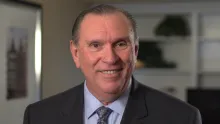
Randy D’Alessandro served as pastor for the United Church of God congregations in Chicago, Illinois, and Beloit, Wisconsin, from 2016-2021. Randy previously served in Raleigh, North Carolina (1984-1989); Cookeville, Tennessee (1989-1993); Parkersburg, West Virginia (1993-1997); Ann Arbor and Detroit, Michigan (1997-2016).
Randy first heard of the church when he was 15 years old and wanted to attend services immediately but was not allowed to by his parents. He quit the high school football and basketball teams in order to properly keep the Sabbath. From the time that Randy first learned of the Holy Days, he kept them at home until he was accepted to Ambassador College in Pasadena, California in 1970.
Randy and his wife, Mary, graduated from Ambassador College with BA degrees in Theology. Randy was ordained an elder in September 1979.
