
John Elliott
This transcript was generated by AI and may contain errors. It is provided to assist those who may not be able to listen to the message.
God has made some wonderful things in the universe for us to look at. Some of our national parks and monuments around the world people flock to. And yet there is nothing more beautiful or more inspiring than people whom God made in his own image. He's developing them into a likeness through a plan that he has. And of those people, probably the most captivating, are the little children. Little children are just adorable and they're precious in every way. The opportunities that we have to interact with little children seem to be limited, and they become special opportunities, unless you're the parent of one, than sometimes you almost feel, in a sense, burdened by it because of the lack of sleep and the continual need to care for and provide. And yet when you're a grandparent, you get the opportunity to step back and to really observe and focus without all of the myriad of details of caring for that child. Over in East Africa, it's a real blessing to have families mostly outdoors, and so you get to see the children and interact with them. And it's a real treat to just walk among the people there. And the little children will come up and interface with you, the little children, well, in ways that are just so precious and enjoyable. The little hands just love to touch your hands and hold your hands, and they would love it if you picked them up. Some of the children will just walk with you. They don't want to let you go. They'll just go ahead and spend the rest of the day with you, just holding your hand. You've never met this child before, but this little child just wants to be there and holding your hand, and once in a while, we'll check to see if anything white came off in their hand. But they go back and they're exuberant. They're so trusting at that age. It's a wonderful, wonderful thing.
Thankfully, God made you ladies to want to have children. My wife and I have had three girls, and from the time the girls are very small, they end up, seems to be wanting children. They have dolls, and they play with the dolls, and they talk about children, and they talk about marriage. Thankfully, God has this desire among women, or none of us would be here. The first time word got out that these kids were kind of a pain and a lot of responsibility, the word would spread and the woman would say, No, we would have died out long ago. But for some reason, women who seem to remember everything forget, after each child, that they weren't going to do that again.
And so here we are. Men want children, and often associate some sort of status in society with how many children that they have. Psalm 127, verse 3 says, Behold, children are a heritage from the Lord. Now, if we stop and think about that, children are a heritage from the Lord is a lot more than, oh, yeah, God was involved in some way. Because what's really interesting about children is, the mother who makes them is unaware most of the time of what even is going on. God makes those children in a very elaborate process that begins when humans don't even know what's going on and ends at a time when they first get to see the baby, having rested and eaten well and gone through a lot of challenges. But as far as getting in with tools and adding parts and putting it together, God does that. And so children truly are a heritage of the Lord that comes from a man and a woman, but He actually creates the whole process. And we are more observers and participants rather than the creators. It says, the fruit of the womb is a reward in that same passage. The fruit of the womb is a reward. Now, unfortunately, there are some who are unable to have children, and certainly they sense a lack of a reward in that instance. There are some who decide not to have children and don't learn until later in life that they have missed out on an incredible reward that keeps coming and coming and coming, not only with your own children, but the grandchildren and the great-grandchildren and the other relatives and the other families you get associated with. Truly, children are a blessing from God. That is the intent. Now, we look at this, as I'm speaking, from a godly perspective, sort of a church culture perfect world. Our world today has 2.2 billion children in it, aged 0 through 17, according to the International Herald Tribune in July of this year. 2.2 billion children. That's a lot of kids. That's a lot of potential. And when we see these little children, sometimes as they were up singing today in the choir, you look at each one and you think, wow, look at the potential. Look how much they've grown. Look how they're stretching and reaching for a future that is unknown at this point. So full of potential. And there's a lot of children, many, many children. And yet, today's world is not so kind to children. This is not the millennial world that we observed, that we reflected, that we forecasted, that we participated in in advance at the Feast of Tabernacles. This isn't it. This is not the kingdom of God. In our world, 30,500 children, ages 0 through 4, die every day.
50,000 children, ages 0 through 14, 50,000 contract aides every month.
20% of children between the ages of 5 and 15 work in hazardous child labor. 30% between the ages of birth and 4 years old are underweight. 40% have stunted growth. 50% are malnourished. It's a tough time for children. Today, let's ask the question, who is fathering these children, the 2.2 billion children that exist at any given time on this planet? God, as we read, intends that children are a blessing and that good things result from having children. He wants children to have a bright future. He is creating them and forming them in His image. Who is causing their demise? Who is causing their problems? And why? Well, let's examine the scriptures concerning children and fathers, and let's see what can be done to promote the little children. The title of the sermon today is The Father of Little Children.
How are children created and why are they intended to be created? The answer to that is they are intended to be created by married parents. Let's look in Malachi 2, verses 14-15. And we'll see here really a foundational, fundamental scripture concerning children, who is to have them, and what their ultimate purpose is.
Malachi 2, verse 14.
It's talking here in context, the middle part of the verse, between you and the wife of your youth. God intends people, when they're young, to fall in love, to get married, to form a covenant, and to follow the covenant that He gave in loving others, in keeping His commandments. And within that covenant of marriage, and people living under a covenant of law from God, He talks about the wife of a man's youth being your companion and your wife by covenant. Now, what results from that? Going on. But did He not make them one, having a remnant of the Spirit? And why one? He seeks godly offspring. Now, you can take that in two ways. God creates marriage, and God creates children, because He seeks godly offspring within the marriage between a man and a woman who have joined together in a covenant and are keeping the laws that He has established. Now, in that context, the children will be a blessing, and their lives will be blessed. But once we step out of that, and we say, oh, we have another idea, we have some other ways of doing this, then you end up in the world in which we have today, which is not so kind to children and does not provide them with a very bright future in many cases.
So the purpose of our physical lives here is that God desires children, and it says He seeks godly offspring. Take that again in two different ways. One is, as God said of Abram, I know that He will direct, guide, train His children properly. God wants children to be godly, to live a godly life, to follow His laws of happiness so that they can have exuberance and excitement and fulfillment in life and pass that on to future generations. And a second aspect of that is that God seeks godly offspring in that this verse tells us God is wanting real, spirit-made children to join His eternal family.
These children include you and me at this time, and we have a spiritual mother. Galatians 4, 26-28, there is a type of a mother, other than the physical mother, that God wants His offspring to be influenced by. Physical mothers have a very, very important role, and as in Proverbs 31, they will call their mother blessed. Their lives are blessed by her. She is such an important part of their life, and a good teacher as well, as Timothy was taught by his mother, and he was a very good child that grew up and became not only a pastor but an evangelist. So here we see in Galatians 4, 26, talking about Jerusalem, the Jerusalem of above, that's God's kingdom, which is the mother of us all. It is really God who creates us, and He keeps us in the womb, as it were, of Himself. He is the one that's nurturing us and feeding us. Jesus Christ is the bread that we are to eat and to grow spiritually by.
Verse 28, Now we, brethren, as Isaac was, are children of promise. So this now takes us in the type of little children as being the children of God. We have spiritual fathers. An example would be Abraham. If you go to Genesis 17, verse 4, there is one who came before us of the right mind, the right mentality, and he still influences us today. We still talk about the faith of Abraham, the example of Abraham, the righteousness. He kept God's commandments, His laws, His statutes, His precepts. And God assigned blessings to him and his generations, of which many today still are reaping. It says here in Genesis 17, verse 4, As for me, behold, my covenant is with you, and you shall be a father of many nations. He would have an effect by being the progenitor of many nations, but he also would be the head, the mind, the mentality, the one who influenced and set the example for people down through time. In John chapter 8 and verse 39, some people were talking to Jesus, and they answered and said to him, Abraham is our father. So you come, I don't know how long that was, two, three thousand years between Abraham and Christ's time, and people were still saying, Abraham is our father. And Jesus said to them, if you were Abraham's children, you would do the works of Abraham. So you see, it's not just that you have the bloodline of a man. He's talking about Abraham being an influencer, and you would follow his example if you were his children in a spiritual sense. Another spiritual father we have, of course, is God. Let's go to Jeremiah chapter 31 and verse 9. This passage says it so very well. Jeremiah chapter 31 and verse 9. They shall come with weeping and with supplications. I will lead them. This is a future time when people are going to come back and follow a covenant that God has made with them. I will cause them to walk by the rivers of waters in a straight way in which they shall not stumble. Speaking spiritually, the waters of his way, of his mind, of his spirit, and they're not going to stumble around in the dark anymore. They're going to walk towards blessings, and they're going to walk in righteousness. And he says, for I am a father to Israel. God is a father. He is one who is engendering humans and ultimately will all humanity who will respond to him. In Isaiah chapter 63 and verse 16, let's notice something else. Isaiah 63 and verse 16. Doubtless, you are our father. Though Abraham was ignorant of us and Israel does not acknowledge us, you, O Lord, are our father. Our Redeemer from everlasting is your name. So it lifts above any human examples or any human fathers or heads of clans and declares that God really is the one that we are following, that we are being influenced by. In Malachi chapter 2 and verse 10, it's important that we understand this concept of God as a father. God is the great one in our lives. Malachi chapter 2 and verse 10. Have we not all one father? Has not one God created us?
Why do we deal treacherously with one another by profaning the covenant of the fathers? When we think about children, they are precious, but they are only ours for a very short time. Parents get the idea that once you have a child, it's yours forever. And sometime at about age 18, they get this rude shock. The child has gone to college. And maybe by age 20 or 25, the child has married and moved away. They have their own family. The child isn't calling anymore. The child doesn't do what I say anymore. I told them not to do that, and they did it. The child makes twice as much money as I do, and it's smarter than me. Children are ours for a short time, and we are really to teach them about another father, a greater father, about one who is truly the one they belong to and the one that they truly should follow. We get to introduce them to God, to His way, to the Church. And as fathers and mothers, we are a type of the spiritual parents that ultimately will take every human into the kingdom of God that will respond.
In chapter 1 and verse 6 of Malachi says, a son honors his father and a servant his master. When we look around the world today, and when we look at those especially to whom God has made a covenant with to be their spiritual father, he asks the question, if I'm the father, where's my honor? If I'm the master, where's my reverence? It says, the Lord of hosts. God loves us very much, and the father that's being spoken of here was the one who became Jesus Christ. He came, he lived, and he died. Why was that? Let's go back to 1 Peter chapter 2 and verse 25 and see.
For you were like sheep going astray. The relationship with the Creator, the one who really is the one who made us all, the one who really is trying to influence us all and bring us into his family, have strayed. And you and I do the same thing, going astray, but have now returned to the shepherd and overseer of your lives. That's what the word souls mean, of your lives. How is this done? In verse 24, who himself bore our sins in his own body on the tree, that we, having died to sins, might live for righteousness. By whose stripes you were healed. You were stitched back together in a relationship with this father, with this God who made us and who loves us and who wants us in his family. He introduced us to the great father. In John 3, he talked about the father. John 6, John 8, other places in the Bible. We are introduced to the father of the one who was Jesus Christ, who was the firstborn of many brethren. And we get the sense then that, yes, we are children, we are little children at this time, ultimately looking to be under a father. So let's take a look at fathers, and in particular, the father of little children. In the Old Testament, which was conveyed to us in the Hebrew language, the ancient Hebrew language, the term father was translated from the word ab, ab, and it has eight meanings, according to Brown driver Briggs, lexicon of Hebrew, it has nine meanings. But I'd like to concentrate on eight. I could argue with them about one of them, so I'm just going to give you eight.
Father in the Old Testament can mean the father of an individual, can mean God, the head of a group, an ancestor, the originator of a class, a producer, a term of respect, or a ruler. So you get the sense there of what father is. It could be the actual head of the father of a child, or the head of a clan, or one who represents or influences or rules a group of people. In the New Testament, which is brought to us in Greek, the term for father is pater, p-a-t-e-r, and pater has three meanings that I would like to convey to you, besides the word abba, which has a Chaldean or a Babylonian origin, which is not used regularly in the New Testament at all. But the word pater can refer to a literal human father, as it says of Abraham and Ephesians, I have made you a father of many nations. In a sense, the nations came from his descendants, Isaac and Jacob and on and on, as well as through Esau and others. Human fathers are intended to be providers, and proverbs are full of admonitions to be good providers. In the New Testament period, we read over in 1 Timothy 5 and verse 8, if anyone does not provide for his own and especially for those of his household, he has denied the faith and is worse than an unbeliever. So fathers are to be providers, and that is a role that they have, that's an intention. And when we look at some of the children in the world that are not being provided for, obviously something is a mess, because they should be provided for. The second meaning I'd like to give you regarding the Greek word pater is that of an influencer, a mentor, or a modeler. Again, regarding Abraham, as an example, Galatians 3 and 7 says, therefore know that only those who are of faith are sons of Abraham. All those who are of faith are sons of Abraham, and only those who are of faith are sons of Abraham. It's not talking about bloodline anymore, is it? It's talking about one who is an influencer, a mentor, a modeler. Satan is called a father, a pater, a mentor. In John 8.44, Jesus said, you are of your father, your pater, the devil, and the desires of your pater you want to do. He was a murderer from the beginning, does not stand in the truth, because there is no truth in him. And when he speaks a lie, he speaks from his own resources. For he is a liar and the pater, the father of it, the originator, the mentor, the influencer, whatever term you want to use there.
This term pater is also used of religious leaders. There are some priests who like to be called pater or father. They want to be known as the one who is the influencer, the leader, the one that is to be looked up to and called father so-and-so. In Matthew 23.8-10, Jesus Christ has something to say about that and for good reason. Matthew 23.8.
He is not just picking out that one term or that one kind of religion, rather he is using it in the sense of don't put yourself in the place of being the great influencer. So he says, but you do not be called rabbi.
Why did he say that? For one is your teacher, the Christ, the anointed one, and you are all brethren. We are all humans and one is the real pater and that is God. Verse 9. To another religion or another concept, he says, do not call anyone on earth your father, your pater. He's not saying don't call your dad, dad or father. He's using this term as the one who is the great teacher, influencer, modeler, mentor. Don't call any man your pater. For one is your pater or father, as we say. He who is in heaven. And do not be called teachers. For one is your teacher, the Christ. Now, Peter was so called the first father of Christianity and Peter sometimes is held up as being the great influencer, teacher, modeler. There is a building, there's a square, there's a monument in his name, there are churches all over the planet in his name and lots is made out of Peter. His name was Simon and Jesus gave him the name of Peter and it was not pater. Rather, his name given by Jesus Christ was Petros, Petros meaning pebble or a small stone.
He would ultimately be encouraged to represent the rock. That's my guess, is why he called him the stone, the pebble, you know, kind of a chip out of the old rock. He said to Peter, feed my sheep, feed my young sheep, feed my lambs. Peter was very instrumental in teaching and preaching. That's the only association I would make from that name, but he would never call him pater, never called him father, he never had him set up in that sense.
There is another example of an influencer, a modeler, and a mentor. We find over in 1 Peter 1 and verse 22 that we are being fathered, as it were, from above by God.
In 1 Peter 1 and verse 22 and 23, it says, since you have purified your lives, that's what the word soul means, since you have purified your lives and obeying the truth through the Spirit in sincere love of the brethren, it's interesting how this life we're called to, this religion we're called to, it isn't about being somewhere and doing something and going through a bunch of stuff and somehow getting a reward at the end, it's about being pater by somebody, influenced by somebody. And so he says, if you're obeying the truth through the Spirit in sincere love of the brethren, what did God do? He loved the brethren so much he sent his son, who loved us so much he gave his life. And if you have purified your lives in obeying the truth through the Spirit in sincere love of the brethren, what do you do? Love one another fervently with a pure heart, having been, it says born again, but that's a misnomer. The Greek words are ganeo-anothan. And ganeo-anothan means engendered from above. You are being engendered from above. In other words, you have another father who is transforming you, he's affecting you, he's mentoring you, you might say, he's influencing you, he's the head of the clan, he's the modeler, having been engendered or being engendered from above. Not of corruptible seed like your human father, but of incorruptible through the word of God which lives and abides forever. Now when that happens, that process is happening. Once a person has started repenting, they've been baptized, they receive the Holy Spirit there, as he talks about, that name gets entered, that person's name gets entered into a book of life. And the book of life means that person will be born into, literally, the family of God, the spirit family of God one day, unless for some reason that name gets blotted out. And God certainly doesn't want that name blotted out. He's there to take all the children of the world, all the people of the world, who will come to him as little children and be modeled and shaped by him. He wants to bring them into his family. Matthew 5 and verse 48 is a scripture that speaks to the patering of God the Father, the great pater. It says, Be you therefore complete, whole, spiritually mature. The word they use is perfect, as your pater in heaven is complete and whole. What he's saying there, Jesus is saying, look, you be influenced and become like your Father in heaven. Be you therefore as your Father in heaven is. That's a strong statement to us to really be moved by this head of the clan of the spirit family of God, to really be influenced by the spirit that he gives us and by the actions and the mentality and the personality of loving one another fervently with a pure heart.
In 1 John chapter 3 and verse 1, we see what comes from this relationship with this Father. We see the end result is a changed individual. It's very unique. Something that has not just gotten a stamp on it. Oh, yeah, you're in the right group or you're the right religion or you say the right word or whatever. There's a huge change in an affluence, just like a physical father has an influence on the little child. You've seen that. You see the little baby born and crusty old guy and they don't look at all alike. A little while later, you know, the teenagers and the kid kind of talks like dad and he uses, how do you do that? Same thing that dad does. I don't know. And the kid's like, oh, you're all empty. And he's like, wow. You guys talk like each other. And you know, dad kind of goes like this. Here comes a teen, you know. What is with that? You walk, then you know, the kid gets 50, 60 years old. He looks like his dad. It's just like, whoa, you are your dad. And in that sense, we are to grow up and to be like our fathers. I know sometimes I look in the mirror and think, well, dad, how'd you get here? Growing up, I was always told I looked like my mother. Now when I look in the mirror, there's dad. And it just happens. I think spiritually God intends for us to start out very different than him and yet to grow up into Christ, grow up into the fullness of Christ. It talks about there in Ephesians the fourth chapter, to become you therefore complete and full like your Father in heaven is. And so there is a strong resemblance that's growing there spiritually between our fathers physically in some cases and spiritually, hopefully in all cases. Okay, 1st John chapter 3 and verse 1, Behold what manner of love the Father, the pater, has bestowed on us that we should be called children of God. There's a transformation. There's a wonderful opportunity here. Therefore the world does not know us because it did not know Him.
You know, John says in another place that he who says he knows Him but doesn't keep his commandments is a liar. In other words, he who says, yeah, I know God, but I don't do anything that God says. I'm not trying to become like Him. I'm not learning. I'm not following His example. The person is just misled. He just doesn't understand. It's not a truthful statement.
Therefore, the world doesn't know us because it didn't know Him. That's just the way it is. We have to understand that. Beloved, now we are children of God and it has not yet been revealed what we shall be. Now here we find then that God is calling us and we are being called children. Let's look in verse 11. Whoever abides in Him does not sin. Anybody here not sinned recently? Well, it's not talking about that. I have to understand what the Greek is implying here. Verse 11, whoever abides in Him does not practice sin. You might want to make a little note of that because this whole passage is talking about not the act of a sin but the one who is practicing as a way of life versus the one that's fighting it, coming out of it, and occasionally slipping in it. Whoever practices sin has neither seen Him nor known Him. Verse 7, Little children, let no one deceive you. He who practices righteousness is righteous, just as He is righteous. See how this is working? We've got a father, he's righteous. He who practices righteousness is righteous, like his dad. He who practices sin is of the devil, for the devil has sinned from the beginning. For this purpose, the Son of God was manifested, that he might destroy the works of the devil. Verse 9, whoever has been born of God, the one who has been engendered by God, or is being engendered by God, if you're being led by God, if he's the the pater, your pater, does not practice sin. For his seed remains in him, and he cannot practice sin. I'm not saying he cannot sin. Anybody who says, it was 1 John 1, verse 8, he says he has no sin as a liar, and the truth is not in him, but he who confesses his sin, God is faithful to forgive him, his sin, and cleanse him of all unrighteousness. So here we find that whoever is being engendered of God does not practice sin, for God's seed, his spirit remains in him, and he cannot practice sin, because he has been, or is being, ganayo anothim engendered by God. He is the pater, the new father. Verse 10, In this the children of God and the children of the devil are manifest. Whoever does not practice righteousness is not of God, nor is he who does not love his brother. Verse 11, but this is the message that you have heard from the beginning, that we should love one another. Now our father is a father of little children. He is not a father of spiritual teenagers, who tend to be a little headstrong, death at times, strong-willed, and have ideas totally different than the parent. He is a father of little children who are open-eyed and eager, they are excited, exuberant, and will follow, eager to learn, and very receptive. That is the kind of children he wants. These are individuals, humans, you and me, being reshaped in our father's image. Let's go over to Isaiah chapter 64 and verse 8. Isaiah chapter 64 and verse 8 speaks of a pater. It speaks of one who is an influencer. A mentor. One who is shaping the lives of little children.
It says, but now, O Lord, you are our father. You. We're looking to you. We are the clay, and you are our pater. You see why you and I can't be spiritual teenagers? It is hard to shape a teenager. How many parents have come to me and said, you know what, my turds are just driving me up the wall, and I'm going to be suicidal or something. I just can't deal with this. You have to calm them down and explain to them what is going on. God created it. You won't like this, parents, but God made it. Whereas your kids, they get past 6, 7, 8, and start developing a certain mentality. 11, 12, a certain ability to actually be able to do things and think. 14, 15, a certain independence and a need to be independent. By the time they're 18, you should have prepared them to stand on their own and face the world and do a great job. If you haven't, you're years behind the time, and this kid is going to go out into the world and not be prepared. You should be able to make all the responsible decisions necessary in order to live life on his or her own by the time they're out of high school. That's the process that happens. But parents tend to get a little behind the 8-ball, and they're still telling the kid what they can wear and what they can eat and what they ought to do and think. They get behind the 8-ball and... So, what's happening here is we need to be the shapeable, moldable minds that God can work with at all times. Here he says, we are the clay. You are a potter. Now, have you ever tried to work with clay that is dry? You know, you kind of left it on the clay machine there and you went to the feast and you came back and said, oh, I think I'll make a pot out of that lump. It's a rock! It doesn't shape very well. You can yell at it a lot. You can bang on it. You beat it. You can get all upset or whatever. But, you know, you've got basically a rock here and not something that's really workable. God doesn't want to work with that kind of mentality. We need to be the clay that is very soft and very malleable and He can take something that's a lump. You know, we come to Him full of sin and a life of sin and a mind that doesn't look like Him at all. You know, I hold up to the mirror. Lump? God. There's no similarity. And so He's got to sort of start mushing this thing and working it into something throughout your lifetime so that it, hey, look, sort of a resemblance here. And so you are our Father. You're going to influence. You're going to change us. We're the clay. We are all the work of your hand. Don't be furious. No, remember iniquity forever. Indeed, please look, we are your people. And we have to come to God, as David did in Psalm 51, and apologize and put some water back in that hardening mass and soften up a little bit. And then we can be reshaped into God's image.
God is also the new Father of literal children, literal spirit children. And all of the life that you and I are experiencing is really just a type. This isn't the real deal. You know, marriage is a type of Christ and the firstfruits who will work together as a team. And God and this Church are merely the reality of the type that you and I are. And one day we will be part of a divine family, of spirit being individuals. Back in 1 John chapter 3, in verse 2, he says, Beloved, now we are children of God, and it has not yet been revealed what we shall be, but we know that when He is revealed we shall be like Him, for we shall see Him as He is. That's the ultimate goal. That's the ultimate child that God is looking for. God is going to be a literal Father. In fact, He is already a literal Father because He already has a son. The first of the firstfruits has already joined Him. And Jesus Christ is now the firstborn of many brethren. He is the Son of God. And that shows us not only that it will happen, that it can happen, it's already been done, but it also shows that God is going to fulfill that promise, and you and I have the opportunity to join Him. Hebrews chapter 2, verse 10, we find that Jesus the Christ is very involved in this process. And your birth, your literal being born again or born into this dynamic, divine family of God is something that Jesus Christ is all about. Hebrews 2, verse 10, for it was fitting for Him, for whom all things are and by whom are all things, in bringing many sons to glory, to make the captain of their salvation perfect through sufferings. So God the Father, through Jesus Christ, is bringing many sons, many children, to glory to that heavenly, spiritual state.
Now, God wants us to have a relationship that is closer, tighter than anything you and I probably could even imagine. God doesn't really tell us what it's like to be a spirit being so much. But we find in John chapter 17 that when Jesus was praying to the Father, He made certain statements, and He indicates a relationship and a closeness that they have that they want us to have someday. And we're not going to have it in this lifetime. Let's notice back in John chapter 17, in verse 3. This prayer is recorded for us.
And Jesus said, and this is eternal life, that they may know you. You and I know of God. God lives in us by His Spirit, but He wants us to really know Him someday. The way you and I know each other is, I guess, we can see each other, and we can talk, and we really feel that we're close sometimes. But how do we do that? You know, we've got lips that go, and air that comes through some things here, and we just really feel close, and we know what each other are thinking. Simply by some, you know, the mind thinks a zillion miles a minute, and then these little words that kind of come out, and we're trying to find the right word, and the person's trying to interpret these words based on their background. And we get some rough idea about what each other mean or are trying to say. But that's not what God beings do. I don't know, I assume that God beings probably can just transfer thought. They don't have to worry about, hey, I've got a lot to tell you, but it's going to take a lot of words, a lot of time. You know, you can just transfer somehow thought, and also a sense of knowing what the other person is thinking, I would assume, because of some of the statements that Jesus made, including in verse 21, that they all may be one as you, Father, are in me and I in you. We don't use that terminology here. You know, I don't say, hey Robert, you know, we are one, I'm in you and you're in me. You know, I mean, we're close, but not that close.
But that's how Jesus describes him and his Father, that they are actually one. It's like, you know, there's some sort of a real closeness there. And what do they say going on?
That they also may be one in us.
When you think of a family that's close, this family is really close, and if you have, you know, billions and billions in the family and that you're all one, how's that going to be? Well, in human terms, you know, there's only six billion on the planet now, but there's probably going to be 60 billion in the resurrection.
So let's figure, I don't know, at least 50 billion God beings are going to be in God's family, right? Are you ever going to get to know everybody? Will you ever have a chance to even speak to God during eternity with that many people in line? And yet we're presented here with being in each other, being somehow one with each other, and being able to have a relationship and a communication, in other words, that is really dense.
So we'll just have to wait and see what happens there. But this is the desire in verse 22. And also, the glory which you gave me, I have given them that they may be one just as we are one. Verse 24, Father, I desire that they also, whom you gave me, may be with me where I am, and that they may behold my glory which you have given me.
So this Father now wants to take us, and His Son, they want to take us into a literal family with all of their attributes and the glory. And like John says, we don't know exactly what that's going to be, but we know that we will be like Him. What all this boils down to is you and I have a choice of which Father will influence us.
And that's a choice that nobody can take from you. That's a choice that nobody can make for you. You and I must make that choice on a daily basis, because there are many paters. There are many fathers. And Jesus said, first of all, if you put any father, physical father or mother before me, you can't be my disciple. We have to look up to God as our pater, our influencer, the one who directs and guides us. And second, there are two great paters that Christ Himself taught us.
One was, you were of your Father the devil, your pater, your influencer, up till now. And then He presents us with a new pater. He introduces us and says, pray, our Father, which art in heaven, and begin to have a relationship with a different Father. And so you and I need to decide which one we're going to submit to. In John 12, verse 35, as a passage that we don't often read, but it speaks to this choice, this decision, this influence that we determine that we will have.
In John 12, verse 35, Jesus said to them, A little while longer the light is with you. Walk while you have the light. You and I have been called to the light. We have that. The window of opportunity is here. We need to walk while we have the light. Lest darkness overtake you. That being a different mindset from a different pater. He who walks in darkness does not know where he is going.
Verse 36, While you have the light, believe in the light that you may become sons of light. Children of a light God. Children of the one of truth. We are given that choice as to how we will walk. We are encouraged to become the little children, the sons, eventually, of light. Hebrews 12, 5-9 talks about correction and how we have had human fathers, but God deals with you and me as with sons. He speaks to you as sons.
He says, Do not my son, do not despise my chastening, etc., etc. And then he concludes, Shall we not much more be in subjection to the Father of spirits and live? You and I have a choice. Will we subject ourselves, submit ourselves to the great Father and the Lord of light and live?
Or will we follow a different concept, a different mentality, one that appeals to selfish, abased human nature, and go for the darkness and go for the way that it's not very conducive to children, it's not very conducive to fulfillment, it doesn't really promote harmony and good relationships, and it certainly doesn't lead to eternal life. But that is a choice. And in conclusion, you are always someone's child. Either that of God or the devil through many of those who would come as a pater in representing that way.
The choice is there for you and me. We need to choose carefully. We need the help and the encouragement to follow the mentality of our new Father in heaven. Strive to let God be your Father. Strive to put oil in that clay and make it soft in the water of God's Holy Spirit, to be malleable by Him.
Let Him be your influencer. Let Him be your chief, the head of the family. Have the mind of a little child. Trusting. That's what faith really means. Trust. Be eager, eager to listen, eager to learn, and eager to apply. Trust. Be eager to listen, eager to learn, and to grow. When we do that, then the future will be bright. Let's conclude by reading 1 John 4, verses 4 through 7.
1 John 4, verse 4 says, You are of God, little children. We need to be little children. Jesus said, Except that you have the mind of a little child, you cannot enter the kingdom of heaven. We must have that malleable, eager, trusting mind in looking to God as our painter, our influencer, and our literal father of a family that we want to join. 2 John 4, verse 6. You are of God, little children, and have overcome them, referring to the world, because he who is in you is greater than he who is in the world. They are of the world, therefore they speak as of the world, and the world hears them. We are of God. We are being engendered from above, and therefore we are of God. He who knows God hears us. He who is not of God does not hear us. By this we know the spirit of truth and the spirit of error. Verse 7. Beloved, let us love one another, for love is of God. And everyone who loves is being engendered by God and knows God. God is fathering little children. So strive to be the little child that Christ will raise up soon and give an incredible blessing of being in the family of God.
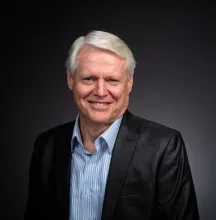
John Elliott serves in the role of President of the United Church of God, an International Association.
