
Jim Tuck
This transcript was generated by AI and may contain errors. It is provided to assist those who may not be able to listen to the message.
Happy Sabbath, everybody! I see some of you are fanning yourselves. It must be summer. It's hard to make up our minds whether it's going to be summer or fall or winter. The other day in Brentwood, it seemed like it was winter up there. So, you know, the weather can be quite sort of a microcosm here of a number of weather patterns. So, it can be that way in the area. Now, if you are new to the United Church of God, you may not know the value of the Sabbath and how much the United Church of God puts emphasis upon the Sabbath day. Also, you may not know that the seven annual festivals, how important they are to the church. The United Church of God firmly believes in the Sabbath, and we firmly believe in the seven annual festivals. And the seven annual festivals, as well as the Sabbath, reveal to us things about God's plan. For instance, the Sabbath pictures the thousand-year reign of Jesus Christ. And the seven annual festivals that are in the book of the biggest chapters 23 reveal to us God's plan of salvation. And when we go through keeping the Holy Days, every year we just observe the Feast of Trumpets, and we'll very shortly, next Sabbath, in fact, be observing the Feast of Atonement, or the Day of Atonement, they remind us of God's plan of salvation for all of mankind. And that is the reason why God gave those Holy Days to ancient Israel, and that is why we must keep the Holy Days every single year so that we are reminded about the plan of salvation that God has for all of mankind. How long would you keep, you know, the plan of God in mind if you did not know the Feast Days? Well, I think that we would very, very shortly forget about God's plan altogether. It would not take long before, you know, we would begin to let things begin to slide in our minds, and this has been proven over and over again from people who have departed from the faith and gone out into the world and stopped keeping the Sabbath and stopped observing the Holy Days. Very shortly, they don't even know, for instance, when the Feast of Trumpets is. They don't know when the Feast of Tabernacles is. You know, if you bumped into them on the street, they'd say, oh, is that that time of year now? Or you might even have to re-educate them entirely about what the Feast of Tabernacles was about and what it pictures. And so, very shortly, people would forget about, you know, the plan of salvation that is revealed in the Holy Days. It fades very quickly. And God does not want us to forget His plan of salvation because it is salvation or eternal life for all of mankind. And you know what? If we forget about God's plan and the meaning of God's plans, then we also will lose out on eternal life. And we'll be heading down that pathway to eternal death once again, which is the way that this world and society is going in. And so, the Feast are important to your salvation, and they're important to all of our eternal life.
So, God gave His festivals to Israel, and then He gives them to us so that we would never forget His plan of salvation for all of mankind. You know, if we forget the knowledge of God's plan and living it, if we stop living that plan, we will lose out on salvation. And you know what? The Bible says that if we forget God and the instructions that He's given to us, He will forget us. Let's notice about this over in the book of Hosea. I want to say some other things before we actually read there in Hosea, but you might be turning there to begin to look at those scriptures there. You know, in the Proverbs, Solomon talks about those who turn away from God. And he used the example of the loose woman who was a harlot to demonstrate what he was talking about when he was talking about how people forget God. In Proverbs 2 and verse 17, he talks about how this harlot forsakes the companion of her youth and forgets the covenant of her God. And of course, the analogy is that Israel forgot the companion of her youth, who was God, and also forgot about the covenant that God made with them. You know, when people lean toward satiating their own desires, they have that tendency to turn away from God and His way of life. You know, the fourth commandment specifically tells us to remember. It tells us to remember. The reason is, again, we have that problem of forgetting. It says, remember the Sabbath day to keep it holy over in the book of Exodus.
You know, God made the Sabbath holy, and God sanctified it, and it remains for us never to forget to keep it holy. It remains for people that do not forget God's law and that we keep that day holy the way God intended it to be and has made it holy. You know, so we need to, again, remember that God wants us not to forget. You know, in ancient times, God was going to bring Israel into the Promised Land. It was the land of milk and honey, as we read. And He forewarned them that when they were blessed, when they became affluent, they had all these rich blessings that God was going to rain down upon them. He said this to them, He said, beware that you do not forget the Eternal, your God, by not keeping His commandments, His judgments, and His statutes, which I command you today. And one of Israel's primary problems was that of forgetfulness, just simply forgetting.
And to think about modern Israel today, how we are, how the United States and Britain are today, is we are so 15 seconds ago. You know, if something happened 15 seconds ago, we'd, you know, oh, that happened 15 seconds ago, you know. I've forgotten that already and moved on to something else.
That's why you look at news, you look on television at CNN, they've got to have these flashes of all of these different things going on on the screen, because they know that the American mind has a short attention span. Well, you know what? Ancestors of modern American Britain, the old Israelites, had a problem of forgetting, too. And eventually, they totally forgot God. Let's go to Hosea chapter 13. Hosea chapter 13 now. In verse 5, and notice here what the prophet Hosea says.
You know, here God is inspiring Hosea to write this down, because this is what God did for Israel. He said, I knew you in the wilderness, in the land of great drought. When they had pastures, and it says they were filled, they were filled, and their heart was exalted, therefore they forgot me. You know, see, talking about Israel. You know, they became affluent, and therefore they forgot me.
And so I will be to them like a lion, like a leopard, by the road I will work. I will meet them like a bear deprived of her cubs. You know, a mother bear is going to tear you apart, as we know that analogy. And I will tear open their ribcage. And there I will devour them like a lion. The wild beast shall tear them. Here it shows again God's utter anger at Israel, because they forgot him. Oh, Israel, you are destroyed, but your help is from me. I'm the one that has given you the help, God has said. And I will be your king. Where is another? Or where is any other? That he may save you in all your cities, and your judges to whom you said, give me a king and princess. And of course, the physical leaders did not solve their problems.
If you read, by the way, verse 10, in the Young's Literal Translation, it says, you have destroyed yourself because of what you've done. And he says, oh, Israel, but in me is your help. You know, so Israel, it seems, has always had a severe case of senility in youth.
Here, young Israel, you know, was a young nation, and she so early began to forget God. And you know, it's so easy for Israel to forget. And they inflicted suffering on themselves because they forgot. And even when we have trials, the example in Scripture, brethren, admonishes that we shouldn't forget God and His precious instructions to us. And God's servants do not forget, even though they may go through terrible trials, it might not be easy for them. You know, God did not promise us a bed of roses.
Let's go to Psalm 44. If I had known, by the way, the trials that we were going to go through when I first started out in God's church back in the 60s, I'm not sure I would have been able to endure it in this time today. Because you just don't know what you don't know. But I'm thankful that I'm here today. I'm sure that Mr. Reed is very thankful he is here today, as well, for his 80th birthday. You know, being able to be a part of God's church in this time, and we're going to see some incredible things ahead, I'm sure, before all is said and done.
But God's servants don't forget, even though they go through trials. And that's one of the lessons, of course, maybe God wants us to learn. You know, you can't learn anything unless you go through trials of some sort. I found that out in life. You've got to sometimes have your knuckles wrapped before you learn anything. I should have figured that out at the beginning, because, you know, God had to take a big two-by-four to get my attention first. So I should have recognized then that I might have to go through some trials down the line.
Psalm 44 and verse 14, it says, You make us a byword among the nations, a shaking of the head among the peoples. My dishonor is continually before me, and the shame of my face has covered me. You know, here the psalmist is writing about the trials that Israel was going through, and the shame that is felt there.
But this is a faithful man who's writing this because it says, Because of the voice of him who reproaches and reviles, because of the enemy and the avenger. You know, Israel had to suffer a captivity, as we know. And Assyria came in and took them off to another land.
And it says, All this has come upon us, but we have not forgotten you, nor have we dealt falsely with your covenant. So this is what a servant of God does, brethren. They hold fast. They don't give up. They don't forget God. Our heart has not turned back, nor have our steps departed from your ways. We observed the Feast of Trumpets yesterday, and I talked about how that pictures the steps that we take in coming to God, in returning to God.
So he's talking about here that the steps that they're taking, he hasn't departed from that. But you have severely broken us in the place of jackals and covered us with a shadow of death. If we had forgotten the name of our God, or stretched out our hands to a foreign God, would not God search this out? In other words, God would know it. God would be aware of what, in fact, they had done. But in this case, again, the psalmist was a righteous man.
And he knew God that knew that he was a righteous man, because God searches it out. You know, David, let's notice what David did over in Psalm 119. This is the longest psalm of the book of Psalms. But in Psalm 119, down in verse 16, let's notice what David said about himself and why he was a man after God's own heart. It says, I will delight myself in your statutes, and I will not forget your word. I'm not going to forget your word, God. I'm not going to forget your statutes. In verse 92, going over quite a ways here in this Psalm 119, Psalm 19, 19, 92, and 93, unless your law had been my delight.
And you think about that, what he's saying here, brethren. Unless I had delighted in my inward parts in your law, I would then have perished in my affliction. And he said, I will never forget your precepts, for by them you have given me life. You've given me life. And so, you know, here David recognized that God was going to give him life and is giving him life. In fact, even in this physical life, we have the life that we should be living in reaping the blessings that we should be reaping in this life.
But also, David meant this probably in the sense of eternal life, the opportunity for eternal life that God had given to him. And of course, I know that God certainly rescued David many, many times. God saved his skin many times, and he recognized that and realized that. Over in Leviticus 23 is where, in fact, the holy days are mentioned.
I'm not going to go through every holy day today, but I do want to point some things out to you here in Leviticus 23 and verse 1, beginning in verse 1. It says, The LORD spoke to Moses, saying, in verse 2, Speak to the children of Israel, and say to them, The Feast of the Jews, which you shall proclaim to be holy convocations, these are your feasts.
Nobody's shaking their head here with this. That's not what it says, does it?
I thought that's what the Bible said. That's what everybody tells me, isn't it?
That these are old Jewish feasts. No, it says here, you know, that these are the feasts of the eternal here, which you shall proclaim to be holy convocations. These are not your feasts, but my feasts. So these are feasts of God. And you know, we better not monkey around with what God claims is His. We've got to do what God says. And I wouldn't certainly come along and say that these are my feasts, and I can do whatever I want with these feasts. Of course, that's what Israel did. But verse 3, let's notice the first feast day that's mentioned here. Six days shall work be done, but the seventh day is a Sabbath of solemn rest, a holy convocation. That's why we're here today, that word convocation means commanded assembly. And so this is a holy commanded assembly you're in right now. And you shall do no work on it. It is the Sabbath of the Lord. And so it's the Lord's Sabbath. No, we find in fact Jesus Christ said He was the Lord of the Sabbath. Go over there and read that in Mark 2 about that. But verse 4, it says, these are the feasts of the eternal.
Now, God says it all the time here, doesn't He? Holy convocations which you shall proclaim at their appointed times. And then He goes on to talk about the Passover, the days of Unleavened Bread, the Feast of Pentecost, which we've already observed this year, the Feast of Trumpets, the Day of Atonement, and the Feast of Tabernacles, and the last great day, those seven annual festivals there. And we are to proclaim those in the seasons, and we're in that season, and we've been talking about it. Proclaim means to shout, by the way. It means to shout it out and to cry out about it. Brethren, the plan of God is defeated when we don't pass on these truths that are in the Bible from one generation to another. God wants us to remember that so that we will have a future, not just a future for us, but a future for our progeny that come from us.
God wants this to be a generational thing. And again, as God's people, we should never forget this plan of salvation that is revealed through the Holy Days, or else we'll have the death of the family line. Do you think about that? If we forget about the feast days and the meaning of the feast days and the plan of salvation, it will be the death of our family life.
You know, no one after that is going to be a part of God's kingdom in the future. Maybe you will be there, but you won't have anyone there. Of course, if you give up on God's way of life, you know, you're not going to be there either. But we need to, again, as God's people, remember again the plan of salvation revealed through the Holy Days so that we will have a future ahead of us. Let's go over to Psalm 78. Psalm 78, go back to the book of Psalms. You know, there's so much that is in the book of Psalms. It's such a rich book in so many ways.
It has a lot of prophecies, surprisingly, as well. It covers the gamut of prophecy and of Christian living. But let's notice in Psalm 78 and verse 4 here, it says, We will not hide them, talking about the precepts and laws of God, from their children.
Tell them the generation to come, the praises of the Eternal, and his strength and his wonderful works that he has done. For he established a testimony in Jacob, and appointed a law in Israel, which he commanded our fathers, that they should not make them known to their children, that the generation to come might know them, the children who would be born, that they may arise and declare it to their children, and that they may set their hope in God and not forget the works of God. Again, that's the purpose. Don't ever forget what God has instructed, what God has given us in terms of understanding about God's way of life, about God's plan of salvation for all of mankind, so that no generation would ever forget what God is doing upon the earth.
You know, of course, it's a wonderful thing that we have so many that know the truth of God now, brethren, but be aware that that could, in fact, go very quickly, very, very quickly, if we remember what happened in our former association, where people disband and they go right back into the world, and they forget all about God's way of life.
So, brethren, what else are we to be reminded about the Feast of God? Perhaps sometime we'll go through and give a sermon about what each of those Holy Days mean for you.
That would be a sermon unto itself. But what are we to be reminded about, that we not forget about by God's Feast? I'll give a few points here that I want to give to you here today, and I want you to think about these points as we go through and keep the Day of Atonement, and we go off to the Feast of Tabernacles, and we meditate on these things. But, number one, remember to assemble where God places His name. We are to assemble where God Himself places His name. Let's go to Deuteronomy chapter 14. Over here it talks about tithing and how we are to tithe. Tithing was used to help to finance the keeping of the festivals. A tithe is a tenth, someone laying aside a tenth in order to keep God's festivals. But in Deuteronomy 14 and down in verse 22, let's notice here what it says. It says, "...you shall truly tithe all the increase of your grain that the field produces year by year." The society, of course, at this time was an agrarian society, and so they dealt in produce and grain, as it mentions here. And so they would keep whatever produce that they had from year to year, and that's what they would use when they went down to the feast to observe the feast. They would eat that produce. We don't have, of course, the same system today that was more prevalent in ancient Israel time, although they did have money, by the way. They did have money during that time as well, so it is not as though there was no money available whatsoever to keep the feast. But most people, again, were farmers, and this is how they made their living. And it says in verse 23, and you shall eat before the eternal your God in the place where he chooses to make his name abide. You notice what it says here, where he makes his name abide. He chooses to do that. The tithe of your grain and of your new wine and your oil and the first born of your herds and of your flocks, that you may learn to fear the eternal your God always. And so we see here that God says you take that produce and you go to the place where God has said his name, and you do that to learn to fear God always. And that word fear means to greatly respect God. It means to stand in awe of God and to not want to go against what he instructs. But notice it says, but if the journey is too long for you, maybe it's going to be hard for you to take those oxen or those goats or whatever it is that you're going to take with you to the feast. You've got the grain and whatnot. He says if the journey is too long for you, don't go.
I don't see anybody shaking their head out there. Is that what the book says or not?
Okay. No, it says if it's too long for you so that you're not able to carry the tie, or if the place where the Lord your God chooses to put his name is too far from you, when the Lord your God has blessed you, then you exchange it for money.
Take the money in your hand and go to the place which the Lord your God chooses. So we are told again to remember to go to the place that God chooses. Where God sets his name, you know, it's clear again that God wants us to remember this.
You know, he did not want Israel to choose just any place. He did not want them to go just any place. He wanted them to go to the place that God chose. You know, of course, that's what the pagans did. When they worshiped their false gods, they worshiped on every mountain and hill and valley and orchard that they could find.
But God told them distinctly, he says, I don't want you to do that.
I want you to come to the place where I set my name. And so we are to appear before God when God says and where He commands us to be in a place where He sets His name.
And you know, God always opens the way for feastsites where He wants His people to be.
And sometimes, you know, we want to hold a feast in a certain location and it just simply does not work out. And what happens is, you know, you can tell this if you stay over at the feast site, that after the people of God are gone, that place is a different place. You know, it's not the same place at all. But God blesses that site and God blesses it abundantly. And so it becomes apparent that God has set His name there. Also, we read, brethren, that we should not use our tithe in another place within our own gates. You know, we are to use the tithe that we lay aside in the place that God chooses for us. You know, that's what God wants us to do. I'm not going to go and show you that, but we read about that, how God says you take that tithe and you go to the place that I choose, where I set my name, God is saying. You know, as we close in, brethren, on the end of the age, we need to be at God's feast more and more, like we need to be at Sabbath services more and more. You know, the Apostle Paul, over in Hebrews 10-25, you don't need to turn there, he talked about not forsaking the assembly of ourselves together as the manner of some is. You know, we should not get into the habit of ever staying away from services unless we really, truly are sick.
And we have a good reason, in other words, where we are not able to be there. We shouldn't be away from the Feast of Tabernacles unless there is a bona fide reason. Obviously, if you have severe health problems that would prevent you from being there, sometimes people can have financial problems as well that are so severe that they're not able to save enough to go to the Feast. We try to help people like that in cases, if we can. But, you know, we need to be careful never to forsake, again, the assembly of ourselves at the Feast of Tabernacles.
Just realize, brethren, that God is not mocked. You know, if we think we're going to have salvation, if we forsake God's law, or we sort of scoot along and we say, well, I'm not going to go to services today, you know, I just feel like just, you know, sort of hanging around here and doing nothing, realize you're not fooling anybody. And most of all, you're not fooling God. Because God knows. You know what? He reads the heart. I don't know what He's got. You know, we know He doesn't need any Geiger counters to see, how's your heart, you know, here. He won't look at what we do, but He will look at what our heart is. And you know what? If our heart is right, you know, it's like David said, if I didn't delight in the inward parts, then I would have forgotten your law. And that's what has kept you and me going, because we do apparently have something inside of us, you know, through these years to endure. And we don't let something raise up a barrier to prevent us from being at services or being at the feast, you know, if at all possible. You know, one thing that happens when people begin to depart from God is something just happens inside of them, and that in fact was the very purpose of the feast to begin with. When God said, you tithe and you go to the feast, what did He say? The reason for that was, what did He say over there in Deuteronomy 14 that we read?
You know, He said that we would always fear God. So rather, remember, remember, during the feast of God, to never lose that fear of God. You know, He said that we should fear God always. And that means, by the way, right now. And it means now. And it means now. And it means now.
In other words, always. It is a state of being in us. Like we're thankful always. It is a state of being. It's what we are inside that we have such a respect for God. Because when a person loses the fear of God, you know what? They begin to ignore the warnings of the Bible. Another thing that begins to happen is they'll hear something given from the pulpit about, you know, do this or don't do that. And it sort of goes in one ear and out the other. In other words, there's no change that takes place, even when somebody is wrong. When we do that, we're losing the fear of God. And we're not, again, upholding God and what God is instructing. You know, when God instructs us through sermons, through sermonettes, through, in fact, Sabbath singing. When you sing the hymns, when we go off to the feast, brethren, God does it for a purpose, you know. He really does it for a purpose. I think I've told you before, brethren, if I had chosen a profession, this would have been the very last thing I would have done right here. If you had given me a list of a thousand things that you want to do when you grow up, you know, being a pastor would have been down here. And, you know, after 999, and I think I told you when I came into the church of God that I looked at the pastor, and I said, I never want to be one of those. And, you know, God wrote it down.
Don't ever say you won't do something or you don't want to do something because you may very well find yourself there in that place. And the reason I'm saying this to you, brethren, is because I would not have chosen to be standing before you here today, and so I'm not just talking to hear my head rattles. If you get what I'm saying, I'm trying to protect you for the future. And, you know why? Because if I don't tell you that, God's going to hold me accountable for you.
And that bothers me a lot, and that keeps me up at night sometimes.
So, brethren, I implore you, listen to what I'm saying. Not because it's not me, it's here. It's from this book. If you don't believe me, come up and I'll show you. It's all over the place. It's written to all over the place. It's hard to miss, in fact. If we lose the fear of God, brethren, we've lost everything. It's like our minds are seared with a hot iron, and we can't feel anymore. We have no conscience anymore. We become like spiritual zombies, and, brethren, we must never lose that fear of God. It keeps us always on the path of righteousness. So, remember not to lose the fear of God. Next, brethren, remember the plan for the Feast of God. Don't ever get into a cavalier attitude about the Feast. In other words, like waking up one morning and saying, oh, tomorrow's atonement. You know, or tomorrow's the Sabbath. Boy, I didn't know that. I didn't know that. In other words, that the Feast does not come upon us unawares, because, you know, if the Feast begins to do that to you, and you wake up one day and say, oh, no, I forgot. Tomorrow is Trumpus. You know, or the Feast, I've got to leave tomorrow for the Feast. You know what is happening, brethren? It's beginning to fade inside of our minds, and we need to, again, be engaged in our mind in the plan of God. We don't want to be caught unawares. And I'll tell you, the ultimate reason for that, brethren, is if we begin to be caught unawares about the Feast, the very Feast of God, the Sabbath, and those things, brethren, we're going to be caught unaware in the future when all Gehenna begins to fall upon this world in society. It will come upon us like the Bible says, like a thief in the night. So let's not ever again become too laid back about God's Feast.
We should be looking forward to the Feast because if we are, it means we're looking forward to the Kingdom of God. So think about preparation for the Feast. Think about, you know, the budget that you have because you've saved your second tithe faithfully. Think about the transportation, what you're going to do with transportation. Make sure your car is in good shape so that you can not have any mishaps and problems on the way. Think about how you're going to be involved when you get there, when you arrive at the Feast. If we do that, brethren, it shows that we're looking forward to the Feast, and it also shows that we're looking forward to the Kingdom, when the Kingdom comes, when we'll be participating in that wonderful Kingdom. So as we prepare for the Feast, brethren, we're also likely giving that attention to preparing for the Kingdom of God, evaluating what we need to change and building the right character in our lives. And God wants us to pursue His Kingdom, not just to sort of lay back, head to His Kingdom, but to pursue His Kingdom and to do it with our hearts, with all of our hearts. You know, when we are told by Jesus Christ, He said, but seek you first the Kingdom of God, and His righteousness, and all these things shall be added to you. Jesus Christ means what He says here. He really means it. You know, if we have financial problems, if we have other problems sometimes that seem to creep into our lives, maybe we need to ask ourselves, are we seeking first the Kingdom of God and His righteousness? Because that's got to be number one. You know, it's amazing. If I were to sit down with somebody and talk to them about their budget, the first thing I would tell them, well, wait a minute here. Matthew 6 33, are you doing this? Are you seeking first the Kingdom of God? Because that's the solution. That is going to be your solution. So if we're preparing for the proper observance of God's Feast, brethren, we're preparing for the Kingdom. So never underestimate the value of that and causing you to remember God's Kingdom. Number four, if you're writing down these points, is this, brethren, remember that we are sojourners in this life. We're sojourners. When we go off to the Feast, brethren, we are to stay in places which are out of our comfort zone.
I don't mean that they have to be uncomfortable to us, but you know how we are in our homes sometimes? We get just used to everything. You know, you could probably somebody could put a blindfold over your eyes and you could find anything, you know, in your house because you know your home and because it's like a glove to you. It fits like a glove. But when we go off to the Feast, things change. We are in temporary surroundings. And what is the purpose of this? The purpose of this, brethren, is so that we will realize that we are sojourners.
We're sojourners. Let's go to Leviticus chapter 23. Leviticus chapter 23. Now, in verse 34, verse 34 down here, it says, Speak to the children of Israel, saying, The fifteenth day of the seventh month shall be the feast of tabernacles for seven days to the Lord. And so, the feast of tabernacles is for seven days. And, of course, the last great day is the eighth day, as we understand.
But down in verse 39, it says, And on the fifteenth day of the seventh month, when you have gathered in the fruit of the land, you shall keep the feast of the eternal for seven days. On the first day there shall be a Sabbath rest, and on the eighth day, that is that last great day, a Sabbath rest.
And so, we are to observe this. And it says, You shall take for yourselves, on the first day, the fruit of beautiful trees. It says, Branches of palm trees, the boughs of leafy trees, and willows of the brook. It says, And you shall rejoice before the eternal your God for seven days. And so, they were to take the boughs of trees, leafy trees, and they were to make a booth. And that booth, if you look into it, it means that it was a temporary dwelling for them during the Feast of Tabernacles. Of course, we have to remember again, keep in mind that they were in the wilderness. You know, they were a little out of the holiday inns, by the way, out there in the Negev, or wherever they were, down in the peninsula there, the Sinai Peninsula. So, there weren't that kind of thing. In fact, did not exist in the same way. But here it says, You shall keep of the Feast of the Eternal, verse 41, for seven days in the year, and it shall be a statute forever in your durations. And you shall celebrate it in the seventh month, and you shall dwell in booths, or temporary dwellings is what that means, for seven days all who are native Israelites shall dwell in booths. And so, a booth is a temporary dwelling. It's a hut. It's a, you know, a cottage or a tent. And this was to teach them every year that they were temporary dwellers upon the earth. And our time of permanence is not yet. In fact, when Jesus Christ came, remember, he said in John 1836 that he said, My kingdom is not of this world. And also, Paul remember said that our citizenship is in heaven. So, we are passing through, and we're building the character and preparing for God's government when it's set up upon the earth for the future. But all of the patriarchs of God realized that they were just passing through, that they were sojourners upon the earth. Let's go to Hebrews chapter 11. Hebrews chapter 11 over here. In verse 8, we're talking about Abraham, the prophet Abraham. And it says, By faith, Abraham obeyed when he was called. You know, are we going to obey and prove that we will obey? To go out to the place which he would receive an inheritance. And he went out not knowing where he was going. And by faith, he dwelt in the land of promise as a foreign country, dwelling in tents with Isaac and Jacob, the heirs with him of the same promise. For he waited, it says, for the city which foundations whose builder and maker is God. So, you see, he looked toward the kingdom of God, and he was a sojourner. He was passing through. And it says in verse 13, these all, talking about the patriarchs and matriarchs of God, these all died in the faith, not having received the promises, but having seen them afar off. It says, We're assured of them, embrace them, and confess that they were strangers and pilgrims on the earth. That's what they were. So, John Wayne said, Pilgrim.
That's what you and I are, brethren. Good to see you, pilgrims, here today. We don't hear that word very much anymore, do we? For those who say such things declare plainly that they seek a homeland. And it says, And truly, if they had called the mine, that country from which they had come out, they would have had opportunity to return. And now they desire a better, that is a heavenly country. Therefore, God is not ashamed to be called their God, for he has prepared a city for them. Oh, what a city God is preparing for his servants who will prove to be faithful through the years. So, remember you're a soldier. When you go off and you stay in that motel room or that tent, wherever you may be staying, it's just the teachers that we're passing through. And we've got a job to do. We've got to prepare ourselves, character-wise, to be prepared for the future. Number five, if you're writing these points down, be reminded, brethren, of what is important.
Be reminded of what is important. Now, the book of Ecclesiastes tells us what is most important in life.
Solomon had everything anyone could have ever wanted, but his life ended up being not fulfilled because he tried to associate those desires. And what happened is he became absolutely miserable as a result of his way of pursuing the physical material things. And he delved into other religions as well. We see he built temples for the wives, the many wives that he had. He multiplied his wives so much that he had, of course, more wives. He has a record on that, as far as I know.
And the Bible says it turned his heart from God. I'm a one-woman man, by the way.
And if you don't believe me, ask my wife.
My wife, if I took another woman, she would kill me. That would solve that problem.
I'd hear that thumb cock, like that. No, I'm kidding. She wouldn't hopefully shoot me, but she might pummel me over the head. Use that Bible to tell me what I should be doing. Let's go to Ecclesiastes 12 and notice what Solomon says in verse 13.
It says, Let us hear the conclusion of the whole matter. Okay, don't we want to all hear that?
What really matters and what's important in this life? Well, Solomon is going to tell us.
Fear God and keep His commandments. For this is man's all. For God will bring every work into judgment, including every secret thing, whether good or evil. So fear God and keep His commandments. That's what's important. So what is important, brethren, is what God commands us to do. That's what is important. And that's what's important right now in our lives, brethren. It's not something ethereal. It's right here. We can read it in black and white in the pages of our Bible. Point number six. Remember, God is the source of all blessings.
God is the source of all blessings. If you have a blessing that has come to you in your life, brethren, it came from God. You know, when you take a, say, a drink of a nice cold glass of water like this, you can see the condensation here on the side of the water. And, you know, if you've been out in the field or something and you're just as hot as can be and you take a drink, a swig of ice cold water, you owe that to God. You know, if you look up into the night sky and see the stars, the beauty of it, you owe it to God. If you eat good food, you know, if you enjoy the splendid colors and the beauty, you know, that God has put in the world, you owe it to God. Where we look, brethren, He's the source of all things. He's the source of good health in our lives. Whatever we have, brethren, is a gift from God. He's the source of all happiness in this life. And, you know, I'm not going to go to James 1 in verse 17 through 18, but we're told over there that every good and every perfect gift comes down from the Father of lights and whom is no variableness or shadow of turning. So, brethren, the feast reminds us of that every single year and shows us, you know, where those blessings come from. You know, why would we, brethren, not seek God's kingdom first then? You know, over in 1 John 3, verse 22, let's notice in 1 John 3 and verse 22, a Scripture over here that really would be one of those memory verses. I think probably would be in our list if we have those old flip cards for the memorization of Scriptures. But here, the apostle John says, in whatever we ask we receive from him, because we keep his commandments and do those things that are pleasing in his sight. And, brethren, God is pleased with us if we listen to what He has said, what He's instructed. Like any father would be. You know, any mother would be, in fact, be pleased with their children if they listen. And God will bless us accordingly. He will bless us abundantly, brethren, if we remember those things, to keep His commandments and do those things that are pleasing to Him. Point number seven of what God wants us to remember, brethren, is also this. And I ... God wants us to remember He's building a family. He's building a family.
It's like, you know, when I was a kid growing up, our home was a mecca for Sunday dinners.
You know, when it first started out, it was just, of course, our family on Sunday.
Then, as the children began to grow older, they began to marry, they had children.
Pretty soon, the children began to come. The grandchildren came. I think about every Sunday at our house, there were probably 50 people. It was that way, every ... I talked to you about, on the Holy Day, how I associated with the people from the Second World War generation.
That's where it happened. You know, on Sundays, I'd go out and sit with the old guys.
You know, and they'd ... you'd listen to them talk. It was always fun to me just to listen to the stories. You know, the things that they would talk about. Oh, when I was a kid, you know, knee-high to a jackrabbit, you know. I was out here hunting, and they'd tell a story, you know, or something like that. I always just enjoyed them, to listening to them. It embedded in me some things that have, I think, been with me ever since that time. I think I relate to older people that way better, quite frankly, because of that. I mean, I enjoy talking to older people, and I enjoy young people as well. I don't want to make it sound like I'm so outdated and, you know, an old fogey type of person, but I like to think that my experience is wide.
You know, it's from youth to older people, an age of people older than I am, which is getting less and less. But anyway, what I'm saying, brethren, it was a sense of family when we gathered on Sunday for those Sunday dinners. And interestingly, when my mother died, all that began to fade. So you see how important a mother is, and a father as well. I know Dad tried to keep it going, but, you know, he was a very good cook. But Mom's chicken and the other things that she made seem to really touch with people. What God is doing to the feast, brethren, is He's weaving a tapestry of people together into one family. He's bringing us together as one family. And, you know, whether you go to Zambia, as I was able to go there in August, and you see people you've never seen before in your whole life, and you sit down with them, and you talk to them, and it's like you've known each other your whole life. Because you can communicate. There's no hostility. There's no, you know, Britanmanship on the part of anybody to vie for this or that. It's just family that God is building. And let's go to Matthew 12. Matthew 12. Don't want to keep pontificating about those things. But Matthew 12, in verse 46, it says, And while he, speaking of Christ, was still talking to the multitudes, behold, his mother and brother stood outside seeking to speak with him. And then one said to him, Look, your mother and your brothers are standing outside seeking to speak with you.
But he answered and said to the one who told him, Who is my mother? And who is? Who are my brothers?
And he stretched out his hand toward his disciples and he said, You know, here is my mother and here are my brothers.
Now, these are my mothers and my brothers. And he said, And whoever does the will of my father in heaven is my brother and sister and mother. And so when we see people from all walks of life, rather than different nationalities, different races living in harmony at the feast, what we're seeing is God's family being built. It's a family gathering together. And we don't want to miss that for anything. Let's go to Ephesians 3. Ephesians 3, I think we would be remiss to not to mention this. Also, in connection with God is building a family. And when it gathered for the Holy Days, even locally, God is building that family. Ephesians 3, down in verse 7, Ephesians 3, in verse 7, it says, He says, Of which I became a minister according to the gift of the grace of God given to me by the effective working of his power.
And he says, To me, who am less than the least of all of the disciples of the saints, this grace was given that I should preach among the Gentiles the unsearchable riches of Christ, and to make all see what is the fellowship of the mystery which from the beginning of the ages has been hidden in God who created all things through Jesus Christ. And so Paul made that mystery known to the intent that now the manifold wisdom of God might be made known by the church to the principalities and powers in the heavenly places. And it says, According to the eternal purpose which he accomplished in Christ Jesus our Lord, in whom we have boldness and access with confidence through faith in him. Therefore, I ask that you do not lose heart at any tribulations for me, for you, which is your or your glory or my tribulations as he says here. Don't lose heart because of what's happening to me. For this reason I bow my knees to the Father of our Lord Jesus Christ, from whom the whole family in heaven and earth. Do you get that, brethren, right there?
Heaven and earth. That's you and me. The whole family is named. That's why we're called the church of God today. Because this is the church of God. It could be said another way. This is the house of God. Or this is the household of God. Or the family of God. This is where we dwell. And so God is indeed building a family. And so God has given his feasts to us to remind us of these things so that we don't ever forget. I can only imagine what it's going to be like to keep the feast in the kingdom. You know, you talk about a fanfare. I mean, when we have all the resources that are going to be available in the world tomorrow to us, what kind of feast do you think that we'll throw? You know, it's going to be so fantastic that you certainly can't even imagine what it's going to be like at that time. But God doesn't want us to forget those festivals. God's wonderful festivals reveal his incredible plan, brethren, of salvation for all of mankind. And the world doesn't even acknowledge the holy days. And without them, we would soon forget what God Almighty is doing through us as well. And we can never allow that to happen. And we must always, brethren, remember the importance of the feast to our salvation, to our eternal life. They keep us on the pathway to eternal life in God's kingdom. So, brethren, let's remember that. And if you're new to God's church, be prepared to embark on a wonderful journey as you observe God's festivals, and you begin to understand God's incredible plan of salvation for all of mankind.
Partial Notes and Scriptures used:
Hos 13:5 I did know thee in the wilderness, in the land of great drought. Hos 13:6 According to their pasture, so were they filled; they were filled, and their heart was exalted; therefore have they forgotten me. Hos 13:7 Therefore I will be unto them as a lion: as a leopard by the way will I observe them: Hos 13:8 I will meet them as a bear that is bereaved of her whelps, and will rend the caul of their heart, and there will I devour them like a lion: the wild beast shall tear them. Hos 13:9 O Israel, thou hast destroyed thyself; but in me is thine help. Hos 13:10 I will be thy king: where is any other that may save thee in all thy cities? and thy judges of whom thou saidst, Give me a king and princes? Even in trials, we are admonished TO NOT FAIL to follow God's Instructions...
Psa 44:14 Thou makest us a byword among the heathen, a shaking of the head among the people. Psa 44:15 My confusion is continually before me, and the shame of my face hath covered me, Psa 44:16 For the voice of him that reproacheth and blasphemeth; by reason of the enemy and avenger. Psa 44:17 All this is come upon us; yet have we not forgotten thee, neither have we dealt falsely in thy covenant. Psa 44:18 Our heart is not turned back, neither have our steps declined from thy way; Psa 44:19 Though thou hast sore broken us in the place of dragons, and covered us with the shadow of death. Psa 44:20 If we have forgotten the name of our God, or stretched out our hands to a strange god; Psa 44:21 Shall not God search this out? for he knoweth the secrets of the heart.
Psa 119:92 Unless thy law had been my delights, I should then have perished in mine affliction. Psa 119:93 I will never forget thy precepts: for with them thou hast quickened me. Psa 119:94 I am thine, save me; for I have sought thy precepts. King David recognized that LIFE was in keeping God's Commandments.. real good and wholesome human life... and even as a projection, eternal life. Lev 23: 1- 1- Remember to assemble where GOD Places His Name. Tithing and to tithe to finance the keeping of the Festivals. Deu 14:22 Thou shalt truly tithe all the increase of thy seed, that the field bringeth forth year by year. Deu 14:23 And thou shalt eat before the LORD thy God, in the place which he shall choose to place his name there, the tithe of thy corn, of thy wine, and of thine oil, and the firstlings of thy herds and of thy flocks; that thou mayest learn to fear the LORD thy God always. Deu 14:24 And if the way be too long for thee, so that thou art not able to carry it; or if the place be too far from thee, which the LORD thy God shall choose to set his name there, when the LORD thy God hath blessed thee: Deu 14:25 Then shalt thou turn it into money, and bind up the money in thine hand, and shalt go unto the place which the LORD thy God shall choose: Deu 14:26 And thou shalt bestow that money for whatsoever thy soul lusteth after, for oxen, or for sheep, or for wine, or for strong drink, or for whatsoever thy soul desireth: and thou shalt eat there before the LORD thy God, and thou shalt rejoice, thou, and thine household, Pagans worshipped on every mountain top and valley and orchard.. .but God wants us to go to the PLACE WHERE AND WHEN He commands us to be. As we close in on the end of the age we need to keep these feasts MORE AND MORE.
Heb 10:24 And let us consider one another to provoke unto love and to good works: Heb 10:25 Not forsaking the assembling of ourselves together, as the manner of some is; but exhorting one another: and so much the more, as ye see the day approaching. God is NOT mocked. Some think we can have salvation while disregarding God's Law, we are only fooling ourselves. GOD reads the heart. If the Heart is Right... [ inward parts, Psalms ] Keeping the Feast... so we always FEAR GOD ALWAYS... as a state of being toward HIM!!!! Whe a person LOOSES the fear of God, they begin to ignore the warnings of the Bible. The warnings from the pulpit are set aside also. IF I do not warn YOU, God will HOLD ME Accountable for YOU.. .and that bothers me a lot. Standing here before you would have been MY LAST CHOICE of professions in a list of a 1000. REMEMBER TO PLAN FOR THE FEAST OF GOD. Do not get in a cavalier attitude regarding God's Feasts or the Sabbath. Always you must be engaged in your minds in the PLAN of God. Being caught unAwares regarding these Feasts will lead to being caught Unaware in the upcoming and terrifying events. Think about all you have to plan for the Feast, money, transporation, places to see, meals, services, activities. All needs to be planned and prepared for... as in preparing for the KOG... building the right facets of character.
Do our LIFE Problems serve as indicators of our focus or lack of it regarding seeking FIRST the KOG REMEMBER THAT WE ARE SOJOURNERS IN THIS LIFE When we go, we stay in places out of our comfort zone... we stay at new and temporary surroundings so that we realize that we are sojourners on this earth. Lev 23:34 Speak unto the children of Israel, saying, The fifteenth day of this seventh month shall be the feast of tabernacles for seven days unto the LORD. Lev 23:39 Also in the fifteenth day of the seventh month, when ye have gathered in the fruit of the land, ye shall keep a feast unto the LORD seven days: on the first day shall be a sabbath, and on the eighth day shall be a sabbath. Lev 23:40 And ye shall take you on the first day the boughs of goodly trees, branches of palm trees, and the boughs of thick trees, and willows of the brook; and ye shall rejoice before the LORD your God seven days. Lev 23:41 And ye shall keep it a feast unto the LORD seven days in the year. It shall be a statute for ever in your generations: ye shall celebrate it in the seventh month. Lev 23:42 Ye shall dwell in booths seven days; all that are Israelites born shall dwell in booths: Lev 23:43 That your generations may know that I made the children of Israel to dwell in booths, when I brought them out of the land of Egypt: I am the LORD your God. Lev 23:44 And Moses declared unto the children of Israel the feasts of the LORD. The booths were temporary dwellings... remember they already lived in tents as they meandered through the wilderness.
John 18:36; Paul also said our citizenship is currently in heaven. All the patriarchs of God realized they were just passing through. Heb 11:8 By faith Abraham, when he was called to go out into a place which he should after receive for an inheritance, obeyed; and he went out, not knowing whither he went. Heb 11:9 By faith he sojourned in the land of promise, as in a strange country, dwelling in tabernacles with Isaac and Jacob, the heirs with him of the same promise: Heb 11:10 For he looked for a city which hath foundations, whose builder and maker is God. Heb 11:13 These all died in faith, not having received the promises, but having seen them afar off, and were persuaded of them, and embraced them, and confessed that they were strangers and pilgrims on the earth. Heb 11:14 For they that say such things declare plainly that they seek a country. Heb 11:15 And truly, if they had been mindful of that country from whence they came out, they might have had opportunity to have returned. Heb 11:16 But now they desire a better country, that is, an heavenly: wherefore God is not ashamed to be called their God: for he hath prepared for them a city. WE have to prepare ourselves and keep the vision and focus. BE REMINDED OF WHAT IS IMPORTANT The Book of Ecclesiastes tells us what is most important in life. King Solomon tried to live life in a deep pursuit of things he should not have... other religions of his wives which turned his heart from GOD.
Ecc 12:13 Let us hear the conclusion of the whole matter: Fear God, and keep his commandments: for this is the whole duty of man. Ecc 12:14 For God shall bring every work into judgment, with every secret thing, whether it be good, or whether it be evil. REMEMBER GOD IS THE SOURCE OF ALL BLESSINGS If you have a blessing that has come to you in your life, it has come from God. A glass of cold water... a beautiful sunset. Jas 1:17 Every good gift and every perfect gift is from above, and cometh down from the Father of lights, with whom is no variableness, neither shadow of turning. Jas 1:18 Of his own will begat he us with the word of truth, that we should be a kind of firstfruits of his creatures. The Feast Reminds us of this every single year. 1Jn 3:22 And whatsoever we ask, we receive of him, because we keep his commandments, and do those things that are pleasing in his sight. 1Jn 3:23 And this is his commandment, That we should believe on the name of his Son Jesus Christ, and love one another, as he gave us commandment. 1Jn 3:24 And he that keepeth his commandments dwelleth in him, and he in him. And hereby we know that he abideth in us, by the Spirit which he hath given us. God is pleased with us if WE listen to His instructions and live by them and HE will bless us accordingly. REMEMBER THAT GOD IS BUILDING A FAMILY As I was growing up I was surrounded by older people, WWII veterans etc... learned to relate to them, their stories and "living history"... At the FEAST God is weaving a tapestry of people as ONE FAMILY...
Mat 12:46 While he yet talked to the people, behold, his mother and his brethren stood without, desiring to speak with him. Mat 12:47 Then one said unto him, Behold, thy mother and thy brethren stand without, desiring to speak with thee. Mat 12:48 But he answered and said unto him that told him, Who is my mother? and who are my brethren? Mat 12:49 And he stretched forth his hand toward his disciples, and said, Behold my mother and my brethren! Mat 12:50 For whosoever shall do the will of my Father which is in heaven, the same is my brother, and sister, and mother. Eph 3:7 Whereof I was made a minister, according to the gift of the grace of God given unto me by the effectual working of his power. Eph 3:8 Unto me, who am less than the least of all saints, is this grace given, that I should preach among the Gentiles the unsearchable riches of Christ; Eph 3:9 And to make all men see what is the fellowship of the mystery, which from the beginning of the world hath been hid in God, who created all things by Jesus Christ: Eph 3:10 To the intent that now unto the principalities and powers in heavenly places might be known by the church the manifold wisdom of God, Eph 3:11 According to the eternal purpose which he purposed in Christ Jesus our Lord: Eph 3:12 In whom we have boldness and access with confidence by the faith of him. Eph 3:13 Wherefore I desire that ye faint not at my tribulations for you, which is your glory. Eph 3:14 For this cause I bow my knees unto the Father of our Lord Jesus Christ, Eph 3:15 Of whom the whole family in heaven and earth is named, Can hardly imagine what the FEAST will be like in the Kingdom with all the availability of what will be then. WE MUST keep them to be reminded of WHAT He has for us... the importance to our salvation.
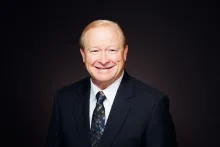
Jim has been in the ministry over 40 years serving fifteen congregations. He and his wife, Joan, started their service to God's church in Pennsylvania in 1974. Both are graduates of Ambassador University. Over the years they served other churches in Alabama, Idaho, Oregon, Arizona, California, and currently serve the Phoenix congregations in Arizona, as well as the Hawaii Islands. He has had the opportunity to speak in a number of congregations in international areas of the world. They have traveled to Zambia and Malawi to conduct leadership seminars In addition, they enjoy working with the youth of the church and have served in youth camps for many years.
