
Finish the Race Strong
Given on
Downloads
Downloads
To download a file, right-click (or long press) a link above and choose Save As.
Millenium has passed. The seventh day of Tabernacles. What photo album will you be in - fruitful or not? focus 1. Clear spiritual goals/focus on the above not the around 2. Did not learn the lessons of Satan's rule 3. Personal disciplines/Did not lay a solid foundation a. The GOD centered life is focused b. Lay a solid foundation
This sermon was given at the Wisconsin Dells, Wisconsin 2014 Feast site.
Transcript
This transcript was generated by AI and may contain errors. It is provided to assist those who may not be able to listen to the message.
You know, brethren, this has gone very quickly. Here we are on the seventh day of the feast. It just seems like a couple of days ago, not seven days ago, that we were getting our things out of the car, putting them into the room, getting ready for what we've had here at Wisconsin Dells. It's been a great feast, so far as I'm concerned. Here we've been at the feast, and here we're on the seventh day. And if you go by analogy, this seventh day would represent the end of the millennium. By the time the end of the millennium comes, we're going to see the world as a beautiful jewel in space. It will be one big garden of Eden, super abundance of good food. I mean real food. I wonder sometimes today if we understand what real food really tastes like the way God intended. We probably don't. But when these days are coming, by the time the millennium is coming toward its conclusion, we will have good, tasty, nutritious food. Human health will be at its best. Challenges for mankind will be overabundant, will have peaceful, safe living conditions, and will have a family of God, you, ruling and teaching and serving and helping, discussing the way of God, the truth of God covering the world like the waters cover the seas today. Add to the facts that Satan has been bound for a thousand years, and we've got a brand new spiritual age, not just a great physical age, a tremendous spiritual age without Satan. Certainly something to look forward to. But, brethren, in the midst of all that beauty, something very ugly is going to be taking place. In the midst of all that beauty, a tragedy is going to be taking place. Please turn with me, if you will, to Revelation 20.
Revelation 20.
Verse 1. Then I saw the angel coming down from heaven having a key to the bottomless pit, and a great chain in his hand. Verse 2. He laid hold of the dragon, that serpent of old who is the devil in Satan, and bound him for a thousand years. And he cast him into the bottomless pit and shut him up and set a seal on him, so he should deceive the nations no more, till the thousand years were finished.
Okay, so the millennium has come and gone. Verse 7. Now when the thousand years have expired, the millennium is now over. Satan will be released from his prison, and will go out to deceive the nations which are in the four corners of the earth, Gog and Magog, to gather them together to battle, whose numbers is the sand of the sea. And they went up on the breadth of the earth and surrounded the camp of the saints in the beloved city, and fire came down from God out of heaven and devoured them. So what we're seeing here, brethren, we've got the end of the millennium. It comes to a conclusion. And then for a short time, it says here in verse 3, for a little while, for a little season, Satan's released. And then starting in verse 11, we see the Great White Throne Judgment period. So there's a little gap in time between the millennium and the Great White Throne Judgment period, which we will be discussing tomorrow. In that little gap of time, Satan is released, and it says here that he goes out and deceives the nations, not just Gog and Magog. That's in some way symbolic of huge throngs, but it says here in the four corners of the earth.
Can our mind wrap around what's happening here? After 1,000 years of the family of God ruling, and the success that we've had for 1,000 years, teaching, proclaiming the truth of God, the healing of the world physically, the healing of people physically and spiritually, where everyone is keeping the feast, going to Sabbath services, teaching the ways of God, all of this taking place with—and I don't know what the educational system will be like in the world tomorrow. I don't know if it's going to be all homeschooling, some combination of homeschooling and where people get together in a classroom setting, in a college, or one of the other kinds of schools, elementary school, middle school, high school.
But in those kinds of settings, even if we do all homeschooling, we'll probably have seminars. And so we have people like Noah. Noah comes to a seminar and discusses what it was like in his day. You've got Moses discussing what things are like in his day, or David, or us, as we are ruling over—the entities we're ruling over.
And after a thousand years, Satan is let loose, and a great number of people—we're not talking about a few dozen. It says here, a great number of people whose number is as the sand of the sea. How, brethren, does this happen? How does this happen? To give you a little bit of an insight as to why I'm giving this message, we've had some very inspiring messages this feast. Very inspiring, very encouraging, very uplifting. But today is the seventh day. And literally, in just a few hours, relatively speaking, we'll all be on our way back home.
We'll be going back to the world. We've enjoyed ourself in this setting right here, a very unique congregation. This group of people will never be together again, not as a specific group, a very unique congregation. Hopefully we'll all be together in the kingdom.
As a group of physical human beings, a very unique congregation here in Wisconsin Dells. But, as I said, in a few hours, we're going to be back home. We're going to get up on—some will be leaving after the second service tomorrow, some will be getting up on Friday, heading back for home, and so forth. You'll be staying and having services here in the Dells area.
But the reason I'm giving this sermon—and it's going to be a little more on the sobering side—is because we're going back to Satan's world. We've never left it, but we're going to go back where we don't have 700 people that we can fellowship with. We're going back to smaller congregations. We're going back to our work. We're going back to our neighborhoods. And what happened to these people in Revelation 20, if we're not careful, can happen to you and I. There's not a single person in this room who gets a free pass on this. Not me, not you, none of us.
I don't care how converted we are right now. If we do some of the things these folks did, we're going to be in great big trouble. So again, this sermon is going to be a little more on the sobering side, but I think that there's room for that here at this feast. Let's take a look at 1 Corinthians 9. 1 Corinthians 9 and in verse 24. Notice what the Apostle Paul says here. 1 Corinthians 9, 24. Do you not know that those who run in a race all run, but one receives the prize? Run in such a way that you may obtain it. Run in such a way that you may obtain it. Brethren, think on your life right now as you're sitting in your seat, as you're looking at your Bible, as you're taking your notes.
Only you know in your heart, not your mate, not your kids. They may have ideas, but only you know what kind of race you're running. Only I know what kind of race I'm running. Are we running the best race we can run? Can you and I do better? 2 Thessalonians 2 And verse 3. Let no one deceive you by any means, for that day will not come unless a falling away comes first.
And that man of sin is revealed, the son of perdition. Before the return of Christ, a falling away is predicted. Now, we've seen several fallings away. And that we'll have others fall away between now and the return of Jesus Christ.
Will I fall away? Will you fall away? Again, nobody has a free pass on this. Nobody. I have discussed with my congregations back home in Ann Arbor and Detroit that when you look at prophecy regarding the church at the end of the age, it's like you're looking at two different photo albums. You've got the one photo album. If you had a name on that or a title perhaps on that, it would be The Fruitful. And you have photographs of The Fruitful. The bride that we talked about on that first day of the feast. People are growing and overcoming and developing.
People of Christ says, I want to come for my bride. I want to rescue my bride. I want to give her eternal life. Hopefully all of our pictures will be in that part of the family album. But there's another family album that prophecy shows about the church at the end of the age. The first one was called The Fruitful. This one may be called The Fruitless.
Christ said in Luke chapter 18, and I'm not going to turn there, but Christ said, When I come, will I really find faith or the faith on the earth? We don't want to have our picture in that album. You see in Matthew 24, Mr. Kubik went through some of this in his message. In Matthew 24 verses 9 through 12, where there's a little inset there talking about us, the church. You know, at the end of the age where persecution arises, as a result of the persecution arising, you'll have some of us who will be offended.
You'll also have some of us who will betray one another. You have some of us who will actually become to hate one another, to have our love grow cold. And Christ there in red lettering in our Bibles says, We must endure to the end.
You also have a picture there in Revelation chapter 3 of the Laodicean Church. People that are poor, blind, and naked. So, brethren, the question I ask myself as I was putting this together, the question I want to ask you is, what family album are we in? What family album do we want to be in?
Now, if you're taking notes, my point is very simple. It's four words. Four words. Write these down across the top of your page. Finish the race strong.
Finish the race strong. Finish the race strong.
Paul talked about how we're running a race. We want to finish that race, and we want to finish that race in a proper manner, in a strong manner.
Now, I'm going to do a little speculation today. Obviously, I'm not living at the end of the millennium. You're not living there either.
But I have some suppositions that are based upon the wealth of information we have in the Scriptures about human nature, about the workings of Satan. And when you begin to think about what these people may have gone through that caused them to finish their race in disaster, then you and I can be warned so that we don't do the same thing. Three points for you. Number one. Talking about those folks in Revelation 20, verses 7-9, who, after the millennium was come and gone, they were deceived by Satan. Number one, their focus was on the creation and not the Creator. Their focus was on the creation and not the Creator.
Another way of putting that is they focused on the around and not the above. They focused on the around and not the above. And it's been so easy to do so. They've got beautiful families, they've got a beautiful place to live, they have a beautiful environment, everything is going well. It would be so easy for physical people to be focused on the physical.
But, brethren, you and I need to have a laser-like focus on what's really important. A laser-like focus. In their book, The Power of Focus, the two co-authors, Jack Canfield and Mark Hansen, creators of the series Chicken Soup for the Soul, the number I'm sure have read those, Power of Focus, they write this. Remember, and I quote, Remember, it's all about focus. The main reason most people struggle professionally and personally is lack of focus. Lack of focus. Now, let's take a moment here and let's drill down even deeper. Let's discuss how we focus. Another book, A Bias for Action, How Effective Managers Harness Their Willpower, Achieve Results, and Stop Wasting Time. Now, this is a worldly book written by worldly folks, but bear with me, listen to the points they make, in summary, some of the points they make, I think you and I can learn some rich lessons here. The two authors, Heike Brunk and Sumatra Gushal, provide an excellent three-part explanation to the most important aspects of achieving focus. First, they say, rather than merely reacting to developments as they arise or meeting routine requirements, focus managers are goal-oriented. Goal-oriented. They have clear ideas about what they're striving for. Brethren, do we have clear spiritual goals? I mean, not just, yes, I want the kingdom of God. Yes, I want to be a better Christian. But do we have, do we break that down even to even closer goals, more finite goals, you know, individual and personal goals? It says they don't merely react to developments. We don't want to go through life just reacting to life. If you would, turn with me to Matthew 6.
We don't want to be like the folks in the millennium where our minds are focused on the wrong thing, focusing on the creation. As beautiful as it is, and there's nothing wrong with that, God wants people to enjoy that. But God wants people to set their sights higher as to what their primary focus is on Him. Matthew 6, verse 33. But seek first the kingdom of God and His righteousness, and all these things shall be added to you. Obviously, this is where our focus is. And we can break this down even to sub-points and so forth. And we should be. But the overall goal, a laser-like focus, is right here on Matthew 6, verse 33.
And let me comment on this, because I think sometimes we think, well, what I'm going to do is I'm going to make sure that I have enough time. I'm going to look at my calendar, look at my daytime, or whatever it is, and make sure I've got enough time for God, and then everything else will kind of fall in its place. We can do that, brethren, but the problem with that is we reduce what Christ is saying here to a lesson in sequencing. We reduce God to a schedule. And we don't want to do that.
We want God as the fabric of our life. The fabric of our life. We don't schedule our family. At least, I hope we don't. We want to spend as much time with our maid, with our children, grandchildren as we possibly can. That's a part of us. We don't even think about schedule—hopefully we don't think about scheduling. We don't want to reduce God to a line item someplace. We want this, the kingdom, to be in our thinking all day long.
In everything we do, the Apostle Paul talked about praying at all times. That should be our goal. That should be our orientation. Secondly, in the book, the bias for action, how effective managers harness their willpower, achieve results, and stop wasting time. Second, focus requires that a manager is intentionally channeling all of his activities toward achieving the desired goal. That means taking the time to reflect regularly on your own behavior and being willing and able to choose what you do not want to do each day. Focused behavior does not emerge by chance nor from the moment.
So our focused behavior, everything we're doing, has some aspect of going toward God's kingdom. Years ago, back in Ambassador College, I had Dr. Hay for a spokesman's club, and he gave a lecture after one of the clubs. One of the men had not prepared a speech properly, like the way he wanted to. Dr. Hay was asking various questions about it. He said, Well, I just didn't have time.
Dr. Hay said, what I practice in my life is what I call the art of selective neglect. There are certain things we're going to neglect because they aren't very high in the list of priorities. And certainly, brethren, the same thing is true for us. If we're going to run a strong race, we've got to make sure our priorities are where they should be. Let's take a look at Ephesians 4 for a moment.
I quoted this the first day, but I want to quote it again. Ephesians 4. If you and I are thinking about focused behavior, this verse, as I said to me, is an epitome of what we want to focus in on. Ephesians 4, verse 13. Until we all come into the unity of the faith, the unity of the faith, unity with God, unity with Jesus Christ. That's where our unity first and foremost must always be. Unity of the faith and of the knowledge of the Son of God. You can probably have a series of sermons on that phrase alone.
The knowledge of the Son of God. To a mature man, to the measure of the stature of the fullness of Christ. Brethren, we must be making sure that our focused behavior is always focused on the things we're seeing here in this verse. We don't want to turn to the right-hander to the left. We'll talk a little bit more about that as we start going through more of the sermon. Thirdly, they said in their book, focus requires personal discipline.
And they say that means protecting yourself against the usual noise of everyday demands or exciting opportunities that will inevitably tug at your attention and emotions. In other words, distractions. Do you have distractions in your life? I've got distractions in my life. We live in a society. We live in an age of distractions. We've got to focus past that. We've got to zero in on what's really important. Apparently, the people in that after the millennium, their focus was very...it wasn't focused. And they paid a horrible price. 1 Timothy 4.
1 Timothy 4, verses 13-16. Here's what we want to do in terms of our personal disciplines. 1 Timothy 4, verse 13. Paul talking to a young minister, but certainly this is true for all of us, where it says, verse 13, "'Til I come, give attention to reading, to exhortation, to doctrine." We're going to talk about it a little bit later on, brethren. We must ensure, you and I, that we have a good basis, that we have a good foundation.
You know, I've spoken here to Del's on many occasions. It's been a few years, but bear with me those who've heard this before. But, you know, when I first started coming into the church, God called me as a 15-year-old. He didn't call my folks.
And, you know, I had to keep the Sabbath at home, the Holy Days at home. I had to quit the football team, the basketball team, so I can keep the Holy Days and the Sabbath. And I did a lot of study, but I couldn't go to church.
I wasn't allowed to go to church until I was accepted for Ambassador College. And I went to Sabbath services for the first time in August of 1970, and the very next day I was at Ambassador College. And I thought I was really studied up. I thought I really had a good background.
I thought I was really there. And then when it came time for me to start counseling for baptism, I had tremendous doubts. I doubted what—here I am getting As and Bs in my religion courses, my Bible courses. And then I'm doubting, well, how do I know God exists? How do I know the Bible's true? How do I know some of the most basic things? And why was that? Because I really didn't lay a solid foundation like I thought I had. And Satan knew that.
And he took a sledgehammer to that, and it crumbled. I was counseling with Dr. Albert at the time. He said, Randy, what I want you to do is fast. So I fasted. I went back to him and said, I'm still not getting it. I mean, I have academic knowledge about—I can answer any question you put to me, but in terms of being in here, I feel empty. I fast again. So we did this for about six weeks. And nothing. Finally said, Randy, I want you to start fasting this weekend, and don't stop until God helps you break through this.
This is all this doubt. And 72 hours later, I was left as a little piece of hair and some tennis shoes. 72 hours later, the answer I needed—you know, we all have our different needs. But the answer I need came, I was able to see things in the right perspective and get baptized.
But I didn't have—I didn't lay a proper foundation. And if you are—if any of us have not laid that or are laying that, Satan knows that. And he will wait until the most opportune time for him to attack you on that point. So we'll talk a little bit more about that as the sermon progresses. To like, give attention to reading, to exhortation—this is verse 13—to doctrine.
Do not neglect the gift that is in you, which was given to you by prophecy, with the laying on of the hands of the eldership. Meditate on these things. Give yourself entirely to them, that your progress may be evident to all. Give yourself to these things. Take heed to yourself and to the doctrine. Continue in them. From doing so, you will save both yourself and those who hear you. Brethren, we are so fortunate. Remember that, you know, most—a lot of us in this room remember the days. I remember back in the 60s when I first started getting the literature. You'd write for a booklet, and six weeks to two months later would come.
Remember those days? And you would get the booklet. You would read the thing in an hour or something. And, of course, the way we did it, we always have other questions in the booklet. You wanted to then write for two or three more. Two or three—you know, six weeks to two months later.
The other book was a very slow process. Maybe in some ways that wasn't so bad, because it caused us to really think about what we had in our hands. Today we've got ucg.org. All of our booklets, all of our literature, so much of a wealth—study guides, sermons, you name it—it's there. There's no reason any of us in this room—people say, I want an ambassador to college education. It's there. All we've got to do is go and take advantage of what's there.
To learn the doctrines, to understand the things that our hearts and our minds need, to have, as people call, a personal relationship with Jesus Christ. We need that. So, brethren, people in Revelation 20 weren't focused on the above. They were focused on the around. Are we focused on the around? Let's hope that we're not.
A few months ago, I gave a sermon in Ann Arbor in Detroit, and the thrust of the sermon, the point of that sermon was, where your thoughts go, your energy flows. Where your thoughts go, your energy flows. The people who lived at the end of the millennium, people we're talking about today, their thoughts went a certain direction. Their energies went in a certain direction. And correspondingly, their disaster came as a result of that. Where are your thoughts going? I have to ask myself where mine are. Where are our thoughts going, leaving us in terms of our actions?
Matthew 6. Matthew 6, verses 19-21.
This is all red lettering. Do not lay up for yourselves treasures on earth, where moth and rust destroy, and where thieves break in and steal. But lay up for yourselves treasures in heaven, where neither moth nor rust destroy, and where thieves don't break in and steal. For where your treasure is, there your heart will be also. As I looked at that verse, where your treasure is, there your heart will be also. That's where I got the thought, where your thoughts go, your energy flows.
So the people in the millennium had the wrong treasure. Their treasure was physical. Verse 24. No one can serve two masters, for either you'll hate the one and love the other, or also be loyal to the one and despise the other. You can't serve God and mammon. Obviously, the people there in Revelation 20, verses 7-9, they weren't serving God the way they should. They wouldn't have ended up the way they did. So they were serving the wrong master. They didn't have the proper goal orientation. They didn't have the proper focus behavior or the personal disciplines. So point number one, their focus was on the creation, not the Creator. Or another way of saying that is they focused on the around and not the above. Point number two, that's my three points. Point number two, they didn't learn the lessons of Satan's rule.
They didn't learn the lessons from Satan's rule. There's a principle here we want to take a look at. 1 Corinthians 10, verses 11-12.
1 Corinthians 10, verses 11-12.
1 Corinthians 10, verse 11. Now all these things happen to them as examples. 2 Corinthians 10, verse 12.
Now explicitly here, this Scripture is talking about what we should learn from looking at the biblical figures. But I say there's another level of understanding here. Not only do we look at the people who have come before us, the Bible shows, I also believe we should look very closely at what happened to a being by the name of Lucifer.
And understand who he is and what he is, what he became, what he morphed into, and how that affects you and I in our life. You know, it's interesting where today people say, if we could only have right government, we would be okay. Just right government, whether we're talking about United States government, we're talking about church government, normally people talk about church government, we only had the right church government thing would be okay.
Well, eons ago, with God the Father and Jesus, the one we call Jesus Christ, and their only being holy righteous angels, the only government that was there was perfect. It didn't get any better than that. Lucifer was in a perfect governmental structure. He may have enjoyed that for, we don't know how long. People talk about environment. Did it get any better than what was there before the human beings were created? Before Lucifer morphed into being Satan? Perfect government, perfect environment. But then something happened. And we've got to be careful about this. Let's take a look very closely at 2 Corinthians 10. 2 Corinthians 10.
There's a thought here in 2 Corinthians 10 and verse 5, where it says, I want to focus on that last phrase. Bring every thought into captivity to the obedience of Christ. Now, there came a time in God's perfect government, in God's perfect environment, where Lucifer had a thought that started to go off kilter.
God knew exactly when that time came. He knew it by the millisecond. God did nothing, even though He knew where that was going to lead. Why? Because God believes in free moral agency for the angels to select who they want to obey. The same thing is true for you and I. But from the time that Lucifer began to go off kilter, who knows how it began? Maybe just a little bit of a disagreement with God and Jesus. Maybe just a little bit, just a little opening. But then it widened and widened and widened. And of course, being as old as they are, the angels, I would think that if we were to give them a human IQ test, they would probably blow it away.
Lucifer, I'm sure, had a brilliant mind. And he began to take a look at how he could rebel, as things progressed. And he said, you know, I can export this to other beings. And eventually, one-third of the holy righteous angels followed him to become demons.
From that point, from a time when Lucifer first began to make that wrong choice, till today, think, brethren, about all the galactic suffering that's taken place. Think about the suffering in your life, the suffering in the world, all because one being didn't bring every thought into the captivity, into the obedience of Christ.
What does that say to you and I in terms of the way we live our lives, in terms of the way we think? Sometimes we sometimes say, I just have this little thought of skew. Satan, being the brilliant being he is, he's got a blueprint. He's seen people like you and I, he's seen people with our personalities, by the, who knows, maybe by the millions over the course of time. He knows all the buttons they hit when it comes to you. He knows your background. He knows your weaknesses. And he has a blueprint for what he did to gain those holy righteous angels and to have them become demons. He is good at his craft. He is good at his craft. He's brilliant. So even after a thousand years of happiness, and those humans were taught about Satan, they were taught about the morphing that took place, probably in greater detail than we're discussing here.
But they fell victim to a powerful, formidable adversary. Now, you and I are very thankful. Our father, our elder brother, are much, much more powerful than Satan or the demons. Much more powerful. There's no need for us to fear them, but there is a need for us to respect their power. And to respect what I call the Satan effect. The Satan effect. Satan is the great deceiver. We understand that. But, brethren, can you be deceived as a converted person? I've been self-deceived. You can be self-deceived. We can certainly be deceived by Satan. Have you... Satan blinds the minds of people. Can our minds be blinded to who and what we are? Who and what we need to be doing in life? Certainly. You've got the Satan effect. 2 Corinthians chapter 2. 2 Corinthians chapter 2.
And verse 11.
2 Corinthians 2, 11. Unless Satan should take advantage of us, we are not ignorant of his devices. Satan has got a tool chest. The tools in that chest, if you were to take a look at them, they are well used. He knows his tools. Every good craftsman knows how to use his tools. Satan has a great many of them. In that toolbox, he's got one that's called mental devices. Mental devices. Because Satan wants your mind. Satan wants your mind. And he understands how to turn it. He did it to, I don't know, a third of the angels, whatever number that is. And look what he's done in 6,000 years of human history. He will blow our minds. He's got moral devices, moral tools. He wants our hearts.
Look at Solomon, wisest man who ever lived. And notice what God, not God, but what Satan did with him. Interpersonal relationships were a large portion of his downfall.
We can have interpersonal difficulties as well. Satan knows just how to use those in our life to bring all sorts of...
...ill to us. Motivational devices are tools in his chest. You've got the story in Acts chapter 4 and chapter 5. I'm not going to turn there. In Acts 4, you see Barnabas having some land. He had the land. He sold the land. He gave the money to the apostles for the work. And then in chapter 5, you've got Ananias and Sapphira. And what's happening in their minds? Well, they sell some land. They sell possession. But they only give part of it to the church. But they want everyone to think they're just like Barnabas. And so, you know, they've got an agenda. They've got a motivational issue there. So point number two is that the people there at the end of the millennium did not learn from the rule of Satan. Whether we're talking about Lucifer morphing into Satan or Satan dealing with human beings. Number three, and I've touched on this a couple of times. Number three, they did not lay a solid foundation. They did not lay a solid foundation. Folks, these people went to church services. They went to the Feast of Tabernacles. They wrote out tithe checks. They had their kids learning things about the Bible. They didn't eat the wrong things. They did all that. They mechanically, everything looked good. But that was the problem. It was mechanical. One man put it this way.
Just because you go to church and sit in church doesn't make you a Christian any more than if you go to McDonald's and sit at McDonald's and make you a hamburger.
And you know, brethren, unfortunately, I think too many of us, or too many over the years have thought, and certainly the people here at the end of the millennium, that just doing the mechanics is all that is needed.
I ask myself the question. You ask yourself the question. Are we mechanical Christians? Are we Christians by formula? We've been in a church so many years, and now it's time I should talk to the minister about being baptized. And of course, since we've been in a church so many years, the minister talks to us. We know all the right things to say. We get baptized. But is our heart really in it? Truly?
Luke 3 Luke 3 Verse 7 Then he said to the multitudes that came out to be baptized by him, Brute of vipers, who has warned you to flee from the wrath that come? Therefore, bear fruits worthy of repentance. Real repentance. The kind you find there, what is it, 2nd Corinthians 7, 11? Where you've got seven different fruits of what real repentance is all about. God tells us how to do it. He grants us repentance. Therefore, bear fruits worthy of repentance. And do not begin to say to yourselves, we have Abraham as our father. For I say to you that God is able to raise up children of Abraham from these stones. And even now the axe is laid to the root of the trees. Therefore, every tree which does not bear good fruit is cut down and thrown into the fire.
Don't think because grandmas come to church and grandpa and mom and dad, and you're now here that somehow that automatically puts you into the church. I can't think that way, even if my folks were in the church. And you can't allow yourself to think that way either. Ezekiel 14. God gets even more specific over here. Ezekiel 14.
Starting here in verse 12.
Ezekiel 14. The word of the Lord came again to me, saying, Son of man, when a land sins against me by persistent unfaithfulness, I will stretch out my hand against it. I will cut off its supply of bread, send famine on it, and cut off man and beast from it. Of course, brethren, this is talking about nations, but it's also true for us as individuals. Even, verse 14, even if these three men, Noah, Daniel, and Job, were in it, they would deliver only themselves by their righteousness, says the Lord God.
Why these three fellows? Because they're considered the three most righteous men who ever lived.
But we don't get into the kingdom of God on somebody else's coattails. We each have to have our own personal relationship with God the Father and with Jesus Christ. We all have to have a solid foundation, spiritually speaking. Verse 15, if I cause wild beasts to pass through the land, and they empty it and make it so desolate, no man may pass through because of the beast. Even though these three men were in it as they lived, says the Lord God, they would deliver needed sons and their daughters, only they would be delivered, and the land would be desolate. So a second time for emphasis. Verse 17, Well, if I bring a sword on the land and say, Sword, go through the land, and I'll cut man and beast from it. Even though these three men were in it as they lived, says the Lord God, they would deliver needed sons and their daughters, but only they themselves would be delivered.
Three times God says this for emphasis. We need to have our own personal relationship with God the Father and Jesus Christ.
So, brethren, at this point in the sermon, and I'm not done yet, we've looked at three possible reasons why the people of Revelation 20, verses 7-9, ended their race as weakly as they did. Number one, their focus was on the Creator, excuse me, their focus was on the Creation, not the Creator. They focused on the around, not the above. Number two, they didn't learn the lessons from Satan's rule. And number three, they didn't lay a solid foundation. Now, two very important spiritual lessons I want to impart before we conclude here today. I'll letter these, letter A.
The God-centered life is a focused life. The God-centered life is a focused life.
We want a glory in God, not the around. Even though some of the around God created, and He wants us to enjoy, but He doesn't want us to be so involved with enjoying that that we forget Him.
Jeremiah chapter 9.
Jeremiah chapter 9, verses 23 and 24.
Jeremiah chapter 9, verses 23 and 24. Thus says the Lord, Let not the wise man glory in his wisdom. Let not the mighty man glory in his might, nor let the rich man glory in his riches. Again, this is Jeremiah chapter 9, verse 23 and now verse 24. But let him who glories glory in this, that he understands and knows me, that I am the Lord exercising loving kindness, judgment, and righteousness in the earth. For in these I delight, says the Lord.
Couldn't be put any better than that. If you're going to glory, let's glory in the great God. And that's what God has created. We have a laser-like focus on Him. You know, so many times, brethren, I think sometimes we feel that a relationship with God is a matter of positive circumstances. You know, if we're doing what's right, God's going to give us, you know, lollipops and chocolate milk or something.
But it's interesting, take a look over here at John chapter 14.
Here we're looking toward the end of Jesus Christ's life.
As you're well aware, John 13, we read that every year at Passover, he realized he had but a very short time with his men. He needed to impart several things, several pieces more of information that they desperately needed. So here is Jesus Christ, knowing what is soon to occur to him. He inspired the Scriptures, talking about his crucifixion. He knew exactly what he was about to face in a matter of hours.
Now, Mr. Fay talked about the various trials.
Three civil trials, three religious trials, six trials in a very short space. The Jesus Christ had to endure all that in mental torment, and then all the physical torture. And yet, notice what he says here in John chapter 14, verse 27. Read lettering in my Bible. Peace I leave with you. My peace I give to you. Not as the world do I give to you. Let not your heart be troubled, neither let it be afraid.
Here's a man who was about to be tortured, worse than any human being ever had been. And he's talking about the peace he has. The peace he wants them to have. And why does he have this peace in the midst of something that's so horrendous? He has this peace because he's got a life that's focused on God, that's centered on the Father. Because they are at one.
Hebrews chapter 12. Hebrews chapter 12. And in verse 2.
Hebrews 12, verse 2.
Looking unto Jesus, the author and finisher of our faith, Who for the joy that was set before him endured the cross. Would the word joy be something in your vocabulary, if you knew what you were about to go through? On a cross? And yet, he could say that. It could be said of him. These things could be said of him because of his relationship with God. You see, brethren, our peace, our joy, is not a matter of positive circumstances. It's a matter of our relationship with the great God.
It's a matter of our relationship with the great God. It's a matter of our relationship with the great God. And making sure our life is focused on him. Now, how can we do that? Matthew chapter 28. There are a number of different ways. I'm just going to give you some examples here.
This is by no means an end-all sort of discussion. Matthew chapter 28, verses 19 and 20. Matthew chapter 28, verses 19. Go therefore and make disciples of all the nations, baptizing them into the name of the Father and the Son and the Holy Spirit, teaching them to observe all the things I have commanded you, and lo, I am with you always, even to the end of the age.
Brethren, when we first came into the church, we had our first love. We wanted to convert everybody. We know how that turned out. But do we still have the passion, or do we need to ask God to help us resurrect that passion?
The passion for getting out His truth, the passion for loving that truth, for wanting to get that truth out to everybody we can. Realizing what took place...you've heard the analogy. Realizing what took place in Europe in World War II, or the 20s and the 30s, and how the people, if they had the knowledge, they could have said some things, to the Jewish folks, get them out of Europe!
And yet, we're standing at a time which is going to be much worse than what took place in the 20s and 30s, which led up to World War II. The Bible talks about a time coming that the world will never have seen the like. We need to have a passion for our fellow human beings. Now, only God calls. I'm not saying we're there to call everybody. That's not true.
But we need to have a passion to do whatever it is God wants us to do, to do the work of the great God. We can be praying about that. We can be giving what we can about that, doing the things we can do. Only God can call. Only God can grant repentance. Only God can give His Holy Spirit. But as His kids, there are chores for us to do. And we need to be passionate about that.
Romans 5. I see I'm battling the clock here a little bit. I know I've got a half hour for church ends, but I've been up here 50 minutes. The wise old man told me years ago when I first was in the ministry, Randy, the worst way for anybody to die is to be preached to death. So we don't want to preach you to death. We are nearing the conclusion.
We'll finish nice and early here. Romans 5.1. Therefore, having been justified by faith, we have peace with God through our Lord Jesus Christ, through whom we have access by faith into this grace in which we stand. Isn't that beautiful? Into this grace in which we stand and rejoice in the hope of the glory of God. Yes, brethren, you and I stand by the grace of God.
That's why it's so important for you and I to make sure that we are doing those things that allow us to be close to that grace, God. Our prayers, our studies, our fastings, our meditations.
Yes, our church attendance. Don't misunderstand. We need to be in church. But let's not be mechanical about things. Let's not be mechanical about things. We want a hunger and thirst for the things of God. Ezra, chapter 7. This goes to laying a solid spiritual foundation. We want to focus in on God. Point number A, letter B now. Lay a solid spiritual foundation. You know, I just don't have... You can have several sermons about this.
Sit down with your pastor. If you don't think you're here, you don't have the foundation you think you should have, sit down with your pastor. Sit down with one of the elders in your congregation. Ask them to go through some Bible studies with you personally. I'm happy to do that. Ask them to give some sermons. I'd be happy to do that. Here in Ezra, chapter 7, verse 10, For Ezra hath prepared his heart to seek the law of the Lord, and to do it, and to teach statutes and ordinances in Israel. Now, this scripture, there's so much happening here. So very much happening here. Ezra hath prepared his heart.
And again, I ask myself, is my heart prepared? Only I can answer that. Is your heart prepared? How do you do that? Well, to prepare your heart means you are devoting yourself. Lock, stock, and barrel. You're like a burnt offering. We've read several times this feast from Romans, chapter 12, verses 1 and 2, where we are a living sacrifice. Not a dead one. I think Mr. Fay brought that up. A living sacrifice. We prepare our heart. We die to the world. Paul was talking about that in Romans, chapter 6.
We die to the world. We live to God the Father and to Jesus Christ. We prepare our heart. He prepared his heart. We need to do the same thing. And notice here, you've got three things. To seek the law of the Lord, study. He devoted himself to his studies. He devoted himself to knowing the Scriptures. I remember as a young man coming to the feast in Squaw Valley, California, and just being amazed by the way the men were able to talk about the Scriptures. Of course, I was so brand new. But, you know, brethren, you and I, we can have that kind of knowledge.
We've got so much available to us to learn. We can dedicate ourselves to the study of God's Word. Seek the law of the Lord. And it says, and to do it. So you're seeking now. You're getting the principles to live by. Then you've got application. You're doing it. And as you do those things, you and I understand the mechanics of the beauty of the spiritual things of God. You don't really understand something until you're doing it. And then you see how well it works, how beautiful it is.
And then it says here, and then, teach Ezra, taught statutes and ordinances in Israel. He prepared his heart. He studied. He applied. And then, as a teacher, it showed a degree of mastery. He mastered those subjects. He knew the Bible. He knew, you know, David talked about meditating for God and panting like a deer would pant for the great God, his longing for the great God. Brethren, if you and I do these things, if you and I do these things, we don't have to worry about finishing a race as badly as the people there in Revelation 20, verses 7-9.
Let's make sure our focus is on the great God. Let's make sure that we are laying a solid spiritual foundation that will ask for all of eternity. And then, when that is done, Jesus Christ will say to you, Well done, good and faithful servant, because you fought the good fight and because you finished the race strong, enter into the joy of your Lord.
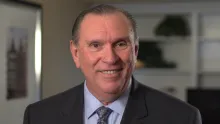
Randy D’Alessandro served as pastor for the United Church of God congregations in Chicago, Illinois, and Beloit, Wisconsin, from 2016-2021. Randy previously served in Raleigh, North Carolina (1984-1989); Cookeville, Tennessee (1989-1993); Parkersburg, West Virginia (1993-1997); Ann Arbor and Detroit, Michigan (1997-2016).
Randy first heard of the church when he was 15 years old and wanted to attend services immediately but was not allowed to by his parents. He quit the high school football and basketball teams in order to properly keep the Sabbath. From the time that Randy first learned of the Holy Days, he kept them at home until he was accepted to Ambassador College in Pasadena, California in 1970.
Randy and his wife, Mary, graduated from Ambassador College with BA degrees in Theology. Randy was ordained an elder in September 1979.
playlist
Related Sermons
When Your "Sighing and Crying" Over the World's Sins Gets You Down?
When Your "Sighing and Crying" Over the World's Sins Gets You Down
