

John Elliott
This transcript was generated by AI and may contain errors. It is provided to assist those who may not be able to listen to the message.
Well, brethren, we've all experienced a very meaningful feast season. When I say festival season, the Passover, Days of Unleavened Bread, Feast of Pentecost, Trumpets, Atonement, Feast of Tabernacles, and that final day have all been very, very inspiring, very meaningful this year. More so in my life than any year that I can remember in the past. After the feast ended, I asked myself, what will help ensure all of God's children to be present for what these festivals portend?
For what they look forward to? For the great Kingdom of God? We don't want to just celebrate them and miss out on them. We don't want to be one that Jesus Christ looks at and said, depart from me. What is it that would help ensure that you and I successfully make it into the Kingdom of God? Jesus said in Matthew 6, 33, But seek first of the Kingdom of God and his righteousness.
That is something he has put in our hearts. He's given us that desire, that goal. And he says all these physical things will be added to you. But do we seek it as primary? And do we seek the Kingdom as primary always? Always. All the time. Or do we sometimes revert back to seeking the physical things? Get diverted, get distracted. The parables that Jesus Christ gives says that we as humans do not seek the Kingdom as primary in our life all the time. And he gave many parables and many warnings because we as humans do get distracted. We become passionate about temporary things or we become involved in the cares of this life. And so many, many, many parables, for instance, the sower and the seed.
The sower comes along and gives us the Holy Spirit. He installs in us this passion and desire for the Kingdom, but what happens? That seed falls on all kinds of soil, doesn't it? Some grows up, some never gets going, and some remains. The question again, how can you and I be sure that we are that seed that endures?
Other parables, the fig tree. Some do not produce fruit. We have to produce fruit. Another parable. Some produce fruit in various amounts, in various degrees. And others will take that which they are given and bury it in a napkin. Ten virgins, half, ran out of oil. They didn't endure to the end. And this is a theme that Jesus Christ brings out in the parables over and over that tells you in me something. Not everybody is going to make it that wants to be in the Kingdom. So again, the question, what will help ensure that God's children successfully inherit the Kingdom of God?
Obviously, we have choices to make. And the conclusion I come to is, he that endures to the end, the same shall be saved. That's what Jesus said towards the end of his life. We must be faithful. We must be committed to our calling. We can't be any of those others that gets distracted and becomes unfaithful and unfruitful. Solomon found something similar in his day to the king many would profess to be loyal and all excited in backing the king. Solomon said in Proverbs 20 and verse 6, Most men will proclaim each his own goodness or greatness.
Each man will proclaim his own greatness and goodness. But who can find a faithful man? That is the burning question. Who will God find that is faithful? Faithful in the long run. Faithful at all times. Fully committed. Today, I'd like to give you a sermon entitled Five Commitments of the Faithful. And here's a guarantee. I believe this guarantee you can make to yourself. If you follow and are committed in all five of these areas, you will be in the kingdom of God.
I think the Bible says that. I think we can be absolutely sure and feel secure in knowing that if we are committed to these five areas, we will be in the kingdom of God. So let's look today and try to impress these five commitments of those who will be faithful and those who will be prepared to be Christ at the resurrection. The first commitment is, be committed to seeking the kingdom of God and His righteousness. At the Feast of Tabernacles, I was counseling one person, and I said, why do you want to be baptized?
And she said, so I can be in the kingdom? Oh, really? Yes, I want to be in the kingdom. I want to be there with God. I said, well, that's very selfish of you. And she thought about that. She said, you're right. That is very selfish. We can get so wrapped up in a carnal way in seeking the kingdom. I want to be in the kingdom. Throw everything else aside. I'm going for the kingdom. And totally miss out, because a person with that mindset won't be in the kingdom of God.
We have to be committed to seeking the kingdom of God and the righteousness of God, which is the love for everyone else. It should be about us in the kingdom. It should be about a great desire for the family of God in that kingdom to envelop all mankind, not just a selfish ambition for an individual. In Matthew chapter 13 and verse 45, Jesus gave a parable. It's one of the shortest parables He gave.
It simply says, the kingdom of heaven is like a merchant seeking beautiful pearls. That's Matthew 13, verse 45. How many of you go around seeking beautiful pearls? Well, not too many. Back in that day, as I understand it, in Palestine, there were no indigenous pearls. Pearls have to come from a special oyster in a special sea, and that doesn't apply to Palestine.
So pearls weren't really part of their culture. Pearls were something unique, something probably rare, something imported, and something that people in their everyday life didn't have access to, not even sure they cared about. But here He gives an example about pearls for some reason. A merchant seeking beautiful pearl, he wanted something that was not available, and yet it's very precious. Verse 46, who when he had found one pearl of great price, went and sold all that he had and bought it.
Now this person was off in a different direction than society. Pearls today don't necessarily mean a whole lot. They're nice to have. But at the same time, in East Africa, people didn't even know what pearls were. And that could be very possible for the average person in Christ's day. They may not even know what a pearl was. Do pearls mean a lot to you? Do pearls mean a lot to me?
Well, in a sense, no. But in a sense, they mean everything to you. Let's go to Revelation 21, verses 9 and 10. 9, 10, 12, and 21. You can just write all those down. Revelation 21, 9, 10, 12, and 21. Then one of the seven angels who had the seven bowls filled with the seven last plagues came to me and talked with me, saying, Come, and I will show you the bride, the lamb's wife.
Now, are you interested? Yeah, because those are the ones who are going into the kingdom of God with Jesus Christ. Those are the ones who are going to reign with Christ. Now it's talking about you and me, isn't it? And He carried me away in the Spirit to a great high mountain, and He showed me the great city, the holy Jerusalem descending out of heaven from God. You're interested in Jerusalem, New Jerusalem? How many of you want to be there?
Yeah. How many of you want to be part of the bride? You bet. There's only one way, and it involves pearls. Okay? Drop down to verse 12. And she, the city of Jerusalem, had a great and high wall with twelve gates. The only way you can get in that city is through a gate. And the twelve gates had angels at the gates. Now, verse 21. The twelve gates were twelve pearls, and each individual gate was of one pearl. The entrance to New Jerusalem, in some way, is a pearl. A great pearl. A pearl of great price. A pearl that is worth selling everything you have.
In other words, setting aside everything you have and seeking something that is very different, very unique. It's the opportunity for all the people of God to go into New Jerusalem, and they can only go through what is referred to as a pearl. There weren't pearls indigenous to Palestine. These pearls, these gates, are not indigenous to our culture, our physical habitation today. It is something unique. It is something different. It's something that we must all seek together, and we must all go through together. We need to be committed to seeking the kingdom in a sense that nothing else gets in the way. No other cares distract us.
Nothing is more valuable to us than helping one another go through the gate of a pearl. The second thing we need to be committed to is to repent and overcome our human nature. If we are committed to repenting on a regular daily basis and getting rid of our human nature, then we are growing in the righteousness of God. Jesus Christ made that part of our daily needs. We've talked about that before in Matthew 6 and the model prayer outline.
We are to be asking for forgiveness of our sins every day. In Revelation 3 and verse 19, Jesus says to His church, "...as many as I love, I rebuke and chasten. Therefore, be zealous and repent." Be zealous and repent. This is not aimed at some bad group of people, somebody who's really blowing it. This is all of God's people whom God loves. He rebukes. He chastens. He corrects. We've got to grow in godliness. We have to grow into the kingdom through the righteousness of God.
And so it requires us to repent of who we are and what we are and to change. Be zealous about it.
So the second point is be committed to repenting. Don't put that as a secondary thing or maybe I will or I'm pretty good. Don't put it as something that's negative. Don't look at it as something with fear. Do it zealously. Do it eagerly. Look forward to it. Don't worry. God's not going to hit you. He's not going to bury you. He's not out to get you. Well, He is out to get you.
He's out to get you in His family. He's out to get you into His kingdom. All you need to do is embrace His mindset and repent of your mindset.
The third point is be committed to the church and your place within it. When you understand what the church is, it's the body of believers. It's the body of Christ. It's the mother of us all. It's the nurturer. It's the provider. It's the protector. Its director is Jesus Christ. He is the head. It has a border in which we are supposed to be inside the body of Christ, not fragmented parts torn and tossed around or independent molecules free-floating. Nowhere to be in the body of Christ. Ephesians 4, verse 11, talks about how He puts things in the body and the places He wants them to be. If you reject the church, in other words, if you reject Jesus Christ, who is the head of the church, if you reject your place within the church, if you reject the fundamental structure and authority of the church, you're rejecting Christ because He is the church.
He's the director of it. He's the head of it. In Revelation 3, verse 16, let's remember what He said, So then because you are lukewarm, and neither cold nor hot, I will vomit you out of my mouth. Now what does that mean? That means you're out of the body of Christ. That's what that means.
He is the body, or the body of Christ is the church, and He will vomit somebody out the mouth. That means you're no longer in the body. That means when you get and say, Lord, Lord, I want to be in the kingdom. He says, depart from Me.
Depart from Me. You're not in the body. You're not of Me. You're not of the church. I never knew you.
So we need to understand what the church is and why the church is there and fulfill our role within the church.
Again, we're placed in the body where Jesus chooses.
Are you doing your role that you've been placed in the body to do?
Luke 12-44, Jesus said in a parable on this topic, Who then is that faithful and wise steward whom his master will make ruler over his household to give them their portion of food and do season? Who is that person, He's asking, who I will appoint in the kingdom of God to be over ten cities or five cities to give them their food and do season, to be the shepherd, to be the teacher, to be the administrator in my kingdom, to make sure that they are fed? Who will I give that responsibility to?
And He answers that in verse 43, Blessed is that servant whom his master will find so doing when he comes.
So doing. So doing what?
So doing what he was put in the body to do.
Being faithful to his place within the body.
Truly, verse 44, I say to you that he will make him ruler over all that he has.
Are you doing your role where you've been placed in the body? Or are you lusting for some other role that you haven't been given or don't want to do the one that you have been given?
Or are you doing the one you've been given well?
This is a point where all of us need to be faithful. It says in Luke 16, verse 10, He who is faithful in what is least is also faithful in much. And that's the principle by which Jesus Christ operates. If I tell you to go pick up sticks and you pick up sticks and do a good job, then I know that if I put you over 10 cities, you'll do a good job. But if you're told to go pick up sticks and say, I don't want to pick up sticks, I want to drive the tractor. So there's nobody picking up sticks. And this guy's trying to knock on the door of the tractor and mess with that guy and hopefully get him sick or get him distracted and get him to teach him how to drive the tractor. No one's picking up the sticks, and now we're interfering with the operations of the tractor.
What do you do?
Fire him.
Fire him.
He who is unjust in what is least is also unjust in much.
You know, he told those who came to the great banquet that he was at the great dinner that he was invited to.
He told them, he said, don't push for the chief seats now. Don't go in and find the best seats.
He's telling us now in this life, don't go in and try to climb and maneuver and find some place that you want within the church or the body or whatever. Don't do that now.
Wait. Go take the least seats. Go sit in the back. Go sit and go face the wall or whatever. You don't have the view. And then when the master of the house comes, perhaps he will invite you to come up to the better seats.
It's just a principle.
Again, the church needs to operate. It needs to do its part. We all have a part. We've all been called to a part.
We have roles within the church. As Paul said, we're not all eyes and not all ears, etc., etc., but the body has many functions and many parts.
And Christ needs us to be faithful in that which He has given us to do, that which we have been asked to do.
The fourth point is, be committed to your vows.
Very important point.
Be committed to your vows.
You might say, what vows?
Let's read in Judges 11, 30-35. Judges 11, 30-35.
Here we find a story, a curious story, of Jephthah.
Judges 11, 30. Jephthah made a vow to the Lord and said, if you will indeed deliver the people of Ammon into my hands, he was leading Israel against these Ammonites, then it will be that whatever comes out of the doors of my house to meet me, when I return in peace from the people of Ammon, shall surely be the Lord's.
It will surely be the Lord's.
Instead of and, you can write, or I will offer it up as a burnt offering.
So it's going to be given to the Lord one way or the other, either in temple service or as a burnt offering or whatever. First thing that comes out, it's God's.
So, Jephthah advanced towards the people of Ammon to fight against them, and the Lord delivered them into his hands. And he defeated them from there to there.
And they were subdued. And in verse 34, When Jephthah came to his house at Mispa, there was his daughter coming out to meet him with timbrels and dancing, and she was his, notice, only child. Besides her, he had neither son nor daughter. This was the problem.
She was going to be dedicated to temple service. She would remain a virgin for the rest of her life. Jephthah would have no descendants. Neither sons, nor daughters.
Nobody.
His lineage ended with that girl.
Now, he could look at this and say, this isn't working out well for me.
I'm not going to have any descendants.
It came to pass when he saw there, he tore his clothes. You begin to see here the problem.
And he said, Alas, my daughter, you have brought me very low, for you are among those who trouble me. For I have given my word to the Lord, and I cannot go back on it.
Notice his statement. He was committed to a vow. Doesn't matter how low I am, I have committed to the Lord, and I cannot go back on my word.
I'd like to read Hebrews 11 and 32 to you.
Hebrews 11 and 32. Here in Hebrews 11 are what we call the righteous ones, those who are waiting for the promises to be fulfilled, so that they will be in the kingdom of God. This is the chapter of the faithful.
It begins with Abraham and goes on. In verse 32 of Hebrews 11, we read this.
And what more shall I say? For the time would fail me to tell of...
Notice these people. Gideon, Barak, Samson, Jephthah, David, Samuel, and the prophets.
Look at the group that Jephthah is listed in, because he would not go back on the word that he gave to God.
Be committed to your vows is very, very important. Who will dwell on God's holy hill?
You've heard before Psalm 15, verse 4.5, He who swears to his own hurt and yet does not change.
He is true to the promise, to the vow, to the commitment that he has made. Now you might say, Well, which vows? I didn't vow any vows. Oh, yes, you did. You may want baptism.
You vowed to God that you would overcome and work on overcoming your human nature and replacing it with God's nature to the day you died.
And we talked to you about counting the cost, remember? That you would never stop that pursuit, no matter what. And if you ever did, that there would be no entrance into the kingdom of God, but certain judgment would wait.
That's a vow.
Another vow you made was in marriage.
You promised certain things in your marriage.
And perhaps you don't remember what those worries are. Oh, I just got married. But, uh-oh, you made a vow.
And you vowed before a minister, and you vowed before family and friends, probably.
You vowed before a justice of a peace. And there were vows, specific vows that you made.
You need to go back and see what were those vows that you made.
Find a copy of it.
Figure it out. Get a copy from whoever. Or go back and read it. If you were baptized... I'm sorry, if you were married within this church, we can provide you with that, most probably.
But be committed to your vows, to the things that you said you would do in your marriage and to your family.
Another vow is the agreements that you made.
You know, a vow doesn't have to be, well, I said I'd do it, but I didn't promise.
You know?
No, if you said you'd do it, that's a vow. A vow doesn't have to be super, super formal. But if God wants to know if you're a person of your word.
You know, if somebody comes up to you and say, tomorrow morning at seven o'clock, will you come over and help me build a fence?
They'd go, yeah, tomorrow morning at seven o'clock, I don't have anything going on. Yeah, I'll come over, I'll wear some old clothes, and we'll build a fence.
All right?
I'll be there.
And you say it like that. Then you have indicated that you will be there, and that person's depending on it.
Now, tomorrow, let's say, tonight, somebody calls up and says, guess what? We're going to Disneyland in California. And it'd be really nice if you came along. We'll pay for your flight, we'll pay for your hotel, we'll be there, you know, all day, Sunday and Monday. And we'll pay for all your accommodations. Just come along and be with us. We want you to be there.
What would you say?
You should say, I'm sorry, I made a promise, and somebody is depending on me to help them with the fence. They cannot hold two pieces of this wood without me.
Or go deal with that issue. But you don't just say, well, I got a better offer.
Found something better to do. Oh, forgot it's quail season.
No?
And move along.
Same with contracts.
Contracts that we sign often are things, yes, I want that and I will sign this contract.
And sometimes you don't even bother reading the fine print. But you have signed your name and it's usually initial to the fine print.
You need to be faithful and committed to whatever it is you said and signed yourself to do. The same goes with loans. It's always easy to get the money. Oh, yeah, yeah, yeah. I'll repay it. I'll pay this much interest. Blah, blah, blah, blah, blah.
But it's very hard to repay loans.
A person shouldn't be uncommitted to promises because people also have extended money to make those loans. They're depending on regular payments. They're depending, even if it's a little thing. Well, it's only a $50 payment. It's only a $20. And he won't miss it. I told him I'd give him $100 a month. He gave me $10,000. He wants $100 a month. Well, you know, it's just $100 a month.
You don't realize that person's depending on $100 a month.
And without that $100 a month, they are short. They're in a bind. There's a problem. There's an issue.
We need to be committed to our vows. And the fifth point is we need to be committed to loving and serving others.
Committed to loving and serving others. Not committed to ourself, selfishness. Committed to an extravagant self-indulged life with increasing and more exciting future focus for the self.
Rather, we need to be committed to loving and serving others.
And that may include a wonderful, involving, and evolving life for yourself. But others need to come along with this, because that's what the Bible says. We are to love our neighbor as ourself.
They're to come along with us in the sense of being loved and served.
In 1 John 3, we'll begin in verse 10.
1 John 3, 10-17. Notice how important and how nailed down this is by the Apostle John at the end of his life.
In this, the children of God and the children of the devil are manifest. This is not a light matter. It's not a topic that's an option.
The children of God here are defined as whoever does not practice righteousness is not of God, nor is he who does not love his brother.
If we really don't love our brethren, if we really don't care about other people, then we're really not children of God, is what he's saying.
For this is the message that you've heard from the beginning, back from Genesis, that we should love one another.
Not as Cain, who was of the wicked, won and murdered his brother. Why did he murder him? Because his works were evil and his brothers were righteous.
Do not marvel, my brethren, if the world hates you.
We know that we have passed or are passing from death to life because we love the brethren. Do we see that? We know that we are heading for the kingdom of God passing to life because of why?
We have the right holy days. We have the right this, the right that.
Because we love the brethren and we love God, too. And those other things are included in that.
He who does not love his brother abides in death.
In verse 16, by this we know love because Christ laid down his life for us. And we also ought to lay down our lives for the brethren. In verse 4, verse 7, the next chapter in verse 7 through 11.
Beloved, let us love one another, for love is of God.
And everyone who loves is born from above. It's engendered from God. You have a new father.
This is the proof that you have a new father.
We're engendered of God and we know God.
He who does not love God does not know God because God is love.
In this the love of God was manifest toward us that God sent his only begotten son into the world that we might live through him.
In this is love, not that we love God, but that he loved us and sent his son to be the perpetuation for our sins.
Beloved, if God so loved us, we also ought to love one another.
So we need to be committed daily, hourly, to loving and serving others.
And if we are, this fifth point, we'll round out the five things that will see us into the kingdom of God. You know, that is the judgment criteria for those who enter the kingdom, is whether they love others.
That's the parable of the sheep and the goats, the king separating the sheep from the goats. The one who loved and served others were the one that were chosen to be in the kingdom.
In Galatians 6, verses 9 and 10, it says, And let us not grow weary while doing good.
Doing good and doing all of these things that I've talked about today can be a weariness if you're really not interested in them. If you really do not care to be committed to seeking the righteousness and the kingdom of God, to repenting of your human nature, to be committed to your place within the church, to be committed to the vows that you make, and to be committed to loving and serving others, you can go weary and say, oh, this is a burden!
But let us not grow weary while doing good, for in due season we shall reap the kingdom if we do not lose heart. Therefore, as we have opportunity, let us do good to all, especially those of the household of faith.
In conclusion, brethren, we are now entering a six-month absence of the annual Holy Days, and yet we have a Holy Day every Sabbath.
And the Sabbath really represents all of those seven annual Holy Days. It wraps up the whole complete picture of the kingdom of God and the process of God in a weekly Holy Day.
What does the fulfillment of this Sabbath day, when the fulfillment comes, what does it portend for you personally, for me personally?
Will it be a time when we are successful in celebrating and entering the kingdom of God? Or will we come up against one of those pearls, as it were, and be denied entrance, because we really don't fit?
Well, the committed will be successful, and that's a choice that we make every day.
I want you to be committed. I want to be more committed. I'm not committed enough.
I hope that you will be inspired through the festival season we have just gone through to be more committed in all five of these areas. I'd like to close with a statement from the Proverbs.
Proverbs 28 and verse 20 simply says, A faithful man will abound with blessings.
For faithful and committed in all of these areas, we will abound with blessings, now and forever.
But he who hastens to be anything but faithful will not go unpunished.
And that really is the summary of the whole Bible. That's the whole summary of the Holy Days. That's the summary of the plan of God, His plan for mankind.
Those who are committed will abound with blessings, and those who hasten off to anything else will not go unpunished.
So let's commit, let's recommit daily to really being the true children of God.
The little children we heard about today, let's be committed to being those who have the mind of Christ. In doing so, you will not only abound now, but also forever.
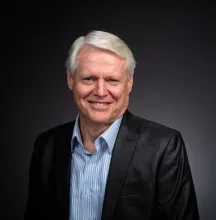
John Elliott serves in the role of President of the United Church of God, an International Association.
