
Jim Tuck
This transcript was generated by AI and may contain errors. It is provided to assist those who may not be able to listen to the message.
Happy Sabbath, everybody! Always good to see you on wonderful Sabbath. I did want to clarify one thing during the announcements. It is a senior study. What we're doing is inviting everybody else as well, so we just want to make sure that you realize you don't have to be a senior to come to the Bible study. So it is a senior study. I guess we had a miscommunication, Mr. McKeon and I.
In preparation for this sermon, I was thinking last night when it was I started praying.
The event that really changed my whole life, really, in a lot of ways. I've mentioned this to you before about how my younger brother, he was five years of age. This was back in the 60s. My younger brother was diagnosed with a brain tumor. Doctors had said he was going to die, basically. Anyway, that was the time I was 11 years old. It was back before the time of John F. Kennedy's assassination. I was 11 years of age, and I started praying. I began to pray every single night before I go to bed. That was my introduction to prayer. Nobody told me how to pray. Nobody said, this is how you do it. I just started talking to God. I don't know if I even addressed it to Jesus Christ for that matter. I was just talking to whoever was up there that could hear the prayer. I really do believe that God did hear the prayer. It was sincere. It was from my heart, but I typically would pray for quite a long time, in fact, before I would go to sleep at night. But that's how I began to pray in my life. I was thinking it's been 56 years ago that that began. You know, brother, one of the greatest tools that Christian has is prayer. That is the biggest tool that you have in your toolbox. Imagine that we can have, brethren, direct access to God to the Father in heaven and Jesus Christ. We can have that direct access to Him, and we can talk to them. Prayer, brethren, gives us access to power, great power. It gives us access to strength, brethren, to allow us to live our lives in a godly kind of way. Sometimes we struggle for the strength to do what we know we have to do or should do as Christians in our lives. You know, it's like I was mentioning to Mr. Knutson coming in. I was reflecting last night on what it says in the model prayer that we should pray that the will of God be done on earth as it is in heaven. But imagine the angels, you know, have a set character, and they never sin. They never think about setting. It is not a part of their nature. It's not a part of their character. And one day, you and I will have that kind of character that we will never sin again. We will never even have a thought of doing that.
But you know, the important thing is that we learn in this lifetime how to pray.
And the Apostle Paul admonishes us to pray without ceasing, to be consistent in our prayers, to be constant in our prayers, to be talking to God in our lives every day. And you know, in the example of David, he prayed three times in a day. And I would imagine here in this audience that there are some of you that have that as a practice in your life, just like King David did.
But you know, sometimes when we pray, if we're really honest with ourselves, when we begin to really labor in our prayers, you ever feel like that somehow you're doing this prayer, and all you're hearing is your own voice if you're praying aloud, and it kind of reverberates in the room, and it sort of bounces off the ceiling, comes right back to you? And it doesn't make it to God. We feel somehow that God is so ethereal, He's so far away, and out of touch that He doesn't hear what we're saying. And it's like our prayers are bouncing off the ceiling, and they're not making it to heaven where God is. Sometimes it seems that way, and I think all of us have probably been down that road, and we felt that way about our prayers, that they just are not doing what we would like them to do. You know, when Jesus Christ was training the apostles, though, He knew that they would really have a hard time with prayer. He knew that that would be something that would be difficult. You know, God knows, of course, all things, and Jesus Christ was aware that this was not going to be an easy thing for His disciples. And that is why, you know, Christ taught them in His earthly ministry of three and a half years, He taught them how to pray. You know, He wanted to be aware of how to do that. You know, we are firstfruits, all of us here, you know, that God is called, and we're headed toward the time when we're going to be a part of the very family of God. We're going to be the first to enter on in to the family of God. And don't you think as firstfruits we should have mastered a prayer in our lives? We should know how to communicate with our God in heaven. We should know how to talk to Him and reach Him at any time. Please turn with me, if you would, to Luke chapter 18. Like I said, Jesus taught His disciples how to pray. And young people, you're going to receive, and I'm sure you've already heard many sermons on this topic in the church. It is one of those topics that is timeless, that is important, always important, for us and our spiritual development and growth. But take note that you are praying properly, that you know what to do. And of course, there's much else we could say about it other than what this sermon is going to talk about. But in Luke chapter 18, let's begin in verse 1 here. And it says, He spoke a parable to them, He was talking again to the disciples, that men always ought to pray and not lose heart. Has that happened to you? Have you started praying and you lost heart? You fainted, you began to let down in terms of your prayer life. But Jesus spoke these words for the very reason that sometimes we do that. We give up. We throw in the towel with prayer, which we should not do. We've got to be careful again about having that kind of an attitude of giving up. Saying there was a certain city, in a certain city, a judge who did not fear God nor regard man. He was, you might say, just a rough and tumble kind of judge. And he really didn't care about anybody's thought. He was the one that was making the decisions and he would do basically what he wanted to do. In verse 3, it says, Now there was a widow of that city, and she came to him, saying, Get justice for me from my adversary. And he would not for a while, but afterward he said within himself, Though I do not fear God, nor regard man, yet because this widow, maybe she was about two feet tall, and weighed like a banny rooster, and it says, Because this widow troubles me, I will avenge her, lest her continual coming she weary me. She wears me out.
You know, that has happened, of course, to all of us at one time or another.
Maybe whether the paying of a bill, pretty soon when you get badgered by somebody, you finally say, Well, just here, take the money. You know, if maybe you owe somebody something.
Then the Lord said, Hear what the unjust judge said, and shall not God avenge his own elect, who cry out day and night to him, though he bears long with him.
You know, God is on his throne, and we know he's not too busy to listen to us. He does hear us, but he's going to avenge as well if we cry out to him, and we're consistent and continual of crying out to him. Why do you think God sent Moses to rescue Israel?
He had all those people complaining to God. And so Moses was sent to be a part of the rescue effort of the children of Israel. Then the Lord said, Hear what the unjust judge said, and shall not God avenge his own elect, who cry day and night, though he bears long with him. So it may take a while for God to answer sometimes, but we've got to be consistent. But he said, I tell you that he will avenge them speedily, a whole lot faster than that unjust judge.
Nevertheless, when the Son of Man comes, will he really find faith on earth? Now, I've read this verse many, many times and gone over it. And we, of course, read this verse. It says, When the Son of Man comes, will he find faith? But have we read it in the context of what it was said? What is the context here? Prayer, right? In other words, when Jesus Christ comes back will he find you and me praying? Or will we give up like everybody else in the world, you know, who doesn't have that stick to it ofness and apply themselves? He could have said it another way. When the Messiah returns, will he find his servants praying? Because faith and prayer go together. Faith and prayer go together. We stop praying because we lose faith in God. We give up because we lose confidence and trust in God. And so that is a key and fundamental thing for us to remember that we continually are praying to God, talking to God. So, brother, how can we make our prayers go beyond the ceiling? I want to cover with you in the remainder of the time here for this sermon, Five Keys to Effective Prayer. You want to get, again, beyond the ceiling, these are fundamental primary keys of effective prayer. You know, the first question, the first question any of us needs to do when we are wondering about why our prayers maybe are not getting through, is 1 John 3 verse 22.
Because there, John says, whatever we ask, whatsoever we ask, we receive of him because we keep his commandments. And the last part here, I think, is very, very key to what we're talking about and do those things that are pleasing in his sight. So the first thing we need to ask ourselves is, are our prayers pleasing in the sight of God? Remember, in the case of Cain and Abel, Abel brought an offering to God, and God wholeheartedly accepted his offering. Very happy with what Abel presented to him there, as they presented at the entrance way to the Garden of Eden. Now Cain, on the other hand, brought his offering, and God did not have respect for his offering. Do you know prayer is like an offering to God? It's akin to making an offering to God. And does that offering a prayer, you know, that we offer to God, is it a Cain-like prayer? Or is it an Abel prayer that's going to be pleasing in the sight of God? You know, God hears us and he blesses us accordingly as we do those things which please him. Are we obedient to what God has commanded us to do? Another part of what that verse tells us to do? Are we doing what God is instructing us to do? Are we walking in the ways of God? You know, God is like any parent. You know, I know when I was growing up and my parents were not greatly religious people. You know, they believed in God. I don't mean to imply they did not, but they were not church-going type people. But if I had a wrong attitude and I asked something for my parents, they weren't in the church, they wouldn't give it to me if I had a wrong attitude. And God is like a parent. He's the same way. If we go and ask him for something and we have a wrong attitude, he's not going to give us an answer to that prayer in the affirmative. And so God is a good parent. He's not going to reward disobedience. In Proverbs 20, in verse 9, I'll quote it to you. You don't need to turn there. You might want to write it down.
But it does say over there, one who turns away his ear from hearing the law.
Just doesn't want to hear anything about the law. Doesn't want to hear about the commandments and the statutes and the judgment. It says here, it says, even his prayer is an abomination to God. So when somebody is just turning their back on the law of God, and that's many people in our society who claim to be Christians, claim to be, you know, and of course they say, born again Christians, and yet, you know, they don't obey the law of God. But what does that say again about what God thinks about the prayers of those who turn their back on the law of God? You know, they teach for commandments, the traditions of human beings, things that come out of people's heads.
So rather, again, in that primary question we need to ask ourselves, when we pray, do we pray in a way, brethren, that's pleasing to God? So we're going to cover again five primary keys to effective prayer so that our prayers are pleasing to God. That God wants to hear from us. He's going to answer the prayers when we offer them up to Him as well. I want to preface what I'm about to say about those five keys with this. When you and I are called, all of us understand it's a covenantal relationship that we have with God.
You know how covenant works? God says, if you do such and such, I will do such and such. There's a reciprocity in it. You know, God is not on the other end, He's just, give, give, give, give.
God says, yes, I will give, but what are you going to give? What are you going to do? How are you going to reciprocate in terms of your life? God doesn't ask a lot from us. Most of us don't have a lot, do we? We don't have enough money to take care of much other than ourselves, most of us.
Of course, do the things we do in terms of offerings and that sort of thing, tithing and whatnot. We do not offer God an awful lot. The thing we have to offer is maybe our blood, sweat, and tears. You know, our lives as a sacrifice, a human sacrifice, which is a lot to God to give. But it's a covenantal relationship. You know, when Jesus Christ said, whatever you ask, I will give to you, it's based on that covenant, based on the promise that you made and I made when I got baptized, that God, I will obey you. I will do what you tell me to do. Please take my life. It's yours. I've messed my life up. I want to put it in your hands. I'm going to surrender to Jesus Christ. I want to surrender to you, Father, and begin to walk in your way. And God says, okay, since you put it that way, if you will do the things that you have told me in this covenant that you want to make with me, that I will give you whatever you ask. But we need one important caveat to hear. I mean, if you have a relationship with somebody, a covenantal relationship with them, and they make this with you because they know you, you know, they're making, in other words, a contractual relationship here, based on your character. And then God knows you're not going to ask of him something he cannot give you.
You know, if you wanted to say a highway built from LA to Hawaii, like, he's not going to do that, you know. I'd give that to you. He's not going to give you, you know, Lamborghini. And I don't think I remember when I started praying. I don't think I ever asked for anything like that. I probably did ask for some pretty stupid things, but, you know, I don't remember. I didn't even know if I knew what a Lamborghini was. It might have been a candy bar, as far as I was concerned. But anyway. So before we talk about these keys, let's get that clear that we are entering into a covenant relationship with God, and God expects reciprocity from us. But key number one, let's talk about this.
Prayer must be made with faith.
You want an answer? You want the prayer to go to the very throne of God? Prayer must be asked. It must be said in faith. Belief must come from the innermost being with conviction, if we expect an answer to come. In other words, we're not just mouthing words to God and expecting something's going to happen. So the kind of asking we're talking about is a person that has a need, a real need.
It's like if you just ate a big breakfast this morning and you came to somebody about food, you probably don't need to eat lunch. Probably most of us could skip the lunch. But if a man has been starving for three days, you see, now that man has deep conviction. He needs food, right? And so when we go to God about a need, brethren, it's from within. We're asking for this.
It's like with my little brother, it was from within. Because I thought, you know, back then, back in the early 60s, I was going to lose my brother. I am thankful, by the way, he lived as long as he did. He died, you know, in fact, last fall, right after the Feast of Tabernacles. But God gave them all those years of his life. He had a tough life.
But when I asked, it was from within. It's like you, when you have somebody you're praying about or something you're praying about, it's come from here. That you really truly need it. You really truly desire it and want it. So prayer must be made with faith and conviction. Let's go to Hebrews 11. I think this is a fundamental scripture that we should have in our minds always when we're thinking about what we're praying about.
But it says, but without faith, without faith, it's impossible to please him. Impossible to please God. So we ask, you know, are our prayers pleasing God? Unless we have the faith, you know, it's impossible to please God. You know, do we want to get on our knees? Do we want to say, God, I know I'm asking you for this. I know you're not going to give it to me, but, you know, well, if that's the case, then why are you asking?
We have to have conviction. We have to have faith. But it says, for he who comes to God must believe that he is. Again, we need to believe God is indeed there on his throne in heaven, and that he is a rewarder of those who diligently seek him. That's another part of that verse you could really underline, that he's a rewarder. You want to hear from God? He rewards those who are diligently seeking him, who've decided, look, I am tired of living my life the way I live it.
I want to live it the way God wants me to live it, and I want to do it diligently. This is the kind of conviction, by the way, that causes a man or a woman to stop breaking the Sabbath and begin to observe the Sabbath in a right and proper manner.
And being able to stand up and say to an employer, look, I can't work on the Sabbath. I'm sorry. Trust God that God's going to take care of you, that God is going to watch after you. You know, if we please God, brethren, if we have faith in Him, because it shows we really believe He is, you know, we aren't talking to Him like we're beating the thin air, so to speak, but we pray with conviction that God will do it. God will do it. And we believe that God does reward those, again, who diligently seek Him. And we're striving to do that in our lives, to walk according to the will of God and to do what God commands us to do.
Let's go to Matthew 21 over here. Matthew chapter 21. I know that, brethren, one thing all of us need to do, even if we've been praying, you know, for 50 years or 70 years, however long we've been praying, is we need to reconvict ourselves, as it were, and make sure we're doubling our efforts to have that contact, that necessary contact with God. But Matthew chapter 21, and let's go down to verse 18 here, it says, Now in the morning, as He returned to the city, He was hungry, and seeing a fig tree by the road, He came to it, and found nothing on it but leaves, and said to it, Let no fruit grow on you ever again.
And immediately the the fig tree wither away. It must, you know, happen, apparently, very quickly here. And when the disciples saw it, they marveled, saying, How did the fig tree wither away so soon? So Jesus answered and said to them, Assurely I say to you, If you have faith, and do not doubt, you will not only do what was done to the fig tree, but also, if you say to this mountain, Be removed, and be cast in the sea, it will be done. And whatever things you ask in prayer, believing you will receive. We have to believe again, brethren. Anything is possible through prayer with faith and belief in God. Again, as I mentioned before, in the preface, it's a covenantal relationship we have with God. This kind of belief in faith involves believing, regardless of what you see. Regardless of what enters your mind, you put it out, you believe. You believe with all of your being, in other words, in this. Faith, as we're told, is the substance of things hoped for in the evidence of things not seen. Faith and belief is evidence that God gives to us, though we can't see it now. Faith is that evidence. Somehow, brethren, we need to mature to understand this, to make it a part of our lives, to believe God. I think some of these sayings that we're talking about come with experience.
It's important that all of us as firstfruits have experience, and God does allow us to have certain experiences. And by the way, I'm not standing up here as a paragon of perfection in regard to that. I need more experience myself to grow in these things.
But God will give us that experience to believe Him, to put our faith in Him. I remember when I was again in the hospital. I wouldn't do that again in a million years. I wouldn't want to do it again in a million years. But I'll tell you one thing. I got to the point at a particular juncture of my hospital stay when I was told I had different things that I was battling with. I think I mentioned you colon cancer and some other stuff that didn't really look very promising.
But after God rescued me from that, I understand this experience.
And I wondered then, why didn't I have more faith that God was going to do this? I've known a long time that sometimes when we ask for things for God to do for us, that He brings us to a cliffhanger. He's always a cliffhanger. And by that, I mean it seems like it's the very last moment when we think all is lost. And then God says, okay, I guess you've learned enough. And in Erescosis, He comes to the rescue. God wants us to have faith and belief in Him. And maybe that's sometimes why He brings it up to this climax. And when you wonder, is it too late? It seems that way sometimes in our lives. Let's go to James chapter 1. So God wants to give us, brethren, the very best. He just does want to give us the very best in our lives. Over here in the first chapter of James, the Apostle James in verse 5, we'll go down to verse 8, it says, if any of you lacks wisdom, anybody here lack wisdom? I do. I wish I had more wisdom. Okay. But here he says, if any man lacks wisdom, let him ask of God, who gives to all men liberally and without reproach, and it will be given to him. What a promise here. You want to have wisdom about what you do? God says, just ask, and God will just give it to you liberally. The only problem is sometimes when we come to a particular juncture where we have to make a decision, sometimes we don't even think we need any advice on it. And we don't have wisdom to know that we need some advice. We need some help. We need some wisdom. Sometimes we, again, don't think the way we should on some of those things. Council can really have safety. We can't have safety for us. And we seek out counsel going on here, but let him ask in faith. There's that word again, faith. With no doubting, no doubting. For he who doubts is like the wave of the sea, driven and tossed by the wind. He's kind of wishy-washy. You know, he's sloshing here and there.
And it says going on, verse 7, and let not that man suppose that he will receive anything from the Lord. He's a double-minded man, unstable in all of his ways. Have you ever thought about your own life in that way? Am I unstable in every way because I have doubts?
Well, you know, maybe it does give us a window into our own character that's not strong enough.
It's not, you know, resilient enough and stable enough. And I suppose you might say, if there's a little instability in it, like if we have one of these chairs down here and you said it and it sort of wobble back and forth, you know, you've got to make it somehow things level. And if there's one area of our life where we maybe got a leg that's shorter than the other, somehow that leg has to be made level. And so that part of us needs to be stable. Every part of us needs to be stable. And if it's not, then we're unstable in all of our ways. So again, think about that. You know, we need to again mature as first fruits to grow in our relationship with God. So we begin to see things from his point of view. We need to focus, brethren, our attention on God and what he can and will do if we pray. Faith comes by completely surrendering, brethren, to Jesus Christ and trusting and obeying God's Word. And you know, we, of course, study God's Word on a continual basis so that we can find answers. Sometimes the answers are right here in the book.
Sometimes the Bible says, my people are destroyed for a lack of knowledge. They don't know. And we need to again have our noses in the book more than we do. You know, Paul said in Romans 10 verse 17 that faith comes by hearing and hearing by the Word of God. So what we're talking about here is, again, the Word of God and what the Word of God says. And we receive it into our heads and our minds, either by the preaching of the Word, which again comes from the Bible, or the studying of the Scriptures ourselves, sometimes pouring over the Scriptures, knowing what is right and what is wrong in the Bible.
But faith comes by what we hear, and what we hear comes from the Word of God.
And of course, it determines what we are going to believe. What do we actually believe of what we hear? I mean, truly believe. What do we really with confidence have as a part and want to have as a part of our life and our character? So again, primary thing number one is prayer must be made with faith. Number two, prayer must be given with a humble, contrite heart and attitude. You have to have a humble and contrite attitude. Once again, this is what pleases God.
Clearly in the Scriptures it says this to us, if we're approaching God in prayer, apparently Abel was of that mentality. God accepted again his offering.
You know, King David wrote this long ago. It says, James wrote this, God resists the proud, but he gives grace to the humble.
So again, if we're going to give an offering like Abel that's going to be acceptable to God, then we're going to have to have a humble attitude in approaching God. We're not, you know, cocky when we go before God, trying to tell God, you will do this. You know, God doesn't have to do anything he doesn't want to do. You know, I think for us to go to God constantly about something is all we need to do with a right and a proper attitude about ourselves. If we wish, though, to have the ear of God and be shown his tremendous mercy, brethren, then our prayers have to be sincerely expressed with humility. The Bible specifically says that God has called the weak and the base things of the world. I don't think anybody hears royalty, as far as I know. I don't think anybody has a princely title. Nobody's a baron here.
If you are, you don't know it, I'm sure. I think all of us are probably related to some king somewhere, although I think I'm related to a horse, horse thief down the line, you know, somewhere in another. Maybe you're like me in that way, but God called the weak and the base things of the world. But you know why he did it? To confound the mighty! To confound the great! Those that think they are all that, you know, God has called us. Someday, they'll know your name in this world that we live in, but they will not know the name of Bill Gates.
They will not know the name of Jeff Bezos or whatever his name is. You know, these people that, of course, have a lot of money in this world today, they won't know Donald Trump for that matter in that time that is coming, or any of the other political leaders. You know, they'll say, you know, I know such is such who's a part of the family of God, but who is Donald Trump? You know, these, of course, are important in our world today, but then they won't be in the King of God.
You know, God has called us, brethren, to confound the mighty.
Remember the parable that Jesus Christ spoke about the Pharisee and the tax collector and how how the Pharisee said, you know, God, I am just grateful I'm not like all these other, you know, plebes that are out here. I fast, you know, twice in the week. I give tithes of everything I have. I'm just so thankful I'm not like some of these old poor people out here and disgusting people like this tax collector over here.
The tax collector's attitude was he, you know, smote his breast and he realized he was nothing that God had no earthly reason to even hear him for what he was doing. And what did Jesus say about the two? He said, I tell you that that publican went down to his house justified rather than the Pharisee because his attitude was right. God wants us to have that kind of attitude, brethren, and to be humble because it pleases him. Over in Isaiah 66, you know, God sits on top of the world on his throne, brethren, out of heaven. He looks down at us and we are just, you know, a bunch of insects by appearance as he looks down from his throne. But notice it says, heaven is my throne, Isaiah 66, verse 1, and the earth is my footstool.
Where is the house that you will build me? And where is the place of my rest?
For all those things my hand is made, and all those things exist, says the Eternal. But on this one, I will look on him who is poor and of a contrite spirit and who trembles at my word.
That's who I pay attention to. That's who God is looking to come before him and pray to him.
And say, Father, I've tried to do what you commanded me to do, and I pray for your blessings now with what I'm about to ask you. You know, we could pray a prayer like that. We could say, also, God, I know I'm not deserving of your help. But if you just hear what I have to say, and you know you are consistent with this, you go to God, you believe he's going to do it for you, it's just a matter of time of, you know, God granting your petition. If it's a right petition you're making, then he will hear that prayer. And let me promise you, brethren, that he hears every prayer that you pray, every one. When Jesus prayed, he prayed a prayer aloud at the time of the resurrection of Lazarus. It was for the purpose of those who were nearby to hear.
But he said, God, I know you, the Father hears all of my prayers. And God hears your prayers, brethren. If we're doing those things that are pleasing in his sight, he hears every last one.
He knows even how many times you've asked about these things.
If he knows the number of hairs on your head, you know, then he knows how many times you've asked for something, even. God knows, brethren, these things. So God is looking to that person as humble before him.
Point number three.
A very fundamental, again, primary key here to answered prayer and making sure those prayers are ascending to God is pray according to the will of God. You know, God is not going to give anything to us, brethren, that isn't according to his will. He won't give us what will harm us any more than you as a parent would give your own kids something that would harm them.
You're just not going to do it. Let's go over to 1 John, verse 5. 1 John, chapter 5, over here. 1 John, chapter 5, and down to verse 14 and 15. Just a couple of verses here we'll read.
It says, now this is the confidence that we have in him, that if we ask anything according to his will, he hears us. He hears us. And if we know that he hears us, whatever we ask, we know that we have the petitions that we've asked of him. God is going to answer those prayers. When we ask for something of God, though we need to ask ourselves the question, how does this fit into God's will for me, for the person I'm asking this for? How does it fit into God's will? Why are you asking about it? God knows all things. But sometimes, brethren, even in our own lives, we don't even grasp the impact of things we ask for. We may not understand what we're asking. What we're asking for sometimes might not even be good for us when we think it is.
You know, sometimes we might want to be delivered from a trial, for instance. But if trials are difficult, show me where in the Bible, brethren, it says that God will deliver you out of them quickly. Show me. God will make a way of escape, but He doesn't say when, does He?
How would you like to have been Shadrach, Meshach, in a bit ago?
You know, did God intervene for them quickly?
Weren't they thrown in the fire? They were thrown in the fire. They put their confidence and their faith in God. You remember that Nebuchadnezzar leaned forward, and he saw four in there, and he called them forth, and he called them the servants of the Most High.
It caused Nebuchadnezzar to think differently. And when these three young men came out of the fire, what was even remarkable is that their clothes were not burned. Even the hair on their head was not sent. There was not even the smell of spoke on these boys when they came out.
So sometimes when we think, well, you know, God's going to take me out of this trial, and it's getting pretty rough here, it's really bad for me. God, can you hear me up there?
You know, it could be the last moment here. Well, brethren, we might be thrown in the fire, but God will pull us out if that's His will to do. And, you know, Shadrach, Meshach, and Abednego said, well, it doesn't really matter. If God does not deliver us, we're not going to bow down to this isle. It's the bottom line for it. So keep that in mind, brethren, about trials and being asking God to deliver us from a trial. You know, we can't know completely God's plan and what it might be for us, but we can know this. Whatever God allows us to go through is in our best interest.
It's for us. It could be for somebody else to, as a witness to them, like in the case of Shadrach, Meshach, and Abednego, you know, and then that Deppekitezor saw something that convinced him of something was very important at the time. And so, you know, God may do it for somebody else, but ultimately it will be in your best interest. You know what? God knows how to bring you into His kingdom. He knows how. We don't know that fully ourselves how to do that. God knows how to give you salvation. He knows how to bring you to the point where He's going to give you eternal life. And all of us can be, again, in His wonderful kingdom. He knows these things, brethren. Oftentimes we think entirely too much on the physical things. You know, we're concerned about paying the next bill. We're concerned about putting food on the table. But frankly, brethren, if we do our part and we're diligent about obeying God, if we seek first the kingdom of God and His righteousness, what did Christ say? All of these things will be added to you. We don't have to think about the physical things. If we're doing our part, we're working hard, and the blessings are not coming, then continue to work hard. Keep praying about it. Keep thinking about what you're doing if something's not succeeding. But realize God will take care of those things ultimately if you don't let down in pursuing the kingdom of God and seeking that first. Don't give up on God's promises that He's made to us, brethren. I assure you, and I've never seen anybody, and I'm sure that there's men here like Mr. Zimmerman and Mr. Stryber and other elders here could tell you the very same thing. I've never seen anybody that God has not ultimately taken care of. I dare say we have one hungry person here in this room.
And all of us live like kings compared to people I've seen in Africa.
Frankly, we live better than a lot of people I've seen in the world, for that matter. But God has really taken care of His people and has been there for us. Over in James 4 and verse 3, there's a scripture that tells us why sometimes people again don't get an answer to their prayer. But in James 4 and verse 3, it says, you ask and do not receive, because you ask amiss that you may spend it on your pleasures.
You know, it's important for us again to realize that God wants us to keep in mind what He's trying to do for us. He's called us to bring us into His kingdom. It pleases God to bless us in our lives, and He's done tremendously with that. I think if we had not learned about tithing, all of us here, none of us probably would have or many of us would never have traveled as much as we have. You know, how many of us prior to coming into the church, I know myself, I probably had not been out of the state of Oklahoma for quite some time myself, although we moved from Arkansas to Missouri to Oklahoma, but that was basically our travel experience. You know, my travel experience up until probably 1973. You know, I hadn't been to New York. I had not been into even Chicago or any of those cities like that. Not that it's really a big deal one way or another. I had not been outside the country. There was not even a thought in my mind. But God has been very, He's blessed us in so many ways, and I talk to so many of you here who have had experiences in different parts of the world. But you wouldn't have it if you didn't obey God. God knows what He's doing, brethren, with His people. He knows what He's doing. He's training us for the future.
If we can be big-minded enough to realize that one day we're going to be kings upon the earth under Jesus Christ in the world tomorrow. We can see, as we used to say many years ago, the big picture of what God is doing for us. You know, we're going to have a fabulous future ahead, but we need to learn again as firstfruits to pray according to the will of God. Key number four. Another very important one, and I'll just take a few moments on this particular point here, is we have to have a grateful attitude for what God does for us.
You know, it's interesting to me that when I see people sometimes who have a lot—I'm talking about financially and physically—in their lives, oftentimes I find that those people are the least grateful. Affluence really does affect us. It causes us to not have the kind of thankfulness and gratefulness that we should have as Christians. But God has been very good to us, brethren. But I think in the Western world, we've been spoiled to a large degree.
We're like—and, you know, sometimes we've been accused of being the ugly Americans, you know, when we go traveling abroad. You know, imagine that when you go abroad—I remember when I was in Thailand, and I was eating Burger King, by the way. I was eating Burger King, by the way, in Thailand. Of course, I didn't want to get some of the parasites and things that sometimes you can get. But I was talking to someone there in Thailand, and they were saying, you're from America. And they said, yes, I am. And they basically—the first thing they said is, you're very wealthy. I said, no, no, you've got the wrong—I'm eating a Burger King here. But, you know, I think I've understood that a little bit better, because, you know, of course, their income, I think, at that time was like $200 a month, you know, average in Thailand.
Then my wife and I went to Malawi, and we visited the brethren in Blantyre and spent time with them there. And we asked the pastor in Blantyre, because we were thinking of taking them out to a nice restaurant. You know, we're these rich Americans, you know, from the United States. We're going to take them out to a nice place. I said, what would be the nicest place that would be good to go out to dinner? And they said, Kentucky Fried Chicken. And I said, well, what would it cost to eat the Kentucky Fried Chicken? And they said, $30. Okay, you might think I'm a little funny here, but the family I was asking had, I think they had five or six in their group, and then my wife and I. And we were in Malawi on a shoestring budget. I had to tell them, I'm sorry, we can't afford to eat it. We couldn't even afford to eat a Kentucky Fried Chicken ourselves. So we ended up eating, you know, at the place where my wife and I were staying. But again, things are different. If you're abroad, you know, you're rich. You could eat it, Kentucky Fried Chicken. Now, I haven't been to a Kentucky Fried Chicken place in a long time, and they may be overpriced here. I don't know. And I don't take people out to Kentucky Fried over here. But anyway, maybe we should, you know, because it might be a delicacy, you know, that they would really enjoy. But, you know, we, again, don't appreciate. We're not grateful, brethren, for what God has given to us here in the United States and other Western world countries. Over at Philippians 4. Philippians 4. Let's notice this one verse here in connection with this particular point of importance of having a grateful attitude in our prayers, where Paul is mentioning over here in Philippians 4 and verse 6.
It says, Be anxious for nothing, but in everything by prayer and supplication with thanksgiving, let your request be known to God. Be thankful for everything that you have been able to avail yourself in your life. If we're not thankful for what God has already done for us, why would he answer another prayer for us? You know, we have so much, brethren, to be thankful for.
Are you grateful for the creation that we have out here? I mean, that we take it, you know, our eyes gander at every single day. The mountains and, you know, the... we look at, of course, at the beautiful beaches and the lovely trees and the tremendous, brilliant, you know, starlit nights that we can enjoy. All of these things God made so our eyes can feast on them, as it were. Are we thankful for God's creation? The food we eat, every good and perfect gift that comes down from God, the Father of lights who has no variableness or shadow of turning. Are we appreciative that the fact is God called us out of this world into the church? Are we thankful to be here? We have gratitude for what God has done for us with that. Are we thankful for the sacrifice of Jesus Christ? Are we thankful for what Jesus did for us so we could be here?
Are we thankful for Him as our High Priest who could be touched by what we go through? And He has experience with that. Are we thankful for His tremendous, again, sacrifice? Do we appreciate the fact that God has given us life itself to experience all the feelings, all the emotions that life allows us to be a part of? Are we thankful for our families?
Are we thankful for our husbands and wives and our children, our brothers and our sisters, and our aunts and uncles, our family? Are we thankful for them, brethren?
You want to make up a list of be thankful? It would be a long list with it.
And it could go on and on, the things you could be thankful for. You know, you could spend a half hour just thanking God. Make a list of things that you could thank Him for. You could be appreciative of the fact that you were able to get up this morning and you were able to be here.
And point number five, brethren, point number five, we must offer an importuding prayer to be effective. Like that importuding widow. She just kept coming back again, again, and again. You don't give up. You keep going to God.
Let's go to Luke 11 over here. Luke 11.
Again, Jesus Christ teaching us, brethren, about these very important things. He taught His disciples, He instructed them, even as we're being instructed now by His words that were spoken nearly 2,000 years ago. But think about this, brethren. If it's important enough to go to God about something, it's important enough to pray until it's answered. You agree?
If it's important to go to God about something, it's important enough to pray until the prayer is answered. You know, if someone needs healing, and they still need healing, you keep praying until it's answered. Somebody needs a job. You keep praying until it's answered. Someone needs a mate. You keep praying until it's answered. Or they need to be called. Or someone needs wisdom, or needs faith. You know, Jesus Christ said that we are to do this. We are to be importunity about it. But here in Luke 11 and verse 5 down to verse 10, we'll go there. But it says, But whatever house you enter, first say, Peace to the house. Oh, I'm sorry. I'm in chapter 10 here. I know that didn't look right. But it says, And he said to them, Which of you shall have a friend, and go to him at midnight, and say to him, Friend, lend me three loaves. For a friend of mine has come to me on his journey, and I have nothing to set before him. And he will answer from within and say, You know, do not trouble me. The doors now shut, and my children are with me, and, bad, I can't rise and give to you. I say, You, though he will not rise and give to him, because he is his friend, yet because of his persistence, he will rise and give him as many as he needs. So I say to you, ask, and it shall be given to you. Seek, and you shall find. Knock, and it shall be open to you. For whoever asks, here's the simple answer that Christ gave about this. Whoever asks receives, and he who finds, it says, And he who knocks, it will be open. And so that's what God says to us. If we ask, it will be given. If you knock, it's going to be open.
But again, if it's according to the will of God, and it's important enough to ask, you keep asking until the answer is given. You know, brethren, it is such a great blessing to talk with God. Imagine just to kneel down and talk to the Father in heaven. That God lets us do that. The very Master, the very God of the entire universe.
And, brethren, as we grow and understand God expects us to mature in how we come before Him in prayer. He answers us if we pray in a way that pleases Him. If we do that, brethren, it's not going to bounce off the ceiling and reverberate in the place where you're praying, brethren, but it's going to ascend to God as a sweet-smelling incense.
So let Jesus Christ, brethren, find faith in you. When the Son of Man comes, let Him find you and me, brethren, praying until the very end that we can be there. And Christ says, All right, then. No, I did find those that were praying with faith until the very conclusion of it all.
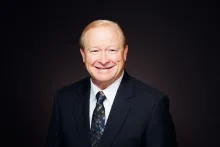
Jim has been in the ministry over 40 years serving fifteen congregations. He and his wife, Joan, started their service to God's church in Pennsylvania in 1974. Both are graduates of Ambassador University. Over the years they served other churches in Alabama, Idaho, Oregon, Arizona, California, and currently serve the Phoenix congregations in Arizona, as well as the Hawaii Islands. He has had the opportunity to speak in a number of congregations in international areas of the world. They have traveled to Zambia and Malawi to conduct leadership seminars In addition, they enjoy working with the youth of the church and have served in youth camps for many years.
