

Roy Holladay
This transcript was generated by AI and may contain errors. It is provided to assist those who may not be able to listen to the message.
God had an interesting discussion with Job, the Patriarch. It's recorded in Job 38. If you'll go there in verse 1, we'll begin Job 38 in verse 1. If you'll remember the story of Job, God pointed Job out to Satan. Satan was allowed to afflict him. His three friends came along, tormented him, accused him of everything. Finally, God steps in to set the record straight. We read in verse 1, The Lord answered Job out of the whirlwind and said, Who is this who darkens counsel by words without knowledge? Now prepare yourself like a man, and I will question you, and you shall answer me. Where were you when I laid the foundations of the earth? Tell me if you have understanding. Who determined its measurements? Surely you know. Or who stretched the line upon it? To what were its foundations passing? Or who laid its cornerstone when the morning stars sang together and all the sons of God shouted for joy?
Now the reason I read this passage is because we discovered that the earth has a foundation. And God asked Job, Okay, you're so smart. You tell me. When was it laid? How was it laid? Can you measure it? Do you even know where it is? And of course we realize that the earth is a ball out here, hung in space, and it rotates around the sun, moon around the earth, and it's in an orbit, and yet it's held there.
So God established a principle in creation, as we see, that any structure that is built has to have a foundation. There is a foundation that holds it. The Hebrew really means an establishment or to establish or a fixing. That it's fixed. And you can apply that to the orbit or to whatever.
The earth has been here, possibly for millions of years, and the foundation stands fast. So it shows that if God establishes a foundation, builds it, it will last. And yet there's another principle that we find in the Bible that the Bible clearly teaches, and that is, the physical will not endure. The physical doesn't remain forever. Buildings constructed by men eventually crumble and fall, do they not?
Houses that were built 500 years ago, there are very few of them left around. A thousand years ago, five thousand, what if we went on for a hundred thousand years? How many houses that were constructed today would still be standing? Well, they would not. The physical is only temporary. We understand that. We're temporary. We're physical.
Trees are temporary. Anything that grows in the physical realm is only temporary. Even though God laid the foundation of the earth, it, the earth, will not endure. Let's go over to 2 Peter 3, 2 Peter 3, and verse 10. The day of the Lord will come as a thief in the night, in which the heavens will pass away with a great noise, and the elements will melt with fervent heat. Both the earth and the works that are in it will be burned up. So the earth, as we know it today, will melt and will be burnt up. Therefore, since all these things will be dissolved, what manner a person ought you to be in holy conduct and godliness? In looking for and hastening the coming of the day of God because of which the heavens will be dissolved, being on fire, and the elements will melt with fervent heat. Nevertheless, we, according to His promise, look for what? Well, a new heaven and a new earth in which righteousness dwells. And so the family of God is going to dwell in the new heavens and the new earth forever. Now, God doesn't dwell presently in the physical realm. He dwells in a different dimension, does He not? You don't see God, but yet He has a throne. We know that God has built and is in the process of building a new Jerusalem, and yet you don't see that floating around in space somewhere. It's around. So this new heaven and new earth may exist in a different realm. I mean, it's not my point to go off into that. But we read of that in Revelation 21 and 22. The Bible clearly reveals that the physical is not permanent. You and I are not permanent. We die. The physical runs down, and it eventually crumbles. In Hebrews 12, back up here a few pages, verse 25, Hebrews 12 and verse 25, we see this principle. It says, See, you do not refuse him who speaks. For if they did not escape who refused him who spoke on earth, much more shall we not escape if we turn away from him who speaks from heaven, whose voice then shook the earth. See, God came down on Mount Sinai, gave the Ten Commandments, and God's voice shook the earth. But now He is promised, saying, Yet once more I shake not only the earth, but also heaven. Now this, yet once more, indicates the removal of those things that are being shaken. As the things that are made, that the things which cannot be shaken, shall remain. So the physical can be shaken, it will not remain. But there will be something that will remain, that will be permanent, that will endure. And what is that? Well, notice verse 28.
So the kingdom of God is a spiritual family that God is developing, that you and I can be born into at the resurrection, the family of God. Now when you think about a proper foundation, you find that a proper foundation to a building or to any structure does at least three things. Number one, it gives stability. If you don't have a proper foundation under your house, the walls crack, it crumbles, it begins to fall. Number two, it gives longevity. The stronger the foundation, the longer the superstructure can last. And thirdly, it's a platform on which to build and to grow. You look at a building like the Empire State Building or some of the huge tall buildings, and you'll find that there are pillars that are sunk, sometimes hundreds of feet. And there's almost as much under the ground sometimes as above because of the stability factor that it gives.
Only the spiritual is going to continue to grow forever and to develop.
Our spiritual foundation is important for our spiritual stability.
I've been talking about physical foundations, but there is a spiritual foundation on which all of us are to build, should be building.
And it gives us spiritual stability, spiritual strength. It also gives us longevity. The Bible says, He who endures to the end shall be saved. Not He who is a flash in the pan. He comes along very quickly, but He who remains faithful to the end.
And a proper spiritual foundation is a platform on which we grow, from which we develop and mature.
Why do so many people not remain faithful to their calling? We've all seen this over the years.
I reiterated for you on one time in announcements the historical sequence of events that have occurred in the Church, and how we lost around 3,000 back in 1974 with the associated churches.
Over the years, we've had hundreds of people leave. In fact, we've estimated we've had at least one-third—this was before 1995—up to that time, at least a third of the people in the Church had left.
We bring them in the front door, they were going out the back door. And yet, in 1995, we know that over half the people did not remain faithful.
In order to be faithful, to have the spiritual stability and longevity, we must build on the proper foundation.
And the question is, what is that foundation that we build on?
In 1 Corinthians 3, we find Paul very clearly telling us what that foundation is.
We'll begin in 1 Corinthians 3, verse 5. If you'll notice in verse 5, you'll find a problem they had back then, is the same type of problem that we have today in the Church.
Paul asks the question, Who then is Paul? Who is Apollos, but ministers through whom you believed, as the Lord gave to each one?
I planted, Apollos watered, but God is the one who gave the increase.
Now, we all understand that. You can take a seed. You can take that seed in the ground.
Now, if it gets sunlight, it's watered, receives proper nutrients, within just a few days, there's a plant that pops up and it begins to grow.
And it will continue to grow, and then it will produce fruit.
Now, does it do that because you gave the seed the ability to produce the fruit?
No, there's something built into that seed. It has the DNAs of the plant.
There's something you plant that thing, and it's a seed. It could be a kernel of corn, or it could be a bean. And yet, there's a plant that grows. And yet, at the end of that growth period, there's fruit that's born that looked like the seed, in many cases.
And so, consequently, you find it's God who created that process. It is God who gives the increase.
Now, we can come along and help you. And just like a farmer waters, plants, hoes, pulls weeds, the sun's out there, it is what's created in that seed that produces spiritual growth, or produces growth physically and spiritually.
When God implants the seed of the Holy Spirit within us, He is implanting His very nature, His mind, His characteristics within us.
Now, we, we in the ministry, come along. We try to help. We try to water you. We give sermons. We try to counsel with you.
In all of this, we all do the same thing on an individual level. But it's God who is responsible for the increase. It is God who gives the growth. God is the one who helps us to mature.
Now, He goes on to say, He who plants and He who waters are one, and each one will receive his own reward according to his own labor. We're God's fellow workers. You are God's field. You are God's building.
Now, what I find today is that too many people are following a man instead of following the one who has given us his Spirit instead of following Jesus Christ.
It's nice to have a minister as a friend, and I'm not knocking that. I certainly hope that everyone feels that way about their church pastor.
But too many people are looking to an individual, not to God, not to Jesus Christ as the head of the church. Notice, verses 10 and 11, he states this, verse 10, According to the grace of God which was given to me as a wise master builder, I've laid the foundation, and another builds on it.
But let each one take heed how he builds on it. For no other foundation can anyone lay than that which is laid, which is Jesus Christ.
So Jesus Christ is the foundation. There's no other foundation that we build on.
If we try to build our spiritual life, our character, on any other foundation, it will not endure.
So this is the spiritual foundation we build on.
And in verse 12, now if anyone build on this foundation, see here's where our responsibilities come in. We have to build on the foundation.
So if anyone builds on that foundation, gold, silver, precious, stone, wood, hay, stubble, each one's work will become clear, for the day will declare it.
Because it will be revealed by fire, and the fire will test everyone's work of what sort it is.
And, brethren, we are all being tested constantly. Are we not? We're being put to the test to see if we will remain faithful.
Now, we're going through a test right now to see if we will be faithful. We've gone through this test on many different occasions.
Gold, silver, precious, stone, if you have that type of character, those endure the fire. Those will not be burnt up.
Wood, hay, stubble thrown into the fire become fodder for the fire. It just is burnt up.
So, you and I have to make sure that our superstructure is proper.
And we've been told here that our work will be tested by fire. So, there's no question about that. None of us will get into the kingdom of God until God absolutely knows that we will remain faithful.
If God doesn't know that we will remain faithful for all eternity to His way, His law, His way of life, we won't be in the kingdom.
As verse 15 says, if anyone's work is burned, He will suffer loss, but He Himself will be saved, yet as through fire.
So, we'll have to go through the tribulation.
Now, in verse 16, very important, do you not know that you are the temple of God and the Spirit of God dwells in you?
You might remember in the Old Testament, when God built the Tabernacle and later on the temple, that the glory of God came down and filled the structure.
It was a dwelling place for God among Israel. God said that I might walk among them, but it was His dwelling place.
Where is God's dwelling place on earth today? It is in His temple, His church.
And so, He says, don't you know that you're the temple of God, the Spirit of God dwells in you?
If anyone defiles the temple of God, in other words, the church, God will destroy him, for the temple of God is holy, which temple you are.
So, God gives a warning here. God is building a temple.
Quite frankly, over the years, many have not laid the proper foundation. They've followed a man, or they've been converted to knowledge, to understanding, been converted to prophecy.
I've seen a lot of people could argue prophecy with you all day long, argue technicalities, they developed their own little pet doctrines.
And argue it, but they're not building on a sure foundation.
When you and I were baptized, we acknowledged that we could not save ourselves, did we not?
For the very reason you were baptized, you realized you could not forgive your own sins. You needed a Savior.
So, when you were taken under the water, your sins were all forgiven, hands laid on you. You acknowledged that you needed additional power, strength. You couldn't do it on your own. So, God gives you the Holy Spirit.
So, we acknowledge Jesus Christ as our Savior at that time.
And one of the questions we ask when we baptize a person, if you accepted Jesus Christ as your Savior, now you're supposed to say yes.
And then we say, have you repented of your sins? And you're supposed to say yes.
Then we say, as a result of your repentance of your sins, which are the transgression of God's law, and your acceptance of Jesus Christ as your personal Savior, your high priest, your Lord and Master and soon-coming King, I now baptize you.
And so, we all acknowledge that Christ is our Savior. We acknowledge that He died for our sins, so that our sins could be forgiven.
And then, through the laying on of hands, we acknowledge that He lives in us, because we're not saved by His death.
We're saved by His life, by Him living in us.
And so, the power of the Holy Spirit that we grow, that we accomplish anything.
So, we have to look to Christ.
Ephesians 2 may have leaped to your mind when I started talking about foundations.
So, let's turn there. Ephesians 2, verse 19.
You'll find Paul writing here to a church that had you in Gentile, but basically Gentile, he acknowledges something.
Verse 19. Now therefore, you are no longer strangers and foreigners.
They had been strangers and foreigners from the Commonwealth of Israel.
He says, but you are fellow citizens with the saints and members of the household of God.
So, whether you're Jew or Gentile, we all become a member of the household, the family of God.
Having been built on the foundation of the apostles and prophets.
Now, here we find the apostles and prophets. They're the ones who wrote the Bible, the Scriptures.
God inspired those Scriptures. They're God-breathed.
And so therefore, part of the foundation is the Word of God.
This is what we use to build our lives on.
But notice, Jesus Christ is, though, the chief cornerstone.
He's the main corner.
In whom the whole building, being fitted together, grows into a holy temple in the Lord.
So, we are a temple.
We grow. And we're not dead stones. We're living stones.
In whom you also, being built together for a dwelling place of God in the Spirit.
So, the church, the temple, the building, the household that God is building, is being built.
So that God can dwell with us.
Brethren, God is with us. He dwells in us. And He guides and He directs us.
Any building, again, depends upon the foundation.
And here we find no other foundation can we lay than Jesus Christ.
We find the apostles and prophets are part of the foundation because they've written the Scriptures.
Now, how is Jesus Christ the true foundation?
If I were to ask you, how do you explain that Christ is a foundation? What does that mean?
How do we relate to that?
Turn over to chapter 5 in Ephesians.
Chapter 5, beginning in verse 22.
And we read here in verse 22, Wives submit to your own husbands as to the Lord.
For as the husband is the head of the wife, for the husband is the head of the wife, as also Christ is the head of the church, and He is the Savior of the body. Therefore, just as the church is subject to Christ, so let the wives be to their own husbands in everything.
So how is Jesus Christ the true foundation of the church?
Well, there are several ways, but number one, He is the head of the church.
He directs the church. He guides the church. He's the one that we look to. He's the sure foundation.
See, if somebody goes off from the church, it's not Christ's fault.
It's the faulty building process on our part. Because He's sure. He never changes.
Hebrews 13, 7 and 8, you might remember, Jesus Christ is the same yesterday, the same today, and the same forever. He doesn't change. We change. We're the ones that have to make sure that we stick with the foundation, that we follow the head, so to speak.
Also, one of the jobs that Jesus Christ has, and one of the ways He's the true foundation, is He is responsible for constructing the church, building the church. His job is to build and to develop the membership to help us develop character. You might remember in Matthew 16, verse 18. Matthew 16, verse 18.
Christ stated this to Peter. He said, I say to you that you are Peter, and on this rock, the word Peter in the Greek is petros, a little pebble. On this rock is petra, a huge crag of rock. On this rock, referring to Himself. I will build my church in the gates of hell, or Hades, shall not prevail against it. So He promises that the church would not die out. So He is the one who is responsible for building the church. We look forward to Him. Let's go back to 2 Corinthians, chapter 5. We look forward to a time here in the future.
2 Corinthians, chapter 5, beginning in verse 1. When we will have a spiritual body, and Jesus Christ's responsibility as head of the church, is to bring you from a person who is carnal in this world, to become converted, to receive His Spirit, and then to grow in grace and knowledge and understanding and character, to one day you can be in His kingdom.
So verse 1 says, For we know that if our earthly house, talking about this body, this tent is destroyed, we have a building from God, a house not made with hands, eternal in the heavens. So we have a spiritual body. For in this we have grown earnestly, desiring to be clothed with our habitation, which is from heaven. So in the resurrection, that spiritual body will be given to us. So we desire. How many times do you wake up and say, Boy, I wish I were Spirit. I wouldn't have the aches and the pains, I wouldn't have to get tired, and all of the problems wouldn't have to depend on eating all the time.
We can all think what it would be like to be a Spirit being in the family of God. And this is what He's saying here. If indeed, having been clothed, we shall not be found naked. For we who are in this tent, in this physical body, groan, being burdened, not because we want to become unclothed, not because we want to just die, but further clothed, that mortality might be swallowed up by life.
What do we read in 1 Corinthians 15? This mortal will put on immortality. And so we realize that one day we will have a Spirit body. Now, he who has prepared us for this very thing is God, who also has given us the Spirit as a guarantee. So you and I have as a down payment a guarantee the Spirit of God, and that's a guarantee that God will give us a Spirit body. So we are also confident, knowing that while we're at home in the body, we're absent from the Lord.
For we walk by faith and not by sight. Now, I think that's a very important scripture. If we're going to have this Spirit body be clothed with it in the resurrection, we have to walk by faith today. And part of that faith is trusting in God to lead us, to guide us, to stay close to Him. So Jesus Christ is that rock. He's responsible for building the church. And as Christ said on this rock, He would build His church on Himself. So He's the one that we have to build on. And then in Hebrews 12 and verse 2, it sort of summarizes it.
You find that Jesus Christ is the author, the beginner, and the finisher of our faith. Chapter 12, verse 2. Looking unto Jesus, it says here, the author and finisher of our faith, who for the joy that was set before Him endured the cross, despised the shame, is set down at the right hand of the throne of God. And then we're told, consider Him, who endured such hostility from sinners, against Himself lest you become weary and discouraged in your soul.
For you have not yet resisted to bloodshed, striving against sin. And said, have you forgotten the exhortation? You're about not despising, you're being chastened. And then it goes on to discuss that. Christ begins the process in us. He ends the process. So God has delegated Him that responsibility. And if we're going to be in His kingdom, we have to build, look to Him as our director. Now let's notice a prophecy in the Old Testament back in Genesis 49, verse 24. Genesis, chapter 49, verse 24. Interesting prophecy here, talking about Joseph and the blessings. If you remember, Genesis 49 lists the twelve tribes of Israel, and what was going to happen to them in the end times, and the blessings that would come upon them.
And we read in verse 24, But his bow remained in strength, talking about Joseph, and his arms of his hands were made strong. How? In other words, here we've risen to prominence, dominance as a nation, the United States, British Commonwealth of Nations. How was that possible? Well, by the hands of the mighty God of Jacob, He says, From there is the shepherd, the stone of Israel.
Now, the shepherd, and you'll notice this shepherd is also called the stone of Israel. Notice how the NIV 1984 edition translates this. But his bow remained steady, his arm, or strong arm, stayed limber, because of the hand of the mighty one of Jacob, because of the shepherd, the rock of Israel. So, it ties that last expression in with the mighty God, shepherd, and rock of Israel. We as a nation, as a people, have remained in power because of the help and the assistance of the rock of Israel, because He has helped us. When we as a nation started, the United States started, we acknowledged God as our provider. We acknowledged God as a blesser of our nation. We acknowledged that our nation was going to be constructed on the fundamental laws, what they would call back at that time, nature's law. But, you know, the spiritual laws of God. All the early leaders of this nation acknowledged God as a source of strength and power. Now, many of you may have this particular book, recommended at the feast a couple of years ago, a miracle that changed the world, the 5,000 year leap. And if you don't, I would suggest that whenever you're at a bookstore, go ahead and buy it. It goes through some of the, I think, about 28 principles that this nation was founded upon. The fourth principle in here, and I wish I could read the whole chapter because there are so many quotes out of this chapter, that deals that without religion, government of free people cannot be maintained. Let me read this. It says, Americans of the 20th century often fail to realize the supreme importance which the founding fathers originally attached to the role of religion in the structure of the unique civilization which they hoped would emerge as the first free people in modern times. Many Americans also fail to realize that the founders felt the role of religion would be as important in our days as it was in theirs. In 1787, the very year the Constitution was written and approved by Congress, the same Congress passed the famous Northwest Ordinance. In it, they emphasized the essential need to teach religion and morality in the schools. Here is the way they said it. Article 3, quote, Religion, morality, and knowledge being necessary to good government and the happiness of mankind, schools and the means of education shall forever be encouraged. So they stated that religion, morality, and knowledge should be a part of education forever. Now we come along today and you can't even mention the name of God in school. You can't bring a Bible to school. No, you can bring the Koran to school. You can talk about Buddhism, Islam, Shintoism, Confuciusism, whatever. You just can't talk about Christianity in our nation. Notice what George Washington had to say. The position set forth in the Northwest Ordinance was re-emphasized by President George Washington in his farewell address. Of all of the dispositions and habits which lead to political prosperity, religion and morality are indispensable supports. And let us with caution indulge the supposition that morality can be maintained without religion. He said, you can't have morality without religion. Now people today claim to be moral, but they don't want to be religious. Reason and experience both forbid us to expect that national morality can prevail to the exclusion of religious principles. It is substantially true that virtue or morality is a necessary spring of popular government. Without it, you're not going to have a government that will endure.
Now it's been said that Benjamin Franklin did not have anything to do with religion. Several of the founders have left us with the description of the basic religious beliefs. And Benjamin Franklin, some nation or some rights, those that he felt, were the fundamental foundational principles in all sound religion. Here is my creed. This is what Benjamin Franklin said.
And we'll be tested with justice in another life, respecting its conduct in these. These I take to be fundamental points of all sound religion. Without these, you don't have a sound religion. So you find that our country started out this way, but notice where we are today. We have completely strayed as a nation from these fundamental principles, and we're getting further and further away. Now why do I mention this? Well, let's go back to 2 Samuel 23. 2 Samuel 23, beginning in verse 1. And you'll notice what David said. Here's the last words of David. It says, These are the last words of David. Thus says David, the son of Jesse. Thus says the man raised up on high, the anointed of God, the God of Jacob, and the sweet psalmist of Israel. The Spirit of the Lord spoke by me, and His word was in or on my tongue. The God of Israel said, The Rock of Israel. So notice the God of Israel is likewise the Rock of Israel. Spoke to me, He who rules over men must be just ruling in the fear of God. He shall be like the light of the morning when the sun rises. And then he goes on to talk a little more about that.
We have survived as a nation because of the Rock of Israel, because of the God of Israel, because of the mighty arm and strength and power that God has given to us, because of God's protection and blessing. Not because we are a superior people or a greater people, but because of the blessings and the promise to Abraham that God has fulfilled.
The history of Israel, ancient Israel, teaches us a lesson. That when we rely on our own ability and talents, our own ideas, we will ultimately fail. In ancient Israel, history is like a broken record. They obeyed God, God blessed them, they disobeyed, they went into captivity. Sent a prophet, raised them up, they repented, they were prosperous for a while, they reverted back, and it was just like a broken record over and over again. The only true foundation that ancient Israel was built upon was God, the Rock. And anytime they relied on that rock, they were blessed. The same thing is true of our nation. While we relied upon God and looked to Him, we were blessed.
And, brethren, the same principle is true for the Church. The spiritual Israel of God today. When we rest on the rock, we are blessed. Our foundation is sure we will have stability, we will have longevity, we will last. Let's notice in Isaiah 8, several scriptures in the Old Testament that deal with God being the rock. And yet, there are prophecies, and these prophecies are quoted several times in the New Testament, as we will see. In Isaiah 8, beginning in verse 11, it says, So if we fear God, trust God, rely upon Him, He then becomes our sanctuary that we can go into.
But a stone of stumbling and a rock of offense. So those who do not look to Him, He becomes a stone of stumbling and a rock of offense, to both the house of Israel and a trap and a snare to the inhabitants of Jerusalem. Now, in Psalm 118, going back here to Psalm 118, verse 22, we find another scripture that goes right along with this.
And we find both of these quoted in the New Testament, and many times they are linked together. So in verse 22, it says, This is the day the Lord has made, and we will rejoice and be glad in it. So that stone that people rejected has become the chief cornerstone. So what did we read back in Ephesians 2, verse 20? That Jesus Christ, apostles and prophets, are part of the foundation. Jesus Christ Himself being the chief cornerstone.
Okay, where did He get that? Well, He got it out of the Old Testament here. And the Bible very clearly says that. So the leaders in both the Old Testament Israel and the New Testament Israel, when Jesus Christ came to the earth as God in the flesh, rejected Him as their rock, as the one that they depended upon and they trusted Him.
Yet for us, He's become the chief cornerstone, the one that we rely upon. Now notice how these prophecies form the basis of a number of prophecies in the New Testament. Matthew 21, let's notice to begin here. Matthew 21, beginning in verse 33. Chapter 21, verse 33. It says here another parable. There was a certain landowner who planted a vineyard, set a hedge around it, dug a winepress in it, built a tower, and when he had leased it to vine dressers, he went into a far country.
Verse 34. Now when the vintage time drew near, he sent his servants to the vine dressers, that they might receive its fruit. These men had been working, they'd been paid. You know, he was due the fruit. And the vine dressers took his servants, beat one, killed one, stoned another. He sent other servants more than the first, and they did likewise to them. Then last of all, he sent his son to them, saying, They will respect my son. But when the vine dressers saw the son, they said among themselves, This is the heir, come, let us kill him. Seize his inheritance. So they took him, cast him out of the vineyard, and killed him.
Therefore, when the owner of the vine vineyard comes, what will he do to those vine dressers? Well, they said to him, He will destroy those wicked men miserably, and lease their vineyards to other vine dressers, who will render to him the fruit of their seasons. Now, they didn't realize they were indicting themselves, did they? Because all through the Old Testament period, God had sent his prophets, his servants. They killed them, they stoned them, they beat them, some were sown asunder, as Isaiah had to flee into the mountains and the caves.
Christ came and they killed him. So, verse 42, Jesus said to them, Have you never read in the Scriptures the stone which the builders rejected has become the chief cornerstone. So, they rejected him as the Savior, they rejected Christ. This was the Lord's doing, and it is marvelous in our eyes. Therefore, I say to you, the kingdom of God will be taken from you, and given to a nation, bearing the fruits of it, would be given to spiritual Israel, and God was going to open up salvation to all nations, to the Gentiles also.
Whoever falls on this stone will be broken, but on whom ever it falls, it will grind them to powder, God says. So, you discover here that you and I, verse 43, must bear fruit. God is looking for those who will bear fruit, and we must be converted and built on that foundation. Now, in 1 Peter 2, we find this principle and this description here about the stone, taken even a little further.
1 Peter 2, beginning in verse 4. Verse 4 says, Coming to him as to a living stone, rejected indeed by men, but chosen by God and precious. You also as living stones. So, you and I are living stones. Christ is alive. We are alive. As living stones are being built up a spiritual house, a holy priesthood, to offer up spiritual sacrifices acceptable to God through Jesus Christ. Therefore, it is also contained in the Scriptures. Behold, I lay on Zion, a chief cornerstone, elect and precious. He who believes on him will by no means be put to shame.
Therefore, to you who believe, he is precious. But to those who are disobedient, the stone which the builders rejected has become the chief cornerstone. And it also has become a stone of stumbling and a stone of offense. They stumble, being disobedient to the word to which they were also called. And so, you and I, as verse 10 says, who are not a people, now are the people of God.
So, he is a foundation. He is a living stone. We build upon him, and we were called to offer up spiritual sacrifices to God. Turn back here to Hebrews 13 and verse 8, just a couple of pages back in my Bible, Hebrews 13.8. And we find Jesus Christ is the same yesterday, today, and forever. Do not be carried about with various and strange doctrine, for it is good that the heart be established by grace, not with foods which have not profited those who have been occupied with them. For we have an altar from which those who serve the tabernacle have no right to eat. You see, we are the spiritual priesthood of God today.
For the bodies of those animals whose blood is brought into the sanctuary by the high priest for sin are burned outside the camp. Therefore, Jesus also, that he might sanctify the people with his own blood, suffered outside the gate. Therefore, let us come forth to him outside the camp, bearing his reproach. For here we have no continuing city, but we seek one to come. Therefore, by him let us continually offer the sacrifice of praise.
So what kind of sacrifices are we to give today? Well, number one, we're to constantly be praising God, acknowledging God in our lives, thanking him for what he's done for us. That is, the fruit of our lips, giving thanks to his name. But do not forget to do good and to share, for which such sacrifices God is well pleased. So doing good, sharing, giving to others is something that's a sacrifice for which God is well pleased. So you and I are to be established, as we read back here in verse 9. We are to be established in our hearts, in what we know and believe.
Now, in Matthew chapter 7, in verse 24, we come to a scripture that all of this applies to. Matthew chapter 7, in verse 24. Therefore Christ says, whoever hears these sayings of mine, so you hear what the Bible says, you hear the principles of the Scriptures, whoever hears these sayings of mine and does them, he's a doer, I will liken him to a wise man who built his house on the rock.
So who is the rock? The rock of Israel. The chief cornerstone is Jesus Christ. The rains descended, the floods came, the trials, the tests that we go through, everything that we're confronted with, we're faced with. It doesn't say we're not faced with them, but when they come, the winds blew, beat on the house, it did not fall. Why? Because it was founded on the rock, that's why. But everyone who hears these sayings of mine and does not do them.
So it's not a matter of being a hearer. Yeah, I agree with it. Or arguing, you've got to be a doer. Well, be like a foolish man who built his house on the sand. Or as Luke said, built his house on the ground. The rain descends, the floods came, the winds blew, beat on that house, and it fell, and great was its fall. So what we discover here is that you and I build a strong foundation through the Word of God and prayer.
If we hear, we must do. Now, over a period of time, we can hear the Word of God, and we begin to forget certain basic principles. God says, I hate certain things, one of those being division. People seem to forget what God says. So we build on that foundation. Ephesians 4, you might remember, talks about, we have to come to the point where we're not blown about with every wind of doctrine.
We are to be solid in what we believe. Our values, our principles that we believe in, must be sunk deeply in the Word of God. So no matter what comes along, somebody comes along, and they say, you don't have to keep the Sabbath. Our roots should be so strong that we laugh at them. We know which day we ought to keep. We know that we ought to keep the Ten Commandments. We know what the values and the principles of God are.
And just like a tree that has roots, or a building that has foundation, we're built on these words. That's where the Word of God, the apostles, and the prophets come in as part of the foundation, because the Word, Christ, the stone, inspired them to write these words.
These are the principles that He wants us to build our lives on. Many of you will remember, years ago at Ambassador College, there was written on Ambassador Hall, one of the stones. The Word of God is the foundation of knowledge. Didn't say it's all knowledge, but the Word of God is the foundation. We have a plaque in front of the home office today on a stone. I think very appropriate. It says, the Word of God is the foundation of knowledge.
And the same thing is mentioned there. Why is it some people seem to have their faith shaken almost immediately when something occurs? Mr. Herbert Armstrong died. Several left the church. Why? They looked to the man. They were told, and some of them thought, well, he could never die. That's 1986. This is 19...what? Well, it's not 19 we know, but I mean, you have 86, 96. That's 10 years. 2006, that's 20. Here we're in 2011. So 25 years plus have come along, and after Mr. Armstrong has died. We have members leave the church and say, I will never trust a man again. And how many in 1995 said, I'll never trust a minister again.
And therefore, are sitting at home somewhere, and in some small group, because, quote-unquote, they said they didn't trust a man. When somebody makes a statement like that, what are they saying? They're saying, I look to a man. A man disappointed me, therefore, I don't trust any man. Well, the Bible states, trust no man.
Now Paul said, follow me as I follow Christ, did he not? So if you see me following Christ, as long as I'm following Christ, he said, you follow me. The moment I don't, you don't follow me. And I think the Bible is very clear on that. We realize that potentially every human being could go astray. So we have to build on what? On the sure Word of God known Jesus Christ. See, that's our foundation. This is what we build our lives on. And we need to know what we believe. You see, I've seen people for years study the Bible, attend the Feast of Tabernacles, come to Sabbath services. They got a video back in 1994 in December, and in a two and a half hour sermon in a video. They completely gave everything up. I had to ask myself the question, how deeply did they really believe it? How strong were they? How far were their roots? How strong was that foundation? Obviously, something was wrong. They had never really proved it. So where is our foundation? Where are our roots? Well, let's notice 2 Timothy, one last scripture here. 2 Timothy 2, beginning in verse 14. 2 Timothy 2 and verse 14. Remind them of these things, he says, charging them before the Lord not to strive about words to no profit to the ruin of the hearers. 3 Be diligent to present yourselves, approve to God, a worker who does not need to be ashamed, rightly divining the word of truth. So you and I are to rightly understand the Scriptures. 4 But shun profane and idle babbling, for they will increase to more ungodliness. 5 And their message will spread like cancer, Hymenus and Phylatus, or this sort. So the apostle Paul wasn't afraid to just name people who were leading people astray. Notice verse 18.
Depart from iniquity, depart from sin, from doing what is right. So the solid foundation here is God knows those who are His, those who have His Spirit, those who are striving to obey Him. Our God is in charge, as we heard in the sermonette, that you and I worship the living God, the Maker of heaven and earth. We look to Him, not to man. He's the living God. His way, His principles, will continue forever. He can give us eternal life, immortality, and we can live forever. Physical will not endure. So we've got to be grounded, brethren, in the Word of God. We have to be grounded in the fundamental values. And even if we never had another Bible in our lives, we would know how to live. We know how to conduct our lives. We would have these principles so ingrained in us. What does the Bible talk about in Hebrews 8 and Hebrews 10? That the law of God would be written in our hearts, in our minds, so it becomes a part of us. So there is only one foundation to build on, to stand on, and that is Jesus Christ.
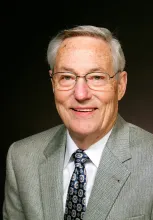
At the time of his retirement in 2016, Roy Holladay was serving the Operation Manager for Ministerial and Member Services of the United Church of God. Mr. and Mrs. Holladay have served in Pittsburgh, Akron, Toledo, Wheeling, Charleston, Uniontown, San Antonio, Austin, Corpus Christi, Uvalde, the Rio Grand Valley, Richmond, Norfolk, Arlington, Hinsdale, Chicago North, St. Petersburg, New Port Richey, Fort Myers, Miami, West Palm Beach, Big Sandy, Texarkana, Chattanooga and Rome congregations.
Roy Holladay was instrumental in the founding of the United Church of God, serving on the transitional board and later on the Council of Elders for nine years (acting as chairman for four-plus years). Mr. Holladay was the United Church of God president for three years (May 2002-July 2005). Over the years he was an instructor at Ambassador Bible College and was a festival coordinator for nine years.
