
Randy Urwiller
Is salvation a one-time transaction or a journey to be walked? Looking at the "Once Saved, Always Saved" doctrine and the life of David—a man after God's own heart who fell, repented, and kept going—this message explores why repentance is the foundation of a transformed life. Salvation is the starting line, not the finish, and godliness is a skill set to be developed.
The doctrine commonly known as Once saved, always saved—formally called eternal security or perseverance of the saints—holds that once a person genuinely puts their faith in Christ, that salvation can't be lost. It's held mainly by Baptists and Reformed/Presbyterian traditions.
The core logic is simple: salvation is God's free gift, not something earned. So the reasoning goes, "If you didn't earn it by good behavior, you can't lose it by bad behavior." The believer's security rests on God's faithfulness, not their own performance. They also point to the Holy Spirit as a permanent "seal" or guarantee.
What it's not supposed to mean is a license to sin. Advocates argue true salvation includes a changed heart—"if it didn't alter you, it didn't save you." When someone abandons the faith, they explain it two ways: either the person was never truly saved to begin with, or they're temporarily "backsliding" and will eventually be drawn back.
Worth noting: this is not a universal Christian belief. Catholics, Eastern Orthodox, Methodists, Wesleyans, and Pentecostals reject it, holding that a person can use their free will to walk away and forfeit salvation.
So, even within the "once saved, always saved" framework, most proponents insist genuine salvation produces transformation—it doesn't excuse passivity or neglect. Salvation, however one understands its security, is the starting line, not the finish. Godliness is a skill set to be developed, not a transaction to be filed away. So, whether or not the doctrine is believed, all agree, transformation is key. So, what does a transformed life actually require of us?
Salvation is a process. It has a beginning and an end. It’s a vehicle in the development or creation of godliness. Solomon may have stated godliness the most succinctly in the last verses of Ecclesiastes.
Ecc 12:13 Let us hear the conclusion of the whole matter: Fear God and keep His commandments, For this is man's all.
Ecc 12:14 For God will bring every work into judgment, Including every secret thing, Whether good or evil.
Fear God, keep His commandments, because God pays attention to everything we think and do.
A HUGE feature of fearing God and keeping His commandments is REPENTANCE. Not only is it the only gateway to conversion, it is required in this salvation journey. Without ever having it, we are never transitioned into the family of God as begotten children, and if we do repent and make that transition, without it going forward, we are lost forever.
David is my example of repentance, today, though we could pick others, even people who weren’t converted, who had a sincere change of perspective.
Saul rejected -- David selected.
1Sa 13:14 But now your kingdom shall not continue. The LORD has sought for Himself a man after His own heart, and the LORD has commanded him to be commander over His people, because you have not kept what the LORD commanded you."
Act 13:22 And when He had removed him, He raised up for them David as king, to whom also He gave testimony and said, 'I HAVE FOUND DAVID THE SON OF JESSE, A MAN AFTER MY OWN HEART, WHO WILL DO ALL MY WILL.'
Out of the heart the mouth speaks (Luke 6:45)—and you could add, out of the heart the hands and feet act. David, a man after God's own heart and the designated future king over Israel in Christ's kingdom (Ezekiel 37:24), gives us one of the clearest pictures of the value of true repentance.
David, Bathsheba, Uriah – tell story
David, fully gifted with the Holy Spirit as the down payment on salvation, temporarily traded godliness for adultery and murder. Breaking any one of God's Ten Commandments is egregious sin and corrupts the value of the whole Law—the Sabbath included—but we humans can naturally understand especially when families are shattered and life is unjustly taken.
David. Messed. Up. Big Time.
The prophet, Nathan, removed the blinders from his eyes by God’s direction, and, suddenly, David saw himself for what he had done.
2Sa 12:11 Thus says the LORD: 'Behold, I will raise up adversity against you from your own house; and I will take your wives before your eyes and give them to your neighbor, and he shall lie with your wives in the sight of this sun.
2Sa 12:12 For you did it secretly, but I will do this thing before all Israel, before the sun.' "
2Sa 12:13 So David said to Nathan, "I have sinned against the LORD." And Nathan said to David, "The LORD also has put away your sin; you shall not die.
And we can see the value David placed on salvation, especially found in this act of repentance, because he defines the value of an actual relationship with God participating in a changed life. Confession, then definition:
Psa 51:1 To the Chief Musician. A Psalm of David When Nathan the Prophet Went to Him, After He Had Gone in to Bathsheba. Have mercy upon me, O God, According to Your lovingkindness; According to the multitude of Your tender mercies, Blot out my transgressions.
Psa 51:2 Wash me thoroughly from my iniquity, And cleanse me from my sin.
Psa 51:3 For I acknowledge my transgressions, And my sin is always before me.
Psa 51:4 Against You, You only, have I sinned, And done this evil in Your sight—That You may be found just when You speak, And blameless when You judge.
Psa 51:10 Create in me a clean heart, O God, And renew a steadfast spirit within me.
Psa 51:11 Do not cast me away from Your presence, And do not take Your Holy Spirit from me.
Psa 51:12 Restore to me the joy of Your salvation, And uphold me by Your generous Spirit.
David was a man after God’s own heart, who seriously faltered, but, through repentance continued his journey in salvation.
Going back to the “once saved, always saved” doctrine, a request of Gemini AI about the state of American Christian religion is very revealing.
Tracking the difference between "self-identified" Christians and "practicing" Christians.
The once saved always saved, extreme mindset, that defines a cheap grace is a pronounced viewpoint in American society, though there are Christians other than we Sabbatarians that DO NOT believe in cheap grace. To be on the right path to Salvation fulfilled, we must fully appreciate the foundational value of repentance to overcome and prosper in godliness.
You may be familiar with a doctrine called "Once Saved, Always Saved," formally called "eternal security" or "perseverance of the saints." It holds that once a person genuinely puts their faith in Christ—you don't hear that part all the time—that salvation can't be lost. That part you hear all the time. It's held mainly by Baptists and Reformed or Presbyterian traditions.
The core logic is simple. Salvation is God's free gift, not something earned. So the reasoning goes: if you didn't earn it by good behavior, you can't lose it by bad behavior. The believer's security rests on God's faithfulness, not their own performance. They also point to the Holy Spirit as a permanent seal or guarantee.
What it's not supposed to mean is a license to sin. Of course, when we hear that phrase, "Once Saved, Always Saved," we often as a church talk about the ones that have the license to sin. But that's not actually the doctrine. Advocates argue true salvation includes a changed heart. We would agree with that. If it didn't alter you, it didn't save you.
When someone abandons the faith, they explain it two ways. Either the person was never truly saved—makes sense to begin with—or they're temporarily backsliding and will eventually be drawn back. Well, that can happen too.
Worth noting, this is not a universal Christian belief, "Once Saved, Always Saved." Catholics, Eastern Orthodox, Methodists, Wesleyans, and Pentecostals reject that. But you'll be interested to know why: holding that a person can use their free will to walk away and forfeit salvation. What other church do you know of that believes that? That would be the Church of God.
So in other words, the real distinction—there's a lot of good things in this doctrine—is that they think you cannot give up salvation. If that makes sense. You cannot reject it. It will not happen. So even within the "Once Saved, Always Saved" framework, most proponents insist genuine salvation produces transformation. It doesn't excuse passivity or neglect. Salvation, however one understands its security, is the starting line, not the finish. Godliness is a skill set to be developed, not a transaction to be filed away. "Okay, I've accepted Jesus, I'll just go do whatever I want." It's not that, and the true doctrine of it doesn't believe that either. Don't go do whatever you want.
So whether or not the doctrine is believed, all agree transformation is key. So what does a transformed life actually require of us? Now that's really a huge subject, which I found as I was trying to put this together, so I'm going to go with one thing. Salvation is a process. It has a beginning and an end. It's a vehicle in the development of the creation of godliness.
Solomon may have stated godliness the most succinctly in the last verses of Ecclesiastes. Everybody's probably familiar with Ecclesiastes chapter 12, verses 13 and 14. "Let us hear the conclusion of the whole matter. Fear God and keep his commandments, for this is man's all. For God will bring every work into judgment, including every secret thing, whether good or evil." So fear God, keep his commandments, because God pays attention to everything we think and everything we do. And he'll make judgments on that.
A huge feature of fearing God and keeping his commandments is the subject of today: repentance. Not only is it the only gateway to conversion—literally the only gateway to conversion—it is required in this salvation journey I am bringing up. See, without ever having repentance, we are never transitioned into the family of God as begotten children. We believers have been begotten into the family of God. But we had to repent, change our ways, believe God, and want to follow him.
And if we do repent and make that transition—or if we do not repent—let's say we make the repentance, this is what I'm trying to say: we repent, we are baptized, we receive God's Spirit, and then we, uh-oh, we make another mistake. Jesus died only once for us, right? So what do we need to do? Repent. And if I don't—uh-oh, now that I've actually entered into being a child of God, begotten of God—I'm done. That's the part that the "Once Saved, Always Saved" don't believe in. Okay?
David is going to be my example of repentance today. Why not? He's my favorite person. There's so much we know about him. God reveals so much about his personality, all of his heart—what he talked about, the fact that he was a man after God's own heart, filled with God's Spirit. He's going to be—I'm getting ahead of myself—he's going to be king of Israel when he's resurrected. He already has a job. He had a job, now he's got another job. So he's my example.
And we're going to go ahead and get started with a brief story. Because, see, Saul gets rejected as king by God, and David gets selected, and we can look in 1 Samuel 13, verse 14, to see that change—although David had to wait quite a while after the change. "But now your kingdom shall not continue. The Lord has sought for himself a man after his own heart, and the Lord has commanded him to be commander over his people, because you, Saul, have not kept what the Lord commanded you."
And then we can get this reemphasized in Acts chapter 13, something Paul says that reveals to us clearly. I'm turning so you can turn. I can't read my print, it's too small, so I've got it in my notes too. Acts 13, verse 22. "And when he had removed him, he raised up from them David as king, to whom also he gave testimony and said, 'I have found David the son of Jesse, a man after my own heart, who will do all my will.'"
So if we will remember, Jesus says, "Out of the heart the mouth speaks." Luke 6, verse 45. And you could add, "Out of the heart the hands and feet act." David, a man after God's own heart—that is clearly stated—and the designated future king of Israel when Christ returns in Christ's kingdom (you can reference Ezekiel 37, verse 24), gives us one of the clearest pictures of the value of true repentance. Now trust me, all of God's saints shared this value. What I'm saying is, it's clearly shown us in a particular incident in his life, and the results of it.
So now we talk about David, Bathsheba, and Uriah, Bathsheba's husband. David, being fully gifted with God's Holy Spirit—we know this, and it was as a down payment on salvation, just like for you and me—temporarily traded godliness for adultery and murder. Like I said, he's my favorite character. And when I was younger, I didn't think about these parts. It became devastating, but it also became very encouraging, because I got to see something about God's forgiveness. I'm getting ahead of myself. So this story about David is very important, even though it's very uncomfortable.
So he chose adultery and murder. We know that breaking any one of God's Ten Commandments is egregious sin—not just those two things—and corrupts the value of the whole law, the whole Ten Commandments, the Sabbath included. We intentionally break the Sabbath, it's one of those Ten Commandments. But we humans can naturally, even without God's Spirit, especially appreciate and understand what some broken law does to family relationships and to lives. You take somebody's life unrighteously, in a wrong way—you remove their life from them. All of society has penalties for that, because they don't want people taking people's life for no reason. So that's just to clarify that sin is sin. This is just two of them.
So David messed up big time. The prophet Nathan removed the blinders from his eyes with God's direction. And suddenly, as soon as he was told, David saw himself for what he had done. This is a man with God's Spirit. It didn't leave him temporarily. It was in him. This was David's mistake. David's decision.
And we can go to 2 Samuel 12 and read about that, starting in verse 11. "Thus says the Lord, 'Behold, I will raise up adversity against you from your own house, and I will take your wives before your eyes and give them to your neighbor, and he shall lie with your wives in the sight of the sun. For you did it secretly, but I will do this thing before all Israel, before the sun.' So David said to Nathan..."
So he heard that. He didn't say, "But I didn't mean to," or "I couldn't help it," or "I didn't do that." "I have sinned against the Lord." And Nathan said to David, "The Lord also has put away your sin. You shall not die." Because that was the penalty for either one of those sins: death. By all rights, he deserved to pay that penalty. He did pay prices—those things happened that Nathan said. Everything happened in his family, messed up because of that sin. But he did not lose his salvation. He was sorry, and he didn't do it again. He paid prices for it.
And we can see the value David placed on salvation—he himself, especially found in this act of repentance—because he defines the value of an actual relationship with God, participating in a changed life. So let's go to Psalm 51. Very, very important Psalm. You steal some bubble gum, you read this Psalm. I'm serious. Because it's an important thing. It's theft. You say the wrong thing—I do that all the time. Psalm 51.
Starting in verse 1, we'll first discuss the confession that he makes, for all the world to see. He didn't have to write this. "To the chief musician, a Psalm of David, when Nathan the prophet went to him after he had gone into Bathsheba. Have mercy upon me, O God, according to your loving kindness; according to the multitude of your tender mercies, blot out my transgressions." And it's very important to always remember: when we're really sorry and we really change, God really forgets about it. We may not. We shouldn't, probably, because we'd do it again. But God forgets about it. "Wash me thoroughly from my iniquity and cleanse me from my sin, for I acknowledge my transgressions, and my sin is always before me." I'm going to remember this. "Against you, you only, have I sinned and done this evil in your sight, that you may be found just when you speak and blameless when you judge." Always important to remember: we're ultimately sinning against God.
Now let's go down to verse 10, where we see the definition of this relationship, verses 10 through 12. "Create in me a clean heart, O God." So God does the fixing. We have to be willing to let him. "And renew a steadfast spirit within me. Do not cast me away from your presence, and do not take your Holy Spirit from me." He understood the value of what God had given him. And the only people who ever will understand that are those who have it. So we need to always seek to understand what God has given us and why he has given it to us—to help us grow and overcome and become like him by his changing power, not our own. "Restore me to the joy of your salvation, and uphold me by your generous spirit."
David knew where his real strength was, and he knew who failed him. That was him. He failed him. David was a man after God's own heart who seriously faltered, but through repentance continued his journey in salvation.
Going back to the "Once Saved, Always Saved" doctrine, a request of Gemini AI about the state of American Christian religion was very revealing—essentially tracking the difference between self-identified Christians and practicing Christians. Pew Research found—these are recent studies—roughly two-thirds of Americans say, "I'm a Christian." Two-thirds. But the practicing reality—now this is another study, by the Barna Group—the practicing reality is about 24%. What do they define as practicing? Practicing is their faith is very important to them—"I'm spiritual," that would be my faith, right?—and who attend a church service at least once a month. Well, according to many people, the Ten Commandments aren't required, so you don't really have to go every week, even if it's changed to Sunday. You could still just—that's pretty good. "I'm not one of those that just goes to the Christmas service and the Easter service. I go at least once a month, therefore I'm a practicing Christian." And that's what Barna thinks also. That's a practicing Christian.
The nominal percentage would be—potentially, because there's not a statistic directly; you can do some math and maybe you're right—nominal Christians would be the 35 to 40% that call themselves Christian but don't go to church at least once a month. And what would the nominal Christian be? Well, that would be where you would find a lot of the "Once Saved, Always Saved" that don't have to do anything, because the daily metrics of these people that call themselves Christian don't have prayer in their life, don't have church community, don't have charity, don't make ethical choices, and they look statistically identical to non-religious people.
So critical for our understanding is one thing I want us to see: that the "Once Saved, Always Saved" doctrine is not as cheap as it sounds—the official one. It's not what we believe, because we believe that you can forfeit your salvation. But there's plenty of people who have cheap grace in their life and don't have a real relationship with God. And who do you try to reach to when you preach the gospel? I don't know. Do you try to reach the ones that just don't have it right, but they're trying? Do you try to reach the ones that aren't listening in the first place? I don't know. God knows. So we'll let him take care of it.
So the "Once Saved, Always Saved" extreme mindset that defines a cheap grace is a pronounced viewpoint in American society—though there are Christians other than we Sabbatarians that do not believe in cheap grace. To be on the right path to salvation fulfilled, completed, we must fully appreciate the foundational value of repentance to overcome and prosper in godliness.
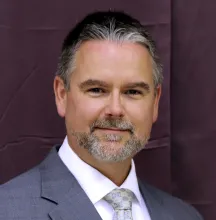
Kelly Irvin, who attends in Northwest Arkansas, is a horticulturist by trade, and spent ten years in fruit and vegetable breeding research before becoming a stay-at-home dad who now owns and maintains a flower bulb nursery for retail sales. Mr. Irvin believes he expresses thoughts and ideas best through writing and is especially interested in using this resource of communication to share the value of God's way with others.
In 1987, Mr. Irvin received an Associate of Arts degree in Theology at Ambassador College in Big Sandy, TX, after which he went on to complete a Bachelor of Science degree in Horticulture from Texas A&M University (1990). While serving full-time in vegetable breeding research at the University of Arkansas in Fayetteville, he then completed via the slow track a Master of Science degree in Horticulture (1999).

