

Steve Shafer
This transcript was generated by AI and may contain errors. It is provided to assist those who may not be able to listen to the message.
Well, the fall feasts and holy days have a lot to do with leadership, as we know. We've been observing them for a number of years, and they have to do, of course, the fall feasts especially. They have to do with reigning with Christ for a thousand years as kings and priests. Let's just, in my introduction here, let's just turn there to read that. It's always inspiring to read that, to see that, what God's plan is for us, to reign with Him, and that role we'll play in that just briefly. That's in Revelation 5. Let's begin with Revelation 5. I'll turn there first. In the beginning of my introduction here, Revelation 5, and beginning in verse 8, it says, Now when he, when Christ had taken the scroll, the four living creatures and the twenty-four elders fell down before the Lamb, the Lamb, of course, representing Jesus Christ.
Each have a harp and golden bowls full of incense, which are the prayers of the saints.
They sing a new song, saying, You are worthy to take the scroll and open its seals, for You are slain, and You have redeemed us to God by Your blood, out of every tribe and tongue and people and nation.
And You have made us, verse 10, kings and priests to our God, and we shall reign on the earth.
Amazingly, a lot of people don't understand that, but that's very plain. We will reign with Christ on the earth. How long shall we reign on the earth with Christ as kings and priests of God?
And they led to reign with Christ for a thousand years, Revelation 20, verse 4.
Now we have all been called to become those future leaders.
Now when you think about that, what's that going to take? We don't think of ourselves as being world leaders. What's it going to take to become a world leader? Do you and I picture ourselves in that way? Can we picture ourselves as kings and priests or as world leaders in God's kingdom when after Christ returns? Can we picture ourselves as a king or a priest or as a part of a kingdom of priests? As it has it in Exodus 19, verse 5 and 6, where God told Israel, Now therefore if you will indeed obey my voice and keep my covenant, then you should be a special treasure to me above all people, for all the earth is mine. And you shall be to me a kingdom of priests and a holy nation, a kingdom of teachers to teach God's way of life to the world who desperately needs to learn God's way of life and God's way of love. So we have all been called to be the future leaders of the world to reign with Christ when he returns to the earth. What kind of training will take to become those leaders? Can you think of yourself as that in that position? Are you trained for that? Are you ready for that? What kind of training will it take? What must you and I learn in order to become a leader? The answer may surprise you, but there are certain character traits that are required in order to become a true leader. In fact, if you've been in God's Church for a while, then the vast majority of us who have been in God's Church, even for a short period of time or for a while, are well on our way toward acquiring those character traits, whether we realize it or not. A lot of you have already acquired all those traits. You may not realize it.
So today, then, I want to look at four essential character traits required of a leader, and that's my title. My title is Four Character Traits of a Leader.
Before getting to the first character trait, I want to make a surprising statement.
There is no word in Hebrew, no word in the Hebrew language, for leadership or for a leader.
And they what? But there's all kinds of leaders in the Old Testament, great leaders.
There's no word for leader or leadership. I want to just give you a little background here on that.
In Strong's Concordance, the English word leader or leaders is listed as being nagid, spelled in Hebrew, I mean in English, in Hebrew word is English, is n-a-g-i-y-d, nagid in Hebrew. It's 5057, 5057 in Strong's Concordance, is listed as being derived from the Hebrew word nagid, n-a-g-i-d, which Strong defines as a commander, such as a military commander, or a captain.
So the Hebrew word translated leader is referring to the person in a leadership position, is referring to that person, and not to the actual role. It doesn't talk about the role, it's talking about the leader. It refers to someone in a leadership role rather than referring to the role itself. So there is no Hebrew word simply for leader. So that raises a question. Why not?
Why not? Because, if you think about it, really understand it, and we'll give you some examples to illustrate this, but leadership is an action. It's not an identity. It's an action, not an identity. It's an action people take under trying circumstances. Often it is a very courageous action that people take, and I'll just give you all kinds of examples. I'd like to spend the rest of the day giving to actions, but I just want to give you one that most of you are familiar with.
And I'll just ask, I've asked this in the other congregation where I gave it a couple weeks ago, but how many of you remember Todd Beamer? Raise your hand. Yeah, okay, we've got one or two. That's what I, there's no, I think there's, Evelyn was the only one in Gaylord, and there were a couple people in Ann Arbor, I remember. But Todd Beamer was born on November 24th, 1968, and he was born here in Flint, Michigan, of all places. I didn't realize that, but he's actually born in Flint, Michigan. And as you might remember now, when I bring it out, he died on September 11th, 2001, as a passenger aboard United Airlines Flight 93, and he was only 32 years old. Up until that point, very few people had ever heard of the name Todd Beamer. He was not an ordinary, he was just an ordinary young man, I said, who decided to take action to try to gain control of this hijacked airline, as you remember. With his airplane phone connected to a customer service representative on the ground, he was heard saying to other passengers, let's roll, remember those words.
Let's roll. As they took action, he said, don't just sit there and just let the plane be taken over by these hijackers, whatever they're going to do. We had no idea what they're going to do, but he decided to take action, try to take control of the plane back. So he got it from a seat and said, let's roll, got other passengers with him. And of course, he had one hijacker there on the plane, the other one in the cockpit, but he actually went forward, and even then that hijacker had, I forget we had a knife or what he had, but he went forward and attacked him, took action against the hijackers. At that precise moment, when he took action, he became a leader.
Prior to that, he was simply a young man named Todd Beamer. See, because leadership is not an identity, it's a courageous action that people take that makes them into a leader.
You realize something? That makes almost everyone in this room a leader, because in 1995, you all took action. You decide you're going to hold on to what you know is right in God's word, and you took action. And when you took that action, that made all of you leaders.
You know, many companies have extensive leadership training programs.
When you stop and think about it, you can't really train a true leader. You can't train someone to be a great leader. A great leader is one who rises to the occasion under times of chaos, stress, and times of fear. That can be a man or a woman, and it can be a young man or an older person. Age or gender doesn't play a role. It can be a very young person and they're teens, or it can be an older person, or it can be a male or a female.
You know, when we think of somebody like a young person, like a teenager, think of David.
David was probably a teenager when he took courageous action to defy Goliath. He said, who are you to defy the living God? And David went out there with a rock and took courageous action, and David at that point became a leader, far before he ever became a king. And what about Esther? Read the book of Esther. Esther laid down her life to go before the king in order to save her people when it was not... when she could have given her life to go before the king when she wasn't called. But she took courageous action to do that in order to save her people. I want to give one other example. This is more current. One current example is for the governor Rick Scott. Prior to Hurricane Michael, he was identified, he had identity as being the governor of Florida. But when Hurricane Michael looked like it would make landfall in Florida here recently, he took immediate action going around the panhandle to warn people, this is a dangerous storm. You better to heed this one. You better leave. You better take action. Get out of here if you can, if you're living by the coast or by the water, because it's going to be really bad.
And he took action, went around all the panhandle, different communities, trying to get people to leave. And after it made landfall, he took action to organize search and rescue and clean up personnel.
And by taking action, you went from just having identity as being the governor of Florida to being a real leader at that particular moment in that time. He has did hundreds of others as well. There are many others who did the same thing. He took action to go and help. Because leadership is not identity, it's an action. So you think about that. We never know when something might occur in our community or near where we are where, you know, maybe we'll see, wow, I need to take action here. Do we have the courage to do that? Do you have the faith to do that? Are we ready to step into leadership? Are we ready to take action when the moment might arise? With that in mind, let's move on to four character traits of a leader. Now, what might the first character trait, I should say, of a leader be? It may surprise you because it's not what many would think. Many might think that a leader is someone who appears to be powerful, invincible, someone maybe like Adolf Hitler. Was he a leader? He was very powerful, he was invincible. He had everyone call him der Führer, which means, der Führer means the leader. Everybody called him the leader. Was he really a leader?
No, he wasn't a leader. He wasn't a true leader. Because a true leader will have followers, but not because they are forced to follow. They had to follow him. They didn't. They were put to death.
That's not a leader. In the end, he died a cowardly death, hiding out in a bunker.
As did Saddam Hussein, who was found hiding in his bunker as a coward when he was finally found.
See, leaders are not those who appear to be powerful or invincible. So what then are they?
See, what is the first character trait of a true leader? This is surprising, but this is very true.
A true leader must first learn to follow. You've got to learn to follow before you can learn to lead.
You must all first learn to follow first. I want to just ask this question, and you all know the answer.
Who is the greatest leader of all time?
We all know the answer. The greatest leader of all time is Jesus the Christ, in the flesh when he was in the flesh.
So what was the first character trait that made Christ the greatest leader of all time? Let's read it from Scripture itself. Let's go to John chapter 5.
John chapter 5, we'll look at verse 19 first. John 5 verse 19, where Christ here is speaking, and of course, if you have a Bible of the words in red, his words are in red in many Bibles.
Then Jesus answered and said to them, Most assured that I say to you, the Son could do nothing of himself but what he sees the Father do, and whatever he does, whatever the Father does, the Son also does in like manner.
So what was the first character trait that made Christ a great leader?
He followed his Father. Verse 30 of John 5, I can of myself do nothing, he said, as I hear I judge, and my judgment is righteous, because I do not seek my own will, but the will of the Father who sent me. I follow my Father's will, Christ said. And in following his Father's will, did Christ consider his Father then as being greater than himself? I am going to the Father, for my Father is greater than I. John 14, verse 28.
What about Moses? He said, Moses is a very interesting example in the Old Testament, because many would consider Moses to have been maybe the greatest leader in the Old Testament for leading Israel out of Egypt. He led Israel out of Egypt, didn't he?
And yet, Moses never referred to as being a leader, not specifically.
You know, when you look at the example of Moses, we're talking about you need to follow first, but Moses was even a reluctant follower. Let's look at that. It's interesting. Let's go back to Exodus chapter 3. This is chapter 3, beginning in verse 1. Now, Moses was telling the flock of Jethro, his father-in-law, the priest of Midian, and he led the flock to the back of the desert, and he came to Horeb through the mountain of God. And an angel of the Lord, an angel, because this turns out to be Christ, it's the God of the Old Testament, but the angel of the Lord appeared to him in a flame of fire from the midst of a bush. So he looked, and behold, the bush was burning with fire, but the bush was not consumed. So then Moses said, verse 3, I will now turn aside and see this great sight why the bush does not burn. So when the Lord saw that he turned aside to look, God called to him from the midst of the bush and said, Moses, Moses, and he said, here I am. Verse 6, excuse me, moreover, he said, I am the God of your father, the God of Abraham, the God of Isaac, and the God of Jacob. And Moses hid his face, for he was afraid to look upon God. And the Lord said, verse 7, I have surely seen the oppression of my people in Egypt, and I've heard their cry because of their task-maskers. I know their sorrows. I understand them are going through, same is true today. God knows everything we're going through as well. He knows our sorrows. He knows our struggles.
Verse 8, he says, God tells Moses, so I've come down to deliver them out of the hand of the Egyptians.
Verse 10, come now therefore, and I will send you, always I want to send you to Pharaoh, that you may bring my people, the children of Israel, out of Egypt. Wow, I think that's really great. I think Egypt, in the case you do that, well, that's going to make me a great leader. It's going to really grade my name forever. But how does Moses respond? Does he want to follow God?
Verse 11, Moses said to God, well, wait a minute, who am I? That I should go to Pharaoh.
Who am I that I should bring the children of Israel out of Egypt? You know, Moses says, wait a minute, I'm not a leader. Who am I that I should go to Pharaoh?
God basically ignores him. Verse 13, so then Moses said to God, indeed, when I come to the children of Israel and say to them, and I tell them, he said, if I tell them that the God of your fathers has sent me to you, and they say to me, what is his name, what shall I say to them?
I can't go to Pharaoh. What am I going to say to Pharaoh? He's the ruler of the world. He's the most powerful man in the world. What can I say to him that's going to make any difference?
God basically ignores him again and continues giving him further instructions.
Chapter 4, verse 1. Then Moses answered and said, but wait a minute, God. I know you keep giving me instructions of what I'm going to do when I go there, but you've got the wrong person here.
Suppose they will not believe me. You're telling me to tell them this, but what if they don't believe me? Or listen to my voice. Suppose they say, the Lord has not appeared to you.
God basically ignores Moses again and gives him further instructions.
In verse 10, then Moses said to the Lord, oh my Lord, I am not eloquent.
You've got the wrong man here. You really do. What can I say to convince you, God, that you've got the wrong person? Oh my Lord, I'm not eloquent. Neither before nor since you have spoken to your servant, but I am slow of speech. I'm slow of tongue. I'm not a good speaker. I'm not good with words. I often get tongue-tied. I wouldn't know what to say, and I can't think well on my feet. I wouldn't know how to answer. If he's going to ask me questions, I'm not going to know the answer. Verse 11, so the Lord said to him, who has made man's mouth? Or who makes the mute, the mute, the deaf, the seen, or the blind? Have not I, the Lord, made those things? Now therefore, Moses, go and I will be your mouth, and I'll teach you what to say. Just believe me and follow me. I'll take care of it. But what did Moses, how do you reply? Verse 13, but Moses said, oh my Lord, please send by the hand of whomever else you may send. Find somebody else. Don't use me.
He wouldn't do it. He couldn't do it. He didn't want to follow God. He didn't have faith.
So God then spoke through Moses' brother Aaron as you go on and read the story.
But later, as we know, God did get Moses to follow. Moses did follow God in all of God's instructions.
Later on, you read, go on the story. Later on, he finally grew in faith, and God did some things to show him that he could do all things, and God was sovereign over all things, and he could take care of anything. And Moses finally grew in faith, where he learned to follow all of God's instructions. By following God's instructions, then Moses became a great leader, although very reluctantly at first.
But he became a leader by finally getting to the point where he could follow what God told him to do. Because the first character trait of a leader is that a leader must first learn to follow.
Learn to follow if you want to learn to lead.
What's the second character trait of a true leader?
Number two, a true leader must maintain a clear vision of the overall goal. You've got to have the overall goal in mind. You can try to lead people, inspire them to a goal. I'm going to illustrate that with a very strange example.
I'm going to use God as an example, but it's a very strange example you wouldn't probably think of.
By asking this question.
You've got a simple question, but you know, read Genesis 1 and then into Genesis 2, and you come up with this question because Genesis 1 and 2, it talks about the days of the week, the days of creation week. Why are the days of the week numbered and not given names?
And what might that have to do with a clear vision of the future?
It has everything to do with it.
That is, the days of the week are not given names by God in Genesis chapters 1 and 2 in creation week.
All it says here in Genesis 1 is, the evening in the morning with the first day, and the second day, and the third day, and the fourth day, and the fifth day, and the sixth day.
Of course, Genesis 1 is describing God's process of creation, and what is the ultimate culmination of God's creation week? What's the culmination of it? Let's go back and read it. The culmination is given to us in Genesis 2. Genesis 2, verse 1, Thus the heavens and the earth and all the host of them were finished. And on the seventh day God ended his work which he had done, and he rested on the seventh day, from all his work which he had done, which we still observe today. I'm Sabbath.
Then God blessed the seventh day, and he sanctified it and sent it apart from all the other days of the week, because in it he rested from all his work which God had created and made.
And God created that day by resting on that day. So, the example of making that a special day.
Even as we still observe now.
But the clear vision an overall goal God had in mind was the Sabbath and what the Sabbath depicts.
Everything went up to the Sabbath and what the Sabbath depicts.
If the days of the week had been given names, as man has given them names, then each day would stand on its own and tend to have its own independent meaning. So, our name days of the week do that. Sunday being the day of the sun.
That doesn't look for the future, does it? That kind of has meaning all of them by itself.
It doesn't project us into the future the next day. Monday being the day of the moon.
Tuesday, and you could go to different sources and give you all different meanings, but Tuesday by many sources being the day of Tur or Mars, the God of War. Wednesday being the day of Woden, the chief Teutonic God or the messenger of the other gods of the sun have it. Thursday being the day of Thor, the God of Thunder. Friday being the day of Freya, the goddess of love. And Saturday being the day of Saturn, the Roman god of agriculture. But instead, God numbered them, so that each day then leads to the next day until you get to the seventh day, which is when we start the count all over again. Which keeps us focused on the future and keeps us focused on looking ahead.
The seventh day we can also be likened to seven thousand years. As stated in Peter, by Peter, I should say in 2 Peter 3 verse 8, where Peter wrote, with the Lord one day is a thousand years, and a thousand years is one day. Depicting six thousand years for man to go his own way, so we can learn that there's only one way that works. The only way that works is God's way. And that's been written in history over a period of six thousand years, ever since Adam and Eve.
To then be followed by a seventh colonial day of rest from Satan and Satan's influence, with the Kingdom of God on the earth, to contrast man's way then with Satan's way.
To contrast man's way and Satan's way, I should say, from God's way.
So from the very beginning, God established a seven-day week, and by doing that, God maintained a clear vision of his overall goal for mankind, as depicted by the seven days of creation week in Genesis chapters 1 and 2. And you know, a leader must do the same. A leader must maintain a clear vision of the overall goal. Number three. A leader is going to have to face confrontation. All leaders are going to have to have the courage to persuasively present their vision for the future, and there will always be some who have a different vision than what that's going to be. You see that even today in politics and so on. So a leader will have to face confrontation at times.
I just want to illustrate that by a fact of an incident in the life of Judah, where Judah relinquished his leadership position by not properly facing confrontation, but he later learned his lesson, and he changed, and he did confront confrontation in the proper way. That's very interesting. Look at that example, because the initial incident is found in Genesis chapter 37, where Joseph's 10 brothers conspired to kill him because of his dreams. Remember that? Joseph comes back with these dreams, and his dreams show what God's going to do in the future. He's going to be above all of his other brothers. It makes his brothers jealous, and they don't like his dreams. Let's go back there to Genesis 37. In Genesis chapter 37, let's begin in verse 19. Talking to his brothers, then they said to one another, look, here comes Joseph, that dreamer. He's coming.
He's got these dreams that he's going to rise way above us and be ruling over us. That's made him all really upset and jealous. Come there for verse 20. Let us now kill him and cast him into some pit. Can you imagine that? His brothers wanted to kill their own brother? And cast him into some pit, and we will say, some wild beast has devoured him, and we shall see what will become of his dreams then. But Reuben, Reuben being the oldest of all the brothers, heard it, and he delivered them out of, he delivered him, delivered Joseph out of their hands, and said, no, let's not kill him. And Reuben said in verse 22, shed no blood, but cast him into this pit, which is in the wilderness, and do not lay a hand on him. He might deliver him out of their hands and bring him back to his father. So it came to pass that when Joseph had come to his brothers, that they stripped Joseph of his tunic, the tunic of many colors that was on him. And they took him and cast him into a pit, and the pit was empty, and there was no water into it. It must have been pretty deep yet. So he was left there to either die or somehow be rescued by someone passing by.
Verse 25, and they sit down to eat them. Can you imagine that? Throw them in the pit, leave them there to die, maybe somebody will find him. If they find him fine, then he'll live, otherwise they're kind of putting God's hands. Then they all say, oh, let's have a nice meal. They sit down and eat a meal.
Then they lifted their eyes and looked, and there was a company of Ishmaelites coming from Gilead with their camels, bearing spices and balm and myrrh on their way to carry them down to Egypt.
So Judah said to his brothers, Judah's now in a leadership role, and I'll show you why in a moment because Uba is not there. But Judah then said to his brothers, what profit is there if we kill our brother and conceal his blood? Come, instead let us sell him to the Ishmaelites and let our hand be upon him, for he is our brother and he is our flesh. And looking to Judah in that position, apparently as a leader at that point, his brothers listened. Verse 27, they listened to Judah as they looked at his leadership, especially since their older brother Ruben had left them temporarily.
If you go ahead and look at Scripture a little bit deeper, they were they were camping on the outskirts in the wilderness, but they were stepping just outside of a city of Dothan.
You can read that in Genesis 37 verse 17. They were in Dothan area, but they were camping outside the city in the wilderness area. And Ruben apparently went into town for the night.
That's what you would assume, and he wasn't there. Verse 28. Then the Midianite traders passed by, so the brothers pulled Joseph up and lifted him out of the pit and sold him to the Ishmaelites for 20 shekels of silver, and they took Joseph to Egypt. And the reason Ruben was there, verse 29, tells us this, is then Ruben returned to the pit. He'd currently gone into town and came back.
Then Ruben returned to the pit, and indeed Joseph was not in the pit. And then Ruben tore his claws, and he realized what his brothers had done.
So it was seen that Judah saved Joseph's life by selling him into the slavery in the hand of Ishmaelites, while Ruben was gone. So there was confrontation among the brothers as to what to do with Joseph. Judah took the lead by selling him into slavery. So Judah faced confrontation here, but is that the way he should have handled it? Obviously not.
As being looked to as the leader, how should Judah have handled this situation? You should... there's no way we're going to sell our brother into slavery. That's horrible. Why are you even thinking of something like that? That's the last thing we're going to do. We're not going to do that.
Would any of you like to be sold into slavery? We're not going to do it. Besides, if we did that, it would just kill our father. What would you tell our father when we go back that you sold him into slavery? That would devastate our father. Let's just take him out of the pit and let him go back home.
That is how a real leader would have handled this confrontation.
But know what it says of Judah at the beginning of the next chapter, chapter 38, verse 1.
It came to pass at that time that Judah departed from his brothers and visited a certain Adamite whose name was Hira.
I'm just going to focus on this verse for a minute because there's a word in here that doesn't doesn't really mean what it says in English. The old King James has it this way. Judah went down from his brothers. What does it mean? He went down from his brothers.
He went down or descended from his brothers.
The Hebrew word here that's translated here in our New King James's departing means, doesn't really mean departing. It means something much more meaningful. It means going down or descending. He went down or descending can imply that by selling his brother into slavery, Judah descended. He descended from his leadership position. He relinquished that leadership position because that's not the way a leader should act. That's not what a leader should do. And by suggesting that and by doing that, he descended. He relinquished his leadership position. Later on, I've heard Judah recovers his leadership role by telling Joseph, whom he doesn't recognize at that time. He goes down in front of the world. Joseph goes to Egypt. He comes up being the second in command of all of Egypt under Pharaoh. And finally, they have to go down there because of a famine to get food because there's plenty of food where Joseph is in Egypt. By going before Joseph to vise for food, he doesn't really recognize him. He doesn't know what his brother Joseph is dead. They don't really realize he's alive. And the last thing they wouldn't think of him being second in command is Egypt under Pharaoh. But later Judah then recovers his leadership role by telling Joseph, whom he doesn't recognize, that they're down there and they want to get food. He says he won't want to go back with food unless they go back. Benjamin is not with him. Benjamin's the only brother who's left behind. Excuse me. So they don't have to go back to Egypt. He has to come back with his brother. Pick it up in justus 43 verse 1.
If you send our brother with us, we will go down and buy you food. And so on. So the man being Joseph is now second in command in rural wall, Egypt under Pharaoh. And he said, if you send our brother with us, we will go down and buy you food. But if you will not send him, we will not go down. For the man Joseph said to us, you shall not see my face unless you are your brother, and being Benjamin who wasn't with him is with you. And in Israel, Jacob the father said, why did you deal so warmly with me to tell this man whether you still had another brother? Why did you tell him he had another brother that wasn't with you? But they said, the man asked us pointedly about ourselves and our family saying, is your father still alive? Have you another brother? And we told him, according to these words, could we possibly have known that he would say, bring your brother down with you when you come back? Then Judah said to Israel, his father, then Judah steps up and takes a leadership role again. He faces this confrontation, this problem by redeeming himself and by taking leadership. Then Judah said to Israel, his father, send the lad with me, and we will rise and go, that we may live and not die, both we and you and also our little ones. And then Judah tells his father, he says, I myself will be surety for him. From my hand, you shall require him. If I do not bring him back to you and set him before you, he tells his father, then let me bear the blame forever. So here Judah recovers his leadership role by telling his father he will bear the blame forever if he doesn't bring Benjamin back. Jacob or Israel then says this, Genesis 43 verse 13, he says, take your brother also and rise and go back to the man, go back to Joseph. And may God Almighty give you mercy before this man, that he may release your other brother, because they, I think, he held him in there where they went back to get more food, that he may release your other brother and Benjamin after you get taken back there. And he's in Joseph, he says, if I'm bereaved, I mean not Joseph, but Jacob says, if I'm bereaved, I am bereaved. So then Judah took the lead after the return to Egypt with Benjamin, chapter 44, verse 14. Verse 14 of chapter 44. So Judah and his brothers came to Joseph's house, they returned to Joseph's house, not knowing it was Joseph yet. And he was still there, and they fell down before him on the ground. And Joseph said to them, what deed is this you have done? Did you not know that such a man as I can certainly practice divination?
I can do anything. Your fate's in my hands, and I could seal your fate one way or another. I can put you to death or let you live. Then Judah said, what shall we say to my Lord? What shall we speak?
How shall we clear ourselves? God has found out the iniquity of your servant. And here we are, my Lord slays, both we and he also, with whom the cup was found. Judah then explains to Joseph his meeting with his father, and what the consequences will be if he doesn't return to his father with Benjamin, chapter 44, beginning in verse 30. Now therefore when I come to your servant, my father, and he's telling Joseph, and the lad is not with us since his life is bound up in the lad's life, my father's life is bound up in the lad's life, it will happen when he sees that the lad is not with us. When Benjamin is not with us, my father's going to die. So your servants will bring down the gray hair of your servant, our father, with sorrow to the grave. For your servant here, now he's Judah saying, your servant, me, I will be became surly for the lad to my father, saying, if I do not bring him back to you, then I shall bear the blame before my father forever. Now therefore he tells Joseph, please let your servant remain instead of the lad as a slave to my Lord, and let the lad go up with his brothers. So Judah then explains to Joseph his meeting with his father, what the cross is going to be. Then, Judah courageously redeems himself here, as we just read here, verses 30 to 33. So now Judah's taking personal responsibility and laying his life on the line, saying, if you let my brother Benjamin return to my father, I remain here. I'll stay here and I'll be your slave forever. If you let Benjamin go back, I'll stay here with you and I'll be your slave forever. Verse 34, for how shall I go up to my father if the lad is not with me?
Thus perhaps I see the evil that would come upon my own father. So a leader will face confrontation at times and will have to exert a strong, courageous leadership role by facing that confrontation head-on and by putting the future in God's hands, as Judah finally learned to do here and as he did here. And finally, in the point four, leadership requires knowing the facts and exercising faith. I mean, it should be obvious that a leader has to be pretty familiar with facts and have a good command of the facts of any given situation. But the other necessary characteristic of a leader is faith. You've got to have faith. I want to give an example from Abraham. You know, Abraham emerged as a leader among the patriarchs of the Old Testament. Let's just read that in Hebrews chapter 11, often referred to as a faith chapter. He was 11 verses 8 through 10. By faith Abraham obeyed when he was called out to go to the place which he would receive as an inheritance. And he went out not knowing where he was going. By faith he brought in the land a promise as in a foreign country, drawing in tents with Isaac and Jacob, the heirs with him of the same promise. For he waited for the city which has foundations, whose builder and maker is God. That would be the new Jerusalem.
I want to show you something here. Because it will see Abraham considered. He ruled by faith. He had tremendous faith, which is exemplified by something in the Old Testament here. You know, what does it say in Hebrews 11? It says, Now faith is a symptom of things hoped for, the evidence of things not seen. For by it the elders obtained a good testimony. And Abraham obtained a good testimony, considering the hopeful land of Canaan had been promised to him. You remember he was promised the land of Canaan? He obtained a good testimony by considering the hopeful land of Canaan as being his land before it became his land.
In essence, he saw what he hadn't seen as if it were a present reality. Think about that.
He saw what he hadn't yet seen as if it were a present reality.
Why is that so important for all of us? Because that's what all of us must see in regards to the kingdom of God. We have to see the kingdom of God as a reality before it actually becomes a reality. We have to be so much faith that the kingdom of God is a reality. It doesn't matter what we go through in this life, what we lose, what kind of trials we go through, what kind of difficulties or sorrows or losses, the kingdom of God is so real that we will go through anything and hold on no matter what, because we know it's a future reality and we're going to live right now as if it is a reality now. This story of Abraham's faith involves his servant Eliezer, whom he sends out to find a bride for his son Isaac. Let's go back to Genesis chapter 24.
A very interesting example that you can read right over and not even see it. Jesus chapter 24 verse 1, and then verse 3, he says, Now focus on those words. He says here, And this was the land of Canaanites because he was living in the land of Canaan.
See, Abraham was an isolated individual living among the Canaanites.
And this was the land of Canaan, not yet the land of Abraham, not yet the land of Israel, God had promised it to him but it was still the Canaanites land.
Of God had promised to Abraham against this 12 verses 1 to 3, in Genesis 12 verses 6 to 7, 6 and 7, where it says, "'To your descendants I will give this land.'" He thinks that's in Genesis 12, 6. So Eliezer, the servant of Abraham, then went to Abraham's hometown of Nahor to find a bride for Isaac. Eliezer then comes to the house of Laban, Rebecca's brother. So notice carefully what he says. He's going there, and he finds Laban. He's going to Laban's house, and he's going to find a wife for Isaac, who's going to end up being Rebecca.
But notice carefully what he says. Abraham had told him what to say, but knows what he says instead. He doesn't say it exactly the way Abraham told him to. Jesus 24 beginning in verse 34. So he said, "'I am Abraham's servant,' he's telling Laban. "'I am Abraham's servant, the Lord has blessed my master greatly, and he has become great, "'and he has given him flocks and herds and silver and gold and "'male and female servants and camels and donkeys.
"'And Sarah, my master's wife, bore a son to my master when she was old, "'and to him he has given all that he has.'" In verse 37, "'Now my master made me come to you somewhere, saying, "'You shall not take a wife from my son from the daughters of the Canaanites, in whose land I dwell, "'but you shall go to my father's house and to my family and take a wife from my son.'" But notice what Eliezer said as recorded at the end of verse 37.
"'In whose land I dwell.'" See, Abraham had told Eliezer to swear not to take a wife from my son, from one of the daughters of the Canaanites, and said, "'Among whom I dwell.'" You may not read this, see a difference, but there's a difference. Abraham told him to say, "'Among whom I dwell.'" But Eliezer misquotes Abraham when he tells Laban, "'Abram told him, "'You shall not take a wife from my son from the daughters of the Canaanites, "'in whose land I dwell.'" See, Abraham said, "'Among whom I dwell.'" But Eliezer changed that to, "'In whose land I dwell.'" Now, you look at that, you say, "'Wait a minute, what's the difference?'" Isn't that basically the same thing?
See, in reality, there's a big difference. And it shows why Abraham is called a man of faith and the father of the faithful. See, Eliezer subconsciously changed the words, "'From one whom I dwell to in whose land I dwell.'" Why'd he do that? Because it was inconceivable to Eliezer that this entire land of Canaan was already Abraham's land. As the Canaanites had not yet been conquered, and he hadn't yet been driven out of the land, it was still the land of Canaan. So he couldn't quite see it yet as being the land of Israel.
And yet Abraham already considered it to be his land, since God had promised it to him. As implied by Abraham, saying, "'Among whom I am dwelling among the Canaanites.'" I'm dwelling among... They're dwelling in my land, in other words. I'm not dwelling in their land. I'm dwelling among them in my land. That's kind of what Abraham's implying. So Abraham in essence was saying and implying that he was dwelling among the Canaanites in his, in Abraham and Israel's land.
Land of Israel. See, Abraham was a leader, exercising absolute faith in God and God's promises by considering God's future promise as a present reality. You know, you think about it, that's what we have to do also. We have to consider reigning with Christ on this earth, not just as a future promise, but as a present reality. Second, it's a done deal. We have to live our life that way, knowing it's a done deal. God has promises to us, and he's going to fulfill his promise. God never lies. He always fulfills and keeps all of his promises. Because of this earth and everything in it belongs to God.
And God has promised to give it to his servants who are faithful to him, to his people. See, this is God's land, actually, right now. This is God's land, in whose land we dwell. That's really what it is in reality, because God promised it to us. So in conclusion, then, remember leadership is an action, not an identity. And the four main character traits of a leader are, number one, a leader must first learn to follow.
Two, a leader must maintain a clear vision of the overall goal. Three, a leader will have to face confrontation in the right way. And four, leadership requires knowing the facts and exercising and living by faith. Those, then, are the four major character traits of a true leader. And we've all been called to be leaders, so we have to strive to develop and live by those character traits.
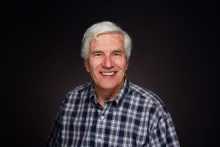
Steve Shafer was born and raised in Seattle. He graduated from Queen Anne High School in 1959 and later graduated from Ambassador College, Big Sandy, Texas in 1967, receiving a degree in Theology. He has been an ordained Elder of the Church of God for 34 years and has pastored congregations in Michigan and Washington State. He and his wife Evelyn have been married for over 48 years and have three children and ten grandchildren.
