
Darris McNeely
This transcript was generated by AI and may contain errors. It is provided to assist those who may not be able to listen to the message.
In this segment, we're going to analyze the human state. Now, we might think this is, you know, well known and kind of boring, etc., etc. However, it's important for each human to understand his or her state as human. We are flesh. We are all aging, and we are not eternal. We do not have some immortality inside us. Only when we can really appreciate how physical we are and how stuck we are, where we are, and who we are, can we really appreciate that God is offering an opportunity for us to become much more. That's what makes that opportunity so great, so exciting, is when we realize our state.
So let's begin this evening. The first point we'll cover is that humanity was created in the image of God. When you think, for instance, of the Second Commandment, have no other gods before me, don't create an image, don't carve, you know, whatever into an image of God that you would worship, you and I actually are an image of God.
We are in the likeness of God. We don't need another likeness to understand about what God is shaped like. But also, when we look in Genesis chapter 1 and verse 26, and we see how God created us in His image, then we can appreciate a little something else that He has in mind.
God said, this is Elohim, and this is important, Elohim, which is plural, said, let us make man in our image according to our likeness. So different than all the animals which are not made in the image and likeness of God at all, God made us in His likeness and in His image. It shows that God has an intent on His part for something more for us. He has a desire of something more for us. He has a hope that is for you and me to be more like Him than just sort of shaped like Him.
And it comes along with an opportunity. In verse 27, it says, so God created man in His own image. In the image of God, He created him. Male and female, He created them. If we go to Genesis chapter 5, we shouldn't begin to think, oh, I'm made in the image of God, so I'm somehow, I don't know, not human. It says here in Genesis chapter 5 verse 2, He created them male and female and blessed them and called them mankind. So like the animal kinds, He's made us mankind. We are different from God. Let's go to Isaiah chapter 45 and verse 12. I have made the earth.
I created man on it. We are created all right in the image of God, but we are created here on earth. Now at this time, we have the potential to become, be children of God. Now that's a little more like God. We don't look any different than other humans, but we become spiritual children of God. With God as our Father, if we're led by the Holy Spirit, the Bible says we are children or sons of God. What's going on?
Therefore, society does not know us. The world cosmos, society does not, they don't really understand us because society did not know Him. So it's sort of like three stages. First, we're human and we're in the image of God. Second, we're children of God and we're becoming like Him. Thirdly, let's go to verse 2 here. Beloved, now we are children of God. It has not yet been revealed what we shall be, but we know that when He is revealed, we shall be like Him, for we shall see Him as He is.
So, which level here do you want to stay at or be at? This is really the question that being a human poses to us every day. Do I want to just stay human and die?
Or do I want to be like God and think and act and keep some of His commandments like Israel did? You can keep the laws under the covenant, then you die. There's no salvation in the Sinai covenant, but they were, in a sense, children of God. Humans have this opportunity to go all the way, as it were.
Let's go to 2 Peter 1, verse 4. Talking about, in verse 3, Jesus Christ, divine power, God called us by glory and virtue. Verse 4, Verse 4, by which have been given to us exceedingly great and precious promises. So we have promises in our covenant that through these you may be partakers of the divine nature, having escaped the corruption that is in the world through lust.
Now let's pause here a second. Lust, the last word, that's sinfulness. In society, backing up to the word corruption, that's dying and going back to dirt. Going back before that, you've escaped these things. How did you do that? By being partakers of the divine nature, and we're predestined to be conformed to the image of his son, that he might be the firstborn among many brethren. That's the divine image. Verse 30, Moreover, whom he predestined, these he called, whom he called, these he justified, and whom he justified, these he also will glorify.
And finally, in this section, Hebrews chapter 2, verse 10, in bringing many sons to glory to make the captain of their salvation perfect through sufferings. There is this plan, there is this covenant, this opportunity, which all humans ultimately will have an opportunity and a covenant that can take them to eternal life. But notice, he is planning to bring many sons to glory. And it is to that end that God and Jesus Christ have developed this plan. But for right now, we're humans, and we're flesh, and oven by ourselves, that's our state. And now, Wayne Ward will go into part two.
Thank you, Mr. Elliott, and good evening to everybody. Yes, and that final statement is basically the existing to the next part, the next, the next element that we're going to examine is the fundamental biblical teaching that God formed humanity of flesh. We are mortal, subject to corruption and decay. Let's turn for a prescription on that to Genesis 3 verse 19. It says, In the sweat of your face you shall eat bread, till you return to the ground, for out of it you were taken, for dust you are, and to dust you shall return.
In the flesh, nothing can stop the process of dying for and determined for mankind. We are to return to this state. Of course, this is something God has determined after man sinned. We believe that when God sentenced him to return from where he came, you just turn back to chapter 2 and verse 7, The Lord God formed a man of the dust of the ground, and breathed into his nostrils the breath of life, and man became a living being.
We are formed of the elements of the earth. We are of the dust. I believe about $6 worth, from what I've heard. $7 in British Columbia, because I've heard that is a little bit more pricey there, since I've been buying some property there. But nevertheless, this is the basic fact in God's creation plan, that we start our life in this temporary form, and that's all we get for now.
And woman 2, she was made flesh, as Adam was made. I had to verse 21 in chapter 2 there. And Lord God caused a deep sleep to fall on Adam, and he slept. He took one of his ribs and closed up the flesh in his place. And to verse 23 there, Adam said, This is now bone of my bones, and flesh of my flesh, and she shall be called woman, because she was taken out of man. Let's turn to Genesis 18 verse 27. Abraham answered and said, Genesis 18 verse 27, Abraham answered and said, Indeed now, I who am but dust and ashes have taken upon myself to speak to the Lord.
And he was doing some pretty interesting reasoning there with the Lord. So Abraham acknowledged this fact in awe, really, as he respected the great magnitude and greatness of the being that he was reasoning with and dealing with. And as Abraham was very respectful to our lowly state in comparison, as we are created by such a vastly superior being, we should obviously do as well, because our lives are supplied to us by him, by God, and we are maintained by his will.
Let's turn to Acts 17 verse 25. He says, Nor is he worshipped with men's hands as though he needed anything, since he gives life to, gives all life, breath, and all things. We require breath from God, as we require everything else from him, our composition, our structure, our ability to be animate and productive, and how we are able to be aware and be able to comprehend and contemplate our own existence and our potential. This is also applied to us, my God, and it's quite amazing. And yet this is only our natural form as Paul taught. Let's turn to 1 Corinthians chapter 15. And verse 44. It is sown a natural body, it is raised a spiritual body.
God created a natural, physical fleshly body, and will create a spirit body for our eternal, our spiritual existence. This is demonstrated in the type in Adam and in Jesus. In the second half, verse 47, the first man was of the earth made of dust, the second man is the Lord from heaven. Verse 49. And as we have been born, as we have, have borne the image of the man of dust, we shall, we shall also bear the image of the heavenly man. So having been made natural and temporary, we are given this understanding of something unnatural, really, you know, to come to us, something amazing, something spiritual.
And we know it is something really amazing to look forward to. But as we exist in our natural, physical state, we are subject to everything in the physical realm, everything that it is in this physical world is subject to decay. We are in a constant state of decay all the time. If you're older than 29, you know we are all very subject to a decreasing, suddenly decreasing physical condition. And everything in our existence needs to be deliberately kept. You know, we need to constantly be fixing ourselves up and cleaning ourselves up and we need to maintain our physical condition, our exercise, our diet, our medicine.
And this is even in the same, this is on the same, we need to do this on a spiritual level as well as we are. We need to continually take in the Word of God and exercise it deliberately and practice the Word of God to maintain our spiritual condition. So everything about our existence today is subject to decay and corruption. But it's a state that's very unlike what we will inherit. Verse 53 here, same chapter, 1 Corinthians 15, verse 53. For this corruptible must put on interruption and this mortal must put on immortality. It is in a front of us to inherit a very significantly improved capacity of being when the cannot be corrupted.
That's amazing to even think about. Let's turn to Acts chapter 2, verse 27. Peter was quoting here from Psalm 16. It says, For you will not leave my soul in Hades, nor will you allow your Holy One to see corruption. You have made known to me the ways of life. You will make me full of joy in your presence. Men and brethren, Peter says, let me speak freely to you of the patriarch David, that he is both dead and buried, and his tomb is with us to this day. Therefore, being a prophet, knowing that God has sworn an oath with an oath to him, that the fruit of his body, according to the flesh, he would raise up Christ to sit on his throne.
He foreseen this spoke concerning the resurrection of the Christ, that his soul was not left in Hades, nor did his flesh seek corruption. Jesus didn't seek corruption in his whole entire life as a man without sin. It seems that God even ensured that Jesus' dead body, three days and three nights, did not see any decomposition. He was not decomposing, which would have been unfortunate for him, not have been resurrected in that smell. But seriously, this is a very symbolic thing for us, that Christ is incorruptible.
And as he abides in us, we can be reassured that we will be transformed into the same incorruptible being. And when that happens, we will finally be at rest. We will be incorruptible, no longer needing to maintain the struggle, to maintain this walk, this Christian walk. We will be inherent to us for eternity. I'll pass the part 3 back to Mr. Algernon.
You know, one thing that we're talking about here as humans is that this life really depends on God giving us something else. Otherwise, we try to live healthy, we try to, you know, be happy, we try to live as long as we can, etc, etc. But all humans, in the third point, are mortal souls. A soul is a living, breathing, thinking, being, whether it's an animal or a human. But a human being is a soul. We don't have a soul, we are a soul. And we do not have anything except mortality. There's no inherent immortality that you and I control on our own. Let's look in 1 Timothy 6 and verse 15. We see that Jesus Christ, the potentate King and King, King of Kings, verse 16 now, who alone has immortality. So we have a captain of our salvation, and he's the only human that now has immortality. As Wayne was just saying, he died. He really died. And as a human being, his father, three days and three nights later, who had immortality in heaven, resurrected him. And so he's become a first fruit of those who believe. But right now, he alone has immortality, dwelling in unapproachable light. So there, the brightness of heaven somewhere else that we don't live, we're humans here on earth, we don't have inherent immortality.
In fact, in Ecclesiastes chapter 3 and verse 19, we see what happens to us. For what happens to the sons of men also happens to animals. Yesterday, Mary and I lost a pet, and it's hard not to think of what happens when you bury something in the ground. And when we think of the patriarchs, Abraham, he buried Sarah, we think of Jacob, he buried Rachel, it was very sad. Various people in their families brought the bones and put them in caves. But those things have all gone back to dust. There's just really no record of humans going back very far. And so what happens to the sons of men happens to animals. One thing befalls them all. As one dies, so dies the other. Surely they all have one breath. Man has no advantage over animals, for all is temporary. The word vanity just means it's temporary.
Verse 20, all go to one place, all are from the dust, and all return to dust. And right now, everyone except Jesus Christ has returned to dust who have died. And when I die, I'll return to dust too. That is our state.
And that can sound negative, but at the same time, it certainly makes salvation positive, doesn't it? It's good to know how earthy we are and where we're going and what befell us when we die. Romans 6 and verse 21. We're going to stay on this theme a bit because this is about being human.
Romans 6 and verse 21. What fruit did you have then in the things of which you are now ashamed, for the end of those things is death. So really, anything we do as humans, of and by ourselves, puts us on a course for death, to also be dead for all eternity.
There's a second death as well, and that's our deed set us up for that death.
And now if we look in verse 23, for the wages of sin is death, not just dying this time, but lake of fire.
So we have to kind of pause and understand here that we, of and by ourselves, have no inherent immortality. Okay, we'll go back to Wayne now for part four.
And part four is expressing that it is a fundamental biblical teaching. God has placed before Adam and Eve the choice of eternal life through obedience to God or death through sin, which is really the fulcrum of right now, of man's experience right now. Mankind is living in the consequence of Adam and him choosing sin.
Let's turn to Genesis 2 verse 16.
Genesis 2 verse 16 and 17. And the Lord God commanded the man, saying, Of every tree of the garden you may freely eat, but of the tree of the knowledge of good and evil, you shall not eat.
For in the day that you eat of it, you shall surely die.
And since that time, well, since the time that Adam and Eve made that choice, everyone seeking God now really has been tested with that same tree.
As you and I are, every day we choose, well, are we going to choose to discern good and evil by our own eyes? Or will we trust God and walk by his word and say?
And this is something that has been tested, I thought, has tested mankind with. That's what he tested Israel with. Let's turn to Deuteronomy 30.
Deuteronomy 30 verse 19 says, I call heaven and earth as a witness today against you. And I have a set before you, light and death, blessing and cursing. Therefore, choose light that both you and your descendants may live.
Okay, so this we put before Israel as it is before us now. But the Mosaic covenant, you know, it has failed now.
And Israel now abides with the rest of the world convicted of sin, where they may have had a choice to not have been in that state.
Turn to John 16 verse 8. And it says, and when he has come, speaking of the Holy Spirit, it will convict the world of sin.
So when the Holy Spirit was given to, you know, get eternal life in man to those repentant and abiding in Christ, that essentially sealed the deal for the world.
You know, the world is now assured of its death sentence. Of course, until the day the whole world will be offered that same repentant path through Christ when everyone will have their time to choose life.
But for the Christian now, the time is now to make that choice. Will we choose as Christ as, or will we choose as Adam and Eve? That's part five. Back to Mr. Elvie.
Okay, let's look now at the fact that Adam and Eve yielded to temptation and disobeyed God.
In Genesis chapter three and verse six, it says, so when the woman saw, she was tempted and her eyes now saw something. She saw that the tree was good for food, that it was pleasant to her eyes.
A tree desirable to make one wise was all about me. See, she took of its fruit and ate and she gave it to her husband and he ate with her. Now in verse 11, God says, Who told you that you were naked? Have you eaten from the tree which I commanded you that you should not eat? So God had commanded them, carefully told them.
You know, if you do that tree the day you eat, you know, you're going to be set up for death.
Now in verse 24, we see the consequence, the last verse here of chapter three. So God drove out the man and he placed carobim at the east of the Garden of Eden, and a flaming sore which turned every way to guard the way to the tree of life.
There's some symbolism here that doesn't apply only to Adam and Eve. We tend to think, oh, there were carobim and swords and they couldn't go back in. But notice a few things. God drove out the man and the woman.
When we think of God's throne in heaven, humans don't go there. We don't literally sort of fly into the spirit realm and enter the third heaven and go right up to the throne of God, literally, you know, as human beings.
And so mankind is separate from God and we were cut off from God, as it were, because of sin, and so was Adam and Eve. But notice he placed carobim at the east of the Garden of Eden.
Over the throne of God are carobim. We know that Lucifer was once a carob that covered, and it might be one who determines or defends or whatever who can come to God. Why do we say that? Well, because when you look at the earthly depiction of God's throne in the tabernacle, you'll recall that once you come into the Holy of Holies, which only the priests could come into, not the lay people, in the Holy of Holies at the west side were curtains, that big curtain, you know, the one that was torn in all the places.
And on that curtain are carobim. God had them sew and stitch and embroider carobim there, and nobody was able to enter. And so here we have in verse 24, carobim at the east of the Garden of Eden and a flaming sore, which turned every way to guard the way to the Tree of Life.
Thus, Adam and Eve yielded to temptation. They disobeyed God. They were the first ones to do this, and consequently, these things were set up. And now we'll go to Wayne for part six. Okay, and so yeah, part six is essentially highlighting the biblical teaching that it is through the disobedience to God's sin entered the world, and through sin death.
Let's turn to Romans chapter five.
And verse 12. Romans five, verse 12. It says, Therefore, just as through one man's sin entered the world, and death through sin, and thus death spread to all men, because all sin. Verse 14, nevertheless, death reigned from Adam to Moses, even over those who had not sinned according to the likeness of the transgression of Adam, who was a type of him who was to come. So again, Paul shows us the comparison of Adam to Christ. Disobedience to obedience, death to life. And each are the same joys. Adam to Christ, disobedience to obedience, death to life. But since every man and woman that has ever existed is now convicted of sin, it's only through the second Adam that all can be made alive. It's only his sacrifice that can atone through the sin to mow of humanity. Let's turn to 1 Corinthians 15 and verse 21.
For since by man came death, by man, capital M, Christ, also came the resurrection of the dead.
In verse 22, for as Adam all die, even so in Christ all shall be made alive. All who come to Christ in repentance and when they are offered that.
It has to be the remainder of this back to mystery.
Okay, thank you, Wayne.
So, you know, the Bible is a very positive book. And what we're doing is we're focusing tonight on elements of being human and how stuck we are really on our own power. But as you can see, we're sort of carefully avoiding the next verse or the next statement in some places, which is this opportunity that God wants us to have. But we need to understand that that opportunity that God wants us to have, which is eternal life, isn't automatic. It's not something germane to our existence.
So what we're doing this evening is we're focusing here on who we are.
And ultimately, we will then work our way through this plan of salvation that God has throughout the Scripture.
If we go back to Romans chapter 5 for just a moment and look at verse 12 again.
Romans 5 and verse 12.
Just as through one man's sin entered the world and death through sin, thus death spread to all men because all sinned. And that is our lot, not just to die as humans, but ultimately to die forever.
In verse 14, nevertheless, death reigned from Adam to Moses, even over those who had not sinned according to the likeness of the transgression of Adam.
Now there's all kinds of sin, the breaking of God's law, and God's law was known.
Not everybody just chose to eat of the tree of knowledge of good and evil.
So if we go to chapter 3 now of Romans and begin in verse 10, it is written, There is none righteous, no, not one.
There is none who understands, none who seeks after God. Of and by ourself, that's our state. I don't know about you, but I grew up in the church. I was born in the church, but I was a carnal kid. I was just a selfish carnal kid who was keeping the Sabbath and keeping the Holy Days.
There is not one who really understood, sought God, etc., etc., without God's calling, without his understanding, without him leading us. So let's look at this. Verse 12. They've all turned aside.
There came a time in your life and in my life where it came to realize, you know, I'm just wrong. I am wrong.
And I'm a mess because mentally I'm not on the path of God. I have turned aside from the path of God, or I'm not on that path.
They have all together become unprofitable.
There is none who does good, no, not one. Even when we try to do good, you know, on our own. We want to do good. And sometimes before baptism, we say, oh, just give me a little while longer here. I'm trying to get perfect. And even by ourselves, you know, we just dig a deeper hole.
Their throat is an open tomb with their tongues. They have practiced deceit. Their poison of ash is under their lips.
I mean, think of how we were as as kids and high school kids and and the things that we said, the things that we did, that were just calloused, whose mouth is full of cursing and bitterness. Their their feet are swift to shed blood. I mean, just think of sports for a minute. Oh, yeah, we all jump into sports and we're going to get that other team, you know, and we'll name ourselves animals and all these things. And we're going to go out and we're going to clobber them.
Destruction and misery are in their ways and the way of harmony and peace they have not known.
Oh, yeah, we talk about all harmony, everything. And and yet we side up, divide up, you know, we get into our formations and we go after each other.
And it says there's no fear or deep respect of God before their eyes. So, you know, this is really the state of of humans on our own. In verse 23, it says, For all have sinned and fall short of the glory of God.
So all have sinned and fall short, you might say, of being glorified or being in spirit form with God.
We we are not there. So we see that humans are stuck. We're stuck in sin and death. And our human state on our own power just takes us back to dust. And ultimately, we have another resurrection. And our own merit would be to be killed for our sins in the lake of fire.
Now, tonight we're going to leave this fourth element of fundamental beliefs with the understanding that humans really become slaves in a type of Egypt.
A society of sin. It's all around us and we're attracted to it. We get involved in it. We're enslaved with humanity by a Pharaoh, a type of Satan.
And we live really as humans, a life of hard labor. And then we die. Now that's kind of negative. So let's just peek ahead. One more verse. Okay, verse 24. Being justified freely by his gifts through redemption that is in Christ Jesus. Oh, yes. Well, we won't be stuck in all of this sin and death.
According to God's mercy and his will, it says in verse 25, whom God set forth as a sacrifice by his blood through faith to demonstrate his righteousness, because in his forbearance, God had passed over the sins that were previously committed.
So we're left here tonight with hope. And that hope is a hope of forgiveness and ultimately to fulfill God's goal for us, his hope for us, which is to be spirit beings in his divine family. So next time we will look at part five, sin and God's law. We're going to look at the definition there and understand a little clearer how God's law and sin work together or work against each other.
Thank you.
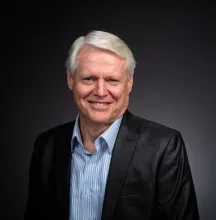
John Elliott serves in the role of President of the United Church of God, an International Association.
