

Chuck Smith
This transcript was generated by AI and may contain errors. It is provided to assist those who may not be able to listen to the message.
This is Fundamental Beliefs of the Bible, Part 9. We are looking at baptism.
Baptism had its roots with Israel passing through the Red Sea. If we look over in 1 Corinthians chapter 10 and verse 1, Moreover, brethren, I do not want you to be unaware that all our fathers were under the cloud, all passed through the sea, all were baptized into Moses in the cloud and in the sea, all ate the same spiritual food and drank the same spiritual drink. So what Paul is doing here is giving us a like type. Israel was in Egypt, a type of sin, under a Pharaoh, a type of Satan, and they left Egypt and went through a type of baptism.
It wasn't a real baptism. They didn't get wet, but he's showing here that they left there, they went through water, and they came out with God following God on the other side. So this is a good illustration because they're moving. They didn't just sort of accept God where they were and stay the same. They really had to change. They had to move. They had to follow God. Now those individuals, of course, rebelled and they died, but this got repeated again with the second generation.
If we go to Joshua chapter 3 and verse 14 through 17, Joshua chapter 3, starting in verse 14, so it was when the people set out from their camp to cross over the Jordan. So here's another body of water, and they were on the wilderness side. Now they're going to come into their promised land. They're going to cross over the Jordan with the priests bearing the Ark of the Covenant before the people. And as those who bore the Ark came to the Jordan, the feet of the priests who bore the Ark dipped in the edge of the water.
For the Jordan overflows all its banks during the whole time of the harvest. You know, this was right at the spring harvest, we find. And in verse 16, that the waters which came down from the upstream stood still and rose in a heap very far away at Adam, the city is beside Zeratan. So the waters that went down into the sea of Arabah, the salt sea or the dead sea, they failed, they were cut off, and the people crossed over opposite Jericho.
And then the priests who bore the Ark of the Covenant stood firm on dry ground in the midst of the Jordan, and all of Israel crossed over on dry ground. So it doesn't talk about this being a baptism, but we can see once again, individuals are following God, a miracle happens with water, and they move forward.
Now if we just take that element, let's now go to Matthew chapter 3 in verse 13. Matthew 3 in verse 13. Here we're going to find the, you know, the beginning of the baptism that you and I know. It says, And Jesus came from Galilee to John at the Jordan to be baptized by him.
So here is an individual who's actually going to be put underwater, and John tried to prevent him saying, I need to be baptized by you, and you are coming to me? But Jesus answered and said to him, permit it to be so now. For thus it is fitting for us to fulfill all righteousness. So what he says, for thus it is fitting for us, you and me, to fulfill all right, right living.
There's going to be a change here. People are going to change. So when we think about baptism, and we see Jesus's example here, you can remember that he also said another example for us with water, didn't he? Which was washing the disciples' feet. It's another type of, you might say, partial baptism. For those who have been baptized, we continue to need to be baptized, don't we?
I don't mean the full immersion, but this water, the washing of the water of the Word for the bride, something that needs to continue. And Jesus is setting an example by being baptized himself, and then by washing feet himself, and telling us, I've left you an example that you would do as I do.
And then part of Jesus Christ's commission to his ministry is for us to baptize and to do it properly. Let's go to Matthew 28. And verse 19, Jesus said, go therefore and make disciples of all the nations.
So in all the nations go out, you're going to disciple them. Teach them to live and be like you are, like I've taught you to live and be like I am. And baptizing them in the name of the Father, the Son, and the Holy Spirit, teaching them to observe all things that I have commanded you. So we see here, it's not just a person who gets put under water for any reason, but they are discipling them.
They are teaching them, they are teaching them to observe all things, and they're baptizing them in the family name.
And lo, I am with you always even to the end of the age. And so now we have part two by Wayne Ward. Part two is basically focusing in on how baptism is by immersion. This is a principle that really needs to be established as a fundamental because baptism, I mean among some groups, got twisted into a ritual of sprinkling or pouring instead of immersion. So one scripture that was used to justify sprinkling is in Ezekiel 26. I'm going to turn to Ezekiel 26 and verse 25. Ezekiel 36 verse 25 says, that I will sprinkle clean water on you and you shall be clean. I will cleanse you from all your filthiness and from all your idols. Okay, so we get this, yeah, the sprinkling idea that comes along. And what we see here that the purpose of sprinkling is to cleanse. And it's based on, you know, a ritual type of cleansing that was given to old Israel. And actually the UCG Bible Commentary walks through the explanation on this. This turns to Numbers chapter 19 and verse 9. It says, then a man who is clean shall gather up the ashes of the heifer and store them outside the camp in a clean place, and they shall be kept for the congregation of the children of Israel for the water purification. It is for purifying from sin. So yeah, the water purification is a purifying from sin. Turn to go up to verse 17. And for an unclean person, they shall take some of the ashes of that burnt heifer for purification from sin, and running water shall be put on them in a vessel. Okay, so the word running here, the Hebrew word they derived this from actually means alive. Okay, this water here is called alive water, or living water. Okay, and verse 19, the clean person shall sprinkle the unclean on the third day and on the seventh, and on the seventh day he shall purify himself. Okay, the unclean person is sprinkled with this living water mixture, and on the third and on the seventh day, and on the seventh day, he is made clean. Okay, verse 20, but the man who is unclean and does not purify himself, that person shall be cut off from among the assembly. Because he has defiled the sanctuary of the Lord, the water purification has not been sprinkled on him, he is unclean. So very evidently, the sprinkling symbolizes a cleansing by living water. And this we understand in a much deeper way, it's representation of the Holy Spirit when it cleanses us from an evil conscience. Turn to Hebrews chapter 10, and verse 22. Hebrews 10 verse 22, let us draw near with a true heart in the full assurance of faith, having our hearts sprinkled from an evil conscience, and our bodies washed with pure water.
Okay, so here the sprinkling or pouring is more representative of the Holy Spirit and its active work in our lives. But baptism has an altogether different symbolism. Baptism represents a burial. Turn to Colossians 2, verse 11, 11 and 12. In him you were also circumcised with a circumcision made without hands by putting off the body of the sins of the flesh by circumcision of Christ, buried with him in baptism, in which you were also raised with him through faith in the working of God who raised him from the dead. Okay, so but baptism represents our burial with Christ. We're in tuned with Christ so that obviously we need to be fully immersed underneath something. Acts chapter 8 and verse 38. So he commanded the chariot to stand still and both Philip and the eunuch went down into the water and he baptized them. See how they went down into the water. John 3 verse 23. So now John was also baptizing near Aenon and near Selim because there was much water there and they came and baptized. Because there was much water there, you know, this is more than they needed for a simple sprinkling or pouring. So it's pretty evident. So baptism plain and simply by definition means immersion. Greek word baptismo, baptismo means dip or to immerse or to submerge. And you can't get any more fundamental than that. So I'll pass part three back to Mr. Eliot. Okay, true baptism is preceded by true repentance. You know, people can get wet. So what we might call a valid baptism begins with true repentance.
And following that, the sacrifice of Christ brings forgiveness.
If we look in Acts chapter 2 and verse 38, we can see very clearly what baptism brings to a person.
Acts chapter 2 and verse 38. Peter said to them, repent. That's step one. Let every one of you be baptized in the name of Jesus Christ for the remission of sins. That's step two. And you shall receive the gift of the Holy Spirit. So we're looking at all three of these elements tonight, along with faith that really is a precursor to all of those, and the Holy Spirit leading us into being children of God. So right there we have four elements all of a sudden. So when we're talking about baptism tonight, we're going to be covering all of these. So repentance before baptism is very, very vital. Let's look in Mark chapter 1 and verse 4.
Mark chapter 1 and verse 4. John came baptizing in the wilderness and preaching a baptism of repentance. So you can't have baptism without repentance. And this baptism of repentance is for the remission of sins. Now sometimes people don't realize what a big event baptism is.
I performed a baptism this last Sabbath, and it was done in a very cold running stream, and it was a beautiful thing. But as you stand there with the individual, and then you put them in the water, and you explain to them what's going to happen, you realize a very momentous event. When this person goes underwater, all of their life's sins are now attributed to Jesus Christ. When that person comes out of the water, they are they are sinless in God's eyes, and they have no guilt whatsoever. And then in that sinless state, of course, they're helpless, but with a laying on of hands, they receive the tools to pursue righteousness and begin developing that character. So it is a really wonderful thing here. In verse 5, then all the land of Judea and those from Jerusalem went out to him, and were baptized by him in the Jordan River, confessing their sins.
We do have to acknowledge our sins, repent of them, and strive to change them in order to be forgiven.
In Mark chapter 7 and verse 20, once again repentance for what? Mark chapter 7 and verse 20.
What comes out of a man, Jesus said, that defiles a man. What's in our hearts? What's in our minds?
For from within, out of the heart of man, proceed evil thoughts. We've got to repent of our thoughts, of our adulteries, our fornications and murders. Some of these aren't actual. They're they're mental. Thefts and covetousness and wickedness and deceit and lewdness and evil eye, blasphemy, pride, foolishness. These are the things that we have to repent of and continue to look for and put out of our lives and at Passover, you know, imitate a type of baptism for someone else to forgive them as well as their forgiving us. All these things, Jesus said in verse 23, come from within and defile a man. And so it says in Acts chapter 3 and verse 19, repent therefore and be converted. Okay, converted. Convert means to take something and change it into something else. Let's go to Romans chapter 6 and verses 3 and 4 and see what that something else is. Romans chapter 6 and verse 3, do you not know that as many of us as were baptized into Christ Jesus, were baptized into his death. So before baptism, we're not linked to his death. In other words, forgiveness of sin does not take place before baptism. That happens when we are joined with him in verse 4. Therefore, we were buried with him through baptism into death that just as Christ was raised from the dead by the glory of the Father, that's a dramatic change from being a human. Now he's in the glory of the Father, the bright God being. Then even so, we also should walk in a different life, in a newness of life, something very different than what we were living before. So as we are linked through baptism to Jesus's death, we also receive forgiveness. Let's see this over in Colossians chapter 2 and verse 12.
Colossians 2 and verse 12. We are buried with him in baptism, in which you also were raised with him through faith in the working of God who raised him from the dead. And you, being dead in your trespasses and the uncircumcision of your flesh, see we were forgiven. We symbolically died, as Wayne said, through that burial. We're dead in our trespasses. They've been removed. He has now made alive together with him, having forgiven you all trespasses. Now let's stay on the theme here as we go forward into the next verse that is a trap for many people. He's made you alive together with him, having forgiven all your trespasses, having wiped out the handwriting of requirements that was against us, which is your list of trespasses, which requires your death penalty, which was contrary to us. It's contrary to us having eternal life. And he has taken it out of the way. Taken what out of the way? Our list of sins. Having nailed it to the cross. What was nailed to the cross? He was. He took our sins. He was nailed to the stake, the upright pole, the cross, whatever it was. And so we now have this forgiveness, and it's a wonderful thing if we have the trust and the faith that he really will forgive us. Now let's go to Philippians chapter 3 and verse 13 and see something really positive about God and forgiving us. Paul says, I do not count myself to have apprehended it. Apprehended perfection. Total righteousness, we can say.
But one thing I do, I forget those things which are behind and reach forward to those things which are ahead. What a wonderful God we have. What you repented of before your baptism, you should forget.
The mistakes you made last week that you repented of and you apologize for. He says, I do not look back. I forget those things which are behind because either Jesus took them himself, right, and he's the payment for them, or you're going to pay for it. It's one or the other. It can be both. So as we come up to Passover, we really, really need to be thoughtful here. As we come up to Passover, do I really believe that Jesus Christ took all my sins and he cleansed me of them? If so, go to the Passover service clean in his eyes and use the Passover service to do what he said. That is, when you take these elements, remember what I've done for you. Do this in remembrance of me.
Clean your mind of yourself and think of the great gift that he's given. Have a real pure Passover, deep respect and honor for that Passover. But if we don't, we think, oh, I don't think he really forgave me. Then I'm going to go to the Passover thinking about me and my sins. I'm going to haul them all there and say, I don't believe you, Jesus Christ. I don't believe that you suffered enough. I don't believe that you really forgave my sins. That would be a horrible thing to do.
Thus, as Paul said, some people were having a lot of issues because they didn't have that faith.
Going on here, he says, I forget those things which are behind and I reach for those things which are before. So as we walk forward with God, don't look backward. Verse 14, I press toward the goal for the prize of the upward call in Christ Jesus. We're on a race here. We need to be looking forward at the finish line. Therefore, verse 15, as many as us are mature, let us have this mind.
And now to Wayne for part four. Okay, well, a big part of the baptism is the laying on of hands. And it is by this action that the Holy Spirit is given. So let's turn to Hebrews chapter six.
And verse one. It went through three. Therefore, leaving the discussion of the elementary principles of Christ, let us go on to perfection, not laying again the foundation of repentance from dead works and of faith toward God, of doctrine of baptism, of laying on of hands, of resurrection of the dead, and of eternal judgment. And this we will do if God permits.
So the laying on a hands is a basic biblical doctrine, an elementary principle of Christ.
By appropriating this ceremony to his servants, to his ministers, we can see two things. Okay, a, that God works through human instruments, human hands are involved, and b, that blessings from God come through his government and through his instruments. So we also note then the laying on of hands is accompanied by prayer, showing what is performed by God, because God is involved, so there's prayer involved, in the giving of the Holy Spirit because of the action of laying on of hands. Turn to Acts chapter 8. Acts 8 and verse 15, who when they had come down, prayed for them that they might receive the Holy Spirit. Basically very simple. The laying on of hands then is highlighted by other occasions as well. Let's turn to Matthew.
Matthew 19 and verse 13. Then the little children were brought to him and that he might put his hands on them and pray for the disciples rebuked him, but Jesus says, let the little children come to me and do not forbid them for such is the kingdom of heaven. So the laying on of hands has powerful symbolism of God's hand in our lives affecting his will in us. Part five back to Mr. Elliot. Okay. Baptism is only for believers. Now a believer is one who has faith, obviously, and faith without works is dead. So baptism is for those who are believing and also for those who are busy working on their salvation. We find in Mark chapter 1 and verse 15 that a person must believe as well as repent. And faith is one grace from God. You know, the various graces that we have, really, from God are faith, repentance, baptism, forgiveness of sin, the receipt of the Holy Spirit, and being led by God by that spirit towards developing holy righteous character. Those are essential grace or the favors, the divine favors that come from God. So in Mark chapter 1 and verse 15, Jesus said, the time is fulfilled. The kingdom of God is at hand. Repent and believe in the gospel. So there's a repentance and a belief in this new rulership that Jesus Christ represented and that he was announcing. There's a new ruler, there's a new there's a new government, and this kingdom of God, the kingdom means rulership of God, is something that you must believe in, you must be active in. In Mark chapter 16 and verse 16, Jesus continues, and he says, he who believes and is baptized will be saved, but he who does not believe will be condemned. That's not just a matter once again of, oh, I believe you or I don't, but the believer is one who has been given that faith of God. He is one who is accepted in receiving the rulership of God, and therefore is baptized for breaking the rules of God, and that individual will be saved. Notice it's a will be saved. He hasn't been saved, but he will be. There's a process of salvation, but he who does not believe will be condemned. Now we find that believers are those who are baptized. In Acts chapter 12, you don't have to turn there, but I'll just give you the elements here, but when they believed, both men and women were baptized. See, first they had to believe, and that is the process, as it were, of the faith and coming to, oh, and seeing God's laws and his rulership and realizing they broke those laws, and thus now they want to subscribe, as it were, to God, his kingdom, his governance, and so both men and women were baptized.
Now let's look at Ephesians chapter 2 and verse 8. Ephesians chapter 2 and verse 8. Here's another verse that sometimes people misuse or misunderstand. We talk about the graces of God, as I mentioned, the faith, repentance, baptism, forgiveness of sin, the Holy Spirit, and Christ and God living in us then, and helping us walk and wrestle Satan. For by grace, or by these divine favors, you are being saved through faith, and that not of yourself, it's the gift of God.
So we can't take any of those favors and say, oh, I gave them to myself. You didn't give yourself faith or repentance or baptism or forgiveness of sin or the Holy Spirit, and you're not so bright that you're leading yourself towards the kingdom. No, those are not of yourselves. Those are gifts of God. But our part of following God and applying these things and using the Holy Spirit is the element of this covenant that is up to us. Over to Wayne for part six.
Good. Thank you. Yeah, so part six is basically after baptism, after the full ceremony and the laying out of hands, that is the point when a converted person receives the Holy Spirit. Let's turn to Acts chapter 2, 2 and verse 38. And then Peter said to them, Repent, and let every one of you be baptized in the name of Jesus Christ, for the remission of sins, and you shall receive the gift of the Holy Spirit.
This is vital, you know, because without the indwelling of the Holy Spirit, essentially a person is not a Christian until that point. Turn to Romans chapter 8 and verse 9. But you are not in the flesh but in the Spirit, if indeed the Spirit of God dwells in you. Now, if anyone does not have the Spirit of Christ, he is not his. And verse 14, For as many as are led by the Spirit of God, these are the sons of God. Pretty basic stuff here, but it's essential to know, just like how the Spirit of God is given, it's be given because of the obedience to God because of our repentance. Turn to Acts 5 and verse 32.
And we are his witnesses to these things, so also is the Holy Spirit, which God has given to those who obey him. But it is also given partly for our knowledge of the love of God. Romans chapter 5 and verse 5 says, Now hope does not disappoint because the love of God has been poured out in our hearts by the Holy Spirit, which was given to us. So the Holy Spirit really grants a person the capacity to know and express God's love and grants the ability to worship God as he wishes to be worshiped. John 4 and verse 23 says, But the hour is coming, and now is, when the true worshipers will worship the Father in spirit and truth. For the Father is seeking such to worship Him.
Verse 24, God is spirit, and those who worship Him must worship Him in spirit and in truth. We cannot worship God in flesh, in the physical. We worship God through His Spirit by attending to His spiritual principles of life, to holding fast to all. That is truth. That is truth that has been preserved for us by His Word, His law, and the fruits of the Spirit. Romans chapter 8 and verse 13.
For if you live according to the flesh, you will die. But if by the Spirit you will put to death the deeds of the body, or you put, if by the Spirit you put to death the deeds of the body, you will live. So the Holy Spirit grants the person to to subdue the deeds of the flesh.
But it is something we have to be active in. We must stir it up. We must deliberately engage in this and to bear godly fruit. Second Timothy 1 verse 6. Second Timothy 1 verse 6. Therefore I remind you to stir up the gift of God which is in you through the laying on of my hands. Meaning then, as well, we cannot neglect this precious gift of God. First Thessalonians 5 and verse 19 says, do not quench the Spirit. Make sure scripture to end there. So yes, there are ritual elements to baptism and the laying on of hands. But what God does on the spiritual side because of that is such an amazing and wonderful blessing and benefit for all of us. Turn the last part back to Mr. Eliot. A baptized person led by God's Holy Spirit is part of the spiritual body of Christ. That is a massive thing we take for granted sometimes because we talk about being part of the body of Christ. But if we go to 1 Corinthians chapter 12 and verse 12, Paul says, for as a body is one and has many members, but the members of that one body being many are one body, so also is Christ. He is including us into his body, into this entity, and a body represents it well. And he's saying, you're a part of it. You're a part of me. I've made you part of me, and you've grown into me. So when you think of the many parts, you can imagine so many parts of the body, and yet there are many, many more than what you and I would tend to just see on the outside. A surgeon could probably tell you a lot.
And whenever you get a new ache or pain, you learn about a new part of your body that you probably didn't know you had before. In verse 13, he says, for by one Spirit we were all baptized into one body, whether Jews or, you might say, Israelites or non-Israelites, whether slaves are free, and we have all been made to drink into one Spirit. For in fact, the body is not one member, but many. So we've been baptized into this body. Baptism brings us into the spiritual body of Christ. If, again, we are led by God's Holy Spirit, that creates some interesting things for us.
If we go to 1 Peter chapter 2 and verse 9, you are a chosen generation.
People just don't choose to receive the divine favors of God, what is called grace. He chooses individuals. So you are a chosen generation.
And now, because you're in the body of Christ, you are a royal priesthood, a holy nation, his own special people, that you may proclaim the praises of him who called you. See, there's the calling out of darkness into his marvelous light. Calling is another element. It's probably the fifth or sixth of the primary elements, is having that calling.
And we're called out of darkness into his marvelous light, who were once not a people, but are now the people of God. So you and I have this remarkable connection with the God family.
And another thing that it makes us is children in the family of God. If we look in Romans chapter 8 and verse 14, it says, For as many as are led by the Spirit of God. Doesn't say, who have the Spirit of God. As many as are led by the Spirit of God, these are sons of God.
For you did not receive the Spirit of bondage again to fear.
Don't look back. But you received the Spirit of sonship, the word should say, by which we cry out, Abba Father. And I'm sure you've heard before, Abba is the familial term. It's almost like saying Daddy.
He really wants us to look to him as family, as the one who loves us, the one who's not just, you know, some super powerful, too bright, too far away, too holy for us to connect with. Just come in boldly and see your dad.
And if you didn't have a dad, many of us didn't have a dad that was, you know, very sort of loving and tender and welcoming. But this is the real dad. We have a new father. Our father is a father in heaven. So, you know, put aside any other thought, and you've got the real father here. And we are to cry out, Abba Father. And the Spirit itself bears witness with our spirit that we are children of God.
And if children, then heirs, heirs of the Godhead, heirs of God, and joint heirs with Christ.
If indeed we suffer with them, that we may also be glorified together.
So, there's a look at baptism. We can't cover all the elements of baptism, but these are principal elements. And in conclusion, we might ask this question. What is God's intended goal of us being baptized? Why do we need to be baptized?
Let's go to Colossians chapter 1 and verse 21 for our final scripture.
And you who were once alienated and enemies in your mind by wicked works, yet now he has reconciled in the body of his flesh through death to present you holy and blameless and above reproach in his sight.
This is what baptism accomplishes to this point. But what is its goal? What's its purpose?
If indeed, verse 23, you continue in the faith, grounded and steadfast, and are not moved away from the hope of the gospel, which you heard. What is the hope of the gospel? Eternal life, eternal life in the family of God, which was preached to every person under heaven.
So that is what God wants, and that's where baptism is taking us with God's Holy Spirit and with the other elements of God leading us and us being his children. If we continue in the faith, grounded and steadfast, pursuing that hope of the kingdom of God, then we fulfill what God wants us to do, which is to ultimately be divine children in his family and shine like the stars forever. Thank you for joining us tonight for the Bible study. Next time, we'll look at part 10, the Sabbath.
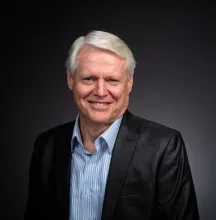
John Elliott serves in the role of President of the United Church of God, an International Association.
