
Don Ward
We continue our study into the general epistles.
This transcript was generated by AI and may contain errors. It is provided to assist those who may not be able to listen to the message.
Welcome, everyone! Welcome to tonight's Bible study. We have come to 1 John, and one of the great purposes for John writing 1 John is to combat Gnosticism. So I wanted to review Gnosticism quickly here this evening. Some of you didn't hear the first review of Gnosticism. Gnosticism did take on various forms. It was one of the great enemies of the Church, in the early Church, in the first and second century, especially, and many of the Paul and John especially wrote to combat Gnosticism. As you recall, and I would like for you to do this now, if you have access to your pencil and paper to draw a horizontal line across, and then several lesser lines below that, the Gnostics taught that God was pure light, and the goal of humanity was to get back to God in pure light. And each one of these lines that represent knowledge had to do with genealogies and special knowledge that the Gnostics would teach the believers in order to get back to the light. We know that in the Gospel of John, that John wrote about knowledge even then. In John 1, this is the Gospel of John. I would like for us to turn to the Gospel of John. In the beginning was the Word. As we shall see when we begin reading 1 John, he says, he uses that terminology, the beginning, or in the beginning, or from the beginning, something like that. In the beginning was the Word, and the Word was with God. And the Word that is translated was, is in the Greek, en, which means to exist. It's the same as the English verb is, which means to be, to exist. In the beginning was the Word, and the Word existed with God, and the Word existed as God. So, in the beginning was the Word, the Word was, and the Word was with God, and the Word was with God. This verse here shows relationship with God, it shows existence, and it shows that Jesus Christ was in relationship with God the Father. The existence, relationship, and now we come to verse 2. The same was in the beginning with God, and all things were made by Him, and without Him was not anything made that was made. So, Jesus Christ, who is the light, was the agent of creation. And Him was life, and the life was the light of men. So, we'll see, of course, in Asic's thought that you were trying to get back to God, and to get back to God, you have to have this special knowledge of genealogies of angels and different things, which we'll read in just a minute from 1 Timothy chapter 1 and verse 4. But now we're in John, the Gospel. So, the light of men. Jesus Christ is the light of men, He's also the life of men. And the light shines in darkness, and of course, darkness and light are contrasted in 1 John. So, He was the light of the world, and light is contrasted with darkness. So, the light shines in darkness, and the darkness comprehended yet not. Of course, if you're in the darkness, in Satan's world, there's always been this battle between the light and dark, in the Garden of Eden, to the present time. There was a man from God, whose name was John, that's John the Baptist. He was not John the Apostle. The same came for the witness to bear witness of the light that all men through Him might believe. Now we go to 1 Timothy chapter 1, 1 Timothy chapter 1, verse 4.
1 Timothy, I'm sorry, 1 Timothy chapter 1, verse 4. Neither give heed to fables and endless genealogies. See, that's what the Gnostics taught, endless genealogies in it. It had to do with genealogies from mythical characters, had to be because they didn't really know what the genealogy of an angel is or was. Neither give heed to fables and endless genealogies, which minister questions rather than godly edifying, which is in faith, so do. And now we go back to 1 John chapter 1, and we'll see the commonality of the language there in John chapter 1 and verse 1. Now, we want to establish that John is the author of this epistle or this letter.
The commentators do not call it an epistle or a letter. It's really a treatise, written in the form of a treatise. There's neither a greeting or a salutation. So we continue now that which was from the beginning, which we have heard. So one of the things that the Gnostics taught, they taught as you go away from God, though the light is less and less, and finally you come into darkness. They claim a duality that there is the world of darkness, there's a world of light. And in the world of light, God doesn't exist in the world of darkness. He exists only in the world of light. So God would have contaminated himself if he had created the world, the universe, that we talk about, and the creator, they called it the Demiurge. It is spelled just like it said, the Demiurge. The Demiurge was the creator. They said that Jesus Christ could not be contaminated with physical things, so he just seemed to be, that he was a phantom in human form. They call this doctrine, Docetism. D-O-C-E-T-I-S-N. And as I said, this doctrine of Gnosticism, Paul combats especially in 1 Timothy and Colossians and other places in his epistles. And John, of course, is now combating it in 1 John. That's what we have from the beginning. See, from the beginning, we read from in the beginning, God existed with with Christ, or Christ existed with God, whichever way you say it. But Christ existed with God before time began. We read from 1 Timothy chapter 1 and verse 10 that before time began, Jesus Christ existed. He was slain from the foundation of the world. So, the beginning which we have heard, which we have seen. So, not only did they hear Jesus Christ, they heard him speak. They saw him with their own eyes, which we looked upon in our hands, and they touched him in our hands of handle of the Word of Life. The Word of Life is, of course, Jesus Christ. And we know that the Word was made flesh and dwelt among us. So, John is really combating Gnosticism here in the first chapter of 1 John. Now verse 2, for the life was manifested, and we have seen it and bear witness, and show unto you that eternal life which was with the Father and was made manifest unto us. So, Jesus Christ, one of the purposes of Jesus Christ's coming was to reveal the Father. In the opening prayer, I said, thank you that you have revealed yourself to us through your Word, through your Spirit, and through your Son, Jesus Christ. So, Jesus Christ is the great revelator, but the revelation begins with God the Father. If you read Revelation 1.1, it says the revelation of God, which he gave to Christ, who gave it to an angel, who gave it to John, and John gave it to the pastor of the churches in Revelation chapter 1.
Now verse 2 again, for the life was manifested, and we have seen and bear witness, and show unto you that eternal life which was with the Father and was manifested unto us. So, Jesus Christ revealed the Father to us, and showed us how we might have eternal life. That which we have seen and heard, we declare unto you that which we have seen and fellowship, that our fellowship might be with God the Father. Our fellowship is with the Father and with His Son, Jesus Christ. Now we are in fellowship with God and Christ as long as we obey. So, here we have in the introduction that John is addressing the people in here.
He addresses the mature Christian, he addresses the new Christian, and he addresses those who are just learning about the truth. He uses a term of endearment for those who are just beginning in the truth, the technon or the little children.
So, three groups of people he writes to in various stages of conversions. He writes to the fathers, he writes to the young men, and he writes to the little children. And we'll see that in chapter 2. He addresses everyone. Saints are those who are in the Church, those who have been called, who have been, who have repented of their sins, been baptized, received, and laying on of hands.
So, this is written in the form of a treatise. It's not written in the form of a letter, an epistle, or it is written in the form of a treatise in which law and love are compared and contrasted. Mainly, we need to understand that love fulfills the law, and without the law, you really can't have spiritual love. Now, one of the things that the commentators oftentimes fail to bring out in 1 John is 1 John 3-4. Now, we're talking about now an overview of 1 John. What does 1 John 3-4 say? 1 John 3-4 says, for this is the love of God, that we should keep His commandments, and His commandments are not grievous. So, that's one of the few places in the Bible where the love of God is clearly stated, the definition of love, for this is the love of God, that we should keep His commandments, and His commandments are not grievous. Now, love, the love of Eros, there's brotherly love, there's Eros, which is the love of husband and wife, or some people call it sexual love, but that kind of love, there's Philaean, the brotherly love, and then there is Agape, spiritual love. So, mainly John is writing about spiritual love, that spiritual love stems from the love of God. For this, this is the love of God, that we should keep His commandments, and His commandments are not grievous. So, in this treatise that John has written here, we oftentimes see love and law, love and law. Now, other purposes for writing this epistle is that, of course, the first one we have already given is to combat Gnosticism. We've talked about Gnosticism. The Demi-Eros is a creator. The goal of the Gnostics was to get back to God. There were genealogies that they had to memorize, and a special form of knowledge to get back into the light. Salvation was light, and in 1 John, the true light, the light of God, is contrasted with darkness, even to the point that this form of dualism that the Gnostics taught, that even they said that Christ Himself was a phantom in human form, that He really didn't make footprints when He walked. He just seemed to be, and that doctrine was Docetism, or Docetism. Docetism. D-O-C-E-T-I-S-M. Docetism, or just said ism. Docetism, I think, is the way most people pronounce it. So, he wrote this treatise to combat Gnosticism. He wrote this treatise that your joy might be full, that the joy of Christians could be could be full. He wrote this epistle to contrast light with darkness.
He reveals to the brethren the true love for the brethren and the true love for God.
He wrote this epistle that we might discern the false from the true, the true from the false, and we'll talk more about that in just a moment. He wrote this epistle to give us the steps of reconciliation, especially in chapter 3 when we get there. And he wrote this epistle, as we've already noted, the definition of love, for this is the love of God that we should keep his commandments, and his commandments are not grievous. Paul wrote this, I'm sorry, John wrote this epistle from Ephesus. Now, Ephesus was a great city. There were two great cities in Asia Minor at the time of the apostles, and especially Paul and John. John, of course, wrote the book of Revelation from an isle just off of Asia Minor, the Isle of Patmos. He wrote this epistle from Ephesus. Ephesus was one of the great cities of the ancient world, along with Corinth. They were like the Las Vegas of the day.
So, are you going to Corinthianize, speaking of Corinth, and with the Ephesians? They had a temple. It went by, first of all, it was called a temple of Artemis. Artemis was one of the Greek gods, and they built a temple in honor of Artemis. It even had a marketplace in it. It was 420 feet long. Now, football field from go-post to go-post is 360 feet. So, 420 feet long was the temple of Artemis. Now, when the Greeks conquered that part of the world, they called the temple the Temple of Diana, and it was from one of their gods. And so, it had two names, Artemis, the Temple of Artemis, and the Temple of Diana, and it was 420 feet long.
Now, continuing here in 1 John chapter 1 and verse 3, that which we have seen and heard declare we unto you. So, once again, combating Gnosticism, that you may have fellowship with us, and truly our fellowship is with the Father and with his Son, Jesus Christ. So, true fellowship is spiritual fellowship, as we see here.
And these things right we unto you, that your joy may be full. We talked about that with regard to your joy being pulled. Now, one of the reasons why Paul wrote this, I keep saying Paul, that John wrote this epistle was that we might know whether or not we are in the faith. What is the most famous phrase in the book of 1 John? The most famous phase is, Hereby we know. Hereby we know. And we're going to, and I would ask you to turn to each one of these. We're going to stay in 1 John now, verse 2 and verse 5.
But whoso keeps his word, and him verily is the love of God perfecting. So, to have fellowship with God in Christ, you have to keep the love. The word of God is perfected, and you will have fellowship. Hereby we know that we are in him. We are in him in that his spirit dwells in us, the eternal spirit, the spirit that has no beginning and no end. What does it say that the eternal spirit, well that's in Hebrews. I think it's in Hebrews chapter 9 and verse 10, but if it's not 10, it's in that area. Verse John 3 16, Hereby perceive we the love of God, because he lay down his life for us, we ought to lay down our lives for the brethren. So once again, hereby we perceive the love of God. That is, if we are willing to lay down our life for God. We are to become living sacrifices, not dead sacrifices, but living sacrifices, sacrifices, it says in Romans 12. 1 John 3 24, and he that keeps his commandments dwells in him and he in him, and hereby we know that he abides in us by the spirit which is given unto us.
So, love, law, spirit, God. 4 Hereby we know that the Spirit of God, hereby we know the Spirit of God, every spirit confesses that Jesus Christ has come in the flesh, is of God. Of course, you couldn't really come to Jesus Christ unless you understand that he did come in the flesh, as it says in John 14, and the Word was laid flesh in the flesh, and the Word dwelt among us. In 1 John 4 6, we are of God, he that knows God hears us, he that is not of God hears not us, hereby know we the Spirit of truth and the Spirit of error.
So, of course, that is in conjunction with identity of the Antichrist, those who hear the apostles and what they have written, the Word of God. In 1 John 4 13, hereby know we that we dwell in him and he us, because he is given us of his Spirit. Now, back in chapter 2, he turned back to 1 John 2 3. Hereby we know that we know him, yet we keep his commandments. In verse 5, but who so keeps his Word and him verily is the love of God perfected. Hereby we know that we are in him. Verse 18, little children, it is the last time we have heard that Antichrist shall come. Even now are there many Antichrists. Hereby we know that it is the last time. In chapter 3 verse 2, beloved, now are we the sons of God. And it does not yet appear what we shall be. Of course, we're in the Begettah stage right now. But we know that when he shall appear, we shall be like him, for we shall see him as he is. And so on it goes, I would encourage all of you to write down, Hereby we know. And you will get a good idea of whether or not you are in the face when you write down, Hereby we know. Not only would I write down, Hereby we know, but I would write down the verses that contain the word NO. If you will do those two things, you will have a good grasp on this epistle. Now, we continue in 1 John chapter 1 in verse 5. This, then, is the message which we have heard of him, and declare unto you that God is light. Remember, we read from the Gospel of John that Christ is light, and he was with God, and he was with him from the beginning.
Now, I would like to read to you what commentators say about the beginning and the use of beginning in the Bible. There can be no doubt that the reference here is to the Lord Jesus Christ, that is, in the beginning. Now, in Genesis chapter 1, in the beginning, God created the heavens and the earth. It always means God is going to create something new, and it's the subject.
It is the object. It is the object. It may be anything matter. It may be animal life, it may be spiritual life, but God is the Creator. Hence, creation is not contained to a single point of time. Whenever anything absolutely new that is not involved in anything previously extend is called into existence, there is creation. And anything or event may also be said to be created by Him, who created the whole system of nature to which it belongs. The verb in its simple form occurs 48 times, that's in the beginning, of which 11 are in Genesis, 14 are in the first five books in the Bible, and 21 in Isaiah, and always in one sentence. The noun found in the Hebrew Scriptures 57 times in the singular, 2 in Genesis, and Deuteronomy 3 times, of which 17 are in Job, and so on, and goes and talks about them. That it is bringing something new into existence, and it doesn't mean that time started at that juncture. That's an important point to consider, that time in the beginning doesn't mean that time started at that juncture, but something new came into existence at that junction. Now we continue in 1 John. 1 John 1 And we have read that he was the light, and we read from the Gospel of John that Christ was light and there was no darkness at all in him. Now in 1 John 2 and verse 6, if we say that we have fellowship with him and walk in darkness, we lie and do not the truth. So one of the things that's necessary to walk in the light, of course, and to have fellowship with God, is to obey, to keep the truth. 2 John 1 But if we walk in the light, as he is in the light, God is pure light. 3 John 1 We have fellowship one with another, and the blood of Jesus Christ and his Son cleanses us from all sin. And in when the Ten Commandments are given in Genesis 20, verses 6, the six Commandments through the tenth, is telling us how to love our neighbor.
But if we walk in the light, as he is in the light, we have fellowship one with another, and the blood of Jesus Christ his Son cleanses us from all sin. If we say that we have no sin, we deceive ourselves, and the truth is not in us. So even after we are baptized, we do sin. And he gives the anecdote for that sin in the next verse. If we confess our sins, he is faithful and just to forgive us our sins. Of course, confessing our sins implies that there is repentance as well. If we did not repent of our sins, and Jesus Christ forgave us and would remain in our sins, it would be like it says in Galatians 2, 17, 18. He would be the minister of sin, and he is not the minister of sin. He called us out of our sins, and called us into the light.
So if we confess our sins and repent, he is just to forgive us our sins, and to cleanse us from all unrighteousness, so that we can walk in a justified position with God at all times. If we say that we have not sinned, we make him a liar, and his world is not in us. So we must obey the Word of God in order to have fellowship with God and with Christ. Now, chapter 2. My little children, my little children, these things right eye unto you that you sin not.
And of course, God is saying, I hope you don't sin. I don't want you to sin, but if you do sin, again, if any man sinned, we have an advocate with the Father. And that advocate is Jesus Christ.
Actually, the Greek word there is parakletis or parakletis. It means one alongside. We have an advocate, one alongside the Spirit.
We have an advocate with the Father, Jesus Christ, the righteous. Now, we know the Holy Spirit proceeds from God. But that same Spirit that sinned God is in Christ is in us. In Ephesians 4, it says that there is one Spirit. And we are partakers of that one Spirit, the eternal Spirit. The same Spirit that's in the Father that's in Christ is in us. Jesus Christ, the righteous.
And He is the propituation. That is, He went in our stead. We didn't have to go.
It says in Romans 3, 23, that all have sinned and come short of the glory of God. And He went in our stead. And He paid the price for us. He brought us, He bought us back from sin and death. He is the propituation for our sins, and not for ours only, but also for the sins of the whole world. And hereby we know, that we know Him if we keep His commandments. Shortly after the split in 1995, and a lot of people went through separate ways, students would write me and talk about how wonderful it was.
In church services now, they had praise, worship, and all that. And I would write and say, 1 John 2, 3, thereby we know that if we know Him, we know that we know Him if we keep His commandments. And I would say, Are you keeping the commandments? Do you know the commandments? Are you keeping the Sabbath day holy? And I almost all of a sudden, no one would write me anymore.
Well, a lot of people that stayed in United did write, but those who left, they knew they were not keeping the commandments. And hereby we know that we know Him if we keep His commandments. He that says, I know Him and keeps not His commandments, is a liar. And the truth is not in Him. The truth is not in Him. So, you think, I'd do everything but so and so. Well, you have to keep the commandments. And the commandments have many, many facets. We have the grand summary in Exodus chapter 20, but there's a lot more branches to the commandments as we know. But who so keeps His commandments? In Him, barely, is the love of God perfected. Hereby we know. Hereby know we, that we are in Him.
You have to keep the commandments and know that God is in you. That you have the Holy Spirit. He that says He abides in Him ought Himself also. So to walk even as He walked, and He walked in the light, He kept His Father's commandments. In one place in the New Testament in Luke, He says, Why call you me, Lord, Lord, and do not the things that I say? Yes, Jesus Christ keeps His Father's commandments, and He expects us to keep His Father's commandments. Now continuing in verse 7. Brother, not write, no new commandment unto you, but an old commandment which you had from the beginning. Send the first five books. The old commandment is the word which you have heard from the beginning.
And again, a new commandment. Now what is the new commandment? The new commandment is to love and keep the law as He gave commandment. Jesus Christ set us an example that we should follow in His steps. That is very clear in the Scripture. He set us an example that we follow in His steps. He kept the law of God perfectly. As it says in Romans chapter 8, He showed in the flesh that it was possible to keep the commandment.
So again, a new commandment. What is a new commandment? I write unto you which thing is true in Him. And in you because the darkness has passed and the true light is now shine. True light now shines. He that says He is in the light and hates His brother is in darkness even until now. Sorry, but I got it.
So once again, He that says He is in the light and hates His brother is in darkness even until now. And you may think that you're in the light and you may think that you're doing all kind of marvelous works, but you may hear the words. If you're not keeping the commandments, you will hear the words, depart from Me, you workers of iniquity, lawlessness, for I knew you not. He that loves His brother abides in the light. And there is no question, time after time in 1 John, we're told to abide in the light. We're told to obey.
And there is no occasion of stumbling in Him. If you're abiding in the light, there is non-occasion of stumbling in Him. But He that hates His brother is in darkness. So He takes up this part about loving your brother, especially in chapters 3 and 4, in a more detailed way. We will cover that when we get there. But He that hates His brother is in darkness. And so you can't pretend that you love God, and at the same time, hates your brother, and walks in darkness and knows not where He goes, because that darkness is blind in His eyes. He can't see spiritually. God wants us to see spiritually. He wants us to be clear-eyed with regard to that which is spiritual. I write unto you little children, because your sins are forgiven, so those who are new in the faith, little children, you are for His namesake. You're forgiven for His namesake. And time after time in the Scripture, God says that He does certain things for His namesake. He doesn't necessarily do it for you. Of course, He did do it for us, but He was willing to give His life. But He also does it for His namesake.
So little children, make sure that you're walking in the light. And I'm doing this for my namesake.
I write unto you fathers, because you have known Him, and that is from the beginning. You have known Him a long time, and I write unto you young men, because you have overcome the wicked one. I write unto you little children, so three stages of conversion, because you have known the Father.
You have to have a certain threshold of knowledge in order to be converted. One time, my brother asked me, well, why do you think that you have salvation? You have to believe a certain way. And I said, there is a critical threshold of knowledge that God must reveal. And who knows the things of God, except that they are revealed? We read that scripture from 1 Corinthians 2, verses 10, 11, and 12. No man knows the things of man, except the spirit of man in him. And who knows anything reveal knowledge, except God reveals it to him.
Spiritual knowledge is revealed. No. You have known the Father, and the Father has revealed it. You know, when Peter was, the first of all, the apostles were asked, whom do men say that I am? And they gave various answers as to whom people say you are. And then Peter said, you are the Christ, the Son of the Living God, or with Jesus Christ's response.
He said, flesh and blood is not revealed it to you, but my Father in heaven. In other words, you didn't learn this from men. You learned it from your Father in heaven. I've written unto you fathers because you have known him that is from the beginning. Now verse 15. Do not love the world. Love not the world. Neither the things that are in the world. If any man loved the world, the love of the Father is not in him. You know, when Jesus Christ was tempted by Satan, he says, Love not the world.
He offered him food. And Jesus Christ, man, should not live by bread alone, but by every word that proceeds out of the mouth of God. He offered him the kingdoms of this world. And he said, No, that's the pride of life.
And he offered him all things of this world. And he said, No, that's the lust of the eyes. I'm not after the things of the world. I'm not after this world. I'm not after the kingdoms of this world. I'm here to obey my Father. Hey, to obey him. For all that is in the world, the lust of the flesh, the lust of the eyes, the pride of life.
Jesus Christ was tempted by the devil in all points, as we are tempted. He says that in Hebrews 2 again. Of course, he was tempted mightily after he was baptized. In Matthew 4, you can read of that. The pride of life is not of the Father, but is of the world. Oh, yeah, we want to be somebody in the world.
And the words and the world passes away. Not only is it not of the Father, it passes away. You know, there is a song that says there's a new world coming. Indeed, there is a new world coming. It is what we call the wonderful world tomorrow. It is beyond today. There is a future beyond today. The world thinks this much of the world, and especially now, the world thinks this is it.
Perhaps that is one of the reasons why they think, well, eat, drink, be merry, because tomorrow we die, and that's it. There is nothing else. But praise beyond the God, there is a new world coming. And this world is passing away, and it is going to pass away fully and completely. Now he warns us against Antichrist. Little children, it is the last time. And as we have heard, that Antichrist shall come. Even now are there many Antichrists.
Hereby we know that it is the last time. Well, even up until John wrote this epistle for these treaties, he thought the world was—that Christ was going to come shortly because there were Antichrists in the world, and there have been Antichrists since the time of the Apostles to the present day. We need to heed the words of the Apostles. We need to heed the word of God. But you have an unction. That word, unction, is a different kind of word.
That word, unction, is chrisma, in the English, and spelled with a k, k-h-r-i-s, m-a-h, in Hebrew, chrisma. It means a smearing or a rubbing in. You received an unction. You didn't have just hands laid on you in receiving the Holy Spirit, but you have an unction of the Holy Spirit. But you have an unction of rubbing in from the Holy One, and you know all things. Well, we have a lot to learn, but we know a lot. We know enough to know the truck of the tree. And the truck of the tree is what we really ought to emphasize. What shall we be in the kingdom of God? We shall be glorious, radiant, spirit beings. And this treatise teaches us about reconciliation. God has committed unto us the spirit of reconciliation. It says in 2 Corinthians chapter—oh, I forget the chapter—in 2 Corinthians, that we have been given the ministry of reconciliation. The ministry of reconciliation. Of course, first of all, we must reconcile with God and Christ. Then secondly, we must reconcile with our brothers and sisters, and we must reconcile with the world. So, three areas of reconciliation. God and Christ, one area with our brethren in the church, second area with the world as much as possible, live with all men peacefully, as it says in Romans 12. But you have not received a rubbing in from the Holy One. You have it rubbed in you and penetrates the law of God as now written on your inward parts. I have not written unto you because you know not the truth. So, he's writing to Christians in three stages. Here, especially, he's writing to mature ones because you know—I'm not writing any cause, but you know not the truth. I'm writing because you know it. You know the truth. And because that no lie is of the truth. And, of course, Gnosticism was a big lie. Who so is a liar, but he that denies that Jesus is the Christ. The Gnostics claim that they knew Jesus Christ, but they in a sense denied that he came in the flesh. They said he just seemed to be. He is the antichrist that denies the Father and the Son. If you deny Christ, you've denied the Father. If you deny the Father, you've denied Christ. You can't have one without the other. It's like love and marriage. You can't have the love of God and hate your brother. It's like love and marriage. Love and marriage go together like a horse and carriage. Who so denies the Son the same have not the Father, but he that acknowledges the Son has the Father. So you have a reciprocal relationship. You can't have one without the other. And, of course, Christ opened the door to the Father. Once again, I bring to mind the opening prayer. Thank you for revealing yourself through your word, your spirit, and your Son, Jesus Christ, who came to reveal the Father.
Let that, therefore, abide in you. Let that abide in you. Don't give it up. You have received the rubbing in the Spirit, which you have heard from the beginning. If that which you have heard from the beginning shall remain in you, you shall continue in the Son and in the Father. And this is the promise that He has promised us eternal life. There's just about everything that a Christian can think of contained in verse 9.
These things have been written on you concerning Him, concerning Him that seduce you. So there was evidently a person going around, of course, as you read in Thessalonians, there's one that was going around saying that Christ has already come. And there, those going around teaching Gnosysism, saying that He only came in phantom form. They believed in a form of dualism that that which you can see, touch, hear, smell, that you can discern by the five senses didn't really exist, that you had to be in the light, and you had to learn genealogists and special knowledge.
And you need not that any man teach you, but as the same anointing. An anointing means pouring out of the Spirit, teaches you of all things. And when it is come, it will teach you all things. That is, in the Gospel of John, it will teach you all things whatsoever I've commanded you. You have an anointing, a rubbing yin of the Spirit, teach you all things that is truth and is no lie. And even as it has taught you, you shall abide in him, you shall abide in God. Of course, the Holy Spirit, you have the Spirit in you, the essence of God in you, not a living person. It is only not a separate person. It is the living God in Christ that are in you. And we both shall make our abode in you. That's the Gospel of John, chapter let's see, chapter 14 verse 23. Chapter 14 verse 23. And even as he has taught you, yes, you shall abide him. And now little children abide in him, that when he shall appear, you may have confidence and not be ashamed before him at his coming.
Once again, showing that he believed in the Second Coming, and he believed that it was nearer. If you know that he is righteous, you know that everyone that does righteousness is born. Now, the translator's translated it born, but let's talk about once again this word of canal. We'll have to talk about it again in chapter 5. The Greek word is canal, that he is begotten, that does righteousness, is begotten of him. If you're born of God, you cannot sin.
But if you're begotten of sin, if you're begotten of the Spirit, you will sin, and you have an advocate with the Father, Jesus Christ the righteous. And he that is done, he that does righteousness, is begotten of him.
The him here is the Father. We are begotten of the Father. He raises us from the dead. Now, Jesus Christ plays a role in it. God the Father does, I think, everything through Jesus Christ.
So, he that is righteous, that does righteousness, is begotten of him. He is begotten of the Father, with Jesus Christ playing a role.
So, we've come to the end of our study tonight. I hope you have a lot of questions.
And we will now entertain questions and comments from you. Do you have any questions or comments? Dr. Ward. Yes, sir. First John 1.3, and truly our fellowship is with the Father and with his Son, Jesus Christ. It's left out fellowship with the Spirit. This proves that the Trinity doctrine is not right.
Proves what? That the Trinity doctrine is not right. Oh, yeah. We talked about that when we read Chapter 1. Does anybody else have a question or comment? Dr. Ward?
Yes. I just wanted to... the scripture you're looking for when you talked about the Ministry of Reconciliation, that was 2 Corinthians 5.18. 5.18, yeah. Ministry of Reconciliation. 5.18. Yes, sir. 2 Corinthians. Anybody else have a question or comment?
If I were in a class, I would have you turn to all of these scriptures, probably, but we are moving on with mature Christians who are attending this Bible study, and I hope you're writing down the scriptures and that you will look them up and make sure I'm them. Don't believe me. Believe your Bible and everything that I say. And I have been known to make errors.
So be sure to prove all things yourself.
How's your life going, Mr. Dr. Ward? Oh, not good at all. Not good. Been a bad couple of weeks.
There's a lot of pain all over the body. That's what fibromyalgia will do to you.
So avoid all stress. Walk in the light.
I think that this shows, like it says in 1 Corinthians, that God is love. If you just summarize everything you've read tonight, you could just say it just proves how God is love. It's everything about Him is love. And if we walk in His light like Him, we will also exemplify that love towards Him and towards everyone, towards our brethren and our families, and so forth. Twice in the epistle of, I just keep saying epistle or treatise of John, in chapter 4, in verse 8, it says, God is love. Verse 16, it says, God is love. So one of the few places, maybe the only place, it's just two places that just say, God is, this is what He is. The chief characteristic of God is love. And you can't love God and not love your neighbor, as it says in chapter 4. You must love your neighbor in order to love God. How can He love God whom He hath not seen and hate His brother whom He hath seen? Right.
So you can't, and of course, you can't play games with God. I mean, He knows everything, everything about you.
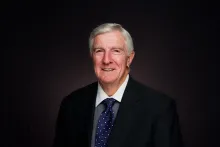
Before his retirement in 2021, Dr. Donald Ward pastored churches in Texas and Louisiana, and taught at Ambassador Bible College in Cincinnati, Ohio. He has also served as chairman of the Council of Elders of the United Church of God. He holds a BS degree; a BA in theology; a MS degree; a doctor’s degree in education from East Texas State University; and has completed 18 hours of graduate theology from SMU.
