
Paul Moody
Being thankful to God and to others is an essential part of life. Too many thankless people in this world fail to be thankful for what they have or may have never been taught how to say or give thanks. Many scriptures reveal that thankfulness is a gift from God. Given in this message are seven things for being thankful surrounding God's annual feasts.
This transcript was generated by AI and may contain errors. It is provided to assist those who may not be able to listen to the message.
As I mentioned before, we finished a wonderful feast of tabernacles from all the comments people have made. But that feeling of thankfulness that we have while we are there shouldn't just fade away. In fact, these feasts in the Bible can be called thanksgiving feasts. For those seven feasts of God emphasize His acts of salvation and the gratefulness that His people are to express. For instance, in Passover and the Feast of Eleven Bread, in the early spring, it was a time of thanking God at the beginning of the barley harvest for their rescue from slavery in Egypt and the blessings they had received. They trusted God that He would provide the rains in due season. And so this was a time now as they gathered up their crops and were able to begin expressing to God that thankfulness. And then, in the summertime, and I want to mention that just as in the Old Testament, that people thank God for their rescue taken out of Egypt, being protected that way. We, in the New Testament, have a spiritual Egypt that we have to leave and that we are thankful that He rescued us, forgave our sins, and provided the blessings of following His way of life. And then, in the summer, is the Feast of Pentecost. This is an early summer. It was a time of thanking God for the start of the wheat harvest, which was the main harvest and the giving of His law and the blessings that came with it. Because that Feast of Pentecost in the Old Testament was a time when they met at Mount Sinai and God delivered His law. And then, in the New Testament, on the Feast of Pentecost, God gave His Holy Spirit to His people. And so that was a time of thankfulness as well. And the Feast of Tabernacles, which we just finished keeping, was in the fall. And it was for thanking God for the end of that entire harvest season and the blessings. As it tells us in Deuteronomy 16, 14, and 15, He said, Be joyous at your festivals, for the Lord your God will bless you. And so we have that connection. It's not something just by a blind chance or luck that these blessings come. It is a result of following God, of Him taking care of us. And I've noticed over the years, as people grow spiritually, they become more thankful and generous to God and to man. It is part of God's gift to us. And so I'm going to talk about the gift of thankfulness. In 2 Timothy chapter 3, it tells us about this society and how people have forgotten to be thankful. Notice in 2 Timothy, this is a prophecy about the end time period before Christ returns, which of course, Paul didn't know exactly when that was going to happen, but God inspired him to describe these events. In 2 Timothy chapter 3, verse 1, and I'm going to read it from the Good News Bible. It's a little bit clearer. He says, Remember that there will be difficult times in the last days. People will be selfish, greedy, boastful, and conceited. They will be insulting, disobedient to their parents, ungrateful. In other words, thankless.
And irreligious. They won't want to follow God. This whole society is against God and His way of life. You just see it all the time. The media and in all means movies and everything else. They will be unkind, merciless, slanders, violent, and fierce. They will hate the good. So it's interesting here to focus on that term, ungrateful. In the Greek, it's acharystos, which means thankless.
They don't give thanks. They expect everything to be given to them. And they don't give thanks back. After all, society owes me this, right? So it's more of a get and get and not give type of attitude. Acharystos comes from two syllables here, a, which in the Greek means against something.
Acharystos is the term where we get the term kara, and it's the term has to do with love and grace. And so the Greek word that is the opposite is eucharystos. Eu means good. It means giving thanks, being good about giving thanks, being thankful. And so what do we have in our lives? Are we learning to be more thankful or to be more thankless? Because society is constantly bombarding us about it's all about you.
And so very self-centered type of mentality is being propagated. But notice that thankfulness is one of the gifts of God. Not just an attitude of thanks overall, it's this gratefulness that comes from following God, being rescued, giving us a new life with His Spirit. And we're so thankful about that. Notice that this is something that God develops in us as we grow. In Colossians 2, verse 6, I'm going to read it from the New Living Translation, Colossians 2, verse 6, it says, And now, just as you accepted Christ Jesus as your Lord, you must continue to follow Him.
Let your roots grow down into Him, and let your lives be built on Him. Then your faith will grow strong in truth you were taught, and you will overflow with thankfulness. So you see, when you're full with God's Spirit, there is that thankfulness, there's that gratefulness that comes about. Another scripture, 1 Thessalonians 5, verse 18, this is a contemporary English version.
It says, whatever happens, keep thanking God because of Jesus Christ. This is what God wants you to do. It's not that we have problems and we should just forget the difficulties. No, we know there are going to be difficulties, there are going to be trials. But when you know God's there, as it says in Romans 8, if God is for you, who can be against you in the long run?
God's more powerful than any problem or difficulty. And He has millions of angels that do His beckoning every day. I read the other day about a term that I thought was appropriate because there's so much negative news out there at work, in the schools, and of course, TV and everything else. There's so much mudslinging that people absorb those negative attitudes. And so it tells us here to have a negativity fast. Just fast about, no, I'm not going to be negative.
Just like you do when you don't eat. Well, have a negativity fact and have a positivity feast. Think about things in the positive way because negativity brings about depression. It brings about wrong feelings, negative. You become more angry with things. You lose your temper more. Many things happen. And what are we supposed to think about? Notice in Philippians chapter 4 verse 8. Philippians chapter 4 verse 8, it tells us these are positive attitudes and thoughts. Verse 8 of Philippians 4, it says, Finally brethren, whatever things are true, whatever things are noble, whatever things are just, whatever things are pure, whatever things are lovely, whatever things are of good report, if there is any virtue and if there is anything praiseworthy, meditate on these things.
That's what our minds should be focusing on. Another scripture along this line of being thankful, Ephesians 5 verse 20, contemporary English version, it says, Always use the name of our Lord Jesus Christ to thank God for everything. And every day we wake up, who gives us life? Who provides the food? He's the one that made the plants and animals. He's the one that makes it available for blessings to come many times out of the blue. You get these blessings from God. And so I'd like to focus now on a biblical example, and that was King David. King David knew about being thankful.
You can say he's one of the champions of being thankful. He's the one that wrote most of the Psalms. And 37 times in those Psalms, he uses the term, give thanks, give thanks to God. Notice in Psalm 100, Psalm 100 verses 4 and 5, it says, Enter into his gates with thanksgiving.
Just like we do today, we entered the doors. Are we thankful to be here? Is this something enjoyable? Something as we get closer to God's Word? He says, And into his courts with praise, be thankful to him and bless his name. For the Lord is good, his mercy is everlasting, and his truth endures to all generations.
Now, David was not perfect by any means, but boy, did he have a wonderful relationship with God the Father and with the Word in which he was just always giving thanks to God, even in his trials. You look at some of those Psalms, he's being persecuted, he's getting desperate, but then he trusts in God, he has the right attitude. In Psalm 119, which is my favorite Psalm, it's the longest chapter in the whole Bible, and it is a praise of God's laws, how wonderful they are, how they changed his life.
Notice in Psalm 119, to start in the first verse, it's amazing that he can write a whole Psalm just praising God for God's laws. He says in verse 1, Blessed are the undefiled in the way, who walk in the law of the Lord. Blessed are those who keep his testimonies, who seek him with the whole heart. And it goes on and on. Notice in verse 9, it says, How can a young man cleanse his way when you made mistakes, when you made errors, by taking heed according to your word?
Look in God's word. It's got the solution. Solutions that God has put there. Don't do it on your own opinion.
It says in verse 18, Open my eyes, that I may see wondrous things from your law. And yes, see, the world doesn't think God's laws are very important. They've tried to erase them when he gave them for our good. And they're based on the Ten Commandments and then the extension with the statutes and everything else. And basically, those Ten Commandments cover the entire Bible, just like ten branches of a tree. And the trunk is God is love. And then those ten branches, four of them, are love toward God. And the last six are love toward your neighbor. But then you have all the twigs, which explain, how do you love your neighbor better? And you have all these laws, and they extend out through the entire Bible, from Genesis to Revelation.
And so David really knows how to thank God. And at the end of his life, he was there with his young son Solomon, who was probably around 20 years old, when he was given the kinship. And David was on his deathbed. And I think it just shows, what was David thinking? Oh, I'm going to die. Oh, terrible. Look at everything I had. Now I'm going to lose it all. And oh, no, not at all. He's thinking about the rest of the people. And so I'd like to read from 1 Chronicles chapter 29, verses 1 through 20. And I'm going to read it to you, the New Living Translation, because King James mentions like talents and all of this, which we don't know how much. We don't use that terminology nowadays. But here it's translated in a modern way. So 1 Chronicles 29, 1 through 20, it shows the attitude of thankfulness and how David just praised God and was so generous. He had to be one of the most generous people in the entire Bible, because look what he did with his money at the end. Then King James turned to the entire assembly and said, So David was thinking about God and His glory and how he wanted to have a temple that the whole world would marvel and be an example to the whole world of glorifying God.
He says, So he spent probably the last couple of years just gathering to give this tribute to God. He says, He says, David said that in 1 Chronicles 22 that that temple had to be something to thank God, give Him glory. That temple had to be made of the best materials. He says, This is in addition to the building materials I have already collected for His holy temple. I am donating more than 112 tons of gold and 262 tons of refined silver. We mentioned in the sermon at by Ray.
He says, Remember that this temple held up for over 400 years. And because it was overlaid with silver and gold, it lasted so much because the wood would be protected with that overlay of metal. He says, He didn't demand it from people, but he said, Who has that type of a thankful heart, which he gave the example? Then the family leaders, the leaders of the tribes of Israel, the generals and captains of the army, and the king's administrative officers all gave willingly. For the construction of the temple of God, they gave about 188 tons of gold, 10,000 gold coins, 375 tons of silver. They also contributed numerous precious stones, which were deposited in the treasury of the House of the Lord under the care of Jehiel, the descendant of Gershon, one of the priests. And the people rejoiced over the offerings, for they had given freely and wholeheartedly to the Lord, and King David was filled with joy. Wow! These people also have that joy in expressing that thankfulness. And so David praised the Lord in the presence of the whole assembly. He said, O Lord, the God of our ancestor Israel, may you be praised forever and ever. Yours, O Lord, is the greatness, the power, the glory, the victory and the majesty. He knew where all that the source of all these things come from. Now we think, oh, these powerful men that are in charge of the world or these powerful corporate people. They're nothing in comparison to God. I mean, we're just in this tiny little island called Earth. And here we have an ocean full of stars. None of them ever built one little star. God created all of them.
And David recognized the grandness of God. He says, everything in the heavens and on Earth is yours, O Lord, and this is your kingdom. Yes, the kingdom of his people. We adore you as the one who is over all things. Wealth and honor come from you alone. For you rule over everything. Power and might are in your hand and at your discretion. People are made great and give strength. He was talking about himself, a shepherd, and God brought him up to this point, but he never forgot what he was. He was a shepherd. He was a humble shepherd, which God had used powerfully. And so he says, O our God, we thank you and praise your glorious name. But who am I and who are my people that we should give anything to you? Everything we have has come from you, and we give you only what you first gave us.
We are here for only a moment, visitors and strangers in the land as our ancestors were before us. He recognizes there were poor people. There were slaves coming out of Egypt. He says, our days on earth are like a passing shadow, gone so soon without a trace. O Lord our God, even this material we have gathered to build a temple to honor you, your holy name, it even comes from you. It all belongs to you. I know, my God, that you examine our hearts and rejoice when you find integrity there. You know I have done all this with good motives, and I have watched your people offer their gifts willingly and joyously. O Lord, the God of our ancestors, Abraham, Isaac, and Israel, make your people always want to obey you, to have that spirit. And we've used this to say, God's people, when they grow and develop, they have the same spirit. They put God first. They put His work, what is being done on this earth, first. Everything else is secondary, but they become part of this spiritual army of God. And we're here, whatever it takes, to please God, to do His will.
It says here, see to it that their love for you never changes. Give my son Solomon the wholehearted desire to obey all your commands, laws, and decrees, and to do everything necessary to build this temple for which I have made these preparations. Then David said to the whole assembly, give praise to the Lord your God. And the entire assembly praised the Lord, the God of their ancestors, and they bowed low and knelt before the Lord and the King. Maybe people can have that type of attitude. Maybe it doesn't last very long. But that's what he was praying. Hopefully this is what we're looking forward to. And after the feast, I think you see that spirit of unity. People have been fed spiritually and also physically. And you're such a blessed person, privileged person, to attend these feasts. Nothing is similar in the entire world.
And David, although he was about ready to die, in 1 Kings 2, you see just this little scene that shows again his attitude. 1 Kings 2 and 2.
It says, David drew near that he should die. He charged Solomon his son, saying, I go the way of all the earth. Be strong, therefore, and prove yourself a man. And keep the charge of the Lord your God to walk in his ways, to keep his statutes, his commandments, his judgments, and his testimonies. And it is written in the law of Moses that you may prosper in all that you do, and wherever you turn. And that advice hasn't changed. The advantage we have is that they had the physical law in the New Testament. It's the spiritual dimension that is added to God's law. So it's not only the letter of the law, but the spirit of the law. And we have the blessings of combining those two elements. And then, as he was on his deathbed, he mentions in verse 7, he says, But show kindness to the sons of Barzillah the Gilead night, And let them be among those who eat at your table. For so they came to me when I fled from Absalon your brother. And so, here, parting thoughts, he remembered, you know what? I haven't thanked the sons of Barzillah when he came and with his family, and they fed us when we were all hungry, and they gave us refuge. This happened years before, but yet on his deathbed, oh, I forgot to give thanks here. I'm going to express it. Don't forget Solomon. Keep them in mind for what they did. So sometimes it might take a long time before you say, you know, I should have thanked for that gesture, that kindness that somebody did for me.
And we have the examples of the ten lepers in the Bible. And it's a lesson of unthankfulness that Christ brought up. Let's go to Luke chapter 17. Luke 17 and verse 12.
And it's a good thing we have such a merciful and loving God because this happens to God all the time. Then he said to his disciples in verse one, It is impossible that no offenses should come, but woe to him through whom they do come.
So he's discussing here about people offending others and the damages they do. It says in verse 11, A leprosy was a horrible disease. It was this immunological disease that your body basically went against everything that had to do with your skin. And so it attacks your skin and slowly you're living, but your skin is just falling off. And we still have leper colonies in the world. It's a terrible disease. And notice here this was between Samaria and Galilee. So there were Samaritans who were lepers, there were Galileans who were... And they bunched together because there was a law. They had to be isolated because it was an infectious disease. They couldn't infect others. So they lived in caves. They lived miserably watching their skin rot off their bones.
And so there as he entered a certain village, there met him ten men who were lepers who stood afar off. They knew they couldn't get close to a healthy person because of the infection. And they lifted up their voices and said, Jesus, master, have mercy on us. So when he saw them, he said to them, go show yourselves to the priests. And so it was that as they went, they were cleansed. Christ prayed and they were healed. And one of them, when he saw that he was healed, returned and with a loud voice glorified God. He thanked Jesus. He thanked God the Father for this great miracle and fell down on his face at his feet, giving him thanks. And he was a Samaritan. The Jews despised Samaritans, but he was the one that came. No Jews came to thank Jesus. So Jesus answered and said, were there not ten cleansed? But where are the nine? Were there not any found who returned to give glory to God except this foreigner? And he said to them, arise, go your way your faith. And said to him, arise, go your way, your faith has made you well. And so here's the percentage, about 10% of the people give thanks. The others, they take. Oh, they're so happy. They wanted to go back to their homes. They want to talk about villages. I can go back to work. I can still make a life of myself. I can do all these things. And you see, the source of that healing, they didn't regard. That's how self-centered human beings normally are.
And we should ask, are we becoming more thankful or more thankless?
You know, it doesn't cost that much to give thanks. We're not even talking about something that's going to cost money. Just give thanks. It's part of God's people's attitudes to not say, okay, well, it's over with. Next thing I've got to do in my life, we have to remember. Just like it tells us in Romans 12, 6-8 in the Good News Bible. Talking about the gifts. And one of them is being thankful.
So Paul says, so we are to use our different gifts in accordance with the grace that God has given us. If our gift is to speak God's message, to preach, we should do it according to the faith that we have. And make sure you have that faith. If it is to serve, we should serve. That's your gift. It's a beautiful gift. It's a wonderful gift. Don't give it up. If it is to teach, we should teach. If it is to encourage others, we should do so. Which is a way of being thankful. Encouraging others. Helping them feel better about their situation. Whoever shares with others should do it generously. If you've got some extra funds and you see somebody in need, help out. Whoever has authority should work hard. Because sometimes with authority, you work less. Take things for granted. No, you should still be a harder worker if you receive authority, not less. Whoever shows kindness to others should do it cheerfully. Again, that type of attitude, that kindness, and do it cheerfully with a good attitude. And here we have people in the congregation that are quite generous. They send cards. Maybe they don't have even able to come to services, but they know who are the ones who are sick, who need encouragement. And we have people that are always helping others. Maybe giving me an envelope, please don't let the person know, but here it is, what I want to help out with. And like I said, there are numerous people here. I would like to single out one, which is Brenda Wozner. She's so sick because of the pain she's not able to come to services, but she's always sending cards. She sends economic help to others. And guess what? It's not like she has extra money to do. That's her attitude. She's always done it that way. For over 20 years at that, we have known her. We really appreciate her little cards.
It's an attitude of compassion. But you see, there's action behind it. It's not nice thoughts or whatever. She actually carries it. I'd say others here. Cheryl is a good example, too.
But here are seven things to be thankful about. After completing all of God's feasts, now we can look back during those seven feasts that we celebrated. First of all, regarding Passover and the Days of Unleavened Bread that happened in the spring, to be thankful for what God the Father and Jesus Christ have done for us. And the greatest thing was God the Father giving up His Son as a sacrifice for our sins to be forgiven. So we don't end up in a lake of fire. And He is the one that saves us.
His forgiveness. And when it says there that famous verse, John 3, 16, that God so loved the world that He gave. What did He give the world? Did He give people more money? People wanted more money. That'd be nice. Or He gave them, you know, great health. Just everybody gets healed. Boy, people be happy with that. But you know, He knew what we needed the most. That was His Son. Because we need our sins to be forgiven more than anything else. And it's a continuous way of being forgiven.
Secondly, and during Pentecost, we should be thankful for our holy calling, which we don't deserve. We are called first fruits of that resurrection, that first resurrection that's going to take place. And as Howard mentioned in the prayer, we have been shown the true purpose in life. We no longer have questions about that.
Thirdly, for Pentecost, we should be thankful for His laws and way of life through His Spirit. In other words, remember Pentecost giving of the law and then giving of His Spirit to unite the two. We should be so thankful for that.
You can imagine how our lives would have been without knowing God's holy laws, how good they are. What would our life be like? We'd just be another ordinary person going through, as it says in the scripture, the course of the world, just following the current of society until you die. What was the purpose? I don't know. It was short. Not too sweet. Well, we know. Also for Pentecost, the fourth Thanksgiving, we should be thankful that our names are written in heaven. In Luke 10, 20, Christ said that you should thank God for having your names written in heaven. That happens after baptism and the laying on of hands when your name is written. You are one of Christ's first fruits.
The fifth Thanksgiving should be thankful we have a God that it pains Him when we hurt. And we have Him in our side. Romans 8, 28 says that for those who love God, everything will turn out for good. And in the end, if we love Him truly, He will work things out. He doesn't guarantee great health all our lives, but He does guarantee an entrance into His kingdom and the removal of all pain. The sixth Thanksgiving, that has to do now with the fall feasts. After trumpets, atonement, tabernacles, and the last great day, we should be thankful for the knowledge of that coming kingdom. Christ is going to set up a kingdom, and He needs people to work under Him. He is training people now for that future kingdom. And that's the greatest calling anybody can ever have. And you cannot appreciate that until you go through God's feasts, especially the feasts of tabernacles. People have mentioned how inspiring those messages were as we went to Temecula. And so inspiring, so motivating. We need that spiritual food like we need physical food every day. And the last Thanksgiving, thank God that we live in a country that we live in here, where it's relatively peace, order, abundance. To be thankful. It doesn't have to do with us. Genesis 49, 22 through 26 talks about the blessings that come from the faithfulness of Abraham, Isaac, and Jacob. The blessings on Joseph. You need to read about who this nation truly descends from. Talks about the United States and Great Britain in prophecy. These blessings are not because of us being special. It's because of those blessings that come from the promise God made Abraham, Isaac, and Jacob, and through Joseph.
So we live with more abundance than ever before, but also with a lot more stress. So let's finish now in Hebrews chapter 13. Hebrews chapter 13 and verse 12. It says here, Therefore, Jesus also, that he might sanctify the people with his own blood, suffered outside the gate. In other words, where he was crucified, that was outside of Jerusalem. Therefore, let us go forth to him outside the camp, bearing his reproach. Yeah, you're going to be persecuted if you follow this way of life. The reproach, people are going to think you're weird or strange, but that's part of comes with the territory. Since we're here, we have no continuing city, but we seek the one to come. It's a very important verse because it tells us we're not going up to heaven. Christ from heaven is coming here to set up his city during that thousand year rule. He's setting up in Jerusalem when he comes back. That is the city we're looking forward to.
He says, Therefore, by him, let us continually offer the sacrifice of praise or thankfulness to God. That is the fruit of our lips, giving thanks to his name. But do not forget to do good and to share. For with such sacrifices, God is well pleased. Those are the spiritual sacrifices that are shown by our attitude. So it is a gift. It's something we can develop, but it's only because we can come closer to God.
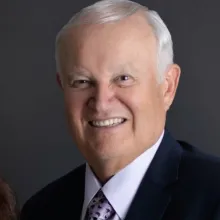
Mr. Seiglie was born in Havana, Cuba, and came to the United States when he was a child. He found out about the Church when he was 17 from a Church member in high school. He went to Ambassador College in Big Sandy, Texas, and in Pasadena, California, graduating with degrees in theology and Spanish. He serves as the pastor of the Garden Grove, CA UCG congregation and serves in the Spanish speaking areas of South America. He also writes for the Beyond Today magazine and currently serves on the UCG Council of Elders. He and his wife, Caty, have four grown daughters, and grandchildren.

