


Don Ward
This transcript was generated by AI and may contain errors. It is provided to assist those who may not be able to listen to the message.
The title of the sermon today, Gird up your mind for such a time as this. We're living in some of the most difficult times in human history, tough, transitional times, critical, crucial times, and other adjectives that you could use to describe the days in which we live. But yet, at the same time, there is somewhat of a peace or a calm that we enjoy, and we should be very thankful for, especially in this part of the world.
But we know what lies ahead, and at the same time, even though there is relative peace and calm in the civil sense, we know that even in our own lives that many of us have great trials and difficulties that we're having to face every day. I'd like for us to turn to 1 Peter 1, verse 13. This is where the title for the sermon is taken, where Peter, here, under the inspiration of the Holy Spirit, admonishes us to gird up our minds.
This word, gird, is used here in the metaphoric sense, and it is derived from the practice of people in the Middle East and the Orient, who, in order to be unimpeded in their movements, were accustomed to when they began to make a long journey, they would gird up the loins of the skirts or the hymns and all of that, so it would not impede them as they walked along.
Most of the people wore some kind of robes, and if you try to run and really go to battle or whatever with a robe on, it would impede the progress. Of course, you know that you've seen pictures of the Roman soldiers and the kind of garb that they wore in their military warfare. So it has to do with binding their long-flowing garments closely around their bodies and then fasted them with a leather belt so that they would not be impeded.
And the word here, the Greek word for mine, dia noia, means understanding, imagination. The mine is a faculty of understanding, feeling, desiring, mind and spirit, way of thinking. So basically the word we use for mine, the ability to think, to reason. So we read here in 1 Peter 1 and verse 13, Therefore gird up the loins of your mind. Tie it down, hold it down, hold it fast. Let nothing impede your journey toward the kingdom of God. We are involved, as Paul uses a metaphor of Christian warfare very often in his writings, be sober and hope to the end for the grace that is to be brought unto you at the revelation of Jesus Christ.
In other words, do this until Jesus Christ comes again. So how do you gird up the loins of your mind? So here today our purpose is to remind us of some of the ways that we can gird up our minds so that we will be ready to fight the battles that lie ahead so that we will be prepared for the great invitation, the marriage supper of the Lamb. First of all, we have to have our priorities straight. So what is most important in our lives? Of all things. And the Bible gives us the clear answer to that, and we basically could all quote it.
Matthew 6, 33. Seek you first. Of all things, the first thing, seek you first the kingdom of God and His righteousness defined in Psalm 119, verse 172, as all your commandments are righteous. Seek you first the kingdom of God and His righteousness, and all these things will be added unto you. So our focus has to be on God and on His kingdom.
In Psalm 25, verse 15, we sing this hymn quite often. It's one of my favorite ones. Mine eyes upon the Lord continually are set, and he it is that will lift my feet out of the net. Mine eyes upon the Lord. That's Psalm 25 and verse 15.
Another way to gird up the loins of your mind is to think on the name of God in Christ. You would turn to Malachi chapter 3, verse 16. Malachi 3 16 is a prophecy for the end times because what Malachi is dealing with here is answering the question, where is the God of judgment? And there will be people at the end of the age who will understand.
They will not be accusing God of being unfair or unrighteous. They will have it together, as we say. And so in Malachi chapter 3, verse 13, this is in response a great rhetorical question. Malachi is Malachi 2 17. Perhaps we should read that. Malachi, I'm going to give a sermon one of these days on Malachi. Malachi is one of the most interesting books in the Bible.
The word Malachi means messenger from the Hebrew word malak, which means messenger. And five messengers are described in the book of Malachi. Malachi himself the prophet, then the priest were God's messengers. And then John the Baptist was a messenger preparing the way. And then the messenger of the covenant, Jesus Christ, this is the first part of Malachi 3, and then the Elijah to come in Malachi chapter 4.
Malachi is the basic question that is being answered is this Malachi 2 17. You have weared the Lord with your words, yet you say, wherein have we weared him? When you say, everyone that does evil is good in the sight of the Lord, and he delights in them. It's like people saying, well, we don't ever get ahead. We don't get to do this. We don't get promoted. We don't get recognized. You could go on with that line of thought.
And he delights in them. Or when you say, where is the God of judgment? Well, where's God in all of this? Well, the answer to where is God in all of this is given in verse 6 of chapter 3, where I am the eternal, I change not. Therefore, you sons of Jacob are not consumed. God is where he's always been. He is on his throne, and he is looking over the sons of men. The all-seeing eye is ever there, and it's not the all-seeing eye on the dollar bill. It is the eye of the eternal, the God of all creation, our Father, our Creator. Verse 13, your words have been stout against me, says the Lord. Yet you say, what have we spoken so much against you? You have said it is vain to serve God. In other words, where is the God of judgment? When is he going to intervene? When is he going to straighten all this mess out? Well, the words of God have not changed. The truth of God has not changed. It's the same. We read verse 6, I am the eternal, I change not. God is the same. Where is he? He's where he's always been. He's on his throne in the third heavens.
You have said it is vain to serve God. What profit is it that we have kept his ordinance and that we have walked mourningly before, mournfully before the Lord of hosts? And now we call the proud happy, yes, they that work wickedness are set up. Yea, they that tempt God are even delivered. So you say, just look at that. They don't ever have any troubles, any problems. Look at the way they live. But if you think that God is not a God of judgment, you're sadly mistaken. And then this girding up the loins of your mind and really understanding what really counts, verse 16, then when this is going on, then they that feared the eternal spoke often one to another. And the eternal hearkened and heard it. And a book of remembrance was written before him for them that feared the eternal and that thought upon his name. The name of God carries tremendous revelation with regard to who he is, what he is, and what is his purpose. So thinking on the name of God and keeping our eyes and focus on the kingdom of God and on God, that's up at the top of the front of how to gird up your mind for such a time as this. Also, looking to Jesus Christ, the author and finisher of our salvation. Let's go to Hebrews chapter 12. So our eyes upon the Lord continually are set. We're seeking first the kingdom of God, and we understand that Jesus Christ is our high priest. He's our intercessor. He's a mediator of the new covenant. That he is on duty 24-7, as they say. He never slumbers. He never sleeps. He's always there for us. In Hebrews 12.1, wherefore seeing we also are accomplished about was so great a cloud of witnesses as chronicled there in chapter 11. Let us lay aside every weight and the sin which does so easily beset us and let us run with patience the race that is set before us. Looking unto Jesus, the author and finisher of our faith, who for the joy that was set before him endured the stake. And he understood the big picture, the loins of his mind were gird. He never lost sight of who he was, what he was, and what is his mission, why he came to the earth.
Who for the joy that was set before him endured the stake? He knew that what was on the other side of the stake. Do we know and believe with all our heart and understand what is on the other side of the stake? When they lay us in the casket, we go six feet under wherever we go to await the resurrection, despising the shame and is set down at the right hand of the throne of God. For consider him that endured such contradiction of sinners against himself lest he be wearied and faint in your minds. And that's where it begins. The mind can be the devil's workshop, or the mind can be the most wonderful tool that you have in defending yourself against the wiles of the devil. And to a large degree, it depends on how you think. The Bible tells us very clearly, Keep your heart with all diligence, for out of it flow the great issues of life.
Back in Hebrews 7, verse 25, talking about Jesus Christ, keeping your eyes on Jesus Christ, the author and finisher of our salvation. In verse 25, "...wherefore he," that is speaking of Jesus Christ, our high priest, "...is able also to save them to the uttermost that come unto God by him." Yes, salvation is a gift, but we have certain duties and responsibilities to perform, and we must be faithful. But yet, at the same time, Jesus Christ is there pleading our case. And like it talks about in Romans, sometimes we don't know even how to pray, but Jesus Christ is there pleading our case. Unaware is the time, at least we're unaware of it, seeing He ever lives to make intercession for us. So we have someone alongside. We have God and Jesus Christ dwelling in us, as we heard in the sermonette, making their home within us. And in addition to that, you have Jesus Christ interceding for you.
So look to Jesus. Gird up your mind with that fact that He is the author and finisher of our faith. Don't give way to the four enemies of faith. Let's briefly review the four great enemies of faith. We go to Matthew 6. We're going to briefly identify the four great enemies of faith. In verse 25 of Matthew 6, Therefore I say unto you, Take no thought for your life, what you shall eat, or what you shall drink, nor yet for your body what you shall put on, is not the life more than meat, and the body than raiment. Now, this take no thought has to do with anxious care.
Anxious care and wondering whether or not you're going to be able to make it is one of the great enemies of faith, and that's how the devil can really get hold of your mind and prevent you from girding up the loins of your mind. So as you read verse 30, Wherefore if God so clothed the grass of the field, which today is, and tomorrow is cast into the oven, shall he not much more clothe you, O ye of little faith. So one of the great enemies of faith is anxious care, and if anxious care floods into your mind and takes hold of you, then it will be very difficult to gird up the loins of your mind for such a time as this. Therefore, take no anxious thought, saying, What shall we eat? What shall we drink? Or wherewith shall we be clothed? The nations, the people who have not been called into God's marvelous light, that's where they are, but that's not where we want to be. And then, concluding with this, Matthew 6, 33, and 34, Seek first the kingdom of God in his righteousness, and these things will be added to you. Therefore, take no anxious thought for the morrow. For the morrow shall take thought for the things of itself. Sufficient unto the day is evil thereof. Now, in Matthew 8, 23, the second enemy of faith is identified here in Matthew 8, 23. And when he entered into his ship, his disciples followed him. Behold, there was a great tempest in the sea, insomuch that the ship was covered with waves, but he was asleep. And his disciples came to him and awoke him, saying, Lord, save us, we perish. And he said unto them, Why are you fearful, O ye of little faith? So fear is a great enemy of faith. Is God going to be able to deliver me? Will he be able to take care of me, or will he let me sink drown in the sea?
Then he arose, rebuked the winds in the sea, and there was a great calm. In Matthew 14, in verse 25, in Matthew 14, in verse 25.
And in the fourth watch of the night, Jesus went unto them, walking on the sea, walking on the water. And many jokes have been made, of course, about walking on the water.
And Jesus walked on the water. And when the disciples saw him walking on the sea, they were troubled. Saying, It is a spirit, and they cried out for fear.
But straightway Jesus spoke unto them, saying, Be of good cheer, and as I, be not afraid.
And Peter answered, and he said, Lord, if it be you, bid me come unto you on the water. And he said, Come. And when Peter was come down out of the ship, he walked on the water to go to Jesus. Has any human being ever walked on water other than Jesus? Yes. Peter walked on the water.
I would imagine it was the faith and the miracle of Jesus Christ, as long as Peter had his eye focused on Jesus Christ and the other enemies of faith, anxious care, fear, and doubt, did not flood in. He walked on the water. Verse 30, But when he saw the wind boisterous, he was afraid, and beginning to sink, he cried, saying, Lord, save me. And immediately Jesus stretched forth his hand, caught him, and said unto him, O ye of little faith, wherefore did you doubt? Anxious care, fear, doubt. Now we go to Matthew 16, and this is like the capstone of the four enemies, because this one feeds off all the others, and it is in the mind. Basically, it's where it starts, and it is human reasoning apart from the Word of God. Human reasoning apart from the Word of God. In Matthew 16.6, Jesus said unto them, Take heed, and beware the leaven of the Pharisees and of the Sadducees. And they reasoned among themselves, saying it is because we've taken no breath. So the human tendency is to always look at things first and foremost in the physical sense, whereas Jesus looked at things first in the spiritual sense.
And when Jesus perceived, he said unto them, O ye of little faith, why reason you among themselves because you have brought no bread? Do you not understand, neither remember the five loaves of the five thousand and how many baskets you took up? Neither the seven loaves of the four thousand and how many baskets you took up? How is it that you do not understand that I have spoken out of you concerning bread, that is, physical bread, that you should beware of the leaven of the Pharisees and the Sadducees? Then understood, they how that he bade them not beware of the leaven of bread, but of the doctrine, the teaching of the Pharisees and the Sadducees. So those are the four great enemies of faith that will keep you from girding up the loins of your mind if you let them take hold. And of course, the human reasoning thing can work. Anxious care, fear, and doubt. And human reasoning on top of that, apart from the Word of God.
Another thing that we must do in girding up the loins of our mind and fighting this Christian warfare for such a time as this is our familiar Ephesians 6, verse 10, and putting on the whole armor of God. Let's go there. Ephesians chapter 6.
You know, our checklist every day, when I get on an airplane to go anywhere, I sure don't like to fly. I've had some near-death experiences here in this area flying college airplanes or flying on college airplanes. I've never flown a plane, and you don't want to be with me if I were. But anyhow, we were back in the 70s. One of our staff members died there, Tom Pittman, and a group of us went over there to Utica, Mississippi, south of Vicksburg, to the funeral. It was late November, and a cold front was coming through. The wind was boisterous and sort of like Peter's situation when he walked on the water for a while. But anyhow, we were basically over in Monroe, Louisiana, and the plane all of a sudden just fell several feet, and then it caught, and then they began to do various things in the cockpit. They discovered that the warmer on the carburetor had failed, and I don't know exactly what they did, but anyhow, that thing just leveled out and took off. And it was fine. And we got there. We had the funeral. Then when we got ready to leave, the front had now reached Utica. The ceiling was 300 feet. The airstrip was down below. You could hardly see out. It's five o'clock in the afternoon, looming clouds all over the place. So our pilot decides we can do it, so he takes off. That goes pretty well. Then we get over here to the airstrip on a campus, and there's a 30 mile narrow wind out of the north.
And he decides to land. And as we come in, the wing tilts and is about a foot off the ground, but then it straightens up. So I don't know how many miracles God performed that day, but we made it back. Another time we went to Austin for business with a state with regard to college and certification and all that, and got caught in a thunderstorm. And we were pitched to and fro back in two. And at times like that, you want to have on all the armor you can get on. In Ephesians 6, Finally, my brethren, be strong in the Lord and the power of his might. Put on the whole armor of God, that you may be able to stand against the wiles of the devil. It's another way, in essence, of saying, gird up the loins of your mind for such a time as this.
We wrestle not against flesh and blood, but against principalities, against powers, against the rulers of the darkness of this world, against spiritual wickedness in high places. So when presidential candidates began to debate and talk about foreign policy, they base all of their rhetoric on human reasoning and diplomacy and the politics of the day, and so on and so on. And the one who is really behind so much of the difficulties in the world, like you can read in Daniel chapter 10, where Daniel had this vision after he had prayed and fasted, and this archangel tried to come and to deliver to him the meaning of the vision and he was hindered by the prince of Persia.
So there is great warfare being fought. Satan is trying his best to set up his kingdom here on earth and to be worshipped. Verse 13, "...wherefore take unto you the whole armor of God, that you might be able to withstand in the evil day, and having done all to stand, stand therefore." I believe there should be a period there. "...having your loins girt about with truth." So once again, the metaphoric use of the word girt to tie it on, to strap it on, as we used to say when we were suiting up for a football game, we're going to strap it on tight. We're going to be ready for everything that lies ahead. But we're talking about spiritual warfare, not some game that might be played in the arena or even military warfare. We're talking about spiritual warfare. And you could have on all the armaments of this world and have all of the bombs and whatever else that the world has to offer for warfare. You wouldn't win the spiritual battle. Here's how to win the spiritual battle. "...having your loins girt about with truth and having on the breastplate of righteousness, your feet shod with the preparation of the gospel of peace." What does that mean? That means that you're ready, willing, and desirous of taking the gospel to the world. The Great Commission has not changed—they've not taken those two verses out of Matthew 28, 19, 20.
"...go you therefore into all the world, disciple all nations, teach them to observe all things, and lo, I'm with you even to the end of the age. Above all, taking the shield of faith." See, don't let the four great enemies of faith prevent you from girding up the loins of your mind. And with the shield of faith, it says you'll be able with that to quench all the fiery darts of Satan—anxious care, fear of doubt, human reasoning, whatever he may throw. And how is that so? Because if you have on the breastplate of righteousness and all the various armaments, and especially if you have this shield of faith—they hold up the shield in warfare to deflect all of the blows that might come in from the enemy. And if you have the shield of faith, which means you know and know that you know that regardless of what happens in this life, that God will deliver you, then whatever he throws will fall harmlessly at your feet. And you'll be able to trample on whatever the devil throws against you.
Above all, taking the shield of faith, wherewith you should be able to quench all the fiery darts of the wicked, and take the helmet of salvation and the sword of the Spirit, which is the Word of God. What is the helmet of salvation?
And how would you describe the helmet of salvation in everyday language?
We'll pursue that in just a second. And then the last thing he says here, praying always with all prayer and supplication in the Spirit, and watching thereunto with all perseverance and supplication for all saints. See, if you do those things, the loins of your mind will be girt up if you have on this whole armor. Now we go forward to 1 Thessalonians 5.8 with regard to the helmet of salvation and what it is.
And how would you express it in everyday language?
1 Thessalonians 5.8.
But let us, who are of the day, be sober. This word sober has to do with being watchful, being vigilant, putting on the breastplate of faith and love, somewhat similar to what we read from Ephesians 6. And for in helmet, the hope of salvation. See, that which permeates your mind, your being, hope, the helmet of salvation. The way I would express this in everyday language would be to keep the big picture of the kingdom of God burning brightly in your mind.
Like Jesus Christ said, who, for the joy that was set before him, endured the cross and suffered the ignominious death that he suffered, but for the joy that was set before him, because he knew that eventually he would sit at the right hand of the Father, and all authority would be given to him in heaven and in earth. And with us, we keep that big picture burning brightly. We know and know that we know that no matter what we go through, that God is going to deliver us, and that we are going to rule and reign with God and Christ as kings and priests in the kingdom of God. The apostle Peter was the apostle of hope. Let's go to John 21. I don't know how many of us have ever really reflected on the life that Peter lived. In this, one of the most touching scenes and dramatic scenes, and one in which perhaps you can really feel for the apostle Peter, as Jesus Christ grills him and says, Peter, do you love me?
And Peter's response, he said, Lord, you know I love you. And Jesus is saying, well, feed my sheep, feed my lambs, feed my sheep. And then they got to toward the end of the chapter here, and they began to talk about what was going to happen after Jesus Christ departed.
We'll pick it up in verse 18. And then, verily, verily, I say unto you, when you were young, you girded yourself and walked where you wanted to. But when you shall be old, you shall stretch forth your hands, and another shall gird you. In other words, you're going to be put on the stake. They're going to drive nails into your hands and feet. You're going to be crucified. And they'll carry you where you don't want to go.
This spoke he, the he Jesus Christ, said, Peter, this is how you're going to die.
Signifying by what death he should glorify God. And when he had spoken this, he said unto him, follow me. And then Peter wanted to know about John. And then Christ said, that'll take care of itself. You worry about you. So Peter lived his life knowing that how he would terminate this life would be through crucifixion. That all the things that he did, with that in view, which knocks in the head, of course, all of this physical salvation gospel that so many have preached, even in the Church of God, and mainly, maybe, mainly in the Church of God through the decades.
What is God interested in? He wants to give us eternal life. It is your Father's good pleasure to give you the kingdom, as it says in Luke. In 2 Corinthians, more about girding up the loins of your mind and how it's done.
In 2 Corinthians 4, 2 Corinthians is the place where Paul says Satan is the God of this world. 2 Corinthians 4, verse 15, For all things are for your sakes, that the abundant grace might through the thanksgiving of many redound to the glory of God, for which cause we faint not, but though our outward men perish, and we're supposed to crucify the flesh, yet the inward man is renewed day by day. That inward man, that man of the mind, the new mind, the new creation, is renewed day by day for our light affliction which just but for a moment works for us a far more exceeding and eternal weight of glory while we look not at the things which are seen but at the things which are not seen. For the things which are seen are temporary, but the things which are not seen are eternal. Renew the inward man daily. It's the Matthew 4.4, Man shall not live by bread alone, but by every word that proceeds out of the mouth of God. It's the John 6.63, the flesh profits nothing. It is the spirit that quickens, it makes a life. The words I speak, they are spirit in their life. This is Psalm 119 verse 9. Let's turn there. We know about renewing the inward man daily. I submit to you, and if the truths were known, I would venture to say that so many who have gone their own way, one of the main reasons was they began to let their mind be malnourished. They did not gird up the loins of their mind. They did not nourish their minds, the inward man, on the word of God. Notice here this admonition, so many times when I used to counsel a lot of students at the college, would always turn here because it's one of the ways to defeat compulsive, addictive behavior.
Compulsive, addictive behavior to a large degree is a battle in the mind, in which people allow themselves to be overcome with temptation.
Not only are there chemical things that are addictive, there are also physical things that are addictive. In Psalm 119 verse 9, Wherewith shall a young man cleanse his way? By taking heed thereto according to your word, with my whole heart have I sought you. O let me not wander from your commandments. Your word have a head in mine heart that I might not sin against you. So the renewing of the inward man and feeding on the word of God and hiding it in your heart. Brethren, we have to know and know that we know that God exists, then he always has our best interest in heart. This goes back to the first article of faith. Let's turn there to Hebrews 11 and verse 6. Hebrews 11 and verse 6.
This is the first article of faith. It is the beginning point.
As I said last week, one of the things that I was able to get a council to accept in our positioning statements, these seven great questions, I think they're the seven greatest questions of all time. Number one, does God exist? Who is God? What is God? And then who is man? What is man? What is his purpose? I think I left one out. Does God exist? Who is God? What is God? What is his purpose? Who is man? What is man? What is his purpose? In Hebrews 11 and verse 6, we say that all spiritual things begin with faith. It is basically impossible to prove God in the sense that a scientist might want to prove God. You know, the Romans 1, the invisible things of him are clearly seen through the things that are, through the creation. There are many proofs out there in the scientific world, but yet science says we can't really prove that God exists. And there is an element of faith. And one of the greatest atheists of all time died in recent days, perhaps one of the men who has done more in the intellectual sense in recent years than any other person to try to turn people away from faith and belief in God. And that's Christopher Hitchens. Christopher Hitchens died of esophageal cancer in the past few days. In Hebrews 11 and verse 6, But without faith it is impossible to please him, for he that comes to God must believe that he is.
See, this is the initial, the beginning point, and there are two parts to this, and that he is a rewarder of them that diligently seek him. So how would you put that last part, a rewarder of them, that diligently seek him into just everyday language? Well, here's how I would put it. He always has our best interest at heart, a rewarder of them that diligently seek him, and he always has our best interest at heart. So when we are in trouble, when trials flood in, when it seems that we can't go on, let's turn to Psalm 50. Psalm 50, if you're not familiar with Psalm 50, you should be, because it talks about the first part, the second coming of Jesus Christ, and what he expects of the saints. But in Psalm 50, in verse 14, Offer unto God thanksgiving, pay your vows unto the Most High, and call upon me in the day of trouble. I will deliver you, and you shall glorify me. So God does want us to call upon him, and to claim those promises. Let's go forward now to lamentations. Lamentations.
Perhaps you have been in the situation of this person here. This is the lament of Jeremiah after the destruction of Jerusalem, understanding what was going to happen there. Notice Lamentations chapter 3. We're going to break in on the thought. We're not going to read all of the woes that Jeremiah describes here in chapter 3.
In chapter 3 verse 19, Remember in mine affliction in my misery the wormwood and the gall, just this absolute bitterness and bitter taste in the mouth and being. My soul has them still in remembrance and is humbled in me. This I call to my mind, therefore have I hope. It is of the Lord's mercies that we're not consumed. See, if any of us were to get just strictly judgment, no man would be able to stand because we've all sinned and come short of the glory of God. It is of the Lord's mercies that we're not consumed.
Why, we read from Malachi 3.6, I am the Eternal, I change not. Therefore, you sons of Jacob are not consumed because God is long suffering, merciful, not willing that any should perish. Instead of giving us absolute judgment and justice, he sent a propitiation for us to pay the penalty in our stead. It is of the Lord's mercies that we're not consumed because his compassion fails not. They are new every morning. Great is your faithfulness. And so, I'm sure many a night you might go to bed and you might wonder, how am I going to make it tomorrow? And you might go over all of your problems and all the difficulties that you face. These may include a plethora of events and circumstances and the trials that might flood in.
But somehow, some way, you might pray this prayer in 2 Corinthians 1 as you close your eyes and sleep, and eventually sleep may come. It may come in the wee hours of the morning, 3 or 4 o'clock a.m. In 2 Corinthians 1, verse 3, Blessed be God, even the Father of our Lord Jesus Christ, the Father of mercies, and the God of all comfort. We've read from Lamentations, Great is your faithfulness, and your mercies fail not. They're new every morning. Blessed be God, even the Father of the Lord Jesus Christ, the Father of mercies, and the God of all comfort, who comforts us in all our tribulation, that we may be able to comfort them which are in any trouble by the comfort we are with, we ourselves are comforted of God. So we pray that prayer, and in the morning His mercies are renewed, and we go on. We continue to fight the good fight of faith. God wants us to completely trust Him, as did the three Hebrew children, Shadrach, Meshach, and Abednego, who went in the face with a fiery furnace because they wouldn't bow down and worship the great statue. And when confronted, they said, oh King, we know that our God is able to deliver us, and whether or not He does, we don't know for sure. But be it known unto you, we will not bow down and worship the statue. And so they were thrown in the fiery furnace, and God delivered them. Similar thing happened with Daniel. Daniel chapter 6. Daniel in the lion's den, a decree had been passed that you should pray to know God with the gods and the Medes and the Persians. And Daniel, as his custom was, went to his room, faced toward Jerusalem, and prayed and was thrown in the lion's den. God is to be trusted. He is always the marine motto, Semper Fidelis, or Semper Fi, shortened. He is always faithful. Great is your faithfulness. Now let's go to Romans 8. In Romans 8, we can be reminded here, and also the story of Joseph in a moment, of the providence of God. Now what is providence? There's a city in Rhode Island called Providence, and you might hear the word use from time to time. Providence. But what does it mean in simple language? Providence means in simple language that God is looking out for you and your best interests years in advance. In Romans 8, 26, likewise the Spirit also helps our infirmities. For we know not what we should pray for as we ought, but the Spirit itself makes intercession for us with groanings which cannot be uttered. And he that searches the heart knows what is the mind of the Spirit because he makes intercession for the saints according the will of God. Similar to what we read and talked about earlier in Hebrews 7.25. Seeing that he ever lives to make intercession for us, therefore he's able to save them to the uttermost. Yeah, Jesus Christ is working a work in us, and he is involved in the salvation process if we will call upon him, if we will gird up the loins of our mind. And he that searches the heart knows what is the mind of the Spirit because he makes intercession for the saints according the will of God. So we have someone other than ourselves and the brethren praying for us and interceding for us. I think at times we don't really believe that or we forget it.
And we know that all things work together for good to them that love God, to them who are the called according to his purpose.
And one of the great keys to this is, believe, verse 31. What shall we say then to these things? If God be for us, who can be against us? Another great key is verse 36. As it is written, for your sake we're killed all the day long, we're accounted as sheep for the slaughter. See, if you want to grow and grow in grace with God, you have to take that which is not exactly right, you have to take it and bear it as Jesus Christ did. That doesn't mean that you just sit down and cower at everything, but at the same time, there is a time and a place. And as far as our attitude is concerned, if we really believe that God is our deliverer, anything we get above death is a gift, and in our hearts and minds we're accounted as sheep for the slaughter. But knowing, as Abraham knew when he was called on to sacrifice Isaac, that he was as good as alive in resurrection if he had to go through with it.
Talks about that in Hebrews 11. Notice Genesis chapter 45, one of the most inspiring stories in the whole Bible, that of Joseph, the 12th son of Jacob. Finally, Rachel was able to to bear a child.
And Joseph really loved Joseph. Joseph had this dream about how he would be exalted over the brothers.
He'd already been given a coat of many colors and so on. And the brothers were very jealous and sold him into slavery. And going through many trials and difficulties, Joseph finally winds up second in command in Egypt. I have a sermon that I've titled, From Pit to Palace, and Joseph went from pit to palace. Finally, when the famine came upon the land, Jacob sent the brothers to buy grain in Egypt. And we picked this up in Genesis 45.
Joseph could not refrain himself before all them that stood by him, and he cried, cause every man to go out from me, and there stood no man with him, while Joseph made himself known unto his brethren. And he wept aloud, and the Egyptians in the house of Pharaoh heard. And Joseph said unto his brethren, I am Joseph, does my father yet live? And his brethren could not answer him, for they were troubled at his presence.
Now, human nature would have been, here they are, they're at my mercy, look what they've done to me, they've tried to kill me, they've sold me into slavery, look what I've gone through, I'm going to get them back, right here. But that's not what Joseph did.
And Joseph said unto his brethren, Come near to me, I pray you. And they came near, and he said, I am Joseph, your brother, whom you sold into Egypt. Now therefore, be not grieved, nor angry with yourselves, that you sold me here. For God did send me before you to preserve life, the providence of God.
God is looking out for our best interests years in advance. And God sent me before you to preserve you of posterity in the earth, and to save your lives by great deliverance. So now it was not you that sent me here. Brothers, you're just not quite that big. God permitted it.
It was not you that sent me here, but God, and he have made me a father to Pharaoh, and a lord of all his house, and a ruler throughout all the land. Haste you, go up to my father, and say unto him, Thus says your son Joseph, God have made me lord of all Egypt. Come down unto me, don't wait. And you know the rest of the story. They did come down, and the great deliverance out of Egypt eventually through Moses.
One of the great Bible examples of girding up the loins of your mind is found in the book of Esther. If you would turn to the book of Esther, the book of Esther, somewhere around Job probably, one of the great stories in the whole Bible, the name of God is not found in the book of Esther, yet it is one of the most inspiring books in the whole Bible. I'm looking in the wrong place. It's before Psalms.
I may give up and say I can't find.
Esther is just before Job.
Esther, a young Jewish girl, is given the opportunity to save her people from extinction. You might ask, well, what did this have to do with me and girding up the loins of my mind?
I've not been called to save my people at this time, but you have been called to a much higher calling. You have been espoused to Christ. You have been called to the wedding supper of the Lamb. You have been called to rule and reign with God and Christ.
You have been called to make yourself ready. Look at Revelation 19. Revelation 19 verse 6. A marker placed there in Esther is hard to find.
In Revelation 19 and verse 6. And I heard, as it were, the voice of a great multitude, and as the voice of many waters, and as the voice of mighty thundering, saying, Hallelujah, for the Lord God, omnipotent reigneth, let us be glad and rejoice and give honor to him, for the marriage of the Lamb has come, and his wife hath made herself ready. The invitation has gone out. You know what it says in the Gospels, many are called, but few are chosen. And those who are going to meet Christ or be caught up in the air, come out of the graves, are called, chosen, and faithful. That's what it says in Revelation 17, 14. And to her was granted that she should be arrayed in fine linen, clean and white, for the fine linen is the righteousness of saints. And he said unto me, Right, blessed are they which are called unto the marriage supper of the Lamb. And he said unto me, These are the true sayings of God. So we have been called, we've been espoused to Christ, we've been called to prepare for the marriage supper of the Lamb. We've been called to rule and reign with God and Christ. Revelation 5, 10 says that he has made us kings and priests, and we shall reign on the earth. So in one sense, the challenge that we face may not be as dramatic as the one at Esther faced, but the challenge is greater, and the stakes are higher. It's not just a people that faces extinction, but it is the whole human race.
You know, it says, unless we do a great work at the end of this age, last two verses of Malachi, that God is going to come and smite the earth with utter destruction. So God is doing a work in us. No man, no organization, per se, can get you into the kingdom of God.
God is doing a great work in us, and God is creating his holy righteous character in you as you live by faith. So we pick up the story of Esther. In chapter 2, Esther was an orphan. Her uncle took her in after the death of her parents and made her his daughter. This is Esther 2.7. Esther 2.7. And he brought up Hadassah, that is Esther, his uncle's daughter, for she had neither father nor mother, and the maid was fair and beautiful, whom Mordecai, when her father and mother died, took her in for his own daughter. So it came to pass when the king's commandment of his decree was heard, and when many maidens were gathered together under Sushan, the palace, to the custody of Hege, that Esther was brought also into the king's house to the custody of Hege, the keeper of the women. And the maiden pleased him, and she obtained kindness of him, and speedily gave her the things for purification. In other words, the king chose Esther after he had put away Fashti the queen before Esther. Now, verse 12, now when every maid's turn was come to go into the king, Ahasuerus, after that he had 12 months to pass according to the manner of women, for so it were the days of the purification accomplished, six months with oil and myrrh, and six months with sweet odors, and with other things for the purifying of the women. So Esther was maid queen of the Persian empire. Now, in the days of Esther, there was an evil man named Haman who hatched a plot to have all the Jews killed. In Esther chapter 3 verse 9, Esther 3 verse 9, if it pleased the king, let it be written that they may be destroyed. That's Haman saying, let the Jews be destroyed, and I will pay 10,000 talents of silver to the hands of those that have the charge of the business to bring into the king's treasuries. In other words, Haman says, I'm going to reward anybody who kills a Jew, and the reward money can be brought into the treasure of the king, which of course is very appealing to the king, and the king agreed to go along with Haman's evil plot. Mordecai, Esther's uncle, hears of the plot and takes it to his niece, Esther, who has been made queen. So we pick it up again in Esther 4 and verse 8.
Also, he gave him a copy of the writing of the decree that was to kill the Jews, to destroy them, to show it unto Esther, and declare it unto her, and to charge her that she should go in unto the king to make supplication unto him, and to make a request before him for her people. And Hetach came and told Esther the words of Mordecai. Again, Esther spoke unto Hetach and gave him commandment unto Mordecai. All the king's servants and people of the king's provinces did know that whosoever with a man or woman shall come before the king, and if he doesn't hold out the scepter and ask them to come in, they may be killed. And she said, I haven't been called in 30 days. Verse 12, and they told the words of Esther to Mordecai. Then the next four or five verses here are among the most challenging in the whole Bible. And, of course, part of the title that we have today, Gird up your more minds for such a time as this. And we've been talking about how to gird up your minds. So, verse 13, then Mordecai commanded to answer Esther, Think not with yourself that you shall escape in the king's house more than all the Jews. For if you altogether hold your peace, at this time, then shall their enlargement and deliverance arise to the Jews from another place. But you and your father's house shall be destroyed. And who knows whether you are come to the kingdom for such a time as this? Have you come to the church of God for such a time as this? Does God in his providence, in his knowledge, grace, and wisdom look down? And we talked about last week how that you are here because God of his own will beget you with the word of truth. James 1, 18. Then Esther bade them return to Mordecai this answer, Go gather together all the Jews that are present in Shushan, and fast you for me, and either eat or drink three days, night or day, I also and my maidens will fast likewise. And so will I go unto the king, which is not according to the law, and if I perish, I perish.
So you know the rest of the story. Perhaps, maybe you haven't read Esther in quite a long time. I will briefly summarize. Esther went before the king, and he asked her to come in. And he asked her what did she want of him. He said, Grant me that I may give this great banquet, and that we may ask Haman to come to the banquet, and he would be like the guest of honor. And so the king granted the petition. But yet, Mordecai was mocking Haman, and so he went and told his wife, and his wife said, well just build a gallop for him. You know, the king has asked you to this great banquet, so after it's over, we'll hang Mordecai. So it comes time for the banquet. And in chapter 6, it talks about how the king asked Haman to come in and says, the story of Mordecai really begins in chapter 1, where he found out that a couple of guards were plotting the death of the king, and Mordecai told the king. So one night after this banquet had been planned, the king couldn't sleep, and he began to think about, this guy who told me about these guards who were trying to kill me, what was done to honor him. And he called certain people, and they said, well nothing, my lord. So he called Haman, and he told Haman, how should we honor a man who has done all these great things? And Haman thought he was talking about him. So he said, you ought to put him on a great horse and parade him up down in the city and show how great he is. So then the banquet comes, and eventually the king turns to Esther and says, well what is your wish? She said, well this man Haman, he's plotted his plot against us, and I ask you to reverse the decree, and that we be able to set the Jews free and to pursue our enemies. And the king granted the request. Haman wound up being hung on the gallows that he had built for Mordecai, and then eventually his ten sons were also hanged.
So how did Esther gird up the loins of her mind?
Well, she turned to fasting and prayer. She exhibited great courage. The four great enemies of faith did not flood in. She fought the good fight of faith, similar to the three Hebrews saying, you know, if God delivers us, so be it. If I perish, I perish. I'm going to do the right thing. So, brethren, we must continue to fight the good fight. As the heroes of faith have fought the good fight through the ages, heroes who were filled with the right kind of fight until the day they died, we have many opportunities and challenges before us. This coming year could very easily make or break my life, your life, and to state something very simple. We're all making choices. All making choices every day that will affect us for the rest of our lives. That's so simple, but so profound. We are all making choices. And we're going to have to live with our choices, and we're going to have to pay the price for the choices we make, and we're going to have to give account to God for the choices we make. Make the right choices. And when your resurrection day comes, it will be a day of joy and happiness, a day in which you will be filled with the glory of God. Make sure you're not there woefully wishing that you could walk this way again. We will never walk this way again. This day will never be repeated, neither yesterday. We only have tomorrow and the future. This is the last time we'll ever walk this way. So we have a tremendous challenge before us, and I hope that the legacy that we will leave will be the one that is recorded in heaven that we read from Malachi 3 16 17. Then they who feared the Eternal spoke often one to another, and a book of remembrance was made. And he goes on to say, and they shall be mine when I make up my jewels. So hopefully many of us will be speaking words during the years that lie ahead that will be recorded and played back. A book of remembrance was made. And when the great day arrives for us, we will be able to say with the Apostle Paul, I'm now ready to be offered. In the time of my departures at hand, I fought a good fight. I finished the course. I've kept the faith. Henceforth, there is laid up for me a crown of righteousness, which the Lord, the righteous judge, shall give me at that day, and not to me only, but to all of those whose love has appeared. So, brethren, let's pray. Thy kingdom come, thy will be done on earth as it is in heaven. Even so, Lord Jesus, come quickly. And who knows whether you'll come to the kingdom, to the Church of God, for such a time as this.
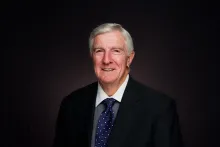
Before his retirement in 2021, Dr. Donald Ward pastored churches in Texas and Louisiana, and taught at Ambassador Bible College in Cincinnati, Ohio. He has also served as chairman of the Council of Elders of the United Church of God. He holds a BS degree; a BA in theology; a MS degree; a doctor’s degree in education from East Texas State University; and has completed 18 hours of graduate theology from SMU.
