

John Elliott
This transcript was generated by AI and may contain errors. It is provided to assist those who may not be able to listen to the message.
It's wonderful to be here, be able to be in this oasis that God provides for us, a spiritual place of refuge in the midst of the land. As we know so much as going downhill, the world situation is not healthy at all.
But here we have this enclave, which is a spiritual resting place, holy convocation. And God tells us that we are here to receive meat in due season. Meat in the Bible is talking about a nutritious meal, but of course he's talking about a spiritual, nutritious meal.
I'll just cite what Christ said quickly. It says Matthew 24, 44 through 45. It says, Therefore you also be ready, for the Son of Man is coming at an hour you do not expect. We never know when that'll happen. Who then is a faithful and wise servant whom his master made ruler over his household to give them food in due season?
And that has to do with the Church. It has to do with our family as well, providing spiritual guidance in our family as well as here in the Church.
And I always have a problem, which is I bring a trunk full of biblical information and I have to fit it all in a carry-on. So I never get through, I never have enough, but it's better to have more than have less than then have to fill in the space, right? Have a carry-on of information and then have a trunk full of time to fit it in.
And one question that has come up, people have asked about in the Church, and it's become a bit controversial. So I'd like to cover this subject of what is the role of God the Father and Jesus Christ in the Old and in the New Testament?
What is the role of Jesus Christ and God the Father in the Old Testament and the New Testament? Believe me, this is something very practical. It affects our prayer life because as we go before God the Father and Jesus Christ, it's very important to know what their roles are in the Bible as God's Word reveals it.
And that is going to determine a lot of our relationship with God and Jesus Christ.
Notice in Jeremiah chapter 9, one of the beautiful passages in the Bible, Jeremiah chapter 9, starting here in verse 23.
It says, Thus says the Lord. So here is God Himself putting this into Scripture.
He says, Let not the wise man glory in his wisdom or be proud. If a person is very smart, a lot of people are intellectual giants and moral pygmies.
So if a person is very intelligent, God is saying, don't get a swelled head over that. Don't be boasting about that. Then He goes on to say, Let not the mighty man glory in his might. Maybe a person has physical prowess, very strong, very proud of his strength, but He says, that's not something to boast about.
He says, Nor let the rich man glory in his riches, which is very common. People like to flaunt their riches in front of others and show by all their goods how important they are and how powerful they are.
And here's what God says. Those things are of secondary importance. What is of primary importance? He says, But let him who glories glory in this, that he understands and knows me, that I am the Lord, exercising loving kindness. The term here has said in the Hebrew, which is a term for love, sacrificial love, judgment and righteousness in the earth. For in these I delight, says the Lord. Getting to know God, who He really is, and how to build a relationship with Him, a personal relationship, is so valuable.
But if we don't have a right understanding, then that's going to affect our relationship and how we even address God. All of these things are important. Don't think, because we've been here in the church for so long, that we have everything down pat, because we will never fully plumb the depth of the Bible.
We will never get down to the very deep understanding of things. Only Jesus Christ could plumb the depths of the Bible.
And so, this subject of who Jesus Christ was in the Old Testament and God the Father, and then as He is revealed in the New Testament, actually has to do with the first commandment, which Christ said was the greatest commandment, to love God with all your heart, your mind, your soul. And so, as we get into the subject of how both of them interact throughout the Bible, it's so valuable.
And another additional benefit that this has is that you can be vaccinated against the doctrine of the Trinity, because a good understanding of the roles of God the Father and Jesus Christ, and how the Holy Spirit is not really fulfilling a role there, it doesn't show that.
And so, it's very important to get inoculated, just like some people have vaccines for the flu. Well, we also need to be vaccinated because that Trinity virus is one that is out there. That if we are negligent or if we are careless, you can be infected with it. Has it happened more than 20 years ago, when a lot of people caught this spiritual flu? And it started with this idea of God being a Trinity, and people started warming up to that, and before you know it, then that was a Trojan horse where many other things, then God's law was attacked, the Sabbath, and many other things. But it really started more than anything with this role of God the Father and Jesus Christ. And so, it's important to rehearse this and to be inoculated, vaccinated. And how do you get vaccinated? Well, you are able to introduce something in your body that is a defense against any of these viruses coming in.
And the vaccination is God's truth about God the Father and Jesus Christ, their role. And of course, it's a very broad subject. I'm going to mention a couple of references you can study deeper. But I want to cover in a bird's-eye view what the role of God the Father and Jesus Christ are in the Old and the New Testament. So we get it clear. So nobody will ever be able to confuse you, to fool you, or deceive you about it. Because brethren, that is one of Satan's key weapons. He goes into the juggler by way of doubting what God the Father and Jesus Christ are, and then getting very philosophical about things. And so, as it mentions there in Exodus 20, verses 2 and 3, which deal with the first commandment, it says, I am the Lord your God who brought you out of the land of Egypt, out of the house of bondage. You shall have no other gods before me. And so here is a term that is used for God that we see throughout Scripture. And in the Old Testament, the term is Yahweh Elohim, which are two terms for God. And we're going to go into just through the Scriptures. And basically, in a general way, Elohim has to do more with the Creator God. And Yahweh has to do more with the Covenant God. So it's either the relationship of the created universe or the relationship that he has with his people here on earth, the Covenant God. So Yahweh and Elohim can be used separately or together. Sometimes they're used in the singular and sometimes in the plural. And basically, in the Bible, it shows how both God the Father and Jesus Christ are revealed as two divine beings in a Godhead. And it's similar to a family relationship. We can't just say it's absolutely like a family relationship, because at the beginning, God and the Word, they had an intimate relationship. They loved each other. But it wasn't the Father and Son. That only happened when the Word came down and became flesh and became the Son. So what I want to do first is, again, look at things, but now we're going to look at it from the overview. And then we're going to focus on the details. So the trunk of the tree scriptures are the following. John 17, verses 20 to 23. To me, that is one of the key understandings of what God is, who God is, what is God's purpose for man, and what is our ultimate destiny. So all of that, you can basically sum it up in these verses, these four verses. John 17, verse 20. Christ is giving this prayer in the Garden of Gethsemane before he was going to be arrested. Basically, it was his final personal prayer that he could do before God the Father, because he was going to be arrested.
And then he just basically just prayed to God when he was there being crucified. But this is the last will and testament in that sense. So he is revealing many things. He says here in John 17, verse 20, he says, He says, So that's talking about us. The future generations that would believe the words of the apostles, the words of God, that they all may be one as you, Father, are in me and I in you, that they also may be one in us, that the world may believe that you sent me. And so here it's a unity that we have as brethren. First of all, unity of the Spirit.
It says there, Romans 8, 7, that if you don't have God's Spirit, you are none of His. And so you need to receive the Holy Spirit from God. That's not something you get at birth. You have to go through this conversion process, baptism, laying on of hands, and then you receive God's Holy Spirit.
So He says here that they may be one in us. Christ also mentioned that He and His Father would come and dwell in us through that Holy Spirit.
And then it says, verse 22, Well, that glory was, first of all, the understanding of the truth. They would receive God's Spirit.
He was guiding them through conversion at the time. In verse 23, it says, How? Through the Holy Spirit. And you and me. How? By that same Spirit that God the Father and Jesus Christ share.
That they may be made perfect in one. That's only going to happen in the kingdom of God.
Because we're never going to be perfect as long as we have this carnal human nature.
But we are developing that. We are being perfected.
And that the world may know that you have sent me and have loved them as you have loved me.
So the world one day is going to witness where was the truth of God.
In all of this world, in all of the centuries, it's hard to believe.
But brethren, these are the words of life that we are covering.
Not this false and counterfeit Christianity that has deceived, through Satan, the entire world. So to me, that sums up that God is creating a family of beings that are going to be part of his divine family.
And that Christ is the one that's making it possible.
And that now, in the Church, we have the potential to be these children of God in that coming kingdom.
So we see here in Christ's prayer, it wasn't just theory, but practice.
It shows the aim and purpose that God has and the importance of relationships with God, with Christ, as it's so important, the relationships that we have in this life.
As I look back in my life, there are a lot of things that are very important. Certainly getting a good education, being diligent, doing your best, giving it 100 percent.
These things are very important, but to me, it's the relationships that I have with the people that I love and the people who love me.
And with those, even if they don't love me, I still try to be gentle, try to be respectful with them.
So now let's get into the overview of this scripture. We're going to look at a couple more that are just like this roof.
We're going to see the main wooden beams that hold up this structure.
Let's go to John 1. Now that we know that they want to be in us and us in them, now we get into a little more details.
This is certainly the second most important scripture. John 1, verse 1, says, In the beginning was the Word, and the Word was with God, and the Word was God. He was in the beginning with God. So here again, we're seeing two beings that are together. They've been there forever. They've never had a beginning of days.
They've never have been created, but they have created everything that we see around us, and yet they are distinct.
Notice John is making the point that it doesn't say the Word was in God, but the Word was with God.
Separation. So this idea that there's just one being and sort of these different persons inside, and they all just have...
There's only one will, but yet there's these personalities inside. That's not what the Bible teaches. It teaches here that the Word was with God, and the Word was God.
So you have equivalency, and at the same time, distinction.
Then it tells us about who fulfilled certain roles.
Talking about the Word in verse 3, "...all things were made through him, and without him nothing was made that was made." Now that's a very profound and important...
It means that God the Father uses the Son, the Word, Jesus Christ, in his pre-existent state, as the one who is carrying out all of these steps of salvation, even creation.
It says nothing was made that was made.
Some people think, well, no, God the Father is the one that did it, but Jesus Christ was kind of a secondary agent. No, it doesn't show that.
It shows that God the Father was the one that delegated all of this power and command to carry them out.
So when people say, no, God the Father is the one that's involved in what's going on here on earth, no, it's Jesus Christ that is the head of the church.
He's carrying out this purpose through God the Father and through the instructions.
It doesn't mean that God the Father just said, okay, Son, I'm going to leave you in charge. Goodbye. I'm just going up here and not going to do anything else.
No, it shows they are both active.
But there's one that is the executor, the one that's carrying it out.
Continuing on, it says, verse 4, Verse 4, In him was life, and the life was the light of men, and the light shines in the darkness, and the darkness did not comprehend it.
Christ brought the truth, but men rejected it.
One of the main things they rejected was his role as the Messiah and as God in the flesh.
They rejected that. They remained in darkness.
And then it goes on to say, in verse 18, Well, let's go to verse 14, because that's a very pivotal verse as well. It says, And the word became flesh and dwelt among us, and we beheld his glory, the glory as of the only begotten of the Father, full of grace and truth. So this word that lived, this pre-existence, and now he became flesh and walked amongst us. He deprived himself of all of this immortality and tremendous power.
He was still the same one, but now divested of all of this divinity, but it was the same one. He just became like a servant to be able to offer his life and sacrifice for us.
And it says in verse 18, No one has seen God, talking about God the Father at any time, the only begotten Son, who is in the bosom of the Father, he has declared him. So that was one of the roles Jesus Christ was going to reveal, the role of God the Father.
Because the Jewish people had a confusion, and they didn't recognize that there were two beings in this Godhead. It was shown in the Old Testament, but they just refused to accept that. So when he came claiming that he was God in the flesh, they rejected him.
As it says here in verse 10, So the Jewish people and the great majority have rejected Jesus Christ and his role up to today. That's why they don't have access to God's Holy Spirit until they are converted. Their eyes are open to that tremendous truth. Notice in John chapter 5, in verse 37, goes on to say, Jesus speaking here says, Well, we know many times that the form of God was seen by men, and the voice of God has been heard by men.
But Christ is saying, wait a minute, you need to understand the roles that we both are carrying out.
In Matthew chapter 11, verse 27, Christ says something very similar. It's an important verse in this regard. Matthew chapter 11, verse 27, Christ said, So again, talking about delegation. All things have been delivered to me, not just some. And no one knows the Son except the Father. Here again, talking about the Son being with the Father, understanding who He is, He says, So Christ is involved in the conversion process when He reveals this wonderful truth. Because it's not something that you're going to read in theology books in the same way. It's not something that is understood in the world. 98% of all Christianity believe in the Trinity. And this annulses this because they're basically saying no. The Father, Jesus Christ, and the Holy Spirit, they're all one being, and they only have one will. So if one does it, they are all involved in the same decision-making process, which contradicts the great majority of the Bible, where Christ said, my Father has given me the decision, whether I'm going to give up my life or not. He didn't say, well, God the Father is also, if I make the decision, then God the Father is making it too. No, He said, I am the one that's doing it. God the Father knows when to send me back to the earth. I don't even know that, He said.
So again, either you believe the Bible or you believe in all of this philosophical theology that just is basically using Greek philosophy and all of these very strange and very speculative elements.
So we see here that Jesus Christ came to reveal His role and the Father's role. Are we all clear on this? And then let's go to Hebrews, chapter 1. Again, this is another one of these overarching scriptures that give us a bird's-eye view of the purpose that God has here on earth. Notice Hebrews chapter 1, verse 1. It says, God, talking about the Father, who at various times and in various ways spoke in time past to the fathers by the prophets.
So again, yes, God the Father is the ultimate and He is preeminent, but He uses Jesus Christ. Jesus Christ is using the prophets. The prophets are carrying out the will. He says, He's saying directly by His Son, Whom He has appointed heir of all things, through whom also He made the worlds. Talk about the entire universe. Who, being the brightness of His glory and the express image of His person, in other words, no inferior quality. They both have the same image, the same qualities, but they are distinct. And upholding all things by the word of His power, when He has by Himself purged our sins, sat down at the right hand of the Majesty on high. Talking about God the Father and the role that Jesus Christ has. So we've got two more scriptures before we get into more of the details. Here's another one that's an overarching theme, Colossians 1. Again, I'm just giving you a good inoculation. These are the verses and scriptures that you always have to go back to when people try to confuse you. This is part of what I believe is the great lie that's going to be taught in the world. And people are going to be persecuted, and it's going to be part of the beast system to impose the Trinity Doctrine in the world. And believe me, they will push it to go into the Arab lands and crusades and everything else.
Because this is one of Satan's big Trojan horses. This is the way he breaks up the truth. Colossians 1, verse 14. Talking about Jesus Christ. It says, let's start in verse 13.
Talking about Jesus Christ.
The firstborn, because he's the first one to go through the process of this spiritual birth.
In him, all things were created, so we know this is something way back in the past, before the universe was created, all things were created that are in heaven. So that includes angels, and the third heaven, and that are on earth, invisible and invisible, whether it's physical or spiritual beings.
Whether thrones or dominions or principalities or powers, so Satan is a created being. He did not do anything on his own. He's still part of the creation of God the Father and Jesus Christ. All things were created through him and for him. So God the Father is using Christ for everything he's carrying out, and it is for Christ. And he is before all things, and in him all things consist.
So again, it's very exclusive. It includes just everything. And he is the head of the body, the church, who is the beginning, the firstborn from the dead. That's what it means, that in all things he may have the preeminence. And then in chapter 2, verse 9, it says, For in him, talking about Christ, dwells all the fullness of the Godhead bodily, because Christ was spirit, became body, and came back to be spirit again. So in him dwells the Godhead. It's not just God the Father. Godhead is a term, again, which is more of a family relationship. It means something that includes more than one. And most of the dictionaries will explain this, although others just talk about qualities of God, but it doesn't make sense here, because he says that the Godhead, he dwells, in him dwells all the fullness of the Godhead bodily.
So let's go to the last scripture, that for me is the overarching area that we're covering here, 1 Corinthians 15, verse 22. 1 Corinthians 15, verse 22, looking at again the bird's-eye view of the purpose of God, the roles of God in Christ, in the Bible, in creation, in our lives. 1 Corinthians 15, verse 22, it says, For as in Adam all die, even so in Christ all shall be made alive.
So every human being will one day be made alive again. But each in his own order, not everybody's going to be resurrected at the same time as people are taught today, that everybody is eventually going to be, well, before the throne of God, and that's just going to be after a person dies, their sentence, either heaven or hell, and eventually their judgment at the end. Now it says here, each in his own order, term here, like military ranks, where you're separating different squadrons, Christ the first fruits. He's the first one resurrected spiritually from the dead.
Afterward, those who are Christ's at his coming. The Bible calls that one the first resurrection. And then, verse 24, then comes the end when he delivers the kingdom to God the Father, when he puts an end to all rule and all authority and power. For he must reign till he has put all enemies under his feet. The last enemy that will be destroyed is death. So Christ is one day going to resurrect people, people are going to have access to eternal life, nobody will have to face death a second time that is part of the kingdom. And notice here the importance, the role. Every place we've gone in the scripture so far, it shows God the Father has placed basically the handling, the executing of the plan by Jesus Christ.
And until every enemy is put under his feet, Christ is going to continue carrying out his Father's will. What happens when that is all finished? Notice verse 27, for he has put all things under his feet, but when he says all things are put under him, talking about Christ, it is evident that he who put all things under him is accepted.
Of course, God the Father is not under the commands of Jesus Christ. Jesus Christ is under the commands of God the Father. Verse 28, now when all things are made subject to him, talking about Christ, then the Son himself will also be subject to him who put all things under him that God may be all in all. It will be just one great family. We're all going to be together.
God is going to be there, and there's not going to be any separation, any estrangement. We're all going to be together. Just like a big family, when they're all included, you just feel so fulfilled, each one carrying out their roles. God the Father has a role. Christ has a role. We have a role to fulfill.
So let's go quickly to the Old Testament to see how these roles of God the Father and Jesus Christ are revealed. Again, I'm going to have to go a bit quickly because of the shortness of time. Genesis 1, verse 26.
We've read this many times, but let's look at it from the point of view that God the Father is in charge. Jesus Christ is doing all of the creating under the Father. Verse 26, then God, hear the term Eloim as the Creator God.
This is God the Father who would become the Father. He's the one that is giving the instructions. He says, then God said, let us make man in our image according to our likeness. Let them have dominion over the fish and everything else.
Here, Eloim, which is a plural, can be used in a singular sense or in a plural sense. When it's used in a plural sense, it's including the Word. God and the Word are together. They're doing the creating, not the angels nor anyone else.
We can see now how God is here talking about making the image, and it is Christ who is carrying it out. Then it becomes singular in verse 27 because this is the one who's doing it.
God created man in his own image. In the image of God, he created them, male and female. He created them. Here, we have Eloim being applied, first to both and then to one, because it says nothing that has been created has been done without Jesus Christ. participating in it. In chapter 2, verse 7, here we have again the term Yahweh Eloim, verse 7, and the Lord formed man of the dust of the ground and breathed into his nostrils the breath of life, and man became a living being.
So this is not referring to just a creator God, it's talking about the covenant God. So there's a special relationship with man that no other being has in this way. You have the two, the creator but also the covenant God involved. In chapter 3, verse 22, we see again the plural. Again, Yahweh Eloim, here is a problem with the covenant with Adam and Eve, the covenant that God had with them was broken by Adam and Eve. It says then the Lord God, Yahweh Eloim, said, Behold, the man has become like one of us, to no good and evil. So he's saying here now man has chosen to have independent thought and will apart from us. God has independent thought and will. But with that human nature, this becomes a very dangerous mix.
And so God knows that they cannot receive eternal life. That's why it says here in verse 22, And now lest he put out his hand and take also the tree of life and eat and live forever, therefore the Lord God sent him out of the Garden of Eden to till the ground from which he was taken.
So again we see the plurality, the Godhead with each one. Sometimes they're together. Sometimes it's one doing one thing or the other. The context determines a lot. In Genesis 11 and verse 7 and 8, here we have the plural, us again. Genesis 11 and 8, in the Tower of Babel, it says, Come, let us go down. And they are confused their language that they may not understand one another's speech. So the Lord Yahweh, the covenant God, scattered them abroad. So again, here we have both involved in the us and then it is the Lord Yahweh who was a pre-existent Christ, who is the one doing the active work here on earth.
Let's go to chapter 16 because in a sense God is going to help us to distinguish one of the God beings from the other. How does he do this? In Genesis 16 verse 7, it says, Now the angel of the Lord found her, talk about Hagar, by a spring of water in the wilderness. This is Genesis 16 verse 7 and verse 9, And the angel of the Lord said to her, Return to your mistress and submit yourself under her hand. Then the angel of the Lord said to her, I will multiply your descendants exceedingly, so that they shall not be counted for multitude. And the angel of the Lord said, Behold, you are with child, and you shall bear a son, you shall name him Ishmael, because the Lord has heard your affliction. So here, angel of the Lord. Now we get into Lord.
Verse 13, Then she called the name of the Lord, who spoke to her. So, you are the God who sees, one of the names of God. So we see here the introduction of this, the messenger of God. A messenger can be a divine messenger, it can be an angelic messenger, it can be a human messenger. Again, the context shows when it's actually dealing with God himself, because you see the interchangeability, angel of the Lord and the Lord doing things. So this is the first time that the angel of the Lord is introduced in the Bible. 11 times we find it in Genesis, and 6 times in Exodus. In chapter 19, verse 24, we see the term that the Lord rained down, sulfur, and let's read it here. Genesis 19, verse 24, It says, What is that all about? Here it says, it's like the being is there, because remember there were three that came to Abraham, and Abraham talked to the Lord, now God the Father, God the Father is not carrying things out here on earth unless there's some special situation, but it is the pre-existing Christ who is here talking to Abraham. Abraham heard his voice, and now it says that the Lord did this, and he says that there's this Lord out of heavens, not just the one here on earth.
So here are two beings being discussed from the context of this verse.
In Genesis 22, this is a very important case, again showing the equivalence between the angel of the Lord and the Lord himself, and one of the pivotal moments in the Old Testament, the sacrifice of Abraham, that he's going to sacrifice his son Isaac, and God stops him, Genesis 22, verse 10.
This is not talking about any angel.
In verse 10, it says, And Abraham stretched out his hand, and took the knife to slay his son. But the angel of the Lord called to him from heaven, and said, Abraham, Abraham. So he said, Here I am. And he said, Do not lay your hand on the lad, or do anything to him. For now I know that you fear God, since you have not withheld your son, your only son, from me. So again, it's not from some other being, no, from me. Who was Abraham interacting with? It was the pre-existent Christ, the Word.
In verse 15, it says, Then the angel of the Lord called to Abraham a second time out of heaven, and said, By myself I have sworn, says the Lord. So what difference is there between angel and the Lord? The angel just separates. Who is doing what? It's talking about the second being, the Word.
By myself I have sworn, says the Lord, Because you have done this thing, and have not withheld your son, your only son, blessing, I will bless you, and multiplying I will multiply you, your descendants, as the stars of the heaven, and as the sand, which is on the seashore. So this is always, we know it's a promise, that Abraham walking by faith, Abraham, Isaac, and Jacob, the promises. So again, we see how it is in the Bible, but you have to look for it.
And I could go on, of course, the angel of the Lord wrestled with Jacob, the angel of the Lord as a commander of God, before Joshua, in chapter 5. And even Paul uses the term, angel of the Lord. Did you know that? To show the consistency in both of the Testaments. Let's look at Acts, chapter 27. Acts, chapter 27, verse 22.
Acts, chapter 27, verse 22 through 24.
Paul says here, he's on the ship, bound for Rome, he says, Now I urge you to take heart, for there will be no loss of life among you, but only of the ship. For there stood by me this night an angel of the Lord, for there stood by me this night an angel of the Lord, to whom I belong and to whom I serve. So he says, I belong to him.
You wouldn't say that of an angel, but you do about God. He belongs to God and he serves God, saying, Do not be afraid, Paul. You must be brought before Caesar, and indeed God has granted you all those who sail with you. Therefore take heart, men, for I believe God, that it will be just as it was told me.
So again, here, this intervention that he says, this is the one I belong to and I serve. Now, a very important scripture, also in Acts we want to cover, is in Acts chapter 7, verse 29, because this is Stephen's testimony. He's recounting the Old Testament. And here he's giving a summary of what's going on, and he uses the term angel of the Lord for the Lord God. Notice Acts chapter 7, verse 29. It says, then, at this saying, Moses fled and became a dweller in the land.
He fled Egypt. He became a dweller in the land of Midian, where he had two sons. And when forty years had passed, an angel of the Lord appeared to him in a flame of fire in a bush in the wilderness of Mount Sinai. When Moses saw it, he marveled at the sight, and as he drew near to observe, the voice of the Lord came to him, saying, I am the God of your fathers, the God of Abraham, the God of Isaac, and the God of Jacob.
And Moses trembled and dared not look. Then the Lord said to him, Take your sandals off your feet, for the ground where you stand is holy ground. I have surely seen the oppression of my people who are in Egypt. I have heard their groaning, and have come down to deliver them. And now come, I will send you to Egypt. This Moses, whom they reject as saying, Who made you a ruler and a judge, is the one God sent to be a ruler and a deliverer by the hand of the angel who appeared to him in the bush. So it was the angel of the Lord who appeared to him in the bush.
But again, there's another God up in heaven carrying out, sending instructions. And the angel of the Lord is carrying it out. The angel who appeared to him in the bush, verse 36, He brought them out after he had shown wonders and signs in the land of Egypt and in the Red Sea and in the wilderness forty years. And so let's go on. It says, This is the Moses who said to the children of Israel, The Lord your God will raise up for you, a prophet like me, from your brethren, him you shall hear. This is he who was in the congregation in the wilderness, talking about Moses, with the angel who spoke to him on Mount Sinai and with our fathers, the one who received the living oracles to give us.
So again, one of the main purposes that Stephen was speaking was to show that Christ was the God that Israel knew and that was with them and that they were rejecting. And after Stephen was stoned, when he said he saw God the Father and Jesus Christ, and he said in verse 59, And they stoned Stephen as he was calling on God, saying, Lord Jesus, receive my spirit.
So you see it can either be God the Father or Jesus. They're both there. So it just shows that both have a role. Both are divine beings. Both are worthy of worship, and both are worthy of our conversations.
Then, of course, we have the famous I AM statements. Let's just go to one of them. John 8, verse 56.
John 8, verse 56.
Jesus is talking about his pre-existence. John 8, verse 56.
He says, Your father Abraham rejoiced to see my day, and he saw it and was glad. Because Christ was the Messiah, and he was happy that that Messiah was going to come. God in the flesh. Verse 57.
That's the term used in Exodus chapter 3 for the I AM, the Yahweh. That's what it means. The one who's always existed. And then they took up stones to throw at him because they knew he was equating himself with God.
So, all the way to the end of the Bible, from Genesis to Revelation, we see Jesus Christ and God the Father have a role to play. God the Father is preeminent. We don't have a problem. But let's not diminish the role of Jesus Christ either.
Just like we're studying in the Bible, a book of Revelation, and how it starts in Revelation 1.1. It says, The Revelation of God, who gave it to Jesus Christ, and then Jesus Christ, through an angel, gave it to John. But the rest of the book of Revelation, Jesus Christ is in the midst of the churches.
Jesus Christ is opening up the scrolls. Jesus Christ is coming back. And God the Father's role is actually found in Revelation from chapter 20 all the way to chapter 22. That's when God the Father enters fully. And now he will be with man directly.
Not through Jesus Christ. Notice in Revelation 22, we're going to be finishing here real quick.
A whirlwind tour that we've taken. Revelation 22, verse 1.
These are the last verses that describe the New Jerusalem.
Now the idea is, they're not two thrones. There's one throne. God the Father and Jesus Christ is sitting at the right hand.
In the middle of its street and on either side of the river was the tree of life which bore twelve fruits. Each tree yielding the fruit every month. The leaves of the tree were for the healing or refreshing. Another translation of the nations. And there shall be no more curse, but the throne of God and of the Lamb shall be in it, and his servants shall serve him.
They shall see his face, talking about God the Father's, and his name shall be on their foreheads. There shall be no night there. They need no lamp nor light of sun. For the Lord God, in the Yahweh Elohim now, talking about the Father, gives them light and they shall reign forever and ever. There's a future expansion of his family throughout the universe.
So, going back to the practical part, God the Father and the Son work together, not like a trinity. It says there are three persons, but only one will. No? There are two divine beings and there are two wills. They have two wills, like the Bible constantly shows, but not like human beings. They don't have human nature. They have a God nature, not carnal or selfish at all, so they can have perfect harmony and unity. And that's what God is offering us, to be part of them. As it says in 2 Peter chapter 1, 2 Peter chapter 1, verse 2, it says, A grace and peace be multiplied to you in the knowledge of God and of Jesus our Lord. That's what we've been talking about. The knowledge of God and of Jesus our Lord, as his divine power has given to us all things that pertain to life and godliness, through the knowledge of him who called us by glory and virtue, by which have been given to us exceedingly great and precious promises, that through these you may be partakers of the divine nature, having escaped the corruption that is in the world through lust. So, yes, being participants of the divine nature. And so, again, in a practical term, let's turn to 1 John chapter 1. There's two verses here left. 1 John chapter 1, verse 1. This is very similar to John chapter 1. It says, So it wasn't some phantasm or ghost concerning the word of life. The life was manifested, and we have seen and bear witness and declare to you that eternal life, which was with the Father and was manifested to us, that which we have seen and heard, we declare to you, that you also may have fellowship, koinonia, a very intimate partnership, with the Father and with His Son, Jesus Christ. And these things we write to you, that your joy may be full. So, brethren, I hope this is a good vaccination, as it says to finish 2 John chapter 1, verse 9.
It says, Where's the Holy Spirit? No. He's not there. This is the Trinity. It's talking about the Father and the Son. They're abiding in the right teaching here. So, brethren, as it says in verse 10, to conclude, So, now we know a little more about this subject, so important, about the nature of God and Jesus Christ in the Old and in the New Testament. For reference works, we have a doctrinal paper, The Nature of God in Christ. That covers what I've done. The booklet, Who is God? And finally, a sermon by Steve Myers this year. Jesus, God of the Old Testament. I recommend all of those sources, if you want to go deeper into this subject.
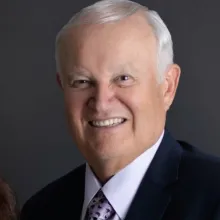
Mr. Seiglie was born in Havana, Cuba, and came to the United States when he was a child. He found out about the Church when he was 17 from a Church member in high school. He went to Ambassador College in Big Sandy, Texas, and in Pasadena, California, graduating with degrees in theology and Spanish. He serves as the pastor of the Garden Grove, CA UCG congregation and serves in the Spanish speaking areas of South America. He also writes for the Beyond Today magazine and currently serves on the UCG Council of Elders. He and his wife, Caty, have four grown daughters, and grandchildren.

