

Ken Loucks
This transcript was generated by AI and may contain errors. It is provided to assist those who may not be able to listen to the message.
7. Matthewmel If you ever stop to consider that or to think about it, the most important quality of God, of His character, is the fact that God is love. I think we understand that. Let's just read one scripture dealing with that in 1 John 4, over here in 1 John 4, beginning in verse 7. It says, Beloved, let us love one another, for love is of God, and everyone who loves is born of God and knows God. He who does not love does not know God, for God is love. So we discover that if you really want to know God, you know Him, as it says here, through love. That's not just our own human love, but the very love of God. God's principal work, though, is creation, both physical creation and spiritual creation. The theme of the Bible, if you want to describe a theme, is eternal life. How God will extend salvation to all mankind. And that's what the whole plan of God is about. That's what all of the Holy Days picture. God's plan of salvation. Now, back in Genesis chapter 1 and verse 1, God began to reveal Himself to mankind. And Moses wrote it this way to convey to us what the great God we worship is like. In Genesis 1, verse 1, it says, In the beginning God created the heavens and the earth. So the first revelation about God in the Bible, the first verse we read that begins to reveal something about Him, He reveals Himself as the great Creator. He was the One who created what? Well, it says, the heavens and the earth. So the word created here is barar, and it means, implies a perfect creation. As we understand, God created the heavens and the earth originally, and then there was a rebellion. And in that rebellion, the surface of the earth was destroyed. And then the rest of this chapter is later on, God reconstitutes and refurbishes the earth and makes it suitable for human beings to dwell on. So God's revelation about Himself is that He creates. Now, with that in mind, let's go back to John 1, because here we have another beginning, or where it refers to the beginning. John 1, verses 1 through 3.
And notice here, John 1, in the beginning was the Word, and the Word was with God, and the Word was God. He was in the beginning with God. All things were made through Him, and without Him nothing was made that was made. Now we find another element added here. God is Creator. That's what He's doing, but He created through Jesus Christ, as we read here.
The Word was God. I want you to notice what Baker's exegetical commentary has to say about this section. I'd never really studied it that thoroughly. But quoting from there, it says, Since the Word existed in the beginning, one might think that either the Word was God, or the Word was with God. John affirms both, that He was God, and that He was with God. First, he states that the Word was with God. The preposition, pros, P-R-O-S, with indicates place or a compliment, but also disposition and orientation.
What is expressed is not simply coexisting, and we know that the Father and the Son coexisted with each other, but what is expressed is not simply coexistence, but rather the idea of active relationship or intercourse with one another.
You discover, from what this Greek word means, that the Father and the Son had a very active relationship with each other. You did not have two beings who never talked to one another, never communicated with one another, who never planned together, but they were very active together. One might say that of a husband and wife if they have halfway decent marriage, that you live with your wife, she lives with you, and that should imply that you just don't coexist in the house, one in this room, one in that room, but that you share things, you're involved with each other. So it is with God, the one who became Christ and the one who we know as the Father, that there was a relationship between the two of them. Now, guess what that implies? When God began to create human beings, one of the fundamental reasons for that is that God wants to share a relationship with us. He wants to share not just a relationship, but a family relationship with us. Going on, it says what is expressed again is not simply coexistence. In terms of relationship, not only does prose establish a relationship between God and the Word, but also it distinguishes the two from each other, that they are separate beings. And so, I think they have a pretty clear understanding. You have the Word who was God, and He was with God, and you let they coexisted, and they had a relationship. The Word in, which is translated was, conveys the notion of existence, relationship, and predication.
And what it means, the force of the Word, is the Word continually was. So, if the question was, was He a creative being? And the answer is no. He continually was. He was God. He had always existed, just like the one that we know as the Father. And the Word was helps to convey that. In terms of relation, well, it goes on to say, though, of course, well, it begins to describe the, oh, the indicative form of the verb here. It says, in context, the Word's existence is placed outside the limits of time and place, neither of which existed when He and the Father, you know, have lived for eternity, forever. We have a family here. We have two beings, and they have a right relationship with one another. Their nature is one of love. It's one of giving. And so, they were giving, sharing, loving. You know, we don't know exactly everything that had gone on for all eternity, but one day, they decided and they created a plan, thought it out, designed it, that they were going to create a family. And so, God, from the very beginning, began to reveal that He is a Creator. God wants to have that same relationship with us. Let's go back to Genesis 1 again in verse 2. Genesis 1, and we'll read here in verse 2.
It says, The earth was without form and void. So, the earth had become this way, and it can be translated that, without form, tohu and bohu, utter confusion, chaos. And God is not the author of confusion, so He didn't create the earth that way, but it became that way with Satan's or Lucifer's rebellion. And darkness was on the face of the deep, and the Spirit of God was hovering over the face of the water, and God said, Let there be light, and there was light. So, the Holy Spirit is the power whereby God did the recreating here, whereby God did originally the creating. It is the power through which all of this took place. And what it demonstrates is that God has staggering power. You and I get a little glimpse of the power of God, the magnificence of God, by looking at the universe, and you realize that there are billions of galaxies out there, billions of stars, and those stars, each one is a sun that generates a tremendous amount of power and energy, and God created it. He brought it into being. So, obviously, he had to plan this out and design it ahead of time. Then you begin to realize the depth of his mind, the depth of his understanding. You and I couldn't even begin to create an atom, and God creates all of this and puts an imperfect harmony, puts it out there containing power. In Psalm 104, let's go over to the book of Psalm, verse 24, Psalm 104, verse 24.
We discover this, O Lord, how manifold are your works? In wisdom you've made them all. So, all of the works of God, everything that we can see, and we don't see, actually, God made them, and he made them out of wisdom. The earth is full of your possessions. And then in verse 30, you sent forth your spirit, and they are created, and you renewed the face of the earth. So, God, in the creation, back in Genesis 1, he renewed the face of the earth. He refashioned it, reformed it, but he did it through the power of the Holy Spirit. And we understand that it is that spirit that is able to do that. So, the physical creation was created through the Spirit of God. Is it any wonder, then, that when it comes to the spiritual creation, that it still takes the Spirit of God to do that? God wants to share with us. And there's only one class of being that God created that God will share his level of existence. He's not going to share it with angels. God never promised the angels that he would do that, that he would share that with them, but he has with us. In Genesis 2, we find something interesting. After Genesis 1, God recreates the earth. Six day makes man, puts him on the earth. He created the Sabbath for a day of rest. We discover in Genesis 2, then, that he will be able to do that. God plants a garden in Eden, and he made it for the man and the woman. Genesis 2, verse 8, the Lord God planted a garden eastward in Eden, and there he put the man whom he had formed. So God puts Adam right there in the garden. He made it for him. Perfect spot! And we discover, through this whole narrative here in chapter 2, that God is talking to Adam. God is communicating with him. There is a relationship that begins to develop. And in verse 16, the Lord God commanded the man, saying, Of every tree of the garden you may freely eat. So God freely commanded and associated with the man. There wasn't any barrier there between the two of them. He was able to talk with Adam.
Now, something happened. Chapter 3. We're all familiar with the story. The serpent comes along, Satan. He leads man into sin.
They rebel against God. They're misdirected by him. They partake of the wrong tree, the tree of the knowledge of good and evil. And what was their reaction to God at this point? Verse 8.
After all of this took place, they heard the sound of the Lord God walking in the garden in the cool of the day. So this is a garden. God is there. I mean, he hasn't left them. He's communicated with them. And Adam and his wife hid themselves from the presence of the Lord God among the trees of the garden.
Several things to notice here. They hide themselves. This is from the presence of God.
God wanted to dwell with man. He wanted to have a relationship with man. Dwell among them. But sin separated them from God. Isn't that what we read later on? In the prophets, that our sin separates us from God? So they were hiding from God. And God came. He drove them out of the garden of Eden. And then they lived in Eden. As man progressed along in sin more, Cain specifically, he was driven out of Eden. To the land of Nod. And so he wasn't even able to dwell in the land of Eden. So both of them were excommunicated, so to speak, from the garden.
Now, later God chose Israel.
I'm skipping a lot here. But God chose Israel as his nation. And revealed to them his way of life, his calling, his laws, and that he personally wanted to dwell among them.
Now, up until this time, man had cut himself all from God. And there wasn't a relationship except with a small handful of people that God would call. In Leviticus, let's turn back to the book of Leviticus, chapter 26 and verse 11.
God begins to reveal his heart's desire to Israel.
And indirectly then to us, God says, I will set my tabernacle among you, and my soul shall not abhor you. Now, in verse 11, you'll notice for tabernacle, in the margin, it says dwelling place. So God wanted to set his dwelling place among them. And I will walk among you and be your God, and you shall be my people. God's desire was to take them as his special people. They were chosen. They were to be an example to all the other nations around them. But they rebelled. Exodus chapter 25. Again, we see God's desire. Beginning in verse 8, Exodus chapter 25 and verse 8. This is where God begins to give to Moses the instructions concerning the sanctuary that was to be built. Notice the purpose behind this. Let them make me a sanctuary.
And he says that I may dwell among them.
So God dwelt with man at the very beginning. They hid themselves from God. Sin cut them off from God. Now God chooses Israel, and he says, Look, I want to dwell among you.
I want to be there with you. God was going to dwell in his sanctuary. In chapter 29 of the book of Exodus, verse 44, chapter 29 and verse 44, we find, again, the same thing reiterated. I will consecrate the tabernacle of meeting and the altar. And I will also consecrate both Aaron and his sons to minister to me as priests. And I will dwell among the children of Israel. And I will be their God.
So God wanted to dwell among them, and he wanted them to always know that he was there. He was their God. All the nations had their gods and their idols. They tried to create God in their own image. They would make idols. And yet we find that God is making us in his image. There's a difference. And this is one reason why idols are so wrong. But God says, I will dwell among the children of Israel, and we'll be their God. And they shall know that I am the Lord their God, who brought them up out of the land of Egypt, that I may dwell among them. I am the Lord their God. So God said, he is their God. Now something happened once the tabernacle was erected in chapter 40 of the book of Exodus.
Verse 34. Notice in added detail here.
Then the cloud covered the tabernacle of meeting, and the glory of the Lord filled the tabernacle.
The very presence of God came and dwelt in the tabernacle. God was there, and when they wanted to talk to God, they would come to the tabernacle, and God would communicate with them. Later on, when the temple was reared up, Solomon's, what we call Solomon's temple, when that was reared up, the presence of God filled that temple. Second Chronicles chapter 5. Chronicles this, verse 13. Second Chronicles chapter 5. And we will read here in verse 13. And it came to pass that when the trumpeters and the singers were as one, to make one sound to be heard, to praising and thanking the Lord, and when they lifted up their voices and the trumpets and the symbols and the instruments of music, and praise the Lord God, for He is good, and His mercy endures forever. And His mercy endures forever. That the house, the house of the Lord, was filled with a cloud. And so God's presence was here in the temple, so that the priests could not continue ministering because of the cloud, and the glory of the Lord filled the house of God. So God's glory, His presence, was there in that house.
We all understand that Israel divided. There was the house of Israel, the house of Judah. God took the house of Israel into captivity somewhere around 721, 718 B.C. They went into captivity to the Assyrians. Later on, the house of Judah went into captivity to the Babylonians. And the temple was desecrated and destroyed. Later on, it was rebuilt. Let's go over to the book of Haggai.
Haggai chapter 2, and we'll begin here in verse 3.
Chapter 2, beginning in verse 3.
They reconstructed the temple, and notice what God says. Who's left among you who saw that temple in its former glory?
Solomon's temple was one of the most glorious, beautiful buildings that was ever constructed by man. So, who's left among you who saw the temple in its former glory? And how do you see it now, in comparison with it? Is this not in your eyes as nothing? Absolutely no comparison between it. If you wanted to use an analogy, it would be like a $5 million dollar mansion today, compared to a $25,000 dollar dilapidated old house. It maybe wasn't quite that bad, but God says when you compare, there was no comparison. Yet now be strong, Zerubbabel, says the Lord. Be strong, Joshua, the son of Jehoshadak, the high priest. Be strong, all of you people of the land, says the Lord. And work! I am with you, says the Lord of Hosts. According to the words that I covenanted with you when you came out of Egypt, so my spirit remains among you. Do not fear. Now the same thing can be said to us today. God's spirit remains among us. We don't have to fear or to be afraid. And God will be with us as we do the work. The work that He has given us to do. Each generation has a work to be done. Now in verse 6, For thus says the Lord of Hosts once more, If it is a little while, I will shake heaven and earth, the sea and dry land. And I will shake the nations, and they shall come to the desire of all nations. And I will fill this temple with glory, says the Lord of Hosts. So it's talking obviously about a future time when God intervenes to shake the earth, the heavens, and that there's going to come a time in the future when the temple, God says, will be filled with His glory. Verse 9, The glory of this latter temple shall be greater than the former, says the Lord of Hosts. And in that place I will give peace, says the Lord of Hosts. Now in one sense, this could possibly be dual, referring to the temple in the millennium. But I think in context it's showing that it's speaking about the Church of God. We today are the temple of God, and God has placed His presence, His glory, His spirit within us. Now it's interesting that God's presence from everything that we can tell, we don't find any example of it here in Scripture, that did not fill that temple.
There were five things missing when that temple was reconstructed that had been there earlier. The Ark of the Covenant was missing. It contained the law of God, as we know. Today, God writes His law in our heart. Now, it was written on tables of stones, written in words here, but it's written in our hearts, in our character, in our mind. Apparently, the sacred fire was not there. It doesn't mean they didn't sacrifice, but God's presence was not in it. God has called us today to offer up spiritual sacrifices. The Urim and Thummim were missing. The Spirit of God and the Word of God leads us today in making decisions. If you'll remember, anciently, they'd go to the priest. He had this breastplate. He had a sack with a couple of stones in it. One was yes, one was no.
If you want us to go to war, they reach in, pull out yes or no.
Which tribe do you want to lead off? God would light one of the stones up, and they would know which tribe should lead them. Well, apparently, that was missing. They no longer had the Spirit of prophecy, as has been before. There was a period of 350-400 years that they did not have a designated prophet. Now, in Revelation 19, verse 10, I'll just refer to this. You'll find that it refers to the testimony here of God.
John sees an angel. He falls down in front of that angel, and he says, I fell at his feet to worship him. But he said to me, See that you do not do this. I am your fellow servant of your brethren who have the testimony of Jesus. Worship God, for the testimony of Jesus is the Spirit of prophecy. Now, there are all kinds of people out there who claim to be prophets. There are all kinds of false prophets out there, as we know. And here recently, we had a gentleman who claimed that he knew the day the rapture was going to come. Day came, passed. That was his second try. I think he's rescheduled it for September. Three strikes, you're out. You know, September comes, and, you know, he believes he knows exactly the day, quote-unquote, the rapture. And there is no such thing as a rapture. So, you know, he's got a problem to start with. But the testimony of Christ is the Spirit of prophecy. And the true Church of God possesses the Spirit of prophecy in the sense that God has given us understanding about prophecy. Now, it doesn't mean we go way out on some limb somewhere with some crazy pronouncement. We understand what the future is all about. We understand the millennia, the white throne judgment, the plan of God, how God's going to work it out. We do understand what God says is going to happen to Israel before the end time. So there is a Spirit of prophecy in that sense. But there was another thing lacking at that temple, and it lacked the glory of God. It did not have the same glory.
When you begin to ask yourself if we truly are the temple of God today, is the glory of God, is the presence of God seen in my life? Is it seen in your life? Is it seen in the Church? Where is God in my life? And I'll rephrase that. Where is God in your life?
God is in the process of a new spiritual creation taking place with each one of us. A new mind that God is creating in us. He is perfecting that mind. So when God created the heavens and the earth and then recreated it, that was a physical creation.
It was a type of what God was going to do later on. He was going to have a spiritual creation. And you and I are participating in that spiritual creation. Let's go over to the book of Ephesians. Ephesians chapter 2. And we will begin to read in verse 21. Ephesians 2.21. This is where Paul explains to the Gentiles that they can be a part of the calling of God. But we'll pick up the story in verse 21, talking about us all being part of the story.
Talking about us all being built together. Verse 20 says, "...having been built on the foundation of the apostles and prophets, and Jesus Christ himself being the chief cornerstone, in whom the whole building being fitted together grows into a holy temple in the Lord." So you and I today, the church, we are the temple of God. And we are created. Why is the sanctuary, the temple built? What did God reveal? All of the scriptures I've just read to you in the Old Testament. God wants to dwell among us. And so God wants to dwell among His people today.
God is not working with one nation today. God is calling people out of all nations, all peoples. God gives us His Holy Spirit. We collectively are the church of God, but the temple of God likewise. And God has created us as a body in which He can dwell. His glory can be manifest.
His presence can be known. His way of life can be lived. And you and I can be examples to all of those who are around us. Verse 22 says, in whom you also, being built together, why? For a dwelling place of God, how? In the Spirit. The Spirit of God dwells in us. When you and I are converted, we're baptized, have our past sins forgiven, hands laid on us.
We receive the Holy Spirit of God, and we then have God dwelling within us. Back up to 1 Corinthians chapter 3. 1 Corinthians chapter 3 here, verse 16. If anyone's work is burned, we're breaking into the middle of the thought here about how our work, our character, what we do, all will be tested at one time or another. It says, do you not know?
Excuse me here. Verse 15 says, if anyone's work is burnt, he shall suffer loss, but he himself will be saved, yet so as through fire. Do you not know that you are the temple of God? We as a church are the temple of God. And that the Spirit of God dwells in you. This has always been God's desire, that he wants to dwell with his people. And if anyone defiles the temple, if anyone destroys that temple, undermines that temple, then God will destroy him, for the temple of God is holy, which temple you are.
So you and I are holy. What makes us holy? Only the presence of God in something makes it holy. Why is the Sabbath day holy? Because God's presence is in it.
Why are we meeting here on what we call a holy day? What makes it holy? Because God is here with us. How can we become holy? Because the presence of God dwells in us. That's what the Day of Pentecost is all about. If you'll remember, on that day the Holy Spirit came. 120 received that Spirit. Later on, 3,000 were converted.
Later on, multiple thousands of people were converted, and added to the Church. And God's Church has never died out. It has continued to our day today. And you sit here today as part of the temple of God scattered around the world, that you have God's Spirit.
God uses men to build the Church, but men don't own the Church. We all belong to God and to Jesus Christ, and we're linked together through the Holy Spirit.
Now, stop and think about this. The only reason we're here today is because there's a common bond that we have. Is it not? We have God's Spirit. We have the same understanding. God's opened our mind.
Otherwise, there's no reason in the world why most of us would be friends.
Now, you wouldn't be up here. You'd be someplace else. You'd have a different circle of friends. But God has brought us together as a family. And what does God want us to learn to do? He wants us to learn to have a proper relationship with one another, does He not? He wants us to learn to love one another, serve one another. So God is working through us, just like a physical family. A physical family is linked together by the same parents. The best example I have right now is over here in this second row. The dances. Same father, same mother, four sons. What do they have in common? Dad and mom. What do we have in common? We have the same, in a sense, genetic pattern implanted in us from our Father, God the Father. We become a part of His family. We are His children. God lives in us, and God wants a right relationship. Jesus Christ and the Father have shared an active relationship with each other for eternity. Now, they're wanting to share it with us. And you and I are the vanguards. We're the ones called out ahead of time to have that opportunity. In 2 Corinthians chapter 6, 2 Corinthians 6 and verse 14, Do not be unequally yoked together with unbelievers, for what fellowship is righteousness with unrighteousness or lawlessness, and what communion has light with darkness? And what accord is Christ with Belial, or what part is a believer with a nonbeliever? And what agreement has the temple of God with idols? For you are the temple of the living God, as God has said. I will dwell in them, and I will walk among them, and I will be their God, and they shall be my people. Therefore, God says, come out from among them, and be separate.
Says the Lord, do not touch the unclean things, and I will receive you. Now, God wants us to be separate from this world around us in a spiritual sense. We can't go out of the world, can't live on the backside of the moon, but you can be separate in everything that you do. And we go on to read, if we do this, I will be a father to you, you shall be my sons and daughters, says the Lord Almighty.
So God has called us to be separate from this world, its traditions, its customs, its way of life. God has given us this day at Pentecost to explain how he sends his Holy Spirit. It's the missing dimension that the world has missed. Remember, Satan took Adam and Eve captive in the Garden of Eden, and he took the world captive at that time. When converted, God separates us from the kingdom of Satan the Devil, as Colossians chapter 1 tells us. We've been delivered from the power of darkness. Now let's notice some interesting facts here concerning God's Spirit and what that Spirit is to do for us. John chapter 15 and verse 26, John 15, 26. But when the Helper comes, so God's Spirit is a Helper, it helps us, it aids us, whom I shall send to you from the Father. So the Holy Spirit emanates from the Father. There's been all kinds of controversy over that over the years. The Catholic Church and the Greek Church split over this, over where does the Holy Spirit come from? Well, the Bible clearly says, I shall send to you from the Father the Spirit of truth that proceeds from the Father. So it comes from the Father. He will testify in me. So that's very clear. God is the source of the Holy Spirit that you and I have dwelling in us. God begets us with His Spirit right across the page of my Bible, chapter 14 and verse 26.
It says, But the Helper, the Holy Spirit, whom the Father will send in my name, He will teach you all things. So God's Spirit is there to teach us, to guide us, and bring to your remembrance the things that I said to you, to help us to remember what we need to do and not do.
Now back in John chapter 4, John 4, you might remember Christ came down to Samaria, appeared to the Samaritan woman, and the Samaritans had built a temple just like the temple in Jerusalem. And yet Christ told the woman here, you worship what you do not know. We know what we worship. Salvation is of the Jews. But the hour is coming, and now is when the true worshipers will worship the Father in Spirit and truth, for the Father seeks such to worship Him. God is Spirit. So God is composed of Spirit. That's His essence. That's what He's made of. Our essence is flesh. God is Spirit. But there is a power that radiates out from God, the power of God, which is His Holy Spirit. That Spirit pervades the whole universe. And so God is in the process of making us in His image after His likeness. Now, in some way that we don't fully understand, the book of Titus tells us in chapter 3, verses 4-6 here, that the Holy Spirit comes through the sun. And exactly what Jesus Christ's role is and how that's accomplished, it doesn't really say here, but it says, abundantly through Jesus Christ, our Savior. So it comes from God, but it comes through Christ to us. And we do find in Galatians 2.20 that Christ lives in us. So it appears that both of them dwell within us. Now, 1 Corinthians chapter 12, I've read this many times recently. You might jot that down. 1 Corinthians 12, 12, 13. There is one Spirit.
You and I, there is one Spirit, the same Spirit that's in the Father, is in the Son, is in us.
And it will be in the family of God forever. Let's go back to the book of Romans chapter 8. Romans chapter 8, and we'll begin to read in verse 8. Romans 8.8.
It says, So then those who are in the flesh cannot please God. Now, in the flesh here means unconverted, being motivated, led, directed by the flesh. But you are not in the flesh, but in the Spirit, if indeed the Spirit of God dwells in you. Now, if anyone does not have the Spirit of Christ, he is not his. So again, the Spirit of God, the Spirit of Christ, it seems that perhaps the both are there working in and through us. And he goes on to say, If Christ is in you, and the body is dead because of sin, the Spirit is life because of righteousness. So the Spirit of God dwells in us. The Spirit of Christ is in us. And verse 11 says, If the Spirit of him who raised Jesus from the dead dwells in you, he who raised Christ from the dead will also give life to your mortal bodies through the Spirit who dwells in you. So God dwells in us through his Spirit and that Spirit dwelling within us. The very fact that you have the Spirit of God dwelling in you, that through that Spirit, God will give us eternal life. And that's God's great purpose. Now, verse 14, For as many as are led by the Spirit of God, they are the sons of God.
It's not enough just to have the Spirit of God. You must be led by that Spirit. It must direct you. It must guide you. It must pull us in the right direction. God's Spirit doesn't control us, but it tugs us. It reminds us. It tries to get us the goal in the right direction. It reminds us when we're doing things wrong so we can repent. So we've got to be led by the Spirit of God. Other places in the Bible, it says, stir up the Spirit. So you and I have to stir that Spirit up. We have to ask God to help us to be led. You might remember angels were created, and they were created by a spoken act of God. God just spoke, and they were created. They were not aware that they were being created. They were created. Boom! There they were. We, though, as part of the temple today, are very much aware that we are in a process of being created spiritually. We're in a spiritual process that God is doing in us. Not only that, we participate in that process. How do we participate? We have to repent. We have to pray. We have to study. We have to overcome. There are things that we have to do. We've got to be involved in doing the work that God has given us to do. And so we participate in that spiritual creation. The day of Pentecost, the day that we're here right now, pictures the firstfruits of that Spirit. We're the firstfruits, the first to be given God's Spirit and for God to be working in us, dwelling in us, and to bring us to glory. Now, you can go on to read in Romans chapter 8 that there will come a time that we will become glorified. But let's go over to chapter 12 and verse 1. Romans 12 and verse 1. And we find that God gives us His Spirit to do something.
Notice, I beseech you therefore, brethren, by the mercies of God, that you present your bodies a living sacrifice, holy, acceptable to God, which is your reasonable service. Now, Wes translates verse 1 in this way, I therefore beg of you, please, brethren, through the mercies of God, by an once-in-all presentation, to place all your bodies at the disposal of God, a sacrifice, a living one, a holy one, well pleasing, your rational and sacred service. So this is our rational, this is our sacred service that we've been called to. So we are a living sacrifice today. Now verse 2, which we want to concentrate on, do not be conformed to this world, but be transformed by the renewing of your mind. So how are our minds renewed? Well, by God's Spirit. So, we're to be transformed by the renewing of your mind that you may prove what is a good and acceptable and perfect will of God. I'd like to quote from Wes' word studies of the Bible on verse 2 here, what he writes about the words used here. The word conformed is the Greek word sonsa mezzo, or sonsa mezzo, and it refers to the act of an individual assuming an outward expression that does not come from within, nor is it representative of his inner heart life. The prefix preposition son added to this adds the meaning of the verb, the idea of assuming an expression that is patterned after some definite thing. The verb construction forbids the continuance of an action already going on. Paul exhorts the saints here when he says, do not be conformed to this world. He's implying that we have been conformed to the world. We have lived according to its ways and its standards, and that we are no longer to be that way. It says that construction forbids a continuation of an action that's been going on. Paul exhorts the saints, and he paraphrases this, stop assuming an outward expression which is patterned after this world, an expression which does not come from, nor is it representative of what you are in your inner being as a regenerated child of God. One could translate this, he said, stop masquerading in the heblements of this world, its mannerisms, its speech, expression, styles, and habit. It implies here a masquerading going on.
It's easy for even us, who have God dwelling in us, and we're trying to change inside. Our change must be inside out, doesn't occur outside in. If that were true, it'd be great. Shave your head and you've got more of God's spirit. You could change your clothes, whatever it might be, it doesn't work that way. It begins in the heart, begins in the mind, begins in the spirit of God dwelling within us, in God's nature being created within us, the spirit of God dwelling in us. It's very easy even for us to masquerade. We can masquerade as a Christian. We can pretend to be a Christian. By our outward example, we come to church, we seem to be doing what's right, we go through the form, the ceremony, we don't have the substance. It's not just enough to have the form, you've got to have the substance. The real change has to be taking place in here. Now, you'll notice here it says, do not be conformed to this world. The word world is AON, and Trench defines it as following. I thought this was interesting. All that floating mass of thought, opinion, maximum, speculations, hopes, impulses, aims, aspiration, and one-time current in the world, which it may be impossible to seize and accurately define, but which constitutes most real and ineffective power, being the moral and immoral atmosphere which at every moment in our lives people live. People don't stop and think about the age they live in and all of that. He goes on to describe all of this is included in the word AON. Bengal has expressed it the subtle informing spirit of cosmos or the world of men who are living alienated and apart from God. The Germans have a word for it. It's called Zeitgeist. For all of you Germans, Zeitgeist, the spirit of this age. There is a spirit of this world, the spirit of this age, that is influenced by the devil. That's the spirit behind it. And there is the spirit of God that influences us to go in the right way. Now it goes on to say you and I have to be transformed. Paul exhorts the saints to be transformed. The word here is metamorphomai, from which we get metamorphoses today, which speaks of the act of a person changing his outward expression from which he has to a different one, an expression which comes from and represents the inner being. As you and I go along, people should even be able to look at us and see a difference. That there is a joy, there's a happiness, there is a contentment, there is a knowledge that we know the true God. We have faith in that God. We believe in Him. He lives in us. We know our purpose, and so there is a transformation that takes place. And it has to be by the renewing of the mind. And that word means a gradual and conforming of man more and more to the new spiritual realm. We have to be transformed. We've got to be renewed. And that comes from God's Spirit. God's Spirit must be renewed within us on a daily basis.
So, brethren, Galatians chapter 5 and verse 16. Let's go over to Galatians 5, 16 here very quickly.
Galatians chapter 5 and verse 16. We read, I say, walk in the Spirit, and you will not fail, or excuse me, you shall not fulfill the lust of the flesh if we walk in the Spirit. West translates this, habitually be ordering your behavior within the Spirit, and by means of the Spirit, and you will positively not fulfill the desires of the flesh. So, you've got to walk. Our behavior has to be within the Spirit, an influence of God's Spirit. Why does God give us His Holy Spirit? To change us. I had a whole set of other scriptures, about a dozen or two, that we won't even get to. That's another sermon that talks about why we need to change, what's wrong with our minds, and our thinking, and our reasoning. There's a warning given to us in the scriptures in Hebrews chapter 2. Hebrews chapter 2, if the great purpose of God is creation, and the ultimate form of that creation is a spiritual creation, where God is extending eternal life to all human beings, each in His own order, we are told this. Therefore, chapter 2 verse 1, we must give the more earnest heed to the things that we have heard, lest we drift away. It's like a canoe or a boat that begins to drift away from the shore, and we get further and further away from what we know is right and what we should do. For if the word spoken through angels proves steadfast, and every transgression and disobedience received a just reward, how shall we escape so great a salvation which at first began to be spoken by the Lord and was confirmed later? Thank you, King James Version talks about neglecting our salvation. You and I, through sheer neglect, and that seems to be one of the biggest problems that we can have. We just neglect to do what's right. We neglect to study, or we neglect to pray. Well, brethren, we need to pray every day that God will stir up His Spirit within us, because anxious care, fear, doubt, human reasoning, all of these are the enemies of faith and work against us in being in God's kingdom. So God has not called you and me to fail, just the opposite. God has called us to be members of His family and to live forever, to have eternal life, that we will, through His plan, have salvation in the family of God. And eventually, as Revelation 21 tells us in verse 3, the last scripture here, Revelation chapter 21 and verse 3, verse 3, talking about the time of the new heaven and new earth and new Jerusalem coming down, I heard a loud voice from heaven, saying, Behold, the tabernacle of God is with men, and He will dwell with them, and they shall be His people, and God Himself will be with them and be their God. God will eventually dwell with men made perfect, the family of God, all of us who have been men, mankind at one time. We're now part of His family. We've been perfected, but God will come to this earth, and He will dwell with us. The Father will not dwell, you might say bodily, and His presence being here among us, until the family has been perfected, and God Himself will be here. Rather than this is our calling, this is what this day pictures. All mankind will eventually have this opportunity. You and I are the first roots. We are the early harvest of God that God is calling and working through. So let's never forget our calling, and let's make sure that we make our calling and our election sure.
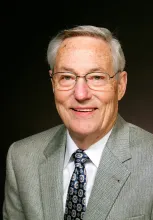
At the time of his retirement in 2016, Roy Holladay was serving the Operation Manager for Ministerial and Member Services of the United Church of God. Mr. and Mrs. Holladay have served in Pittsburgh, Akron, Toledo, Wheeling, Charleston, Uniontown, San Antonio, Austin, Corpus Christi, Uvalde, the Rio Grand Valley, Richmond, Norfolk, Arlington, Hinsdale, Chicago North, St. Petersburg, New Port Richey, Fort Myers, Miami, West Palm Beach, Big Sandy, Texarkana, Chattanooga and Rome congregations.
Roy Holladay was instrumental in the founding of the United Church of God, serving on the transitional board and later on the Council of Elders for nine years (acting as chairman for four-plus years). Mr. Holladay was the United Church of God president for three years (May 2002-July 2005). Over the years he was an instructor at Ambassador Bible College and was a festival coordinator for nine years.
