

Jorge de Campos
This transcript was generated by AI and may contain errors. It is provided to assist those who may not be able to listen to the message.
Next Monday, we're having trumpets. Can you believe it's already this time and then time for the feast? And how quickly the year has gone by? How quickly it's gone by? But it is always a time of joy as we prepare for the feast.
There's always... we always get excited, but there is a plan that God has for us. And I like to review that plan before we get into that time and review how God is planning and why is it so significant these fall holidays? Because they all fall in the same month, the seventh month, according to the Hebrew calendar. And one important thing about this time of the year is mentioned, and I just want to draw your attention here to Revelation chapter 10, verse 7. Revelation chapter 10, verse 7. So if we just turn there... And as we read in chapter 10, it's talking about this little book and then talks about seven funders.
Doesn't tell us much about that. So I'm not going to tell you much about it because the Bible doesn't tell us what it is. So I am not going to add to what it's there. So we just have to wait.
It says, seal up. But it says at the end of verse 6 that there should be no delay, no longer. And that is very significant because this is right at the end. As you read through verse and you read the context, this is after the sixth trumpet and before the seventh. And it says there should be delay no longer. Verse is that now. And then in verse 7 it says, But in the days of the sounding of the seventh angel, that's the seventh trumpet.
When it's about to sound, the mystery of God would be finished. As he declared to his servants the prophets. What is the mystery of God that will be finished? What is this mystery? In a way, I would say that's probably why the feast is such an excitement. Because there's a lot of expectation as we go to the feast physically, but the spiritual meaning is just beyond our understanding. There's a lot of things that will happen in the millennium that we don't even fully understand. There's a lot of things that will be very exciting.
You see, because there is a great plan that in this fall festival season, these four feasts and four holy days that happen on the seventh month, trumpets, atonement, feast of tabernacles, and the last great day, these four holy days are significant in the unveiling of this mystery and the execution of what will happen after this mystery is unveiled.
Now, why did Christ come? If we go back to Luke chapter 4, verse 43 and 44, so we'll just go back to Luke chapter 4, Matthew, Mark, Luke, verse 43 and 44. Right at the end of that chapter says, and he said to them, I must preach what? The kingdom of God. I must preach about the government of God, putting it in modern terminology, but it's more than just a guarantee.
It's a kingdom. It's a royal family to other cities also, because for this purpose, I, Christ, he's speaking now, have been sent. Christ was sent by the Father to do a very specific job. We know he came to die, to redeem for us, but that makes it possible for the kingdom of God to be preached. And he was preaching in the Synagogues of Galilee.
You see, Christ's first coming makes the kingdom of God to rule on earth possible, because the kingdom of God includes a family. And that family would be dead if Christ would not redeem or buy us back from death, because of our sins. And so his first coming makes it possible, the kingdom of God, and that's why he can now preach it, and from here onwards, the kingdom of God is preached, and we preach it.
But brethren, you and I have an enemy, and you know who the enemy is. It's none other than the God of this world, the God of the society. And if you and I turn to 2 Corinthians chapter 4, and we read verses 3 and 4, 2 Corinthians chapter 4, verses 3 and 4, and he says, but even if our gospel is veiled, even if there's good news, which is the good news that Christ preached, good news that Paul preached, is the good news that we got to preach, which is the good news of the kingdom of God, which includes, of course, the great mission and responsibility of our Lord and Master and Savior and High Priest and soon-coming King, Jesus Christ.
Of course, it includes that as well. But if this gospel is veiled, how is it veiled? Because Satan is making an outright effort in this society to hide the real truth about the kingdom of God. Mankind does not understand the kingdom of God. We in the church just kind of scratched the surface.
How much less Christianity that doesn't even obey God? We'll talk about that in a moment. And he says, but even if our gospel is veiled, it is veiled to those who are perishing. Yes, the world is perishing. Everybody in the world is perishing. You and I are perishing, but for God's grace, for God's grace, there are woke, whose minds the God of the sage, which is Satan, has blinded, who do not believe, lest the light of the gospel, of the good news, of the glory of Christ, that he is going to be king of kings, and he is going to establish them, lead and be king of this kingdom to come, that will reign on earth, that will bring peace, because you and I, as we look at it today, we just, every day we just see a bigger and bigger and a bigger mess around us, that we say, thy kingdom come.
Don't we? I mean, we look at the news, and we got to a point that we actually just want to switch it off. You probably feel the same thing, and you just look at these things, and it just turns your stomach, and you say, we are on slippery road, super fast, down a path, which we can't go back, but for Christ.
And so, Satan is blinding the world from this mystery. What is this mystery? You see, this mystery is unveiled basically in two phases. First coming and second coming. The first phase, first coming, Christ died for us, and obviously He brought us the message of the kingdom, and He's making it possible. And the second phase is when He literally comes and steps in and intervenes in this world's affairs and fixes this mess up.
Thank God there is coming, because it's our only hope. It's our only hope. You see, the wall today does not preach the kingdom of God. Oh yeah, they say the kingdom is in your heart. They don't get an idea of what the kingdom of God really is.
Oh, they do preach a message about Jesus Christ. But it's a distorted message. You read in Galatians chapter 1, where they preach a different Christ. They preach a different gospel. That's not a different gospel, but it's a distorted gospel. Paul said that in Galatians. You see, the gospel today is basically along the lines of, once saved, you're always saved.
Or in another way, you don't have to keep the law. Oh! Well, we don't really say. You don't have to keep the law. People say, you can't kill. You can't... Well, I don't know about that. Looking at what we're looking at today in the world with abortions, I think they kill him.
Outright murder! But anyway, Christ in Matthew chapter 19 verse 17 said clearly, if you want to enter into life, He said, why'd you call me good and that? You remember that? Matthew 19 verse 17, He says, if you want to enter into life. Now, what do you mean, enter into life? I am living, so I'm already in life. No. Eternal life, right? If you want to enter into eternal life, of course. Keep the commandments. People say, well, I'll keep the commandments. Well, maybe I'll just have a couple of images in church because they just remind me of God. Bad, wrong, you know, that's not...
that's idolatry. And so on. Oh, we're not allowed to kill. We're not allowed to lie. Well, they all lie through their teeth. You know, no man is good. So the world is basically, when you look at it, and if you start analyzing God's 10 commandments, they kind of say, well, we'll keep them all. But they are against one. One. Which is Exodus 20 verse 8 through 11, which is the fourth commandment.
They are against the Sabbath. Oh, the Sabbath is done away. The Sabbath is done away. But you see, brethren, Hebrews chapter 4 says, the Sabbath is not done away. Turn with me to Hebrews chapter 4, starting in verse 9. Hebrews chapter 4 verse 9. I beg your pardon. Chapter 4 verse 4 to verse 9. Hebrews chapter 4 verse 4 says, for he has spoken in a certain place of the seventh day, in this way. And God rest on the seventh day from all his works.
Well, you know very well what that is. That's in Genesis. That's at the creation. That's long before Moses, long before the Lord Moses. So that's long ago, and God sanctified it. And again in this place, they shall not enter my rest. Oh, where does it say they will not enter into my rest? That's when they were leaving Egypt. Yes, Moses was there. And they went 40 years in the desert. And that generation was not allowed to enter into the Promised Land, symbolic of rest. So you can see the Sabbath, the seventh day is a rest.
Then we looked at the Promised Land is a rest. He has a clue, because the rest is now pointing not only to the seventh weekly Sabbath, or seventh day of the week, but it has, think of it like an onion, it's got another layer, yeah? You peel the first, the outer skin, and you got another layer. And the second layer is pointing to a rest, which pointed to them, to the days of Joshua, to get into the Promised Land.
So it says those people do not enter the rest. But that's, you peel that layer, and there's another layer. You see, let's go on. Again it is ignites, verse 7, a certain day, saying to David. Now, David, King David, was many years, as if you recall, after Joshua, right? Many years. And he says to David, today, after such a long time, it has been said, today, if you hear his voice, do not harden your hearts. Why? Because the Israelites, when they were in Egypt, they left Egypt, and those 40 years, they hardened their hearts, and disobeyed God.
So, at the time of David, he says, today, don't harden your hearts like David. For, verse 8, if Joshua had given them rest, you see, so their children went to the Promised Land, but that was not the real rest. Then when you peel that layer of the onion, there's another rest to come. You see, so here's a picture, the Sabbath points to a rest, but that is a metaphor to another rest. And then he goes on, and he says, let me read verse 8 again, if Joshua had given them rest, then he would not, of the word, have spoken of another day.
Verse 9, they remind therefore a rest. The Greek word is sabatismus, which means keeping of a Sabbath, keeping of a Sabbath, sabatismus, Sabbath-keeping. There remains, therefore, a sabbatical rest for the people of God.
So the Sabbath is not done away because it remains a Sabbath. But you see, there is a further vision of a rest.
Verse 10, for he who entered his rest as himself also seized from his works as God did from his. So we are to enter that Sabbath rest on a weekly basis and seize from our works as God did every Sabbath.
But the point here is the Sabbath points to a rest. Now you've got to peel that onion a little more.
What rest? It's because the Sabbath, the weekly Sabbath, is like a primer, is like a Sabbath-rest 101 lesson.
And now you need to expand and understand a bit more about the Sabbath to look at the real rest.
And that real rest is life-eternal in the kingdom of God.
That real rest to come is life-internal in the kingdom of God.
And so, to explain the Sabbath, to expound the weekly Sabbath, God has given us other Sabbaths, which are the annual Sabbaths. Which basically is like taking a magnifying loss on the Sabbath and wow! And you're looking at more about the Sabbath.
Because there are seven annual Sabbaths.
So the weekly Sabbath is... an integral part is directly connected with the annual Sabbaths.
Did you ever consider that?
In other words, the annual Sabbaths are indirectly but implied a required obedience just as the weekly Sabbath is because it's one of the Ten Commandments.
Because you can say, oh well, I don't need to keep the Sabbath. Oh yeah, you do. Because Christ just said in Matthew 19-17, if you want to enter into life, keep the commandments.
And the Sabbath is one of them. Oh, but I'm saved by grace. Yes, you are. Yes, we are.
But that does not give you the right now to continue sinning.
Yes, you've forgiven graciously by nothing that you and I have done.
Nothing. I have done nothing. And you've done nothing. None of us have done nothing to deserve Christ's forgiveness and His blood. Nothing. Christ doesn't owe us anything. God doesn't owe us anything.
It's by His gracious kindness that He gave His Son for us because He loves the world. He loves us. And the world, not just us, He doesn't love the world as is, but He loves the people. He wants them to repent.
And the goodness of God hopefully will lead them to repentance one day.
Well, you know, the example is simple. You know, imagine you in jail, okay, because you committed such a terrible crime that now you condemned to life sentence or death sentence in jail.
Now somebody knocks at the door and says, you can get out. You're scot-free. Why? Because this man is going to stand for you and now you're scot-free. On the condition, you don't do it again. Otherwise, you get back in. And He said, thank God, thank you. Are you sure you do it? Yeah, I've done it. I'm doing it for you. I'm staying in jail for you. Now, don't do it again. Otherwise, you get back in jail. That's what Christ has done for us. We are scot-free. We are redeemed from death. In other words, we'll be resurrected because He died for us.
But now, don't go back like a pig into its mud. Don't go back like a dog back to its vomit. Don't go back. You see, yes, now that you've been saved by grace, it's our responsibility and decision not to go back. Therefore, it is required that we don't go back. Otherwise, we put the Son of God into shame. That's what you read in Hebrews.
You know, if you go back, you put Christ's sacrifice into shame because you don't appreciate it.
So, yes, indeed, we're forgiven graciously. But we are required to obey God's laws now.
Obedience does not save us, but if you and I are not obeying, He won't give us eternal life. He's giving us eternal life gratis freely, but on the condition.
And now, you are a new man and a new woman. Don't go back to the old man. You read that in Colossians and Ephesians, you know. Don't put off the old man and put on the new man. Don't go back. That's nothing new. That's plain and simple in the Bible. So, getting back to the Sabbath. The Sabbath, which is one of the Ten Commandments, is expounded, is enlarged, is made more meaningful and clear and more detailed for us through the annual Sabbath.
And the annual Sabbath explains to us God's plan of salvation.
In other words, the annual Sabbath explains to us how we're going to get to that ultimate rest, that eternal rest, which is what the weekly Sabbath is pointing to.
In analogy or in a metaphor, because God rested on the seventh day, obviously giving us the metaphor that we will have an ultimate rest. So, God's early days are basically in two phases, right? You've got the Holy Days, which are the spring holidays, Passover, and leavened bread, and Pentecost. Even Pentecost is counted from the first month, because you count 50 days from the wave sheep, which is during the first month. So, all those three Holy Days are based off the first month, which are based off and start and get triggered by the Passover, which is crushed death and redeeming our lives and binds back. Phase one, then we receive God's early spirit, we've got to overcome till the end, and then we've got the end, fall Holy Days, that point to Christ's second coming, which is the revealing of this mystery, the mystery of God.
But as we saw, Satan is… is got one master degree. If you were to kind of say, he's got a doctorate degree or a master degree on one subject, the subject would be deception.
He is the great deceiver. I mean, people say, well, you can deceive people for a time, but not all the time, or you can't deceive all the people. Well, Satan can. He's deceived the whole world, except for those that God has called. He's got the highest qualification in the science of deception, if you call it science. But that's his… you read. Revelation 12, verse 9 says, he's deceived the whole world. Now, if God has shown you that you've got to keep the Sabbath, then he's going to try and deceive you some other way. You see, I've mentioned this before. If I want to tell you, and if I give you a container of water, and it's filthy dirty, and it's stinking, and I say, drink it, it's good for you, you're going to say, ha, come on, I'm going to drink it. But if I give you this, and I look at it, it's clean, it smells good, it tastes good. But if it has a tiny drop of arsenic, I can't see it, I can't taste it, I can't smell it, but it's poisonous.
You see, deception must be done in a way that this looks real. It's like, if you want to cheat people with fake $100 notes, you're not going to deceive people with a note that you look at it and say, nah, this is junk, this is not a $100 bill.
It's going to be exactly to the eye, as far as you can see, quote-unquote, perfect. Well, it's not perfect because it's right, but it's going to be as near perfect as possible to deceive you. So Satan to deceive you about Christ has to make it as near the truth as possible, but just a subtle deviation. And so, let's say you keep the Sabbath, and you know you got the Sabbath. Now, it can't deceive you by saying, don't keep the Sabbath. So what is it going to say? Oh, well, the Holy Days are optional. You probably heard that. Oh, well, we don't have to keep the Holy Days. The Holy Days are not required. And with these sort of stories, you get the situation like when Peter was told by Christ that he had to die, and he was going to, after three days and three nights, he would resurrect and this and that. And then Peter says, nah, it won't happen to you. And what Christ tell told him, get behind me, Satan. You are an offense to me. You see, Satan is that master trickster, and he wants to deceive us all. And you see, our life today in this world is like you walking into a cinema or into a movie house. And you want to watch a film that runs for two hours and you walk in there 10 minutes before the end and you just don't get the story. That's what our life is. We are kind of come alive yet 10 minutes before the end, and we just don't get the story. Because we don't understand that God and the Word planned this thing, and they wanted to have extra beings in the God family, and they wanted to expand the kingdom, and they decided to go through and create a family and this whole plan and therefore to have a family and for them to be like God, obviously not in authority and power, but of that kind, they would have to be free moral agents. And you know that as parents, you know that Sunolite, your children are going to do, even though you may think they're little angels, one day they're going to do something wrong because they're free moral agents. And God knew, but when he gave you free moral agency and me free moral agency, when he gave us free moral agents, he knew that sooner or later we would do something wrong against his law. And you know, Romans 6, 23, the wages of Sunis, death. So he created these beings, the intent for them to be part of his family.
But they have to have free moral agency so that they know by themselves what to do, otherwise they're just robots. But because they're free moral agents, they sooner or later they're going to do something wrong and they're going to die. That's the end of the plan.
Finished. So the only way to get out of it is that the being that the father instructs to create man, that being that was the creator, would die for man. And when I say man, I mean mankind, man and woman. Right? And therefore, there was a plan. There was a mystery. There's a mystery that mankind does not understand that one day, one day, you and I will not be flesh and blood anymore. But it will be incorruptible, spirit beings. And the day that the first few human beings become spirit beings, the mystery of God would be revealed. Things that even the angels desire to look into. You read that in 1 Peter 1, verse 12. And that's why I read to you just now, Revelation 10, verse 7, says the mystery of God would be finished when the seventh trumpet would blow.
You see, so God has given us this, let's call it rolled out plan of holy days. First, Christ would have to suffer for us, Passover. Then immediately after that, immediately the day after, we have to make a commitment to obey God for seven days, which means completely obey God. Seven means complete. The days of 11 bread. Then we realize we cannot do it by ourselves. We need God's help. We need God's Holy Spirit. We need that power and strength from God to help us overcome. And so after 50 days, he gives us his spirit. So this is the whole symbolism of the holy days tied to Christ's first coming. Once you and I receive God's Holy Spirit, which gives you and enables us, which you and I receive after baptism in Christ's name into the family of God through the laying on after the laying of hands and praying that God would then send you his spirit.
Then when you receive the spirit, you now enter this process of sanctification because the moment you baptize and receive the Holy Spirit, that is only step one. That's not the end of the road. That is the beginning of the road. Sometimes it comes to people and says, I want to be baptized and I'm okay. Now, have you counted the cost? Wait a bit. Let's go carefully. Do you really understand what it is? I want to help you through it. I want you to be baptized, but I want you to understand what does it mean to be a member of the spiritual body of Christ.
Do you understand that? And that's why I go through baptism counseling very carefully, very carefully, because I want the brethren to really understand what it is to be a member of the spiritual body of Christ.
You see, because I don't baptize anybody into any human organization or sect. I don't baptize people into the United Church of God. As a minister of Jesus Christ, in other words, having the delegated authority as an agent, as a representative of Christ, in other words, in His name. So it's not just using the words, but you've got to be a representative of Jesus Christ to actually do it by His authority.
I baptize people into repentance, into the way, and then I ask God through Christ to baptize you with His Holy Spirit. As on the Baptist said, I baptize you with the water, but He that comes after me will baptize you with the Holy Spirit, which is Christ.
And so therefore, and that process is we're baptizing people not into any human organization, but into the spiritual body of Christ. It's different, very different than what the world is.
And so, as then people are baptized, it's the first step in this process of sanctification that they now need God's Holy Spirit.
And God's Holy Spirit pricks their minds, pricks their conscience, it's like that still small voice that says to me, George, don't do that, or says to you, put your mind there, don't do that.
And if you keep fighting it, you're going to be unhappy, you're going to be miserable, because God's Holy Spirit is the spirit of joy.
And as you submit, and as you abide, then you have love, joy, peace, goodness, kindness, etc.
So, those are some of the attributes or fruit of God's Holy Spirit.
Then, at the end, because it says, persevere till the end, at the end, which is your death, or when Christ comes, then you will be born again as a spirit being into the family of God.
That is the revealing of the mystery of God.
And that is described by the four lost Holy Days on the seventh month when Christ comes.
So, what are those four Holy Days?
Trumpets, atonement, feast of Tabernacles, and the lost Great Day, or eighth day.
Right? So, and they all on the seventh month.
So, trumpets symbolizes the seven trumpets, so it's that period of the seven trumpets, but particularly symbolizes the seventh of those seven.
Which is Christ's coming.
Turn with me to 1 Thessalonians 4, verse 16.
1 Thessalonians 4, verse 16.
1 Thessalonians 4, verse 16.
1 For the Lord himself will descend from heaven, that's Christ, with a shout, with the voice of an archangel, and with the trumpet of God.
So, there are these seven trumpets, and it's the seventh trumpet, as we'll look in a moment, when we'll turn to 1 Corinthians 15, but not yet, we'll look in a moment.
But he says, yeah, with the trumpet of God.
And the dead in Christ will resurrect first. So, the day of trumpet symbolizes the resurrection.
It also symbolizes when Christ comes to rule on earth.
And then he says, then we who are alive, in other words, we, true Christians, baptized, truly baptized into the spiritual body of Christ, that are overcoming and remain, shall be caught together.
In other words, we shall be changed, transformed, in the clouds to meet the Lord in the air.
And that's how we'll meet Christ. That's how we'll meet him.
So, first the dead will resurrect first, and those that are alive, then will be changed, transformed. That's how we'll meet Christ.
From there on words will always be of Christ. That's what it says. And thus, we shall always be of the Lord.
It doesn't say where. This is from there on words will be always with the Lord.
Therefore, comfort one another of these words. Now, if we add 1 Corinthians 15, 1 Corinthians 15, let's first read verse 23, 1 Corinthians 15 verse 23.
And it's talking about, let's read verse 22. As in Adam all die, even so in Christ all shall be resurrected.
Now, let me ask you, is there any human being that has not died in the past? I mean, you and I haven't died yet, but otherwise it wouldn't be up. But I mean, our antecedents, they all died. All died.
In analogy, in St. Centres, therefore says, even so in Christ shall all be made alive.
So just as all means all die, so all will be made alive in Christ, because Christ died for the whole of mankind.
Everybody will be brought back from death.
Even the most horrible person that you may think of will be resurrected.
He'll be brought back from death.
Doesn't mean that they have lived a good life, because then it will be judgement, they'll be judged according to their works. But they will be brought back from the first death, because there will be a second death, as you know, and you read elsewhere.
But verse 23, but each one in his own order, Christ the first fruit of fruits. Yeah, Christ was first. We know that.
Everybody else is dead. You read Hebrews 11. You've got this faithful man. At the end of chapter 11 of Hebrews, you can clearly say, you read there, they're all dead waiting for us. Even Moses, even Elijah, they're all dead. Oh, but Elijah went to heaven. Well, which heaven? And where do we go afterwards, right? You've got to read a bit more. So they're all dead, and they're waiting for us for the resurrection at Christ's coming.
See, each one in his own order, first the first fruits, afterwards, those who are Christ's at his coming.
Everybody's dead. Even David is dead. But they will be resurrected at Christ's coming. And if we jump now in verse 51, he says, I tell you a mystery.
We shall not all sleep, but we shall all be changed or transformed in a moment in the twinkling of an eye. At which trumpet? At the last trumpet, the seventh trumpet.
But the trumpet will sound and the dead will be raised incorruptible, and we shall be changed or transformed immediately afterwards.
And so that is the meaning of the day of trumpets.
Let's look a little bit more about the seventh trumpet.
The seventh trumpet, when it sounds, is explained in Revelation 11 verse 15. Revelation 11 verse 15.
Revelation 11 verse 15.
Then the seventh angel sounded.
And now what happens? It says, And there were loud voices in heaven, saying, The kingdoms of this world have become the kingdoms, our Lord, and of his Christ, and he shall reign forever and ever.
In other words, at the seventh trumpet, the nations of this world will now belong to God through Christ, and Christ is the one that the Father is sending to rule as King of kings and Lord of lords.
So the nations will now belong no more to the God of this world, Satan, but now to Christ. But as he says, Right now I'm the boss, I'm now ruling, there's a certain number of things that have to be done.
And verse 18 tells us a little bit more about those things that will be done.
The nations were angry. Oh yeah, when Christ comes, the nations will want to fight Christ.
All different subjects are not going into there now. And he says, And your wrath has come.
And yeah, it's the first point that I want to bring to you. The time of the dead that they should be judged.
What do you mean by that? At Christ's second coming, some dead will be judged to be resurrected immediately into the first resurrection.
The other dead will be judged to remain sleeping for another thousand years, at least.
So the dead are being judged to either be resurrected, first resurrection, which is a better resurrection, straight to eternal life, express lane, you know, bang!
And then you have, the others have to wait a thousand years or more, and then they'll be resurrected.
So the first action is the dead will be judged. In other words, they'll be the first resurrection, right?
Second, that you should reward your servants, whether they're prophets, the saints, and those of fear your nine, whether they're small or great.
So there's going to be a reward. You know, it says, a good and faithful servant, you ruled well over ten cities.
You have, you know, you had this, and now you rule over ten cities. You did well over this with five talents. Now rule over five cities. Oh, you had to do well of two talents. Rule over two cities. You know, you multiply it or whatever.
There will be a reward. And thirdly, it's a time that he's going to destroy those that destroyed Earth.
So there's a whole number of events that this day of trumpets explains.
And then we get a little later when we see the destruction of those nations. You see that at the end of Revelation 19.
And then in Revelation 20, you see Satan being bound for a thousand years.
And that is the symbolism of the next holy day, which is the day of Atonement.
In Revelation 20, verse 1 through 3.
And then what do you have? We have the Feast of Tabernacles, when we will rule with Christ for a thousand years. And that is Revelation 4 and 5, and there is, that's what it is, the Millennium.
And then what do we have after that? Well, we have temporary rebellion that will happen, a little detail that is discussed there. We're not going to go into it now. But then, after that, what do we have? We have the Great White Throne Judgment, starting in Revelation 20, verse 11 and 12 specifically.
And that represents that other resurrection, because it says you saw the dead, small and great, stand. So if the dead stand, that means they're resurrected.
And so then we have that time of the Great Judgment, which will possibly be for a period of a hundred years, according to Isaiah 65, verse 20.
So after that, there will be a second death, and there will be a new heaven, a new earth, which will basically mean that ultimate rest.
You see, this is all revealed through the Holy Days.
And the Holy Days are just expanding the Sabbath, which basically points to a rest.
You see, brethren, God has got a great plan for us.
And as we are approaching now these fall Holy Days that have this represent the Day of Trumpets, the Day of Atonement, the Feast of Tabernacles, and the Last Great Day or the Eighth Day.
This is the moment when Christ will come and will rule on earth, thank God, do we need it, thank God.
And also is when the mystery of God will be revealed, because for the first time we'll have beings made of dust, of mud, being made eternal spirit beings.
The mystery of God will be revealed.
And therefore, to conclude, I'll just like you to turn with me to Revelation 22, starting in verse 12.
And beyold, says Christ, I'm coming quickly, and my reward is with me, to give to every man according to his work.
I'm the Alpha and the Omega, and it was the A and the Z, the beginning and the end of the Greek alphabet, which is Alpha and Omega.
The beginning and the end, the first and the last. In other words, he started, he created all this under the instruction, under the delegation of the Father, and he will complete it.
And then you and I know that at the end he will say to the Father, Yah is the kingdom, Yah is the family.
In other words, he will turn to the Father and say, mission accomplished.
And therefore, right at the end, in verse 20, Christ, he who testifies to these things, says, surely I am coming quickly.
And quickly means suddenly. When he comes, it will be sudden, very quick.
You read elsewhere, it says, sudden destruction. You know, it will be quick, because it will have to be quick, because the world will be in a mess, otherwise it will be completely destroyed.
And then he says, Amen. Even so, come, Lord Jesus.
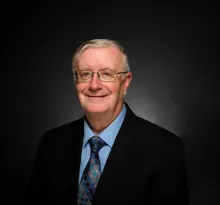
Jorge and his wife Kathy serve the Dallas (TX) and Lawton (OK) congregations. Jorge was born in Portuguese East Africa, now Mozambique, and also lived and served the Church in South Africa. He is also responsible for God’s Work in the Portuguese language, and has been visiting Portugal, Brazil and Angola at least once a year. Kathy was born in Pennsylvania and also served for a number of years in South Africa. They are the proud parents of five children, with 12 grandchildren and live in Allen, north of Dallas (TX).
