


Mark Welch
This transcript was generated by AI and may contain errors. It is provided to assist those who may not be able to listen to the message.
One word. Wow!
I want to thank Bob for the beautiful rendering of Exodus and for our ensemble and Ken Cook. That was really beautiful.
I would like to see more of that. Of course, I don't have to do all the work. But that was just very... both selections by Bob and by the ensemble and Ken was just really wonderful, marvelous, and... Maybe we should just dismiss and go home. Something to back from to say, amen, brother.
Well, today I've used the preacher's outline and sermon Bible commentary for preparing the sermon today.
Brother, in this part of the year, this season of the year is rich in its historical meaning for us as Christians. However, the richness I speak about isn't confined to just the history books alone. God wants us to learn from what happened many centuries ago to ancient Israel and apply that knowledge to our situation today. Let's begin our journey today for the sermon over here in 1 Corinthians chapter 10.
1 Corinthians chapter 10 touches on what happened to ancient Israel so many centuries ago.
1 Corinthians chapter 10 verse 1.
Paul writing to the church there in Corinth chapter 10 verse 1. 1 More of our brethren, I don't want you to be unaware that all of our fathers were under the cloud, all passed through the Red Sea. All were baptized into Moses in the cloud and in the sea. So here you've got a discussion roughly talking about the time when Israel was liberated from Egypt. We drop down now to verse 11. Now all these things happened to them as examples, and they were written for our admonition, 1 by whom the ends of the ages have come, therefore let him who thinks he stands take heed, lest he fall. Paul's writing to a church here, a very human church, a church who had all sorts of difficulties. As I said on Passover evening over in Detroit, a church that years, a few years after 2 Corinthians was written, this church basically fell apart. For people who think that every church was just everyone was walking on water, that wasn't the church in Corinth. They had all sorts of issues. And that's one of the reasons why Paul says here, take heed, lest you fall, if you think you're standing.
The plagues of Egypt may be viewed as God's miraculous intervention to release that nation from the bondage of Egypt, from the bondage of Pharaoh, Pharaoh representing a type of Satan, Egypt representing a type of sin.
Today, you know, just in the last few days, we've observed the Passover.
Each of us who were there at the Passover service. And you know, you just can't come to that service unless you've done something special in your life.
You have to have a paid admission ticket, if you will, to get into Passover service. That admission has been paid for by Jesus Christ. It's not a free ticket. He paid a tremendous cost for you and I to be there. But you and I have taken the opportunity to accept that invitation. We were there on Passover. We enjoyed the fact that as we have, as Mr. Werkle was talking about, as we have examined ourselves, as we've come to see that we're sinners, we've also come to see that we've got a remedy for that. That God in His great love has given us that remedy. And that remedy is the sacrifice of Jesus Christ. That it's through His shed blood we have our sins forgiven. We're given a new slate to live, a new lease on life. And of course, now we've got the days of Unleavened Bread. And these days represent a time when we need to really appreciate what Christ has done for us and now move forward.
Let's forget about what we've done in the times gone by. Those times are past. We can't do anything about that other than repent of the negative, allow God to cleanse our conscience, and now with God's help move forward.
Let's look at Deuteronomy chapter 4. Deuteronomy chapter 4, verses 34 and 35. Notice that God says here about Israel coming out of Egypt.
And there's a very important lesson here for us. Deuteronomy 4, verse 34, Did God ever try and go and take for Himself a nation from the midst of another nation? By trials, by signs, by wonders, by war, by a mighty hand and an outstretched arm, and by great terrors according to all that the Lord your God did for you in Egypt before your eyes. To you it was shown that you might know that the Lord Himself is God. There is none other besides Him.
So here you got a discussion from God saying, look, I performed great miracles to bring you out of sin. I want to show you how great I am.
Brother, that is not just a lesson for the history books. That's not just a lesson for a group of people who have lived and died and they have turned to dust. This is a lesson for our day today.
My point today is this, and it's very simple. If you want to write something across the top of your paper, if you take notes, here it is. God offers us miraculous assistance in coming out of sin.
God offers us miraculous assistance in coming out of sin.
Just as God offered miraculous assistance to spring Israel from Egypt, by example, we have the same power of wonders. Think about what we just read there in Deuteronomy chapter 4, verse 34. That God would use signs, wonders, a mighty and an outstretched arm to bring us out of Satan's world, living like Satan's world would live. Now, we still have to live in society. You understand what I'm saying by that. But we certainly don't want to live like society, even though we must live in society.
There are only three lessons that I want to bring forward to you today as I was thinking about this in preparation for the Holy Days.
As I was thinking about how God offers us miraculous assistance in coming out of sin, I got to thinking about my life, reflecting upon my journey with God. I don't know that my journey is that much different than anybody else's journey. So forgive me if I try to overlay this on the group. But I've learned some lessons over the course of a number of years. To be quite frank, I've had to relearn some of those same lessons more times than I would care to admit.
Lesson number one.
We see this in ancient Israel. I certainly see it in my life from time to time. Lesson number one. We not be as willing to come out of sin as we think.
We may not be as willing to come out of sin as we think.
That's one of the hard lessons I've learned about Randy Delosandre over the years. That I can do better in a lot of ways.
And I can have more zeal, more dedication. But I don't know that I am alone in that evaluation of myself. Maybe you've evaluated yourself along the same lines from time to time.
I don't say this is something that's an everyday occurrence for me, but it's been happening more times in my life than I would care to admit to. Let's take a look at Exodus 3. 3. Exodus 7-10 Exodus 3 7-10 Verse 7, And the Lord said, I have surely seen the oppression of my people who are in Egypt. I have heard their cry because of their taskmasters, for I know their sorrows.
Brethren, God looks upon you and I the same way.
Mr. Werkley talked about in his message earlier today about the trials we go through in life, the trials some of us are going through right now. Notice what it says about God here. God says, I have surely seen, I have heard, and I know.
I've seen, I've heard, I know.
God has seen what you're going through. God has heard your prayers. God knows what's happening in your life.
Verse 8, So I have come down to deliver them out of the hand of the Egyptians.
So here we see God wanting to intervene for his people. And God has intervened for you and I. He's wanted to deliver us out of the hands of sin. Egypt has a type of sin. And to bring us up from the land, to a good and large land, to land flowing with milk and honey. God is wanting to bring us into his kingdom. Just as God wanted to bring Israel back, you know, from Egypt to the holy land, God wants to bring us from society, sick and society, into the wonderful world tomorrow.
Verse 9, Now therefore behold the cry of the children of Israel has come to me. I have seen their oppression which the Egyptians oppress them.
So because God understands our plight, he sends relief. Verse 10, Come now therefore and I will send you to Pharaoh that you may bring my people, the children of Israel, out of Egypt.
Now so far, so good, correct? Here we've got people. They are under a curse. They are coming before God. This is you and I have faced various curses. Through living in a sinful society, we face curses because of our actions, things we have done, whether, you know, out of ignorance or just playing with the rebellion. We've done things that have brought curses on ourselves spiritually. Those are called our sins. We cry out to God. But notice something else here. There's another part of the story that we don't want to miss. Exodus chapter 8.
Exodus chapter 8.
Verses 20 through 23. Now, I'm kind of breaking into the story of the plagues of Egypt. The first, the second, and the third plagues have come and gone. But I want to start here at the beginning of the fourth plague. And there's a reason for that. Exodus chapter 8, verse 20.
You know, brethren, it's one thing for the Israelites to complain, to cry out because of the curses and the evilness of the bondage they were under.
They did that. You and I do that. It's another thing, however, to go from that point to going to the place where we want to really follow God. Did the Israelites really want to follow God? Or was their mindset more, we just want to leave all this negative behind?
And there's a distinction there. And there's a distinction for you and I as Christians. We don't want to be cursed, but do we fully want to embrace the way of God?
There are times in our life that our rebellion against God shows otherwise.
There are times in our life where we allow our attitudes to show otherwise. Now, God allowed Israel to experience the first, the second, and the third plague.
Why was that? Because even though they were crying out for deliverance, they were still too attached to society. They were still too attached to Satan's way of life. How about us? Are we still too attached? What were your thoughts on Passover evening?
How well are we doing? Are we concerned that we have been overcome by certain lifestyles that we can't seem to break? Here in chapter 8 of Exodus, let's take a look at something. Because Satan understands that about we human beings. We want to leave the curses behind. But Satan also knows something else. Satan has got a history. We don't know how many years Satan had when his name was Lucifer. For all we know, he could have had billions of years to work on the holy righteous angels and to begin eating away at the edges of these holy righteous angels and to the place where they began to follow him in his rebellion. And of course, God saw all of that.
God saw every second of that. God knew exactly what was going on all along. And God was allowing that because God wanted even the holy righteous angels to make an important choice. So Satan has had billions of years to work on individuals who are holy and righteous. And he's had 6,000 years to work on human beings. He knows us. He knows our hot buns. Take a look at what Satan likes to do here. Chapter 8, verse 25. Exodus chapter 8, verse 25.
Then Pharaoh called Moses and Aaron and said, Go sacrifice to your God.
Notice the end of that sentence. Have you caught that before? Go sacrifice, but don't go far away. Go sacrifice, but do it in Egypt. Do it in the land.
So what we see here in verse 25 and 26, we're seeing a moment, is Satan is basically saying, Satan, you know, being a type of Pharaoh, stay close. I want strings attached.
Right, you go to Passover, but next day, next few days, we're going to kind of talk about your lifestyle. Verse 26. And Moses said, It's not right to do so, for we would be sacrificing the abomination of the Egyptians to the Lord our God. If we sacrifice the abomination of the Egyptians before their eyes, then surely will they not stone us?
But this is another attribute that Satan would want to use on you and I. Not only does Satan want us to stay close, not only does he want strings attached, Satan wants to continually put us in harm's way. He wants us to think that we're doing the things that are okay. Oh, we're going out and we're going to do sacrifice. We're going to Sabbath services. We're coming to the holiday services. We're sending in our tithes. We just gave an offering. But do we still have strings attached? Have we not grown close to God, or are we still staying too close to Satan? It's one of the ways Satan works. Verse 29 of the same chapter 8. The most said, Indeed, I am going out from you, and I will entreat the Lord, and the swarms of flies may depart tomorrow from Pharaoh. But let Pharaoh not deal deceitfully anymore, and not letting the people go to sacrifice to the Lord. Again, Pharaoh represents Satan. Don't be deceitful. Verse 32. But Pharaoh hardened his heart. Satan hardens as a hard heart. Satan is deceitful. It's one of his devices. Trickery. So we ask the question, do we really want to go out of sin as much as we think we do? And each and every one of us in this room can ask ourselves, well, how are we doing some of the things that are of long standing in our life? Why are they still there? Why are the strings still attached? Why aren't those things gone? It's because we're not truly motivated, you or I, truly motivated enough to cut loose. To cut loose. And let's again go back to that question I posed earlier. Why these first three plagues? Why not the first four plagues? Why not the first five plagues? What was God wanting to bring across to the children of Israel? And not only to them, but remember what Paul said in Corinthians. That this is an example for us. What is it about those first three plagues that they needed to learn before they can move forward? And we also need to learn before you and I can move forward. Let's take a look at those plagues for a moment. The first plague was the river Nile being turned to blood.
We're not going to read the whole thing. Don't have time for that. Let's go to Exodus chapter 7.
Exodus chapter 7 verse 16. Exodus chapter 7 verse 16. And you shall say to them, the Lord God of the Hebrews has sent me to you, saying, Let my people go, that they may serve me in the wilderness. But it need now you would not let them you not hear. Thus says the Lord, By this you shall know that I am the Lord. Behold, I will strike the waters which are in a river with the rod that is in my hand, and they shall be turned to blood. This is the first of the plagues that God used to allow Israel to have escape from Egypt. And in the scriptures, the first of anything is always very significant.
The first of anything is always very significant. Isn't it also, I'm not going to turn there to this, but also isn't it significant that the very last plague dealt with blood? Wasn't it significant that before the children of Israel were to be able to leave Egypt, they had to strike blood on the doorposts? Because if they didn't, they were going to die. The firstborn. They were going to die. So here you've got blood, first plague, blood, last plague. I believe that God wanted Israel to realize that they would only get their release.
That they would only have salvation in life through the blood.
You and I realize that's true because of our Passover, Jesus Christ. This was a lesson Israel needed to learn. That they needed to understand the power of the sacrifice of Jesus Christ. The power of blood. Now, that first plague brought death. And if you and I don't accept our Passover, we will die. We will die the second death. If God has called us. Let's take a look briefly at the second plague that they had to experience.
Exodus chapter 8. Verse 1, And the Lord spoke to Moses, Go to Pharaoh and say to him, Thus says the Lord, Let my people go, that they may serve me. But if you refuse to let them go, behold, I will smite all your territory with frogs. So here we see a second plague. Frogs everywhere. Frogs everywhere. Now, it came to be that in time, that plague was stayed.
But what do we learn? What did God want the Israelites to learn? What does God want us to learn? The first plague, we learned about the need for blood. To release the need for blood for sacrifice. The second plague, we realize that God has no equal.
God is all-powerful. These frogs would be every place in the nation of Egypt. Everywhere. Just as God is everywhere. God wanted them to realize how powerful, all-powerful, he was.
Brethren, God wants us to appreciate how powerful he is, how all-powerful he is. What is it that has you in the grip? If you are in a grip of something.
God has the power to break that grip.
Third plague, also found here in Exodus 8.
Plague of Lys. We'll just read one verse. This is chapter 8, verse 19. The magicians said to Pharaoh, this is the finger of God. Lys, or any small gnats, or whatever they were, they were everywhere. And the magicians, under the inspiration of God, said, this is the finger of God.
So here's the third thing. I believe God wanted the people then to realize and us to realize. That is, that the finger of God controls all things.
We're not talking about his great arms. We're not talking about his great legs, or all, you know, any of the things that we can talk about that show power. All it takes is the very little finger, a little pinky of God.
So we find release through the blood. We find salvation and life through the blood. We find that God is all-powerful, and that just by the whisking of his own little finger, he can release us.
These are not just lessons for ancient Israel. These are lessons for us.
We need to understand that we may not be as willing to come out of sin as we think. Israel wasn't. God had to show them that. Let's take a look at 2 Timothy, chapter 2. 2 Timothy, chapter 2.
And in verse 25, 2 Timothy 2, 25, talking about a servant of God, one of the God's ministers, in humility, correcting those who are in opposition.
Israel was not where they should have been. That's why they had to go through those first three plagues. They were in opposition to their best interests. If God perhaps will grant them repentance, same is true for us. There are times we're acting not in our best spiritual interests. And even though we may have been converted for some period of time, repentance is one of those things that we do every day of our life. And God must, with His great grace, grant us that repentance. Just as God granted that release to Israel to get out of Egypt. So that they may know the truth. I'm not going to turn there, but in your notes you might want to put down Psalm 19-12. Psalm 19-12, the psalmist asked God to show him his hidden faults, his secret sins. What is it you and I aren't seeing that is hurting us?
Here Paul talks about that they may know the truth, the truth about ourselves, the truth about our weaknesses.
Verse 26, that they may come to their spiritual senses, if you remind me, injecting that one word, come to our spiritual senses and escape the snare of the devil. Just as Israel had to escape the snare of Pharaoh in Egypt, we've got to escape the snare of the devil, having been taken captive by him to do his will.
Israel weren't the only captives. We have been captive, too.
So we must understand that God offers us miraculous assistance to come out of sin. But if we're to understand that, as Paul said to the church in Corinth, we need to take heed lest we fall. We need to take heed. Maybe we're not as willing to come out of some of our issues as we should be. And you and I, each and every one of us, can look into our hearts and minds and answer that question as to where we are in that point. Point number two.
Point number two. We may not know the best way to come out of sin. We may not know the best way.
We may not know the best way to come out of sin. And God offers us miraculous assistance to know the way to go. Israel didn't know the way to go. Proverbs.
You understand where I'm going to go, but I'm going to go there anyway. Proverbs chapter 14, verse 12. Proverbs 14, 12.
There is a way that seems right to a man, but its end is the way of death.
Do we really know? You know, if you and I have been struggling and, you know, my experience as a church pastor, as a full-time minister in a church since 1984, since the summer of 1984. So what is that? 16, 28 years? My experience of being full-time into work as a church pastor, well, not all those years as a pastor, but most of those years as pastors, the people have issues. I've got issues. And so many times we wander around in our own wilderness. You know, Israel wandered for 40 years. And some of us are wandering around in our wilderness. We can't escape the snare of the devil. We've got this issue. We've got the other issue. We've got this way of thinking. We've got this attitude. We've got these hang-ups, and we've had them for years. So we're basically wandering around just as Israel did in the wilderness. Why are we wandering? Because sometimes we really don't know the way we should go.
I'm sure it's true for some of you. It certainly has been true in my life. To my regret. But notice, let's go over here to Exodus chapter 13. There's some powerful lessons here to be learned. Exodus chapter 13. Then it came to pass, when Pharaoh had let the people go, that God did not lead them. God did not lead them by the way of the land of the Philistines, although that was near.
For God said, lest perhaps the people change their minds when they see war and return to Egypt.
So God didn't take people from point A to point B, the nation of Israel, which seemed to be the easiest and shortest route. He took them a different way. You and I, as human beings, we would want to go the fastest way out of Egypt. We would want to get to the Holy Land as soon as possible. But God has other plans. God has other plans. Maybe you and I really don't know the way. And that's why we're wandering, our own personal wilderness. Now there's a couple of things here that we can note in verses 17 and 18 here. One is that God didn't lead them by the way of the land of the Philistines.
Why was that? The way of the land of Philistines was basically a military road.
It was a well-traveled road, a well, a very famous road, and a road where the Egyptians had forts every so often. Egypt was trying to protect themselves, their borders, their boundaries. They wanted a buffer zone to take care of situations.
And had they gone that way, there have been all sorts of problems as they ran into fort, after fort, after fort. Over here in 2 Corinthians chapter 2, I'm sure God had this in mind.
And that's the reason why God didn't want them to go the shortest route. It wasn't the easiest, but the shortest route, because that shortest route would not be easy. God knew the best way for them to go, and it wasn't the way they would have chosen. Just like God may know the best way for you and I to go, and that's why we go up, get on our knees, and ask God, God, please, reveal to me the way I personally need to go.
My eyes tell me one thing, my brain tells me one thing, but sometimes my eyes, my brain, my heart are not led by you as much as they should be. But here in 2 Corinthians chapter 2 and verse 11, But here in 2 Corinthians chapter 2 and verse 11, Let Satan should take advantage of us, for we are not ignorant of his devices. God didn't want Israel to be taken advantage of by the various devices that were along the way. The road was booby-trapped. There was going to be a lot of harm that would come to them.
What did Jesus Christ say to Peter there in Luke chapter 22? Christ said to Peter, Simon Simon, Simon Simon, indeed Satan has asked for you that he may sift you as wheat. That's in Luke 22, 31. That he may sift you as wheat. Satan very much wanted to do the same thing to the nation of Israel.
God says, you know, if you go that direction, which may seem right to you, there's going to be a world of pain there. There's going to be a lot of hurt there. Satan has booby-trapped that road. Now, Satan has a number of devices, and I've given sermons on this in the past. I'm not about to go through that material again, other than just to briefly touch on some of the devices Satan uses.
Satan uses deception. We as Christians can be deceived about our own standing with God. As Mr. Wreckle was trying to bring out in his message today, sometimes God, Satan wants to deceive us. You know, somehow we're just never going to be in the kingdom of God. And God doesn't want his people thinking like that. God doesn't want his people out with their heads down, always looking at the ground. I hope I make it someday.
No, God wants us to appreciate we've got to sacrifice Jesus Christ. We have accepted that sacrifice. Our sins have been forgiven. Our minds have been washed. And we're moving forward. Now, we may fall down from time to time.
And when we do, we're going to ask for God's help. God's going to pick us up. He's going to put us back on the road. And we're going to move forward. We're going to move forward in the proper way with a repentant frame of mind. And as we do, God's going to forgive us.
That's the frame of mind God wants for us as Christians. Not the, well, I hope, I hope. But Satan would like to deceive you. Satan would like to divert you. It's another one of his devices. Diversion. Are there any diversions in our society today? TV, radio, music, you know, all of these things by themselves can be okay.
But we can spend all of our time in front of the TV. If we spend all of our time listening to music, or sports, or whatever you want to mention, we can be diverted from our spiritual pursuits. Doubt is a device of Satan. A big device of Satan. Doubt, which is the breeding ground for faithlessness. Discouragement is another one of those devices of Satan. Anger. Anger to the place where you get, you know, you can hardly think straight because you're so angry with somebody. And when we do those things, when we're that angry, we dislodge the opportunity to really draw close to God.
Apathy. Worry. Those are all various devices of Satan. But there was a second thing. So the one reason why God didn't want them to go a certain way is because the way really was strewn with difficulty. But there was a second reason, if you remember from reading back there in Exodus 13, and that was that God said, well, you know, you might change your mind when you see what this way has for you.
All the forts here and all the difficulties and all that. You might change your mind and go back. You might change your mind and go back. So not only was God wanting to protect them from Satan's devices, God wants to protect us from ourselves. God wants to protect us from ourselves.
Our own weaknesses. Our own arrogance. Oh, we can handle that. Well, sometimes we can. Sometimes we can't.
We can go that way. Well, God may have other things in mind for us. I mean, that's not the best way for us to go. Matthew 13. Matthew 13.
Let's look at one of the parables here.
Parable of the sower. Again, notice not only the devices here, but the tactics of Satan. The tactics of Satan. Matthew 13. Therefore hear the parable of the sower. When anyone hears the word of the kingdom and does not understand it, then the wicked comes and snatches away what was sown in his heart. This is he who receives the seed by the wayside.
So Satan wants to, as soon as you begin to understand where you need to be going, Satan wants to enter the picture and say, well, wait a minute, let's erase that. Let's rub that out. Let's replace it with something else.
So Satan hits you as soon as the truth begins to enter their hearts and their minds.
Verse 20. But he who receives the seed on stony places, this is he who hears the word and immediately receives it with joy, yet he has no root in himself and endures only for a while. For when tribulation or persecution arises because of the word immediately, he stumbles.
So if Satan doesn't get us right at the get-go and we're starting to understand some things, and we're talking about principles here, you and I are mature and probably in many ways in our life, but probably in other ways in our life, you and I have a lack of depth. I'm sure in all of our cases there are places where we lack the maturity we should have, regardless as to how many years we've been in the church. We lack depth, we lack maturity, and then Satan's not going to pry at those places. He's going to pound on those places. He's going to try to kick the door open in those places. And if he can do that, then he can really do a lot of damage to you and I. Verse 22. And he who receives seed among the thorns, and he who hears the word, and the cares of the world, and the deceitfulness of riches choke the word, and he becomes unfruitful. So here we see the situation where others find that just, you know, the diversions we were talking about earlier and the various things that take up our time, we're just choked. The truth of God is choked out in our hearts and minds and we don't respond. We don't go the path God wants us to go. Now Paul wrote to young Timothy here in 2 Timothy chapter 3.
Again, God has remedies for all of us. He wrote what he wrote. God inspired what he did in Exodus to teach us lessons. That he offers us miraculous assistance in coming out of sin.
But we need to understand certain things about ourselves. 2 Timothy chapter 3.
Verse 15.
And that for childhood you have known the holy scriptures that are able to make you wise for salvation through faith which is in Christ Jesus. Now here's the way we need to go.
Here's the way. You know, one scripture there in John talks about Christ being the way of the truth and the life, and that certainly is the case. But here we have a scripture here that tells us that the holy scriptures are able to make us wise for salvation. Lights the path. Shows us the way we should go. Verse 16. All scripture is given by inspiration of God and is profitable.
Many years gone by I gave a series of two sermons on this is one verse. Verse 17. Probable for doctrine. Teaching us an unleavened life. What it means to be unleavened.
God puts us on that path. That's the path we need to be on. So we understand doctrine, God's teachings. The second thing is reproof. reproof is conviction.
None of us ever changes anything unless we're convicted of what we need to change. None of us ever does anything in life unless we're convicted we need to do X, Y, or Z.
So God must put us on that path as well, not only to teach us, but to convict us.
But the word of God is also for correction. See, the conviction is where we see the leavening in our life and we remove it. The correction is where we bring in the unleavened bread of sincerity and truth. We must do both. Get out the leavening, bring in the unleavened bread of sincerity and truth. Then notice at the very end, for instruction in righteousness, to live the way God, to put ourselves in the, allow ourselves to go on the path, God instructs us to go on. That's the way out of Egypt. That the man of God may be complete thoroughly equipped for every good work. When I gave this sermon many years ago, I may mention that in verse 17 there is a word picture where it talks about being thoroughly equipped. And the picture is of a ship. You know, back in the days when Paul lived, when you took a ship out into the Mediterranean, you had to take a lot of extra things with you. You had your cargo, you had whatever people on board as crew, maybe some passengers, depending upon the kind of ship you were on. But you also had a number of other things on a ship. You had extra sail, you had extra rope, you had extra wood, you had all sorts of other things. So if you had a problem at sea, you can make repair at sea. You were thoroughly equipped. And that's what God wants for us, to be thoroughly equipped as we set out on the seas of this world. So point number two, or lesson number two, we may not know the best way to come out of sin, but God will inform us of the best way. Lastly, lesson number three. Lesson number three. God's way protects us from the ravages of sin. God's way protects us from the ravages of sin. Let's go back to Exodus 13.
A very unique occurrence is about to take place, from which we learn a great deal. Exodus 13, verse 21.
And the Lord went before them by day in a pillar of cloud to lead the way, and by night in a pillar of fire to give them light, so as to go by day and night. Interesting here. A couple of very important points for us to realize about God's protection here.
One of the first things we see is God is there to protect us day and night, 24-7-365. That's one of His jobs. It's a job He enjoys to protect us, to protect us from the ravages of sin. Just as God wanted to protect Israel from the ravages of sin in Egypt as they were leaving, as Pharaoh was pursuing. God wants to do the same for us today. But notice something else. Verse 21. And the Lord went before them. The Lord went before them.
They are only going to be protected night and day if they follow God's lead. Are you and I following God's lead?
If we follow God's lead, He will be there day and night to protect us from the ravages of sin.
Chapter 14 of Exodus. Chapter 14, verse 19.
And the angel of God, who went before the camp of Israel, moved and went behind them. And the pillar of cloud went from before them and stood behind them. So it came between the camp of the Egyptians and the camp of Israel. Thus it was a cloud of darkness to the one, and it gave light by night to the other. So the one did not come near the other all that night. So here we have God who was in front of His people leading them. Now He's moving behind them to protect them. Protect them from the Egyptians who represent sin. Again, here we see God as the great protector to protect us from sin.
That's why when we look at the model prayer, I'm not going to turn there, and you'll notice my jot down Matthew 6 and verse 13. Matthew 6, 13. Christ says, Do not lead us into temptation, but deliver us from the evil one.
That's what's happening right here in Exodus 14. God is delivering them from the evil ones. And then, going on here in chapter 14 of Exodus, verse 21, Then Moses stretched out his hand over the sea, and the Lord caused the sea to go back by a strong east wind all that night. And made the sea in the dry land, and the waters were divided. So the children of Israel went into the midst of the sea on a dry ground, and the waters were a-walled to them on the right hand and on the left. What is God doing here? God here is making them a way of escape. What does it say there in 1 Corinthians chapter 10 verse 13? Again, you can put that in your notes. I won't read it for you. I'm not going to turn there. 1 Corinthians 10, 13. No temptation is overtaking you except as such as is common to man. But God is faithful who will not allow you to be tempted beyond which you are able. But with the temptation, make a way of escape that you might be able to bear it.
So God provides them a way of escape, but they've got to be following God. They've got to be listening to God, doing the things of God, so they're protected from the ravages of the sin.
Chapter 14 verse 23 of Exodus. And the Egyptians pursued and went after them into the midst of the sea, and all Pharaoh's horses, as chariots and as horsemen, came to pass in the morning watch that the Lord looked down upon the army of the Egyptians to the pillar of fire and cloud, and he troubled the army of the Egyptians. And he took off their chariot wheels, so they drove them with difficulty. And the Egyptians said, let us flee from the face of Israel, for the Lord fights for them against the Egyptians. Brother, that's true today. God fights for you against sin.
He will fight for us if we're willing to listen, if we're willing to follow. If we're willing to follow His lead, if we're allowing our conscience to be continued like we saw there on Passover evening. Hebrews chapter 9. For our conscience is to be purged from dead works so we can serve the living God. God will fight for us. He will provide for us. He will protect us from the ravages of sin. In this case, protect them from the ravages of the Egyptians. Verse 26. And the Lord said to Moses, stretch out your hand over the sea, that the waters may come back upon the Egyptians, on our chariots and our horsemen. Moses stretched out his hand over the sea, and when the morning appeared, the sea returned to its full depth, while the Egyptians were fleeing into it. So the Lord overthrew the Egyptians in the midst of the sea. At the end of verse 28 it says, not so much as one of them remained. Just as you and I were baptized, our sins were forgiven us. Not so much as one of our sins remained. We stood up in that water, whatever it was, a stream, a river, a lake, a pond, a horse trough, that we've baptized a number of people in over the years. Wherever you were baptized, I was baptized at a pool in Los Angeles in Pasadena, California. I'll never forget the day I was baptized, because I was being baptized in this pool, and the minister had his suit on, and he would take his jacket off, and then put on these hip waders that you go fishing with, fly fishing with. So he put those things on, he's coming into the pool, and I'm standing in the pool waiting for him. I've got a t-shirt on, and whatever, swimwear, whatever. He says, oh no. I said, what? You're not going to baptize me now? After all, I've gone through all these different times of fasting every week for six weeks, straight fasting every weekend, because I had all these doubts that God, that Satan put in my mind. Then at the end, he said, this is Dave Albert, who used to do our telecast. Mr. Albert said, well, you know, Randy, what you need to do is start fasting, so God will allow you to work through that doubt, and you don't stop fasting until God allows you to break through. And that's what I did. Three days and three nights of fasting. There was nothing left to me but a little hank of hair and some tennis shoes.
So there I am, I'm thinking, he's not going to baptize me, and I said, Mr. Albert, what's wrong? He said, I've got a hole in my waders. So, you know, all the suits getting all wet.
But all of our sins were forgiven us in that baptismal water. Every one of them, not one, remains. God protects us from the ravages of sin in terms of our eternal consequence. Now, you know, there are times that sin, many times that sin will have its consequences in the flesh. We do certain things, we're going to pay the price. Sin always has consequence. What I'm talking about this other, we're talking about eternal consequence. God forgives us, we'll be in his kingdom. There's one other section I want to turn to before we conclude today. It's over here in Exodus chapter 40. We alluded to this, I believe it was last week. Exodus chapter 40. Now, we're talking about this pillar of cloud, this pillar of fire. Let's take another view of this pillar. Let's kind of expand the discussion here a little bit. Exodus chapter 40 verse 34.
Then the cloud covered the tabernacle of meeting. Same cloud. Cloud covered the tabernacle of meeting, and the glory of the Lord filled the tabernacle. You and I are the temple of God's Holy Spirit.
God's power here is showing filling this tabernacle. God's Spirit will fill you and I.
Verse 35. And Moses was not able to enter the tabernacle of meeting because the cloud rested and the glory of the Lord filled the tabernacle. The cloud rested above it.
Remember what I said last week? We were talking about 2 Corinthians chapter 12 and verse 9. I won't turn there for time's sake. But Paul said, most gladly therefore I would rather glory in my infirmities that the power of Christ may rest upon me. That the power of Christ may rest upon me. When Paul was referring to the rest there in 2 Corinthians 12 and 9, same thing we see right here in Exodus 40 verse 35. The cloud rested. This power of God rests on you and I. So we can miraculously use the power of God in coming out of sin.
Verse 36. Whenever the cloud was taken up from above the tabernacle, the children of Israel would go onward in their journeys. But if the cloud was not taken up, then they did not journey till that day when it was taken up. Again, here we see following and being led by God. God will show us which way to go. God will tell us when to go. Not just the way, but when. Timing is everything.
Timing is everything. You know, Paul talked about, in Romans I believe it is, being led by this faith. Romans chapter 8. Being led by the Spirit. If God was not leading them, they stayed put.
Brethren, if God is not leading you and I, we need to stay put till we know what God wants us to be doing. Now there was a time, you know, I'm not going to turn there back in Exodus 14, I believe it is, where God told Moses, stand still. Don't just do something. Stand there. Don't just do something. Stand. There is a time for standing, for looking, for recalibrating our minds, for appreciating the situation we're in. And then there comes a time where God said to Moses, tell children as you move forward. You understand, now it's time. So timing is everything. Verse 38 of Exodus 40. For the cloud of the Lord was above the tabernacle by day, fire was over it by night, and the sight of all the house of Israel throughout all their journeys. Throughout all their journeys, God was with them. What did Peter say? God will never leave us or forsake us throughout all of our journeys. Brethren, today my point was really very simple. God offers us miraculous assistance in coming out of sin. We see that with the children of Israel as they came out of Egypt. It is no less true for us today. God offers us that miraculous assistance. We have to be willing to come out of sin. Sometimes we're not as willing as we think. So we're looking at motivation there. The second thing we saw today is we may not always know the best way to come out of sin. So God's got to inform us the best way to come out of sin. And the third lesson we saw is that God protects us from the ravages of sin. Let's allow God to do just those things in our life. Let's allow God to offer us that miraculous assistance so we can be His unleavened people.
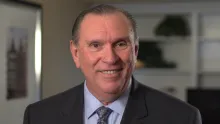
Randy D’Alessandro served as pastor for the United Church of God congregations in Chicago, Illinois, and Beloit, Wisconsin, from 2016-2021. Randy previously served in Raleigh, North Carolina (1984-1989); Cookeville, Tennessee (1989-1993); Parkersburg, West Virginia (1993-1997); Ann Arbor and Detroit, Michigan (1997-2016).
Randy first heard of the church when he was 15 years old and wanted to attend services immediately but was not allowed to by his parents. He quit the high school football and basketball teams in order to properly keep the Sabbath. From the time that Randy first learned of the Holy Days, he kept them at home until he was accepted to Ambassador College in Pasadena, California in 1970.
Randy and his wife, Mary, graduated from Ambassador College with BA degrees in Theology. Randy was ordained an elder in September 1979.
