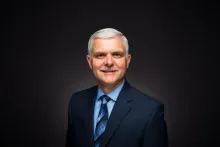


Mario Seiglie
This transcript was generated by AI and may contain errors. It is provided to assist those who may not be able to listen to the message.
While we are all familiar with how the Bible begins in Genesis 1, verse 1, it states as a clear and simple fact that in the beginning God created the heavens and the earth. And then continues to explain how God later on spoke and things were created, such as light on the first day and how on the sixth day God created man, saying in verse 26, Let us make man in our image according to our likeness. And on the seventh day God created the Sabbath and he rested. And so it's nice to remind ourselves that each Sabbath ought to be a day when we also take time to reflect upon God as our Creator and what he has created and what he continues to create. And so it is my purpose today to remind us that God is the Creator of all things and also to have us recall what God has created and what he is still creating for us and also within us. And so I've entitled the sermon, God is our Creator. God is our Creator.
Now the fact that God is our Creator, the Creator of all things in this vast universe is reiterated and expanded upon throughout Scripture, Old and New Testaments. But I'd like for us to turn to John chapter 1, verse 1 through 4. I want to have us quickly turn to some of these other places where we have more elaboration of who was involved in this creation, what was going on, what was happening. And so we have John 1, verses 1 through 4. And it definitely sounds like the beginning of the Old Testament. And so in John chapter 1, verses 1 through 4, we read, In the beginning was the Word, and the Word was with God, and the Word was God. He was in the beginning with God, and all things were made through him, and without him nothing was made that was made. In him was life, and the life was the light of men. And then, turning back to Colossians chapter 1, verse 13 through 18, Colossians 1, 13 through 18, we find, clearly stated, that God the Father created all things, this vast universe, through the Word who became his Son and our Savior, Jesus Christ. Colossians 1, verses 13 through 18.
And so God's Word exhorts us to know that in all things, he may have the preeminence. And so God's Word exhorts us to know and to remember, to recognize God as our Creator, that we're also to rejoice in him. And we can see this back in Psalm 95. Let's go back and look at Psalm 95, verse 1 through 7, and here we have a hymn of praise. Quite appropriate to be praising our God. Psalm 95, verse 1 through 7.
The heights of the hills are his also. The sea is his, for he made it, and his hands formed the dry land. O come, let us worship and bow down. Let us kneel before the Lord our Maker, for he is our God, and we are the people of his pasture and the sheep of his hand. Does that make you want to stand up and sing? I almost did, but I decided not to. And so it is so far today. I've been listening to the hymns very closely, and yes, we've been praising God. And many of our words are praising God as our Creator, and it is appropriate, again, to do so on his Sabbath day. But, and here we go, but sadly, ever since the Garden of Eden, mankind has turned its back on God.
Mankind refuses to believe and to obey God, refuses to worship Him according to his will, as revealed through Scripture. Mankind largely chooses to ignore and to reject God as their Creator.
We see this as not really new news to us. Over in Romans chapter 1, verse 18 through 25, Romans chapter 1, 18 through 25, Paul describes mankind's rejection of God back in his day, and it happened long before his time as well. Paul describes mankind's rejection of God along with the ramifications of that choice, their choice. And it's revealed in, we would say, rather miserable lives of ingratitude, of futility, and of foolishness. And so here Paul writes Romans 1, verse 18, breaking into the thought.
The whole chapter is really powerful to read. But here in verse 18, His invisible attributes are clearly seen, being understood by the things that are made, even His eternal power in Godhead, so that they are without excuse. Because although they knew God, they did not glorify Him as God, nor were thankful, but became futile in their thoughts, and their foolish hearts were darkened.
Professing to be wise, they became fools, and changed the glory of the incorruptible God into an image made like corruptible man and birds and four-footed animals and creeping things. And therefore God also gave them up to uncleanness, and the lust of their hearts, to dishonor their bodies among themselves, among them who exchanged the truth of God for the lie, and worshiped and served the creature rather than the Creator.
Now, that word, creature, in verse 25, is rather interesting to note. Where it reads, in exchange to the truth of God for the lie, and worshiped and served the creature, the Greek word for creature, cotisis, it actually, by implication, can also mean, more broadly, creation. Not only worshipping creature, but you're also worshipping, in a broader sense, creation. And so it is the New English translation, as verse 25, reading like this, "...the exchange to the truth of God for a lie, and worshiped and served the creation rather than the Creator." And if you think about what's been going on in human history and what's still going on today, there is very much all attention on the creation.
Even, of course, worshipping our human beings, worshipping themselves. We can expand that to say human beings, in essence, worshipping their own intelligence, worshipping their own ideas, their own philosophy, their own science. Now, Paul's words remain true today. His words remain true today. There are men and women of great intelligence through the centuries and to this day, great intelligence, great abilities. They study the universe God has created. They're studying all things you can imagine, both great and small.
And yet, they reject the notion of God's handiwork in it. However, interestingly, there have been advancements in knowledge and in technology. And what that means is that even more amazing details about the universe are being discovered. And what they're discovering is capturing the image of the universe, both big and small, and into such precision and focus, they're discovering that there are some details that they just cannot quite explain away.
Because their explanation for the universe and all things is that, as you probably have heard, that everything exists due to happenstance. It's all by chance. It's been a mixture of cosmic particles that just happen to bang together at the right moment to create another bigger bang And what do you know? Here we are. We're still here. But what some scientists have been brave enough to say, and I'm going to share some of that material with you today, there are some brave souls out there who have dared to resist the expectations of their field, of their professions.
Some brave souls are daring to suggest that what is going on in the universe, what is happening in creation, is not by accident. It's not by happenstance, but it's by intelligent design. And perhaps you've heard of that phrase. It's been around for a while. And years ago, when I first heard about it, you can only read about it in books, but now you can go to YouTube, for example, and various websites and read and watch even more about it. Now, paying attention to discoveries about the things of the heavens and the earth do reveal God's attributes.
They do reveal God's eternal power in Godhead. Now, a book that's been out for a while, and I still enjoy reading, and it's one called The Case for a Creator, a journalist investigates scientific evidence that points toward God. There's a lot of YouTube videos out there developed by the same man, Lee Strobel.
But the author, Lee Strobel, in this book shares his interviews that he did with scientists who have stubbornly followed the evidence of their research. They followed the science. I don't know where that phrase came from. They followed the science of their research, and they've had some conclusions that they do not shy away from. What are some of their conclusions? Their conclusion is that the universe reveals evidence of, indeed, intelligent design.
The universe points to a Creator, even as Paul and Romans 1 were saying. So let me share with you just a few of the discoveries that Strobel talks about in his book. I found them very thought-provoking and a good foundation for what else I want to say here in the sermon.
Now, I had to really study this because science and math is not necessarily my fort. But I followed the book, and we'll see what happens here. And so one of the principles scientists are now willing to step up and talk about, though they have many skeptics trying to tear them down, is that they've advanced this principle of physics related to life in the universe. It's something I never heard about in school years ago. They call this the anthropic principle. Anthropic is from anthropos. It's from the Greek word for man.
It's the same word for man we find in the New Testament, anthropos. Now, this principle, a number of scientists have agreed upon, this principle essentially means, quoting here from Strobel, that all the seemingly arbitrary so-called chance things and unrelated constants in physics have one strange thing in common. These are precisely the values you need if you want to have a universe capable of producing life.
It just happens that the universe is so precisionally organized like a fine machine that it's exactly set to support life. Now, calling the universe anthropic or life-friendly in a carefully crafted habitat for life is a very bold position to take in science today. But Robert Argros and George Stansu, who wrote the book, The New Story of Science, they strongly argue it's the appropriate stance to take. And they say, though man is not at the physical center of the universe, they state he appears to be at the center of its purpose.
He appears to be at the center of its purpose. That's based on science. And again, it seems to echo what we find talked about in Scripture. I find that an amazing statement. Now, there's another scientist, a physicist, that Stoble interviewed in his book. This scientist, Dr. Robin Collins, has studied physics all his life. And over the past 30 years or so, he says, scientists have discovered that just about everything about the basic structure of the universe is balanced on a razor's edge for life to exist. A razor's edge for life to exist. He says the coincidences are far too fantastic to attribute this to mere chance or to claim that it needs no explanation.
Too much precision exists, he says, to have been a random accident. I find that science rather encouraging, don't you? Take gravity. He talks about gravity. Gravity, Dr. Collins states, has the incomprehensibly narrow range, that's his words, incomprehensibly narrow range for life to exist. Its force happens to be situated precisely to make our universe capable of sustaining life. And he says, if the force of gravity were increased just one part in 10,000 billion billion billion, are you getting all those zeros written down?
Oh, look at the math professors over here, no? No? Okay. If the force of gravity were increased just one part in 10,000 billion billion billion, animals anywhere near the size of human beings would be crushed. Now that's precision, precision-edged, isn't it? That much difference. And we simply would cease to exist. We couldn't exist. Now, from the vastness of the universe, which I admit is really hard for me to grasp, let's turn our thoughts to something much smaller, shall we?
In fact, we'll talk about something that's microscopic. Something microscopic. Now, as you probably know, science has long maintained that Darwinian evolutionary theory is the best explanation, according to the purely human point of view, apart from God. Evolutionary theory best explains how life on earth began and how it is that it still exists.
Life, according to Darwinian theory, says, it says, life began from purely naturalistic causes, with living organisms emerging by themselves from this primordial, organic, chemical sort of soup. I don't know how the organic came before things, but that's what I've read. It came from some sort of primordial soup and then developed naturally, developing naturally over eons into more and more complex creatures. And as you know, including all of us, we human beings.
I used to think years ago, with all cartoons, maybe that little amoeba is my relative. I guess that amoeba is only my relative in the sense that God created the amoeba and He created me.
And what we're going to see, even that little things like an amoeba, even that shows some detail that can only be attributed to an intelligent designer. Well, according to Darwinian evolutionary theory, God is entirely out of the picture. God's a fable. God's a fantasy. It's one of those myths that people cling to for no logical reason. But now, the good news for us is that in recent years, Darwinian evolutionary theory has been undermined.
Some actually go as far to say it's been destroyed. It's been destroyed by advancements in biochemistry and microbiology. Some of you young people in high school and college probably know what I'm getting at here. Biochemistry and biology, the study of life at the cellular level, actually shows there is such a design at that level that it defies the possibility of happenstance of chance as well. Very similar to what we saw largely in the universe. There are some incredible coincidences on the microscopic level.
Strouble explains this. He says, Life is essentially a molecular phenomenon. If Darwinian evolution is going to work, he says, it has to succeed at the microscopic level of amino acids, proteins, and DNA. On the other hand, he adds, if there really is a designer of the world, then his fingerprints are going to be all over those cells, those microscopic cells. In Darwin's day, Strouble writes that scientists could see the cell under a microscope.
You might remember looking at those back when you were in school. Yes, I know they had microscopes back then for some of you. You might remember looking at a microscope. What we were supposed to have seen was this little blob that looked like jelly. Then there was maybe a little spot in the middle, the nucleus. That was about all we could see way back then, and even farther back into the 1800s.
That was the best they had. The cell we learned back in school could do interesting things. It could divide. It could move around. But they really didn't know how. They didn't understand how it propelled itself. They didn't understand how it was moving. They really couldn't see anything. They had to make guesses. But now, biochemists know that the cell is an incredible, intricate, lilypusian world, where a typical cell takes 10 million atoms to build.
I always thought a single cell, like a blood cell, was pretty tiny. Now they're explaining from what they're learning from microbiology that a simple cell can have 10 million million atoms in it just to build it. It boggles the mind. One scientist, Dr. Michael Behe, has described a single-cell organism, these are his words, as a high-tech factory compared to what we've got now. We understand a little more about how these cells work because we understand computers. We understand microchips and processors. Dr. Behe states that scientists have, quote, "...probed to the bottom of life," so to speak, and we're at the level of molecules and atoms, and there's complexity all the way down.
We've learned the cell is a horrendously, this is his word, his words, the cell is horrendously complicated in that it's actually run by micro-machines of the right shape, the right strength, and the right interactions. The existence of these machines create challenges. In fact, it challenges Darwinian evolution. It's the existence of these complex biochemical micro-machines that Dr. Behe says undermines Darwinian evolution. You see, if one were to remove one of those components, the machine would no longer function.
Those little biochemical machines would not function. And so he argues that they could not have evolved or been built piece by piece, but by necessity they had to be fully present. They had to be put all together, all the little pieces, all at once, at the same time, in order to function. This he called, and now it's being torn apart or trying to be torn apart by other scientists, he calls his argument the irreducible complexity. You go so far down and you really can't take things apart and explain them away by evolution because it just doesn't work. Behe illustrates his point by comparing these biochemical machines to a mousetrap.
In order for a mousetrap to function, it must have all of its component parts at once. Now, you can find that illustration on YouTube, but I'm live. So, let me show you what he's talking about. Please have the ice packs ready in case I catch my finger on the mousetrap. I believe you all know what a mousetrap is. If you're in Radioland, I'm holding up a mousetrap.
That's what a mousetrap is. A lot of us grew up with mousetraps in our houses. Some of us have never seen a mousetrap. In order for it to work, I have it set right now. I have it set right now. No, I better not use a paperclip. That's a little too close to home.
I don't want to give too much entertainment today. But we know how to work. It's got to be put together so in the little mousetrap, the mousetrap works. So, if any of those parts were gone or missing, it wouldn't work. So, each part has to work in coordination. Now, I've deconstructed another mousetrap. The board, the lever, the spring, the square wire for the trap, the little flap to put the cheese on, peanut butter's better, and then all the other little staples that put together.
Now, what evolutionary theory, and maybe I'm oversimplifying this, but this is what I gathered from his book, is that all the parts that I've just put in this box that are required to make this trap work, right? Imagine if these could just come together all by themselves and work just like this one did. You think it's going to happen? No? I'm looking at the young people, the old people.
Even us old-timers know this. No matter how much I rattle the trap in this box, these pieces, it's not going to come back together. It doesn't work that way. And that's part of what Behe's trying to talk about and explain in his irreducible complexity. There comes a point where you can't take things down any farther. Now, he came up with this idea well over, must be over 20 years ago now.
And guess what? All the skeptics out there are now very busy poking holes in his explanation. And from what I gather, as best I understand it, they're really being nitpicky and claiming things that he really wasn't arguing. The gist of it is there is no way really to explain away these cellular microscopic micromachines. It just can't really be done. But of course, we understand from Scripture that they will continue, won't they?
They will continue to try to ignore it. And so let's go back to what Behe says. There's that mousetrap example. Dr. Behe says, again, quoting, he says, Evolution can't produce an irreducibly complex biological machine suddenly, all at once. It's just much too complicated. It's too complicated. And if the creation of a simple device like this mousetrap illustration requires intelligent design, well then we have to ask, he says, what about the finely tuned machines of the cellular world? Where did they come from? How did it happen? Now the response, again, to most scientists and influential organizations, to Dr. Behe and some of these other scientists and their arguments and their research, all that seems to be pointing to what they claim is intelligent design in the universe, they're not necessarily saying that God did it, they're just saying somebody did it.
There's a designer. A lot of them aren't stepping out as far as saying God did it. I'm saying God did it. Okay? They're just saying a designer did it. The response to this intelligent design theory has been to ignore it, suppress it, or ridicule it. It's all unscientific, they claim. It's all flawed. It goes against science. You're stepping into faith. You can't do that. And again, as we read earlier in Romans 1, 18-25, I'm just going to take part so that what Paul wrote there, remember what we read about the ungodliness and unrighteousness of men, who suppress the truth in unrighteousness, professing to be wise, they became fools.
And they exchanged the truth of God for the lie. And that's what we're seeing. That's what, for kids in school, it's probably part of what you have to be ready to understand what the theories the scientists have, but also understand what God has to say. So this new scientific evidence and compelling arguments, I still believe, does give us a deeper understanding and appreciation of God, and just how amazing I say, just how truly, incredibly amazing God's creation is, both big and small.
However, we must go beyond the science, don't we? To consider God as our Creator, we need to go beyond the science. And that, this is an important point. This is an important point. Science can't be relied upon to answer every question. We should know that. Science can't be relied upon to answer every question. And the one question has not and cannot answer is this one. Why do we exist? They're trying to figure that out, and they really can't. Because it goes beyond the science. That answer can only be revealed, we believe, by God, through His Holy Scripture. The answer is, put simply, why do we exist? It's because God wants a large and divine family.
That's why we exist. It is God's purpose to bring many sons to glory. It is His purpose to create children like Himself. And He is doing so through the very One through whom He created all things. That is Jesus Christ. That's what we read about. Let's look back in Hebrews 29, verse 9-10. I think I said that right. Hebrews 2, that sounds better. I knew there were not 22 chapters in Hebrew. It is in Hebrews 2, verse 9-10. God is still in the business of creating. We're still in the process of being created.
That's what we read in Hebrews 2, verse 9-10. But we see Jesus, who was made a little lower than the angels, for the suffering of death crowned with glory and honor, that He by the grace of God might taste death for everyone. For it was fitting for Him for whom are all things, and by whom are all things, and bringing many sons to glory to make the captain of their salvation perfect through sufferings. He's breaking the way before us.
He set the path for us. We're following. We're learning from Him. We're getting His help and our Father's help through God's Spirit as we build God's righteous character with His help. God is our Creator. God is still creating us in His own image. Whereas we might want to say He's helping us and helping us to create His righteous character with the help of His Holy Spirit. And that's especially true in a profound way once we have accepted His call and we have received the begettle of His Holy Spirit.
Let's also be turning to Romans 8, verse 14-18. Romans 8, verse 14-18. Romans 8, verse 14-18. It's through a process, the process conversion, that God is helping us to become like His Son, Jesus Christ.
Verse 14, for as many as are led by the Spirit of God, these are the sons of God. For you did not receive the Spirit of bondage again to fear, but you received the Spirit of sonship. Of sonship. It says adoption, but oftentimes if you look in your margin, you'll also see it can be translated sonship. But you have received the Spirit of sonship by which we cry out, Abba, Father.
And the Spirit Himself bears witness with our spirit that we are the children of God. And if children then heirs, heirs of God and joint heirs with Christ, if indeed we suffer with Him, that we may also be glorified together.
Paul writes, for I consider that the sufferings of this present time are not worthy to be compared with the glory which shall be revealed in us. In his line there, his words are in verse 18, I find very comforting, especially when I'm having my trials, my troubles, and I know you do too, to remember was the goal.
What's the outcome if we endure with God through our suffering? We have to go to Him for His strength and help, because He's helping us to be perfected through the suffering. Now, even as awesome as God's creation right now is to see from our eyes and to understand some of these things I've talked to you about today, at Christ's return, just how much more awesome will be that future moment of creation that Paul describes in 1 Corinthians 15. Let's turn there.
There's another moment of creation that's going to occur. 1 Corinthians 15, verse 49 through 54. Yes, scientists will say, well, these verses we're going to read are nothing but fiction. No, it's not fiction. It's prophecy. It's fact. It's the inspired Word of God, 1 Corinthians 15, verse 49. And as we have borne the image of the man of dust, Paul writes, we shall also bear the image of the heavenly man.
Now this I say, brethren, that flesh and blood cannot inherit the kingdom of God, nor does corruption inherit incorruption. And so behold, I tell you a mystery. This is a mystery to most of the world, a mystery to science. This is what they can't understand. I tell you a mystery. We shall not all sleep, but we shall all be changed. In a moment, in the twinkling of an eye, at the last trumpet, for the trumpet will sound and the dead will be raised incorruptible, and we shall be changed.
For this corruptible must put on incorruption, and this mortal must put on immortality. Do you notice that word, must? It's got to happen. This is part of God's plan. This is not chance. This is not a coincidence. This is part of God's plan, since before the creation ever occurred, the original creation. Verse 54, so when this corruptible has put on incorruption, and this mortal has put on immortality, then shall be brought to pass the saying that is written, Death is swallowed up in victory. I love that. Death is swallowed up in victory. So those who are Christ, those who bear God's Holy Spirit, and who faithfully endure with God until the end, they will be received by Christ.
They will become like He is. We will join Him in the heavens as He comes to establish the kingdom of God on earth, and that's where we will reign with Him as kings and priests on the earth. Not in heaven. Not in heaven, but on the earth. Let's note 1 John 3, verse 1-2. 1 John 3, verse 1-2. You know, it's really impossible, as we think about our Creator today, and every day, especially on the Sabbath, it should be really hard for us to think the Creator without thinking about that He is love, and everything He has done is because of love, and is love for us.
1 John 3, verse 1. Behold what manner of love the Father has bestowed on us. Think about that when we're going through tough times. What manner of love the Father has bestowed on us, that we should be called children of God. That's something we're thinking about. Therefore, therefore, the world does not know us. They can't comprehend it. They can't comprehend that. It could be true for us.
And it's because it did not know Him. The world doesn't know God. It does not know God. So, beloved, verse 2. Now we are children of God. We are begotten. And it has not yet been revealed what we shall be. We haven't been born as spirit means yet.
But we know that when He is revealed, when Christ returns, we shall be like Him. For we shall see Him as He is. As He is.
Now, of course, skeptics will demand. Skeptics will demand. Where is the evidence that the dead will live again? They have been trying since the days of Frankenstein to get something to come alive from the dead.
They haven't done it. Instead, they're making machines more and more like human beings. But it's not the same thing.
Others will say, prove that mortal bodies can become immortal spirit. Well, I can't prove it scientifically. For now, all we can do, which is a lot for those of us who have faith and believe, we can point to the scriptural evidence of Jesus Christ's resurrection. We can point to the evidence of what happened to people that did believe it. Something happened. Something happened. It is now a matter of faith, but in due time, won't that be fun? In due time, we will show the evidence of our own resurrected and glorious selves to those who are skeptics at this current time. That is, if we endure faithfully with Christ until the end, we have a part to do. And what an awesome act of God's love and creative power that will be.
Now there's another point, a second important point, I want to make. The second point I'd like to make.
We must go beyond believing that God exists, beyond believing that God is our Creator. We must also submit to God and do what he says.
Although God has made it possible, you see, for mankind to perceive the evidence of his design and his workmanship for those willing to see it. That's what Paul states in Romans. It's out there for people to see. If they just look, some are willing to look and be open-minded. But beyond the ability to perceive the evidence of his design and workmanship in his creation, more than simple seeing and believing is needed to be a follower of God and Jesus Christ.
To be of the firstfruits of this new creation we're referring to, there in 1 Corinthians, we must have God's Holy Spirit dwelling in us. There's a process, there's something that has to occur for that to happen.
We understand that God the Father must first call and open one's mind to be interested and to begin to perceive and want to know more about God and about his plan for humanity. We know, as Jesus said in John 6.44, that no one can come to me unless the Father who sent me draws him. And then God says, and at that I will raise him up. Jesus said I'll raise him up at the last day. And so when the individual welcomes the Father's calling, then he must welcome it and he must be moved further on to be convicted of sin to recognize he needs to change. He's not right with God and he wants to be right with God. He's beginning to understand God's plan of salvation and that's what God intends for him and he wants to be a part of that.
And so being convicted of sin, that individual repents and he is baptized. Then he receives God's Holy Spirit with the laying on of hands. And with the receiving of God's Holy Spirit, the laying hands of God's ministers, God's ministry, that individual becomes a begotten son or a begotten daughter of God the Father. It's only with the indwelling of God's Holy Spirit that one can be a part of that new creation God has begotten us to. His children, His children, His first fruits in His kingdom.
And so it is now that many, many of that want to, can come to believe that God exists.
They can come to see that God is a creator, which is a good thing. It's good to believe in God. It's good to believe that God is the creator. You see, that's what the authors and scientists I was quoting from. That's what a lot of people in the world, a lot of people that are not sitting in the same place as we do on the Sabbath, a lot of people believe in God, a lot of people believe in a creator, but yet they don't know God. They don't yet, yet know God. They don't yet strive to do as He instructs us, as do those within whom dwells God's Holy Spirit. That's a huge difference. In this regard, I think we need to read and remember the words of James 2.19. I don't think this was read in the sermonette. I was certainly looking at those other scriptures as I was preparing my message.
James 2, verse 19, and we remember this, but it's good to read. James 2, verse 20, and we remember this, but it's good to read. You believe that there is one God. You do well, James says. It's good to believe in one God. As I said, scientists and other people do believe in God, a creator. That's why you see all their videos and books out there on the shelves, on the computer websites and all. Even the demons believe, but they tremble.
You see, that kind of gets to a point, doesn't it? The demons believe God exists, and they tremble about it. Whereas there may be a lot of people in the world, they believe in God, but they don't really tremble. Oh, they're awed like we are. I watch the videos. I've seen the children's programs. They're really great material out there, making us appreciate God as our creator, and how cute the animals are. And, wow, I've never seen a fish like that before. All that's great to know. But then, what do you do? Right? What do you do with that knowledge? Does that inspire you to get to know God better? Does that inspire you, with God's help, to try harder to obey God? Or does it just make you feel good, which is okay? I hope we do more than just wanting to feel okay, because we know that God is our creator. As we've heard, we must be more than just good and kind and nice and feel okay about things. We need to be doing something. And so, what God's holy scripture declares, and what the evidence of science concedes, is that there is a creator. And we know that that creator is God. We know who that creator is. It's a very precious knowledge. And I hope we do value it.
And as we've read, God is still in the process of creating us in His image, creating mankind in His image, in a most profound and spiritual sense. And so, it is that God is most worthy of worship. God is most worthy of our total faith and devotion, believing and doing, what God says. But sadly, and just as Paul said in Romans, that section I read, Romans 1, 18, 25, humanity remains or chooses to remain ignorant about God. And as we learned, even some of the scientists themselves refuse to accept the evidence and even hinder others from understanding and believing it. And that's why people can... that's what people should do, I should say. That's what people can do when they suppress the truth, as Paul said there, by their unrighteousness, their wickedness. But for those willing to accept God's calling, willing to accept the evidence of God's handiwork, welcoming His calling to salvation, they can clearly see the invisible attributes of God. In what does creation reveal about God? Ultimately, it reveals the same things that God is going to open up our minds and reveals to us about Himself, about our relationship with Him in Scripture. So a few more scriptures I'd like to read. Let's turn and read Psalm 33, verse 4 through 9. We take to heart, very profoundly, the words we see, we read here, these inspired words. Psalm 33, verse 4 through 9. Psalm 33, verse 4, For the word of the Lord is right, and all His work is done in truth. All His work. He loves righteousness and justice, and the earth is full of the goodness of the Lord. By the word of the Lord the heavens were made, and all the host of them, by the breath of His mouth, He gathers the waters of the sea together as a heap, and He lays up the deep and storehouses. Notice verse 8. What are we supposed to know now that we know God's a creator? Let all the earth fear the Lord. Let all the inhabitants of the world stand in awe of Him. For He spoke, and it was done. He commanded, and it stood fast. We are told, then, that God is our Creator. He's good. He's just. He's omnipotent.
We must be in awe of Him. We must admire, respect, and honor God as He instructs us to do. When we read here in Psalm 33, verse 8, that we should fear God. That means we should revere Him. Fear God and keep His commandments. That's part of how we fear God. That's how we respect God as our Creator. He made all things. He made His law clear to us. So we will revere Him by submitting to Him, doing as He says. Not just believing, but doing as He says. Let's also look at Isaiah 66, verse 1.
Many profound scriptures in Isaiah referencing God's power. Isaiah 66, verse 1, Better listen.
In Isaiah 66, verse 1, Again, God our Creator loves those who revere and worship Him. He is sovereign over the whole universe. Absolute authority. And we must be willingly humble, contrite before Him. We must be willing to do His will, not our will. Not take His commandments and laws and ways as suggestions, as nice things to do when we feel like it. There are things to be doing and striving to be doing better. Finally, Revelation 4, verse 9-11. Revelation 4, verse 9. Wrong chapter, excuse me. Revelation 4, 9.
Again, God is our Creator. That should mean something to us. Very profound. He is most worthy of worship. So when we come to service as each Sabbath, whether it's here in person or online at home, on the road, we are coming before God on His throne in heaven. Do you think about that? Do you think about that? How do we come before God when we worship Him together on the Sabbath? He is our Creator, most worthy of worship. So if you haven't written it down in your notes yet, God is the Creator of all things. He is our Creator. The Holy Scripture and evidence found, what science is learning, what people are willing to understand makes clear His existence. When we consider the physical works that His hands have made, we need to consider that all these and other scriptures that reveal more about God, His authority, about His power and His love, about His plan of salvation, much of what we've touched upon and reviewed today, it should give us a more profound desire to have a right relationship with our God, with our Father, with Jesus Christ, and ultimately with every other human being who God is also going to call in due time according to His will. How absolutely amazing is God's plan of salvation? How absolutely amazing is His purpose behind all things which He has created? And again, He's still creating. He is still creating.
And I encourage you, the rest of the Sabbath, weeks ahead, think about it. Enjoy the beauty of the creation, even the warm humidity we may be having today. That's part of the beauty of God's way, too. There's beauty in everything. And so, when we do consider all that God has made and still is making, we have great cause to worship God with humility, with praise, great cause to redouble our efforts, our commitment to believe and to obey God no matter what, both now, brethren, and in the age to come.
