
Ben Light
This transcript was generated by AI and may contain errors. It is provided to assist those who may not be able to listen to the message.
I want to begin sharing with you one of the most beautiful words in the Bible. It is the word truth, and in the Greek it's aletheia. Aletheia. You spell it A-L-E-T-H-I. It is the opposite of a lie, and in the Greek the word for lie is pseudo. P-S-E-D-O. And we use that quite a bit when we're talking about pseudo this or pseudo that, which is something that appears to be real but isn't. Aletheia comes from two syllables which have to do with A, which is a negative in the Greek. Aletheia means it's something that is hidden. So it's the opposite of something that is hidden. It's something that is out in the open, that is revealed. It is what it is, the reality of things. For instance, a beautiful rosebud. You can't see inside it, but once it opens up, it reveals the beauty inside. And so truth is something that opens and reveals the beauty inside, something that is out there. It's not concealed. It has nothing to be ashamed about. It is open. We can take great comfort that the Bible tells us that our God is a God of truth. Notice in Psalms 31 verse 5, Psalms 31 verse 5. By the way, if somebody can bring me a glass of water, that would be good. Psalms 31 verse 5 tells us here about God. It says, Into your hand I commit my spirit. You have redeemed me, O Lord, God of truth. So God is—one of his characteristics is truth. He cannot lie. He is open. He reveals things. There's nothing dark, nothing concealed about Him. Also in Isaiah 65 verse 16, we see again God being called the God of truth. Isaiah 65 verse 16. Now this is just an introduction. I'm getting to the main theme of why we're discussing this in a moment. Isaiah 65 verse 16. It says, So that he who blesses himself in the earth shall bless himself in the God of truth. And he who swears in the earth shall swear by the God of truth, repeated time and time again. That is one of the characteristics of God. He cannot lie. That is part of His nature. I remember in a debate between some Christians and Catholics, and atheists, and one of the atheists says, Well, if God is all-powerful, why is it that there are things that He can't do? If He can do everything, then how can He be limited? And they use that as an argument of why God doesn't exist. But actually, that is not a contradiction. If God is a moral God, there are certain things that God has willed He cannot do. But yet, yes, that is within what it means to be all-powerful. Because if you are all-powerful and moral, there are certain things that you choose not to do. Just like in a chess game. If you're going to play a chess game, you have to abide by the rules. You cannot move just any haphazard way. You can't move the bishop like you do the horse, or you can't move the rook or the tower. Each one has a certain way to move. And once you begin to play, you have to accept the rules. Well, God has established rules that He has chosen to respect. Although He is all-powerful, He can set up laws in which He Himself is going to participate and respect. And so there are certain things God will not do. And one is that God will not lie. That is not part of His nature. That is not something that although He is all-powerful, He is also a moral and spiritual God that will not do evil. Notice, in Titus, in Titus chapter 1 verse 2, it just tells us here very simply exactly what I have been mentioning.
Titus chapter 1 verse 2, it says, talking about in hope of eternal life, which God, who cannot lie, promised before time began. So He promised that there would be eternal life offered to human beings, and He cannot lie.
Also in Hebrews, a little bit further forward, Hebrews chapter 6 verse 18, talking about here an oath. He said that by two immutable things in which it is impossible for God to lie. It is impossible. God has set it up. So in a way, some of these questions that atheists throw, they're short of infantile. They just think, well, God can do everything.
Then He can create a square circle. Well, by definition, you either have a square or a circle. But they say, oh, well, God, if He's all-powerful, He can do that. Well, again, you're just going into absurdities. That's not the God that is logical, that is moral, that is consistent. And God is light, which means that He reveals things. He is not in the business of concealing, of hiding things, because they are shameful.
He is not that way. Let's go to 1 John chapter 1. 1 John chapter 1 verse 9. Let's go a little bit before that. And verse 5. It says, This is the message which we have heard from him, and declare to you, that God is light, and in him is no darkness at all. He is a moral God. He will not sin. He will not be untruthful. If we say that we have fellowship with Him and walk in darkness, we lie and do not practice the truth.
Notice all these terms. Light, darkness, truth, lies. See, there are two different ways of life, two systems, in which God does not participate in darkness or in lies. But if we walk in the light, as He is the light, we have fellowship with one another, and the blood of Jesus Christ, His Son, cleanses us from all sin. We have access to forgiveness, because we want to walk in the light. We want to do what is right.
We want to follow the truth. That's why we're here on the Sabbath. We want to be more like God Himself. And not only is God called the God of truth, but also His Word is called the Word of truth. It is something open. It reveals God's character. It reveals the truth about human nature, about mankind. God is revealing things. It's just like a rosebud that is opening up and opens up to the truth.
Notice in Psalms 119, 151, just a couple of scriptures to see how the Bible describes itself in certain ways. Psalms 119, 151. The great poem that David wrote about God's law. And he says in Psalms 119, 151, You are near, O Lord, and all your commandments are truth.
All that He has given us about His commandments, they are truth. There's nothing wrong with them. We should never attack God's law. That's Him that we sang, O how I love your law. How we love thy law. Well, some people that left God's way, people are saying, Oh, now they have a different version. How I loved thy law. See, you can't quit loving God's law if you're going to be walking in the truth and walking in the light. He says here, all your commandments are truth.
They have nothing that are concealed, that are wrong. Notice in John 17, verse 17, this is a famous memory scripture. If you want to know what the truth is, John 17, 17, Jesus Christ Himself said, sanctify them in your truth, in your alatheia, the way you reveal the reality of things. Your word is truth.
That is something that shows truth. God's word is that way. Now, of course, there are all kinds of alleged discrepancies and all kinds of things that people will bring up, but there are no true contradictions in the Bible. Just as in nature itself, there are many things that appear to be disconnected. You have, for instance, light. You have, at the same time, energy. You have matter. You have all of these forces together, and many times people can separate them. Electrical energy, you have gravitational pull, you have atomic energy and pull, but in the depths, as you study all of these in their deepest recesses, there is unity.
Einstein was able to reduce matter and energy and show the unity that is in the depths of it in that famous formula. E equals m c square. Energy equals mass times the velocity of light squared. And so he showed that energy is a manifestation of matter when it is in a certain state, and matter can become energy. So you see, it's like the Bible itself. Yes, you can look at it in the superficial areas and you think there are apparent contradictions, but deep inside there is a unity of thought.
There is a way to unite and for everything to be reconciled, and that is why God's Word is truth. It has nothing to conceal. It is trustworthy. Now we are celebrating, we celebrate God's feasts, we are celebrating the Sabbath, but what do we see outside? Well, we're seeing people celebrating man-made holidays, things that are not part of God's Word, that actually substitute the truth of God for something that is a pseudo-festival, something that is not right.
It might appear to be to human beings, but it isn't part of God's Word. It is not accepted, and at the same time God tells you, you shall not add to my Word, nor shall you take away from it. All through scriptures. God says, here's my revealed truth, here's what I showed you, and what does he show?
He shows the Sabbath is his holy day, his feast days are the way to worship him, and not having these pseudo-festivals of the world. Notice in John chapter 4 verse 23, John chapter 4 verse 23, what did Jesus Christ tell the Samaritan woman?
He says, but the hour is coming, and now is when the true worshipers will worship the Father in spirit and truth. For the Father is seeking such to worship him. God is spirit, and those who worship him must worship him in spirit and truth. In other words, God is far more than just whether you're going to go to a mount there in Israel, Mount Zion, where the temple used to be, where they thought, well, God is there. No, God is beyond that, and he wasn't in Mount Gerizim like the Samaritans thought. If you're going to worship God truly, you've got to realize he's the God of the entire universe, and the God that is of truth. We follow him through the truth that is revealed to us in the scriptures.
In Ephesians chapter 4, it also adds, okay, we should follow the truth of God, but with what attitude? It tells us here in Ephesians 4 verse 15.
He says, "...but speaking the truth in love, we may grow up in all things into him who is the head Christ." So truth is the goal in our lives, and love is the attitude, an attitude of humility, of outgoing concern. In other words, it's not to get puffed up and to spill all of the beans to people that are not interested in it, but we have these wonderful truths, and we should realize there is a battle going on between what the world calls truth and what God's Word says is the truth. So you see, there's a divide between what is God's truth and what the world says is the truth. Truth is one of the main themes in the Bible. It goes from Genesis all the way through to Revelation.
And as we pursue God's truths, they are the key to other truths. It was men like Isaac Newton, who studied science in the morning and then studied God's Word in the afternoon. And he never saw they were incompatible. As a matter of fact, because he read God's Word, he knew there was a God who was reasonable, that did not contradict, that these laws that he set up were consistent with his character. And so he pursued the truth and discovered how the laws of gravity operate, which was a great advancement. Those truths were there, but it took a man who understood how God thinks. That's why in many of these other religions, for instance in India, where they talk about a God that is contradictory, that is a mixture of good and evil, or in Buddhism as well, that they have the yin and the yang, and that actually God is both good and evil. See, those did not develop the type of scientific method and the development of modern science, which is not based on contradictory accounts, but of absolutes, laws that are logical, that make sense. And so it was Western civilization, through the biblical foundation, that knew that this was a logical God, this was a God that did not contradict himself, and so men like Galileo, also Kepler, and many others who discovered the fundamental laws of physics, they were God-fearing men and men that studied the Bible very carefully.
The Bible is not only, though, about head knowledge. The truth in the Bible doesn't mean just intellectually understanding things. It's also heart knowledge. It doesn't only go to the mind, but it goes to the heart. And God is not only interested in us being truthful, but also being trustworthy, faithful. See, in the Bible, they're both connected. It's not just what you believe, but how you act, how you live, how reliable, how trustworthy you are. So, a person that just talks the talk, doesn't walk the walk, is not the type of person described in the Bible, but a person that is truthful is also going to be reliable, trustworthy. His word is going to be something that you can take seriously, a person that is not going to be devious about things. Notice how this truth is summed up in John chapter 1, John chapter 1 verse 9. And of course, we know truth can hurt. God says that our hearts are deceitful above all things, and we can deceive ourselves, and that Satan has deceived the world. So it's hard to look at that light sometimes, because it goes into the deep recesses of our mind, of our heart, of our soul.
In John chapter 1 and verse 9, it says, that was the true light, talking about Jesus, which gives light to every man coming into the world. He was in the world, and the world was made through him, and the world did not know him. He came to his own, and his own did not receive him. But as many as received him, to them he gave the right to become children of God, of those who believe in his name. Going on to chapter 3 now, in verse 19, John continues the thought about Jesus Christ being the light. He's called the truth in this gospel as well. In John chapter 3 verse 19, it says, and this is the condemnation, that the light has come into the world, and men loved darkness rather than light, because their deeds were evil. For everyone, practicing evil hates the light and does not come to the light, lest his deeds should be exposed. But he who does the truth, notice it doesn't say he who knows the truth, it says he who does the truth, through his actions, through his behavior, comes to the light that his deeds may be clearly seen, that they have been done in God. This always reminds me of that illustration. If you've ever lived someplace where there was a dark basement, and maybe there are all kinds of little creatures running there, especially in places that are more humid and dank, and what do you do? You go to your basement, turn the light on, and all of a sudden you see all of these little animals scurrying, hiding from the light. And so God brings the light and the truth to the world, and what do people do? They scurry. They leave. No, no, no. Turn the light off. I'm not comfortable. And of course, we all know that truth hurts. The light shows our weaknesses, but it also shows our strengths. And as we become more sincere and dedicated to God, we don't mind self-analysis. And that God's light, when we pray, it does open us up. And we're able to receive forgiveness when we sin and also receive comfort and help in our times of need.
In Romans 12, it tells us what to do about the truth. Romans 12, verse 1, Paul here, beseeching, pleading with the brethren to follow this. It says in verse 1, I beseech you therefore, brethren, by the mercies of God, that you present your bodies a living sacrifice, wholly acceptable to God, which is your reasonable service for God's desires of us. It's what's expected. Verse 2, and do not be conformed to this world. Don't let the darkness overwhelm you. Don't conform to the darkness and the falsehoods of the world. But be transformed by the renewing of your mind that you may prove what is the good and acceptable and perfect will of God. So our lives need to be dedicated to the pursuit of truth and of being truthful, being trustworthy, and reliable before God.
There's another beautiful scripture that Jesus Christ mentioned in this respect. Let's go to Luke chapter 16, Luke chapter 16, verse 10. I'm going to give you a break here in a moment with all these scriptures, but I just want to set the scenario, prepare the scenario of why truth is so important and what is happening in the world, and also our perspective on these things. In Luke 16, verse 10, Jesus Christ said, He who is faithful in what is least is faithful also in much, and He who is unjust in what is least is unjust also in much. So it's just a general principle that if we're going to be faithful, if we're faithful in small things, we'll be faithful in big things. If we're unfaithful in small things, we tend to be unfaithful in big things as well. And so it has to do with our marriages, it has to do with our own relationship with our family, with friends, at work. That faithfulness is one of the descriptions of what it is to be truthful, to be able to be open, and that people can rely on us.
We will always have shortcomings. Failures will come along the way, but we must never stop trying, making the effort, pursuing that truth. It's so easy to become complacent, to go with the flow, to lower the standards on things.
It's so easy to refuse to accept the truth when it hurts, when it means we have to change, we have to give up something that we enjoy, that we love. And of course, it means being truthful to God, to ourselves, and to others. So I'd like to show now a brief excerpt from a movie about the Berlin Wall. And it's related to the seminar. So if you're going to stay for the movie, just remember, because one of the main themes of the movie is this analogy with the Berlin Wall. I happen to have a part of that Berlin Wall that came down 20 years ago. One of the ministers got it, and it's one of my trophies in my little glass case that I have at home with all my fossils and things, because this is symbolic of the separation between truth and what is false. And also, there are two political systems that were there, two philosophical systems that were struggling, but when the wall came down, then people could live a more truthful life. They didn't have to live a lie. So I want to make, while we're getting to this film, just take advantage to say, see the world has a Berlin Wall that separates what is the accepted truth, and many churches have accepted truths. All right, well we need to get started this afternoon. So, Brandon, can I ask you to ask the question? No, wrong one. Did you get the DVD okay? No, that's that's yeah, that's one of the ABC classes. So, but I want to give you this analogy that the Berlin Wall, also there is a Berlin Wall in Christianity. We're on one side and traditional Christianity is on the other side. They will not accept us as long as we don't accept certain accepted truths. Sunday instead of Sabbath day, our holy days instead of their man-made holidays, immortality of the soul that they teach, we teach resurrection of the person. We also do not believe in the Trinity. We believe in what you could call a binary godhead. The godhead composed of two divine beings, binary godhead, where there is a godhead but includes two divine beings, God the Father and Jesus Christ, the Holy Spirit being the power that they share. Okay, let's go to the DVD.
And so I have this problem that this Berlin Wall separates us because they will not deal with us as long as we don't accept the Trinity, Sunday, their holidays, immortality of the soul. Now if we accept that, then we're over on this other side. There's a limited amount of truth that they can share, but you see it's all control. Whereas we're on the side. Let's break this wall. Let's discuss this openly. I remember the night of August 13, 1961, very vividly. I was 10 years old at the time and we had lots of visitors staying in our apartment from the eastern part of Germany. As they had come over the border, they would all tell us that something awful might happen. They didn't know when, but that it was imminent. And they saw barbed wire rolled up and as a child, I was really... I had no idea of politics, but I knew the feeling of gloom that was in those people that were reporting that to our family. And indeed, that night the wall went up. The attention of an anxious world is focused on East and West Germany and Berlin. East German troops swooped down on the border between Red Berlin and the Free City in the pre-dawn hours. They closed the 66 points where movement between the sectors has been relatively free. East Berliners who held coveted jobs in the West were told to stay home and the elevated trains were holed.
Mayor Willie Brant, commenting on this latest Russian move in the War of Nerves, cautioned East Berliners against revolt, exhorting them to do nothing rash. The mayor, along with other West Berlin authorities, feels that some minor incident might give East German and Soviet troops an excuse to oppress the people further. Two battle-ready Soviet army divisions have ringed the city to bolster the army of the East German puppet government. Meanwhile, the Allies set to work immediately to draft a strong note of protest. Even when the corridor to Berlin was blocked and the Allies resorted to the famed airlift, free movement within the city was never interrupted. The Russians have told their people that the border was closed to prevent the infiltration of agents from the West, never a word about those who fled to the arms of freedom, fled from the rule of guns and tanks, and cast ominous shadows on the red side of freedom's border. The wall really went through an interesting cycle. To begin with, of course, it wasn't there, and no one thought they would dare put up a wall. But when it came, people thought, well, it's probably going to be for just a short time. The hope was that the Americans would do something about it, and they didn't. And that was a great disappointment, especially to the East Germans.
We stood with open mouths in disbelief. A wall! We couldn't believe that! We said, no problem. The wall will stand until noon. By then, the Americans will have done something about it.
There was anger, there was sadness, there was frustration. In the beginning, we really thought that it could not last long. We hoped that it was something that the Western powers would not allow.
The blockade had lasted about one and a half years. And it was my opinion, when the wall was built, that it would only last a short time, because the Americans and other Western allies would find a way to make Berlin free again.
Love conquers the Ulbricht Wall. A young couple in East Berlin, separated from the bride's mother in the West, wave to the tearful woman. Scenes of heartbreak that are daily occurrence as families are torn apart by the wall of heat. The tears of a mother, the sadness of a bride. That is Berlin today. I lived in East Germany long before the wall was put up. And even then, I, even as a child, I perceived that there was already, well, maybe not a wall, but a chasm, would maybe be the better word, between the two sides. To live in the Russian sector, you were looked down upon, like, oh, they're over there with the Russians. You always kind of hoped that you could go over to the other side, even to do a little shopping. And you felt, oh, are they lucky to be on this side of that, really just a street where somebody said, this is the border between East and West.
I had an uncle living in East Berlin, and they had an attitude as a wall never would come down. Well, I was 20 years old when the wall was being built. At that time, I was living in a small town, some hundred kilometers away from Berlin. And then when I came to Berlin, that was in 1968, the wall was already there. So I took it as something natural. I had no relatives in West Berlin, so it didn't hurt me so much as other Berliners who had their aunt or their mother, or their father just living next door in West Berlin, and they couldn't visit each other anymore. The most tragic part of it all was that a lot of people learned to accept the wall, even to the point of condemning those who were willing to risk their lives by trying to escape over the wall. They were willing to die for it. Many were willing to give the government the right simply to shoot those people. That was, for me, the greatest sign of inhumanity.
I grew up in Berlin. The wall was part of the city. We didn't know anything else. For me, it was almost like every day, you know, that wall is there and it became a permanent fixture in my life. Yet when I talked to my parents, they would always say, this wall has got to come down. You know, something will have to happen. This can't go on forever. Many of my relatives, none of them thought that it would ever come down. I said, half faith, you know, maybe it'll come down. They said, look, our parents had faith and they're dead now. The communists had such iron control. Everyone there felt like they were in a prison. The whole country was like a concentration camp to them.
As the communist barrier between East and West Berlin grows higher and stronger, the more determined grows the will of those in the East to escape. Smoke and tear gas bombs sometimes boomerang on the East German troops.
It's like a deadly game of badminton. East Berliners who have apartments facing the border take the long chance when they get orders to leave their homes for the interior. While in East Germany, the Germans are not allowed to go to the border. They have a long chance when they get orders to leave their homes for the interior. While an East German guard attempts to yank her back to prison, West Berliners pull her to a fire net and freedom.
The East Germans don't seem to have guards enough to plug every hole. When a soldier's attention is diverted by others, a hole is cut in the barbed wire and Khrushchev's face is slapped again.
At times, the border guards seem to make but half-hearted attempts to stop their fleeing countrymen. They never use their guns within camera range, though there have been many reports of shootings. Maybe someday they too hope to sample the sweet taste of freedom.
In 1963, Kennedy was in Berlin and stood just down always from this point at Checkpoint Charlie. and said to look forward to the day when the wall would come down.
So let me ask you as I close to lift your eyes beyond the dangers of today to the hopes of tomorrow. Freedom is indivisible, and when one man is enslaved, all are not free. When all are free, then we look and look forward to that day when this city will be joined as one and this country and this great continent of Europe in a peaceful and hopeful globe. When that day finally comes, and it will, the people of West Berlin can take sober satisfaction in the fact that they were in the front lines for almost two decades.
The people always thought, that cannot be it. That cannot be the end of it. There must be a day where they work something out. In November of 1989, when the wall opened up for the first time, the euphoria in Berlin was unbelievable. People would come across, they would just hug each other. West Berliners bought fruits, exotic fruits, with their own money, and as the cars went by, they would just hand out bananas to little children. Many of them had never seen or eaten bananas before. It was just fantastic.
On the evening when the wall opened, they showed it all on television as it happened. We sat in front of the TV and cried. The emotions were just overflowing.
For someone that experienced when the wall was built, and suffered because of it for 40 years, it was an indescribable experience. It simply cannot be described. Euphoria is not the right word for it.
You see, this 9th of November 1989, it was a historic day, even for my own family. Everybody was exaggerated, of course. We were looking at the TV, and my two sons, they went, in the very night, they went to see their father, who was living in West Berlin, and to whom they hadn't been able to see for quite a long time. The 12 crossings up until now have been so frightening for me. You never know what to expect, and they really had me over the cold several times. And now to come back, this is my 13th trip, so lucky 13, to come back and walk freely back and forth. It's almost like the wall was never here. When the wall came down, I realized that what my parents had always told me, that these folks are actually human beings that don't mean to kill other people. They were ordered to do that. And as a child, I was always really frightened by them carrying their guns and looking at me through their binoculars. When I saw them lift people over the wall, hugging each other, that was affirmed in my mind that these were just as human as I ever was.
If you look at the wall in retrospect, it did cause a barrier within people, because it was unnatural. It made a barrier between people. It prevented them from communicating with each other and exchanging feelings. When the wall first fell, we believed at the beginning in our happiness that now everything was all right. We are one. We are free. And suddenly, we discovered that these barriers that we've built up over the past 40 years cannot be broken away in a short time. This period of euphoria was very short. And after that, while we were here in East Berlin, started to discover that people in West Berlin, they think different. And we too, we think different. And people over there, they just think in terms of money, how to make money, how to buy a big car, how to make that career. This is something we have to ask ourselves. Is our freedom only materialistic freedom? Is there freedom to buy whatever we want? Or is it something more? Now that the wall is down, there really is another wall within the people starting to go up. There is a very big difference between East Berliners and West Berliners. You can feel it, you can sense it. When you talk to him, oh, he's from East Berlin. And I think it's really a little bit like in the South and the North in America. We still have a few repercussions from the Civil War. And I have a feeling that this will remain for many, many years to come. One could be under the impression that now an era of greatest bliss and joy would begin. This was not the case. But reality caught up with us quickly.
Just as the wall fell, the trench between the West and the East deepened. Now, the trench is deeper than the wall was high. I dislike, actually, to call it unification. To me, it's rather a kind of occupation, you see. I was one to be against the unification. I don't like this great Germany we have now. There are many people like me. I feel I'm not a German to such an extent. I feel I'm sort of a stateless person. The vision that brought the wall down really needs to continue in order to overcome the lack of the last chasms that are still between the two Germanies. There are people at work that are trying to overcome that chasm, or that other secondary wall, the spiritual wall, maybe, so to speak. Only if people are at work in that respect can Germany really be reunited. West of the Wall I'll wait for you. West of the Wall Our dreams can all come true. Go where apart A little while My heart will wait until we folk and smile. That wall, built of our sorrow We know must have an end. It's till this dream of tomorrow When we meet again West of the Wall Where hearts are free West of the Wall Your heart can come to me And if I are that cold you tight You will forget the darkness of the night The world knows of our sadness And we are not alone Here we can have the lights again.
Yes, the Berlin Wall fell. We still have a religious wall in the world.
Also, in the movie Expelled, you're going to see there is even a scientific wall between scientists who want to discuss alternatives to just evolution and they are not allowed to have a free discussion and you will see that in this movie. Well, we are also with a spiritual wall in this world in which we're not allowed the free discussion. We don't get to have the microphone like all of these mega groups and the big influential people out there and they don't want to discuss that Christianity took a wrong turn around the second century when anti-Semitism grew after the Jewish wars and all of a sudden what used to be the norm Sabbath keeping, holy day keeping, the respect of God's laws, it all was subtly changed and within a couple of decades you have people then keeping Sunday, not keeping the holy days and beginning with all these different ideas about God being a trinity and also the immortality of the soul going to heaven or hell, the judgment right after you die. Those things are a wall that was established and that wall has not come down and God tells us although the political wall in Berlin came down, that spiritual wall will not come down until Jesus Christ himself removes it and destroys it. Let's go to Isaiah chapter 26 verse 6 because the Bible, like a time machine, predicts there is going to be a time when that spiritual wall of deception will come down, when Satan will no longer deceive the world with pseudo truths and pseudo doctrines of men that still hold sway today. In Isaiah 25 verse 6, after Jesus Christ comes back, it says, and in this mountain the Lord of hosts will make for all people a feast of choice pieces, a feast of wines on the leaves, of fat things full of marrow, of well-refined wines on the leaves, very descriptive of the same type of feast of tabernacles, spirit. And He will destroy on this mountain the surface of the covering cast over all people. Yes, notice the covering cast over all people, something that is concealed, the truth is hidden from the world, and He will remove the veil that is spread over all nations. Yes, that spiritual wall that hinders and impedes God's truth to shine in this world. Now we have a work to do. Our magazine goes out to hundreds of thousands of people, but still it's a drop in the bucket in comparison to the rest of mankind. But we have to be ready. We have to be prepared. We have to be pursuing the truth, and we have to be following the truth and being trustworthy before God so that He can use us even more powerfully in the future. The Apostle Paul mentions, and because of lack of time, I want to be able to end on time today. It tells us, as you well know, that he was blinded. He had a spiritual wall that had to come down. He was in Judaism thinking he was following God, but again, Judaism had set up a spiritual wall, and Christ denounced it. And the Apostle Paul was on one side of that wall, and then God struck him there on the road to Damascus, and he was blinded, and he had scales, what looked like scales, on his eyes. He could not see. So the man took him, physically led him into Damascus until Ananias, one of the disciples there, God told him to go and see the Apostle Paul. At that time, of course, he was Saul, one of the Jewish leaders. And when Paul accepted God's truths, Ananias saw that God was working, and that those three days where he walked like a helpless blind man, and he was willing to learn and to unlearn the wrong things that he had learned that he thought were truths. And let's read real quickly Acts chapter 26. Acts chapter 26 and verse 15.
We can read it for ourselves, the account.
It says, so I said, when he was on the road to Damascus, who are you, Lord? And he said, I am Jesus, whom you are persecuting, but rise and stand on your feet, for I have appeared to you for this purpose to make you a minister and a witness both of the things which you have seen and of the things which I will yet reveal to you, truths that will be open, that will be revealed. I will deliver you from the Jewish people as well as from the Gentiles to whom I now send you, to open their eyes in order to turn them from darkness to light and from the power of Satan to God, that they may receive forgiveness of sins and an inheritance among those who are sanctified by faith in me. So the scales came off of Paul's eyes and then God dedicated him and commanded him to go and open and take the scales from the eyes of those who do not see. And we know, ultimately, Jesus Christ is going to do that, but we have a wonderful work to do, and we need to have that love of the truth in our lives. In 2 Thessalonians 2, 2 Thessalonians 2, verse 10, talking about the coming of the lawless one who's going to even further deceive the world into going against God's ways. It says, from among those who perish, because they did not receive the love of the truth, that they might be saved. And for this reason, God will send them strong delusion. He will permit Satan to do this, that they should believe the lie, that they all may be condemned, who did not believe the truth, that Alathea, but had pleasure in unrighteousness. They did not want to open their minds. They did not want to open their hearts. They wanted to remain in that darkness. And so, of course, they will be further deceived. But those who love the truth, they're going to seek it wherever it is found. They will not put up walls. They will not have preconceived ideas like we see in Christianity, where they really have not examined carefully to see what is true. And to finish in 1 John chapter 2 verse 21, beautiful scripture here, 1 John chapter 2 verse 21, it says, I have not written to you because you do not know the truth, but because you know it and that no lie is of the truth. Nothing pseudo about the truth. And that is why we do not keep the present holidays that we see, which are lies. Yes, it might be called different little white lies or pious lies or whatever you want to call them. They're not pious. They're actually concealing the truth. And as we grow spiritually, we will be more open to God's truths and there will be more light coming out of our mouths and coming out of our lives as well. We have mentioned this word many times. The choir sang it and mentioned the word amen. Well, amen is a Hebrew word and it means it is so. It is the truth. So when we say amen, it is because we are backing it and we are saying this is something we believe and it is true. But these man-made holidays, they are not amen. That is something we cannot give our approbation and backing. It is not true.
Remember what Jesus Christ told us about the truth, that if we follow Him, if we follow God's word, He said you will know the truth and the truth will set us free.
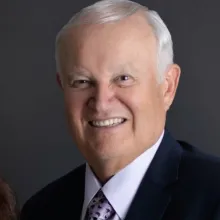
Mr. Seiglie was born in Havana, Cuba, and came to the United States when he was a child. He found out about the Church when he was 17 from a Church member in high school. He went to Ambassador College in Big Sandy, Texas, and in Pasadena, California, graduating with degrees in theology and Spanish. He serves as the pastor of the Garden Grove, CA UCG congregation and serves in the Spanish speaking areas of South America. He also writes for the Beyond Today magazine and currently serves on the UCG Council of Elders. He and his wife, Caty, have four grown daughters, and grandchildren.
