

Roy Holladay
This transcript was generated by AI and may contain errors. It is provided to assist those who may not be able to listen to the message.
I know that we were all saddened this past week to hear the sudden and untimely death of Jim Rickard. I've had a number of members approach me, ask me questions about the topic, especially when a suicide takes place. People wonder, well, how does this relate to a Christian? And, you know, there are all kinds of questions that come up. You find that suicide is a leading killer in the United States. It's something that we don't tend to think about, but it is a leading killer.
I'd like to quote to you some official U.S. suicide statistics for the year 2002, as compiled by the American Association of Sociology. It says, suicide claims that the lives of nearly 32,000 people annually in the United States. It is the 11th leading cause of death in the United States. By way of comparison, homicide is the 14th leading cause. More people kill themselves than who kill each other.
Suicide rate for all ages combined is 10.7 per 100,000 in this country. An average one person every 18 minutes dies by suicide. Males complete suicide 4.1% more often than females. That means that men, if they attempt it, will generally accomplish it more than women do. Females, though, attempt suicide three times more often than males. Male suicide is, as I said, four and a half times more often than females. An estimated 730,000 suicide attempts are made in the United States every year.
Most people who commit suicide communicate their intent to kill themselves before they attempt to do so. They reach out in some way, generally. Each suicide intimately affects at least six other people based on the number of suicides since 1970. The number of survivors of suicide in the United States is estimated at 4.4 million. The number grows 175,000 a year. It's tripled among young people since 1950.
Today, it's a leading cause of death among teens behind accidents and homicide. That's not a very good record for teens. The three leading causes of death are accidents, homicide, and suicide. I remember when we lived in Chicago, we lived in Highland Park, and it was a very affluent community. In fact, it was one of the richest communities in the Chicago area.
It had quite a large Jewish population. Right up the road from where we lived, Scotty Pippin and Jordan, a number of basketball football players lived. And yet, there was an underpass that you had to go under railroad track where the school was. And Highland Park was known as the Suicide City or Capitol in the Chicago area. Here you had students when there was a spring break. They'd come back talking about their trip to Jamaica, their trip to the Caribbean, Bahamas, cruise, whatever it might be. And our boys were out mowing the lawn, or something of that nature.
But almost everyone had the money and were affluent enough that they could go do this type of thing. So you'll find that suicide is a problem among so many young people today.
White males have the highest suicide rate throughout all age groups. Minority females have the lowest. Contrary to popular belief, the suicide rate does not increase during the December holidays. The highest average number of suicides per day is during the summer months. Now, suicides, or people taking their own lives, do happen within the church. And over the years, I've had to personally perform the funeral of at least four individuals that I know of.
And people in the church do attempt to admit suicide. Now, when this occurs, it's always a series of questions that people have. How did something like this happen? How could it happen? What is the fate of a person who does this?
And any number of questions that people might have. I'd like to address some of these. As I said, I address them in the funeral service. But one question that people keep asking is, how could something like this happen? Well, let me explain what I said at the funeral, because I think maybe that will help to shed some light on it.
We know that Jim had become depressed. He had gone off of his medication, and he was on a medication for chronic problems with seizures, and he just quit it suddenly. And anyone knows, if you do that, you quit taking medication like that quickly, that very possibly this may have affected his reasoning and his thinking. He had some emotional issues that he was dealing with, because he had recently been told by a doctor that he might develop multiple myeloma, which was a blood cancer, and he had convinced himself in his own mind that the cancer was there, had developed.
Even though the doctors had told him he had probably died of old age before he died of cancer, but he in his own mind was sure that he had it. No one really knew how heavily this weighed on his mind. You know, he, Jim, as you know, was a quiet man, introspective.
He didn't share a lot of his thinking, a lot of his fears, a lot of his concerns. He kept a lot of these things inwardly. In fact, I think he's like a lot of men are.
A lot of men tend to be that way. And you find that a person can break from reality. That happens to all of us and believe something that is not totally accurate. I would say that there's not a person sitting here who hasn't at one time or another broken from reality. And you believe something or you hold on to something that is not accurate. Many things can happen to a person to cause them to lose touch with reality, to lose touch with what they would rationally do. And if they were in their rational mind, they would abhor or they would hate to take such action. And yet, if you're not thinking correctly or logically, you might do that.
Jim stated that he didn't want to be a burden on his family. He didn't want to put his family through a lot of suffering, having to take care of him and be a burden. As I mentioned then, we may never know all of the reasons and factors that contributed to his death. But certainly these were some of the major ones that did. We find in the Bible, the Bible shows that any number of the leading characters, if you want to say in the Scriptures, any number of the men that God worked through in the ministry, as well as his servants and prophets of old, were faced with similar type of difficulties.
Let's go back to 2 Corinthians 2 and verse 6. And we'll notice that Paul wrote here a section in the Scripture where he recognized that it was possible for Christians to become discouraged and to become despondent. 2 Corinthians 2, beginning in verse 6. You might remember the story in chapter 5 of the book 1 Corinthians. Paul had to deal with the situation where a young man was disfellowshipped from the church. And he told them to put him out of the church. Well, in the meantime, this man had repented.
And they apparently had not yet allowed him to come back. So Paul is addressing this situation here. Beginning in verse 6, he says, This punishment, which was inflicted by the majority, is sufficient for such a man. So that, on the contrary, you ought rather to forgive and to comfort him. Lest perhaps such a one be swallowed up, notice the terminology, be swallowed up with too much sorrow. That it is possible for a person to sorrow too much and to grieve too much. And this is what the apostle Paul was concerned about. Now, why was he concerned?
Well, notice. Going on, Therefore, verse 8, I urge you to reaffirm your love to him. For this end I also wrote that I might put you to the test whether you are obedient in all things. Now, whom you forgive anything, I also forgive. If indeed I have forgiven anything, I have forgiven that one for your sakes in the presence of Christ.
Lest, notice. Satan should take advantage of us, for we are not ignorant of his devices. What he's saying here is that Satan can take advantage of us if we don't show the love and the compassion and forgiveness that we should toward one another. And that a person can be overly sorrowful to the point to where Satan can take advantage. Who is the one who is the most hopeless in this world today? Who has no hope for the future? Satan, the devil, and the demons. They know absolutely that their fate is sealed.
They have no hope. And God isn't going to extend salvation to them. They are in a situation where they know their ultimate fate is to be cut off from God. And what you find is that he tries to infuse, influence, and carry, convey that same attitude in society. And you find so many people today who feel hopeless, or discouraged, or despondent, don't know how to handle it. And he's trying to constantly get at all of us.
As we heard last week in the sermon, Mr. Cowan was talking about, Satan broadcasts in his wavelength. There is a spirit, as the Bible talks in 1 Corinthians chapter 2, of this world. There is a spirit where Satan broadcasts his attitudes. How does he broadcast? In what way? Well, moods, attitudes. He broadcasts fears, doubts, hopelessness, despair, despondency. These are the things that he tries to get at. So, if he finds a weakness, a chink in the armor, he finds that we are letting down, or we have difficulty handling something. That's what he comes after. And so we need to realize who we're fighting against. It seems that always before the Holy Days, Satan seems to be active, not only to discourage us individually, but to discourage us collectively.
And he will try his best. Just as an example, we had one of our members in the Rome Church yesterday, who had a pretty bad car wreck, destroyed, totaled her car, caught on fire. And thankfully, she just walked away with a broken finger, a couple of bruised fingers, some bruised ribs, chest, back.
And there may be more to it than that, but a couple of years ago, their son was sitting in school, and his cars parked in the parking lot, and he caught on fire. And to this day, they have no idea how that happened. It just burnt to the ground. So, that was on Passover Day. So, these type of things, seemingly trials, tests, difficulties, come up and confront us. Let me read verse 7 to you out of a few other translations.
The CEV translations say, When people sin, you should forgive and comfort them, so they won't give up in despair. So it shows that people can despair. The SV says, So you should rather turn to forgive and comfort him, or he may be overwhelmed by excessive sorrow. So now you should forgive and comfort him instead. Otherwise, this one may be overwhelmed by excessive grief. So, notice how they put this. Despair, excessive sorrow, excessive grief. The Living Bible says, Now it is time to forgive him and comfort him.
Otherwise, he may become so bitter and discouraged that he won't be able to recover. And the message, finally, says, Now is the time to forgive the man and help him back on his feet. If all you do is pour on the guilt, you could very well drown him in it. That's how they translate it.
So, the reason I read this is to show that Paul is very clearly demonstrating that it's possible through circumstances. That a Christian can be confronted with trials, with tests. I mean, all of us have health issues. We have maybe financial problems. We have job-related problems.
We have tests and trials that we're confronted with. And if we're not careful, it's very easy to get down and to be discouraged. And the need to be encouraged, as it says here, to forgive and to comfort. Why for you to notice that we have a number of examples in the Bible of the servants of God who became discouraged. Men like Elijah, David, Paul. You read through all of David's Psalms. And many times David will start a psalm out by saying, Lord, help me. I'm down in the dumps. And he will describe how he's running or hiding or whatever the problem might be. And generally, always towards the end, he comes back and says, I know that you will deliver me.
And he looks to God. Let's go back to 1 Kings 19. 1 Kings 19, verses 1-4. We have a classic example here of Elijah. Remember, Elijah had just had the prophets of Baal slaughtered. God had intervened. He had poured water all over the burnt sacrifice, and the ditch was filled with water around. And God sent fire down out of heaven to burn the altar up, burn the sacrifice, lap the water up. And this tremendous miracle took place. And here's Elijah.
God is God. You get over here on his side. If Baal is God, you get over there on that side. God intervened on his behalf. Now, he's confronted with a woman, Jezebel. Verse 1 says, Ahab told Jezebel all that Elijah had done, and now how he had executed all the prophets with the sword. And Jezebel sent a messenger to Elijah, saying, So let the gods do to me, and more also if I do not make your life as the life of one of them by tomorrow about this time.
Now, you would have thought Elijah would have stood up and said, Well, God intervened on my behalf. We got rid of all the prophets. Now's the time to get rid of Jezebel. And God's going to take care of you, Jezebel. But he didn't do that. Notice what happens, verse 3, when he saw that he arose, ran for his life, and went to Beersheba, which belonged to Judah, left his servant there. And he himself went on today's journey into the wilderness, and came and sat down under a broom tree.
And he prayed, what? That he might die. I want to die, he said. It's enough. I've had it. I can't stand it any longer, he said. Now, Lord, take my life. I'm no better than my father's. And, of course, God had to deal with him on that level. You might remember Herbert Armstrong and his autobiography, writing, and this was about the time that Ambassador College first got started, how that he despaired of life itself, and he asked God to take his life. And he, you know, well, it was a circumstance where he thought he had the money to purchase property, and it wasn't there.
And he had to really trust God in faith, and the monies came. But he despaired, because everywhere he looked, you know, nobody was there, it seemed to support and to help. But they were constantly criticizing.
So you find the servants of God do occasionally run into roadblocks where they become discouraged. Notice in Numbers 11 what happened here with Moses. Now, God used Moses to lead Israel out of Egypt. And here, Numbers 11, beginning in verse 10, notice what Moses ran into. Moses heard the people weeping throughout their families and everyone at the door of his tent.
And the anger of the Lord was greatly aroused. Moses was also displeased. See, God's really angry. Moses is a little displeased over this. But he gets worse. Moses said to the Lord, Why have you afflicted your servant, and why have I not found favor in your sight, that you have laid the burden of all these people on me?
Did I conceive all these people? Did I beget them? That you should say to me, carry them in your bosom, as a guardian carries a nursing child to the land which you swore to their fathers? Where am I to get meat to give to all these people? See, they were complaining. For they weep all over me, saying, Give us meat that we may eat.
I'm not able to bear all these people alone, because the burden is too heavy for me. It's just too much for me to handle. If you treat me like this, please kill me, here and now. And if I have found favor in your sight, do not let me see my wretchedness. So here you find he again asks God to take his life.
Well, God intervened and gave him 70 elders to help him in judging the people to carry the burden. So, brethren, we do find that even though you have God's Spirit, you can still become discouraged. Sometimes the trials and tests overwhelm us. Now, man tends to categorize sin, but God doesn't. Sin is sin. The Bible says the wages of sin is death. It doesn't matter what sin you commit. It's going to lead to death if we don't repent of it. However, we understand that some actions or sins have greater consequences. Certainly, taking one's life does. It affects so many people.
Most people are not thinking rationally when they do this, or they wouldn't take these steps. So I don't believe that, as an example in Jim's case, that the actions are unforgettable or forgivable, or that they're unpardonable. That's a question that people advance. Well, is this the unpardonable sin? Will God forgive? The breaking of God's law is something that God will forgive. We know that Jim loved God's law. He loved God's way. He had been a faithful member of the church since 1971 for about 37 years. He was a dedicated Christian, a dedicated father, husband. God looks on the heart. God looks on the attitude. God looks on the direction that a person is going in. Jim's life, attitude, approach, and direction was dedicated to God. Something happened right toward the end that discouraged him. Is suicide the unpardonable sin? The answer is no. Now, the Catholic Church teaches that. They teach, if you do that, bang, you're dead, you're gone, you're in hell. That's it. No chance. But that's not what the Church of God has historically taught. It's not what we believe, and I don't believe it's what the Bible teaches. Let's go back to Hebrews 10. We have a couple of chapters here in the book of Hebrews that address this topic. Hebrews 10, 26, and Hebrews 6.
We find if we sin willfully, that means deliberately, after we receive the knowledge of the truth, there no longer remains a sacrifice for sin. But a certain fearful expectation of judgment, fiery indignation, which shall devour the adversaries. Anyone who rejected Moses' law died without mercy on the testimony of two or three witnesses. How much worse punishment do you suppose will be he who was thought worthy, who has trampled the Son of God underfoot and counted the blood of the covenant, by which he was sanctified a common thing, and insulted the Spirit of grace? This is a sin that has to do with willfully rejecting God and rejecting God's way. Once God has revealed his way to you that a person shakes his fist in God's face, and says, I'm not going to do what you tell me to do, and he willfully rejects that way. Jim didn't do that. Jim just simply became despondent. In Hebrews 6, in verse 4, it's impossible for those who were once enlightened and have tasted the heavenly gift, and have become partakers of the Holy Spirit, and have tasted the good word of God and the powers of the age, to come if they fall away to renew them again to repentance. Since they crucify again for themselves the Son of God, and put him to an open shame. So here you find falling away from the truth. I believe Jim believed the truth to the very end. Most people who take their lives do so in response to severe depression or hopelessness. One thing appears to be clear in these cases. A person who attempts to take his own life views themselves in some sort of an extreme circumstance.
Suicide has much to do with being hopeless. The circumstances one personal predicament can seem to overwhelm a person. The pain can be unrelenting. And this seems like many times the only way out. All of us need to realize that God is our ultimate judge. We're not the judge. God is regarding all actions. And since God is a judge of all, he will determine the ultimate faith of all of us.
How many Christians die without repenting of all their sins? If you were to die right now, have you repented of all your sins? If you had a heart attack and you're dead, stroke. Have you repented of all your sins? Why did you go out here and you're involved in a traffic accident and you and your wife had a big argument before you had the accident and you were killed immediately? Did you repent of your part leading to that? What if a person at the feast happens to overdrink a little bit and they go out and they're involved in a wreck and they've never had a chance to repent of that? Is God going to then throw all of those people, the scenarios that I've painted here, into the lake of fire because they haven't, quote-unquote, repented of their sins? How many people do you know who are dying are in the process of repenting of their sins as they're dying? Generally, these type of things happen to us unexpectedly. You can die in your bed at night and you weren't expecting to die. What we need to realize is that God looks at the heart and do we have a repentant spirit and a repentant attitude? Because if you were to die and just drop over of a heart attack and there was something you hadn't repented of, do you think that God's going to keep you out of the kingdom over that? Not if he knows that your attitude is one that if God shows you where you're wrong, you say, yes, Lord, and you repent of it and you're sorry. And anytime something comes to your consciousness, you are willing to change. This is why, I think, again, we tend to categorize sin. And even though some sins are more horrible and have maybe a lasting scar than others, we have to realize that God is the one who looks at us and he's the one who forgives. Let's face it, taking your life is a bad option. It doesn't really solve anyone's difficulties. It actually compounds them. When you look at it in the next split second, a person's thoughts, you'll be awake again, alive, and you'll have, what, the last thought you had going through your mind. Very possibly, we'll be there. In addition, suicide afflicts tremendous permanent pain on the surviving family and friends. There are a lot better options than doing that. And this is what I would like to focus on in the rest of the sermon. You and I, brethren, are going to be the ones who live into the future. We are the ones who are going to be confronted with life. And all of the trials that go along with it, all of the tests, all the difficulties, all the hardships, all of the problems that we're going to be faced with, we need to choose to fight the battle, and when we find that we're weak, we need to seek others out to help us when we're not strong. And you see, there are many people here who do care about you, who do care about your salvation and how you do, and who are willing to help you go through low points. But you know, one of the most difficult things we as human beings have, and this is especially true, I think, for men, is to ask for help.
To say, I need help, because we're men. We don't need help, we think. But yet, there are times that all of us need help. Let's notice Galatians 6, 2.
The Bible here clearly shows that there is a response that all of us should have toward one another. Well, verse 1 says, So we should be willing to bear each other's burdens. We should be willing to help one another. We realize that God is our helper, that God is concerned for us, and we need to be able to help bear each other's burdens. If we find that we're weak, if we find that we need help, we need to ask, we need to talk. The worst thing we can do is just sort of keep it in and not be able to seek help. Romans 12, 15 tells us, Romans 12, 15, that we should rejoice with those who rejoice. Now, this morning in Rome, we were rejoicing. This past week, I baptized Karen Townsend, and so we have a new member in the Rome congregation. So we were all able to rejoice over the fact that she had been baptized. But notice, we also weep with those who weep, those who are going through trials. We weep with them. We hurt with them. We feel for them. It may be hard to ask for help, but it's harder to ask your family and others to deal with suicide if you go that route. And that's not the route to go. Let's take a look at some of the promises that God gives to us when we're faced with discouragement, despondency, depression, feeling like quitting, giving up, throwing in the towel, saying, I've had it. There are certain steps that we should take. Hebrews 13.5 is an anchor that we can hold on to.
What I find is that there are times, and we all go through this, that when we're going through something that's difficult, we tend to forget these scriptures. Somehow, they disappear, and we're not focusing on them. It would be good for all of us to keep a list of scriptures that are uplifting, encouraging, that help us, that give us promises from God, that show us what God will do for us. And this is one of those. Verse 5. Let your conduct be without covetousness. Be content with such things you have. He Himself has said, I will never leave you nor forsake you. As I've explained before, this is a double negative in the Greek and a triple negative. I will not, I will not leave you. I will not, I will not, I will not forsake you. Now, that means the reason why it's expressed that way. It's a matter of emphasis. God is wanting to show that He will never leave us. He will never forsake us. Now, in verse 6, He says, so we may boldly say, the Lord is my helper. See, this is where we can get strength and help. I will not fear what man can do to me. We don't have to be afraid of man or this world because we have God on our side. So, notice the assurance that God gives to anyone who might feel alone or feel like they're friendless, don't have a lot of friends, alienated from others, alienated from family. God says, look, I will never leave you. I'll never forsake you. We don't have to face the future alone. We have God who will be with us and who will guide us. What about those who might feel unloved? You ever felt unloved? You ever have a pity party? Nobody loves me. Not even my mate loves me, or my children love me, or whoever it might be. Nobody loves me. We've all gone through that. Don't tell me you haven't. We've all experienced that to a certain extent. And yet, John 3.16, a scripture that we're all familiar with, it is in the Bible, and it says basically this. God so loved the world, He gave His only begotten Son, that whoever believes in Him should not perish but have everlasting life. So we find that God says that He loves us. So we won't lose God's love. He loved us so much that He sent His own Son to die for us. And Christ loved us so much that He was willing to come to the earth to be one of us, to suffer like we suffered, to go through trials and tests, as we do, to die for us so that we might be a part of His family. In Romans 8, we find the absolute assurance here in verse 39, 38 and 39, that we will not lose God's concern for us. Paul said, I am persuaded that neither death nor life, nor angels, nor principalities, nor powers, nor things present, nor things to come, nor height, nor depth, nor any other created things shall be able to separate us from the love of God, which is in Christ Jesus our Lord. So nothing can separate us from God's concern for us. We are the pinnacle of His creation. We are the ones that God created, and God wants every human being in His kingdom. As the Bible clearly says, God is not willing that any should perish. So God wants every last one of us in His family and in His kingdom. And He will go to the nth degree to try to carry that out.
God will offer comfort and aid to us if we are suffering, if we are going through trials. Hebrews 2 and verse 10. Hebrews 2 and verse 10. We read this about Christ. It says, It says, So Christ was perfected, completed, matured through the suffering, the trials that He went through. And verse 18, There's not a trial that you can go through that Christ hasn't experienced to one degree or another and suffered. And He has concern for us. As chapter 4 and verse 15 says, Hebrews 4.15 And we need that help. God is there to extend it. And you find that Christ is able to have that sympathy, that comfort. 2 Corinthians 1, verses 3 through 5 again, show that God is a God of mercy and compassion. 2 Corinthians 1, verse 3, So God is a Father of mercies. A Father is one who begets, who gives life, He gives mercies. And He comforts us. Who comforts us, verse 4, in all of our tribulation, that we may be able to comfort those who are in any trouble. You see, comfort comes from God through His Word. You read the Scriptures, and there are all kinds of promises. There is hope held out, and we receive and derive comfort from that. The Holy Spirit is called the Comforter. And we are comforted by one another, are we not? Sometimes God sends someone along to encourage us, to strengthen us, to build us up, to help us. And that's what all of us need to do. We may not be eloquent. We may not be the greatest speakers. But we can be there, we can be supportive, we can be encouraging, and we can let people know that we care. Does God care for us? Well, 1 Peter 5, 7 says that He does. 1 Peter 5, verse 7 says, casting all your care upon Him, for He cares for you. So God cares for us. He's concerned for us. So what should we do when we are faced with depression? What care or concern or problems can we not take to God? Is there anything you can't take to God? Is there any problem you can't bring before Him and say, Father, look, I'm helpless here. I need your help. Please help me. And you cast your cares upon Him.
God is aware of even the slightest matters in our lives. Back in Matthew 10, verse 29, you find Christ made this abundantly clear. Matthew 10, verse 29, when He said, Are not two sparrows sold for a copper coin? Not one of them falls to the ground apart from your Father's will. But the very hairs of your head are all numbered. Do not fear, therefore, for you are more value than many sparrows. So if God knows the hairs on our head, the number of steps we take, He certainly is concerned about attitude, problems, difficulties, trials, everything that we go through. What situation is it that it's impossible for God to deal with or to handle? Is there anything too big for Him, too great for Him? Well, Philippians 4, 13 tells us, no. Philippians 4, verse 13, notice how Paul summarized this. He said, I can do all things.
How? Well, through Christ, who strengthens me. That's how I can do it, through Christ. The strength, the power, has to come from God. We don't have it of ourselves. See, the first thing to do to receive help from God is to admit you don't have the strength yourself. You need some other strength and power. That's why God gives us His Spirit. The Holy Spirit is the very power that emanates from God that God gives to us. What promises does God make when we see no solution? I mean, there are times we have no idea where to go, how to proceed. When the Israelites came to the Red Sea, they didn't see any solutions. Red Sea, mountains, army. It's over. We're boxed in here. Look like a box canyon. But yet God performed a miracle and led them through the Red Sea and destroyed the Egyptian army. In 1 Corinthians 10 and verse 13 is a scripture that sometimes when we become despondent or hopeless, we forget about. But this is one of those scriptures, one of those promises that we need to keep in front of us. No temptation, no trial is overtaking you except such as is common to man. So we all go through the same thing.
But God is faithful who will not allow you to be tried or tempted beyond what you are able. God says He will help, but will with the trial will also make the way of escape that you may be able to bear it, to endure it, to handle it.
So we understand that God is there and that God will help us. Brethren, we as a church, as a people, need to be much more aware of one another. We need to be there. One of the reasons we develop and strive to develop close relationships with one another as members of the church is that we get to know each other. And so that a person feels comfortable in coming and saying, Well, please pray for me this week.
I'm going through this trial. I need help. And I appreciate your help and where you could sit down and you could talk to that person. And they know that you are concerned for them. God offers us a vision for the future in which He gives to us strength to help us in our everyday life. One of the things we tend to do is just simply forget about some of these Scriptures.
But we need to remind ourselves every day. You wake up in the morning. There are days that I go through the day and I forget why I'm even alive. I mean, you pray and you study and I've got to get out. I've got to do this. I've got to do that. And you don't stop and think, now, wait a minute. You are a son or a daughter of God. And why am I here? You know, that's a question you need to ask yourself every day. Why am I here?
Why am I alive? Well, God has called me so that I can be a part of His family. And as 2 Corinthians 2 and verse 9 states, 1 Corinthians 2 and verse 9, as it's written, Eyes not seen, ears not heard, nor has entered into the heart of man the things that God has prepared for those who love Him.
So we know that God has things prepared for us that our human minds can't even comprehend. He's revealed some of it to us, but just a fraction of what He has in store for us. So we need to keep the future in front of us. That's part of what motivates us, drives us, and keeps us going. Notice, if there's coming a time, as Revelation 21 verse 4 says, ultimately in the future, when all human beings have had their opportunity for salvation, God will extend that offer to every human being.
And God says here that He will wipe away every tear from their eyes, and there shall be no more death, nor sorrow, nor crying, and there shall be no more pain, for the former things have passed away. The word former means the first things. The first things are the physical. First comes the physical, then the spiritual. So you have the physical first. We're created as human beings, made out of the dust. We're here on this physical planet. We're surrounded by the physical. Well, the former things are going to pass away, and there's going to come a time when we will be able to live into the future, that all of the problems and difficulties that we face in the past will fade away.
The character we've developed as a result of them will be there, and we will move forward and live forever. So God is a merciful God, a loving God, and He will resurrect Jim Rickard in the future. God is the only one who can truly evaluate a person's conversion and his relationship with him. Only he can know that on an intimate basis. Only he knows the pressures, the difficulties, the trials, the influences, the circumstances that we all go through.
He only is able to judge righteous judgment in these areas. He knows the attitude. He knows the direction we're going in. He knows the character that we are developing. He knows our attitude. And He will take all of this into account in our day of judgment.
So, brethren, as I mentioned the other day, as long as we do not reject Him, He does not reject us.
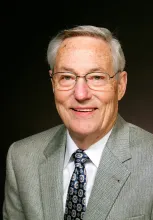
At the time of his retirement in 2016, Roy Holladay was serving the Operation Manager for Ministerial and Member Services of the United Church of God. Mr. and Mrs. Holladay have served in Pittsburgh, Akron, Toledo, Wheeling, Charleston, Uniontown, San Antonio, Austin, Corpus Christi, Uvalde, the Rio Grand Valley, Richmond, Norfolk, Arlington, Hinsdale, Chicago North, St. Petersburg, New Port Richey, Fort Myers, Miami, West Palm Beach, Big Sandy, Texarkana, Chattanooga and Rome congregations.
Roy Holladay was instrumental in the founding of the United Church of God, serving on the transitional board and later on the Council of Elders for nine years (acting as chairman for four-plus years). Mr. Holladay was the United Church of God president for three years (May 2002-July 2005). Over the years he was an instructor at Ambassador Bible College and was a festival coordinator for nine years.
