

Don Ward
This transcript was generated by AI and may contain errors. It is provided to assist those who may not be able to listen to the message.
Once again, today's title, Gods and Christ's Relationship and Authority in Scripture. Mankind has always had a problem with authority from the Garden of Eden to the present day. Let's note the words of the prophet Isaiah in Isaiah 66 and verse 2. Isaiah 66 verse 2, For all these things hath my hand made, and all these things have been made, says eternal. But to this man will I look, even to him that is poor and of a contrite spirit, and who trembles at my word. Do you and I tremble at the word of God? Or do we count the word of God as the word of man? The word of God that we hold in our hands is not the word of man, as we shall see from Scripture, it is the word of God. What things does man know apart from the spirit of man that dwells in him or what things does man know about God apart from the spirit of God that dwells in us? So what we know is by revelation from the Scriptures. So who is the ultimate authority in all things pertaining to the church? Let's briefly read about some of the things in the Western World Read Review, some of the things in the Western World that have taken place after Catholicism became the official religion of the Roman Empire in 380 AD. So 380 AD, that's roughly 1620 years ago or something like that. At that time, the Catholic Church became the official religion. The Catholic Church had already basically taken over the churches in the Western world, and at the Council of Nicaea, they began to develop. They didn't absolutely canonize it to the last degree in the Council of Nicaea in 325 AD, which was later done in the late 300s. So the Catholic Church placed its ecclesiastical, that is its church authority, above that of the Scripture. Those outside the Catholic hierarchy were forbidden to read the Bible. So that meant only those who were in directly ordained and had a role in the liturgical services, the worship services, of the Catholic Church were able to read the Bible. The rest were forbidden. The Western world was gripped by the power of the Catholic Church for over 1,000 years. This period of history is called the Dark Ages. Can you imagine a thousand years from the late 300s up until the Renaissance began in the 1300s, Renaissance began in Italy, it was called the revival of learning and beginning the age of enlightenment? So for a thousand years, the average person was kept in ignorance by design of the Catholic Church and papal authority. In 382, the Pope authorized Jerome, who was one of the leading figures in the Catholic Church, to gather various transcripts of scriptures and translate the Bible into Latin. 382 was the first Bible that was translated into the language of the common man, as you might say. That Bible was called the Latin Vulgate. Now the word Vulgate simply means for the common man or common commonality.
Vulgate is the word, it is a derivation of the word vulgar, we get vulgar from which means common and commonplace.
In 1592, so some 1200 years later, you know, from the first printing of the Vulgate, some 1200 years later in 1592, the Latin Vulgate was revised, adopted as the official text for the Catholic Church. And as we noted, Vulgate means common or colloquial speech. It is the root word from which we get vulgar. To this day, many of the Catholic masses, that is their church services, their liturgy relies heavily on Latin. For several hundred years, there were only a very few copies of the Latin Vulgate Bible. They had to be copied by hand. It was over a thousand years from Jerome's Latin Vulgate Bible that Gutenberg invented the printing press in 1440. It was made available for common use in 1454, 14 years later. And in 1455, the Gutenberg Bible was printed. So some of these copies began to leak out to the common man, but it was still very much the domain of the Catholic Church. In 1517, Martin Luther posted his 95 Theses on the Door of Church in Wittenberg, Germany, talking about the indulgences of the Pope, how that if you paid such-and-such money to the Pope to pay full authority, then you could get yourself forgiven of sins, or you could buy your loved ones way out of purgatory, that kind of thing. And long about this time after Martin Luther did what he did, his very bold and courageous move, others claimed to replace ecclesiastical authority with Scripture. They developed the slogan, Sola Scriptura, Scripture Only. Scripture Only was the criterion for that which was true in the spiritual sense. The Scriptures are the supreme authority regarding spiritual matters. Along about the time of Martin Luther's bold move, several men devoted their lives to trying to translate the Bible in the common language of the people and making it available to them. We note such heroic figures as William Tyndale. Tyndale gave his life trying to translate the Bible into English. Tyndale's translation had some very severe errors, especially in John chapter 1, where he used pronouns for referring to the Word. Not only did the Catholic Church claim authority over ecclesiastical matters, it also, to a large degree, controlled what was taught as truth in every discipline, in the schools and universities of the day. The Catholic Church taught that the earth was the center of the universe. In the 1200s, Thomas Aquinas tried to merge Catholic teaching with that of the Greek philosopher Aristotle, who taught that the earth was the center of the universe. But with the advent of the Renaissance in the 1300s, so that's once again roughly a thousand years from the Latin Vulgate Bible by Jerome, there was a revival of learning. Men began to challenge the teachings of the Church. Galileo invented the telescope and challenged the assumption that the center of the universe was the earth, and he clearly saw that the universe, or at least what we can see is heliocentric, that is, sun-centered, that the sun is the center of the universe, for which he was eventually burned at the stake in 1633. In 1633, you know, 400 or plus years ago, the Catholic Church apologized for burning Galileo at the stake October 31st in 1992. It was not until 1611 that a state monarch authorized a translation of the Bible. We know it today as the King James Authorized Version. That's why you will see the letters A-V after a scriptural notation oftentimes. It'll say Isaiah 1-1-AB, and then the Authorized. That stands for Authorized Version. That's the first time that a state official authorized the printing of the Bible for the common man, but even there, they still tried to suppress what was really in the Bible. Sadly, the Protestants were very much influenced by the Catholic Church and embraced many of its teachings, such as the Trinity, Immortality of the Soul, and other teachings that are contrary to Scripture. Protestant ministers have dangled the souls of men over hellfire for hundreds of years. When one speaks of ecclesiastical authority, what are they speaking of?
The Catholic Pope claims to be the vicar of Christ, that is, in place of Christ or in place of Jesus, who works through men he is placed in the Church.
The Bible clearly reveals—and now we get to—the revelation of God's and Christ's relationship and authority in Scripture. We see what the world—just a brief overview of what the world has gone through. It has been horrendous how many people have bled and died, how many people have suffered over the centuries just to have that precious word in their hands. So let's go to Ephesians chapter 1 and Ephesians chapter 1 and verse 15. Ephesians chapter 1 and verse 15—of course, Ephesus was a big trade center somewhat like Corinth. It had a great temple in it as well. In Ephesians 1 and verse 15, Wherefore also after I heard of your faith in the Lord Jesus, and love unto all the saints, seeks not to give thanks for you, making mention of you in my prayers, that the God of our Lord Jesus Christ—and of course, Jesus Christ—praised to the Father. He recognizes the Father as His God. Remember God's relationship and authority in Scripture. That's the title. That's what we're talking about. And that's what the Scripture will reveal to you if you listen to it, meditate on it, and understand it.
That the God of our Lord Jesus Christ, the Father of glory, may give unto you the spirit of wisdom and revelation in the knowledge of Him, the eyes of your understanding being enlightened, that you may know what is the hope of His children and what the riches of the glory of His inheritance in the saints. And what is the exceeding greatness of His power to us, who believe, according to the working of His mighty power, which He wrought in Christ, time after time you will see in Scripture that God works through Christ. And you will see time after time that God has placed all things under Christ. Lots of people have difficulty with that. Which He wrought in Christ when He raised Him from the dead, set Him at His right hand in the heavenly places, far above all principality, power, and might, and dominion, and every name that is named, not only in this world, but also that in the world to come. So it's really forever. There's only one being over Christ, and that is God the Father. And hath put all things under His feet. Did it say He's put some things? Did it say He's put everything but?
There's one place where there is one exception, and that is the Father. The Father is not under His authority. And hath put all things under His feet, and gave Him to be the head over all things to the church. Christ is the head over all things to the church. Now the understanding of that is difficult for some, and maybe it's difficult for all of us. When the various divisions have taken place in the church, and the various heresies began to arise, some people would say, well, leave it to Christ. Christ will straighten it out. Well, how does Christ straighten it out? Well, He straightens it out through men and women who are dedicated to the truth as revealed in Scripture. And it says, which is His body, the church is His body. Why is the church His body? Because Christ lives through His Spirit in the church, in you and I. The Spirit of God was noted in the sermonette. There is one Spirit, clearly, it says it, in Ephesians 4, there is one Spirit. 1 Corinthians 12, verses 12-13 clearly says, by one Spirit are we all baptized into one body, whether we be bond or free, which is His body, the fullness of Him that fills all in all. The fullness of Him, the fullness of God, as we shall see, who fills all in all. So God gave Christ this authority. Christ has all authority over the church. However, as I noted, He works through men and women. So in administering the affairs of the church, we must always seek the will of God and Christ. I remember before the last split between Kogwa and United, I gave a sermon in Houston on the Holy Day. Tidal, you better look before you leap. You better look before you leap. You better know what you are doing, because when the judgment comes to your door, God is not going to listen to, well, so and so said such and such and such and such said this. No, He's going to judge you on what you did and what you believe and how you obeyed or didn't obey. And the same is true for all of us.
So in administering the affairs of the church, we must always seek the will of God and Christ. What would God have us do? We know further that the Father placed all things under Christ, as we've already read from that source, but let's read more about it. This is perhaps more poignant in one sense. We'll go forward to Philippians chapter 2 and verse 9. Well, let's just read into this from verse 5. Philippians 2.5. Let this mind be in you which was also in Christ Jesus.
And there's a colon there, meaning what is to follow is the description of the mind of Jesus Christ, who being in the form of God thought it not robbery to be equal with God. Now the word robbery means a thing to be seized.
It wasn't a thing to be seized. He was already on the co-eternal plane. And the Greek word therefore equal is isisos, which can mean either in quality and quantity. In quality, the Son is equal with the Father, but the Son has subordinated Himself to the Father. So we can say of the Father and the Son. They're uncreated. They are co-eternal, and they are co-equal in a certain sense. But in the ultimate sense, as we shall see from the Scripture, the Son has subordinated Himself to the Father.
So thought it not a thing to be seized, to be equal with God. He was on that same plane. Now you notice in verse 6 where it says, being, that means existing in the form of God. Verse 7, but made Himself in no reputation, took upon Him the form of a servant, and was made in the likeness of men.
And being found in fashion as a man, existing as a man, He gave up His glory, but not His divinity. He was God in the flesh. He humbled Himself and became an obedient unto death, even the death of the stake. Now as a man, He was subject to everything that human beings are subject to, wherefore God also hath highly exalted Him and given Him a name which is above every name. I have in the notes later on, but just mention it right now in our prayers, opening, closing prayers, and then your prayers.
We say, by the power and authority of Jesus Christ. Jesus Christ said in John 14, yeah, 1413 and John 1414, that whatever you ask in my name, I will give it unto you. Of course, we know the qualifiers of according to the will of the Father. That at the name of Jesus Christ, every knee should bow of Him in heaven, things in earth, and things under the earth.
That every tongue should confess that Jesus Christ is Lord in the glory of God the Father. Notice that Jesus Christ is Lord to the glory of God the Father. Wherein, my beloved, as you have always obeyed, not as in my presence only, but now much more in my absence, Paul was in prison when this was written as a prison epistle. Work out your own salvation with fear and trembling. And when you work out your own salvation, if you don't have anyone to guide you, you have the Scripture.
You better make sure that you know and know that you know what the Scripture is saying to you. So this being the case that all things were placed under Christ, we should never be confused about the one who delegated authority to Christ. God gave him this authority. God has the ultimate authority. We could use the analogy of using the Isaiah class. We're teaching the analogy of a great composer, like Beethoven or Mozart, who does the composition and then turns it over to the director of the orchestra to bring it to life.
Or a great master architect, like the great master architect of the universe. Just think about it. We don't even begin to know what the universe holds and what it's all about. And new things are discovered every day. But this great master architect of the universe, who shares and gives his plan to the great spiritual remulator and master builder, gives him the authority and power to execute his plan.
The Father is the source of all authority and the power which is delegated to Christ.
The Word is the perfect revelation of God. While on earth Christ embodied the whole divine nature of man in the flesh. He manifested what God is in the flesh. Now you may say, well, I don't know what you're talking about there, but let's see what the Scripture says with regard to that. In Colossians, so once again turn forward a page or two, in Colossians 2.6, as you have therefore received Jesus Christ the Lord, so walk in him. By the way, Colossians was written to combat Gnosticism, the notion that Jesus Christ didn't really come in the flesh, that he was a phantom in human form. And when he walked, he didn't really make footprints, he just seemed to be there. I know it's foolish, but it's one of the things the Gnostics taught. Verse 7, rooted and built up in him and established in the faith, as you have been taught, abounding therein with thanksgiving. Beware lest any man spoil you through philosophy and vain deceit after the tradition of men, after the rudiments of the world, and not after Christ, for in him, in whom in Christ dwells all the fullness of the Godhead bodily. So therefore, the Apostle Paul could write what he wrote in Hebrews, chapter 1. Let's go there, and we'll note one other place as well in just a moment. In Hebrews, chapter 1, what does it say about Jesus Christ after the resurrection? In Hebrews 1.1, God, who at sundry times, different manners spoke in times past unto the fathers by the prophets. They were spoken to in dreams and visions and different things, and given various revelations and prophecies of what was to come and what they were to deliver to the people, hath in these last days spoken to us by his Son, who he has appointed heir of all things, by whom also he made the worlds. So the master builder, the master plan of the universe, and here it is. Let's execute this plan. He spoke and it was created from things that are not seen. He made the worlds, who being the brightness of his glory and the express image. The express image, a better translation, would be the exact mold, who being the brightness of his glory and the exact mold of his person and upholding all things by the word of his power, when he had by himself purged our sins, sat down on the right hand of the majesty on high. So Jesus Christ, coming in the flesh, revealed to us what the Father is like. So we go to John 14, where Philip asked this question. First of all, Thomas brought it up, and then Philip said, show us the Father and it suffices us. So we are now going to go to the Gospel of John, chapter 14, in verse 7. Gospel of John 14, 7. If you had known me, you should have known the Father.
And from henceforth you know him and have seen him. How could he have seen him? Because Jesus Christ was the express image, as we just read from Hebrews 1.3 of the Father. Philip said unto him, Lord, show us the Father. And it suffices us. Just tell us that. Just show us that. And Jesus said unto him, Have I been so long with you, and yet have you not known me, Philip? He that has seen me has seen the Father. And how do you say, show us the Father? Now, they had difficulty with that. We have difficulty with that. That's what the Bible says, that Jesus Christ revealed the Father. So we are noting from Scripture, the Father and Son revealed themselves through the Holy Scriptures and the Spirit of God. So now we want to go to 2 Corinthians, not 2 Corinthians, 2 Timothy 3, and verse 16, which says what I've just verbalized, that is, through the Spirit and Word of God, they are revealed. And the Holy Scriptures are not of man's doings, as we shall see from a couple of places here. In 2 Timothy chapter 3, in verse 16, all scriptures given by inspiration of God, this word inspiration can mean God-breathed. We get into this argument, is there a plenary dictation as a Bible or not?
Various authors writing over hundreds of years were moved by the Holy Spirit. They put it to some degree in their language, in the language of the day, but it had to conform to the will and intent of the one who was giving them the revelation. As we'll note in just a moment, the Father is the source of revelation.
All scriptures given by inspiration of God, and it's profitable for doctrine or teaching, for reproof, to encourage us, to motivate us, to enlighten us, to give us more understanding, for correction, for instruction in righteousness, that the man of God may be perfect, thoroughly furnished to all good works.
The prophets used the term, thus saith the Lord. In the Old Testament, when they were giving prophecies, they would say, and thus saith the Lord. Or something like, the word of the Lord came unto me, say, or in the night visions I saw. They did not speak on their own. They spoke as they were moved by the Holy Spirit. So look at 2 Peter 1.19 for scriptural proof. 2 Peter 1.19. We have also a more sure word of prophecy. You hold in your hand a more sure word of prophecy. How many people died in between Pentecost 31 A.D. and when Paul wrote the book of Revelation in the 90s A.D. some 60 years, lots of people died during that time frame. They didn't know anything about what Revelation said.
But we have the, what is called the complete or canonized word of God. We have also a more sure word of prophecy, where until we do well that we take heed, as unto a light that shines in a dark place until the day dawn and the day star and the day star is Christ and the day star arise in your hearts. Knowing this first, no prophecy of the scripture is of any private interpretation. Now a lot of people, it's true in the sense that the Bible interprets the Bible, but that's really not the context of what he's saying. What he's saying is that the Bible, the scripture, was not given through any private means by a human being, that it was given by God, as it says in the next verse. For the prophecy came not in no time by the will of men, but by holy men of God, spoke as they were moved by the Holy Spirit. So through the Spirit of God and the Word of God, the relationship and authority of God in Christ is revealed. God the Father, as mentioned earlier, is the source of revelation. In Christ, the Son is a revelator and spokesman. So we'll note this if you go forward a few pages to Revelation 1 in verse 1. Virtually every person, when you ask them, well, who gave the revelation in the book of Revelation? And they will say it is the revelation of Christ. In one sense, you maybe could say that because the Father gave it to him, and then the him being Christ, as we'll read in just a moment, and Christ gave it to the angel, and then the angel gave it to John, and then John wrote it down and gave it to us.
So the hierarchical structure, I guess you could say, of revelation is contained in this verse.
In Revelation 1.1, the revelation of Jesus Christ, which God gave unto him to show unto his servants things which must shortly come to pass, and he sent and signified yet by his angel unto his servant John. So the revelation of Jesus Christ, which God gave to him, then God gave it to this spirit messenger who then gave it to John. And then John is told to write the book, to write what you see and hear, write in all three dimensions of time, past, present, future, what you see and hear in the book of Revelation. We can note that there are the last few verses of chapter 1, verse 19, Revelation 1.19, since we're there, let's read it. Write the things which you have seen, the things which are, and the things which shall be hereafter. And then it begins to reveal what the vision was about the golden candlesticks representing the church. So, God the Father is the source of revelation. Christ is a revelator. Let's look at a couple more scriptures with regard to this in 1 John 5 and verse 20. 1 John, back to page or two, in 1 John 5 and verse 20.
And we know that the Son of God has come and have given us understanding that we might know Him that is true. So, Christ is revealing the Father, and we are in Him that is true. Even in His Son, Jesus Christ, this is the true God and eternal life. Now notice 2 John, verse 9. Hardly ever in the sermon do you hear a verse read from 2 John or 3 John, but let's read 2 John verse 9. Whosoever transgresses and abides not in the teachings or doctrine of Christ hath not God. He that abides in the teachings or doctrine of Christ, He hath both the Father and the Son. So almost everything that can be said of the Father can be said of the Son.
Perhaps the most complete summary of Christ is given in 1 Timothy 3 16. So let's read that verse, 1 Timothy 3 16. This is an amazing scripture, and it entails so much, says so much.
1 Timothy 3 and verse 16. And without controversy, great is the mystery of godliness. So all of this to the average person who has not had things revealed to him through the Spirit. This is a bunch of mumbo-jumbo. But to you, hopefully, it's as clear as the sun shining out there today. And without controversy, great is the mystery of godliness. God was manifest in the flesh.
This is one of the places where in the New Testament where Christ is called God. God was manifest in the flesh, justified in the Spirit, seen of angels, preached unto the ethnos.
See, Gentiles can include everybody, because actually the Greek word is ethnos, preached unto the ethnos, believed on in the world, received up into glory.
So much is said in that word, one verse.
In the well-known prophecy of Isaiah 9 and verse 6, which forms to a large degree the basis of Handel's Messiah, we talked about this in our Isaiah Bible study Wednesday evening, but let's go there now in Isaiah 9 and verse 6. For unto us a child is born, unto us a son is given. This is a prophecy, a messianic prophecy, prophesying the coming of the Messiah. Given somewhere, let's say circa 730s BC, 2700 years, circa 2700 years before he was born, something like that. Amazing! For unto us a child is born, unto us a son is given, and the government shall be upon his shoulder. And we read several verses that everything has been placed under Christ. And his name shall be called, wonderful counselor, the mighty God. See, here's a place in the Old Testament where Christ is called God. The mighty God, the everlasting Father, the Prince of Peace.
Christ will always shepherd and take care of the sheep that God has given him. As the everlasting Father, Christ and the Father inhabit eternity. As we have already noted, both are uncreated. They are co-eternal. They are equal in that they are on the same plane of existence, the God family, which plane we shall be on in resurrection.
But the Father is the one who begets us with his Spirit. It is not Christ who begets us with his Spirit. Though Christ may have a role in it, but I don't know exactly how that works. We'll go to 1 Peter 1 and verse 3. We should see this clearly here, that the Father is the one who begets.
In 1 Peter 1 and 3, Blessed be the God and Father of our Lord Jesus Christ, which according to his abundant mercy has begotten us again. Why has he begotten us again? Because we were begotten once, physically, by a human Father. And now we are begotten by our spiritual Father. He has begotten us again. Now this word that is translated as begotten is, I pronounce it as aga, means before, ganau.
It means again begotten. Again begotten. And it's translated correctly here, begotten us again unto a living hope by the resurrection of Jesus Christ from the dead. The resurrection of Jesus Christ from the dead was so important. As you read in John 16 verses 7 and 8, where it says that Jesus said, you know, if I go not away, the comforter will not come unto you, but if I go away, I will send it to you. And the comforter is the Holy Spirit. So it was necessary that Christ go through this process, birth, begotten, born into the family of God at the resurrection. We'll go through the same process on our way to the kingdom. Now you look at verse 23. The same Greek word that is translated begotten again is now translated born again. But the correct translation is being born again, not of corruptible seed, but of incorruptible by the word of God, which dwells and abides forever. Now we go back to James 1, 17, and 18, and we'll see this in different words. James 1, 17, and 18, every good gift and perfect gift is from above and comes down from the Father of lights with whom there is no variableness nor shadow of turning with his own will beget he us with the word of truth. So it is the Father who begets. The Son is referred to as the mighty God, and of course in many places the Father is referred to as the mighty God. The Father is the source of the Holy Spirit, and the Son fulfills a role in us receiving the Holy Spirit. And the Scripture does not make that exactly clear how that takes place. Let's note what I just said from Scripture, John 15, that the Father is the source of the Holy Spirit. The Holy Spirit proceeds from the Father. The Holy Spirit proceeds from the Father, John 15, and verse 26. But when the comforter is come, which is the Holy Spirit, which I will send unto you from the Father, see here it's Christ playing a role somehow in it, even the Spirit of truth, which proceeds from the Father. It shall testify of me. Now we go to John 14 and verse 16. Well, we've already gone there. Let's go to Acts 2, verse 29. We're talking about the role that Christ might play in receiving the Holy Spirit. Here we have read that the Father is the source of the Holy Spirit, and He sends it to us. In Acts 2, in verse 29, we shall start reading Acts 2, 29. Men and brethren, let me freely speak unto you of the patriarch David, that he is both dead and buried, and his sepulchre, his grave, is with us unto this day. Of course, it says in John 3, 13, that no man has ascended into heaven except the son of man who came down from heaven. All of this stuff about going to heaven is just what it is stuff, but it's false stuff. Therefore, being a prophet, David said here that David is a prophet, being a prophet and knowing that God has sworn with an oath to him that of the fruit of his loins, and that fruit is Christ, according to the flesh, he would raise up Christ to sit on his throne. He, seeing this before, spoke of the resurrection of Christ, that his life essence, his inner being, was not left in Hades, the grave, neither his flesh did see corruption. This Jesus, as God raised up wherein we're all witnesses. Therefore, being by the right hand of God exalted, having received of the Father the promise of the Holy Spirit, he has shed forth this, which you now see and hear. For David has not ascended into the heavens, but he said himself, the Lord said unto my Lord, sit you on my right hand until I make your enemies or your foes your foots to. That's a quote from Psalm 110.
So Christ confirmed the veracity of the scriptures, and so did the other writers of the New Testament in so many different ways, and I gave you a handout to that effect. Christ confirmed the veracity of the Old Testament. He magnified the law, and revealing and teaching its spiritual application.
The Apostle Paul further magnified it when he said a Jew is not one who has went outwardly, but the one who is a Jew inwardly. Circumcision is of the heart and not of the flesh. That's Romans 2, 28, and 29.
In addition, Christ confirmed the veracity of the Old Testament by quoting it on several occasions. He quoted the Old Testament 78 times. The first five books, the Pentateuch 26 times, he quoted Isaiah eight times. He also quoted from Psalms, Proverbs, Jeremiah, Ezekiel, Daniel, Hosea, Amos, Jonah, Micah, and Malachi. Let's look at this one here in Matthew 4 and verse 1, three times when Satan was tempting and testing Christ in the wilderness after fasting 40 days and 40 nights. Christ's response to him was Matthew 4, 4, it is written, man shall not live by bread alone, but by every word that proceeds out of the mouth of God. And he said essentially the same thing the next two temptations. Christ claimed absolute authority by his works and his deeds as I gave you that handout. Now, let's notice this one where he just plainly says that he is the Messiah. In John chapter 4 and verse 24, the well-known, well-rehearsed, but maybe not so well understood passage of Jesus Christ encountering the Samaritan woman at the well, and finally after their discourse, Christ tells her this. John 4, 24, God is spirit and they that worship him must worship him in spirit and in truth. And the woman said unto him, I know that Messiah comes, which is called Christ. Of course, she knew that from the Old Testament. When he has come, he will tell us all things. And Jesus said unto her, I that speak unto you am he. I am that Messiah. So, so many different places that we could go to. And so I hope you will review your notes and also the handout that I gave you. And this is a, what I would call it, an overview, a primer with regard to the topic, because the topic is very deep, can be quite complex. We've tried to make it as simple as possible and I think you, I think you get the main thrust of it. So what about you and I? Do we fear and tremble before the Word of God? Remember, we started by reading Isaiah 66 to where God says, I will look at this man, the one that fears and trembles at my word. We want to be as this person or as these people in 1 Thessalonians 1.13. 1 Thessalonians 1.13. I already mentioned this one time. When any minister, whether he be ordained or not ordained, anyone stands here giving a sermon at a sermon, teaching the Word of God. If he's teaching the Word of God, it is not his words. He tries to make you understand it. He tries to embellish it for understanding, not for his own glory or anything else, for your own understanding. You should read up to this, but this verse, 1 Thessalonians 2.13. I hope this is where you and I are.
To the end, he may establish, I'm reading wrong, verse 13. 2.13. For this cause also think we, God, without ceasing, because when you received the Word of God, which you heard of us, you received it not as the Word of men, but as it is in truth, the Word of God, which effectually works also in you that believe. So, brethren, I hope we receive what is taught as the Word of God, and that we always search the Scriptures daily, whether these things be true. So, how are we going to overcome Satan in the end? It says in Revelation that they overcame him by the blood of the Lamb, the Word of their testimony, and they love not their lives until the death. So, brethren, I hope we now have a clearer understanding of God's and Christ's relationship and authority in Scripture, and I hope you will study your notes and the handouts. There's so much more there that you can learn and we can all learn.
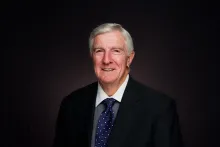
Before his retirement in 2021, Dr. Donald Ward pastored churches in Texas and Louisiana, and taught at Ambassador Bible College in Cincinnati, Ohio. He has also served as chairman of the Council of Elders of the United Church of God. He holds a BS degree; a BA in theology; a MS degree; a doctor’s degree in education from East Texas State University; and has completed 18 hours of graduate theology from SMU.
