
Rick Shabi
This transcript was generated by AI and may contain errors. It is provided to assist those who may not be able to listen to the message.
We will continue with the message that Dave Wallach gave, because it ties in very well with the message that I have. He talked about some of the Old Testament heroes of the faith. And King Asa, who he talked about, I call him forgetful Asa. Because although he was faithful, he was also forgetful of what God had done. And so sometimes you can be faithful, but you can also be forgetful. That's sort of the lesson of King Asa, that you cannot be forgetful. What God has done in the past, you cannot compromise with your faith like he did, and he paid a very dear price for it.
So here we are as a congregation in Garden Grove. And sometimes people think that heroes are people that do great exploits, people that have to really go out on the limb to do things. But you are part of God's heroes. God considers all of you as part of those heroes, those people that decided not to take the path well trodden, the easy way of the world. You are part of those that took the difficult path, the path less trotted. Those people that wanted to go down that narrow path were very few to follow through. And so I want to mention to you that we are all part of God's heroes at this present time. He's calling people to do heroic things, to follow the faith, to not be intimidated, to have that living faith that God can do great things in our lives. Even if it is like Anna just getting up in the morning and praying earnestly because they are part of God's army. So let's turn now to Hebrews 11. Hebrews 11. Because it's very interesting when you read Hebrews 11, it doesn't just deal with people in the Old Testament that showed they had faith and living faith. You'll be surprised how this chapter ends. So Hebrews 11.
In verse 1, Paul is talking about those that had that faith. He was talking to the congregation that was comprised of Jewish Christians. He was trying to encourage them to continue on. He says, verse 1, So faith is not something just in your mind, in your thought. It has to do with action. Something that shows evidence of things not seen. The things that God tells us we should do. That nobody is going to come down from heaven and speak to you about God's will. That's why it's already in the Bible. So faith is walking, trusting in God, and fulfilling what He desires, not what we desire.
He says, He says, So we see this vast universe. Now they're talking about not 200 billion galaxies, but now they're talking about 400 billion galaxies out there. It has doubled as the telescopes get more powerful. 400 billion galaxies, and each galaxy has, according to the latest calculus, about 200 billion stars. So how did all of this come? And they know that everything is expanding. So if you wind the film backwards, you finally come to a point of infinite density, an infinite temperature, and you come eventually to the disappearance.
If you go a split second before that, nothing. And out of nothing popped this whole universe. That's what science will tell you. Just look at any one of those movies on astronomy about the beginning of the universe. And it says here that by faith we understand that the universe was framed by the Word of God. And those things that are seen were not made of things which are visible.
God created things from His Spirit. His Spirit is not made out of matter. Spirit created matter. But we cannot see Spirit. It is unseen, as it says here. And then it says, by faith Abel offered to God a more excellent sacrifice than Cain, through which he obtained witness that he was righteous, God testifying of his gifts. In other words, the way Abel presented that sacrifice, a gift that he did to God, it was done in the right way. It was done with the right spirit.
And God was pleased, whereas Cain didn't have the right heart. He didn't have the right spirit. He didn't do it in the proper way. And so it says here, and through it, he being dead still speaks. His faith is still there to be read by everyone that he put God first. And so it goes on to verse 6, and it says, But without faith it is impossible to please him.
For he who comes to God must believe that he is, in other words, that he exists, and that he is a rewarder of those who diligently seek him. He's going to show up in your life. He's going to make a difference. He is going to intervene. He is going to bless. But we have to walk by faith. We have to do our part. As James said in his epistle, faith without works is dead. If you just believe something but you don't carry it out physically, it's dead. It says faith without works is dead. So you need both. You need the faith that comes from God, and you need your involvement, your active participation for it to be followed through.
And so he continues. Let's go to verse 37. He talks about all of these men of faith. Jehoshaphat was one of them. In verse 37, it says, They were stoned, some suffered martyrdom. They were sawn in two, as the prophet Isaiah was reputedly killed in this way by Manasseh, the king. They were tempted, were slain with the sword. They wandered about in sheepskins and goatskins, being destitute, afflicted, tormented.
These weren't the popular people of the earth, of whom the world was not worthy. The world didn't consider them worthy. God did. They were God's heroes. Although the world wouldn't call them as such, just like the world doesn't call those that follow God now God's heroes. But in his sight they are. Continuing on it says, And all these having obtained a good testimony, through faith, did not receive the promise, the promise of being in God's kingdom.
God having provided something better for who? For us, that they should not be made perfect apart from us. So you see, this idea that people go up to heaven is false, because they are still waiting for their resurrection. And God is going to wait until that last person that qualifies before his eyes, that is faithful, until that last person is living.
And when Christ comes back, he says here that all will be resurrected at that time. You will be part of God's heroes then. You'll be resurrecting with Abraham, with Moses, with David, with the apostles, with all the brethren throughout the ages. You will see Abel. You will see Enoch. You will see Noah. You will be part of that same group that made it, that crossed the finish line, that remained faithful to the end and walked by faith. That's what God is offering to us.
He's telling us that that last breath of air that we take, that last thought before we pass into the sleep of death, he says, the next instant of consciousness, you'll be in that kingdom. You will not have noticed any time have passed by, and you will be there being resurrected from the grave as people that are alive at that time will be resurrected.
They will all be together. It isn't just about those distant heroes and remote heroes of the faith. It's talking about us, the people that have taken the path less trodden, that narrow path of faith that are struggling with their problems, with their difficulties. But they have not turned around. They have not given up. They have continued and remain. Some people think, well, today is more comfortable. We have nice houses. We have indoor plumbing. We have all kinds of medical services. We have food that is good enough for the ancient kings. We're the only ones that could eat the delicacies that we can have. We can have the greatest grapes around the earth.
They come and we can just eat those grapes like we were kings. We have all the meat and all the poultry and all the fish. And if you'd like to eat this today or that, nobody's going to say, oh, you can't do it. Whereas 98% of the people on earth before this past century had no choice.
They were still depending on the land. They were living to survive day to day. So yes, we have entertainment like never before. We have expanding girth of society, don't we? This pastor down the road that Saddleback was mentioning that he had a book on losing weight. And he mentioned that he had been baptized in a couple hundred people. And he said, all of them were overweight. He was appalled by that. So this is a very affluent society that we live in.
But when you look back at those people with the faith that they had and their trials, you know, who had it worse? It's hard to say. I always think people are spoiled and they fall from the faith more for having more riches than poverty. I don't see people leaving the church too much over poverty, but I see a lot of people leaving the church because of prosperity. I don't need God anymore. I've got my checking account. What's the problem? I'll just sign a check and I'll get rid of that problem and I'll get rid of this other problem and I can do what I want.
That's the big temptation that is making people fall more than ever before. And so they had it tough. They had to tough it out, and they did. Notice the verse following this. It's actually Hebrews 11. It should continue on because it doesn't pause. Notice what it says, Therefore, since we are surrounded by so great a cloud of witnesses, all of these people of the faith let us lay aside every weight and the sin which so easily ensnares us.
There's always some sin that a person is struggling with, men or women. No matter what people overcome, there's always something that's there which is a weakness. There's a saying that the most difficult thing for a woman to control are her emotions.
If you're married, you know a little bit about that. And the hardest thing for a man to control are his eyes, wandering eyes. Men have problems with their thoughts and their sight, more than women do. But they don't usually have as many problems with emotions as women have. So it tells us here that we have to lay aside that sin which so easily ensnares us and let us run with endurance the race that is set before us at race toward God's kingdom. That is the major goal in the church, is to prepare a people to be ready for God's kingdom as they live today, as they think today, as they act today, that it is the right way to prepare to be part of God's kingdom. This is our opportunity to show God if we are worthy of the calling. We know nobody deserves it, but He is calling people to that kingdom. And so it says, verse 2, The joy of watching all of us be part of that kingdom endured the cross, despising the shame, and has sat down at the right hand of the throne of God. For consider Him who endured such hostility from sinners against Himself. Lest you become weary and discouraged in your souls, you have not yet resisted to bloodshed, striving against sin. And so as we walk by faith and we walk through those doors, there are threats. There are menaces that happen. You don't ever accomplish anything without resistance or someone with a wrong attitude that tries to intimidate you. And you can't let yourself go with that same spirit and imitate that spirit. But you have to be able to trust in God, do what's right, and He will find a way to carry out His will. Let's go to Acts 15.
After visiting the people in Tabasco for two weeks, seeing how dire was their spiritual state. They had no guide. They basically were just withering on the vine, spiritually speaking. Well, in Acts 15, the apostles, the elders, and the congregation gathered together. This is called the Conference of Jerusalem, or the Jerusalem Council. It's very interesting what James mentioned there. After they had the discussion, the big point was the Gentiles need to be circumcised to be part of the Church or not. Now, circumcision wasn't just the surgery that you had to have. Circumcision meant being under the ritual law.
In other words, you had to be offering certain sacrifices in the temple. You had some ritual washings that you had to do. So, circumcision was just the category of the ritual law. And even today, if anybody ever wants to become a Jew, if you go to a synagogue and say, well, I want to become a Jew, there are two things that you have to do. One is you have to be circumcised, and you have to have a ritual bath to become a Jew.
Now, once you become circumcised, you are under the ritual law. And there are many rituals to the Jewish way of life. Judaism is filled with different prayers, different ceremonies, different traditions. You are under all of that ritual law. And that's why you have this ritual washing. Because they consider you as a Gentile, you are unclean. And so now you have to be clean with a ritual bath. And now you are under the ritual law, as well as the rest of the law.
And so this was the question. Did the Gentiles have to follow all of these rituals to come into church? And God showed that, no, they had to keep God's commandments and everything that had to do with the spiritual and moral laws in the Bible, but they didn't have to worry about the ritual law. And as a matter of fact, later on in the book of Acts, just to show that this is so, in Acts 21, Paul comes back from his missionary trip around that area of Greece and Turkey, and he comes back and James says, well, Paul, people have been saying that you have not been telling the Jews that become converted that they don't...
You're saying they don't have to keep this law. And Paul said, wait a minute, now if you're a Jew and you come into the church, you still got that national heritage. You still have that responsibility. But the Gentiles don't have to do it. And then Paul goes on to say that once you're a Christian, whether you're a Jew or not, that ritual law is not necessary for salvation.
And so many Jews can still go and do some ritual according to their nationality if they want to. Most Jews come into the church, they circumcise their children on the eighth day. Now, a Christian that isn't a Jewish background, he doesn't have to do it. And so we've got people in the church that are circumcised and others that aren't. But if you're a Jew that comes in and you have a little baby in the church, normally you would continue with your tradition.
But it's no longer an issue of salvation. It's more of your national heritage. Now that's what Paul and all of the apostles cover in the New Testament. And so when James gets up, verse 13 of Acts 15, he says, And after they had become silent, James, who was the brother of Jesus Christ, who had been converted, after he had seen Jesus Christ resurrected, he became one of the pillars there, and basically the pastor of the Jerusalem church.
He got up and he's saying, Man and brethren, listen to me. Simon, talking about Peter, has declared how God at the first visited the Gentiles to take out of them a people for his name. And with this, the words of the prophets agree, just as it is written. After this, I will return and I will rebuild the tabernacle of David, which has fallen down. I will build its ruins and I will set it up so that the rest of mankind may seek the Lord.
Even all the Gentiles who are called by my name says the Lord who does all these things. And Dave Wallach mentioned that when God uses the term, you know, my name, it's dealing with his reputation, with what God represents, his authority. So he says here, Gentiles who are called by my name. In other words, they have accepted God as their God, and they have accepted God to worship him. But it's interesting that James was referring at that time that Judaism was basically off the track.
They were not continuing with the teachings of David and what he did. And so now the church has to raise up that tabernacle that has fallen. And the tabernacle of David, that the church has to raise it up. They are going to continue with the work of David and many of the others that were faithful to God.
So there are moments in time when you have to raise that tabernacle of David that is fallen. I saw that in Tabasco, Mexico. A once thriving church had just whittled down to almost nothing, and God did not let it become extinguished. And so there are times to raise it up and to give it energy and to give it vision.
And we are going to take care of those people. We are going to help them feel vibrant and part of God's church and those heroes of the faith. And so they begged us to come, to help us, to help them, rather. And their prayers were that they would not just fade away. So we see that there are times like that. There is a time when the stones are cast away and dispersed, and there are times to gather the stones back, to build, to put it back together again. And it is your tithes and offerings that are helping us spiritually feed those brethren. If I didn't have your backing and the tithes of your people, I could not have gone to that place.
Those people would have just withered, and they were almost extinguished, spiritually speaking. And thanks to your backing, thanks to what you do, we are able to feed this flock. Many of them, as you saw, they tried to dress nicely, but there is 45% unemployment in that area. A lot of people are struggling. That was not an area of high income. They could not meet their needs.
The church there was in pretty bad shape when we saw it. We gave it a new coat of paint that the chairs were broken down. People didn't know whether they were going to last during services or not. And we were able, because of the strength of the church, to be able to focus in that area and to raise those people up, and to take care of them spiritually. So don't ever think those tithes and offerings go to some distant place that is not doing anything. Those tithes and offerings are making it possible to feed spiritually people that cannot be fed otherwise. And 80% of the budget in the Spanish area comes from the United States.
Only 20% comes from local tithes. So you can imagine if we pulled the plug, those people could not afford a minister. They could not afford to be taken care of. And so that's why in the church we pool all the tithes and offerings so they can be distributed evenly throughout the world. So it's not one big corrugation that gets the big budgets, and then the small corrugation doesn't have hardly anything, and the minister can hardly survive.
No, no matter what it's in the ministry, no matter what they're doing, we spread it out. So it'll be even and fair, and those people at Tabasco are able to get the subsidies to keep them going. Some areas don't need subsidies. They can go on and they have access, but some areas have deficits. They don't have enough. And I thank God that we are able to do that.
So don't ever think those offerings and tithes. Don't go to those places. We're not one of these big government agencies where all the fat just...we're down, we're trimmed down. Most of us wear five or six hats, and we have to do a lot of things because they're not enough. We don't have enough funds. We just had to cut back on many things because the incomes dipped for a while. But thankfully, God has brought it up again.
So this really goes a long ways. And we have to get that gospel out to the world, and we have to prepare people for God's kingdom. Let's go to Titus 2.11. This is what I saw in Tabasco. I saw a lot of enthusiasm. People that did not want to have the Spirit extinguished in them.
In Titus 2.11, it says here, Yes, God is not separating just the Jewish people to have that favor and have that opportunity to be called. Now the grace of God that brings salvation has appeared to all men, teaching us that denying ungodliness and worldly lusts, we have to get rid of that past way of life. We should live soberly, righteously, and godly in the present age. There is a deep responsibility here to live that way, looking for the blessed hope and glorious appearing of our great God and Savior, Jesus Christ.
That's our goal. That is what our faith is based on, looking forward to that glorious appearance of Jesus Christ, who gave Himself for us, that He might redeem us from every lawless deed, all the breaking of God's laws, and purify for Himself His own special people, zealous for good works. That's what I saw there. I saw people that wanted to grow spiritually. They did not want to wither in the vine.
They needed help. They need support. But they want to do their part, zealous and good works. That's what I saw. He says, Speak these things to Titus. Exhort and rebuke with all authority. Let no one despise you. Titus was a young man. There are always some people that think they should be in charge. They are more spiritual. They know better. He tells Titus, Do your part. Follow the example of the Apostle Paul. Exhort and rebuke with all authority. Don't let anybody despise you. Don't let them intimidate you. Because God has that power and love and sound mind.
That's His Spirit working in us. Now, as we finish, let's go to Matthew 10, verse 40. Matthew 10, verse 40. By the way, I know some of you donate a certain amount to help those Latin American brethren. You can imagine over there in Tabasco, some people didn't have a job.
There's no real welfare in those areas. You don't get a check from the government when you're unemployed. You have to fend for yourself. So some of those funds were handed out to people. One of them has a little tortilla factory in the back of his house. And he said, you know what? People are so in bad shape, they're not even buying tortillas like they used to. So we were able to say, here, here's something. Seed money. Go ahead and get your flower.
Go ahead and get what you need there to keep your business going, because they didn't have anything. That's the type of thing that we see. And then sometimes, you know, what do we complain about? When you see the situation in some of these areas, you come back and think, boy, you know, we have Thanksgiving every day of the year in comparison. Continuing here in Matthew 10, verse 40, Jesus Christ said, And wherever gives you one of these little ones, only a cup of cold water in the name of a disciple, assuredly I say to you, he shall by no means lose his reward.
Yeah, being part of this work and being part of this church is such a privilege. Sometimes we think, well, we don't do enough. But I'll tell you, you are preparing to serve and to reign under Jesus Christ in that coming kingdom.
And those funds are helping brethren that are far less equipped than we are. And thank you, brethren, for your faithfulness, because we're spearheading. We're the ones that see the difference in people's lives that could have withered on the vine. I mentioned that some of them looked like the coals, the embers, they were just there, slowly dying out. And you could blow, take away the different types of the coal, the ashes. You have to remove the ashes and then blow, and then it lit up again. Yes, yes, it's the fire of God's spirit stirring up again.
So that's what all of you have done. So don't let anybody discourage you. Don't feel you're not doing enough or you consider yourself much less, because in God's eyes, you are His spiritual heroes. Thank you.
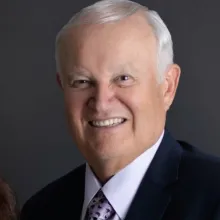
Mr. Seiglie was born in Havana, Cuba, and came to the United States when he was a child. He found out about the Church when he was 17 from a Church member in high school. He went to Ambassador College in Big Sandy, Texas, and in Pasadena, California, graduating with degrees in theology and Spanish. He serves as the pastor of the Garden Grove, CA UCG congregation and serves in the Spanish speaking areas of South America. He also writes for the Beyond Today magazine and currently serves on the UCG Council of Elders. He and his wife, Caty, have four grown daughters, and grandchildren.
