
Don Ward
This transcript was generated by AI and may contain errors. It is provided to assist those who may not be able to listen to the message.
We talk about getting our priorities straight. God has revealed to us what should be our first priority. Matthew 6, 33. But seek you first the kingdom of God, and his righteousness, and all these things shall be added unto you. Seek you first the kingdom of God. There's no doubt about what our first priority should be. But did you ever think about what do you think is God's highest priority? I would think that his highest priority is related to what he has given us as our highest priority. He's told us to seek first the kingdom of God, and I think his highest priority would be related to that. God created all things to fulfill his will. Let us turn to Revelation 4, verse 11. Here the apostle John is given a vision of the throne of God, what the setting is, what it looks like, and all of that. But we want to look at the last verse here, verse 11. You are worthy, O eternal, to receive glory and honor and power, for you have created all things for your pleasure they are and were created.
This word here that is translated pleasure is the Greek word Thea lema. Thea lema. T-h-e-l-e-m-a. E in Greek is pronounced as an a sound. Thea lema. What is thea lema? It appears 64 times in the New Testament.
62 times it is translated will. In other words, the will of God. It means desire and purpose. It means the will. God's will reflects what God determines and or desires be done. So we read that verse. You are worthy, O Lord, to receive glory and honor and power, for you have created all things for your will, for your desire.
It is for His will to be accomplished. They are and were created.
So what is one of the main things that we can talk about with regard to the will of God? You turn back to 1 Peter, 2 Peter. Turn back to 2 Peter chapter 3 and verse 9.
What is God's first priority? Our first priority is to seek the kingdom of God. I believe God's priority, His main will, is closely associated with our first priority, that He has created all things for His will, for His desire to be accomplished. What does He so much desire?
In 2 Peter chapter 3 and verse 9, the eternal is not slack concerning His promise, as some men count slackness. Of course, the first part of this chapter talks about the scoffers will come in the last days saying, where is the promise of His coming? For since the fathers fell asleep, all things continue as from the beginning. So Peter shows that it's going to come to pass. The day with God is a thousand years and a thousand years as a day, as it says in a preceding verse. In other words, God doesn't mark time or count time in the way that we do. So you look at this, He is not slack concerning His promise, as some men count slackness, but His long suffering to us. We're not willing, not willing, that any should perish, but that all should come to repentance. So one of the great aspects of God's will is that everyone makes it into His kingdom, into His family. Now let's notice Luke chapter 12 and verse 32. Luke chapter 12 and verse 32.
The word that is translated pleasure here is not the same word. It is not thei lema as in Revelation chapter 4 and verse 11. It is a different word. But notice what it says in Luke chapter 12 and verse 32. Luke 12 verse 32, fear not, little flock, for it is your Father's good pleasure to give you the kingdom. So one of God's greatest priorities is to bring us into His family and to give us the kingdom.
God created humans to have a relationship with Him. We go now to Leviticus chapter 26 and verse 3. Leviticus 26 and verse 3. Remember Leviticus is the sanctuary book that God speaks from the tabernacle to Moses in chapter 1, and God continues to speak to Moses throughout this book. So many places in the Bible, and we'll reference this again, talks about God speaks to so-and-so. God spoke to Adam and instructed him. God spoke to Noah. God spoke to Abraham. God spoke to Moses, and so on it goes.
God is the great communicator. That's a big part of what we'll be talking about as well. In Leviticus 26 verse 3, if you walk in my statues and keep my commandments and do them, then I will give you rain and dew season, and the land shall yield her increase, and the trees of the field shall yield her fruit.
And it goes on listing a whole list of blessings, mainly in the physical sense. Now we come down to verse 11. And I will set my tabernacle among you, which they did. They built a tabernacle in the wilderness, raised it up, and God's presence filled the tabernacle. But today God lives in each one of us. We are the tabernacle, the temple of God. I will set my tabernacle among you, and my soul shall not abhor you.
And I will walk among you, and you will be your God, and you shall be my people. God has, from the creation of humankind, wanted a relationship with us. Our very existence reflects God's desire to have a relationship with us. We are His children created in His image. His children created in His image. Of all the creation, we are the most precious. We are His children by creation in the physical realm and with the promise of becoming His spiritual children forever in eternity.
It is difficult to have a relationship with anything or anyone that cannot communicate with you or you with them. Humans are His children by the act of creation and the process of biological reproduction. That was set in motion after Adam and Eve was created. That is, biological reproduction. And so, physically, we are created in His image, but not of the same essence, but with the potential of becoming His spiritual children through being begotten and born at the resurrection into His family. That is such a vital understanding, and we must understand that.
People talk about, well, I am a child of God. You are a child of God through physical creation if you don't have God's Spirit within you. If you have God's Spirit within you, then you are a begotten Son of God in the spiritual sense with His potential of being born into the spiritual family of God. As we've noted, God is not willing that any should perish. He deeply desires that every person who has ever lived, who is alive now, or ever will live, will be in His spiritual family and live forever.
God is our Creator. He is our Father. And we exist because He deeply desires to share His being with each one of us. Now let's go to Genesis chapter 2. Genesis chapter 2, as soon as Adam was created, I would imagine this is not exactly in order here, that probably Eve was there present as well, but this account is given before the creation of Eve. So I don't know, maybe God instructed Adam first, about what He expected of him, and then as soon as God created Eve, taking a rib from Adam.
God was the first one, I guess you would say, to use anesthesia and also to perform surgery, taking a rib out of Adam and creating Eve. In Genesis 2 verse 15, Genesis 2 verse 15, And the Lord God took the man and put him into the garden of Eden, to dress it and to keep it.
And the eternal God commanded the man, saying, Of every tree of the garden you may freely eat, but of the tree of the knowledge of good and evil, you shall not eat of it, for in the day you eat thereof, you shall surely die. Or in the margin it says, in dying you shall die. You will begin the death process. Of course, in chapter 3, after Adam and Eve had sinned, God promised them a Redeemer, one to buy them back from sin and death. Adam and Eve knew that they owed their existence to God, but amazingly, the devil was able to deceive Eve, and Adam willingly went along with Eve. It talks about in Timothy how that Adam was not deceived, but he went along was in the transgression.
God is the perfect Creator. He's the perfect Father. He's the perfect Teacher.
And yet Adam and Eve failed to heed their Father's instruction. They were placed in a perfect environment. So there's a lot more to rearing children and also for us coming to spiritual maturity than just the teaching, just the environment. It is a total package. Everything has to be put together. There are people who are reared in the inner cities of America today, who have grown up in a terrible environment, not given many opportunities, and so on and on we could go. And yet they've risen above that, and they have achieved great things in the physical sense in their lives. God has committed to us His precious treasure of little ones, as you heard in the special music. This special treasure, the greatest gift, of course, is life. You're given life. That life has the potential of living forever. Children created in His image potential sons and daughters of God. He expects us to prepare the hearts of these little ones to receive His instruction and not go the way of Adam and Eve. So what are the most important concepts and beliefs that you can teach your children? What would you place as number one? The number one thing that you should do first and foremost with regard to teaching your children. First of all, you must teach them to love you and then teach them to love God.
Because they are too young and they don't understand the abstract concept of God. But God needs to become more than an abstract concept. God needs to become real. So let's explore this moment about teaching them to love you and then teaching them to love God.
Love is an emotion and emotion that comes from the heart. As such, it is perceived at the heart level. In Scripture, heart and head are closely related. Teach the heart first and the head will usually follow. Now, you cannot let emotion be your principal guide, but the emotion of love is the greatest motivating force in the universe. For God so loved the world that He gave His only begotten Son, that whosoever should believe in Him should not perish but have everlasting life. That's how deep His love is for us. It motivated that love. It motivated Him so much. He wanted to share His being with us that He was willing to give His Son. You just think about in human terms, you look at your son and daughter sitting there beside you and whether they're here today or somewhere else, would you be willing to give them, him or her, for the life of the world? See, this is greater love had no man than this, that He lay down His life for His friends. And Jesus Christ was willing to lay down His life for each one of us. I think we can safely say that love is the greatest motivating force in the universe. Now, it's almost like, and the exact opposite of that is hate. And people seem to be able to swing from love to hate almost like turning a switch in this world because they let just raw emotion take over. And oftentimes, if, quote, like the old thing, if I had it to do over again, I wouldn't have done it that way.
We hear the expression, you're not thinking with your head. You're being controlled by your emotions. But we need both head and heart to be taught so both are in harmony with the will of God. If your child perceives that you really love them from the heart, then it would be very difficult to break that bond. They may go astray in all kinds of ways, but they will probably still have that bond and that feeling which is difficult to explain or describe in their heart. And they may say, at times, I hate you or whatever they may say. But yet, deep down in their heart, they love you and you love them if you've done what you're supposed to do. The Hebrew word for heart is spelled in English, L-E-B. As I said, usually in most languages other than English, E is pronounced as A. So it's actually pronounced L-A-B-E. The heart is the inner man. The heart is at the sea of intellect and emotion. You've got intellect and emotion involved in that which is of the heart. In Strongs, here are some of the things that they say. The midst of things, mind, knowledge, thinking, reflection, memory, inclination, resolution, determination of will, conscience, in other words, the knowing of right and wrong, the seed of appetites, the seed of emotions and passions. And the Greek word for heart is cardia, from which we get cardiac. We're familiar with cardiologists, heart doctors, and it means virtually the same thing as the Hebrew word labe.
The organ in an animal that is in the center, the circulation of the blood, and hence regarded as the seed of physical life, denotes the center of all physical and spiritual life, the vigor and sense of physical life, the center and seat of spiritual life.
That's just a few of the things that's in Strong's concordance. So how do we teach children to love us? We teach children to love us by loving them.
Love is perceived in many ways. In the early stages of life, it is mainly perceived through touch and the human voice as you hold the child, as you talk to the child. You remember I brought this up before in sermons with regard to what they discovered around the turn of the centuries, the century, that is the turn of the 20th century.
And at that time, in the late 1800s, early 1900s, it was very shameful for a young person to give birth out of wedlock. And so a lot of people, especially upper-class families, would send their daughters to off somewhere. They would have their babies. And the babies would be sent to foundling homes. And to a large degree, some of them were ignored in these homes. They weren't held. They weren't nurtured and nourished, as they should be, especially emotionally. And some of them died a strange death. And it had to do with those who were not nurtured and nourished, were not held, did not have human contact. And so they began to understand the importance of human contact in the early life of an infant. Human contact and also the human voice. So in the early stages of life, love is mainly perceived through touch, the human voice, along with taking care of the basic needs of a child. The basic needs, of course, has to do with feeding them and taking care of them the various duties that go along with that. Hans-Erz von Balthasar. That's the name of a man. Pretty hard to say. Hans-Erz von Balthasar. He's a famous theologian, though you've never heard of him. That's good, probably, in one way. But he writes in his book titled, Love Alone is Credible. Love alone is credible. And subtitle, Love Must Be Perceived. What he writes is in keeping with what I've just said.
Here's what he writes. After a mother has smiled at her child for many days and weeks, she finally receives her child's smile in response. She has awakened love in the heart of the child.
In this face, the primal foundation of being smiles at us as a mother and as a father.
Insofar as we are his creatures, the seed of love lies dormant within us as the image of God.
But just as no child can be awakened to love without being loved, so too no human heart can come to an understanding of God without the free gift of his grace in the image of his son.
Read that one sentence again. But just as no child can be awakened to love without being loved, so in order to teach a child to love you, you have to first love them. And this is in keeping with what the Scripture says. Let's go to 1 John with regard to who makes the first move in the love relationship between God and man.
We, as parents, are placed in the role of being in charge of the child, and the child is placed in our sacred trust. So in 1 John 4, 1 John chapter 4, oftentimes we tend to think of taking care of the physical needs first and then the emotional needs. It is more important to take care of the emotional needs first, but usually with a child, they are wrapped together. They don't really separate that.
And so we had a booklet in the Worldwide Church of God, Plain Truth About Childrearing, that did immeasurable harm. That did not understand, or if it did understand, did not understand child growth and development at all. All children are egocentric at birth and remain such, basically, until about eight years old.
Ego-centric means self-centered. The world revolves around them. Of course, it lessens and lessens and lessens as the years go by.
And this notion, well, just let the child cry itself to sleep.
Well, if it's crying too much, go spanking, making him cry more.
In 1 John 4, verse 17, Herein is our love made perfect, that we may have boldness in the day of judgment, because as he is, so are we in this world. There is no fear in love, but perfect love cast out fear, because fear has torment. He that fears is not made perfect in love.
We love him because he first loved us.
And children love us because we first love them.
How are they going to learn love otherwise?
If a man says, I love God, and hates his brother, he's a liar.
For he that loves not his brother, whom he hath seen, how can he love God whom he hath not seen?
In this commandment, have we, from him, that he who loves God loves his brother also. So God makes the first step toward us. He loved us first. In fact, as we've already said, the very fact that we exist is because he loves us and wants to share his being with us.
As the physical needs are taken care of, there's oftentimes contact and comforting and reassuring words that can be spoken from the feeding of a child to changing the diaper to whatever bathing, whatever it might be. It is made into an overall kind of learning activity in which the parent is expressing to the child their care and concern, having some fun, talking back and to, and the whole thing. And so you're taking care of physical needs and emotional needs at the same time. Failure to learn this lesson is why we are where we are with our children in this age. Of course, there are some other factors that we will mention involved in this age that we're living in. The children have turned to their peers to have their emotional needs met.
And friends and peers, that is the thing that seems to be most important.
A new term developed starting back around World War II, and that term, the generation gap.
And now there are books written about generations. I don't have it in my notes, but maybe I should turn there. I think I know where it is. Let's go to Proverbs chapter 30. I read this in one of the sermons at the feast.
In Proverbs chapter 30, in verse 11, there is a generation that curses their father and does not bless their mother. There is a generation that are pure in their own eyes, self-righteous. We know it all. I mean, we could do our cell phone and all of that. We can turn to the book of Genesis on our cell phone before you can pick up the Bible or whatever it is. And yet it is not washed from their filthiness. There is a generation, oh, how lofty are their eyes, and their eyelids are lifted up. There is a generation whose teeth are as swords and their jaw teeth as knives to devour the poor from off the earth and the needy from among men.
All of those characteristics are present in generations that have not been properly nourished and nurtured according to what God teaches us in His Word.
The country and rock music of the 50s began to shift the emotional affection of youth from parents to their friends and their peers. And these lovesick kind of songs, though, I think one of them was Donna. Oh, Donna, oh, you know, if I could be with Donna tonight, then everything would be all right. Or maybe it was Diana. I don't know, but some of that.
So the affection began to be shifted from parents to their peers and friends. Today there is the music and social media. Paradoxically, the more young the more that youth engage in the social media, the less their emotional needs are met. The more they engage in the social media, the less their emotional needs are met. Because there is less personal contact and less personal use of the human voice. Loneliness is epidemic among youth and, for that matter, the whole population of the Western world. People are probably more lonely now than they have ever been in human history. How could that be with all of the means of communication that are available? But to a large degree, it's electronic communication. It's not in person.
It doesn't have personal touch.
This is what I'm about to tell you. In fact, I heard clips of this interview.
Just happened this past week. Just this past week in a talk show interview, Rick Pitino is coach of the University of Louisville Cardinals. They won the men's NCAA Division I Basketball Championship this past year.
He said now, when he goes out on recruiting trips, that he mainly talks to the parents because the recruit that he's trying to recruit is over there busy texting under the table or whatever to his friends. Here is the coach who, in one sense, holds his future in his hands, or could, and give him a scholarship, $50,000 or more, for an education and the opportunity that might go with that. But it's more important to, I guess, to text your friends, guess what? Coach Pitino is here. I can't talk to him. I gotta text you.
So instead of conversing with him, the prospective recruit has his hands on his cell phone, and he's texting his friends.
He feels lonely, I guess, at the table, there sitting with his parents and the coach of the National Championship team.
Once a young person receives a cell phone, it will become increasingly difficult to reach them at an emotional level that is positive. One of the things that helped me try to do the best I could as a child growing up was that I wanted to please my parents. I didn't want to hurt them. I did not want to let them down because I knew they dearly loved me and I loved them. Now, they didn't do a lot of what I've talked about up front with regard to what I was well taken care of as a child, a little boy. But there was not a lot of touching and feeling and hugging. I love you going on, as there is in some families. We could say a lot more about this, but I want to move on for now. So, first of all, you've got to teach your children to love you, and you do that by loving them, and then you begin to teach them to love God. So, secondly, you must teach them that God exists and that we owe our existence to Him. We exist because God wants to share His very being with us. Now, God is not the coach of the NCAA Men's Basketball Championship team.
If you want to put it in those terms, God is the great, as we heard last week about the good, great, and chief shepherd. God the Father is the chief shepherd, as you heard in the sermonette, inherit all things. Be given charge over all things, or at least access. How much charge will be given depends on many other factors. The first article of faith, Genesis, I mean Hebrews 11, verse 6. Hebrews 11, verse 6. You must teach them that God exists and we owe our existence to Him.
The first article of faith, Hebrews 11, 6. Without faith, it is impossible to please Him, for He that comes to God must believe that He is, and that He is a rewarder of them that diligently seek Him. So you begin to teach your children just about the creation.
Who made the moon? Who made the stars? Who made the sun? Who made the birds? Who made the grass? On and on you can go with who made.
And then, coupled with the existence of God, is you must teach them to have a relationship with God.
Their relationship with God will basically be reflected by the relationship that the parents have with each other and the relationship that the parents have with the children.
Because they learn relationship from you. If they can't relate to you, whom they have seen, as we read from verse John 4, how can they relate to God? So how is the relationship between mother and father? And what about the relationship between parents and children? It has been said that the greatest gift that you can give your child is a good marriage. And probably the second greatest gift that you can give is a good name. Next, you must teach them that they are personally responsible to God and man for their actions. They are personally responsible to God and man for their actions. Now, I doubt you have ever had a systematic list like this given.
And I don't care what age you are, you need to know it. You need to have it memorized. It needs to be a part of your being. And this thing of personal responsibility to God and man begins with teaching them responsibility in the general sense. The Bible provides ample exhortation to all of us concerning the responsibility of teaching our children. So, youth must come to understand that they are responsible.
Jesus came to understand responsibility and mission at the age of 12. Of course, he might have understood it before then, but we know from Scripture what it says here. Let's go to Luke 12 and verse 41. I don't know where I got that. It's Luke 2. Luke 2 and verse 41. Luke 2 and verse 41. Luke 2 and verse 41.
Now his parents went to Jerusalem every year at the Feast of the Passover.
And when he was 12 years old, they went up to Jerusalem after the custom of the feast. When he was 12. And when they had fulfilled the days as they returned, the child Jesus tarried behind in Jerusalem, and Joseph and his mother knew not of it. They supposed him to have been in the company. They went a day's journey, and they sought him among their kindred and acquaintance. And when they found him not, they went back to Jerusalem seeking him. And it came to pass that after three days, they found him in the temple, sitting in the midst of the doctors, both hearing them and asking them questions. You say, oh, I can never do that, or I wouldn't do that.
To this day, the Orthodox Jewish community and some that are not Orthodox have what they call bar mitzvah. As a child is turning 13, they have a special ceremony both for the boys and the girls, as they are reaching what some call the the age of accountability.
Verse 47, all that heard him were astonished at his understanding and answers. And when they saw him, they were amazed. And his mother said unto him, Son, why have you dealt with us in this way? Behold, your father and I have sought you sorrowing. And he said unto them, How is it that you sought me? Don't you know that I must be about my father's business? He had a sense of responsibility and a sense of mission. And they understood not the saying which he spoke unto them. And he went down with them and came to Nazareth and was subject unto them. In other words, he obeyed his mother and father. But his mother kept all these sayings in her heart. And Jesus increased in wisdom and stature and in grace favor with God and man. If you ever hope to achieve anything in life, you have to learn that you are personally responsible before God. Let's go now to Ecclesiastes chapter 11. I mean, this is so clear here in Ecclesiastes that anyone could understand it.
Ecclesiastes chapter 11 and verse 9.
It is never too young to begin teaching your child, as we will talk a little more about, even in the womb. They've come to understand that a lot of learning takes place before a child is born. So some parents today are playing classical music because they have also discovered in the scientific sense that the classical music has a kind of harmony and rhythm to it that helps not only the emotions but also the nervous system in its being wired to perform in harmony. In Ecclesiastes 11.9, Rejoice, O young man, in your youth, and let your heart cheer you in the days of your youth walking the ways of your heart in the sight of your eyes. In other words, you need to enjoy life. Be a child. Childhood lasts about like snapping your fingers, and it's gone. But know you that for all these things, God will bring you into judgment.
I mean, there is accountability. There's responsibility, and there is accountability. Have we taught our children accountability in the church as we should? I submit that we haven't.
It's like we sort of ignore them until they get 18 and expect them to magically turn on. Well, they've turned off so long before you can't throw that switch magically. Therefore, remove sorrow from your heart and put away evil from your flesh. For childhood and youth are vanity. That means, in this case, vanity means temporary. Last a very short time.
Remember now, your Creator in the days of your youth, while the evil days come nigh, nor the years draw nigh when you shall say, I have no pleasure in them. So growing old is a lot of fun.
Try it if you don't believe it. I hope everybody gets a chance to try it.
As a young person, you need to respect yourself. You need to show respect to all, but don't be intimidated. You know, Paul wrote to Timothy and said, Let no man despise your youth. And as I've already mentioned, as we see here, for all these things, God will bring you into judgment. Be not deceived. God is not mocked. For whatsoever man soweth, that shall he also reap. There are no exceptions.
And so you have to teach them accountability, that for every action there is a consequence. And none of these concepts and behaviors can be taught in isolation. They're all interrelated. You have to put the whole package together. So once again, what is the greatest gift you can give your children? The greatest gifts that parents can give their children are a successful marriage. A good example. A good name. Children learn method. Methodology before they learn content. They're going to grow up and be like you when it comes to methodology. They're going to rear their children as they were reared, unless they get instruction, education beyond that. They're going to follow your example. This brings us to the necessity of having a plan. There is almost no parents, young parents in this world, that have a plan for rearing their children. Most of the teaching in a family is reactionary. That is, parents responding to a situation. He spilled the milk. He ran out into the street. He burned his finger. I told him not to do that. He did that. And so we react to all of these various things, and in this, in some cases, there's slam-bang, little teaching here and there. Instead of children being reared, they're jerked up. Instead of reared up, God instructed Adam and Eve before he let them go out in the garden on their own. Now, they didn't do what he said. They did it. Eve did the exact opposite. But he set the basis of the relationship and the consequences for breaking the core covenant of the relationship. If you do this, then this. If you don't do this, then this. Of course, he told them, when you do this, you'll begin to die. So with this background and mandates in mind, let us ask these questions. Is God real to you? Or is God abstract? Is God real to your children, to your grandchildren, to your great-grandchildren? Or is God a name that you use in the abstract and refer to at times? Do you and your children have a relationship with God? Do you walk with God? Talk with God on a daily basis so that he is real to you.
He is as real to you as any member of the family. But hopefully more real.
Is it possible to develop a relationship with God to the point that you know and know that you know that he is walking with you and you're walking with him?
Do you cry, as it says in Romans 8, 16, or 15, Abba, father? Hold just that close. You know he is your father and you are his child. In order to have a relationship with someone, you must spend time with them, communicate with them. God spent time with Adam and Eve and communicated his instruction to them. Time is the substance that life is made of.
Time is the substance or the essence that life is made of. We live so long in what we call time. Time. The hand of time marches on. We cannot recall one millisecond of it.
Once gone, it's gone forever. You can remember what happened yesterday, but you cannot recall it. That is, you can't go back and live yesterday over again. One author writes, the moving finger writes, And having writ moves on, nor all the piety, nor which, Allure it back to counsel half a line, nor all your tears wash out a word of it. What's written is written. What's done is done. Of course, we can repent of it. We can change. And we can determine to make the best use of time in the future. No wonder the Apostle Paul admonishes us in Ephesians 5 to redeem the times for the days are evil. We will never pass this way again. We will never relive this Sabbath again.
This child will never be blessed again in this setting in this way. We will never be witness to that again. We will never hear exactly that same special music again or this sermon.
We move on.
Last Sabbath is gone, and this present Sabbath will soon be gone, and the hands of time march on. The way we spend our time is the way we're going to spend our lives. What will it be? Will it be on frivolous things that have no substance, or will we lay up for ourselves treasure in heaven where thieves cannot break through and steal?
Nearly all of us play the game of one of these days. One of these days, we're going to do such and such. One of these days, but one of these days never comes.
You must spend time to build a relationship. Cats in the cradle. Cats in the cradle.
Song was made popular by Cat Stevens. It was written by Harry Chapin.
My child arrived just the other day. He came to the world in the usual way, but there were planes to catch and there were bills to pay. He learned to walk while I was away. He was talking before I knew it, and as he grew, he'd say, I'm going to be like you, Dad. You know, I'm going to be like you. The cats in the cradle and the silver spoon, little boy blue and the man in the moon. When you're coming home, Dad, I don't know when. We'll get together then, Son. You'll know we'll have a good time then. When my son turned 10 just the other day, he said, thanks for the ball, Dad. Come on out and let's play. Can you teach me to throw? I said, not today.
I got a lot to do, he said. That's okay. And he walked away, but his smile never dimmed. He said, I'm going to be like you. Yeah, you know, I'm going to be like him.
And so it goes on with he went to college. Now he's married. He's got a job.
And now the father's retired. Well, I've long since retired. My son moved away, called him up just the other day. I said, I'd like to see you if you don't mind. He said, I'd love to, Dad, but I can't find the time. You see, my new job's a hassle and the kid's got the flu, but it's sure nice talking to you, Dad. It's been sure nice talking to you.
And as I hung up the phone, it occurred to me, he'd grown up just like me. My boy was just like me.
Yeah, the cat's in the cradle and the silver spoon. Little boy blue and the man in the moon. When you're coming home, son, I don't know when, but we'll get together then, Dad. We're going to have a good time then. That's one of these days, you know. You must spend time with someone to build a relationship. Time spent together and communicating with each other are two of the most essential keys in building relationships. The human touch, the voice, and spending time together. My dad never told me he loved me that often, maybe occasionally, but he spent time with me. He did everything he could in the way of spending time to show me he loved me. We would go fishing together. We would play ball together. He would pitch, as I would bat, catch the passes, do whatever. But he spent the time, and I knew that he cared.
Look at Genesis chapter 5. Spending the time. We'll get together one of these days, Dad. Might be soon, one of these days. In Genesis 5 and verse 22, And Enoch walked with God after he begat Methuselah, three hundred years, and begat sons and daughters, and all the days of Enoch were three hundred and sixty-five years. And Enoch walked with God, and he was not, for God took him.
He translated him to another place. He walked with God for three hundred years. God must have talked a lot to Enoch, and Enoch must have talked a lot to God during that three hundred years. God must have revealed a lot about his plan to Enoch because we turned to Jude 14 and see what we read. See, really, we can do what we set our minds to do. If we set our minds to do it, we can do it.
But we get so used to walking in the same old ruts and doing the same old things, it's almost impossible to change. In Jude 14, Enoch also, the seventh from Adam, prophesied of these, saying, Behold, the Lord comes with ten thousands of his saints, even before Noah's flood. He not walked with God three hundred years, and he knew that Jesus Christ was coming with his saints, ten thousands of his saints.
God walked with Noah. God spoke to Noah. Being with someone indicates a relationship. When God walks with a person, or when a person walks with him, he communicates with them. Communication is a sacrifice in one of the main ways that relationships are built. Notice Hebrews 1 verse 1.
You look at, in days past, the people who lived pre-noation flood, post-flood, whatever era of time, up until more modern times, as we call it. They only had snippets, bits, and pieces of the Word of God and the plan of God. Here, we have the whole package in our hands.
Revelation and instruction that, I would think, would boggle the mind of the people who lived in the past. Hebrews 1.1. God, who at different times and in different ways spoke in times past and under the fathers by the prophets, has in these last days spoken unto us by his Son, whom he has appointed heir of all things, by whom also he made the worlds. God counts communication. Now turn to Hebrews 13. God counts communication as one of the principal sacrifices. We are living stones, as Peter writes in 1 Peter 2 verses 4 and 5. We're living stones built up in this great spiritual temple, and we are to offer up spiritual sacrifices. One of the main ways that we can offer up spiritual sacrifices is through communicating, through talking with God, and then have him talk with us, and he talks to us through his word.
In Hebrews 13 and verse 15, By him therefore let us offer the sacrifice of praise to God continually. Hebrews 13 and 15, By him therefore let us offer the sacrifice of praise to God continually. Notice the sacrifice of praise, communication. That is, more specifically, the fruit of our lips, giving thanks to his name, but to do good and to communicate, forget not, for with such sacrifices God is well pleased.
When you start teaching your children, you start before they're born. You continue to teach them the rest of their lives. One of the best ways to teach youngsters is through songs.
I remember the songs that I learned when I was just a little boy, a little toddler, three, four, five years old. Jesus loves me. Well, it's like we don't sing Jesus loves me because we're not Jesus people. Well, we better be Jesus people. Jesus loves me, this I know. Or the Bible tells me so. Little ones below are precious in his sight and so on.
Read to your children. Discuss what you read. Ask questions about what you read. Talk about God and Christ. Make them relevant in the life of your youngster.
This first part of this week, I received a message from a young mother who was at the feast in Panama City asking about schooling and homeschooling and rearing children. And here's what I wrote back to her.
Rearing our children in the nurture and admonition of God is one of the weightiest responsibilities that God has mandated to us. I believe the most important concept you can teach your children is to have a relationship with God and they're responsible to Him. Of course, that comes, as we talked about today, you have to teach them to love you and God. You can start this when a child is very young by teaching them to believe in God as our Creator and Father. Talk about God and His works in your home. Focus on the fact that God is relevant in your life. This can be done with very young children by reading to them and talking about what you read in practical and personal terms. You can teach them to pray. You can play simple quiz games with them about God and the Bible. See, that's what this special music was about. Taken from Deuteronomy 6 and beginning in verse 6. Let's turn there. Deuteronomy 6 verse 6.
It's like in today's world, it's, when are we going to do this? Where are we going to do it? Well, this tells the when and where.
Deuteronomy 6, 6. And these words which I command you this day shall be in your heart. You shall teach them diligently unto your children. Shall talk of them when you sit in your house, when you walk by the way, when you lie down, when you rise up. You shall bind them up for a sign upon your hand. They shall be as frontlets between your eyes. You shall write them upon the post of your house and on your gates. And it shall be when the Lord your God shall have brought you into the land that you swore unto your fathers of Abraham, Isaac, and Jacob to give the great and goodly cities. And it shall be when the Lord your God shall have brought you into the land that you built not. When, where, well, that tells us. So, brethren, we have a great challenge before us, but I believe that we can meet the challenge. And I believe that we are meeting the challenge to a large degree here in our congregation. We must not let what is going on in this world dictate to us what we're going to do when it comes to rearing our children and when it comes to relating to them, when it comes to relating to one another, and especially when it comes to relating to God. So we have these precious gifts before us. We have the words of life. Let's put them to use.
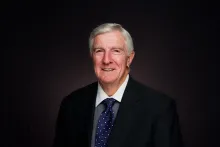
Before his retirement in 2021, Dr. Donald Ward pastored churches in Texas and Louisiana, and taught at Ambassador Bible College in Cincinnati, Ohio. He has also served as chairman of the Council of Elders of the United Church of God. He holds a BS degree; a BA in theology; a MS degree; a doctor’s degree in education from East Texas State University; and has completed 18 hours of graduate theology from SMU.
