

Jay Ledbetter
This transcript was generated by AI and may contain errors. It is provided to assist those who may not be able to listen to the message.
Even in Mr. Shaby's letter, we had to plan now for the Feast of Tabernacles. It always surprises me. I've been doing this for years and years. And what? Already? We just got over the Feast. And I had so many others tell me that, express that idea, too. So there are three holiday seasons. Each year they symbolize steps in God's plan. We've gone over this a lot. Pentecost is the middle season in this special order of holy times. I made the title here, God's Ordered Plan. And that's what I'm going to focus on. There are so many things to talk about with the Holy Days and with sermons in general. But there is, in this case, Pentecost is special as far as this subject goes, focusing on the order of the plans. There are three of these Holy Days seasons, but this is the only one, the only day of the Holy Days, where we have to count. We've mentioned that before. And the idea is that we're counting toward Pentecost, that special event. But it pictures also a whole life of daily feeding. Because you have the Passover, there's the repentance of the foundation, then you have Days of Unleavened Bread, which is daily feeding. The seven days picture the entire and complete life that we live. And each one of those seven days, we're striving to put sin out. That is the focus of the Days of Unleavened Bread. But there's something that is just as important as that. It goes along with it. In order to put sin out, you have to be putting the true manna in. John 6, verse 63, he said, you have to actually consume and eat my blood and my flesh. And it sounded like cannibalism to a lot of them. And a lot of them just left. They said, this guy's crazy. And it's not explained by John here. And apparently by Christ, when he spoke it towards the end of this discourse, the manna or bread discourse, the bread of life. And in verse 63, he said, these are my words.
The manna is the words that came out, the proceeded forth from the mouth of God.
And so he explains that that's what we have to consume each day of the Days of Unleavened Bread. The focus is to get the leaven out. But why? Well, so we can eat the sweet and pure, as contrasted with the fermented and corrupted bread, the leavening, which puffs up.
And there's an analogy between bread and attitudes there. But the idea is to, we are to consume and be fed by God every day of our lives. That's the way life is, our life. So I'd like to start with looking at a law in the Bible. There are so many, many laws. In one sense, every word of God is a law, the prophecy and the proverb and everything, because what comes out of God's mouth is truth. Come to a scripture, there are many scriptures that say that. We'll review that pretty soon.
That which proceeds forth out of the mouth of God, Romans, pardon me, Deuteronomy 8.3, applies directly to John 66, pardon me, 6.63, which is that the words that Christ had spoken, that was the bread of life. It wasn't his physical blood and his physical flesh, which, I mean, that's what he said, metaphorically, but they did not get that, didn't want to, and so they didn't.
So anyway, in Ecclesiastes chapter 3, we have a law stated, but you wouldn't recognize it as a law, but consider a very famous, very commonly quoted scripture. And, you know, many, many songs, popular and sacred, have been written about the fact that to everything there is a season and time to every purpose under heaven. Time to be born and time to die, time to plant, time to pluck up that which is planted. And he goes on with all these.
I don't want to read all of them. You're familiar with that. But there's time for everything, and down in verse 13, he says, and also that every man should eat and drink and enjoy the goodness of his labor. Well, that's actually, I didn't want to read that alone. It goes with verse 12. But verse 14, specifically, I know that whatsoever God does, it shall be forever. So it's in that line, everything that God says, everything in the Bible, either is directly or has to do with or becomes a law.
And that is also, by the way, applies to the word prophecy. Everything written is a prophecy. About a third, we say, is the Bible is prophecy. But that's just predictive prophecy. All the other prophecy is also predictive in many cases, like history. Why are they called the former prophets? Why are they called the former prophets? Because it's just history. Well, they're speaking what happened and how man either obeyed or mostly disobeyed, and that predicts what will happen in the history of mankind in the future.
So in two or three ways, whatever God says is not just a law, it's a prophecy. So there's, He speaks, and there's so many places in Isaiah, Jeremiah, and Ezekiel also, but and other places, that just is whatever God says, if He says it is true, and if we misunderstand it, well, we misunderstand it, but we better not go like many people do, accusing God of just of not understanding how stupid, you know, it's true. If we don't understand it, then we can learn. So I know that whatsoever God does, it shall be forever. He's just right in every judgment, Psalm 51, and in other places. Nothing can be put to it, you know, anything taken from it.
You can't, and that we're warned at the end of the Bible not to do that with God's Word. Anybody that adds unto God's laws as though it were something, you know, added to what He has inspired, well, it wasn't inspired, He's the one that said it, but anybody that would take away from God's truth and His statements of truth would be in big trouble, would partake of the plagues in this book. So that's a pretty serious warning. Nothing can be put to it, nothing taken from it, and God does it that men should fear before Him. It's just going to be that way, and we better fear or respect what God says, no matter what it is.
So that's kind of a general statement in verse 14, but the point of the chapter and what is originally stated here is that God has an order of things, and there is a time for everything that He has planned, and it probably isn't our timing, but the order has so much to do with timing. But there are other ways to take that word and other meanings. It's a robust word, but God is organized in His plan.
The seasons go in the proper time and order every year, and it was a promise that He made at one point that would just continue until the end. Everything is going to go according to God's order in His plan, even though man messes things up and fouls up the environment, and in the end almost will completely annihilate all other men—the suicide of the race of man—because of the brilliance we have and the bad character combined the brilliance that God has put into mankind.
And He made the statement, any thinking you think of, I've made it, He can do it. And there—I had a professor, Dr. Herman made a statement one time. He said there are so many things—it's just profound.
Remember it all this time—but there are so many things that man can do. We can think up great plans and governmental orders of society, and even things that seemingly are not sent directly, you could do to a degree. We don't usually have breaks. We just keep on going, you know. Man does in general, and we do individually. So many things that we can do, but we shouldn't do. We don't have the wisdom to see when you should either stop doing something good and not turn into bed, or flat out not do it because of the bad fruits that we don't see in advance. So that's a huge principle that God has here, which actually is a law. It's a principle that he uses, how he operates. It's part of his mentality, the mind of Christ, the thoughts of God.
And so we see this basically every year in the seasons. They go into order, and this teaches us that God's great plan of the creation of his family has been planned out in detail and will be executed, his plan in the proper order, despite all of Satan's efforts to derail it, despite how man cooperates with Satan and resists God. God's will will stand. We just take a look at how the seasons go, and when you start not having seasons anymore, then you'll know it's either the end of the world, because that's going to happen to a certainly great extent, I think, or that God is a liar. It's how serious he is about it. The seasons are going to happen, and there are disturbances sometimes that last for years, but the seasons continue. It has to do with the way it created the earth and the tilt of the globe, etc. But it's important to notice this is a law that he's referring to. He operates according to his laws, and one of his laws is that everything shall be done decently and in order. 1 Corinthians 14 and 40. Come to that in a minute, just to mention it. But God started the whole plan of man by doing what? It was actually he had created, and that became befouled, completely a dead planet, without light.
Just cold, some of it frozen, and just nothing. And he started the recreation for man's world by setting things in order. First of all, you must have light. That was number one. And then he went to number two and number three. Number four, finished up number one. Five finished up number two. Six finished up number three. It was complete. He created man on Friday, and then he rested the Sabbath. That's an interesting study, too. It's fascinated me. I know that, but I haven't really studied into it deeply. I want to go back and do that sometime. I know that, of course, others let us have. Okay, now, to give a specific purpose statement to this, I'd like to look at this major characteristic of God's mind, the idea that he does things in order. He has an order. He doesn't think in a confused way. He's not the author of confusion. Everything should be done decently in order. That was actually the same book, 1 Corinthians. But 1433 and 1440, as a matter of fact, the two verses.
God isn't the author of confusion, and that everything should be done decently in order, those two verses of chapter 14. So I want to just take a look at this principle of order, because that's how God thinks and acts and does. Now, speaking of, let's just, excuse me, look at just a quick notice. You don't even have to turn there. 1 Corinthians 13 is, we call it the love chapter, and for good reason. I mean, it's a beautiful chapter, and so much is given in there. But I'll just make that note. And actually, if you go through the book of 1 Corinthians from start to finish, you will see that Paul had some distressing news from Corinth. They were in a mess. They had party spirit, and they had broken defactions, as usual, things that mankind does. It should not be in the church, but we have to, that's part of the sin we have to put out. And so he wrote 1 Corinthians, and if you look at it, looking for the disorder, because everything was out of order in Corinth. Couldn't even keep the Passover right.
Just everything, basically. It wasn't Christian living. They were just confused and brought other ideas, how they always did it, and you can see that there. But the book is about the principle that we read in Ecclesiastes 3. God is a God of order, and Paul is setting that church, which had almost every problem I've ever heard of, you know, it's been said and written about, had all the problems that any church ever had in Corinth. And he's trying to set out a total confusion, set an order for the church. And there were some that left, but most of them stayed and repented, and it appears later in the comments he makes. He was so happy about that, because usually a church in that better shape will just simply fly apart and not even be. But the Corinthians responded to his sometimes severe correction. At any rate, so then you have chapter 14. And so if you read every chapter, I'll finish my comment, you'll see he's trying to set that. Everything has to do with setting things back in order, or in order for the first place. Come to the end of 13. Now abides faith, hope, and love, these three, but the greatest of these is love. And then so, follow after love and desire spiritual gifts, but rather that you may prophesy or speak inspired words. It doesn't necessarily mean speak in front of groups of the church. It means that you're, certainly means that, but your words will be inspired of God. They'll be right words. Philippians 4.8, think on these things. And so I mentioned verse 33, for God is not the author of confusion, but of peace in all churches of the saints. And verse 40, let all things be done decently and in order. And in that, he's basically summarized his purpose for writing the whole book. Then we come to 15, and let's just read a little bit of chapter 15. It's called the resurrection chapter. It's just very broad in its scope. It's about the resurrection. So I'm going to skip down when we're familiar with it. So I'll take advantage of that fact and go to verse 20. But now in Christ, now is Christ risen from the dead and become the firstfruits of them that slept are those who are dead. In other words, the firstfruits of the dead. He's the first to be resurrected. Then verse 22, for as an Adam all die, and it's given to man once to die, he wrote in Hebrews 927, even so in Christ shall all be made alive. So if you're a son of or daughter of Adam, if you're descended to Adam, you're going to die. That's the bad news. The good news is we can live, and that's what the Bible's about, of course, but all die. But in Christ, all will live, or at least have the opportunity. We get to decide. God in His perfect goodness gives us what we choose. We have the right to choose. Verse 23 then, but every man, so Christ is made alive, referring to the resurrection, subject to the chapter, but every man in his own order.
The magic word, at least for this sermon. There's no order here, even in the resurrection. Christ, the firstfruits, which we just read about, verse 20, and then afterwards, they that are Christ, at His coming. Well, that's what is called the first resurrection, referred to by Christ in Matthew and the Gospels, and all the way through, and then in Revelation. The first resurrection is discussed and prophesied, Revelation chapter 20.
But every man in his own order. Then comes the end, when he shall have delivered up the kingdom to God. So he's jumping all the way to the end, to the very end, after which resurrection, there won't be any humans. They will all have died. Or we assume, and there'll be the majority, that we aren't given any kind of percentage to figure, but the majority, we presume, will accept God's truth. And he shall have delivered up the kingdom to God the Father, even the Father, when He shall put down all rule and all authority and all power. Everything against goodness and truth will be done away with. And then Christ hands over this work that He has been given to do, project man, if you will, and He turns it over to the Father with family intact. And that's the point. There's just absolute glory. We don't know what, we can't understand what the glory is. I've thought and thought and thought. And in my brilliance, I couldn't think of it. It's just beyond. And I trust that that's the way it is for all men. So to think of what's going to happen then is just astounding. So God is a God of order. The resurrections are such a good example because you can't have a resurrection unless you have a person. And that started with birth, and that started with Adam and Eve, and that started with the plan that God made, Genesis 1, 26, and 27, let us make man in our image and our likeness and so on. And He goes all the way through to the start of the kingdom, not just the start, but where everybody's included. And so that project was just huge. And the resurrections are important in making the point that God is a God of order because from the start to finish, everything was ordered. He talks about His plan, His sovereign will, and I only intend to read one scripture that says that a little bit, but there are many that say that. God is a God of order, and not just any old order, order that we couldn't have thought of, but He in His supreme intelligence and brilliance has put together this plan. We think, oh, I don't see how that could happen. It doesn't matter, even if it's your own conscience. I don't see. I can't forgive myself, you know, in 1 John 3, 20, 19 and 20.
You know, if your heart or your conscience bother you, or if it troubles you, how does it say it's not bother or trouble? At any rate, you just can't forget and completely get rid of the sin. Well, you do everything you can, and that's what God always says. Give me everything you have, and I'll take care of the whole debt, but you have to give everything you have. And so, He says, even your conscience, if you can't clean your own conscience with God's help, He says, God is greater than your heart. And I think that's maybe the top miracle. He knows how to clean up a corrupted human being and make that person righteous. That includes every one of us here. This is fantastic. It's good news. The Gospel. It just really is the greatest news.
A couple of scriptures. Oh, I didn't mention here, it says this principle of order. 14 verse 40, we were just there. 14 verse 40, we let all things be done decently and in order. And the word is in the Greek is taxis. And it's just properly translated order, but a fuller definition is a fixed succession, something that is set and planned, in other words, and approved and stamped and fixed as the succession of things, the way they should be. Another one is a regular arrangement, or the regular arrangement. That's the official dignity. And order has to do with, let's say, a group of government officials, or religious officials, or something or other, officials. And they have their individual, they have their lives and their duties in order. And it's according to prescribed governmental authority. And that's how it is. That's the meaning of taxes, which simply means, as I said, it just means order. It's a perfectly good.
Okay, so that's the word taxes, it's order.
Find my place here. Oh, yes, so a couple more scriptures. Just to note them, ones we know, James 1, 18. The true church are a kind of firstfruits, James says. So we have the word firstfruits that we use. The itineraries always make it, or seem to always make it two words, but we use it as one word because it's a title for the church. Church of the firstborn, Hebrews 12, 23. The church of the firstfruits, certainly. Romans 8, 29.
He's the firstborn of many brethren, showing that there is not just a one-off deal here. Christ was resurrected so that in His plan to order, His fixed succession, others would be resurrected and come to glory. So that's the way God thinks. There's an order. We think, and if I can't get things in the right order that I understand, I'm just confused. I have to go back to square one and start it, and so I can understand it. I presume you're that way, too. And whether you're an extremely organized person or not very organized generally, you have to have basic order to make sense of life and to have sanity. It has to make sense to some degree for you to even start. Now, the order of the plan was originally given in symbol in the Old Testament church in the wilderness, and that's in Leviticus 23. We usually mention these on all of the holy days and in between. So let's just notice a little bit from Leviticus 23, a chapter that we're just very, very well, we're knowledgeable of. We've been through it a lot of times. 23, and each of the holy days is mentioned. Let's just notice verses 10 through 11. 23 Speak unto the children of Israel and say unto them, When you come into the land which I give you, you shall reap the harvester of, then ye shall bring a sheaf of the first fruits of your harvest unto the priest. Now, we'll be studying that more carefully later, and we actually already had that. Mr. Brian gave a sermon on that during the days of the Unleavened Bread. First day, second day, last day, I mean. But the sheaf of the first fruits, he went into all that. And we'll talk about that later, of course, and already have today. But we're focusing on the idea of order. And he shall, that's today, he shall wave the sheaf before the Lord to be accepted.
On the next day after the Sabbath, the priest shall wave it. And I read over that very quickly, over something really, really important. And that was the idea of acceptance. With the order of the kingdom, there is always this theme of being accepted by God. So, not that order equals acceptance, but in God's order of things, acceptance by God is there at the root. It's always there. And you start out mentioning it here, that it can be accepted. So, this simply is a symbol of Jesus Christ. He was sinless.
And we find an amazing thing. A lot of people read past this. We emphasize it, so you've heard it. But in John 20, verse 16 through 17, the whole section there, Mary, Magdalene says, "'Rabboni,' when she recognized it. He said, Mary, and she thought he was the gardener, and I recognized him, Rabboni, my master, my teacher. And I presume she went forward to bow down and touch his feet. Or anyway, he said, don't touch me, as you know the story, because I haven't ascended to my father yet, and I'll be back later, and I don't know what else he said. But he had to go to heaven for a particular reason. And that is, it wasn't good enough. Think about this. It wasn't good enough for Jesus Christ to give his life in perfection. But it wasn't good enough to do the job. That sacrifice had to be accepted by the Father. And so they had the first fruits offering up. It's not good enough just to offer the offerings. You have to have them blessed by the priest and accepted by the priest and then offered. Our prayers are not good enough unless they're accepted by God. Have you ever said a prayer and walked away and you thought, I'm not sure that one was accepted? You know, I was kind of fast, and I was distracted in thinking of other things. And you know, a sleepytime prayer, wake up and continue where you left off. If you can remember, maybe start over. And he puts up with all kinds of stuff from us. But he's so gracious. And he's always steady. We're the ones that vary, are variable. But later that same day, to finish the story, he allowed them to touch him.
They bowed down and they grabbed his feet and ankles. And he allowed that. And I presume he all during the time before he went. So it demonstrates that he went to heaven, to the Father, was accepted, like in the Old Testament, wavesheep was accepted and came back. So the amazing thing, I think, maybe it just strikes me, but is that Christ had to have that acceptance from the Father. But that was so important because when God first introduces the order of His plan, He begins by showing that every member of the family must be accepted by the Father personally. And what are you accepting? Not just kind of, oh good, glad to see you, glad you could make it. No, it's the sacrifice of your life, the sacrifice of my life. I can't hold anything back. If it came to it, I'd have to do what William Tyndale did, you know, and would not give in. Pain is for a short time, but life is forever. And I always pray, I've prayed about this since I was baptized, that I would have the strength to do that. But usually it's not so easy. That's over and you can be strong. Usually Satan will work on you for a long time and drag you down. So there's a lot to learn on that. But we have to be accepted by the Father. And everybody, everybody in the whole kingdom, starting with Jesus Christ himself, had to be accepted. Has to be accepted personally. So this is a big thing. That's that, does that have anything to do with order? Sure does. It's God's planned orderly, well, orderly succession of events according to his plan that's important. And this aspect is, you know, you could say it's kind of small because there are big things in prophecy to think about and so on. But that personal acceptance is at the very core of being in the kingdom. You have to give everything with no reservations at all, including my life. Like John the Baptist who said, are you the prophet or, you know, what's going on here? I'm still in jail. And in Christ, I've gone over this a few times, he quoted three or four scriptures, three at least, about when Christ would come, he would do several things. He would forgive sins and he would heal the sick and, you know, heal the brokenhearted and let them out of prison. But Christ, in his message to John, left that part out. And so John knew, I'm going to die in prison. He's not, it's my time. And Christ, I always thought that was strange before I understood what he was saying by what he left out.
He was saying, no, you have to die in jail. That's according to the order of things, of the plan, the sovereign will and plan of the Father, the succession of events that have to come to bring this plan to fruition. So Christ immediately said afterwards, but don't be offended.
And so, you know, that explains it. I always thought that was kind of strange.
He quoted the Bible and said, don't be offended. But the background shows why. We're in the same boat. We're not in prison right now. You could, it's possible, we could be. We could be tried severely. So we had to give up everything that we love, all the people, you know, Satan, you think of all the horrible things. That's generally not going to happen. God tells us He'll bless us, but we must be giving up ourself every day. That's the idea of Passover, the Days of Unleavened Bread, and the count up to 50. To the, picturing, you know, the resurrection of the Firstfruits, or at least the pictures, the church, which will be resurrected. Okay, that's kind of a side point, but it's just so, so much has so much to do with the principle of order, and not just in the old order, but God's order. Now, as far as acceptance, later Christ taught acceptance and unity equals glory. I've mentioned this a few times, not in this context. John 17, His prayer, where He said, Father, give back, give Me back, bless these, the ones I have taught, and so on, but give Me back the glory I had before with you, before this world.
And that then, therefore, and He identified unity and love for one another as glory, because it's the seed. You have to have one relationship to start a kingdom, and a spiritual kingdom. That is God and Christ. They have to be absolutely in unity, with no reservations. And then you can start a kingdom, because then you add somebody else that's in absolute unity, like you and I. But this personal devotion, without any stuff in between, nothing between, in this relationship, that's the key to everything. And so Christ and the Father started it. And then Christ actually began, it was a new order of being. There had been no beings like this that had been born from human into the God family. But it's going to be more than just one. It's going to be a lot. John 17 verse 17, His prayer, well, I shouldn't just limit you to verse 17. But this is His prayer, Jesus' prayer, for the acceptance of His sacrifice. He prayed for all of us as well, the plan in general, and then the acceptance of His sacrifice before the Savior offered His offering. It had to be accepted by the priest. You can bring it over here. It had to be blessed, and then it was accepted by the priest. In this case, Christ was the priest and the offeror and the offering, all three, and was accepted by the Father. So this is really important. And I don't know if you might have noticed, but this is His asking God to accept Him as we have prayed every Passover and before we were baptized. John 17. So, now I need to see if I can hurry a little bit here. We were in Exodus.
No, no, we weren't. Here we go with Exodus. We're going to start the whirlwind part of the tour, looking at the time here. And I just was going to mention this, so I'll mention it just later, even.
Continuing in the order, actually, where we were, we see that God's, to add to what I just said, God said through Christ and through the prophets, and then both Paul and Peter mentioned specifically, that it's God's will to have everybody ever born come to the point of being acceptable, so that He could be brought into the kingdom of God. Now, we do know of a few that won't be in their prophesied, that there will be others who rebel, but that's God's will. That's what He has set out to do. But it all has to be, I mean, we have to accept the blessing first, accept the promise first, and He gives that to us. So we're in, I mentioned, let's see, Leviticus, just mentioned verses 15 through 6, counting seven full Sabbath, and the word actually means the weekly Sabbath. It can also mean the week. But here we are on the third one, so we're three full Sabbath and four to go, or 50 days, you shall count 50, and until, at that point, the harvest was complete, or at least ready to harvest, better stated. And then it talks about verse 17, the two loaves, they were baked with leaven. Some offerings could have leavened bread, they were thank offerings and other things, but not the sin offering, but or burnt offering. But these two loaves with with leaven, picturing sin in this case, represented the Old Testament Church and the New Testament Church. Both have had a lot of sin in them, and they are still firstfruits, and they'll still be in the kingdom. Well, the few that God converted, but eventually, being the kingdom, God accepts us in a sinful state if we are prepared to give up everything to get rid of sin. Now, Pentecost is special in that it has the timing, and it shows the idea of the firstfruits and the general timing of things, the three resurrections. This is the Christ resurrection, and then what we call the first resurrection when He returns to earth, and then the general resurrection. By understanding the church age, and that that ends just before as Christ comes, and that a resurrection will occur there, we understand the timing of the plan. The whole plan is laid out. If we didn't know that, if we couldn't hook that in and see the means behind the Holy Days, we would have a lot of confusion in our doctrine, and that's why people do. They don't have the timing nailed down.
But timing in itself is order. And so the Feast of Pentecost, as we count up to it, really has a lot to do with that principle of order. And in one sense, that's the key Holy Day that gives the timing. The foundation is Passover, and this is the timing. Okay, so the law was given on the Day of Pentecost, or the Pentecost weekend, the law and the covenant and everything, Exodus 20 to 23, the law and statutes, Ten Commandments and Statutes, chapter 24. They had a banquet that I'm going to...
We've read it before, so I'm going to skip it for time's sake. Verses 7 and then 9 through 11. This is called the elders of Israel. There were 70 elders in addition to Moses, Joshua, and Aaron, maybe his two sons. I'm not sure about that, but there are 70 other elders from the children of Israel. And it says, they went up, that's verse 11, and they ate and drank with God, a banquet. And this, that's... Exodus 24 there. This is a symbol of a great future event, of course, which we know as, we call it the wedding supper or the marriage supper. Revelation 19, verses 9 through 11, record the marriage supper of the Lamb. And so that's going to be a fantastic thing, where the firstfruits, those who are called first and are converted in this age, are going to eat and drink with God almighty and Jesus Christ, his Son. That's such an astounding thing. That's in our future. That's what's promised. And God says, when I speak, it happens. Many times. I'll read one here in a little bit. But this, so you can see, this was when he made this, well, the same covenant as, a similar covenant as Genesis 15, the one to Abraham. And this was made with the whole nation. And this is one, like unto the unique covenant that God made with the Christ made, in marriage ceremony terms of the day, with the disciples on the last Passover of Christ's earthly keeping of the Holy Days. And so, as I say, it comes back to that personal, absolute commitment to God being the fundamental, foundational order that we have, the order of things, the covenant relationship and the glory to come of the whole kingdom. The New World Order of God, also known as the Kingdom of God. So law, the words that proceed forth from God's mouth, and the order and the way to do things and how to do them, are, they bring order. That's what brings order is God's law, His words, not some, not ours, not some other idea, certainly not Satan's, which that's, you know, we're affected by that a lot. So that's where order comes from. And the question would be, now, just exactly how important is order to God? I mean, you know, humans are sloppy around the edges. We make mistakes all the time. And it's one of my constant things. I say, oops, too much. You know, Bill Cosby's old joke about, you know, a lot of people say oops, but when you, one person you don't want to hear say oops as your surgeon, you know, oops, no, not, God just doesn't say oops. We say oops all the time.
If we don't say oops, we see that we lack. We fall out of order. We get out of, out of God's order, and we have to get ourselves back in order. One way to look at it, which is a good way to look at it. So we have the book of Leviticus next after the giving of the law, and we're answering, we're trying to answer the question, just how important is this to God?
For seven chapters, you have, well, you could say two, no, three main offerings. There are two subsets, so there are five offerings given, but they're in three categories, and it's simply a system, all seven chapters, a system of sacrifices to purify and to make clean, to maintain that contact and acceptance with God. Those whole, those seven chapters, that's the purpose of that. They were made clean when they accepted, you know, they kept the Passover and so on, but they accepted the law and they said, everything the Lord says we will do, and we're scared to death, and they had already run across the valley. That's a sight to see, I'm sure. The Ten Commandments was accompanied shortly thereafter with everybody just so scared, they just ran. And don't know how far, but and God orchestrated that. That's what they really did. They said, we'll obey everything you said, and then they said it a second time, as a second witness to that, and they didn't mean it because they didn't understand it. Okay, then we have chapters 13 and 14, and that's about leprosy, that's about leprosy, the type of sin. Why all those details about leprosy? We're not even sure what it is. It has to do with mold and stuff like that, mildew and stuff that's really poison and oil that, you know, as far as cleanings from the house, and if it can't be cleaned, you have to tear the house down. The house is made of rock. It just can't, you know, the poison of the mold and so on can't be gotten out, so you have to... and the priest, who is also the health officer at that early point, had to determine what you had to do. Why all that? Why have two chapters devoted to that? We don't have the problem today, and certainly wasn't... because there's a problem, you know, dirt and filth and disease is always a problem. Well, that's a type of sin, and you look into the principles behind each of those little laws. You really have to dig deep for sin, and you have to eradicate sin. It has to be done for that house to be habitable so the kids don't get sick, or everybody gets sick, and that's the house of God. So that's the reason for it. So it sounds like the order of things and what the health officer orders, based on whatever standards they had at the time, and that came to the leprosy of the body as well.
Order seems really important. It seems to be important to God. It is. Because without the order, that means without following his prescribed pattern of succession of events. Without doing it God's way, we're going to die. We won't succeed. The earth will all come to the place. The wars will get so bad, man would actually kill himself. We are crazy. That's Satan's goal. Without God's thoughts and his order, knowing how he wants things done, we're just doomed.
Then we come down to chapter 15. The whole thing is about cleansing. That chapter is about cleansing.
And chapter 16 is the Atonement itself. It's a chiasm organization where you build up to the main point and then you go down from the main point.
To some extent, the sub-points match on the up and down side of it. Anybody see that short video? I think it's eight minutes. I can't remember the fellow's name. Can anybody remember what I'm thinking of? They just started doing it. This fellow is giving short talks. It's these short videos. Yeah, like Ted Talks. What did you say? Mike a gun. And what's the name of it? Anyway, it's on the website. It's very much like, come to think of it, Ted Talks. At any rate, he just talked about chiasm. Leviticus uses the order of chiasm. And so you have the atonement there in the middle of chapter 20.
Law and acceptance go together. I'm just going to note verses 22 and following. Chapter 26, the blessings and cursings. If you don't follow God's laws, order breaks down and people die. And so you have blessings and cursings and whole nations. If they don't maintain that acceptance by God, which is in the first seven chapters mentioned, chapter 26 shows that the nation simply will die.
It is about keeping God's order, which are given through His laws. We know what God's way of doing things is. And they get to be downright picky, it would seem, but sometimes the small points are really important.
So, paramount, the law or the word put into our mind, into our hearts, so that our minds and hearts are conforming with the thinking of God. We're accepted by God through that process because we'll be able to fit into the kingdom and go on forever in unity and harmony as per John 17. So, I'm setting up several comparisons here. And links. In the spirit of Isaiah 28 where he says line upon line, you know, putting things together, precept upon precept, and so on.
The line, I used to think it meant every line of the Bible. It's not talking about that at all. It's talking about a cord, or like a line you would throw to a rope, line or rope you'd throw to a boat, and tie it up on the dock, and so on. That kind of connects. That's the kind, that's the word, what the word means. A close line, maybe, where you would connect things and hold them together with. And so, he's talking about making connection between all the principles in the Bible back and forth, New and Old Testament, and laws, and proverbs, and histories, and all those things.
So, what I'm trying to do is show how important the principle of ordering things and tying them together, all of God's different laws, and suggestions, and proverbs, and principles. Okay, so history of the church, the Old Testament church failed, and because they just didn't have the heart or the spirit. So, Pentecost 31 A.D. Acts chapter 2, God gives the Holy Spirit to the church. Just skipping over for an overview here.
This gift with the Holy Spirit was called Power from on High, and that was referred to in John 1 verse 12. Chapter 1 of John verse 12, we quote it, it's the power to become the sons of God. The power to do, be, change, you know, do everything that we need to to become holy like God, be acceptable by God by becoming in harmony with His order of things, how things should be, so that we can be received into His family. I want to mention two Psalms right now, and that's 50 verse 23, Psalm 50. He says, He talks about ordering our way, or our conversation, it means ordering our way or our conduct aright, and Psalm 78, in this case, verse 8, Psalm 78, they talks about ordering their heart aright.
So your way, your conduct, what you do, and your whole heart, your motivations, and that's so that we can conform, it just describes, conforming to God's order of things through His law, with joy, just focusing on trying to be like God and think like God and become compatible with His way of thinking. Okay, so I've mentioned this before, I guess I'll just repeat it to make the point, this relationship of God's authority, acceptance of His authority, and our loyal devotion, our faithfulness, our personality, our personality, our personally vowed and kept and motivated relationship with God and the Father and Jesus Christ.
That's the first order. The order of God, the order of the kingdom, the primary order, the first to man was to fill the earth with people, but the first order of the kingdom of God will have the people. It's to get this relationship straight for each of us.
So I thought that was just an amazing thing when you think about all of it. And I wanted to bring those things and focus on them. Now, I'll try to wind up quickly with several points. This time I have points.
I have mentioned this two or three times. Isaiah 46 chapter 10, he says, I can tell I'm God. There's nobody like me. And I can tell you the end from the beginning. From when we start, I'm just going to get to Isaiah here. From when he started the plan, he knew what was going to happen. And that's mentioned Old New Testament, gone into fairly thoroughly by Paul. He knows exactly what's going to happen. Okay, and he's because he's going to make it happen. So chapter 46 and verse 10.
Well, I'll go with verse 9. Remember the former things of old, for I am God, and there is none else. I am God, and there's none like me. All through Isaiah. This statement is made in different ways and sometimes exactly like that. Declaring the end from the beginning. I could tell you what's going to happen, and I could from before we started. And from ancient times, the things that are not yet done. You know, prophecy is given long ago that haven't happened yet. I can tell you what happened, what's going to happen. My counsel shall stand, and I will do all my pleasure. Thank you. If I say it, it's going to happen. That's what God is saying. He has an order of things. Ephesians 1 verse 4 talks about this order of things planned before the foundation of the world. And Revelation, that's Ephesians 1 verse 4. Revelation 13 verse 8 says the same thing. The Savior, his death was planned before the creation of the earth happened. So it was planned at the very beginning. So we have several different scriptures. I mean, it's many, many different. I'll mention a couple more here. We went to Ecclesiastes, of course, but said in verse 17, it just said God has a plan. He has a macro plan that includes everything, but it's also micro down to the last detail. He has an order of things and requires that we come to have that same order in our lives.
John 6 verse 33 fits in here. It says that if you basically reject God's laws and His ways and so on, you'll die because God's laws and His ways, His order of things, doesn't use that word in that verse, brings life. So without it, all we have is death.
I'll just skip to this. Proverbs 14, 12, the way of man, the way a man thinks is right, ends in death. Revelation 15, verse 4, shows that this lesson is what God will bring to everybody in the whole world. Let's see that man's way leads to death. That's why people say, and I do too, why do people have to suffer? Why does He fix things in the government? Our nation is going down, it's not a descendancy. It's in descent. Why? Well, because there's a plan, and the outcome is absolutely everybody is going to be on God's side, not just admitting that He's right, but just saying, I don't want my way. I want your way. Show me what to do. And being absolutely fervent about that. God is so brilliant in His plan, that's the outcome of it. And that's why He allows for us to punish ourselves. God's laws bring order, and God is all about order, not about confusion, as we read in 1 Corinthians 14. Remember, in Hebrews, it talks about God gave Moses a pattern on the mount, and He came down and built a tabernacle. There was a pattern exactly about how the tabernacle should be built, and that was modified slightly for the temple, same basic thing. And that pattern or plan went into very tiny detail. Well, the temple, tabernacle and temple, pictured salvation. And even the dimensions in the building of the tabernacle have to do with symbolizing salvation, our conversion, and coming to the kingdom of God. And so the idea is God went to great diligence and care to put the instructions down and even the tiny things. And if He does, then we should be diligent in our thoughts and actions, ordering our hearts aright in matters of salvation and conscience, which is what the tabernacle pictured. Our conversion. In other words, do it God's way with great care, which is like getting 11 out, you know, putting it out during the days of 11 bread. And maybe the crumbs aren't so important to find everyone, but the crumbs of spiritual sin in our life is important. So Pentecost teaches a lot of things. One of them is God's ordered plan. The key is timing, and that's the key as far as timing everything. The key holy day is Pentecost. One of the great lessons that we meditate on and understand more deeply every year as we count toward the Feast of First Fruits of the Day of Pentecost is order, specifically God's order, and that's the way it is on day 21.
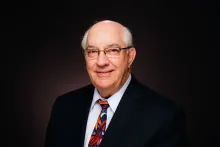
Mitchell Knapp is a graduate of Ambassador College with a BA in Theology. He has served congregations in California and several Midwestern states over the last 50 years and currently serves as the pastor of churches in Omaha, Nebraska, and Des Moines, Iowa. He and his wife, Linda, reside in Omaha, Nebraska.
