
John Elliott
This transcript was generated by AI and may contain errors. It is provided to assist those who may not be able to listen to the message.
It says in Genesis 17, in verse 1, When Abram was ninety-nine years old, the Lord appeared to him and said, I am the Almighty God. Walk before me and be perfect. Abraham is called the Father of the Faithful. In other words, he was one who sets an example. He's one that's to make an impression on us. He was also one of the first to really show his faith, not only in the sacrifice of his son Isaac, which was interrupted, but also by his trust in God, the way he walked, the way he lived, kept God's laws, commandments, kept his statutes, kept his judgments.
You and I need to look at our requirement that this Days of Unleavened Bread speaks to us about. Our need to walk, to walk before God, to walk with God, and to be perfect. The Passover is an awesome thing, and whenever we think about the sacrifice that Jesus Christ gave, it was a fabulous blessing that enabled us to walk.
Because without it, we were trapped. We were stuck like the Israelites. They couldn't go anywhere. You and I were sold into slavery to our sins. We couldn't walk with God. But that perfect sacrifice represented by our Passover and given to us enabled us to move. And following the Passover of the Lamb, you were released from slavery. You were free to go, unbound. The Days of Unleavened Bread show now a follow-on to that event. Our responsibility, our responsibility to journey, to march, to move, to take the symbol that we took at Passover as being the body of Jesus Christ and now apply that symbol as our goal, as our meaning to also be as He is, unleavened, perfect, pure, godly.
We've been eating this symbol now for a week. We are to move in our walk with God to a promised land, to a different place than where we started, transitioning from one mindset over to another mindset and ultimately reaching where the family of God is in the very divine kingdom of God. Today I'd like to talk to you about walking with God. This is part five of a series on God's plan of salvation, and it's entitled, Walk with God. After being justified by the blood of Jesus Christ, which is one of the things that the Bible says justifies us, after being released from bondage to sin, now we are to do something.
We are to walk rightly. Right. Not wrong, but right. That's what righteousness means. It's about right, doing right. God is righteous. We are to pursue the kingdom of God and His righteousness, or His right way of living. In Titus 2, verse 12, it says, teaching us that denying ungodliness and worldly lusts, we should live soberly, righteously. We're not to do the old. Now we're to do what is right in God's eyes, according to His words, and live godly in the present age, looking for the blessed hope and glorious appearing of our great God and Savior, Jesus Christ, who gave Himself for us.
Why did He give Himself for us? That He might redeem us from every lawless deed and purify for Himself His own special people, zealous for good works. See, we now act. He has acted. He has redeemed us. He has set us up in a position where we can follow Him. We can walk in the light. My wife and I saw a movie recently, somewhat against her will. It was at home. It's one of those things you can get through a Roku channel and it was free. And it looked kind of interesting. It was about trains. Everybody loves trains.
I remember having a train set when I was a kid and I like to imagine being on a real train and chuk-chuk-chuk-chuk. It went around. You could put some stuff in there and a little smoke would come out. Well, in this particular film, it starts out and this man who had a certain physical disability worked for another man who ran a model train shot. People came in and they bought trains. They looked at the little cars and they bought the little engines and they made the little tracks and they imagined the trains and what trains could do.
And then they also repaired the trains. This is a story about a quiet little man that worked in that train store. It was all about trains. His life was kind of dedicated to trains.
In fact, when the trains went by and he heard the trains, he got excited about that too. Well, the day came when he went to work but the owner died and the shop closed and that was the end of model trains. And this man didn't really know what he was going to do. Until one day an attorney contacted him and said, there's a document here you're going to want to see. The owner who died, he left you some property somewhere else. So he thought, well, that's interesting. So he traveled and visited this new property that he had acquired and in fact it was a train station next to train tracks that had been abandoned years ago.
And next to the train station were even train cars. The real thing. They were kind of falling and molding. But he got busy and fixed up the train station and he lived there and the trains would go by and he started keeping the schedule of the trains. He would go out and sit in his train cars and fix them up and he'd pretend he was on a train. It was all about trains. He'd sit on the roof of the train and watch the train go by. He'd travel into town and watch a certain crossing where the trains went and he knew where the trains were going and what they were doing.
That can be like us.
We can be church enthusiasts. Kingdom of God enthusiasts. We love the church. We love the Kingdom of God. We know all about it. We take notes about it. We're all excited about it. We watch people change and grow. We watch this. We even maybe take notes or photos and we're all thrilled.
But do we ever join the transition ourselves and actually walk? Or do we just get thrilled with all that God is doing? In His church and towards His Kingdom. It's kind of like the guy who loved trains. The only thing missing was he never got on one. He never rode a train. He never actually participated in the thing that he wrapped his life around. He was just an observer. But God warns us a lot about that. Let's go back to Exodus 12 and verse 29. Exodus 12 and verse 29. You know, we know in Scripture it's not the hearers, but the doers that are justified, etc., etc.
Exodus 12 and verse 29, we see this big event take place that you and I have been celebrating and remembering all week.
Came to pass at midnight. The Lord struck all the firstborn in the land of Egypt. Verse 30, Pharaoh rose in the night.
There was not a house where there was not one dead. Verse 31, he called for Moses, said, Rise up, go out. You know, leave. This is your opportunity to go.
Verse 32, Take your flocks and your herds, and as you have said, Be gone and bless me also. And so the people took off, in verse 34, with dough before it was leavened, and they marched. They moved. You can read throughout this whole passage here how God moved the children of Israel. In verse 51, it came to pass on that very same day, the Lord brought the children of Israel out of the land of Egypt. He led them. They moved.
In verse 3 of chapter 13, Moses said to the people, Remember this day in which you went out of Egypt, out of the house of bondage, for by strength of hand the Lord brought you out of this place. We need to walk with God. Walk as He leads us. We have to be participatory people who move. We have to go a long, long way.
God moved them. In verse 21 of chapter 13, The Lord went before them by day in a pillar of cloud to lead the way, and by night in a pillar of fire to give them light, so as to go by day and night. And He did not take away the pillar of cloud by day or the pillar of fire by night from before the people.
God wants us to walk in His way during this life. And yet, that's not the way we start.
How we walk is something God needs to know about you and me. It's integral to His judging us. If we look in chapter 16 and verse 4, Then the Lord said to Moses, Behold, I will reign bread from heaven for you. Yes, we have the bread of life. We have Jesus Christ as the one we can ingest every day. We can see this unleavened bread that we need to eat that reminds us of Him and reminds us of what we need to be as an individual and as a church. He's going to reign this bread from heaven, and the people shall go out and gather a certain rate every day. It's up to us to partake of this, that I may prove them whether they will walk in my law or not. There's a lot said in that one verse about your journey and mine. God needs to know. He needs to see what we are doing as far as following Him, walking with Him.
God said to Solomon in 1 Kings chapter 9 and verse 4, something that we should pay attention to. He said, now if you walk before me, as your father David did, in integrity of heart and in uprightness, to do according to all that I have commanded you, and if you keep my statutes, and if you keep my judgments. David, he says, walked.
David walked in integrity. He walked with God. He did what God said. He moved. He didn't just sit and say, oh, I'm so thankful that I'm free to walk. I think I'll sit down.
I think I'll just be thrilled about what God is doing and watch the parade of people transitioning as they follow God.
No, we are actually being judged, and God wants us to be like David, a man after God's own heart.
But you know, it's typical of humans to walk in other paths. This is not the only path available. And as you and I know, the process of transforming into children of God is a sampling, choice-making process of saying, well, this looks good. I think I'll try that. Well, that didn't work out real well. Guess I'll bounce back over here and do what God says again. But that looks so good. This other thing now, that looks wise for me. But that doesn't work out so well.
You know, and after a while, we're supposed to develop character of right choices, of character of habits that have been going on so long to where they become us. It becomes our way. God's way becomes our way. And His right way becomes what we want to do.
Satan leads a walk to destruction. You know, it says in Job 2, in verse 2, how Satan came before God. Lord said, from where did you come, Satan? And He said, from going to and fro on the earth and from walking back and forth on it. Satan didn't walk with God. He has his own walk. Very selfish, very relationship-dashing. Walking.
Walk. But God's way leads to salvation. In Matthew 7, verse 13, Jesus says, Enter by the narrow gate, for white is the gate, and broad is the way that leads to destruction. So Satan has this way that's nice and broad, it's level, it's easy to find, everybody knows where it is, you don't even need a GPS. There are many who go in by it. Because narrow is the gate, and difficult is the way, the path, the road, the way which leads to life, and there are few who find it. There are few who are interested in it. At times, even you and I aren't that interested in it. We have this kind of a way that seems right and clear, a way that seems right unto a man, and it leads us to things that are not life, but rather death.
So all week this week, we've been given a profound lesson by God, and that's to do something quite unusual. Just like the Israelites were asked to do something very unusual. Come out here in the dark, and let's march. Let's go somewhere where you don't know where you're going.
And trust me, it'll be better.
Wow, that's different.
But that process leads to life, whereas the one that seems so certain to us and so confident that it's going to work out leads to death.
All of us have sinned. All of us have trod in the easy way, the wide path. And at times, we still will. None of us are perfect, and at times, we will still get selfish. We may even break one of the major commandments.
But we shouldn't, because we've been rescued from that. We're no longer slaved to that. We've been freed from slavery to that wrong way, that wrong mindset. So we see in Ephesians 2 in the first three verses how there is a way, there's a course that we have followed.
And it says in Ephesians 2 verse 1, And you, he has made alive, who were dead in trespasses and sins, in which you once walked according to the course of this world. You once walked according to the prince of the power of the air. So don't convince yourself that you've always walked with God, or that necessarily I am even walking fully with God now. This is why we have the Feast of Unleavened Bread every year. This is why the Passover focuses us on the deep gift, the deep involvement of everything that brought us to being here, first of all, and then to what freed us to be able to walk in God's way.
Among whom we also once conducted ourselves in the lusts of the flesh, fulfilling the desires of the flesh and of the mind that feel so good for the self.
And we're by nature children of wrath. Wrath means the wrath, the destruction that's coming on God, the lake of fire. We are children who are heading for the lake of fire, just as others. But he has made us alive, and he's changing our course, if we will change. Consider for a minute the names of some books that the United Church of God publishes. The Road to Eternal Life. It doesn't sound very static, does it? It's a road to eternal life. We could have a companion booklet, The Road to the Lake of Fire.
With illustrations you don't need to read, just look at the pictures.
The Road to Eternal Life, it'll take a little study, a little scratching of the head, some meditation, some repentance, trial and error, a lot of repentance, forgiveness, and you'll gradually work your way down that road if you can find it.
Transforming your life.
You know, the... You see once in a while, ads for these movies on transformers. You have this one thing, and suddenly it's changed into some demonic beast or whatever, but it's different. It's transformed. It's changed. We might call it the process of conversion. I know we all think we got converted when we went in the baptism tank and came out and said, I'm converted. Well, and since we are, but we're just starting. We need to do the full conversion.
It says in Romans 12 too, don't be conformed to this world, to that course, to the society. Don't be conformed. We have been. We've been freed from that. Now we're expected to become like the unleavened bread. Rather, be transformed by the renewing of your mind. Now, the renewing of your mind is not something you just do. That is the whole part of God, His Holy Spirit, working in you and all the complexities that we often talk about in this calling, in this new covenant that we have. But we are to be transformed by this covenant and all the components and God working in us so that a renewing of mind takes place, so that we can test and prove what is good and acceptable and the perfect will of God. So we would be changing into that unleavened bread, and it should fully begin to represent us as, whoa, Jesus Christ spread, it pass over. Look, there's some similarity here. Not that they're at all equal, but we're headed towards being Christ-like. We're headed towards walking and living like God does.
It's not always common for everyone in the church to be on this path.
The Apostle John said in 2 John 1 and verse 4, he says, I rejoice greatly that I have found some of your children walking in truth as we receive commandment of the Father. We see Jesus Christ talking about 10 virgins, 5 don't make it. We talk about sheep and goats, sweet and tares.
We talk about a church that grew, grew, grew, and we like to think of all the growth and where's the growth in the church like Acts. But we forget Corinthians, Ephesians, Philippians, Colossians, we get into Peter, James, John, into Revelation and what Christ said in chapters 2 and 3. It's not that many left. Many are called. Few are actually chosen.
And those things are written so that we can wake up, redeem the time, make use of it, that we can begin to walk with God while there is still opportunity and to do it fully. Job was a good example of walking. He said, When God's lamp shone on my head and when by his light I walked through darkness, it's really a dark world that we live in and we can't find the way, we can't find the path. It's too cluttered. It's too many poles, too many temptations, too much of us as humans out there. That's so logical. But just as the other one, just as the Israelites started their journey at night and they had this flaming fire to light their path in a direction they did not know, did not understand, so Job says, By his light I walked through darkness. David wrote, You will show me the path of life.
Not something that you do, but a path. God shows it because He's on it. Jesus Christ is alive and He's living. Symbolically, this path, this road, this way of living, is something we're invited to and He is the light of that path.
Paul mentioned walking in agape love. That's where this path goes. It's in the mindset of God. It's again represented in that right type of bread that's not corrupted, it's not putrefied, it's not selfish and short-lived. About to start growing mold in a few days before the feast would even be over. But no, it's the pure, unleavened bread. All the original structure is there. And it lasts. If you don't eat all your unleavened bread this week, save it for next year. It'll still be there.
It just keeps on giving. Now we might ask a question. All right, how can I walk with God? If this feast is about walking, and these first six days that we've experienced are about my life, let's say, if we extrapolate that and say, all right, six days, a man, seventh day today would be the seventh day, so that would be the number of God. I'm supposed to be walking six days. How do I walk? And the seventh day, obviously, we really can't accomplish anything, and we certainly can't reach the promised land without God gifting that to us and actually providing that for us.
God doesn't walk where man walks. Our environment is pretty much... We're land-based, aren't we?
We don't fly through the air ourselves. Nobody's been able to do that. We really don't do real well on water unless we protect ourselves somehow. Shield ourselves from the water. We go out there for a little while and make it back. We like land.
In contrast, God's environment, if you read the Scriptures, includes lots of water. Water, water, water. During the creation, he had tons of water in the atmosphere and tons of water on the earth, and he created water coming up from the earth, and the oceans, about 75% of the earth's land surface. You and I have up to 75% of water as the structures of our body. God's all about water. So many things in the Bible from the baptism that comes from God, the grave that you and I are shown. It's dangerous to us. God puts us in something that could kill us. Water's not our natural zone, but He said, no, come on in. This is of me. This is good. This is going to wash you. This is going to clean you. We think, I don't know. You know, when you go over to Africa and you tell somebody, I'm going to put you underwater, and they've never been underwater in their life, grown men start to shake.
This is not the place where humans go and come back from a lot of the times. The Holy Spirit is represented, in some cases, by water. In fact, it says in the future that the knowledge of the Lord will cover the earth as the waters cover the seas.
You might just say, God is really at home when it comes to water. But that's not necessarily a place that you and I rush out to. Let's go to Psalm 77 in verse 13. Psalm 77 in verse 13.
Psalm 77.
Beginning in verse 13.
Your way of God is in the sanctuary. God's way is somewhere different than ours. If you want to use an analogy, you could drop down to verse 16.
The waters saw you, O God. The waters saw you, and they were afraid. The depths trembled. The clouds poured out water. The skies sent out a sound.
Verse 18. The voice of your thunder was in the whirlwind. Lightnings lit up the world. Yeah, God's no problem with the storms and the water and the seas. Verse 19. Your way was or is in the sea. Your path in the great waters. Now, does that just make you want to say, oh yes, I want to walk with God in the sea and in the great waters? See, that's not where you and I tend to be in a certain analogy here. You led your people like a flock by the hand of Moses and Aaron. God led them into a place that's kind of like going into an ocean. It's kind of like going into a place they couldn't really understand. They'd never been there. It was a place that had risk as far as they were concerned. They were out of their element, but with light and power, God led them. And they did very, very well.
Man is not really at home on water. We're more of a temporary visitor there. You might dive down with a face mask and hold your breath and see some sights and come back up, but you're not going to be down there very long, even with a tank of air. You might go out in a boat, but, you know, as the film recently called All Is Lost said, there are dangers out there and lots of people in boats go to the bottom of the ocean. I like the concept of visiting water.
It's not where I live. Let's go to Psalm 107, verse 23.
Psalm 107, verse 23. Here's a passage that I've read for years as we visited various maritime places, talked with people in Alaska, over in Boston, who go off out in the ocean, and there's always placards of those who never came back and ships that were lost, and the stories of those. It's quite tragic. This is an interesting statement here in Psalms, chapter 107 in verse 23.
It says, those who go down to the sea in ships, who do business on great waters.
Now, it's interesting, after the feast last year, my wife and I got on a ship coming home and was out of the ocean, and the seas at one point were 25 feet swells and the ship couldn't go there, so we weren't allowed to get out of the harbor for a while, but we finally were able to go out there and play in the big waves. And I just love that. And I just, my wife knows, I'll just watch those waves, and I'll imagine a little boat out there. So we got home, and I called up our good friend Bob and Elaine and said, let's go out to sea.
I know if I used the word fishing, he would be all on board. So he says, yeah, we could go out to Catalina Island and just say, no, no, no, no, no. I want to go out there, maybe a hundred miles out to sea. He said, okay, okay. Well, there's some tuna that have been out there. So we left San Diego in his boat, 25-foot boat, and before we went, I said, tell me, when this thing gets a leak in it, you know, is it full of styrofoam? Does it kind of bob around out there? He says, oh, no, you got about 10 minutes. And, and, you know, the bottom of the ocean where we're going is between one and 3000 feet down. I said, well, do you have a lifeboat? No. I said, well, why don't we take that raft of yours and let's fill it up and tie it to the bow? And so we did that. So we're, we look kind of dorky, it's a big old raft up there, and off we went. And we traveled hours, hours until finally the sun set. And he said, you know, there's no place to dock, and, you know, I don't have a 2000 foot chain to drop an anchor. So we're just going to float around out here. The wind came up, and the swells came up, and it's doing this and doing that. And finally it got so dark. He said, I don't want to drive anymore because I've hit one of these containers before and it gashed aside in my boat and it nearly sank. He says, maybe we should just go back. I said, no, no, no, no, no. I'll sit out here. You go in sleep. I'll sit here. We were doing this and, you know, the whole thing. I wasn't getting too sick. It was fine. I just sat out there and I loved it. I just ate it up. Little shark fins at night, you know, coming around. The moon came up. It was gorgeous. Okay, so the next morning, first light out there sitting, and he comes out and he says, oh, okay, we're 90 miles out, 10 more miles, and there's fish. So he fires up the boat. And the motor, you know, the prop thing hanging out there, is sideways. And he takes the steering wheel and it won't move. So he puts it in gear and we just did this little turn. That's all he could do, turn. He says, oops.
He says, you know, we're 90 miles out and there's nobody coming.
It's interesting to be out there and this particular scripture, those who go down to sea and ship suddenly apply to us. And they see the works of the wonders in the deep. Every time he put his foot out there on that thing, you know, the outdrive to push it, see if he could get it to move, the sharks were coming around. They came clockwise around the boat and just had no head weight on this matter at all.
So he commands and raises the stormy wind, which lifts the waves of the sea. They mount up to the heavens. They go again to the depths. Their soul melts because of trouble. They reel to and fro and stagger like a drunken man and are at their wit's end.
Been there.
And they cry out to the Lord in their trouble. Because, see, that's not our environment.
And he brings them out of their distress and he calms the storm so that the waves are still. And then they are glad because they are quiet. And he guides them to their desired haven. You know, we were able to further complicate things by totally breaking the steering system.
And then disabled the autopilot connection and found that, had we not broken the steering system, we would have been good to go. But, you know, I'm out there with a good mechanic and I got some ideas too. So God helped us. And when we were finally ready to go, he says, so do you want to go 10 miles further out or just kind of start working our way back?
You know, we are not long-term in that environment. Not long-term. In Matthew 14, verse 22, just notice what Jesus says here. Matthew 14, verse 22. He's taking us into environments that we would typically often perish in. Actually, I had the time of my life. I was not concerned at all. We did have one little backup called a radio. It was just a $10,000 call if we made it.
See? So we tried all other options first and thankfully they came through and God helped us. But that's kind of one of the blessings of living where we do, that there's quite a support team out there available. So in Matthew 14, verse 22, remembering here that water is synonymous with His Holy Spirit. Like I said about our baptism, you know, God and His Logos, His Word, the washing of the water by the Word, He talks about. It's all about water. And so in Matthew 14, 22, it says immediately Jesus made His disciples get into the boat.
That's interesting to just think about it. Now I want you guys, I'm ordering you, get in a boat and go.
And He, after He'd sent the multitudes away, went up on the mountain Himself to pray. Now when evening came, He was alone there, but the boat was now in the middle of the sea, tossed by the waves, for the wind was contrary.
Jesus put them in an environment He was very comfortable with. See, it's an all-water environment. There's nothing else there. It's just all water. Very, very fascinating that these two gases of oxygen and hydrogen can make this plasmatic stuff called water.
We look in verse 25, we see that this is very synonymous with an environment that God is very comfortable with. While they are panicking, tossed by the waves, we see in verse 25, in the fourth watch of the night, Jesus went to them walking on the sea.
Quite at home. Quite His environment that He had sent them into. No problem. He just seemed quite content and in His element, walking on the sea.
In verse 27, Jesus spoke to them saying, Be of good cheer! It is I! Don't be afraid. Don't be afraid of this trek that you're on. Don't be afraid of coming into a different environment, into a godly environment. It's unknown to you. It's fearful to you. If you want to use this analogy.
So in verse 27, He says, Be of good cheer! You and I need to have the confidence that this way that we're called to walk, that sometimes looks so terrifying when we're going to lose our job over the Sabbath. It's so frightening that we might miss out on some excitement or fun or something that would help me if I sacrifice and serve others.
To don't be afraid, but be of good cheer.
Peter said, Lord, if it's you, command me to come to you on the water. Was this some walking on water training that Christ was initiating? Or was he making a point?
You know, God, help me walk with you. Help me walk like you, you could say.
And when Peter had come down out of the boat, after Jesus said, come, He walked on the water to go to Jesus. They were in a unique environment that God is very comfortable with. That can be very scary to us.
And what did He say? Verse 31, Jesus stretched out, His hand caught Him and said, Oh, you of little faith. Why did you doubt?
Why do you and I sometimes walk through the valley of the shadow of death and doubt and say, Oh, I've got to run. I've got to take matters into my own hand. I have to save myself. I have to get back to land, back to what I know, back to society, back to human nature and take care of myself. How many of us would be very godly until a crisis came and then we'd run for some tool of protection that would be used to hurt someone else? That we would go back to our carnal way of warring or fighting with other individuals?
Jesus wants us to trust the difficult path, the unexpected, to trust God and walk with Him anywhere, wherever He leads. And we don't always know where that will be.
You know, the second chapter of Proverbs is all about choices of paths.
If you read that particular Proverb, it warns you, avoid this path, but go on this path. You have choices. Choices have consequences.
Choose. Choose the wise, God's wise paths, and they are paths of life.
How do we walk with God? Well, if you take the model prayer outline, there's a real good kind of a chart there to plan your itinerary by. To start off focusing on God and His Kingdom, His righteousness.
Then transitioning into digesting and taking on the spiritual food that we need and repenting of the wrong path, but really focused on what we've been doing all week. This bread of life, taking that bread of life, and walking in harmony with others and forgiving others as we all make mistakes journeying down this path, rejecting the wrong path, but seeking the right path.
You and I need to feed on the bread. We need the washing of the water, of the logos. We need to be pursuing an environment that is not one that we're all that familiar with as human beings.
Some statements of Paul and of Jesus Christ that came from the first sermon in this series include that we are saved by... it's often translated grace. So the Greek word is cherus or charis. Thayer's lexicon defines this word that is most commonly translated grace as being this.
The merciful kindness by which God exerting His holy influence upon lives turns them to Christ, keeps them, strengthens them, increases them in Christian faith, increases them in knowledge, increases them in affection, and kindles them to the exercise of Christian virtues. See, that's what we're to be doing. That is what this plan of salvation is about. It's about walking and being led by God, led by His Spirit down a path.
And by that, we are being saved. Through faith, trusting God in that path.
We are walking with a God that is gradually changing us, and it's so slow at times. It takes time. But our entire walk, all of it together, brings us to salvation.
Consider the many aspects, the complex aspects of this walk. It's not just, I'll put one foot in front of the other, and I'll just go to the door. It's quite complex. Consider these components, as Paul said, we are saved by Jesus. We are saved by Jesus' life. We are saved by Jesus' death. We are saved by the name Jesus. We are saved in this hope. Those who believe in the Lord Jesus Christ shall be saved. If you confess with your mouth the Lord Jesus Christ, and believe in your heart that God has raised him from the dead, you will be saved. Whoever calls upon the name of the Lord shall be saved. The gospel which you have received, by which you are also saved. You are being saved by Cheris, this God who is developing and changing us and leading us through faith. And that not of yourselves, it is the gift of God. Paul says you are saved through the love of the truth. Paul says you are saved by God, the Father's mercy. We are walking down a path where all of those elements are at work, including some more that Jesus Christ mentioned. He who endures going down this path will be saved. He said if you want eternal life, keep the commandments, give to the poor, and follow me. We have to walk with him.
He says, if we want eternal life, pursue it.
Hunger for the unleavened bread, thirst for the water of life, for the Holy Spirit.
You and I need to walk. We've been released from slavery. We've been baptized in our Red Sea in that journey. We need to march with him to the Promised Land. And so if we want it, we have to hunger for it. We have to thirst for it.
This is in Revelation 21 and verse 6. I will give the fountain of the water of life freely to him who thirsts. The question I ask is, do I really want the water of life? Do I really want the bread of life? Do I really want that path? Do I really want to walk rightly or righteously? Do I really want to be the unleavened bread that I've been eating all week? Or do I say, oh, this is something else, or somebody else has done this, or I don't like this unleavened bread.
I want a big old hamburger bun. I want some kind of a cinnabon or something. This doesn't really appeal to me. Or are we changing and saying, you know what? This is the true bread. This is the real deal. That's what I want. Let's go to John 6, verse 41 through 67.
John 6, verse 41.
The Jews then complained about Him, saying, I am the bread which came down from heaven.
And Jesus said in verse 43, don't murmur among yourselves.
No one can come to Me. No one's going to walk with Me. No one's going to journey down this path. No one can come to Me unless the Father draws Him. That has to happen first.
And I will raise Him up at the last day. You know, in one sense, this day-to-day is kind of like after the six-day journey, God does something special. We get raised up. We don't do that. He does that. It's like Israel, you know, the Israelites traveling out of Egypt. They did what they could to get out of Egypt, but today they were trapped at the edge of the Red Sea. And that was not an environment they wanted to go into. They just didn't know anything about that one. They thought they were dead.
But here we see, verse 48, I am the bread of life. Verse 51, I'm the living bread, which came down from heaven. If anyone eats this bread, he will live forever.
In verse 54, whoever eats my flesh and drinks my blood has eternal life, and I will raise him up at the last day. This is a path. This is a way. This is something that you and I need to really get involved in.
Unfortunately, there were those who said, that's not what we do here. We don't eat flesh and drink blood. We don't eat this unleavened stuff and drink wine. We have stuff that we do as humans here, and we're going to go do that.
You know, in verse 60, it says, therefore many of his disciples, when they heard this, they said, this is a hard saying.
When Jesus knew in himself that his disciples complained about this, he said to them, does this offend you? You know, how does it work for you and me? In verse 64, there are some of you who do not believe.
Now, in verse 66, it says, from that time many of his disciples went back and walked with him no more. We can begin a journey, but you know, it can be such a different path, a different thing that we don't really ever participate. We can like to watch it. We can take notes on it. We can observe it. We can be cheerleaders of it, but we might not actually get on the train and actually go down the track.
And so, from that time, many went back and walked with him no more. So he asked the classic question. It's a good one for me. Maybe it's good for you. Jesus said to the 12, do you also want to go away?
Well, that hits right at the heart of these days of Unleavened Bread and our calling to salvation. Do we also want to go away? Do we want this walk with God? Or do we want to do something else?
Let's go to Psalm 23 as we wrap this up and look at a summary of walking with God. The 23rd Psalm is all about doing something that's very different, in some ways disconcerting, scary, dangerous, unfamiliar.
23rd Psalm says, The Lord is my shepherd. I'm declaring that I'm walking with this shepherd. Now, I'm not like the shepherd. I'm a sheep. I'm not real bright compared to the shepherd. But I'm declaring that I'm walking with him.
I shall not want. I have faith that he knows that all things will work out to good if I follow him.
Now, the interesting thing is, he makes me to lie down in green pastures. Who would have thunk? You know, I thought my way would have led to green pastures, but it turns out this odd way that doesn't make any sense that scares me to death has some really nice pastures. Life is really good. Relationships are really good. It's just, it's mind-boggling. And he leaves me beside still waters. Of all things that sheep don't like, a lot of it's water. But here is some really nice, cool water that they can just sort of stick their lips into. It's still, and they can get nourished by it. This is working out, in other words. He restores my life. He leads me in the paths of right, of righteousness. He leads me. I don't know those paths. I don't know how to find the difficult path. I don't know how to get to this tiny little door that's the size of the needle, eye of a needle. But he leads me there.
And he does it for his namesake, for the family of God's sake. And yea, though I walk through the valley of the shadow of death. Yea, I'm not familiar with this country. I don't know about oceans and water and as a sheep, you know, white against dark backgrounds with wolves around, and no protection.
He leads me down there.
But I will fear no evil. For you are with me, and your rod and your staff, they comfort me. You'll correct me and you'll defend me. And you won't let anything come upon me that I cannot handle.
And you prepare a table before me in the presence of my enemies. And you anoint my head with oil, my cup runs over. Surely goodness and mercy will follow me as I travel, as I walk with God, all the days of my life. And eventually I'll dwell in the house of the Lord forever. Imagine how that worked out. What a journey! What a journey into the absolute unknown. And that's what Israel was doing as they came out of Egypt. A journey into the absolute unknown that was unbelievable.
Your need to walk with God was symbolized by that journey. It started in darkness.
It started in an environment that actually is God's. Because when God shows up, He is light. And anywhere He is, there is darkness there naturally. So He's at home where darkness is because He's so bright. There is no darkness. But when you and I show up in darkness, it's a terrifying thing.
They started in darkness, but there wasn't dark because God was there. They didn't know where they were going, but God led them.
They came to the Red Sea and what did they say? Oh no! Water!
And God said, hey, welcome to my world.
This is no problem. I've got a rainbow over my throne. You know, I love water. So we see in Exodus 14 and verse 15. Let's just notice here. Exodus 14 verse 15. Because it's such a big event that happened on this very day.
And the Lord said to Moses, why do you cry to me? Why are you nervous?
Tell the children of Israel to go forward. You know, let's go.
Lift up your rod, stretch out your hand over the sea and divide it. And the children of Israel shall go on dry ground through the midst of the sea. Wow!
It's just so easy with God. It's like, welcome to my world. Let's go see some cool stuff down there on the bottom of the ocean and march across. So they did that. In verse 19. The angel of God, who went before the camp of Israel, moved and went behind them. And the pillar of cloud went from before them and stood behind them. It was a cloud of darkness to the Egyptians, light to the Israelites. He must have had a really good time.
Must have been just great.
You know, God led them in His environment very safely, very effectively. But you see, in verse 19, when we read this, we find that's not an environment for man. It's not an environment that works well if you're not walking with God. So it came between the camp of the Israelites and the Egyptians. And verse 21, Moses stretched out his hand over the sea and the Lord caused the sea to go back. See? This is all that God's in His realm, His command. Strong east wind made the sea into dry land. The Israelites went in the midst of the sea. Verse 23, what we find, you see, if you're not walking with God, it's the opposite. The Egyptians pursued and went after them.
Came to pass, verse 24, that the Lord looked down on the army of the Egyptians.
Verse 25, He took off their chariot wheels. Oops. Then they got very afraid.
Verse 26, the Lord said to Moses, Stretch out your hand over the sea, that the waters may come back upon them. And Moses did that. Verse 27, the sea returned to its full depth while the Egyptians were fleeing into it. Verse 28, the waters returned and covered the chariots, the horsemen, and all the army of Pharaoh, so that all that came into the sea after them, not so much as one remained. That, you see, is the normal environment for humans if we're not walking with God.
Water, though often fatal, certainly dangerous to humans, it's foreign, it's not foreign to God. And in that sense, we need to trust God. We need to trust His environment, His direction, His path, and to things that, to us, can be very scary. Eventually, this difficult path will lead to a door.
This door is tiny. It's difficult. The environment on the other side of the door is kind of interesting. Let's conclude by reading Revelation 21. We'll start in verse 1. Interesting thing happens when we get to the kingdom of God, when the physical realm is done away with. We enter where He lives. But we enter as a spirit being. We enter as a full divine member of the family of God. And no more are there things there that are foreign to us, everything is an environment that's very compatible. And so John now enters that in a vision into a new world where humans will not be human. And I saw a new heaven and a new earth, for the first heaven and the first earth had passed away. Also, there was no more sea. There was nothing there that was foreign, or odd, or out of bounds. There was nothing there that wasn't just right. And I, John, saw the holy city, New Jerusalem, coming down out of heaven from God, prepared as a bride, adorned for her husband. And I heard a loud voice from heaven, saying, Behold, the tabernacle, the dwelling place of God, is with men, and He will dwell with them, and they shall be His people, and God Himself will be with them and be their God. This environment is what we're heading for. It's not that it won't be without water, though. Notice chapter 22 in verse 1. And He showed me a pure river of water, of life, clear as crystal, proceeding from the throne of God and of the Lamb.
Water, this path, right, the way of God, the mind of God, the unleavened bread, the unique thing that you and I have been called to participate.
That's what the God family's about. Do I want it? Do you want it? Are we going to move from where we are towards it? Are we going to have the courage and the faith and the trust, like David did, as a sheep? If so, that's our destiny, and this feast is our feast. This is your feast. This is the one feast out of seven that tells you and I what we need to be doing in order to participate in all the rest that the festivals represent.
I hope, rather, that this feast won't just rush away, that you will continue to consider all that God has done, the examples that He's laid down in history of the patriarchs, the Exodus, all of the events that Jesus Christ and the Father have done for us that have spanned so much time to bring us to this little window of opportunity, your little vapor, your little hand breadth of life, this little space, this little tiny opportunity that we have right now, and that you'll fully maximize it by walking with God.
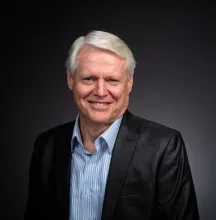
John Elliott serves in the role of President of the United Church of God, an International Association.
