
Mark Welch
This transcript was generated by AI and may contain errors. It is provided to assist those who may not be able to listen to the message.
I did want to mention one other thing that Mike wasn't aware of that I just want to mention.
I really would like all of you to be praying fervently for Heather Easton. Of course, you all know she has kidney failure. She also has another problem now that's very, very serious. I don't know exactly how to come to the test to find out what the extent of that problem is, but in addition to her kidney failure. It's been really, really a difficult time for Heather and Chris. I do want to go into details, but certainly keep Heather in your prayers. It's a very, very difficult time for her right now with the kidney failure now compounded by another potentially very, very serious problem that she discovered this past week.
Glad to be here with you. We were down in Ann Arbor this morning. The sermon I gave last week, I gave in Ann Arbor this morning, and that changed the schedule. Kind of left a vacancy here for today, so I got to back here today. That was good news for you or not, but it's good news for me. I enjoy being here. But due to the cancellation of services in Ann Arbor last Sabbath, because of the heavy snow and hazardous driving conditions, again, I changed my schedule. So again, that's an opening to be back here with you today. I want to talk about what's kind of not too far away now from beginning to think about observing the Passover and God's Holy Days. The world, of course, observes Christmas and Easter, which supposedly commemorates Christ's birth and resurrection. However, both, as we know, have pagan origins, which far predate the birth of Christ, which any Google search will confirm. You can go on the internet and find out very quickly. But even if we look at those holidays as commemorating the birth and resurrection of Christ, as they claim, they do not reveal God's plan and purpose for mankind. So they're very shallow in that sense. The only way to fully understand God's plan and purpose is through the observance of God's annual feast and Holy Days, which we're going to be soon entering into once again, in about a few weeks from now, by the end of March. To begin, as we are now about to enter God's Holy Day seasons, I want to show how they portray God's great plan of salvation for mankind. It's always good to review that. I think it's good to review it in one sermon as we think about this coming year and observing those annual feasts and Holy Days. So the title I have for my sermon here this afternoon is God's Plan of Salvation as revealed by his annual feasts and Holy Days. God's plan of salvation is revealed by his annual feasts and Holy Days. So I want to begin by asking this particular question, because this really is kind of the key to the whole thing in one sense. What is God's desire? What does God desire in His creation of mankind and making man his image and likeness? What is God's great desire? God, through the Apostle Paul, plainly tells us what God's desire is. Let's turn there and read it for ourselves. It's recorded for us in Paul's first letter to Timothy.
First Timothy, beginning in chapter 2, verse 1. First Timothy 2, verse 1. It says, Therefore I exhort, first of all, that supplications, prayers, intercessions, and giving of thanks be made for all men, for kings, and all who are in authority, that we may lead a quiet and peaceful life, and all godliness and reverence. For this is good and acceptable in the sight of God, our Savior, who desires what? Verse 4. Who desires all men to be saved, and to come to the knowledge of the truth?
Now, if that's God's desire, God must therefore have a plan through which he will strive to accomplish that particular desire and that purpose. So when it comes to God's desire and God's purpose and God's will, let me ask a couple questions. What does God not will for anyone? What does God will for everyone instead? And when it comes to God's will for everyone, does man have a role to play in fulfilling God's will and God's desire? Do we have a role to play in that? There's actually, interestingly, there's one scripture that answers all those questions for us. This time, actually, through the Apostle Peter. You know, I've known people in God's church who have gotten discouraged at times, wondering why God allowed certain things to happen and wondering why God did not seem to fulfill his promise, that time to intervene, take care of the situation or problem they were facing. There could be one doing about that right now in her situation, as young as she is. But God does not look at time the way we do. Let's take a pause for one look at that. Let's go to 2 Peter. 2 Peter chapter 3.
2 Peter chapter 3, beginning in verse 1, where Peter writes, Beloved, I now write to you this second epistle, in both of which I stir up your pure minds by way of reminder, that you may be mindful of the words which were spoken before by the holy prophets and the commandment of us, the apostles of our Lord and Savior, knowing this verse, that scoffers will come in the last days, walking according to their own lusts. And saying, verse 4, where is the promise of his coming? He's been talking about that for decades, every century somehow. Where is the promise of his coming? For since the fathers fell asleep, all things continue as they were from the beginning of creation. See, that's a good question. Where is the promise of his coming?
Peter then goes on to say this in verse 5 and 6, verse 5, For this they willingly forget that by the word of God the heavens were of old, and the earth standing out of the water, and in the water, by which the world that then existed perished, being flooded with water. Referring, of course, to Noah's flood. And back in the days of Noah, before the flood, they were also scoffers, they were also scoffers, walking according to their own lusts. Back in that day, saying, when is the promise of this flood you're talking about? You talk about the world's gonna be flood? Noah's building an ark? Where you been this huge ark for out here? It took him 100 years to build the ark. I'm sure there were scoffers. Look at that. This guy's crazy. What in the world is he doing building an ark out here in the middle of nowhere? There's not even any water around. Saying there's gonna be a flood? He's got all the animals on there? This guy's nuts.
Second Peter 3, verse 7, But the heavens and the earth, which are now preserved by the same word, are reserved for fire until the day of judgment and perdition of ungodly men.
In other words, there is a consequence for not believing God and for not believing on His word.
But as I already stated, God does not look at time the way we do. Verse 8, By beloved, do not forget this one thing, that with the Lord one day is as a thousand years and a thousand years as one day. In what regard is one day as a thousand years? Well, there are seven days in a week. With the seventh day, of course, the day we're observing today, a day being the day of rest. And there are seven thousand years in God's plan of salvation. Seven thousand years for God to fulfill His plan and purpose for mankind. With the final period of one thousand years being a millennial day of rest, with Satan having been removed for a thousand years. And then begin verse 8, Do not forget this one thing, with the Lord one day as a thousand years, and then it adds, and a thousand years as one day. You know, one thousand years may seem like an eternity to us, but with God it's only a moment in time. Time doesn't mean anything to God.
So now then, we come to the verse that answers all of our previous questions, and that's 2 Peter 3 verse 9, where it says, The Lord is not slack concerning His promise, as some count slackness, but is long suffering toward us, not willing that any should perish, but that all should come to repentance. So what does God not will for anyone?
He is not willing that any should perish. What does God will for everyone instead? God wills that all should come to repentance. Does man then have a role to play in fulfilling God's will? Absolutely. Everyone must at some point in their life come to repentance. That's the role we have to play. God can't do that for us. Everyone must change from doing what is right in their own eyes to doing what is right in God's eyes. Now then, let's show how God's annual feast and holy days portray God's plan of salvation for mankind. We'll just go in order. First, we have the Passover.
If all sinned...it's a question...if all sinned and fallen short of the glory of God, what did the Apostle Paul say? I won't turn there, I'll just read it. He said, all have sinned and fall short of the glory of God. Romans 3 verse 23. What is the wages of sin? What do you earn? What do we earn when we sin? Go contrary to God. The wages of sin is death. Romans 6, 23. And when it comes to God's plan of salvation, what then must happen first? The wages of our sin must be paid so they can be passed over and forgiven as repaid by the New Covenant Passover. Now, as we know in the Old Testament, on the Passover day, a lamb was flying, but that Passover lamb was only symbolic. It could not pay the penalty for our sins. Far greater sacrificial lamb would be required for that. Did John the Baptist proclaim who that was going to be? Let's go to John chapter 1.
John chapter 1 verse 29. The very beginning of Christ's ministry. As he begins to fulfill that ministry, here's John the Baptist. And what does he say? What does he see? John 1 verse 29. The next day, John saw Jesus coming toward him and he said, Behold the Lamb of God who takes away the sin of the world. No Old Testament lamb could do that. Those Old Testament lambs were just symbolic of Christ as the Lamb of God. Only Christ can take away the sins of the world. So how did that happen? How did he go about that then? How did Christ as the Lamb of God take away the sins of the world? Before he died, the Apostle John was given a revelation on the Allapattimos, going up the book of Revelation. And that revelation recorded for us, as I said, in the book of Revelation. And in that revelation, John was taken in vision to the throne of God. He's on the Allapattimos. He's taken in vision to the very throne of God. In that vision, what did John see in the midst of God's throne? Let's turn to Revelation, chapter 5, for the answer. Revelation chapter 5 verse 6. And I looked, and behold, in the midst of the throne, and of the four living creatures, in the midst of the elders, stood a lamb as though it had been slain. He saw a lamb as though it had been slain. In other words, he saw Christ as now being the slain Passover Lamb of God.
Which resulted in what? What did that result in? It resulted in a new song, Revelation chapter 5 verse 9. And they sing a new song, saying, You are worthy to take the scroll and to open its seals. For you were slain, and have redeemed us to God by your blood, out of every tribe and tongue and people and nation. And you have made us kings and priests to our God, and we shall reign on the earth. In other words, you have made it possible for people out of every tribe, tongue, and people and nation to be redeemed back to God, because our sins cut us off from God. Christ made apostles to be redeemed back to God again, so everyone can now have the opportunity to fulfill God's plan and purpose in His desire.
So how did God's plan and salvation begin? You know, it's very interesting. It did not begin with the birth of Christ, as Christmas supposedly portrays. It began with the Passover. It began with the death of Christ, who died on the Passover day. It began with His death, not His life, not with His birth, I should say. It began with Christ becoming the Passover land slain from the foundation of the world, Revelation 13, verse 8. Is that where it ends? Does God's plan of salvation end with Christ's death, or is that only the first step?
What comes immediately after the Passover? Immediately after the Passover, of course, comes the days of unleavened bread. Now that our sins are paid for and covered under the blood of Christ, do we have a role to play? Is there something we must all strive to do? If so, what must that be? Immediately following the Old Testament Passover, what were the people of God commanded to do? Let's go back to the book of Exodus. Let's go back to Exodus chapter 12. Exodus 12, verse 15.
Seven days you shall eat unleavened bread. On the first day shall move leaven from your houses. For whoever eats unleavened bread from the first day until the se... excuse me, for whoever eats leavened bread from the first day until the seventh day, that person should be cut off from Israel. So immediately following the Old Testament Passover, they were commanded to eat unleavened bread for seven days. And this is here to remove all leaven from their houses. Why? What did that signify spiritually speaking? You know, at the time of Christ, the city of ancient Corinth, and we've been there. I've seen the ruins of ancient Corinth. We were there to marry raining crews, and we saw some things that indicate what Corinth was like back at the time of Christ. But at the time of Christ, the city of ancient Corinth was a very immoral city, which affected some members of God's church in Corinth back at that time at the time of Christ. Let's go to 1 Corinthians. Paul's first letter to the church of Corinth. Let's go to 1 Corinthians chapter 5, beginning in verse 1. 1 Corinthians 5 verse 1, where Paul writes, It is actually reported there is sexual immorality among you, and such sexual immorality is not even named among the Gentiles, that a man has his father's wife. Verse 2, When you are puffed up, have not rather mourned that he who has done this deed might be taken away from among you.
Now what does love and do? It puffs up.
And when the vanity of our human nature puffs up, what do humans tend to do?
They tend to glory in things that are contrary to God, which was happening in the case of Psalm in Corinth. Verse 6, chapter 5 verse 6, you are glory, and they were getting to glory, and things that were contrary to God. And he says, your glory is not good. Do you not know that little leaven leavened the whole lump? What does leaven therefore symbolize, spiritually speaking? Symbolizes sin. It symbolizes being puffed up and glorifying things that are contrary to God.
What do all of us then need to do? What role must we all play? Verse 7, therefore purge out the old leaven that you may become a new lump, since you truly are unleavened, for indeed Christ our Passover was sacrificed for us. There's two possible meanings to that. Number one, they were truly unleavened in the sense that this was during the days of unleavened bread. So they were unleavened physically in that sense, if they're observing that day, those days. And of course, you could also say this, because there might have been some who were also taken to Passover in a worthy manner with an attitude of repentance, who were maybe in that sense, and spiritually unleavened. Not everyone probably had the same wrong attitude. But as a parent, not all of them had done that in the right way or had the proper attitude. They were spiritually unleavened. Some of them were maybe only physically unleavened, and they had wrong thoughts. They were glorying. They were puffed up in their minds, and they were letting their human nature's day precedence in their thinking, which is Paul and I'll marsh them to see that, understand that, and purge that out of their life. Verse 8, Therefore let us keep the feast, but not with the old leaven, nor with the leaven of malice, holding things against people, and with wickedness, and glorifying, and letting the vanity of your carnal mind direct your thoughts. But let's keep the feast with the unleavened bread of sincerity and truth, according to its true spiritual meaning and intent. So what then is the second step in God's plan of salvation, as portrayed by the days of unleavened bread, is putting sin out of our lives. But there's more to it than that.
How do we put sin out of our lives?
By our true willpower, how do we do that? Well, that is what I could say is the mystery which has been hidden from ages and from generations, but has now been revealed to his saints, which is Christ in you, the hope of glory. Colossians 1, verses 26 and 27.
So how do we put sin out of our lives? We have to put Christ into our lives. We have to allow Christ to live his life in us. That then leads us to step three in God's plan of salvation, as portrayed by God's annual feasts and holy days. That then leads us to Pentecost.
What happened on the day of Pentecost in the year Christ died? Well, we're all familiar with that. Let's go to Acts chapter 2. It tells us exactly what happened on that day of Pentecost. New York Christ died. He appeared to his disciples 40 days after his resurrection, and 10 days after that would come to the day of Pentecost. And here's what happened. It was recorded in Acts chapter 2, beginning in verse 1. When the day of Pentecost had fully come, they were all with one accord in one place. And suddenly there came a sound from heaven of a rushing, mighty wind, and it filled the whole house where they were sitting. Then there appeared to them divided tongues as a fire in one set upon each of them, and they were all filled with the Holy Spirit and began to speak with other tongues, other languages, in other words, talking about languages, as the Spirit gave them utterance.
So on the day of Pentecost, in the year Christ died, God poured out his Holy Spirit, which is the means by which Christ can live his life in us, which then in turn gives us the power to strive to put sin out of our lives. So a third step in God's final salvation is to receive God's Holy Spirit of baptism so he can have the power to overcome and to persevere.
Luke 24 summarizes these first three steps. Let's turn to Luke 24.
Just back a little bit from John 1. Luke 24, verses 45 and 46. We'll begin in verse 45, Luke 24, beginning in verse 45, which summarizes these first three steps.
Luke 24, verse 45, and he opened their understanding that they might comprehend the scriptures. Then he said to them, verse 46, Thus it is written, and thus it was necessary for the Christ to suffer and to rise from the dead the third day, as portrayed by the Passover. Verse 47, And the repentance and remission of sin should be preached in his name to all nations, beginning at Jerusalem, as portrayed by the days of unleavened bread. Second step in God's final salvation. And then verse 49, And behold, I send the promise of my Father upon you, but tarry, or wait, in the city of Jerusalem, and you are endued with power from on high by receiving God's Holy Spirit, again, as portrayed now by the day of Pentecost. So that summarizes all three of God's first three steps in God's final salvation.
Now before we move on to trumpets, I want to first pause for a moment by asking this.
How many harvest seasons are there? Very important in God's final salvation. How many harvest seasons are there? Well, there are two harvest seasons. In the Old Testament, Pentecost is called the Feast of Harvest and the Feast of Weeks, both referring to harvesting the first roots of the spring and early summer harvest. Let's go back there and read that for ourselves. Let's go back to Exodus chapter 23. Exodus chapter 23, beginning verses 15 and 16. Exodus 23 verse 15, You shall keep the feast of unleavened bread. You shall eat unleavened bread seven days as I commanded you, at the time of point in the month of Aibid. For in it you came out of Egypt, none shall appear before me empty. Verse 16, And the feast of harvest, the first fruits of your labors, which you have sown in the field.
Now let's go to Exodus 34 verse 22.
Exodus 34 verse 22, And you shall observe the feast of weeks. So here Pentecost is called the feast of weeks. Previously it was called the feast of harvest. Now it's called the feast of weeks. And you should observe the feast of weeks because you got to count seven weeks from the Sabbath that occurred during the days of unleavened bread. So it's called here the feast of weeks. Again, like we just read previously in Exodus 23, it's called the feast of harvest because it was that first fruits harvest. But here it's called the feast of weeks, the first fruits of the wheat harvest. That then is the first physical harvest season, which culminated around the time of Pentecost. First physical harvest season. The second physical harvest season is mentioned in the same verse here in Exodus 34 verse 22, and the feast of ingathering at the year's end. Of course, that was a much larger ingathering of the fall physical harvest, which occurred between late September and early to mid-October. Those end of the two physical harvest seasons. In God's plan of salvation, they are symbolic of God's two spiritual harvest seasons. Let's go back to 1 Corinthians.
Let's go back now to 1 Corinthians 15. 1 Corinthians 15. If in this life only we have hope in Christ, Paul writes, we have all men the most pitiable. But now Christ is risen from the dead, and has become the first fruits of those who have fallen asleep. For since by man came death, by man, referring to Christ, also came the resurrection of the dead. For as in Adam all die, even so in Christ also be made alive. But each one in his own order. Christ the first-roots afterward those who are Christ at his coming. And those who are Christ at his coming are also referred to as being first-fruits. James 1, 18 says this, Of his own will he brought us forth by the word of truth that we might be a kind of first-fruits of his creatures. Let's go to Revelation 14, verse 4. Revelation 14, verse 4, talking about first-fruits.
These are the ones, these first-fruits, these are the ones who are not defiled with women, for they are virgins, spiritually speaking, he's talking here. These are the ones who follow the Lamb wherever he goes. These were redeemed from among men, being first-fruits to God and to the Lamb. So those of us that are called now and chosen now and remain faithful in this lifetime and to our calling, we will be first-fruits to God and to the Lamb. We're the first-fruits, we're the spiritual first-fruits. Those then will become a part of God's first spiritual harvest at Christ's return. But what about everyone else? This is what's so wonderful about God's plan of salvation. What about the rest of the dead who are not now called to be part of those first-fruits now? Revelation 20, verse 5 says, the rest of the dead did not live again until a thousand years were finished. So at the end of the millennium, a second much greater spiritual harvest is going to take place. So how many harvest seasons are there? There are two physical harvest seasons and there are two spiritual harvest seasons. Now how do the two harvest seasons, especially the spiritual harvest seasons, talk about the spiritual harvest seasons. Now how do the two spiritual harvest seasons tie in with God's annual feasts and holy days? How does that all tie together?
Well, Passover on lemon bread and Pentecost portray God's first spiritual harvest season. Trumpets atonement and the Feast of Tabernacles in the eighth day portray God's second spiritual harvest season. This does not mean that those who will become a part of God's great fall spiritual harvest will not have to also go through the same steps as those that are called now. That's what we go through. They will also have to accept Christ as their Savior and as their Passover land. They will also have to put sin out of their lives and put Christ into their lives and receive God's Holy Spirit. They will have to go through all those steps as well. But for them, their spiritual harvest begins with the Day of Trumpets in fulfilling God's desire for all men to be saved and come to the knowledge of the truth. So let's then move on to Trumpets to see how this all comes together. What must happen first before God can begin working with the rest of mankind? See, what does the Day of Trumpets portray? Let's go to Matthew 24. Matthew 24, verse 3, As he said on the Mount of Olives, the disciples came to him privately, saying, Tell us, why do all things you're talking about here, when are they going to come to play, come to happen, come to happen? Tell us when these things will be, and what will be the sign of your coming and the end of the age? Dropping down to verse 30, Then the sign of the Son of Man will appear in heaven, and then all the tribes of the earth will mourn, and they will see the Son of Man coming on the clouds of heaven with power and great glory. And he will send his angels with the great sound of a trumpet, and they will gather together as he left from the four winds from one end of heaven to the other. They're going to gather his luck with the great sound of a trumpet.
So what does trumpets portray? It portrays the return of Christ. Many other scriptures will show that also. So what is the first sign that will take place when Christ returns, then? Matthew 24, verse 31, he will send his angels with the great sound of a trumpet, and they will gather together as he left from the four winds.
So the first sign that will take place will be the spiritual harvest of the first roots, called here his elect.
With the first roots being resurrected to eternal life to reign with Christ at his return, that's the first spiritual harvest as confirmed by the Apostle Paul in 1 Thessalonians. Let's turn there to 1 Thessalonians chapter 4. 1 Thessalonians chapter 4, beginning verse 13.
1 Thessalonians 4, verse 13, he said, But you don't want you to be ignorant, brethren, concerning those who have fallen asleep, lest you sorrow as others who have no hope. For we believe that Jesus died and rose again, even so God will bring with him those who sleep in Jesus. For this we say to you by the word of the Lord, that we who are alive and remain until the coming of the Lord will by no means precede those who have fallen asleep. For the Lord himself will descend from heaven with a shout, with the voice of an archangel, and with the trumpet of God, and the dead in Christ will rise first. Those of us who die in Christ, having followed Christ and applied his principles and accepted him as our Savior, says we will rise first when Christ returns to be part of that first spiritual harvest. Then we are alive and remain at the time Christ returns, shall be caught up together with them in the clouds to meet the Lord in the air. And of course, then he's going to return to the earth, so I can stay up in the air. And thus we shall always be with the Lord, therefore comfort one another with these words.
But that still raises this question. Why does God's false spiritual harvest begin with trumpets?
Why does God's false spiritual harvest begin with the return of Christ?
Well, because Satan is the God of this age and the God of this world. 2 Corinthians 4, verse 4. And the entire world is not under Satan's sway and Satan's influence, which means what? It means there is spiritual darkness, even as portrayed by the day on which trumpets falls. Trumpets, as we know, is the only holy day which falls on a new moon, when the moon passes between the earth and the sun, making it dark or merely invisible, making it the darkest night of the month. And when Christ returns, as portrayed by trumpets, falling on a new moon, it will be the darkest time in man's history, spiritually speaking.
How dark will it be? What does Matthew 24, 22 tell us? It says, it will be a time that unless those days are shortened, no flesh would be saved, meaning no flesh would be saved alive. Man will be on the brink of destroying himself. And you can't get any darker than that, spiritually speaking.
And as Christ told Saul, who became the apostle Paul, as Christ told Saul on the road to Damascus when he was converted, or when his mind was opened, I will send you to the Gentiles, God told Saul on that road to Damascus, to open their eyes in order to turn them from darkness to light and from the power of Satan to God, Acts 26 verses 17 and 18. And only the return of Christ, portrayed by trumpets, can accomplish that, can turn people from darkness to light and from the power of Satan to the power of God. And that is why God's spiritual harvest begins with the return of Christ, as portrayed by trumpets. That then brings us to the Day of Atonement.
What will happen as portrayed by the Day of Atonement? It tells us in Revelation 20 verses 2 and 3, and I'll just quote it. Revelation 20 verses 2 and 3 says this, the dragon, that serpent of old, who is the devil and Satan, will be bound for a thousand years and cast into the bottomless pit and shut up and sealed so that he should deceive the nations no more till a thousand years were finished. Now, there's a number of things that are unique about the Day of Atonement. I want to point two of them to you. Number one is the only holy day on which we are commanded fast by doing without food and water. Which basically, without going into it in detail, which teaches us what? It teaches us that only God has the power to remove Satan and his influence. Only God can accomplish that. We can't. And number two was on the Day of Atonement, that the trumpet of the Jubilee year was founded. Let's go back and read that. Going back to Leviticus 25. Leviticus 25 beginning in verse 8.
Leviticus 25, 8, He shall count seven Sabbaths of years for yourself, seven times seven years, and the time of the seven Sabbaths of years shall be to you forty-nine years. Then you shall cause the trumpet of the Jubilee to sound, now when was it sounded? Then you shall cause the trumpet of the Jubilee to sound on the tenth day of the seventh month, on the Day of Atonement. You shall make the trumpet to sound throughout all your land. Why are they the Day of Atonement? Why did they sound the Jubilee year on the Day of Atonement? Verse 10, And you shall consecrate the fiftieth year and proclaim, proclaim this, and proclaim liberty throughout all the land to all its inhabitants. It shall be a Jubilee for you, and each of you shall return to its possession, each of you shall return to his family.
That particular scripture was says there in verse 10, that inscription is written across the Liberty Bell in Philadelphia, Pennsylvania. On the Liberty Bell it says across the top of the Liberty Bell, says proclaim liberty throughout all the land until all the inhabitants thereof, Leviticus 25 10. That scripture is proclaimed on our Liberty Bell.
But who's the only one that can really give us liberty and freedom? Only God can. It is God who has given us our liberty and our freedom. Of course, what we see now, the Liberty Bell very soon after it was put up there, it was the first time it was wrong, it was cracked. So here's our Liberty Bell is now cracked and can no longer be rung.
Our liberty and our freedom is now very fragile and is in grave danger of being lost.
We see that happening right now before our very eyes.
But only God can restore that freedom by removing Satan as portrayed by the Day of Atonement. What's in here brings us to the Feast of Tabernacles.
What will happen after the Day of Atonement and after Satan is bound for a thousand years, that he should deceive the nations no more? What will happen next? Let's go back to the book of Revelation. Let's go to Revelation chapter 20.
Revelation chapter 20 verse 4, where John in his vision says, I saw thrones, and they that sat on them, and judgment was committed to them. Then I saw the souls of those who had been beheaded for their witness unto Jesus, and for the word of God, who had not worshiped the beast or his image, and had not received the mark on their foreheads or on their hands. And they lived and reigned with Christ for a thousand years.
The Feast of Tabernacles in the New Testament looks forward to the millennial reign of Christ on the earth as King of Kings and Lord of Lords for one thousand years.
Now, what did they do in the Old Testament? In the Old Testament, the Israelites had to live in booths or in temporary dwellings for seven days, even as our physical bodies are only temporary dwellings, showing us we only have our own physical lifetimes to fulfill the calling that God has now given us. Now, I want to go back to Ezra and Nehemiah, their time just for a moment. During the time of Ezra and Nehemiah, near the close of the Old Testament, and after the city of Jerusalem and the Temple of Solomon had been destroyed, when the seventh month came, the children of Israel were in their cities. Nehemiah 7, verse 73. Let's go back to Nehemiah chapter 8. You can find it.
Except for 2 Chronicles. Nehemiah, Ezra and Nehemiah. Nehemiah chapter 8, and begin in verse 1. Now, all the people gathered together. I've got to just quote in the previous verse, last verses of Nehemiah 7, verse 73. When the seventh month came, the children of Israel were in their cities. The Christedom and the captives, they hadn't observed these feasts and holy days for quite a while. So, verse 8 says, Now all the people gathered together as one man in the open square that was in the front of the water gate.
And they told Ezra the scribe to bring the book of the law of Moses, which the Lord had commanded Israel. Verse 5, And Israel opened the book in the sight of all the people. Drop them down to verse 8. So they read distinctly from the book in the law of God, and they gave the sense and helped them to understand the reading, what the words meant. Gave them understanding.
Verse 9, And Nehemiah was the governor, and Ezra the priest and scribe, and the Levites who taught the people said to all the people, This day is holy to the Lord your God. Do not mourn nor weep, for all the people wept when they heard the words of the law. They hadn't heard for a long time. I think they're weeping for joy. They'd hear these words. And this day, which is holy, here they're talking about the first day of that seventh month, it was the day of trumpets.
Nehemiah 8, verse 13, On the second day of that month, the day after the day of trumpets, the heads of the fathers' houses, on the second day, the heads of the fathers' houses of all the people, with the priests and Levites, were gathered to Ezra the scribe in order to understand the words of the law. The second day, again being the second day of the feast of the seventh month, the suturing the feast, but the second day of the seventh month, the day after the day of trumpets.
Going on in verse 14, And they found written in the law, which Lord had commanded by Moses, that children of Israel should dwell in booze during the feast of the seventh month. Verse 15, That they should announce and proclaim in all their cities, and in Jerusalem, saying, Go out to the mountain and bring all their branches, the way which is what they get in the Old Testament when they observe the Feast of Tabernacles, go out to the mountain and bring all their branches of oil trees, and myrtle branches, palm branches, branches of leafy trees, to make boosts as it is written.
Then the people went out and they brought them and made themselves boosts, each one on the roof of his house, or in their courtyards, or in the courts of the house of God, in the open square of the water gate, in the open square of the gate of Ephraim. Verse 17, The whole assembly of those who had returned from the captivity, had been in captivity for a number of years, and now they are returning from that captivity to Babylon, and they sit under the boosts.
For since the days of Joshua, the son of none, until that day, the children of Israel had not done so. They hadn't really observed these feasts in holy days with understanding and the meaning. And there was a very, very great gladness. Also, day by day, verse 18, from the first day until the last day, talking about the first day of the Feast of Tabernacles until the last day of the Feast of Tabernacles, he read from the book of the law of God, and they kept the Feast seven days.
So this portion of Scripture shows that the Feast of Tabernacles also portrays a time when the whole world will learn to keep the Feast of Tabernacles so they can also learn from the book of the law of God. He was teaching them from the book of the law of God. They're teaching them God's laws, God's ways. Teaching them what Scripture taught, God's Word.
But they're going to keep it in a way that they can learn God's laws and how to live by the Word of God. That's what they're going to learn when they've heard the Feast of Tabernacles, which finally brings us to the eighth day. Perhaps the greatest step in God's plan of salvation is portrayed by the eighth day, which shows how God will open the door to salvation to all men, women, and children who have ever lived such a fantastic step in God's plan of salvation.
Let's go to Revelation 20 again. Let's go back to Revelation chapter 20, and read verses 4 and 5. Revelation 20, verse 4, And I saw thrones, and said unto them, And the Gentiles committed to them. Then I saw the souls of those who had been beheaded for their witness to Jesus, and for the word of God, who had not worshipped the beast or his image, and had not received his mark on their foreheads or on their hands. And as we read just a while ago, they lived in the rain with Christ for a thousand years. Verse 5, But the rest of the dead did not live again until a thousand years were finished.
So the rest of the dead who died without knowing the truth, or who died prematurely as children, it says here, they will live again after the thousand years were finished.
After a thousand years are finished, they will be resurrected back to physical life, to have their opportunity to fulfill God's desire for all men to be saved and come to the knowledge of the truth. You know, I thought about this. This past Wednesday was a horrible, horrendous tragedy and evil deed. If I could think of those 17 people who died this past Wednesday in that mass murder in Parkland, Florida, most of whom were children. I think a couple were adults, but most of them were children, high school children, probably 14, 15, 16 years old.
But all 17 of those individuals, again, most of whom were high school students who died in that mass murder, which took place this past Wednesday in Parkland, Florida, they're going to be resurrected, part of this resurrection. It's not over for them. I mean, you can imagine how, I don't know, as a parent, you can't even understand how the parents might feel having lost their children. They send them off to school, and then something just happens. They never come home. Just the very beginning of their life, cut off by a lunatic.
I can't imagine as a parent what that would feel like. How angry that would make you. Some are dealing with anger. They're dealing with all kinds of things. How could this have been prevented? But God is going to forgive them their lives back. They are going to eventually be reunited with their families, because that's a part of God's great plan of salvation.
God will preserve their lives for future resurrection. Let's go to Ezekiel 37. We're all familiar with it, but let's read it. Because this is talking about a physical resurrection that's going to take place when the thousand years are finished. So all these people who died, all the rest of the dead, and the children, and whoever died in whatever tragedy might be by being murdered by someone, or whatever, or an accident or whatever might have happened to cut off their lives, their lives are going to be restored. So they can have their opportunity to fulfill God's desire for all men to be saved and come to the knowledge of the truth. Ezekiel 37, verse 1, The hand of the Lord came upon me and brought me out in the spirit of the Lord and sent me down the midst of the valley. And it was full of bones, people who died. And he caused me to pass by them all around to behold there were very many in the open valley and they were very dry. They'd been dead for a long time, some of them, many of them. And he said to me, so demand, can these people live again? So I answered and said, well, I don't know, but Lord, you know. And again he said to me, prophesy to these bones, say to them, O dry bones, hear the word of the Lord. Thus is the Lord God to these people who've been dead for many, many years.
Surely I'm going to cause breath to come into you and you're going to live again.
Because I desire for all men to be saved and come to the knowledge of the truth.
But this is obviously referring to a physical resurrection. Straping down to verse 12.
Therefore prophesy and say to them, Thus is the Lord God, behold, all my people, I'm going to open your grace. I'm going to cause you to come up out of your grace and I'm going to bring you into the land of Israel. I'm going to give you your land back.
I'm going to give you a position of your land back with your families.
Then you shall know that I am the Lord when I have opened your grace, all my people have brought you up out of your grace. And what's God going to do then? Verse 14. I'm going to give you my Holy Spirit so you can have your minds open to understand the reason for what you were created. I'll put my spirit in you and you shall live and I'll place you back in your own land. Then you shall know that I, the Lord, have spoken it and performed it, says the Eternal. So that then is the final step in God's plan of salvation as portrayed by the eighth day. So as we now will soon enter into God's peace and holy day season, be thankful that God has given us this understanding and what these peace and holy days truly mean. How they reveal how God will set out to fulfill his desire for all men to be saved and come to the knowledge of the truth. How they show us God's plan of salvation. God's plan of salvation is revealed by his annual peace and holy days.
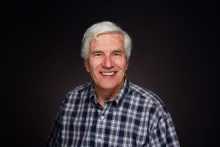
Steve Shafer was born and raised in Seattle. He graduated from Queen Anne High School in 1959 and later graduated from Ambassador College, Big Sandy, Texas in 1967, receiving a degree in Theology. He has been an ordained Elder of the Church of God for 34 years and has pastored congregations in Michigan and Washington State. He and his wife Evelyn have been married for over 48 years and have three children and ten grandchildren.
