
Steve Myers
This transcript was generated by AI and may contain errors. It is provided to assist those who may not be able to listen to the message.
Well, thank you, Mr. Hanson. Good afternoon, once again. I have to apologize. I managed to leave one very important announcement off. And my brother-in-law texted me the second I left the stage, because I don't know how many of you felt it or not, but Thursday we had a birth quake. And Matt and Jamie Miller welcomed Kayla Clementine Miller. I'm getting the details here for you so that I can read those off and make sure I actually have them accurate. It says, Matt and Jamie Miller are pleased to announce the arrival of their daughter, Kayla Clementine, born on June 21st.
She was 8 pounds, 13 ounces, and 21 inches long. As you might imagine, big sisters are pretty smitten with the new baby. In fact, I overheard one of the conversations. They looked at the little toe, and they were like, she's got the littlest toes! They're so cute! So, you know, the sisters are pretty smitten.
Kayla means sweet, pure, and who is like God. And Clementine means mild and merciful. So we're very thankful for the birth of Kayla Clementine and for the new addition to the Miller family. Well, brethren, several years ago I had a chance to be a part of a really cool opportunity out of Portland State University. It's called MESA, and it's a engineering program, essentially, where you're trying to teach kids human-centered design. Now, I don't know if you're familiar with the concept of human-centered design or not, but the general idea behind it is that you can't truly design something for a user group if you don't understand what that user group needs.
So, for example, the project we were there to learn about was we were designing an Arduino-controlled system. Arduino is just a microprocessor that does inputs and outputs. So you put a certain input in it, you can program it to do a certain output. And the idea was, what they wanted us to do was create a device that would make the life of someone who dealt with vision issues better, in some way, shape, or form.
So whatever it was, the kids—and these are eighth grade students—looking at and trying to understand what it's like to have a degree of vision loss. And so then they had to understand and have empathy for the individuals that are experiencing this, listen to their stories, experience in many ways what they experience—and I'll get to that in a second—and then design something that would serve them in a certain capacity. And part of the process for that was to allow us as teachers to also experience this and to experience what vision loss was like.
And so as a part of this training that we were there, they gave us these special sets of goggles and special sets of glasses and sometimes just full-blown blindfolds, for complete blindness. But they would give us these goggles and these glasses and blindfolds and things and then have us try to go through a regular daily task. For example, they had a set of goggles that would mimic what macular degeneration is like. So for macular degeneration, you kind of lose the center part of the vision, but the periphery is still there by and large.
And then they had you try to go through and do just a daily task of some variety and trying to see just the difficulty with which that was done in that particular case. Having cataracts, what it was like to have cataracts, they had us try to make a... I want to say it was peanut butter and jelly sandwich or something was really serious cataracts and trying to see through the cataracts and to be able to see the detail and see what was going on.
Color blindness, they had us sorting M&Ms. Yeah, right, with these glasses that mimicked color blindness. And, you know, they had three different colors of M&Ms, one of them that was the color blind one, and then you get to take it off later and realize you've got the wrong ones in the wrong place.
But just to get a feel for this, one of the final things that they did was they blindfolded us entirely. So they blindfolded us and then they gave us a probing cane, like one of those big, long, white and red canes with the little thing on the end of it. Gave us a quick five-minute crash course on how to use it and then said, go! And turned us loose to go try to navigate the the engineering building at Portland State University.
So it was fine when we were in our little hallway. There's nobody in the hallway. But when we got to the end of that hallway and it opened up and the noise and the people crossing back and forth and we're trying to walk across this thing and can't see anything, it was unnerving. It was truly unnerving. I remember just being completely blown away by how much I relied on my eyesight, how much that particular sense contributed to my overall sensory perception. I found, personally, that when my vision was removed, navigating forward became significantly more difficult. What I found was I had to cheat it a little bit, which obviously if you're completely blind you can't cheat it.
But what I would do, because I realized that you can kind of sight before you put the blindfold on. So you kind of, as they're putting the blindfold on, you fix the point. You know, it's like when you're navigating in a boat. You fix the point, you're like, okay, put the bow on that and then don't deviate and you'll be over there. Well, that's kind of what I did. I just fixed forward and they tied the blindfold on and then don't turn your head. You know, don't turn your body, don't turn your head, and you just kind of put yourself in that direction. Well, the reality is it didn't really matter much. I ended up at one point doing a complete 90 degree and running into a wall over here.
Lost depth perception. I mean, completely lost depth perception. But it was just incredible how much my eyesight contributed to everything and how much that vision was necessary. I was not particularly successful in this endeavor. It was not something that I was particularly good at. I was very figuratively and very literally flying blind. But it's this way in our lives as well. If we don't have vision, if we don't have vision, if we don't have kind of a long-term look, we lack focus. We're aimless. We're adrift. You know, taking the boat analogy, if we don't have something to point our bow at, we're going to end up someplace that we didn't intend. The book of Proverbs talks about this in Proverbs 29 verse 18, and we won't turn there just for sake of time, but it says, where there is no vision or where there is no revelation, where there's no vision or revelation in some translations, the people perish. Where there is not something in the distance to fix on to keep yourself navigating through, the people perish. Did you, just like I did with a blindfold on you, 90 degree it into the wall, or you end up losing depth perception and you can't focus on where and what you're doing. If we don't have a place to point the bow of our ship, we're adrift.
And it goes on in Proverbs 29, 18, it goes on to describe the law of God as providing vision, as making people happy. That gives a framework, that gives something that people can navigate toward. Being able to see our path forward, being able to have the vision to go in the direction in which we're intended to go, is an important comfort. I can't tell you how uncomfortable I was when I left that hallway into that just sea of people and noise. I couldn't see people coming, I ran into people because they told us just don't stop, just try to cross. They sped us up for failure, is what they did. But, you know, you get in there and the noise level and just the sheer fact that you can't see anything, it's just completely unnerving. We have our own vision in our lives. We have things that we desire, we have things that we want to do, we have things that we pointed our lives towards from a career standpoint, relationships, things like that. But for those of us who have been called by God, there's another vision that's even more important, and that's God's vision for us. It's God's vision for us. So what is God's vision for you and for me? What does He have planned for us? What has He provided for us in order to help us to see that vision, to kind of center us, to provide us with the comfort of knowing that we have a place to point towards, that we have a direction to go? This year's United Youth Camp theme is God's vision for you. And during the five days that we're going to be at the or doing the Christian living classes at the camp, they're going to be exploring this concept in more depth, be digging into this significantly. And so for those of you that are headed to camp, spoilers, but we're going to talk just a little bit about that, because I think it's an important concept to examine. I think it's an important concept to examine what exactly is God's vision for us as His people, as those who follow Him, as those who have taken on that calling and have responded to it. So this year's theme, God's vision for you consists of five interconnected parts, and those are going to make up the points of our message today. We're going to briefly cover those. The first point is that it begins with God.
The first point is it begins with God.
The second point is that God begins your story, your personal story.
The third point is that we are expected to choose life. We're expected to choose life.
The fourth point is that we're expected to walk worthy of the calling that we've received. And the last point, the last thing that we'll cover at camp, and the last point that we'll cover today in this second split sermon, is live your story, your story. So for the time that we have left, I'd like to take some time to explore this, because I think it's worthwhile to consider what God has planned for us individually, what He has planned for us collectively, and understand what it is that He sees for us. What is His vision for us? The title of the message today, in case you hadn't already guessed, is God's vision for you. And the first thing we're going to look at is that it begins with God. It begins with God. Mr. Armstrong used to ask the question at the Feast of Tabernacles every year, why are you here? Why are you here? And it's a question that's designed to inspire reflection and thoughts as to the reason why that individual is present in that place, why they were keeping the Feast, why they were going through that. But you know, that's a dual purpose question. That is a dual purpose question with a very important implication.
Why are you here? Why are you here? Interestingly enough, the answer is pretty simple. It really is. It's a surprisingly simple answer. Let's go to John 6, verse 44. Let's go to John 6, verse 44, and we'll look at John 6, 44, and we'll also look at John 6, 65. Why are you here?
John 6 and verse 44. We'll go ahead and dig into the account halfway through here. Contextually, Christ is in Capernaum. He's talking with the multitudes that kind of followed him across the sea. He's explaining his role. He's explaining who sent him. He's explaining who he is.
And within this particular passage, Christ answers the question that we posed a moment ago. Why are you here? Why are you here? John 6, verse 44. John 6, verse 44.
No one can come to me unless the Father who sent me draws him, and I will raise him up at the last day. Let's jump to verse 65 real quick, since we're close. John 6 and verse 65 says similar, and he said, Therefore I have said to you that no one can come to me unless it has been granted to him by my Father. The short answer is we're here because God the Father has called us to be here. We've been drawn to this. In some way, shape, or form, He chose us. He specifically offered each of us an opportunity to be part of His family. He began our story for us, probably unbeknownst to us. We probably don't even know how long before we felt like we had been drawn or felt like we had been called that He had begun that process. Perhaps at that time, you were keeping Sunday, celebrating Christmas, eating pepperoni pizza. It's very possible.
One day you heard something on the radio, you read something in a magazine, or during some sort of personal study, as it often does. Something just jumped out, kind of slapped you in the face real quick, and hopped back down in the book. You went, whoa, I've never seen that before.
It happens quite a bit. Read something about the Sabbaths, read something about God's holy days, clean and unclean meats, and that started us down the rabbit hole. That's usually where it starts. It's not where it ends, obviously, but that's where it starts. But, on the other hand, perhaps you were born to believing parents. You've never known anything else. You've always kept the Sabbath, you've never kept Christmas, and pepperoni makes you viscerally sick, like literally sick. You eat it, and you just get sick to your stomach. Regardless of which of those scenarios you find yourself in, God Himself, God the Father, has drawn you to this place. He has extended an invitation. You've been given an opportunity to come to Christ because you've been drawn, because it's been granted by the Father. You know, God began our story. We just didn't know it yet. It all started with Him, and it started because He has a vision for us and for all of mankind. Let's turn over to 1 Timothy 2. 1 Timothy 2. 1 Timothy 2 and verse 1, we'll see the Apostle Paul's words to Timothy here in 1 Timothy 2 verse 1. As he briefly describes to Timothy that vision, what it is that God desires. 1 Timothy 2 and verse 1 says, Therefore I exhort first of all that supplications, prayers, intercessions, and giving of thanks be made for all men, for kings and all who are in authority, that we may lead a quiet and peaceable life in all godliness and reverence. Verse 3 of 1 Timothy 2, For this is good and acceptable in the sight of our God or of God our Savior, who desires all men to be saved and to come to the knowledge of the truth. God's vision for mankind is that He desires all men to be saved, to come to the knowledge of the truth. That is God's vision. That is what He wants. God desires a relationship with mankind that enables them to become a part of His kingdom. And we recognize that may not happen in this life. That may happen in the next. That may happen after the resurrection. John 1 verse 12 further spells this vision out for us. John 1 and verse 12.
John 1 and verse 12. We'll go ahead and pick it up in verse 11. John 1 verse 11 says, He came to His own, and His own did not receive Him. Verse 12, But as many as received Him, to them He gave the right to become children of God, to those who believe in His name, who were born not of blood, nor of the will of the flesh, nor of the will of man, but of God. The Jews didn't receive Christ when He came, by and large. I mean, by and large, the whole painting with a broad brush. He came, He preached to them, He taught them, He fed, He cared for them. And they didn't esteem Him. Those who heard and received Christ were given the right to become children of God and were begotten of the Spirit.
God has specifically chosen you as a person that He desires to have a relationship with.
You've been selected out of the multiple billions of people who have ever lived to have that opportunity to be hand-picked to be God's representatives on this earth.
So as we go about our daily business, as we are out and about in the world around us, as we interact with people, brethren, we are ambassadors in a foreign land. Our example is exceptionally important as we are out and about in the world around us.
So God has specifically chosen us to be here. He's given us that opportunity, He's called us, He's drawn us. The second point is that God begins your personal story. God begins your personal story. So we see, scripturally, the Bible has a lot to say about what God has planned for mankind.
We've got God's plan. We know that the millennium, we know the kingdom of God, we know that God very specifically provides us with this overview of what things are going to look like going into the future. We know those things are going to happen. We know that that's often the distance to a degree.
What about now? What about the relationship that we're developing with God today?
You know, God has called each of us specifically to be part of His family, to be part and become His children. Many of you that have had children, you might remember the late nights holding on to the little baby and know you weren't probably counting the hairs on their head, but I bet you were looking at it pretty close. I bet there were times as they were sleeping, running fingers through hair in a very loving way, you know, not rustling hair necessarily, you don't want to wake them up. But just like a parent, He knows this intimately. He knows the hairs on our head, He knows our thoughts, He knows the desires of our heart. I would make the argument that He knows us better than we know ourselves. In many ways, He knows us better than we know ourselves. Let's go over to Psalm 139. It's Psalm 139, and we'll kind of see David's reflection on this as he contemplates this relationship that he has with God. Psalm 139, contemplating again the relationship with his Creator. We'll go ahead and pick it up in verse 1 of Psalm 139. Pardon me.
Psalm 139, verse 1, says, Lord, you have searched me and you have known me. You know my sitting down, you know my rising up, and you understand my thoughts afar off. You comprehend my path and my lying down and are acquainted with all of my ways. There is not a word on my tongue, but behold, O Lord, you know it altogether. You have hedged me behind, you've hedged me before, so you've given him protection. Hedged him behind and before, laid your hand upon me. Such knowledge is too wonderful for me. It is high. I cannot contain it. Where can I go from your spirit? Where can I flee from your presence? If I were to ascend, or if I ascend into heaven, you are there. If I make my bed in hell, or in this case the grave, if I make my bed in the grave, behold, you are there. If I take the wings of the morning and I dwell on the uttermost parts of the sea, even there your hand shall lead me, your right hand shall hold me. If I stay surely, the darkness shall fall on me, even the night shall be light about me. Indeed, the darkness shall not hide from you, but the night shines as the day. The darkness and the light are both alike to you. And then we get to 13, which is kind of typically where we jump into this. For you formed my inward parts. You covered me in my mother's womb.
I will praise you, for I am fearfully and wonderfully made. Marvelous are your works, and that my soul knows very well. My frame was not hidden from you when I was made in secret and skillfully wrought in the lowest parts of the earth. Your eyes saw my substance being yet unformed, and in your book they all were written. The day's fashion for me, one is yet there were none of them. How precious also are your thoughts to me, O God! How great is the sum of them! If I should count them, they would be more in number than the sand. When I awake, I am still with you." You know, the relationship that David had with God was a very close, very intimate relationship.
And I would venture a guess, you know, as parents you kept some form of a baby book, or your parents kept some form of a baby book. In it are the big moments. These are the big things, the first movement in the womb, first time you felt movement. First kick, right? Ultrasound photos. Sometimes you look at it and go, it's not a baby, how's it? It's hard to tell. Ultrasound, I always have a hard time with ultrasound photos. After the baby's born, you've got the little ink footprint that goes in there. You've got lots of hair from the first haircut. You've got photos, you've got memories. And some of you, depending on your birth order, may not have much in your baby books.
I know with our kids, well it was confession time, we were very diligent with Aiden, more or less diligent with Desmond, and a lot less diligent with Mallory on her baby book. So unfortunately we don't have as much stuff in hers. But I would imagine, we're not the only ones, imagine. I think it's a lot like how, you know, you're super paranoid about your first kid getting germs, and so anything so much as touches the floor for a split second, you know, goes immediately in the dishwasher on the super sanitation cycle, you know, and makes sure everything's fine. Second kid, maybe not as much. Third kid, they're eating dirt clod, you know, is that a problem? Nah, it's probably fine. I think it's kind of similar in many ways to that. But God tracks and records what we go through in our own little baby book, verse 6 or verse 16. It says, Your eyes saw my substance being yet unformed, and in Your book they were all written. In Your book they were all written. And so we see that God has this just incredible relationship with His children. Children represent so much incredible potential, you know, here in this life when they're growing in the womb. Parents are already planning. Parents are already planning, right? You've got the color of the nursery. You've got to paint the nursery. You've got to start compiling clothes and things and stuff and toys. You know, the mother starts being more careful about what she eats and what she takes in. You know, limits caffeine, no alcohol, playing music, trying to keep stress levels down, all to give the baby the best shot at success. We start, the men start nesting in different ways. You start amassing tools so that we can help fix things as needed, you know, establishing college funds. And you start to really sit and you have conversations about, I wonder what they're going to be like. I wonder what they're going to do. I wonder who they might marry. I wonder what they'll become. I wonder what it'll be like as they go forward.
And we have those plans. We have those considerations in place before the child is even born.
You know, some kids, you know, you meet some parents who are like, yeah, my kid's going to be a doctor. Period. End of sentence, right? And, you know, it's already established. It's already done. It's decided. I mean, the kid doesn't have an option, right? Let's go to Jeremiah 29, verse 11. Jeremiah 29 and verse 11. And just up front, this has taken somewhat out of context, but I want to use it to make a point. Jeremiah 29 and verse 11. In this particular passage of Jeremiah 29, Jeremiah has written a letter to the captives that were taken in the captivity to Babylon. And so he's going through and he's explaining, these are the words that were given to me by God. Here is what God says to you based on what he has told me to inform you of. Jeremiah 29, verse 11. So after everything has gone just terrible, they're off there in captivity in this foreign land, all these things. Here's what Jeremiah writes in Jeremiah 29, verse 11. For I know the thoughts that I think towards you, says the Lord, thoughts of peace and not of evil, to give you a future and a hope. Then you will call upon me and go and pray to me and I will listen to you.
And you will seek me and find me when you search for me with all of your heart.
Now, the point that Jeremiah makes to ancient Israel in the context of their captivity in Babylon is this ain't over yet. God has plans for you, plans for a future and a hope, despite the fact that it looks like the world is ending right now. You are in captivity in another land, you know, the nation has been raised to the ground, you know, all these bad things have happened.
Jeremiah tells them God knows the thoughts that he has, the plans that he has, for a future and a hope. God has plans for us, too. Plans for us as relationships like a father and son or a father and daughter. And interestingly, as we look, you know, in our congregations, we're all brothers and sisters, look around just like any family, people are different, right? People are very different from one another. I think it was amazing to me, you know, Aiden and Desmond are 18 months apart. And not much from a standpoint of our family dynamic changed other than we had a kid and we were now parents, but they could not be more different personality-wise. I... diametric opposites, personality-wise. Despite the fact that they're only 18 months apart, nothing really, seriously, majorly changed, but they're different. And just like that, we as brothers and sisters are also very different. We all have different strengths. We all have different abilities, have different gifts, different spiritual gifts. Sometimes they're obvious, you know, some people are phenomenal singers, other people are not, other people are not. Some people have the gift of encouragement, other people just... empathy is not a strong point for them, you know. People have different gifts, and sometimes it takes some time to find our gift, I think. But everybody has a strength, everybody has an ability, everybody has a gift, and God has hand-picked us for those talents, those gifts, and those abilities, enabling us to work with one another and with God so we can represent Him to the greatest degree. Let's go to 1 Corinthians 12. 1 Corinthians 12, we see this passage in the letter that Paul wrote to Corinthian church.
1 Corinthians 12, and we'll go ahead and pick it up in verse 12.
1 Corinthians 12, verse 12, says, For as the body is one and has many members, but all the members of that one body, being many, are one body, so also is Christ.
For by one spirit we were all baptized into one body, whether Jews or Greeks, whether slaves are free, and have all been made to drink into one spirit. For in fact the body is not one member, but many. If the foot should say, Because I'm not a hand, I'm not of the body, is it therefore not of the body? Feet, hands, two very different parts of the body. Yet both are absolutely essential.
You know, if you had nothing but hands, that'd be really awkward. If you had nothing but feet, it'd be even more awkward, I would imagine. Though I've seen there was an interesting video that I saw recently of a gentleman that was born without arms, and he had learned to play the guitar with his feet, and beautifully played a guitar with his feet. So just kind of he plays a guitar better with his feet than I do with my hands. So it can be done. I digress, sorry, I'm off in the weeds here. The point is, feet and hands are both essential. Feet and hands are both essential. Different abilities, different strengths, different gifts, but both have to be present for the body to function in the way that it functions. He goes on to say, and if the ears should say, Because I'm not an eye, I'm not of the body, is it therefore not of the body? We talked about kind of sensory perception and things earlier. That eyesight is so important. You've got to have it. You've got to have the hearing. The hearing is difficult to operate without, too. If the whole body were an eye, where would be the hearing? If the whole were the hearing, where would be the smelling? But now God has set the members. God has set the members, each one of them, in the body, just as He pleased, just as He pleased, as He wrote the story for them, as He pleased.
And if they were all one member, where would the body be? And it goes on. We've been through this passage before. I don't want to belabor the point. But the idea here is that God works with us each individually, but He also works with us collectively as a body, as a people, according to His purposes and His plans. So your story is entirely your story. We talk about working out your own salvation with fear and trembling, but the reality, too, is that our story is not written in isolation.
It's not written in isolation. You know, if you've ever seen a campfire, the coals in the center of the fire burn awfully hot, but those ones that go and land on your shirt, it doesn't take long for them to go out. We need one another. We need each other. We need brothers and sisters. We need to be together in this process as we work through these things. As a result of all of this, the third point today, God expects us to choose life. So as a result of God calling us and beginning this process and writing our story and beginning our story, God requires us to have an obedient response. He wants us to obey. As a loving Father, He's given us plans. He's given us opportunities. He's provided for us a future and blessings. And then He said, but you have to choose to want them.
They're out there. They're there. Here are the stipulations. Here are the conditions.
It's up to you. It's your call. God created man with free moral agency. He gave us the ability to choose between two options to illustrate where our heart lies, to show Him what we think towards Him. We make choices every day. Most of them are inconsequential. Most of them are not that important, really. But there are some that are quite important. And how we make that decision ultimately influences our future going forward. I don't know who said the quote, but we are free to choose, but we are not free from the consequences of our choice.
We all have the option to make choices and to decide, but we're not free from the consequences of that decision, whatever it may be. You know, it's interesting to think about where we are at this moment in time. We are a sum total of every choice that we have ever made. We, at this point in time, right now, are the sum total of every choice that we've ever made. Each choice, major, minor, whatever they may be, has brought us to this point. The amount of baggage that we have these choices, we're here as a result of those choices. And sometimes those choices that we make build us a reputation either for good or for bad. Sometimes our name can be tarnished through decisions that we make. There's a section in Proverbs 22—we won't turn there—Proverbs 22, verse 1, says, a good name is to be chosen rather than riches, loving favor rather than silver and gold. So more valuable than riches is a good reputation, is a good name. And why that is important, I mean, other than obviously having our own names that are good names and good reputations, is that we are handpicked representatives of God. And as such, His name is in us.
And the importance of maintaining that good name is essential, absolutely essential.
There have been a number of people throughout the years, a number of God's people, who have had to make extremely difficult life-and-death decisions, life-and-death choices. One of them is Daniel—you know, it was mentioned in the first split sermon, Daniel 6, he jotted down. Basically, you know, it was determined that there was an edict put out, can't pray to anybody but never Knezor. And Daniel said, okay, hide and watch me, because I'm going to leave my window open right here, and I'm going to do it anyway. You know, he could have closed the window. He could have closed the window. He could have been quiet about it, but he wasn't. He said, no, this isn't right. I'm going to continue to do this. And it meant certain death. Threw him in the lion's den. God delivered him. We kind of know the rest of the story, but he chose God over his own life. Esther—you know, the story of Esther—you know, she was put in a position where she had an opportunity to kind of bend the king's ear, but to walk in there and bend the king's ear meant certain death. She did it anyway. She did it anyway. She went in. She petitioned him. Ultimately, the situation resolved itself. Peter and the apostles—let's go to Acts 5, 29. Acts 5 verse 29.
Acts 5 verse 29, we see a passage that is an important one for us to file into the back of our heads—a very important one to file in the back of our heads. At this point, the apostles had been arrested. They'd been threatened with bodily harm. What else is new? You know, no stranger to that as time has went on. But by that point in time, they must have been starting to make the connection that the Sanhedrin was largely behind Christ's arrests, his betrayal, and his crucifixion.
They're now standing before this body of people that have kind of worked towards having Christ arrested and worked over. And then they are told in Acts 5—we'll kind of take a look here just as we build into this—Acts 5, let's pick it up in 27. And when they had brought them, they set them before the council, and the high priest asked them, saying, Did we not strictly command you? Those, didn't we not tell you, did you not hear us when we said not to teach in this name, not to go out and preach Christ to the people? Did you not hear us when we said that? And look, you filled Jerusalem with your doctrine and intend to bring this man's blood on us. Verse 29, Peter and the other apostles answered, and they said, We ought to obey God rather than men. We ought to obey God rather than men. Their conclusion ultimately was, Say what you will, do what you will, be as kill us. We're not stopping. We're not stopping. God desires in our lives that we make the right choices, no matter how hard they might be, no matter how difficult they are. He desires that we make the choice that leads to eternal life. And where the rubber meets the road on this is in our marriages, making the right choice, in our workplaces, making the right choices, in our schools, making correct and right choices. Wherever it is that we find ourselves in this life that we're going to make the right choice that leads to eternal life, the choice that leads to eternal life, choosing eternal life over temporary pleasure. You know, I don't know how many of you have ever been wronged by somebody and had the opportunity to just really chew them out, really give it to them. That's a temporary pleasure. It's a temporary pleasure. It feels great. Oh, it feels great. But you're only going to have her more slayer on. But, you know, holding our tongues, praying about the situation, solving it in a godly manner is a preferred method of going about that. Whether it's breaking the chains of an addiction that has a hold on us. You know, there's a lot of things out there that people have addictions to. You know, those are temporary pleasures. Choosing eternal life over temporary pleasure. Any other myriad of issues that we face, God expects us and desires us to choose life. Let's go to Deuteronomy 30.
Deuteronomy 30, we'll see this particular passage that he set before ancient Israel.
Deuteronomy 30 in verse 19.
Deuteronomy 30 verse 19 says, I call heaven and earth as witnesses today against you, that I've set before you life and death. I'm giving you the option here to choose life, death. Make the call, he tells them. Blessing and cursing. Obviously, therefore, he tells them, choose life, that both you and your descendants may live, that you may love the Lord your God, that you may obey his voice and you may cling to him or cleave to him as the word is. It's the same word that's used when it says to go and become married and cleave unto your wife.
Or it's the same word, too, with the guy that slew all the Philistines and the sword cleaved to his hand. It's stuck tight to his hand. That's the kind of clinging that we need to have when it comes to God. We should stick tight. For he is your life and the length of your days, and that you may dwell on the land which the Lord swore to your fathers, to Abraham, to Isaac, and to Jacob, to give them.
Once God's called us, once we've received, we've responded to that calling, we work to make the right choices. God expects we're going to walk worthy of the calling that we've been given. So the fourth point that we're looking at today is walking worthy of the calling. And we're going to spend probably the least amount of time on this point. And the reason for that is, I feel like we've covered this a lot in the studies and in the sermons and things that we've been looking at as to becoming disciples. So we're going to spend a little less time on this one today just because we've been to a lot of these passages already. But would you turn over to 1 Timothy 3, please? Let's turn over to 1 Timothy 3. 1 Timothy 3, we'll pick it up in verse 1. We see a list of qualifications that are presented for individuals that would hold an office in a church, whether it is a deacon, whether it's a bishop, whether it's, you know, whatever we would call it, elder, you know, whatever we would call it today. These are the qualifications that have been laid out.
It says, a bishop must be blameless. That means above reproach. The husband of one wife, temperate, sober-minded, of good behavior, hospitable, able to teach, not given to wine, not violent, not greedy for money, but gentle, not quarrelsome, not covetous, one who rules his own house well, having his children in submission with all reverence. It kind of says, because if a guy can't rule his own house, well, how's he going to take care of the church of God? Not a novice, lest being puffed up with pride, he fall into the same condemnation as the devil. Verse 7, moreover, he must have a good testimony among those who are outside, lest he fall into reproach and the snare of the devil. It goes on to talk about deacons. Likewise, saying many of these are the same, must be reverent, not double-tongued, not given to much wine, not greedy for money, holding the mystery of the faith with a pure conscience. Let these first be tested, then let them serve as deacons, being found blameless, or again, a brow of approach. Likewise, her wives must be reverent, not slanderers, temperate, faithful in all things. Let deacons be the husbands of one wife, who, ruling their children in their own house as well. For those who have served well, as deacons, obtain for themselves a good standing and great boldness in the faith with the gin Christ Jesus. Titus 1 has a similar list of qualifications. You can jot it down and look at it if you'd like. It's basically the same list. What I want to ask you is, what is a higher office?
Deacon elder or king priest?
What's a higher office, ultimately?
Kings and priests, right? That's the goal. That's what we've all been called to become. In the kingdom of God, kings and priests, or a kingdom of priests, however you want to translate that particular passage. The point is, he's calling us all, you and me, to an incredible opportunity, an incredible chance for leadership. The qualifications listed in 1 Timothy 3, Titus 1, while yes, are qualifications that we use to determine someone that holds an office in the church today, I would argue they are the expectations for us all. They are not just the expectations for those that are in leadership positions in the church. They are the expectations of the church, because we are all being called to be kings and priests. We are all expected to be above reproach, to be temperate, to be silver-minded, well-behaved, hospitable, not given to wine, not violent, not greedy, gentle, not quarrelsome, not Spartan fights, not covetous. The list goes on.
Let's go over to Colossians 1 and verse 9. Colossians 1 and verse 9.
Colossians 1 and verse 9 again another pistol of Paul.
Colossians 1 and verse 9 says, For this reason we also, since the day we heard it, do not cease to pray for you, and to ask that you may be filled with the knowledge of his will in all wisdom and spiritual understanding. Verse 10, that you may walk worthy of the Lord, you may walk worthy of the Lord, fully pleasing him, not partially, not sometimes, not Tuesday, Wednesdays, and Fridays, fully pleasing him, being fruitful in every good work and increasing in the knowledge of God, strengthened with all might according to his glorious power for all patience and long suffering with joy.
Verse 12, giving thanks to the Father who has qualified us to be partakers of the inheritance of the saints in the light. You know, these are the qualities of the church. These are the qualities of individuals who are followers of God, and as followers of God, because again his name is in us, we must walk accordingly, we must walk worthy of our calling. The final point today as we kind of begin to wrap this up, is that we have to live our story, live your story. Throughout the Bible account, throughout the New Testament in particular, we see God calling people in a variety of ways.
We see different forms of people being called. There are a number of very specific callings we see in the New Testament. We see the Apostle Paul in Acts 9, struck blind on the road to Damascus, right? Very sudden, very just, hello, you know, walking down the road and all of a sudden, boom! You hear a voice from heaven, you know, saying, why are you per- or why are you persecuting me? And it's very, very dramatic, very sudden. We see the Ethiopian eunuch in Acts 8, who was already kind of a proselyte, already had, you know, some understanding.
But we see him in Acts 8 come into contact with someone who helped him understand. Let's go ahead and turn there. Acts 8, verses 26 through 28. We'll give just a little bit of a backdrop here again. Acts 8, verse 26, says, Now an angel of the Lord spoke to Philip, saying, arise and go toward the south along the road, which goes down from Jerusalem to Gaza.
This is desert, so it's the highway that cuts through the desert here. So he arose and he went and behold a man of Ethiopia, a eunuch of great authority under Candace the Queen of the Ethiopians, who had charge of all of her treasury and who had come to Jerusalem to worship. You know, he already had knowledge. He already had some understanding. He was coming to Jerusalem to worship.
What he didn't have was the same thing Paul didn't have, Christ. He didn't have an understanding of Jesus Christ. He says, on the way to Jerusalem to worship was returning and sitting in his chariot he was reading Isaiah the prophet.
Spirit said to Philip, go near and overtake his chariot. So Philip ran to him and heard him reading the prophet Isaiah and said, do you understand what you're reading? He said, how can I, unless someone guides me? He asked Philip to come up and sit with him in the place in the scriptures, which he read was, he was led as a sheep to the slaughter as a lamb before its shears to his and blur They needed the rest.
They needed the rest. Paul got it in a very sudden, very dramatic way, from the man himself, from God himself. Whereas the eunuch came into contact with somebody who helped him to understand, which is similar, not identical, but similar to how many of you were called.
Coming into contact with someone, coming into a plain truth, finding a radio program of some variety, or talking to somebody who was a member of the Church of God, and kind of having some things brought up to you that opened your eyes. It's interesting, many of the young people in the Church that have been born in the Church see these two kinds of callings and wish that they could have had something so sudden.
That they could have either been struck blind on the road to Damascus, or that they could have had some sort of connection with somebody at some point that just took their life in 180-degree day.
Because, you see, their calling was very different. They were born into this. They'd never known anything else.
Many of the younger people that are in the Church, that have been born in the Church, in some cases, may have never had to prove some of these things. It's just always been. It's just what we've always done.
I've even heard some over the years lament their calling and wish that it was like your own for those that have come out of the world into the Church.
But there is a third calling that we see in Scripture that's outlined. There's a third calling. It's the calling of Timothy. Let's go ahead and turn over there real quick.
2 Timothy 1 and verses 4-5.
2 Timothy 1 2 Timothy 1, verse 4-5.
I'll pick it up in 3. I hate breaking into a middle of a sentence. I thank God whom I serve with a pure conscience as my forefathers did, as without ceasing. I remember you in my prayers night and day, greatly desiring to see you being mindful of your tears that I may be filled with joy.
Verse 5. When I call to remembrance the genuine faith that is in you, which dwelt first in your grandmother Lois and in your mother Eunice, and I persuade it is in you also. Therefore I remind you to stir up the gift of God, which is in you, through laying on in my hands. For God has not given us a spirit of fear, but of power of love and of a sound mind.
You might call Timothy a third-generation Christian. Right?
You might say, or he might have been a second. We can bant you about whether Lois and Eunice, Lois and then Eunice and then... Anyway, moral of the story.
This was handed down through his family. This was something that he had experienced from birth. In fact, we can see that in the next passage. Second Timothy 3. Second Timothy 3, we can see that this is something that he knew from his birth. Second Timothy 3, verses 14 and 15 says, But you must continue in the things which you have learned and been assured of, knowing from whom you have learned them, and that from childhood you have known the holy Scriptures, which are able to make you wise for salvation through faith, which is in Christ Jesus.
You know, I think we put a lot of stock in the differences between first, second, third-generation Christians. And I'm not saying there aren't differences. There absolutely are. And some of them are big differences. There's differences from a perception standpoint. There's differences in experiences, differences in life.
Which calling is more valid? Paul's? Timothy's? The eunuch? They're all equally valid. They're all equally valid callings. They're all equally important. They're all part of the same vision. Live your story, not someone else's. Live your story. Live your calling. Own your calling, not someone else's.
And we like to compare ourselves to others sometimes. It's natural. It's human. It's what we do as people. But I think we often look at each other and we wonder, well, what if? What if I'd been called like this person? You know, what if I'd served in the military and I'd been called out of that and I came to God through that process and now suddenly I have this very different viewpoint and it's just a total night and day difference.
You know, I'm going to bet that there were certain things that I experienced during that time that I don't want to remember anymore. There are things that you see that can't be unseen. There are things you experience that can't be unexperienced.
Sometimes our young people feel like there's a need to be prodigal, in a way, rebel, and come back so they can feel that feeling, to experience that style of calling.
I would argue that the calling of Timothy is an equally valid calling to any other calling that God has experienced through Scripture and given to us.
Brethren, God has a vision for you. It's your specific vision. He has handpicked you. He's called you in a specific way at this time, not another point in time in history, but now.
And He's called you to be His representative. He's offered you the same opportunity that's been offered to all of those throughout history, to be part of His family.
And He desires that you respond with obedience. In fact, He demands it. He demands our obedience.
He asks us to walk worthy of that calling, really living the way of life that He's called us to. Again, however, He may have called us.
God has an incredible vision for you. And as a result of that incredible vision, let's finish today with Isaiah 55, verses 6 and 7.
Isaiah 55, verses 6 and 7. As a result of all of these things, God's calling, His writing of our story, the whole process, walking worthy of our calling, choosing life, the whole thing. As a result of all of these things, Isaiah 55, verses 6 and 7. Seek the Lord while He may be found. Call upon Him while He is near.
Let the wicked forsake His way and the unrighteous man His thoughts. Let Him return to the Lord, and He will have mercy on Him, and to our God, for He will abundantly pardon Him. Have a wonderful Sabbath.
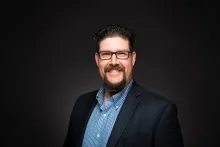
Ben is an elder serving as Pastor for the Salem, Eugene, Roseburg, Oregon congregations of the United Church of God. He is an avid outdoorsman, and loves hunting, fishing and being in God's creation.
