

John Elliott
This transcript was generated by AI and may contain errors. It is provided to assist those who may not be able to listen to the message.
There are many prophecies in the Bible about the end time. You find, especially the Book of Revelation, describes some of the events that are going to take place at the end time. Actually, it gives us more of a story flow of those events. Revelation chapter 3, which we're going to spend most of our time in today, deals quite a bit with events that are going to transpire over the next few years and are actually taking place presently.
There are three major approaches or three major attitudes pointed out in this chapter. So let's go over to chapter 3, beginning in verse 1. Take a look at what Revelation chapter 3 has to say.
Let me just mention that in going through this, we need to realize that God in His mercy and God in His love has given us a prophecy as a warning.
God has given us a prophecy to encourage us because outlined here are conditions in the church.
And God doesn't want us to have to go through a great deal of trouble in the future. He's trying to reveal to us what we need to do to avoid some of the problems.
We don't need to bring certain difficulties upon ourselves.
So let's begin here in verse 1. We'll see some things immediately.
I know your works.
Now when you stop and you think about that, what it's saying is that God knows us.
It's not a matter of God is ignorant of any one of us sitting here. He knows what's going on in your life. He knows what's going on in your mind, what you think. He knows your works, your actions. He knows your involvement with the church. He knows everything that there is about you. And there's not anything that we can hide. God knows our state. We might fool others, but we can't fool God. Now what do I mean by that? Notice. I know your works that you have a name. So in name, that you are alive.
So in name, we appear to be alive, but God says you're dead. So the outward appearance to a lot of people about the Sardis group is that they're alive. They're doing something. They're involved. But God says you're dead. In other words, they have a reputation for being alive, but from God's perspective spiritually, they're dead. They have the appearance of those around them that they're alive. And when I say alive what I'm talking about, they're active.
They seem to be obedient. They come, they sit, they're at church, and they seem to be doing what is right. Notice what the Believer's Bible Commentary says about this. Sardis was a church of lifeless profession. It had a reputation as a Christian assembly, but for the most part, it simply went through the formal, dull routine. In other words, church became just a routine for them, and it wasn't their life. It wasn't how they lived. It wasn't how they thought.
It was more just formal. And then God says that they were dead. Now, the word dead means dead. I mean, it means no life. Lifeless. But you go on and looking at the definition, and you'll find that it means to be spiritually dead, destitute of life that recognizes and that is devoted to God. In other words, looking at a life that outwardly, everything seems to be okay, but inwardly, we're not devoted to God and to His way, inactive as respect or in respect to doing right.
What is right? And as we heard in the sermonette, we have to make choices, and we have to determine if we're going to do what's right, or we're not going to do what's right. And then in verse 2, notice how God counsels this group. He says, Be watchful and strengthen the things which remain that are ready to die, for I have not found your works perfect before God. Remember therefore how you have received and heard and hold fast and repent, and then God says that they don't, and certain things are going to happen.
Now, I want you to notice, 1, 2, 3, 4, what God tells them. Number one, be watchful. The word watchful means to give strict attention to, to be cautious, to be active. If you go out and you want to cross a busy highway, four-lane highway, you need to be watchful. You don't just sort of meander across and start looking. You look left, right, left, right, and you make sure that you can go across.
Well, this is what God is saying. We don't sort of meander through life without watching and being careful. And then he talks about strengthening, that you and I need to strengthen the things which remain. So, you find that not everybody in Sardis was dead. There were some who were still, who would walk with God. And the things that are still there, God says, don't let go of those. Whereas a person might not be doing everything that they wish they could do, but what you are doing, don't give up.
You strengthen those things, hold on to what remains, and then you can move on. Then we're told in verse 3, Remember therefore how you have received and heard. Brother, one of the best things that we can do is to remember how it was in the past when God called us. You remember when God called you, opened your mind, you understood the truth, you began to respond to it, how zealous you were, how passionate you were, how much you wanted to study, pray, wish you could attend church. And we need to remember the past. We need to remember how we started out, the zeal and the enthusiasm that we had.
And then we need to hold fast to what we have, give careful attention. And then finally God told them to repent. Repent means to change your mind. Now in verse 3, he goes on to say here, If you don't do this, I will come upon you as a thief, and you will not know what hour I will come upon you. Now what does it mean to come upon you as a thief?
Well, it means you're not expecting it. Your robber doesn't knock on your door, and you answer the door, and he says, tomorrow night I'm going to burgle your house. And it'll be around 8 o'clock, and so therefore you can expect me. He doesn't do that, does he? If he's going to rob you, what will he do? Well, he'll try to rob you when he thinks you're not there in the middle of the night. You know, he will do all kinds of things.
He'll try to come in secretly. Let's go back to Matthew 24. You might mark this, because we'll be coming back to this chapter. Matthew 24, verse 42. Matthew 24, 42, says, Watch therefore, for you do not know what hour your Lord is coming. But know this, if the master of the house had known what hour the thief would have come, he would have watched, not allowed his house to be broken into.
Therefore, you also be ready. For the Son of Man is coming at an hour that you do not expect. And one of the themes that runs through some of the parables and analogies that Jesus Christ gave was the analogy that the master is coming back from the wedding and coming back to his house. You know that the wedding, it was taking place. You're expecting him back, but you don't know precisely when he's going to be there. So you have to be ready. And the thing is, you and I are to be in the ready mode. God wants us to be ready. Now, we don't know the hour. Back in 1 Thessalonians, chapter 5, we find that at the end time, this world is going to be asleep. Society will be asleep. People will not expect the tremendous tumultuous times we're going to be faced with. Beginning here in verse 1, 1 Thessalonians, chapter 5, verse 1, says, But concerning the times and the seasons, brethren, you have no need that I should write to you. For you yourselves know perfectly that the day of the Lord is to come as a thief in the night. When they say peace and safety, then sudden destruction comes upon them, as labor pains upon a pregnant woman, and they shall not escape. A woman can be pregnant, be nearing the time of birth, and she's going along fine and all at once. Uh-oh! She begins to have pain. And she knows that the end is near. The baby's going to be born.
Well, there's going to come a time in the future when God says people are going to be talking about peace and safety. Everything seems to be going along well. And then all of a sudden, major events, prophetic events, are going to begin to transpire. But then we are told in verse 4, But you, brethren, are not in darkness. You and I are not in deception and deceit. We have the Word of God. We have prophecy. So that that day should overtake you as a thief, for you are sons of light and sons of the day, and we are not of the night and of the darkness. Therefore, let us not sleep as others, but let us watch and be sober. So we are to watch. We are to be sober. We are to know what is going on. So one of the approaches, attitudes that God says that we need to be aware of is being spiritually dead. Just outwardly routine, look good, but inside nothing is going on. Now in verse 14, let's go back to Revelation 3 again.
Revelation 3 and verse 14, we come to the Laodiceans. It says, to the angel of the church of the Laodiceans, write these things, says the Amen, the faithful, the true witness, the beginning of the creation of God.
I know your works. So notice again, it says, I know. So God, again, is very much aware of all of us that you're neither cold nor hot. You're neither just totally turned off. Neither are you on fire. I would wish you were cold or hot. So then, because you are lukewarm and neither cold nor hot, I will vomit you out of my mouth. Now you'll notice one little word here, the word because. Whenever you see because, it explains why the action is going to take place.
Now why is God going to vomit these people out of his mouth? Well, it says here, because you're lukewarm. That's why. So the word lukewarm just means that. The fluctuate between a torpor and a fervor of love.
You're just insipid. You're not on fire. You're not real cold. So God gives us the reasons, and he says anyone who is this way in the future needs to realize that they're not going to be under God's protection. He's going to vomit them out of his mouth. Now verse 17 says the same thing, because... Now notice again, you say... Now here's their self-assessment. Every year at the Passover, we're told to assess ourselves, to examine ourselves. And hopefully we do it more often than that throughout the year. But because you say... Now notice their self-assessment. This is their opinion of themselves. I'm rich. I've become wealthy. Have need of nothing. Now notice God's assessment. God's perspective. And you do not know that you are wretched and miserable and poor and blind and naked. Quite contrast. So here's a church, or here are people who think spiritually they're rich. They've got it made. Spiritually, they're wealthy. They don't have any need of anything. Need more love? No, we've got more love than you can think of. Need patience? Oh, no, we're patient. You need joy? No, we're so happy. We can hardly contain it. And you talk to them and ask them, and they will tell you they don't need anything. And yet God says you're wretched, miserable, poor, blind, and naked. Now we know that being blind means that you can't see. And so, therefore, God is pointing out the problem spiritually. They're not really attuned to what God says. And they're naked. But what if you got up one morning, decided to go to work, and you comb your hair and spray it, and you forgot to get dressed? You go get in your car, and you tool off the work, and you get in the parking garage. You haul yourself out of the car, and you start walking into the building, and people... You know, they're a gas because you're naked, and you don't know you're naked. You think you're dressed. And all at once, maybe, you walk by a big mirror, and you look, and you're horrified. You don't know what to do.
Well, here are people who are naked, and they have no idea. What is nakedness symbolized? Well, biblically, it's unrighteousness. You and I are to have white garments on, which picture is being righteous. And so, they're not. Now, in verse 18, notice how God counsels them. I counsel you, God says, to buy from me. Now, notice, where do they get what they need? It has to come from God. You buy from me gold. Now, gold is something that has a value, has an intrinsic value. We all realize that over the years and centuries, metals like gold and silver have held their worth. You know, our money used to be backed by gold. It's backed by the U.S. government today, which is a very sorry state of affairs. But gold has an intrinsic value. Now, its price can go up and can go down, but it's still always going to have a value, and it will come back, even if it goes down. But notice, this isn't just gold. It's purified gold. It's gold refined in the fire. Now, what is gold a symbol of? Well, 1 Corinthians chapter 3 talks about the character that we are supposed to have, gold, silver, precious stone, wood, hay, stubble. Wood, hay, stubble burns up in the fire, gold, silver, and precious stones are purified. So God is saying, look, you need your character refined or purified. And so the only way you can get that, God says, is from me. Godly character comes from God. Spiritual character comes from God. And it has to be refined.
Now, why? Well, if you have this, then you will be rich. So obviously, it's talking about a spiritual perspective, that they can be rich. And white garments that you may be clothed and that the shame of your nakedness be not revealed, annoying your eyes with eyes that you may see.
And then God says, as many as I love, I rebuke and chasten, therefore be zealous and repent. Behold, I stand at the door and knock. If anyone hears my voice and opens the door, I will come to him and dine with him and he with me. Now, the picture is somebody coming up and knocking on your door. You ever had someone knock on your door and you see them, you don't want to talk to them, so they knock and you don't open the door? Generally, when somebody knocks on the door, we've got these peepholes. And you look out and you see who it is. So here's Christ. He's telling this group of people, I'm knocking, open the door, because I want to come in and eat with you. Well, what are they going to eat? Well, this is what we eat. Christ wants this group to take His Word, the Bible, the Scriptures, to eat it, to study it, and that there would be a relationship developed between the two so that they might grow and overcome. So here we have a group at the end time that are going to be Luke 1. Now we have a third group in verse 7. Beginning in verse 7, to the angel of the church in Philadelphia write, these things says, He who is holy, He who is true, He who has the key of David, He who opens and no man shuts and shuts and no one opens. I know your works. So again, God knows. He sees. He understands. And I've set before you an open door and no one can shut it, for you have a little strength. So here's a group that has only a little strength. They have to rely upon God because they don't have a lot of strength. They don't think they're rich and increased with goods. And you've kept My Word so they've been faithful in keeping the Word of God. Now that's doctrinally, but also in doing what God commands, what God says to do.
And you have not denied My Name. Name meaning authority. So we have kept His Name and His authority. So rather than what you have, you have three distinct attitudes that are prevalent at the end time among the church. We want to take a look at what God has in store for these different groups, and specifically what God has in store for the person who is faithful, who does His work, who has loved one for another.
Because what, again, you find is that God has written this, put this in the Scriptures. We know that Revelation 2 and 3 are talking about seven literal churches that existed at the end of the first century. There's also a type we've said over the years of the phases or historical charting of the church that the church has progressed through. But at the end time, you find all three of these are there when Christ returns. And sometimes we tend to look at one organization and say, well, they're Laodicean. Or we look at another organization and say, well, they're Sardis.
And while we are Philadelphia, or we're this or we're that. Well, there may be a preponderance of an approach that dominates one group or another. But what we have to realize is God is looking at each one of us individually.
And within a group, within a congregation, there can be people who are spiritually dead. There can be people who are lukewarm. There can be those who are on fire, who are truly zealous for God and for His way. And so we need to look at the admonition. Now, the one thing that Jesus Christ always does, He always says, look, if you overcome, then this is what we will give. This is your reward. I want you to notice, and let's focus, beginning here in verse 9, on the one group, what God says to them.
Because it's amazing what God outlines, what He specifies, 1, 2, 3, 4, 5, 6, 7, right down the line, what He will do for this group at the end time who is zealous for Him. Right now there's a movie out, I think it came out yesterday, called 2012. I don't know how many of you have seen the previews of that movie. They've been showing it on television. Norm and I saw a movie not too long ago, and they had previews of this. It looks quite scary.
And of course, it's based upon the fact, what is it, the Aztec calendar supposedly ending in 2012. A lot of religious groups have selected 2012 for the return of Jesus Christ. So 2012 holds a lot of significance for different people. They're predicting the end of the world at that time. Well, here in verse 9, you find one day there will come a time when somebody has said, Well, this is the year that Christ will come back.
And guess what? They'll be right. Because everybody has selected a year from now to probably 3000. So one of them has got to be right somewhere. But let's notice here in verse 9, it says, Behold, I will make those of the synagogue of Satan who say they are Jews and are not, but lie indeed, and lie, indeed I will make them come and worship before your feet, and know that I've loved you. Because, now notice again this word, because. Because this group does something.
What is it? Because you have kept my commandment to persevere. Or I think as the King James Version says, because you have been faithful, patient and faithful, I also will keep you from the hour of trial which shall come upon the whole world to test those who dwell on the earth. So God, number one, promises to protect this group at the end time.
That's an absolute promise. This is not talking about a local occurrence. It doesn't say those over here in Palestine I'll protect, or those who are in the Mideast I'll protect. Notice, I will keep you from the hour of trial which comes upon the whole world, whole planet God is going to protect. We will be kept from that period, the hour of trial. That's talking about the tribulation coming in the future, the great tribulation.
That God will protect a group of people. Now, let's go over to chapter 12. We find that not all will be protected. Revelation 12, verse 12. Here in the future, as verse 9 shows, there's going to come a time when Satan the devil is going to get into his mind that he can go up again and fight against God. He's going to try to kick God off of his throne. So he's cast back down, cast out of heaven. Verse 12 tells us, therefore, rejoice, O heavens, and you who dwell in them, woe to the inhabitants of the earth.
Now, the sea for the devil has come down to you having great wrath because he knows he has but a short time. Now, a couple of things you find here. One, the wrath of Satan the devil is the tribulation. He has but a short time. He knows. He's not ignorant. He can read this scripture. He knows that once he goes up against God, and if it doesn't succeed, that he only has a short time. And he's going to be locked up. So what does he do when he's cast back down?
Now, when the dragon saw that he'd been cast to the earth, he persecuted the woman who gave birth to the man-child. But the woman was given two wings of a great eagle. She might fly into the wilderness, to her place, where she is nourished for a time, time, and a half a time from the presence of the serpent. So the serpent spewed water out of his mouth like a flood after the woman that he might cause her to be carried away.
But the earth helped the woman. Now, a flood could be symbolic either of actual flood, water, or an army. Whatever way, Satan is absolutely enraged against the church. And he will come down against two specific groups. Matthew 24 shows. One is the church. He wants to come down and destroy the church. Secondarily, he wants to destroy physical Israel, the nations of Israel, the United States, the British Commonwealth of Nations, some of the nations in Europe.
He's going to turn his wrath against those nations. So God helps the woman, and she goes to a place of safety here. Notice, it talks about verse 17. The dragon was enraged with the woman. So even though the woman is protected, he went to make war with the rest of her offspring, who keep the commandments of God and have the testimony of Jesus Christ.
So here you find that there are some who are left behind. There are some who do not go to this place of safety or not protect it. Satan will turn around, and he will throw his full wrath against those people. Now, obviously, we don't want to be in that group. Revelation 3, verses 14-19, which we referred to earlier, shows that the Laodiceans are a part of that group.
I would say the Sardis would probably be, many of them, a part of that group. Let's go back to the book of Ezekiel, Ezekiel 5. You'll notice, even in the Old Testament, this was very plainly spelled out. Chapter 5 of the book of Ezekiel, verse 1. Verse 1 says, You, son of man, take a sharp sword, take it as a barber's razor, pass it over your head and your beard, and then take scales to weigh and divide the hair.
And you shall burn with fire one-third in the midst of the city, when the days of the siege are finished, and you shall take one-third and strike around with a sword, and one-third you shall scatter into the wind. And I will draw a sword after them. So what is this one-third, one-third, one-third all about? Verse 12. One-third of you shall die with pestilence and be consumed with famine in the midst.
So famine, drought, pestilence will kill one-third of our people. One-third shall fall by the sword all around you. That's warfare. And I will scatter another third to the winds and draw out a sword after them. So a third go into captivity. Well, let's back up to verse 3. Notice what God offers to a group of people. You shall also, he tells Ezekiel, take a small number of them. Bind them in the edge of your garment. So, you know, His robe, maybe a small handful of the hairs, they're bound in the edge of the garment. Then take some of them again, some of those that were bound in His garment, and then throw them into the midst of the fire and burn them with fire, or in the fire.
From there, a fire will go out into all of the house of Israel. Here you find God offering to protect a small number of hairs. That would be symbolic of the church. And yet, when He's ready to do that, not all of them are protected. Some of them, then, are taken out and thrown into the fire. Exactly what Revelation 3 pictures.
So there is going to be a group that will be protected, some will be left behind and not. So brethren, one of the things that God shows us, He says, Look, look people. And in essence, God is saying, look, all of us, all of you living at the end time. These are going to be the conditions. This is what is going to happen. Here's what I hold out. This is what I offer to you.
This is what I will do for you. But you have to do your part. And some will heed what God says, some will not heed what God says. Okay, let's go back to chapter 3 again. Chapter 3. And you might remember what we read in verse 9, something else that God brings out.
He says, Those who are the synagogue of Satan, so synagogue is a symbolic for church of Satan, so those who claim to be, you know, they don't call themselves Satan's church, but church inspired by Satan, who say they're Jews and are not, in other words, claim to be Christians, in other words, spiritual Jews, that they will come and worship before your feet, God says. Now, how can human beings come and worship before other human beings' feet?
The word here for worship is translated 60 times in the King James Version as worship. And I think almost every time it is translated as worship, it means to bow before, to pay homage to, to pay respect and honor to. Back here in chapter 19 of the book of Revelation, we find John making a mistake beginning in verse 9. John, excuse me, Revelation chapter 19, verse 9. An angel had come down and revealed to him certain prophecies. And verse 9, he said to me, Right, blessed are those who are called to the married supper of the Lamb.
And he said to me, these are the true sayings of God. And I fell at his feet to worship him. And he said, See that you do not do it. Don't worship me, he says. I'm your fellow servant and of your brethren who have the testimony of Jesus. Worship God, for the testimony of Jesus is the spirit of prophecy. So even angels are not to be worshipped, and only God can be worshipped. Now, John didn't pick up too quickly on this. Let's go over to chapter 22, where we find him doing the same thing over again in verse 8.
Revelation 22, verse 8. Now, I, John, saw and heard these things, and I heard. And when I heard, I saw and I fell down before the feet of an angel who showed me these things. And he said to me, See that you do not do that, for I am your fellow servant, your brethren, the prophets, and of those who keep the words of this book, worship God. So we're told again to worship God.
So how can, coming back to Revelation 3 again, how can people fall down before our feet and pay homage and worship us? Well, the implication is quite obvious, that here's a group of people who've made it into the first resurrection, who've been made immortal, and who are now a part of the family of God. You find that they're not angels, far above angels. They're a part of the kingdom of God, the family of God, and worthy of honor, and worthy of the respect of others. And those who may have persecuted this group in the past, made fun of this group in the past, ridiculed this group in the past, fired them from their jobs in the past, are going to have to come and say, you know, you were right, and to acknowledge that.
And so, you know, God shows that. So not only will God protect us, but one of the things that he shows in the future that he holds out to this group is that.
Now, in verse 11, Revelation 3, we find, behold, I'm coming quickly. So again, here's a prophecy. It's the second coming of Jesus Christ. He's going to come quickly. Hold fast, he says, what you have, that no one may take your crown. So there's a crown that God promises us, and he says, don't let any man take that crown from you.
Now, in the book of Revelation, crown has two symbolic meanings. Actually, not just symbolic, but two meanings. Revelation 2.10 is one. Revelation 2.10, here's the church in Smyrna. And notice what God says here. Do not fear any of those things which you are about to suffer. Indeed, the devil is about to throw some of you into prison. You may be tested, and you will have tribulation ten days, be faithful into death, and I will give you the crown of life. So one way a crown, or one thing a crown symbolizes is life. Now, we already have physical life. This is talking about eternal life. That one of the things that we're being told here is don't let anybody take away your crown. Now, a crown also symbolizes a position. I don't know how many of you have seen old videos of some of the queens, kings of England, being crowned, as it's called. And it's quite an elaborate ceremony that they go through. But finally, they've got the scepter, they've got the robe on, they're sitting on the throne, and they come up, and the archbishop of Canterbury, whoever it might be, comes up, and he takes the crown, and he places it on the person's head. And what he's doing, he's crowning that individual. The office of the king or the queen is given to them. The responsibility, the authority, the duties, everything that that office carries is symbolized by that crown. And so it is with us. We find in Revelation 19, verses 11 and 12, I won't read that, but Revelation 19, verses 11 and 12, we find that Jesus Christ has many crowns. And then it goes on to say that He is King of kings and Lord of lords. He's King over all kings. He's Lord over all lords, and He's going to be in charge. And so you and I in the kingdom will be given certain responsibilities and certain duties, which a crown symbolizes. And so God says those who are faithful here at the end, those who don't fall back, don't just put on a display, but are truly striving to live, put God's way of life into their life, that they will be given a crown of life and positions of rulership. Now in verse 12, it says, He who overcomes, I will make a pillar in the temple of my God, and he shall go out no more. You know what it means to be a pillar in the temple of God? Remember the temple? First of all, it was the tabernacle. The tabernacle, the portable tent that Israel carried around with them, was the center of religion, of worship of God, because it contained the ark.
Now, later on, Solomon built the temple. Let's go back to 1 Kings 7.21, because we find here in Kings that not only did he build the temple, but he also put two pillars out front in that temple.
1 Kings 7 verse 21. Now I'm in 2 Kings. It doesn't look right.
Chapter 7 verse 21 says, Then he set up the pillars by the vestibule of the temple. He set up the pillar on the right, and he called its name Jason. And he set up the pillar on the left, and he called its name Boaz. So we have Jason in Boaz.
Jason means he shall establish.
So if we're going to be pillars in God's kingdom, we shall be established, and Boaz means in its strength. So we will be established, and we will have strength, power, responsibilities, and duties.
The temple, as I said, was the center of worship. If there was a... the most important part of the temple would be the foundation and the chief cornerstone. Let's go over to Ephesians chapter 2, where you find this mention. That symbolically, the temple in the Old Testament was a type of the one in the New Testament, which is the church.
Ephesians 2, 19. Now therefore, you're no longer strangers and foreigners, but fellow citizens with the saints and members of the household of God. Having been built on the foundation of the apostles and prophets, Jesus Christ Himself being the chief cornerstone. So the apostles and prophets will have the key positions in the kingdom of God. Christ is the chief cornerstone. He's King of kings and Lord of lords.
Notice, in whom the whole building, being fitted together, grows into a holy temple in the Lord, in whom you also are being built together for a dwelling place of God in the Spirit. Now God dwelled among Israel in the tabernacle to begin with and then in the temple.
God's dwelling place on earth today is His church.
His church is the temple. That's where God dwells. God didn't dwell somewhere else in ancient Israel. The symbolism that God gave them was that this would be where He would dwell. And God isn't dwelling just over here and over there. He's dwelling in His temple. And His temple are those who have His Spirit, His church. And there's a foundation to that temple, the apostles and the prophets. So they're going to have key positions. The apostles in charge of all the tribes of Israel.
The prophets will have major responsibilities. And you and I will be pillars.
Now a pillar helps to support, helps to hold up a building. Galatians 2.9, you back up here to the preceding book. Galatians 2.9, when Paul went up to Jerusalem, he met James and Cephas and John, as he says here, who seemed to be pillars. The word pillar there means support. They seem to be the ones who supported the church, the backbone of the church, so to speak.
You and I are going to be pillars in the future. We're going to have key responsibilities and duties. And not only that, it says we will go no more out in verse 12 of Revelation 3.
That means that our jobs will be assured to us. And we're going to be given some key positions, and we will not go out. We won't have to worry about somebody else taking over our positions, our jobs, our responsibilities. Those God has given to us.
Now backing up again to verse 12 of Revelation 3, you'll notice that this again is explained under three different categories of what I'm talking about here.
In verse 12, He who overcomes, I will make him a pillar in the temple of my God, and he shall go out no more. I will write on him, notice, three things. The name of my God, so God's name will be written on us, and the name of the city of my God, the New Jerusalem, which comes down out of heaven, from my God, and I will write on him my new name.
So let's take a look at each one of these. What does it mean to have the name of God written on us? Well, it means we will become a part of the family of God. Revelation 14.1. Revelation 14.1, you might remember pictures, those who have been resurrected with Christ, and says, Obviously, that's symbolic. We're not talking about somebody coming along tattooing you on your forehead. But God's name, His authority, name stands for authority, position, responsibilities, duties.
We are going to be a part of the family of God. His name will be written on us. People will say, their goal, the sons of God, their goal, the family of God, there goes the kingdom of God. He or she is one of them, and we will be noted as God's children.
We will be a part of that family. Chapter 22 and verse 3. Chapter 22 and verse 3 of the book of Revelation says, Our way of thinking and motivation, because we will at that point be a part of the family of God. Now, I want you to notice also the name of New Jerusalem.
Now, New Jerusalem is the city of God. One of the things that God the Father is doing right now, He's building a city. He's getting a present ready for the Son and the Bride. You and I are the Bride. Christ is the Bridegroom. There's going to come a time when God will give us that city, in a sense, as a wedding gift, and says, This is for you. When some of you young people like to get married and have a father wealthy enough to say, Our wedding present to you is this $300,000 home over here.
It's all paid for. Taxes have been paid for five years. Don't worry about it. You could start out life already set up in that way. Well, this is what God is going to do for His family. In Revelation 21, beginning in verse 1, Revelation 21.1, I saw a new heaven and a new earth for the first heaven and the first earth that passed away. And also, there was no more sea. And I, John, saw the holy city, New Jerusalem, coming down out of heaven from God, prepared as a bride for her husband.
So the city is compared to a bride. And I heard a loud voice from heaven, saying, Behold, the tabernacle of God is with men. He will dwell with them. They shall be His people, and God Himself shall be with them and be their God. Now, verse 9, Then one of the seven angels, who had the seven bowls, filled with the seven last plagues, came to me and talked with me, saying, Come, and I will show you the bride, the Lamb's wife.
So, okay, here He's going to show the bride. So why does He show him? He carried me away in the spirit to the great and high mountain, and showed me the great city, holy Jerusalem, and having the glory of God in the light of her. So the city is symbolic of the bride. The bride is symbolic of the city. And what you find, it will be the chief headquarters of where God the Father and Jesus Christ will reside and operate forever. Right now, the Father's throne, we think, is somewhere in the sides of the north, and the third heaven, and that He administers the whole universe from there.
In the future, it will be right here. And it will be administered. Christ is on His right hand, and Christ's bride will be right there with Him to assist in this situation. Notice verse 24, an interesting Scripture. Verse 24 says, The nations of those who are saved, so these are people who are changed, made immortal, they've been saved, shall walk in its light.
And the kings of the earth shall bring their glory and honor into it. So apparently, not everyone in the future will reside in that city. There will be other nations. There will be those who are saved. And they will bring their glory and honor into it. They'll have access to it. But it's the bride, apparently, who will reside in that city. And so therefore, we will have the name of New Jerusalem written on us. You know, where are you from? Well, we're from New Jerusalem. You know, that will be our address.
And then thirdly, it said the new name of Christ. Again, name, choose in the Bible to picture position, office, attributes, authority. In the Old Testament, the one who became Jesus Christ was known as the Word of God. He was a spokesman. He's also referred to as the Eternal in the New Testament. He took on different other responsibilities. He became the Son of God. He came to the earth, God in the flesh. He also then was resurrected, became our High Priest. So he's taken on another title or responsibility. He's High Priest now. He was Jesus Christ. He was the Messiah, the Savior.
Now, when it says that He will be given a new name, we don't know what that name is, but that symbolizes a new duty responsibility that He will be given. And whatever that is that the Father gives Him to do, you and I will have part in it, because it will be written on our forts. And so therefore, whatever this new duty, new responsibility that Jesus Christ will be involved in, you and I will be involved in it also. Now, I don't know what that is, but when you look at progressively how God has given Christ more and more to do, and new jobs, new responsibilities, there could be any number of things that this might refer to.
You and I will have the privileges of the Son, and we will have pride in the very name of God. So, brethren, we need to realize that God in His mercy has given us many scriptures, but He's written, especially one whole chapter in the book of Revelation, to help us evaluate ourselves, to compare ourselves, to show that at the end time, because of the society, the way things are going in society around us, that society rubs off on us. And you find that there are people out there who are very turned off.
There are people out there who don't want to be involved in anything. There are people who are very zealous, who get involved in politics or many other things. But the same thing, those attitudes come right on over into the church. And so, God says, look, there are going to be some who are going to be dead.
He says, wake up! There are going to be those who are lukewarm. He says, get on fire! And then, there are those who are going to be responsive. And He says, hold on! Don't quit! Don't compromise! Keep doing what you've been doing! You see, God is giving us Hebrews 11.35, the opportunity to participate in a better resurrection. Notice here, women received Hebrews 11.35, they're dead, raised alive. Others were tortured, not accepting deliverance, that they might obtain a better resurrection.
So, brethren, the first resurrection is going to be a better resurrection. Greater opportunities to have higher positions, to serve more, to be right there with Jesus Christ as part of the bride, to be next to Him and the Father in administering the Kingdom of God in whatever God has in store, because we will not go out. We will be there assisting Jesus Christ. So, God gives us a warning, but He also gives us encouragement.
He says, you know, here it is, these are the attitudes, this is what you need to be doing. If you do this, God says, look what I will do for you. Look how I will bless you. So, God has revealed the future to us. What are we going to do with it?
Thank you.
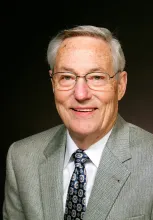
At the time of his retirement in 2016, Roy Holladay was serving the Operation Manager for Ministerial and Member Services of the United Church of God. Mr. and Mrs. Holladay have served in Pittsburgh, Akron, Toledo, Wheeling, Charleston, Uniontown, San Antonio, Austin, Corpus Christi, Uvalde, the Rio Grand Valley, Richmond, Norfolk, Arlington, Hinsdale, Chicago North, St. Petersburg, New Port Richey, Fort Myers, Miami, West Palm Beach, Big Sandy, Texarkana, Chattanooga and Rome congregations.
Roy Holladay was instrumental in the founding of the United Church of God, serving on the transitional board and later on the Council of Elders for nine years (acting as chairman for four-plus years). Mr. Holladay was the United Church of God president for three years (May 2002-July 2005). Over the years he was an instructor at Ambassador Bible College and was a festival coordinator for nine years.
