
Ben Light
This transcript was generated by AI and may contain errors. It is provided to assist those who may not be able to listen to the message.
Thank you again, Mr. Hanson. My wife reminded me when I reached my seat that I did forget about an announcement. There is a woodcutting service project going on tomorrow at the home of Joanne Emery. I believe the start time is eight in the morning. Eight-thirty in the morning. Show up at eight-thirty, it should be fine. But there is a woodcutting party. The requested tools, hand splitters are fine. It sounds like most of it is already pretty well split. It's just a matter of sizing it down so it will fit in the wood stove. So chop saws, miter saws, skill saws, things like that that will just kind of quickly rip pieces of wood down, like from a long piece like this down into a shorter split piece would work. Snacks and food and things, as I understand it, are provided. So you can just come on in and get the work done. It should be quick, it should be fast, it should be just a couple of hours in the morning, and it should be good to go. So we look forward to seeing you there. Well, when it comes down to it, you know, mankind has always had a love-hate relationship with growing older. I think many of you may be able to relate to that. I'll tell you, I sure can. When we're young, we always want to be older. We always want to be looked at as being more mature, maybe, than we already are. We tell our parents sometimes, hey, I'm a big kid. I can do this myself. You're three, working on trying to make sure the spoon hits the right place. Well, maybe a little bit. Okay. Three, if you're still...yeah, anyway. But if you ask any kid or any youngster as to how old they might be, the word that might get used is, I'm almost five. Or I'm three and a half, or and a quarter, and three quarters, depending on how well they know their fractions. But we always want to be older. We always want to be more mature. We always want to be the big kid, at least when we're younger. Interestingly, at some point in our lives, we turn a corner where that's no longer desirable. We still want to be independent. We still want to be mature. We just don't necessarily want to talk about how old we are in the process. Instead, we would rather look and feel younger than we really are. We don't tell people I'm fifty-seven and a half, or and three quarters, or and a quarter. We round down, right? And sometimes people round way down. Some people actually remain perpetually twenty-nine. Perpetually twenty-nine. But being young is ingrained in our society. It's interesting, if you take a look at the society around us, all the different advertisements, all the different things that are keyed towards being younger, and all the different things. I was actually asking my wife last night. She has a subscription to Mother Earth News, which we love for all the little farming stuff and all that things in there. What's really interesting in Mother Earth News are the ads in the back. Because they're pretty much open want ads that anybody can purchase and anybody can grab. And so I quickly just flipped through there real fast to see how many different products I could find that talked about making you younger. And then we're like five or six. One full giant page ad about taking human growth hormone to reverse the aging process and slow things down and become younger overnight. We have things like Peter Pan in Neverland, the Lost Boys who never grow up. We have the Toys R Us kid. I don't want to grow up. I'm a Toys R Us kid. Right? We have billions and billions and billions of dollars spent to keep ourselves young. There's pills, there's Botox, there's plastic surgery, there's youthful fashion trends and the like. You know, hair jeans that are hundreds of plus dollars, but they look so young.
It seems that many today will do or spend whatever it takes to be young. Let's face it, getting old is rough. It's rough. It appears that very few people today actually look forward to aging, to growing older, reaching a point where it's harder to get around, reaching a point where it's maybe more difficult to do some of the tasks that you are able to do with ease or perhaps lose the ability to care for ourselves and need more assistance than we needed in the past. It's hard. It's hard to go from a state of being independent to a place where we have to rely on someone else. This isn't a new development, and this isn't an American thing. The Greek poet Homer spoke of aging as loathsome. This is exact words. Aging is loathsome, he said. Shakespeare referred to old age as a hideous winter. A hideous winter. I don't know if it's that bad. But even King Solomon wrote of the difficulties of growing old. Let's go over to Ecclesiastes 12. Let's start over in Ecclesiastes 12. If you'd begin over there today, we're going to read the words of Solomon as he reflects upon the aging process and considers growing old. And in the process of that, the frank reminder to ensure that we do the important things in life while we still can. While we still can. Ecclesiastes 12. And I'm actually going to read this passage from the New Living Translation. That particular translation, while not a direct literal translation of the Bible, more of a thought-by-thought translation or a paraphrase, but it kind of endeavors to capture the language maybe a little bit more and the ideas a little bit more descriptively. So while it's not a true word-to-word translation, it does paraphrase the thought well. And it kind of flushes out the account a little bit. Ecclesiastes 12 and verse 1. Ecclesiastes 12 verse 1. In the picture here that Solomon paints, Don't let the excitement of youth cause you to forget your Creator. Here's that frank warning and that frank reminder in the midst of this. Honor Him in your youth before you grow old and say, Life is not pleasant anymore. Remember Him before the light of the sun, the moon, and the stars, is dim to your old eyes, and rain clouds continually darken your sky.
Remember Him before your legs, the guards of your house, start to tremble, and before your shoulders, the strong men, stoop. Remember Him before your teeth, your few remaining servants stop grinding, and before your eyes, the women looking through the windows, see dimly. Remember Him before the door to life's opportunities is closed, and the sound of work fades.
Now you rise at the first chirping of the birds, but then all of their sounds will grow faint. Remember Him before you become fearful of falling and worry about danger in the streets, before your hair turns white like an almond tree in bloom, and you drag along without energy like a dying grasshopper, and the caperberry no longer inspires sexual desire. Remember Him before you near the grave, your everlasting home, when the mourners will weep at your funeral. Yes, remember your Creator now while you are young, for the silver cord of life snaps, and the golden bowl is broken. Don't wait until the water jar is smashed at the spring, and the pulley is broken at the well, for then the dust will return to the earth, and the Spirit will return to God who gave it.
Wow! That doesn't paint a very pretty picture of aging, does it? It doesn't paint the very pretty picture. Noted American aphorist Mark Twain once said, We would be infinitely happier if we could only be born at the age of 80, and then gradually approach 18. Like if we could somehow run life in reverse. It's a classic Catch-22. It really is a classic Catch-22. When you're young, you have the strength and the energy to do just about anything you set your mind to, but little to no life experience to help you be successful at it. Not all the vim and the vigor, but no plan. You're just ready to get out there and go.
On the other hand, the other end of that candle, you have loads of life experience. All the ideas, all the concepts, all the things that you want to do, but a lack of strength and energy to get out there and to do it. Which explains why the legends of the Fountain of Youth were so alluring to all of those who sought it years and years and years ago. Imagine being able to have all the wisdom and the life experience that you've obtained from a long-lived life, but additionally maintain the strength and vitality of a younger man.
There'd be no stopping you. All those ideas and all that energy and all the ability to go and do them. Herodotus wrote of a source of water in the 5th century B.C. which was reputed to provide long life. Alexander the Great was reported to have searched for this spring in the 3rd century A.D. During the Crusades there was a legend told of a Christian king named Prestor John who ruled this mythical land where this water source could be found that restored your youth and your vitality.
People told stories of the people, the people in the Caribbean told stories of the mythical island of Bimini, which was reputed to have a spring as well, which would allow you to live forever if you consistently drank from it. And there are still legends told today in Japanese culture of certain hot springs that are hidden throughout the Japanese islands that if you bathe in them can heal your wounds and restore your aging body. And then in the back of Mother Earth News, a full page ad of human growth hormones well, whatever it may be, anyway, it seems like no matter what we're always looking for some way to stay young, some way not to age, to more or less live forever.
We're looking for ways to live, it seems, forever. Are we? Are we? Not in a physical sense, but are we seeking the eternal life promised to us in the Kingdom of God? Is that our focus? Is that our goal? I really appreciated Mr. Harmon's message today. In fact, there's some major parallels. I almost toyed with the ditto concept and just let everybody out early, but I figured we'd go through it again. Repetition's good. But most of the time when you ask people to take a look at their goals and what they plan in their life and what it is that they'd like to do, the majority of the time their goals revolve around the physical.
More often than not, people say things like, I want to finish school, I want to get married, I want to have kids, I would love to go backpack through Europe, maybe, get that big promotion at work, drive that really nice car, own that really nice house, lose weight, quit smoking. Most of the time these goals are physical in nature. And honestly, most of the time they're not really written down, and the individual doesn't really necessarily want to sacrifice anything to achieve them either.
The goal becomes a little less of a goal and becomes a lot more of a resolution, something that they can point kind of fuzzily off into the distance to and say, I'd like to eventually achieve that, maybe, I guess. James Clear is an entrepreneur. He does a lot of writing and podcasting around goals and habits. And he has the following to say regarding goal setting. This is written by James Clear. It says, experts define goal setting as the act of selecting a target or objective that you wish to achieve.
Fair enough. That definition makes sense. But I think there's a much more useful way to think about setting goals. Most goal setting exercises start with an overpaid consultant standing by a whiteboard and asking something like, what does success look like to you? In very specific terms, what do you want to achieve? If we're serious about achieving our goals, however, we should start with a much different question. Rather than considering what kind of success we want, we should ask, what kind of pain do I want?
Having goals are the easy part. Having goals is the easy part. Who wouldn't want to write a best-selling book or lose weight or earn more money? Everybody wants to achieve those goals. The real challenge is not determining if you want the result. The real challenge is determining if you're willing to accept the sacrifices required to achieve your goal. Do you want the lifestyle that comes with your quest? Do you want the boring and ugly process that comes before the exciting and glamorous outcome? It's easy to sit around and think about what we could do or what we'd like to do, but it's an entirely different thing to accept the trade-offs that come with our goal.
Everybody wants a gold medal. Few people want to train, like an Olympian. There's a video out of Michael Phelps' training regimen, and what that guy's doing is he's trying to get a chance to do a great job. This brings us to our first key insight. Goal-setting is not only about choosing the rewards that you want to enjoy, but also the costs that you are willing to pay. Imagine a small rowboat. Your goals are like the rudder on the boat. They set the direction and they determine where you're going to go. If you commit to one goal, then the rudder stays put, and you continue moving forward.
However, if you flip the rudder, you're going to have to be able to get the results. However, if you flip-flop between goals, the rudder moves all around, and the boat goes in circles. However, there's another part of the boat that's even more important than the rudder. That's the oars. If the rudder is your goal, then the oars are your process for achieving it. While the rudder determines your direction, it's the oars that determine your progress. He goes on to talk a little bit about systems and goals, and he makes the analogy that if you're a coach, your goal is to win a championship.
Your system is what your team does at practice each day. If you're a writer, your goal may be to write a book. Your system is the writing schedule that you follow each and every week. If you're a runner, your goal might be to run a marathon. Your system is your training schedule for the month.
If you're an entrepreneur, your goal is to build a million-dollar business. Your system is your sales and your marketing process. Goals are useful for setting the direction. Systems are great for actually making progress. It says, in fact, the primary benefit of having a goal is that it tells you what sort of system you need to put in place. However, the system itself is what actually achieved the results. It's the hard work that goes on that takes you to the goal.
Which brings us to our second key insight. Goals determine your direction. Systems determine your progress. You'll never get anywhere just by holding the rudder. You have to row. Brethren, are we willing to accept the sacrifices that come with the goal that we have set? Are we willing to accept the sacrifices that come with the goal that we set?
Do we recognize the levity of what that really means? Are we training to finish the race? Do we set our rudder towards the goal and keep it there, or do we find ourselves bouncing back and forth between two or three or four different goals, perhaps? Does that rudder flip-flop between two different focuses?
Are we singularly focused on the kingdom of God and living a godly life? You know, in addition to writing about the difficulties of aging, Solomon also wrote about goals. Let's turn over to Proverbs 4. Proverbs 4, we'll see King Solomon's advice on goals and achieving them. And interestingly, they're pretty similar to what we just heard from James Clear.
In verse 23, Proverbs 4 and verse 23, he says, Protect, keep your heart with all diligence, for out of it spring the issues of life. Put away from you a deceitful mouth and put perverse lips far from you. Let your eyes look straight ahead, eyes on the prize you may have heard, eyes on the prize. Let your eyes look straight ahead and your eyelids look right before you. Ponder the path of your feet and let all your ways be established. Do not turn to the right or to the left and remove your foot from evil. Keep and protect our hearts with all diligence, protecting them, watching our speech, letting our eyes look forward, keeping our eyelids straight before us. All of these things help us to keep the rudder true, help us to keep focused on what we need to maintain our focus on. Brethren, is the kingdom of God eternal life our ultimate goal? Or is it a hobby? Is it something that we sort of think about when we're not thinking about other things? Or is it singular focus and direction in our life?
This is the fifth and final sermon in a series of messages based on the 2016 Youth Camp Themes. And while these themes were initially designed for our youth, they are excellent opportunities for the rest of us to dig in as well and explore what is really truly important and from a standpoint of foundational teachings. You know, as we kind of jokingly said when we started, what's good for the Goslings is also good for the Geese, right? But it is true. I mean, as I dug into this, as we were teaching them at the kids at High Sierra in Davidson and in Nigeria, I reflected on with regards to my own life.
And it became more and more convinced that these are things that are crucial and questions we should really be asking, all of us should be asking. Starting out this series of messages, we examine the importance of ensuring that our lives are built upon the foundation of God's Word.
That was the goal. We started with looking at building our life on the foundation of God's Word, that there was only one source of truth and the only way for us to build a life that's unshakable, a life that's not going to fall down when the storm starts blowing, is to build it on that foundation. We talked about it, the decisions of our life, particularly those that are important, things like baptism, marriage, our careers, if they're not built on that foundation, when the storm comes, the house that we built will fall.
In the second message, we looked at how important our choices are. And the fact that we make hundreds of choices each and every day, some of those choices are pretty trivial, but others of them are pretty important. But no matter what, each of them need to be analyzed with God's Word in mind. That we need to be considering our choices, deciding very carefully in order to ensure that we choose God's blessings. Recognizing that He has set before us life or death, blessing and cursing, that He doesn't open the door and then push us through it, that we have to actively choose.
You know, it'd be nice if the decisions were made for us, but that's just not always the way that it works. The choices that we make will betray the intents of our heart and where our desires lie. In the third message, we examine the role that Satan the devil plays in our spiritual life, that if we're endeavoring to build on the right foundation, if we're making right choices, that we have to also then resist His influence in our life.
There are certain characteristics and certain attitudes that Satan broadcasts regularly. Things such as pride, gossip, lying. All things that, unfortunately, as humans we respond all too easily to. And we need to make sure that we're resisting that influence and preventing ourselves from making ungodly choices, really putting a wall between God's presence and us in our life. And the last message, most recent message, we looked at the importance of building godly relationships. Scripturally, we see two great commandments referenced. We see loving God and loving our neighbor. And we need to make sure that we're working to build and develop good, solid relationships with God and with our neighbor.
That includes particularly those in the church, those who share the same spirit as us, because we are more closely related to them in all the ways that really matter than we are to our own family. Water is thicker than blood, and His presence in our lives, that Holy Spirit, bears fruits that enable us to build those relationships with each other and our Heavenly Father.
So as we dig into the fifth and final message today, it is the culmination of all the others. They've all been building to this point. And what they've been building to really is the core of the gospel message. Eternal life in the kingdom of God. The title for the day's message is Guided by God's Word, Life Eternal.
God's Word does lead to eternal life. Once you've read the Word of God, once you've chosen to live by its words to become baptized, once you're actively resisting Satan's influence and continually working to build those godly relationships, then and only then have we shown God our level of commitment. That we're willing to continue in those things.
Only then have we shown our level of commitment. And then and only then will God give us eternal life. God desires that all of these things are in place. One of them is not good enough. It takes the whole gamut of the whole thing that we've been talking about in this series to reach the point of God offering us eternal life. Romans 6, verse 23, was one of our memory verses for the youth at camp on the final day of Christian living.
Let's go ahead and turn over there. Many of you probably already have this memorized. It is one of those memory scriptures. But let's take a look at it anyway. Romans 6 and verse 23.
It sets the stage for this concept of eternal life. Romans 6 and verse 23.
Romans 6 and verse 23 says, For the wages of sin is death, but the gift of God is eternal life in Christ Jesus, our Lord. And from this we can pull a couple of very important lessons. And I don't think it's coincidence that the word wages is used in this passage. I think it's quite purposeful. The only thing that I have earned is death. That is the only thing that I have earned is death. That's the only thing I deserve. The sins that I've committed have earned me the death penalty. That is my paycheck. Those are the wages that I have received. Now, no, he doesn't go on to say, The wages of righteousness are eternal life. Instead, he turns it, the gift of God is eternal life in Christ Jesus, our Lord. The one who paid the price for our sin. Eternal life in the kingdom of God is a gift. I cannot earn it. It's God's gift to give to whom He chooses. If I had the ability to earn it, I might boast of my works, as it discusses in Ephesians chapter 2. It's a gift, but it's not a gift that doesn't have conditions. And that's where things get a little muddy at times in some people's minds. We are often accused of preaching justification by works. We're often accused of that by folks that are out in mainstream Christianity. They accuse and they say that we are telling people that in order to obtain salvation, you must do X, Y, and Z. Now, this is in contrast to justification by faith, which is that in order to obtain salvation, all you have to do is read or say this little prayer, believe that Jesus is Lord, and you're in. Theoretically, that involves a change in lifestyle, but not necessarily. Not necessarily. And the reality is, with many things, the truth is somewhere in between those two ditches. It's not law versus grace. It's law and grace. It's not works versus faith. It's works and faith. Turn over to John 14, please. I want to make sure we establish this concept before we go forward, because otherwise we might be accused of making it sound as though I'm trying to advocate for earning your salvation, which I am not. It is a gift. John 14, and verse 15, John 14, verse 15 says, And you and me, and I and you, and we covered that concept in the last message, that concept of abiding within one another.
Verse 22, And the word which you hear is not mine, but the Father's who sent me. Justification does come as a result of our faith in God. That's stated in Romans 5, verse 1. Paul says that in Romans 5, 1. However, because we have faith in who and what Jesus Christ is, and because we have faith in who and what Jesus Christ is, and because we have faith in who and what Jesus Christ is, and because we believe what He told us, and because we love Him, and because those who love Him keep His commandments, we base our lives on His word. Not to earn salvation, not to earn our spot in the kingdom, so to speak, but because we love Him. Some might see that as a condition set upon a free gift. Some might say that's a position of justification of works over justification of faith. To me, when I read John 14, it's clear as a bell. If I love God, I keep His commandments, period. Period. It's not a condition. That's how I show love to God. So with that in mind, I'll ask the question again that we started with. Is the kingdom of God, eternal life, our ultimate goal? Or is it a hobby? Is it something that we sort of kind of think about whenever we're not thinking about other things? Or is it the primary focus in our life? Let's go over to Matthew 6. Let's go over to Matthew 6. And this is where I could probably walk off the stage and let Mr. Harman's sermon finish it up for me. We'll go through it anyway. Matthew 6 and verse 19. I love it when God does that kind of stuff. I absolutely love it.
Matthew 6 and verse 19.
Matthew 6 and we'll pick it up in verse 19. This particular section again is in that section that deals with the words that were spoken during the sermon on the Mount. And we know that from our first message, this culminates with a statement from Jesus Christ that says, Therefore, hear and do these things. Going all the way back to Matthew 5, 5, 6, and 7. Therefore, hear and do these things. Matthew 6 and verse 19 says, Do not lay up for yourselves treasures on earth where moth and rust destroy, and where thieves can break in and seal. But lay up for yourselves treasures in heaven where neither moth nor rust destroys, and where thieves do not break in and seal. For where your treasure is, there your heart will be also. Whatever it is that we care about, whatever it is that we put value on, is where our mind will reside. Is it on God's kingdom? Is it on changing our lives so that we might obtain it? Where we place our treasure is where our mind will be.
Verse 22 goes on, It says, The lamp of the body is the eye. If therefore your eye is good, your whole body will be full of light. But if your eye is bad, your whole body will be full of darkness. If therefore the light that is in you is darkness, how great is that darkness? You know, if the eye is good, if the eye is focused in the right places, if we focus on the right things, the fruit of it will be apparent in our lives. If our focus is in the right place, and if we're doing the right things as a result of that focus, the fruit in our life will be apparent. If we're not, and the eye is in the wrong place, the eye is evil, as it says here, the body will be full of darkness, not light. It goes on in verse 24, and he says, No one can serve two masters, for either he will hate the one and love the other, or else he will be loyal to the one and despise the other. He says you cannot serve God and mammon or things, you know, the avariciousness, the love of money. Christ tells the people gathered, you can't serve God and money, but we might naturally extend that out to God and work, God and entertainment, God and status, God and family. Sometimes that's something that we can put before God. God in our relationships, God and self, because we will serve one and despise the other. That rudder has to be pointing in the right direction, because in that journey to the kingdom, in that boat, if you can forgive the analogy, we can't constantly be changing rudder from one direction to the other. Well, I think today I'm feeling pretty good over here, so the boat goes this way. Well, I'm not feeling it today, but it goes back over here. You ever watch somebody who doesn't have a sailboat? I don't know how to sail a boat. My poor buddy, when we would go fishing over in Tillamook Bay, he would throw me on the kicker in the back and have us kind of troll along so we're out salmon fishing. And you go, point right over there is where you're going. Uh-huh, I got it. He's like, um, we're... Oh, got it. And back over here. You know, sailing's not as easy as it looks, or power boating also isn't as easy as it looks, but if we're shifting our focus, and if we're not keeping ourselves going in the right direction, in that same direction all the time, well, then we start to have some issues. That ship can't reach its ultimate destination if it waivers between two different points. Elijah said in 1 Kings, and we'll turn there for a second time, 1 Kings 18, 21, said, how long can a person waiver between two opinions? If the Lord is God, serve Him. If Baal is God, serve Him. You know, how long can we waiver? How long can we be on the fence that rudder has to stay true? Let's go to Acts 4. Let's go take a look at Acts 4. Pardon me. Acts 4 and verse 8. Acts 4, and we'll pick it up in verse 8.
Acts 4 and verse 8 says, Then Peter, filled with the Holy Spirit, said to them, rulers of the people and elders of Israel. Now, who's he talking to here? He's before the Sanhedrin. Okay, so this is the political force, so to speak, of the timeframe. It says, rulers of the people and elders of Israel.
If we this day are judged for a good deed done to a helpless man, by what means he has been made well, let it be known to you all and to all the people of Israel, that by the name of Jesus Christ of Nazareth, whom you crucified, whom God raised from the dead, by him this man stands here before you whole. So they were kind of brought before them for healing someone.
And they're saying, the person who did this is the one whom you crucified. The power that was used through us came from this person. This is the stone which was rejected by you builders, which has become the chief cornerstone. Verse 12, Nor is there salvation in any other, for there is no other name under heaven given among men by which we must be saved. Peter makes the point here to the elders gathered that they were ultimately responsible for Christ's death, that Christ was the stone that they rejected, who became that chief cornerstone, whom the Father raised from the dead, and through whom this particular man, referencing, was healed. But he goes one further, and imagine for a moment the boldness of this statement before the Jewish Sanhedrin.
In none there is or is there salvation, for neither is there any other name under heaven that is given among men wherein we must be saved. In other words, unless you counsel elders, repent, and are baptized in Jesus' name, you won't be saved.
That's bold. That's audacious and spot-on. You know, we hear a lot today about all paths or all roads lead to heaven. It's not true. It's not true. This Scripture counteracts that. There is one name, and if we can't keep our focus in the right place, if we can't keep our focus in the direction of that one name under heaven by which salvation comes, if we're moving that rudder around all the time, flitting our focus between one thing and another, it's really easy to find ourselves off course. Some of you have built things before. I'm not a particularly good builder of things. You're familiar with compounding errors, where if you're off by this much down here in 30 feet, it's a foot and a half. Imagine if you're sailing a ship and you're off by this much here. How far are you off a thousand miles away? You're landing in Greenland, rather than the Bahamas, where you may have been planning to go. So the reality is, a small shift that's not corrected for could mean, at the ultimate destination, that we're hundreds of miles off of our original destination by the end of our journey. In our world that we live in, it talks about the importance of rowing and having a system for rowing. This idea that our daily lives and what we do each and every day in our Christian life is important. The prayer that we have, the study that we have, the fellowship that we have with one another, that's crucial. That's that system that gets us to here, living that life each and every day. That system that gets us to the goal that we're excited for. The part that's tough is our world is a system of instant gratification. This world is designed to be instant gratification. It is a system of, I want it now. To be honest, we live in this world. We're conditioned to it. We are. If the sandwich doesn't get there faster than Jimmy John's, I'm not interested. Jimmy John's, they're crazy fast. Boom! Right there. You'd send in the order and ding-dong. No, not really. But if the news article takes more than a couple of seconds to load, forget it. I don't care anymore. I'm done. I don't have time for this. We get conditioned in this lifestyle and in this society to have this instant gratification concept.
And that's what's so tough about this way of life, because this way of life is not an instant gratification way of life. This is the most extreme version of delayed gratification that can exist. Except for a select few, we will not see the results of our faith in this life.
We will see it in the next. That's delayed gratification. That is, I'm going to do all these things in this life without a direct assurance that any of it is actually going to happen. It's called faith.
Receiving God's gift of eternal life is not instant gratification. It's delayed. We make the sacrifices in our life now for later.
And again, there's a good chance it will die without seeing the fulfillment of it. But the good news is, brethren, we're in good company. We're in very good company. Let's go to Hebrews 11.
Hebrews 11, and we'll pick it up in verse 1.
Speaking here of faith, of the assurance that things hope for.
Conviction of things not seen. Hebrews 11 and verse 1. And we'll go ahead and read through verse 13.
Now faith is the substance of things hoped for, for the evidence of things not seen. For by it the elders obtained a good testimony. By faith we understand that the worlds were framed by the word of God, so that the things which are seen were not made of things which are visible. By faith Abel offered to God a more excellent sacrifice than Cain, through which he obtained witness that he was righteous, God testifying of his gifts, and through it he being dead still speaks.
By faith Enoch was taken away, so that he did not see death, and was not found because God had taken him. For before he was taken he had this testimony that he pleased God.
But without faith it is impossible to please him. For he who comes to God must believe that he is, and that he is a rewarder of those who diligently seek him.
By faith Noah, being divinely warned of things not yet seen, moved with godly fear, prepared an ark for the saving of his household, by which he condemned the world and became heir of the righteousness, which is according to faith. You know, he's building this ark the whole entire time. No guarantee that it's going to start raining. He just started building.
By faith Abraham obeyed when he was called to go out to the place where he, or which he would receive as an inheritance, and he went out not knowing where he was going. God said, leave. I'll take care of it. That's a big step of faith. By faith he dwelt in the land of promise, as in a foreign country, dwelling in tents with Isaac and Jacob, the heirs with him of the same promise. For he waited for the city which has foundations, whose builder and maker is God. By faith Sarah herself also received strength to conceive seed, and she bore a child when she was past the age, because she judged him faithful, who had promised. Therefore from one man and him as good as dead, were born as many as the stars of the sky in multitude, and as innumerable as the sand which is by the seashore. Verse 13, These all died in faith, not having received the promises, but having seen them afar off, were assured of them, embraced them, and confessed that they were strangers and pilgrims on the earth. These died in faith, not having received the promises in this life, were not seen as far off. Recognize that this physical life, this isn't all there is, that there's much more. They had faith in God that there is more, and they lived their life in accordance with His way, and are now asleep awaiting their reward. Not unlike friends and family that we've all lost over the years. They died in the faith, not having received the promises, but having seen them and greeting them from afar off, they lived their life in such a way that they might obtain them. You know, one of the things that comes with the territory of being an elder is having tough conversations. I'll be honest, I'm probably telling on myself a little bit, I've avoided tough conversations for much of my life. I really have. I don't particularly like conflict. My home was full of it as a kid, and when I'm in discussions that start to get heated, frankly, I get really uncomfortable. And I just have to... I'm looking for the exits. I gotta get out of here. I gotta get out of here. What's my way out? Faint and epileptic seizure. Drop. Go. You know, whatever it takes to get out of this particular situation, I try to find a way out. That's an area of growth for me, honestly, you know, is being able to have those kinds of conversations that aren't particularly pleasant. You know, I've been trying to grow in this a little bit, so I've been putting myself in some more of these type of situations in order to become more comfortable. And a couple of years ago, one of the women that we've gotten to know quite well in our travels to the various congregations was diagnosed with terminal cancer. We absolutely loved her. She was so wonderful. And honestly, one of the most encouraging folks to us, as we were just starting out speaking and traveling, and so wet behind the ears, and inexperienced, and just not really sure what we're doing, she was a voice of encouragement, and absolutely wonderful. As the cancer quickly progressed, I avoided the conversation. I don't deal well with emotional conversations either, so it wasn't so much that this was a conflict situation, it was more of an emotion issue. I didn't think I'd be able to hold it together, things were still really raw, but things needed to be said. In some ways, after all the encouragement she provided me, how could I not turn around in her time of extreme need and do the same? So I finally mustered up the strength to call her one afternoon, and we spoke for quite a while. It was well advanced at that point, and frankly, it wasn't going to be long. As we spoke, we both recognized this would be the last time we would talk. This would be the last time.
Before we hung up, I thanked her for all the encouragement that she'd given me over the years. I always wanted to say this, I told myself I wouldn't do this. And for the friendship that she offered, and she thanked me for being there, and especially thanked me for calling. Then she said something that I'm never going to forget. She said, I'll see you there. We both started crying, of course. And we said our final goodbyes. She died a couple of days later. But the way that she said, I'll see you there, she was so certain. She was so absolutely unshakable in that statement. So much faith and assurance that she had run her race, and she had received her crown, and received life eternal. What if the fountain of youth, what if that elusive source of water that so many people have been searching for for so long, that allows you to live forever, has been hidden in plain sight all these years? What if it's been sitting on that dusty shelf in every home around the world, that best-selling book that everybody buys and hardly anybody reads? Brethren, God's word leads to eternal life. When we build our life, and all of the decisions of our life on it, and we don't compromise, when we don't, and was this the influence of Satan the Devil, when we put our human nature in submission, when we work to build godly relationships with our brethren and with God, if all those things are done, and if we are sincere in our application of what we know, and we're humble letting God lead us, that same crown awaits us too. Let's turn over to Hebrews 12 today to wrap it up. Hebrews 12.
Hebrews 12 in verse 1 says, therefore we also, since we are surrounded by so great a cloud of witnesses. I mean, think about the number of people who have died in the faith over the years. How many different people are mentioned in here? People that we know. People that have lived this way of life for years and years and years and years.
Let us lay aside every weight and the sin which so easily ensnares us, and let us run with endurance the race that is set before us. Looking unto Jesus, the author and finisher of our faith, who for the joy that was set before him, endured the cross, despising the shame, and has sat down at the right hand of the throne of God. Brethren, throw off all of the weights and the sin that besets us, and run the race that is set before you. Keep your focus. Keep that rudder where it needs to go. Run that race with endurance and attain that prize. I hope you all have a wonderful Sabbath.
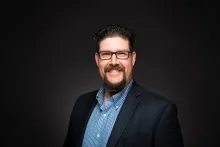
Ben is an elder serving as Pastor for the Salem, Eugene, Roseburg, Oregon congregations of the United Church of God. He is an avid outdoorsman, and loves hunting, fishing and being in God's creation.
