

Rick Shabi
This transcript was generated by AI and may contain errors. It is provided to assist those who may not be able to listen to the message.
If you would, turn to the book of Habakkuk. Probably in Hebrew they pronounce this Habakkuk.
When it came into the Latin, it was generally pronounced and into English as Habakkuk.
Habakkuk is before Zephaniah. Zephaniah is before Haggai, and Haggai is before Zechariah, and Zechariah is before Malachi. So, after Nahum, we have Habakkuk.
You might be in the Church of God for several years and never turn to the book of Habakkuk, and some might ask, well, why would we want to turn to it anyhow?
I think you'll find Habakkuk to be a very interesting study. Not much is known about the prophet Habakkuk. There are various theories as to who his parents were, his lineage, but there's nothing conclusive. Also, the exact time setting for the book of Habakkuk is generally believed that he wrote somewhere between 608 and 597 BC during the reign of Jehoiakim.
Jehoiakim came on the scene after Josiah. Josiah was the last good king in Judah. So the northern kingdom, the ten tribes of the north, had already gone into captivity at this time, and the southern kingdom was about to experience the chastening power of Babylon or the Chaldeans. When we look at Babylon, the history of Babylon, the history of Assyria, are closely linked to that same area of the world. The Tigris-Euphrates River Valley area is generally associated together, anciently called Mesopotamia. Assyria more to the north, Babylon more to the south. Today, the country of Iraq occupies that territory. As you may recall, Abraham came from that area. It says in Genesis that he came from Ur of the Chaldeans into what we now call Palestine or the land of promise. In studying the minor prophets, one of the great keys in understanding the minor prophets has to do with understanding the literal meaning of the name of the prophet. Habakkuk literally means to embrace.
This prophecy here shows that there are going to be some very difficult times. Basically, the time setting of Habakkuk is the end of the age and the great tribulation.
Though when you read the commentaries, many of them apply it in the period in which they theorize that it was written 609-597 BC. However, I think you'll see very clearly that this is basically an end-time prophecy.
This prophet, Habakkuk, is also called the questioning and the complaining prophet. He's one of the boldest prophets that you'll find in the entire Bible in that he questions God, why are you doing the things the way you're doing things, God? I really don't understand it, and he complains to God.
Now, his chief complaint is, why are you letting evil triumph? Why are you letting things go unchecked? Things that should be stopped, it seems. Why are you letting this suffering go on? So this is one of the great questions of the ages. One of the great questions that baffle philosophers and people, theologians, and especially trying to explain to people who really don't know much about God is, why do we have evil in the world?
Why does it seem like that on every front evil is triumphing over good?
So you can read Habakkuk in the commentaries, you can get bogged down in the arguments of the moment, but there's a larger picture here. And the dating of the activities, the dating of this book, basically center on the activities of the Antichrist at the end of this present evil age. And that time is a time of great tribulation.
You know, Jesus said in Matthew 24 verses 21 and 22 in the Olivet prophecy that the great tribulation would be a time of treble, such as was not since the beginning of the world up to that time, nor ever shall be in the future. So this period of time is a very troubling time. Now, there are many things that we can apply from this book to ourselves individually and collectively at the present time. So you got to like a dual message that runs to it. In all of the Bible, generally speaking, you can draw principles that can be applied in the present time. During this time, the people of God who really know their God will be in mourning. M-O-U-R-N-I-N-G. They'll be in mourning and distress. They'll be crying out for deliverance. So you notice in verse 1 of Habakkuk, the burden. Now oftentimes a prophecy begins with something like that, the burden.
The emphasis is upon the message, not upon the prophet. The burden which Habakkuk the prophet did see. And immediately in the first four verses, Habakkuk begins to question, why are you letting God, why are you letting these things go on that we see happening in our world today? But we shall see that it is for a time yet basically appointed. I want to turn to that right now, and we'll be coming right back there to the first. But look at chapter 2 verse 3.
For the vision is yet for an appointed time. Now the Hebrew word for appointed time is moed.
Moed, M-O-E-D. A specific time. It is for a time appointed. There is an appointed time in which God is going to intervene in the course of human events. The Great Tribulation is going to begin. The Day of the Lord is going to take place. You know, we have people who sit around and say things like, well, if the church would do such and such, if so and so would do such and such, then Christ could come. When I read this, I don't get from it that God is saying, when you get your act together, I'm coming. It seems to me that he's saying, I have an appointed time. Look at it. For the vision is yet for an appointed time, but at the end it shall speak and not lie, though it tarry.
Tarry means you're going to have to wait for it. It's not now, though it tarry, wait for it because it will surely come, it will not tarry. When that time comes, when that appointed time comes, it's going to come. And you can't delay it, and you cannot make it come sooner. Now, there is a verse in the New Testament that says that he will cut time short, but that still I am taking from this includes this appointed time. But I cut time short in the sense of, if things were to go on the way they are going, as it says in Matthew 24, no flesh should be saved alive. Now in Habakkuk 1-2, O eternal, how long shall I cry? How long do I have to pray before you do something? And many of us fall into this situation, and it could be a trap. How long am I I have to pray for this? I mean, it just doesn't seem that you're going to answer.
How long shall I cry, and you will not hear, even cry out unto you of violence, and you will not save?
When the Great Tribulation begins, there is no amount of prayer that's going to stop it. Now, I know that sounds maybe negative, and you might say, well, it's futile to pray. No, it's not futile to pray, but at the same time, once God sets his hand to do what he's going to do, when it comes to judging the nations of the world before the end of this age, he's going to do it. He's going to do it in his own time, in his own way.
Now, we'll be coming back there very often. I want us to look at Amos now, chapter 8.
Just back a few pages. Hosea, Joel, Amos, Obadiah. Back a few pages to Amos, chapter 8.
In Amos 8, verse 9, it shall come to pass in that day. There's what's called in prophecy a prophetic utterance, and in that day is a prophetic utterance that introduces that period of time as you merge into the millennium. Once again, prophetic utterance in that day introduces a period of time just before the millennium. It could include the Great Tribulation, but generally just the day of the Lord. It shall come to pass in that day, says the Lord God, that I will cause the sun to go down at noon. I will darken the earth in the clear day. I will turn your feast into mourning in all your songs and delamintation, and I will bring up sackcloth upon all loins and ball this upon every head. And I will make it as the morning of an only sun and the end thereof as a bitter day.
Behold, the days come, says the Lord God, that I will send a famine in the land.
Not a famine of bread, nor thirst for water, but the hearing of the Word of God.
They'll wander from sea to sea trying to find it, and they won't find it.
Now, there's a bit of paradox here with regard to Tribulation, end of the age, day of the Lord, because even in the model prayer, you know, one of the things it says, Thy kingdom come. But notice in Amos chapter 5, back a few pages, in Amos chapter 5, in verse 18. Amos 5 verse 18.
Woe unto you that desire the day of the Lord! To what end is it for you? The day of the Lord is darkness and not light. As if a man did flee from a lion and a bear met him, or went into the house and leaned his hand upon the wall, and a serpent bit him, shall not the day of the Lord be darkness and not light, even very dark, and no brightness in it.
So it's a terrible time, even though God is intervening in the course of human events. Now we look at Isaiah 61, and you'll see what the church will be doing at that time. By the church, I mean members of the body of Christ who have God's Spirit. Isaiah 61, the first verse, and the first clause in the second verse. Jesus Christ, remember after he was baptized, he went back to Nazareth, and on the Sabbath day he stood up in the synagogue, and he took the scroll, and he read from the book of Isaiah. Well, this is where he read from, and he stopped like in mid sentence. He stopped after to proclaim the acceptable year of the Lord, and he sat down.
Now this remaining part is yet to be fulfilled. And the day of vengeance of our God, the vengeance of the day of our God, the day of the Lord, and the judging of the nations before the millennium begins, is yet ahead. So he didn't come in his first coming to do that, but he will be coming as Lord of Lords and King of Kings to do it in his second coming. And notice the next thing, to comfort all that mourn. There will be great mourning in the land. To appoint unto them that mourn in Zion, remember Hebrews 1222, you have come to Mount Zion, the city of the living God, the church of the firstborn. To appoint unto them that mourn in Zion, to give unto them beauty for ashes, the oil of joy for mourning, the garment of praise for the Spirit of heaviness, that they might be called the trees of righteousness, the planting of the Lord, that he might be glorified. Then it goes on to talk about what they are going to do. So it is a time of great travail and trouble. And Habakkuk is seeing this afar off. He said, remember Habakkuk 2.3, the vision is for a time appointed. Wait for it. It will surely come when it comes to a lot tarry.
Now continuing in Habakkuk. Verse 3, why do you show me iniquity, lawlessness, and cause me to behold grievance? For spoiling and violence are before me, and there are those that raise up strife and contention. I mean, just look at the way things are. Of course, it could be a description of the way things are in our nation today. Human nature has not changed from the Garden of Eden to the present time. Man has always struggled with lawlessness. Therefore, the law is slack. That means that it's really not being enforced, and judgment does never go forth. For the wicked does compass about the righteous. And once again, that great question of the ages, why do the wicked prosper? And why is it that the righteous have oftentimes so many trials? Why is it that they can do the things that they do, and it seems like they're blessed? But on the other hand, look at me. I'm trying to do the best I can in serving God in every way that I know, and look what's happening to me. Therefore, wrong judgment proceeds. And then, after Habakkuk says his part, he raises these questions. He charges God, as it were. Here is God's response to that complaint, starting in verse 5. Behold you among the nations, and regard and wonder marvelously. For I will work a work in your days, which you will not believe though it be told you. What would be that work that he will work? The Apostle Paul, in the book of Acts, if you'll turn, hold your place. Every time we leave here, you need to hold your place back here. The Apostle Paul, in Acts 13, is giving a great summary sermon. There are three great summary sermons in the book of Acts. Acts 2, the day of Pentecost. Acts 7, Stephen's inspired sermon. And Acts 13. We're breaking in on the thought here of Paul's sermon in Acts 13, verse 41. Acts 13, verse 41. The Apostle Paul quotes now from Habakkuk, this very verse.
He's quoting Habakkuk 1.5, Behold, you despisers and wonder in Paris, for I work a work in your days, a work which you shall in no wise believe, though a man declare it unto you. What was that work? Well, that work was that God was going to send Jesus Christ through Him. Our sins could be remitted, and that we could receive the Spirit of God. And Paul is preaching Christ on this particular occasion. And in the context of that, he quotes Habakkuk 1.5.
Notice in verse 37, Acts 13.37. But he whom God raised again, Jesus Christ, saw no corruption. But be it known unto you therefore, men and brethren, that though this man is preached unto you, the forgiveness through this man, the forgiveness of sins is preached. And by him all that believe are justified from all things, from which you cannot be justified by the law of Moses.
Beware therefore, lest that come upon you which is spoken of in the prophets. Now, there's a dual meaning to this. If you're not aware of this, that which is spoken of in the prophets has to do with the tribulation coming, you finding yourself in the midst of this tribulation totally unprepared. And then on the other hand, a marvelous work, that God is going to prepare away through Jesus Christ, that sins can be remitted, and regardless of your ethnic lineage, you can be a part of the very family of God.
In verse 6 now, back in Habakkuk, verse 6, God continues his response to Habakkuk. For lo, I raise up the Chaldeans. Now, probably this should be singular, because the referent pronouns, even though the King James has they and so on, plural pronouns, his referent pronouns, two Chaldeans, is very clearly that the referent pronouns are in the singular, in the Masoretic text, and it puts a whole new light. And this is one of the keys to understanding Habakkuk. For lo, I raise up the Chaldeans. That bitter and hasty nation, which shall march through the breath of the land, possess the dwelling places, that is not his.
And from this point on, the referent pronouns are singular, his, he, him, and so on. So this Chaldean, this evil one, as we follow this through, and we shall see a little bit later in God's response here, that it is very similar to the language that is used for the Antichrist, the Willful King, the King of Fierce Chaldeans, and other titles.
I hope you were able to grasp that. Verse 7, He is terrible and dreadful. His judgment and his dignity shall proceed of himself. In other words, he has a very high exalted opinion of himself. Actually, he's energized by Satan the devil. His horses also are swifter than the leopards and are more fierce than the evening wolves. And the evening wolves, of course, they have been fasting. The wolves generally come out at night. They are ravenously hungry, and they are ready to devour anything in sight.
So he uses the metaphor of animals to show how swift this is. Leopards are among, I suppose, the fastest mammals. They can reach speeds of 60 miles an hour or more. And more fierce than the evening wolves, their horsemen shall spread themselves. Their horsemen shall come from far. They shall fly as the eagle that hasteth to eat. So ravenous animals, both the four-footed type and the fowls of the air, the eagles, they shall come all for violence. Their faces shall sup up as the east wind. Now, if you were... And here's controversy here with regard to invading the land of Israel.
If you are invading and you're facing the east, you're not coming from Iraq or that area from the area of the land of the Chaldeas. You're coming from the Mediterranean area, and you're facing the east wind. So there's controversy with regard to that, but it clearly says that they shall sup up as the east wind. They shall gather the captivity as the sand. So they're going to conquer many nations and very quickly. They shall scoff at the kings. The rulers of the various nations will not be able to stand.
The princes shall be a scorn unto them. They shall deride every stronghold, for they shall heap dust and take it. Then shall his mind change. He shall pass over and offend, imputing this, his power unto his God. Now, let's notice here, a whole year place is similarity between this language and that of Daniel and the willful king. If you go to Daniel 11 now, the willful king who eventually sets up his, and this is no question the beast power, who eventually sets up his tabernacle, his headquarters in Jerusalem.
In Daniel 11, verse 36, And the king shall do according to his will. He shall exalt himself, magnify himself above every God, shall speak marvelous things against the God of gods, as in the case of the beast described in Revelation 13. And shall prosper till the indignation be accomplished, for that that is determined shall be done. Neither shall he regard the God of his fathers, nor the desire of women, nor regard any God. For he shall magnify himself above all. Now verse 39, Thus shall he do in the most strong holes with a strange God.
Now apparently this one is going to feign to be perhaps Christian because he sits in the temple of God. Other names for this one we'll find in 2 Thessalonians 2.3 as he is called the man of sin. He's called the son of perdition in 2 Thessalonians 2. And verse 3 sits in the temple of God saying that he is God. But notice in his secret holes, in his most strong holes, he worships a strange God whom he shall acknowledge and increase with glory and he shall cause them to rule over many and shall divide the land for gain.
And notice eventually in verse 44 tidings out of the east now Jordan, Iraq, Iran, Afghanistan, Pakistan, India, several other stands of small countries north of those countries on into China and Japan to the east. And then of course Turkey and Russia to the north but out of the east and out of the north tidings shall trouble him therefore he shall go forth with great fury to destroy and utterly to make away many. He shall plant the tabernacles of his palace between the seas, between the Mediterranean and the Dead Sea in the glorious holy mountain.
The glorious holy mountain is where God placed his presence in Jerusalem. Yet he shall come to his end and none shall help him.
So we see the language here is very similar. Let's read it again.
In verse 9, then shall come for all for violence. He shall come all for violence.
He faces the east wind. He gathers the captivity as the sand. They scoff at the kings, the princes shall be escorted to him. He shall to ride every stronghold. For he shall heap dust and take it.
Then shall his mind change and he shall pass over. Notice how even in the King James now it changes from the plural pronouns to the singular, but it should be singular all the way through.
Then shall his mind change. He shall pass over in a fin, imputing this his power unto his God. We read about in Daniel that he will in his most strong holds worship a God that his fathers knew not.
And so that's God's answer to Habakkuk's first questions, verses 5 through 11. Now, this prophecy is written as a kalelukwe or a dialogue that is a conversation back in 2.
Habakkuk says one thing and then God gives his response. So now Habakkuk, after God speaks in verse 12, takes it up. Are you not from everlasting? I mean, haven't you always existed? Oh, eternal, oh, Yahweh, my Elohim, mine holy one. And here's another big translation error in the King James. And this is one of the emendations of the sophorems, that is, those who preserve the scriptures, but in the marginal errors, in the marginal references, the true reading is preserved.
It should read, who shall not die? The holy one shall not die. The sophorems said, well, it's disrespectful to God to even to indicate that he could die by saying he would not die.
So it says, we shall not die. And then some of the commentators who should know better, take off on, oh, we shall not die and we'll live and all that. But this should read, he shall not die. That is God, because he's from everlasting. The holy one, he shall not die, oh, eternal.
You have ordained them for judgment and, oh, rock. The word there for mighty God is to soar.
You have established them for corruption. So he's saying, look, you have all power, you've always existed. What's going on here? You are a purer eyes than to behold evil. I mean, it looks like to me, you've always existed. You have all this power, you can't die, and all these things. It just seems that you would not look at this and let it go on.
You are a purer eyes than to behold evil and cannot look on iniquity.
So why do you look on them that deal treacherously and hold your tongue when the wicked devires the man that is more righteous than he? Now, some of the commentators say, well, the Jews were better than the Chaldeans. And so even though they're really doing wicked, they're still better than the Chaldeans, but yet God is going to use the Chaldeans to punish you. That is off.
It's talking about the righteous man. And during this period of time, the righteous are going to suffer right along with everyone else. It's going to be a terrible time.
Let's read it again. Why do you look upon them that deal treacherously and hold your tongue when the wicked devires a person that's more righteous than he is? Why do you let it happen? Well, God is working out a great plan for all humankind. He's no respecter of persons. He knows what he's doing. And in his own time, he does things that are best for us. And he always has our best interests at heart. And that's one of the great lessons that all of us have to learn.
Now, verse 14, and make men as the fishes of the sea as the creeping things that have no ruler over them. So the fishes of the sea, the creeping things, the shrimp, the crabs, the lobsters, and everything else. And what he's saying here is that this one, this evil one, it's like you went out into the sea with a net and you brought all of this into your net. But instead of bringing the things of the sea into the net, you're bringing the nations. You're bringing people. They take up all of them with the angle. That's talking about the fisherman when he casts his net in their net and gather them in their drag. Therefore, they rejoice and are glad. So they're glad when they get a big catch. Therefore, they sacrifice under their net and they sacrifice under their net, burn incense under their drag, because by them, their portion is fat and their meat plenty. Now that's using the figure of speech or metaphor of a fisherman, but the actual application is verse 17. Shall they therefore empty their net and not spare continually to slay the nations? So actually this net, this drag, is bringing all nations into this confederation. Notice, hold your place, look at Revelation 13. Revelation 13. Verse 6, speaking of the beast power, he opens his mouth and blasphemes against God to blaspheme his name, his tabernacle, and them that dwell in heaven. It was given unto him to make war with the saints and to overcome them, and powers given him over all kindreds and tongues and nations. So this drag brings all in.
And all that dwell upon the earth shall worship him, whose names are not written in the book of the life of the Lamb slain from the foundation of the world. Now, chapter 2, Habakkuk.
One more verse of Habakkuk's response to God's first response.
Once again, we call Habakkuk the questioning and complaining prophet. So what Habakkuk does now, in essence, before we read it, just put in everyday language, say, look, I've laid out my case here. This is what's going on.
Now I'm just going to sit back and see what you're going to do about it.
Chapter 2, verse 1, I will stand upon my watch and set me upon the tower and will watch to see what he will say unto me and what I shall answer when I'm reproved.
And then the Lord answered.
Now, the answers, as we have already noted, is for the future, and we'll see that.
Embedded in God's second response are five woes. And we'll note the woes as we come to them.
The Lord answered me and said, write the vision, make it plain upon tables, that he may run that reads it. Now, this is an interesting expression here that anybody that gets this vision that grabs hold of it, it's sort of like the Paul Revere thing, the British are coming, the British are coming. He that reads it, let him run with it. Let him tell it. Don't keep it secret. Let him run with it and share it.
For the vision is yet for an appointed time, Moed, a specific time, as we have read.
But at the end of it, but at the end, it shall speak and not lie, though it tarry, wait for it, because it will surely come, it will not tarry. Behold his soul, and this is referring back now to raising up this one described in verses 5 through 11.
This one, behold his soul, which is lifted up, is not upright in him.
But, and here's another controversial phrase, and we could do battle over this one.
Most of the readings and most commentaries and most people just quote, the just shall live by his faith. Now, probably the better translation of this is that living by faith, if you live by faith or because you live by faith, you will live in resurrection. The contrast between faith and living forever, as opposed to living by faith right now. It's also because he transgresses by wine. He's a proud man, neither keeps it home, who enlarges his desire as the grave, and is as death cannot be satisfied, but gathers unto him, just like the analogy of the fisherman's net, gathers unto him all nations, and heaps unto him all people. Thus, we're not talking about just a local event in or a regional event in 604 or 587 or whatever date there in the Old Testament.
This is a worldwide phenomenon. He gathers all nations and heaps unto him all people.
Now, of course, there are many things here in this verse that could be applied to each one of us specifically, that we don't fall into the trap of the willful king, the one of fierce countenance, the man of sin, the son of perdition. He transgresses by wine. How many people are destroyed in this nation every day by alcohol? He's a proud man. He's too proud to really depend upon God. Neither keeps at home. He's better at trying to tend to other people's business. He enlarges his desire. He cannot ever be satisfied as the grave and is as death and cannot be satisfied.
And he tries to rule over everything on the earth. Verse 6, shall all these take up a parable against him and taunting proverb against him and say, woe, the first of the woes, woe to him that increases that which is not his. So one of the greatest sins of all time is covetousness. Covetousness is equated with idolatry. In fact, it says, let's see if we can turn to that right quick in 1 John chapter 5.
Well, the last verse in 1 John 5, 21, little children keep yourself from idols.
My eye doesn't fall on the exact verse I was looking for, but coming back to this.
Verse 6 again, shall not all these take up a parable against him as a taunting proverb against him and say, woe to him that increases that which is not his. How long? And to him that lades himself with thick clay. Shall they not rise up suddenly? That shall bite you and awake, that shall vex you, and you shall be for booties unto them, because you have spoiled many nations.
All the remnant of the people shall spoil you. Now, of course, eventually God is sending Jesus Christ back and with Jesus Christ will be the armies in heaven. Hold your place there and let's look at that. In Revelation chapter 19, in Revelation chapter 19, Revelation 19 verse 11, after the marriage supper of the Lamb.
I think sometimes we have painted, and I know that we have painted this picture of how the church, everybody's going to be tucked away safely in a place of safety, and there won't be any great suffering, trial, trouble, difficulty. And according, I believe there is a place of safety, and some will go to a place of safety, as in Revelation chapter 12. But on the other hand, I also read from Revelation chapter 13 verses 7 and 8 about that He'll make war against the saints and overcome them. I've also read from Isaiah 61 that those in Zion will be in a state of mourning, M-O-U-R-N-I-N-G. So it is a time of contrast, it's a time of irony, it's a time of paradox. Because you have spoiled many nations, all the remnant of the people shall spoil you.
When this really happens, as described here in Revelation 19.11, I saw heaven opened, behold, a white horse, and he that sat upon him was called faithful and true, and in righteousness he'd asjudged and make war. His eyes were as a flame of fire on his head were many crowns, and he had a name written that no man knew but himself. He was clothed in a vesture, dipped in blood, and his name is called the Word of God, and the armies which were in heaven followed him upon white horses clothed in fine linen, white and clean. And that's what will be clothed in the marriage supper of the Lamb. So the saints are with him coming back to fight the battle of the great day of God Almighty, where the nations of the world have gathered together in Armageddon to resist the returning Jesus Christ. Now, the Vatican this past week called a great conference on whether or not extraterrestrial life exists in the universe. I believe that the Vatican will probably issue some kind of official statement, and I'm no prophet, but I believe that they will issue some kind of statement that says that there is that. That is extraterrestrial life, aliens existing in the universe. And, see, when this event actually takes place, when Jesus Christ and the saints return on the white horses and the great army coming down where the nations are gathered, the nations of the world will be deceived and believing, well, these are these aliens.
How many movies and how many whatever articles and all that today are being written about aliens and invasion from outer space and the whole Star Wars stuff and everything that goes with it.
And the nations will be deceived into fighting against the returning Jesus Christ. And here we have the largest ostensible Christian organization in the world holding a great conference. It's been all over the news this week of whether or not extraterrestrial life exists in the universe.
I haven't yet seen the summary, but I and perhaps they will conclude, no. Actually, obviously there is extraterrestrial life that exists. There is the spirit world, the angels of God, and there are also along with Satan the demons.
Now continue in Habakkuk verse 9, because you have spoiled many nations, all the remnant of the people shall spoil you because of men's blood and for the violence of the land of the city and all that dwell therein. Woe to him that covets an evil covetousness to his house, that he may set his nest on high, that he may be delivered from the power of evil.
You have consulted shame to your house by cutting off many people and have sinned against your soul, your very being. You know when Jesus Christ comes again, what is he going to do with the beast and the false prophet? The beast and the false prophet are going to be cast into the lake of fire.
And all of the unrighteous, the incorrigibly wicked, will be cast in the lake of fire, where the beast and the false prophet were cast. So they commit the unpardonable sin. Exactly how that works, I don't know for sure. But it seems that they know better.
For the stone shall cry out of the wall, and the beam out of the timber shall answer it.
Woe to him that builds a city with blood and establishes a city by iniquity.
The governments and cities of this world today are established by blood and through iniquity.
You may doubt that, but in today's world, in Satan's world, to be really able to retain your power, as they say, it's a dog-eat-dog world out there. The prophet Ezekiel tells us about that. Let's notice this in Ezekiel 22, of what is really going on in Ezekiel 22.
In Ezekiel 22 verse 25, there is a conspiracy of our prophets in the midst thereof, like a roaring lion, ravening and prey. They have devoured souls, see, through blood. They have taken the treasure and precious things. They have made her many widows in the midst thereof.
You send the husbands, and you send your sons and your daughters to war.
Our priests have violated my law, profane my holy things. They put no difference between the holy and profane. Neither have they showed difference between the clean and unclean, and hid themselves from my Sabbaths, and I am profaned among them. Her princes in the midst thereof are like wolves ravening the prey to shed blood and to destroy souls to get dishonest gain.
Yes, the cities, the governments of this world, have been built largely through the blood, the labor of what we call the common man.
Now back to back to and using the analogy of very just the the substance that buildings are made out of. It's going to come to the point that the very stones are going to cry out of the wall for justice.
Another one of the woes, 12. Woe to him that builds a town, as we've just talked about with blood, and establishes a city by iniquity. Behold, is it not of the Lord of hosts that the people shall labor in the very fire, and the people shall weary themselves for very vanity? What does it really achieve? What is it really accomplish? For the earth shall be filled. Now the contrast and showing that is end times and millennium. That day is coming. The earth shall be filled with the knowledge of the glory of the Lord and the waters as the waters cover the sea. Woe unto him that gives his neighbor drink, that puts your bottles to him and makes him drunk, and also that you may look on their nakedness. Of course, there's a tremendous amount of that goes on with drugs and alcohol and mind-bending kind of substances in which all kind of sexual orages and everything you can name and imagine under the sun takes place. You know, it seems with these sitcoms today, they passed innuendo. It's come to the point where it's like I watched for the first time this week about five to eight minutes of Raymond. Now, this particular scene, what the deal is, that Raymond's wife, I don't know what her name is, but anyhow, Raymond's wife's father is living with them, and Raymond's wife's mother lives across the street, and they're divorced.
And so one night, Raymond gets up like early in the morning, 3 a.m. or whatever, and he sees these two in an intimate relationship. And it's all this big fun. Oh, I can't talk about it. I know I saw them. You saw them? Oh, I saw them. And then it's Thanksgiving day the next morning.
So the neighbors come, and then the mother, who has now gone back, she slipped out of the house at night and come over for this rendezvous. She's gone back, and then she comes through the door the next day, and they start talking. And eventually they say, oh well, you don't have to be married to have sex. It says, you know, I don't think we love each other anymore, but we just, this is very fulfilling for us. I mean, that's Raymond. I suppose that's rated, I don't know what it's rated. But anyhow, that Raymond is mild to these others. They might as well just pull off their clothes and get in bed and be done with it. That's what it's all about.
And this is in so-called prime time, and then we wonder why our children are in the situation, the condition that they're in. You know, many of the even the Hollywood types say, I don't let my children watch television. Verse 16, you're filled with a shame for glory.
Drink you also and let your foreskin be uncovered. In other words, you're uncircumcised.
You are unconverted. The cup of the Lord's right hand shall be turned unto you, and shameful spewing shall be on your glory. In other words, similar to what was read in the sermon, Ed, God is going to spew them out of his mouth for the violence of Lebanon shall cover you in the spoil of beast, which made them afraid because of men's blood and for the violence of the land of the city and all that dwell therein. And then the question, what what profit is the graven image that the Maker thereof is graven in? The molten image and the teacher of lies, like we read from Ezekiel 22, that the Maker of his work trusts therein to make dumb idols. What good is all of this?
You know, like I was saying last week, I went to this doctor and she told me that she was a Buddhist. Well, I have been to Bangkok to the Old City, and they have the temple area there of the Old City. And in this temple area, there is a statue, a jade statue. It's about this big, a head. It is the third most sacred statue of Buddha in the world.
And people go there, you know, just you can't touch it or anything just to look upon this statue as if it is going to bring them peace, tranquility, and whatever else that is brought with it. And throughout Bangkok, you have thousands of young men from ages 18 to 25 standing around in these robe, orange kind of robes, doing alms, begging alms. And they are studying to be, they are supposed to spend two years in the nominal priesthood.
And one of their big roles is to beg for alms to help support the religion.
But what prophet is that? Verse 19, woe unto him that says to the wood awake to the dumb stone arise, it shall teach. It's not. Behold, it is laid over with gold and silver, and there is no breath at all in the midst of it. But the Lord is in, now, the contrast in view of all of these things that are going on. The Lord is in his holy temple. Let all the earth keep silence before him.
So you can be assured that God sees all, he knows all, and he's aware. And in the time appointed, he will come and he will not carry. Now, this concludes with a prayer of Habakkuk, the prophet, upon Shiganath. Now, Shiganath is a musical term that has to do with mournful crying. So, Habakkuk responds to what God has said here in chapter 2.
O eternal, I have heard your speech and was afraid. O eternal, revive your work in the midst of the years, in the midst of the years, make known and wrath, remember, mercy. Now, some of the various splinter groups, as made a great deal out of this, revive the work. And they supposedly are the ones that are going to revive the work. Now, there have obviously been periods in human history in which the work of God was barely discernible upon the face of the earth. You could hardly discern if there was a Christian on the face of the earth. And then God would raise up, oftentimes, a person who would wholeheartedly, and very few people are able to do this, who would totally give himself to God and to the study of God's Word and actually do what the Word of God says to do, and He would raise up a work through that person. And we have seen that in our days.
And we have seen it come, and we have seen it go. And some think, well, this is really what this means. And there are times to do this.
But this word here, to revive, also means to renew. And what it's basically saying is, I'm pleading with you, God, I've heard what you have to say, and I'm asking you that you involve yourself in the affairs of human beings, in the affairs of our people, as you did in years past. As you did in years past. Renew like you used to do.
Now, you could, perhaps there is the application of reviving a work in the midst of the years.
One person makes a lot to do over this and claims he is the one.
But notice what he has to say here. God came from Timon, and the Holy One from Mount Paren, Selah.
Now, there's a lot of controversy about it. You see this term, Selah, in the Psalms. What does it mean? Well, it's probably a musical term in one sense, but it also is a pause or rest, and it provides an indication that there's a connection between what has been said and what's coming. His glory covered the mountains. So, look, he came from Timon, and the Holy One from Paren, and the connection is what happened. His glory covered the heavens, and the earth was full of his praise. Now, the earth has not yet been full of his praise, but if the peoples of the world really considered who they're dealing with and the majesty of his power, they would praise him, hopefully. And his brightness was as the light he had horns, and horns, the symbolic of power coming out of his hand. And there was the hiding of his power.
He wasn't in his absolute full glory. Before him went the pestilence, and burning coals went forth at his feet. Now, pestilence and coals can be symbolic of judgment. He stood and measured the earth, and any time you're measuring the earth, measurement also has the connotation of judgment. He stood and measured the earth. He beheld and drove us under the nations.
And the everlasting mountains were scattered, the perpetual hills did bow. His ways are everlasting.
I saw the tents of cushion in affliction, and the curtains of the land of many and did tremble.
Was the Lord displeased against the rivers? Was your anger against the rivers? Was your wrath against the seas that you did ride upon your horses and your chariots of salvation?
Your bow was made quite naked according to the oaths of the tribes, even your word.
Selah, connecting that with what's coming in a fuller explanation.
You did cleave the earth with rivers. The mountains saw you, and they trembled. The overflowing of the water passed by. The deep uttered the voice and lifted up his hands on high.
The sun and moon stood still in their habitation.
And that, of course, happened once in Joshua's long day.
At the light of your arrows they went, and at the shining of your glittering spear.
You did march through the land in indignation. You did thresh the nations in anger. You went forth for the salvation of your people, even for salvation with your anointed.
So why does God intervene, and why does He do the things that He does?
Well, the ultimate goal is to bring all peoples into a relationship with Him and Jesus Christ. Salvation comes through Jesus Christ. There's none other name given under heaven whereby men must be saved. In Acts 4, 23, you can read that. You went forth for the salvation of your people, even for the salvation of your anointed. So why did you do what you did for salvation, for deliverance?
You wounded the head out of the house of the wicked by discovering the foundations of the foundation unto the neck.
Say, lie, you did strike through with his staves the head of his villages.
They came out of the whirlwind to scatter me. Their rejoicing was as to devour the poor secretly.
You did walk through the sea with your horses through the heap of great waters.
And he led Israel through the sea and parted the Red Sea.
When I heard my belly tremble, so when Habakkuk reflected back on the great works of God and what he had done and what he's going to do, when I heard it, my belly trembled. Have you ever heard of that feeling, sudden sort of fear come up in you?
I remember one time when my oldest daughter, she contacted, first of all, strep throat.
Then that turned into scarlet fever. Then that turned into rheumatic fever.
And I was, at that time, doing my doctoral work at Commerce, East Texas State University.
And I remember driving that drive day after day, and I could feel this burning in my stomach.
As I prayed up there and I prayed back, asking that God would intervene and he would spare her.
And he did.
She has no signs or symptoms of rheumatic fever. Of course, rheumatic fever attacks the heart and can lead to death. Of course, we did some things. She was anointed and all of that.
But if you've never had that, where your belly trembles and you're just burning inside, my lips quivered at the voice. Rottenness entered into my bones. There's no pain like bone pain.
And I know quite a number of people who've experienced bone cancer.
And I tremble in myself that I might rest in the day of trouble. When he comes up under the people, he will invade them with his troops.
And we read about those troops in Revelation 19.
Although the fig tree shall not blossom, neither shall fruit be in the vines, the labor of the olive shall fail, the field shall yield no meat, the flock shall be cut off from the foal, and there shall be no herd in the stalls. And that describes part of the scene of the Great Tribulation when God intervenes. And now, reflecting back on all of this, and as we reflect back on our lives and what we have faced in the past, how many trials have you gone through in the past and you came through them? How many trials are you going through today? And how many trials will you go through in the future?
Well, the future to a large degree depends on us.
I don't know if God has said, okay, in the future, you or me, we're going to go through X, Y, or Z trial. I don't think any of us knows that. I don't know if God has that predetermined.
And I don't think he does. I think to a large degree it depends on our response of what we do and say. So obviously, you can apply these things individually. You can apply that collectively in a sense to the church. The greater scene has to do with God dealing with all of the nations and all the peoples of the earth and what he desires to do with all the peoples of the world.
And as we see the things that we see unfold every day in our world, and we sigh and cry for the abominations thereof. And yet at the same time, this time is like a time of paradox, irony.
Same time where it said, lift your heads up high because you know that your redemption draweth nigh.
So Habakkuk says in verse 18, in spite of all these things that have been described here, yet I will rejoice in the Lord. I will joy in the God of my salvation.
And that's one of the great things that I think that so many of us have lost and we need to restore.
We want to talk about reviving and restoration, restoring within all of us the joy of our salvation. In spite of the trials we have faced in the past, in spite of the trials that we're facing presently, that we may not consume and fill with anxious care of what lies ahead for tomorrow, but that we joy in the salvation of God. Verse 19, the Lord God is my strength, and He will make my feet like the feet of a deer or a robot, which has great spring and great... they can walk on the rocks and the sides of the hills and run like the wind and jump fences and all of that... will make my feet like the deer and He will make me to walk upon high places to the chief singer on my string instruments. So you have turned, hopefully most of you have turned at least once in your life, to the book of Habakkuk. And you have seen somewhat about the questioning, complaining prophet. He questions and complains up front. All of these things are laid out. And then he comes to this conclusion that he's going to rejoice in the salvation of God and that he understands that God is His strength and will place Him in high places.
May God place all of us on His throne when He comes again, as it says in Revelation chapter 3, which Mr. Douglas read, that I will grant Him to sit down with me on my throne as I am sat down with the Father on His throne. So, brethren, let's really study the Bible. Let's really dig into the Bible. There's so much there that you could be in the church for 20 years, 30 years, or whatever, and never really consider some of these things. So, if you've never read through the Bible in totality, I would encourage you to get on a Bible reading program to read through the Bible. We have done that with our various Bible reading programs, but to continue to study because the very essence, the very mind of God and the life, the Word that speak, their spirit and their life, Jesus said.
So, let's continue to study the Word of God.
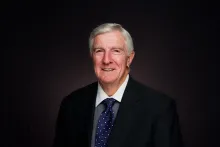
Before his retirement in 2021, Dr. Donald Ward pastored churches in Texas and Louisiana, and taught at Ambassador Bible College in Cincinnati, Ohio. He has also served as chairman of the Council of Elders of the United Church of God. He holds a BS degree; a BA in theology; a MS degree; a doctor’s degree in education from East Texas State University; and has completed 18 hours of graduate theology from SMU.
