
David Mills
This transcript was generated by AI and may contain errors. It is provided to assist those who may not be able to listen to the message.
It starts one week from today, Saturday, March the 20th will be the official spring equinox. It means the spring holy days are near, and the Passover and the Feast of Unleavened Bread will be observing those days in just over two weeks. Soon a new year will begin on God's calendar at sunset this coming Monday night. After today we've just got two more days in this year, and then we will begin a new year of the sacred calendar. But I've got a question for you. I think it's an important one that we need to understand. How can we be sure that we have the right calendar for determining when we should observe the Passover and the other festivals of God? It is important that we have the right calendar in order to observe the festivals at the time that God wants us to observe them.
You know, calendar study. Have you ever done any study on the calendar issue? Well, from the World Book Encyclopedia, let me read just a little bit. If you've got a piece of paper, I want you to write down some numbers in just a moment. This brings out here the lunar month is about 29 and one half days long. I believe just over 29 and one half days long. 12 months, 12 such months, amount to 354 days. Well, this is 11 days shorter than the solar year of 365 days, 5 hours, 48 minutes, and 46 seconds.
But if we make the year 13 months, then we have 383 and a half days, which would be more than 18 and a half days longer than the solar year. Let me just think about that. There's a real discrepancy here then, and this from the World Book Encyclopedia goes on to say that this discrepancy explains the great confusion that has existed in the calendar for thousands of years and still exists in some areas today. Man has no simple and accurate way to keep the lunar and solar calendars exactly in step. We want to expound on that statement. Man has no simple and accurate way to keep the lunar and solar calendars exactly in step. You know, as the article began, there's been a lot of confusion over the millennia on the calendar. Do you know the earliest known Roman calendar? We use a Roman calendar. First of all, it was the Julian calendar from Julius Caesar and then the Gregorian calendar, which is the one that we use now. But there are Roman calendars. The earliest known Roman calendar consisted of 10 months. Just think of that back in ancient Rome. They just had 10 months, and a year was 304 days. The Romans seemed to just have ignored the remaining 60 days. They just seemed to have ignored that those days just kind of were in limbo. But finally, in 46 BC, Julius Caesar ordered the Romans to disregard the moon in calculating their calendars. He divided the month, or the year rather, into 12 months of 31 and 30 days, except for February, which had 29 days. Every fourth year, it would have 30 days. And Julius Caesar at that time also moved the beginning of the year from March 1 to January 1. At that time, the Romans had used the spring of the year too. It began their calendars. Well, the Julian calendar was fine. It was used for more than 1,500 years, but guess what? It wasn't completely accurate. And so, actually, the difference led to a gradual change in the seasons. And by 1580, the spring equinox fell on March 11, 10 days earlier than it should. And so, Pope Gregory XIII corrected the difference between the sun and the calendar by ordering 10 days dropped from October. The day that would have been October 5 in 1582 became October 15. By the way, there was no disruption of the weekly cycle. Just the one day was October 5, and the next day was October 15. This procedure restored the next equinox to its proper date. And the calculations for the Gregorian calendar are so accurate that the difference between the calendar and the solar years is now only about 26.3 seconds per year.
Well, you know, as you can see, the calendar issues, indeed, are quite complex. Right down the lunar month, 29 days, 12 hours, 44 minutes, and 3 seconds. Somewhere I got 2.8, another place I got 3. So that's close enough. 29 days, 12 hours, 44 minutes, and 3 seconds. That's from one new moon to another. One lunar month to another lunar month. That's how many... that's the passage of time. But you can notice that's very irregular, isn't it? It's not like having a month that is 30 days long. You could really deal easily with that. 29 days, or if you're worried, just an even number of days. Now, right down the solar year. Solar year is 365 days, 5 hours, 48 minutes, and 46 seconds. Somewhere I got 45.51 seconds. So that's close enough. But you can see that the solar year is also very irregular. So the calendar is complex, very complex. How do we reconcile, or how can we construct a calendar with such irregularities between the lunar month and the solar year? God does want us to observe His holy days by the new moon, by the month.
We have certain dates during the month. So we have to have a lunar calendar. How do you construct a calendar that is lunar and solar with such irregularities? You know, obviously the Romans threw their hands up. They said, we can't do it. We can't. We'll just then have a calendar that is apart from the lunar months. We'll have a solar year, and they moved it to January 1, and then we will have artificial months that are 30 or 31 days, except for February. So they created the calendar we use today, which with its artificial months. The months that we use are artificial. They're man-made. They don't go by the moon. But we do go by the moon in determining the holy days. We go by the lunar month. How, then, what kind of calendar can you come up with? Let's ask a question at this point. Does God have a calendar? Is there a biblical calendar that we are to go by in determining the holy days and when they should be observed? The answer is yes. God has a calendar. Let's go back and study this a little bit in Genesis chapter 1.
Right away we see the components of a calendar when God created human life.
When God made the earth for human beings, for mankind, we see the components of a calendar.
In Genesis chapter 1 and verse 3, God said, let there be light, and there was light. God saw the light that it was good. God divided the light from the darkness. He called the light day, and the darkness he called night.
The evening and the morning were the first day. Then you would have to have the earth, of course, right? Rotating. You would have to have the sun. The earth is about 93 million miles out. This is where we find ourselves.
So you have the earth and the sun. Day one. This is the most basic component of a calendar, a day. Now, we come to verse 14, and we find the other two components. Of course, the day involves the sun, so you actually have two. We'll add one more in verse 14. God said, let there be lights in the firmament of heavens to divide the day from the night.
And let them be for signs and seasons and for days and years. Here we have, on the fourth day, everything is put in its place. It would appear that it would be not in quite its place on the first day, but by the fourth day, these lights, well, the moon and the sun and the earth are brought into their relationship with each other.
Verse 15, let them be for lights in the firmament of the heavens to give light on the earth, and it was so. God made two great lights, the greater light to rule the day, that would be the sun, and the lesser light to rule the night, and that would be the moon.
He made the stars also. He set them in the firmament of the heavens to give light on the earth, and to rule over the day and over the night, and divide the light from the darkness, and God saw that it was good. So now, by day four, we have all the components of the calendar in place. We have the sun, we have the earth, and we have the moon. And now God has this astronomical clock at work. He has the earth rotating on its axis every 24 hours, creating a day. He has the moon circulating around the earth every 29 days, 12 hours, and 44 minutes and 3 seconds, giving seasons.
And He has the earth and the moon going around the sun, and the earth at this strange 23 degree plane to the sun, creating seasons of the year. All this is now in motion. So we have all the components of the calendar in place within the first four days of the creation week. So we have a calendar in motion. But you know, where is the information on exactly how you construct a calendar? How do you take these very strange numbers that I gave you as far as the lunar month and the solar year, how do you construct a calendar around those very irregular numbers?
There's nothing given here in Genesis about that. Let's go to Genesis 7. Yet there was a calendar before the flood. A calendar was known, and how to reckon the calendar was known. But Noah, in Genesis 7 and verse 11, in the 600th year of Noah's life, in the second month, the 17th day of the month, so there's a calendar. The second month, the 17th day of that month, on that day, all the foundations of the great deep were broken up, and the windows of heaven were opened. So there's a calendar here, and Noah was aware of it.
In chapter 8 and verse 4, chapter 8 and verse 4, then the ark rested in the seventh month, the 17th day of the month, on the mountains of Ararat. That would be, by the way, the third day of the Feast of Tabernacles. The seventh month and the 17th day. The waters, verse 5, the waters decreased continually until the tenth month. In the tenth month, on the first day of the month, the tops of the mountains were seen.
So we have a calendar referred to here that Noah would have been familiar with. Verse 13, chapter 8 and verse 13, it came to pass in the 600 and first year, that would be referring to Noah's life, in the first month, the first day of the month, that the waters were dried up from the earth. And Noah removed the covering of the ark and looked, and indeed the surface of the ground was dry.
Verse 14, in the second month, on the 27th day of the month, the earth was dried, and they were able to come on out of the ark. So we have references to a calendar in the time of the flood. But where is the knowledge of how to construct such a calendar and be able to, in some way, bring together the lunar month and the solar year with all their irregularities? It would seem obvious that Noah would have known how to do it. That God had revealed it, and it was known to Noah just exactly how the calendar was to be constructed.
You know, there is no other mention. You study calendar in the book of Genesis, other than what we have read in Genesis chapter 1, and here in Genesis chapters 7 and 8, there are no other references to the calendar in the book of Genesis.
That's it for the first 2500 years of human life. At the end of Genesis, we come about 2500 years forward from the creation of mankind. And that's it. There's no information given as to how a calendar should be constructed.
Well, let's come now to a very critical time in the study of the calendar.
Let's come to Exodus chapter 12. Exodus chapter 12 and verse 1. We know here that the Israelites were about ready to be delivered from slavery in Egypt, for they had been for over 200 years. And so in Exodus 12 and verse 1, the Lord spoke to Moses and Aaron in the land of Egypt. The Israelites were yet in slavery. And verse 2, This month shall be your beginning of months. It shall be the first month of the year to you.
I think we could read from this that the implication would be that the Israelites, and including Moses and Aaron, had lost track of the calendar. And the information as far as how the calendar should be calculated, how the calendar should be constructed, that information had been lost. And now God is revealing to them the knowledge of the calendar. Now they would need the true calendar to keep the Passover every 14th day of each year, of the first month of each year, followed by the Feast of Unleavened Bread for seven days, and then for calculating Pentecost, for calculating trumpets in the fall of the year, Day of Atonement, and Feast of Tabernacles last great day. They would need the knowledge of the calendar to know when to keep the Holy Days. And yet, here in Exodus 12, where is the knowledge of how a calendar should be constructed? Where is the information on how we can construct a calendar that brings together the solar year and the lunar month? As far as that is concerned, where in anywhere else in the Bible do you find anything on how to construct a calendar? We don't.
The knowledge on how to construct a calendar is not in the Bible. Think about that.
So, how can we know then when to observe the Holy Days? As we have already brought out, calendar calculation is very complex. The lunar month of 29 days, 12 hours, 44 minutes, and 2.8 or 3 seconds. The solar year 365 days, 5 hours, 48 minutes, and 46 seconds.
Very complex. It doesn't come uneven.
The simple truth then is that God has not revealed calendar calculations and how to construct the calendar in the Bible, but He has revealed who should keep His calendar. Let's fast forward now 1,500 years to the time of Christ and the New Testament Church. Let's come on to Acts chapter 37.
You know, when Jesus was on the earth about 1,500 years after Exodus 12, Exodus 12, the Israelites were in slavery. Okay, 1,500 years later, Jesus shows up on the scene, and He kept the Passover at the time the Jews did, the East of Tabernacles at the time the Jews did. So, that knowledge had been preserved until the time of Christ. The early church also had that knowledge. But let's notice in some very important verses in Acts chapter 7 and verse 37.
Acts chapter 7 and verse 37.
This is that Moses who said to the children of Israel, The Lord your God will raise up for you a prophet like me from your brethren. Him you shall hear.
This is he who was in the congregation, in the wilderness with the angel.
This is referring to Moses then. This is Moses, the congregation in the wilderness with the angel who spoke to him on Mount Sinai and with our fathers, the one who received the lively oracles to give to us. It would appear from this verse that God gave these lively oracles then to Moses and then Moses would have given that information to the Israelites.
The living oracles to give to us. Notice that. Moses received things to give to us. Let's go over to Romans now chapter 3 and verse 1.
These verses in Acts 7 and Romans 3 are very important as far as the calendar.
In Romans chapter 3 and verse 1, what advantage then has the Jew or what is the prophet of circumcision? Verse 2, much in every way, chiefly because to them were committed the oracles of God.
Paul says the Jews do have some advantage. They had committed to them the oracles of God.
Now the word oracles is from Logaea and it means utterances. It doesn't always have to be something written down. It could be even something that has been preserved orally or that has been preserved other than just in the Scriptures. Certainly the oracles of God would include the Scriptures. The Jews have been very jealous in preserving the Old Testament Scriptures, Hebrew Scriptures, very jealous. And we rely upon their preservation of the Old Testament Scriptures or that portion of the Bible today. But what about the oracles? What exactly is this? The oracles? Well, the Greek logia is used especially for divine utterances, often for those preserved and handed down by earlier generations. Jewish writers used it for revelations from the God of Israel. To be entrusted with the divine oracles obviously means more than to be the recipient of them. It means more than even than to be the custodian and transmitter of them. The Jews then would be like custodians and transmitters. But notice that it wasn't their choosing even. It was committed to them. It was entrusted to them. By whom? By God. God entrusted to the Jewish people the oracles of God to preserve the Scriptures, the Old Testament Scriptures, also the knowledge of the Sabbath. And just ask any Jew, he knows that the Jewish people have preserved the knowledge of the Sabbath. But what about the calendar? Well, we have what is called the Hebrew calendar, and it does reconcile the lunar month, the irregularities of the lunar month and the solar year in a very nice and a very, very accurate way. Did the Jews, did God also commit to the Jewish people the preservation of the calendar? We believe that he did. But there's no question about it that God entrusted to the Jewish people to preserve the knowledge of the calendar.
You know, how can we know then that the Jews have faithfully preserved the calendar calculations and how to construct the calendar until today? Well, after it was given to Moses, the lively oracles given to Moses, including the calendar construction, 1500 years later Jesus and the early church had no question as to when to observe the Holy Days, same time as the Jews. Did we then have any reason to think that 2000 years later it would be any different? The answer is no.
But you know, it does take faith. But you think about it. You have not been there, and no other human being has been there to see that every generation of the preservation of the Scriptures has been accurate. No human being has overseen that generation by generation. The preservation of the Old Testament, as far as that is concerned, the New Testament Scriptures. God used the Greeks to preserve the New Testament Scriptures. Why? Because the Jews rejected Christ.
So God turned to the Greeks, and Paul worked with the Greeks a lot. No doubt one of the reasons was because that would be where the New Testament Scriptures would be preserved. The majority of the manuscripts of the New Testament are in Greek. And the Greeks have done a very careful job in preserving the New Testament Scriptures. In fact, the Greeks have done such a good job. Let me read a couple of quotes.
One is from Our Bible and the Ancient Manuscripts by Sir Frederick Kenyon. He said, "...it cannot be too strongly asserted that in substance the text of the Bible is certain. Especially is this the case with the New Testament." I think we can say also the Old Testament. The number of manuscripts of the New Testament, early translations from it, and quotations from it in the oldest writers of the church is so large that it is practically certain that the true reading of every doubtful passage is preserved in some one or other of these ancient authorities.
This can be said of no other ancient book in the world. And God has seen that the His word has been so widely preserved, and it all agrees 99.9%, then there can be no question that it has been very carefully preserved. Another quote is that the books in the Parchments by F.F.
Bruce, "...there is no body of ancient literature in the world which enjoys such a wealth of good textual attestation as the New Testament." So God has seen to it that we have no doubt we have the Old Testament and the New Testament scriptures faithfully preserved.
But again, you or I weren't there generation by generation to oversee that, were we? Nobody else was. But God has been there every generation. He has seen to it. He not only inspired the Bible, he has seen to its preservation. But what about the calendar? Let's get back to the calendar. God has also entrusted something, committed something to the Jewish people. And nobody else has preserved the knowledge of the calendar.
The other tribes of Israel lost knowledge of the calendar in the Bible. But the Jewish people have generation by generation preserved the knowledge of the calendar. And so today we have what is called the Hebrew calendar, which we believe, again, is on faith, but that faith is to word God. That the knowledge of the calendar has been faithfully preserved by the Jewish people. We have absolute faith in that. You know, we don't need to have any doubt that we will be observing the Passover and the Feast of Unleavened Bread at the right time. We accept that God has used the Jewish people to preserve and maintain calendar calculations.
We believe in the United Church of God that today's Hebrew calendar is the same one used in the Bible. And that this calendar goes back to the time of Jesus and the New Testament Church, and that that calendar then goes back to Exodus 12, verses 1 and 2. And that that is knowledge, which was restored that was once understood by Noah from the beginning. Now, we have some good study papers on the calendar. The United Church of God has the summary of the Hebrew calendar.
That would be good to read and to study. It's not just easy reading or simple. You'll have to study the summary of the Hebrew calendar. And also, we have one undead God give a calendar. Both of these you can find at the members website. You can look up papers, do a search on papers and find them, or go to the members website papers and you should find both of these. You know, the one reason it's important that we discuss this this morning is that every now and then there will be people that come along to say, well, you're not observing the holy days at the right time. And there are people that begin to appoint themselves as the custodians of the calendar. They begin to take it upon themselves. They look at the calendar and they say, well, this is coming not close enough to the spring equinox. They begin to use human reasoning. But you know the calendar in the Bible, there's nothing that ties the calendar into the equinox. There's no verse that just ties it in. And so, let me just read a comment later on in this article. Did God give a calendar? Here's what we would say to those who come along and say, well, you know, I have a better idea for the calendar than the Hebrew calendar. Well, near the end of this article, let me read this paragraph. Since God did not reveal in the Bible the essential elements for a calendar, those who reject the Hebrew calendar must rely solely on their own opinions. What authority do they have except their own opinions? So if you or I or somebody else begins to disagree with the Hebrew calendar, and we think we have a better idea, then I would ask you on what authority? Just yourself, that's all. I don't want to be presumptuous like that to you and become the custodian of the calendar. That's also the height of vanity because you mean God waited all these centuries for you to come on the scene to get it right?
Think of all the members of the church who have been wrong in the past, then until you came alone to get it right. That's the height of vanity as well. So anyone that rejects the Hebrew calendar and that God, something God has entrusted to the Jewish people, has been faithfully preserved. They just have to rely upon their own opinions.
Regarding how to create a calendar. They cannot legitimately claim that their opinions are based on God's instructions, for he did not outline the elements these individuals must use in their calendars. Therefore, we have two options. Either we accept the Hebrew calendar in its entirety, or we choose one of the calendars created by one of the several who have created their own calendars in recent years. The latter is not a logical choice. So United Church of God accepts the Hebrew calendar, and we have faith that God has used the Jewish people, what has been entrusted to them, to preserve the knowledge of how to construct the calendar.
So what we're saying here is very important because you might have somebody come along. You might read an article that says, well, I think we're doing it wrong. We should have the sacred year begin one month sooner because it's being put too late by the 13th month this year. So it should come sooner. That came up a few years ago. We certainly should be prepared for that. You may encounter that sometime in the future. There are those who try to entrust themselves to be preservers of God's calendar, but only on their own authority. And they follow their own faulty human reasoning and opinion and what seems right to them. Again, the bottom line on the calendar is faith, that God has preserved it and that we do have His inspired scriptures, and we do have His calendar as well. One final thing before we get off of the Hebrew calendar. How accurate is the Hebrew calendar? I put this quote in our weekly announcements because it is just an outstanding quote from the essence of the Holy Days' insight from the Jewish sages by Abraham Finkel in 1993. Listen carefully. The calculation of the calendar was transmitted to sages in an unbroken chain going back to Moses. According to the ancient calculations, the exact time between one new moon and the next is 29 days, 12 hours, and 793 chelakim, or parts of an hour. The hour of the Hebrew calendar is divided into 1080 parts. In other words, one lunar month has 29.9 53059 days from one new moon to another 29.53059 days. It is interesting to note that according to NASA, the time between one new moon and the next is 29.530588, virtually the same. Of course, NASA has its disposal of the most advanced and sophisticated telescopes and computers. Nevertheless, the difference between NASA's figures and that used by Hillel II, which originated more than 3,000 years ago, is .00002, or two millionths of a day calculated for the period one month. So, it's the same. You know, what the calendar that God gave to the Israelites is the same as what NASA has discovered as far as the lunar month. But, you know, we don't credit Moses, we don't credit the Jews, we credit God who gave that calendar to the Israelites. The same one that made the earth and the sun and the moon in their relationship to each other and created the lunar month and the solar year. Credit God. And NASA has just confirmed more recently that you know what God gave to the Israelites is absolutely accurate. Right on the money.
Okay, we've gone about halfway through the sermon on the calendar, but I wanted to bring this information out to you because I think it is important for us to understand. And, you know, it helps us to have strong faith that as we keep the Passover on Sunday night, March 28, we know this is the true beginning of the 14th day of the first month of God's calendar, going all the way back to Exodus 12, and by extension, even back before the Flood. So let's move on to the spring holy days. I'd like to have us to focus on them.
Have you noticed how many of our fundamental beliefs focus on the spring holy days? I want to spend a few minutes on our fundamental beliefs of the United Church of God. Every year we expound on these and expound on them the spring holy days. But have you noticed how many of them focus on the spring holy days? There are actually at least seven of them that focus directly on the spring holy days. First of all, on page 14, the sacrifice of Jesus Christ. Fundamental belief. Number six, the sacrifice of Jesus Christ.
We believe God so loved the world of helpless sinners that He gave His only begotten Son, who, though in all points tempted as we are, lived without sin in the human flesh. That Son, Jesus Christ, died as a sacrifice for the sins of humanity. His life, because He is the Creator of all humanity, is of greater value than the sum total of all human life. His death is sufficient to pay the penalty for every human being's sins.
In paying this penalty, He has made it possible, according to God's plan, for each person and for humanity as a whole, to have their sins forgiven and to be released from the death penalty. But then we have a couple of pages that explain in more detail about the sacrifice of Jesus Christ. I would certainly encourage all of us to read this entire fundamental belief, and we will be certainly focusing on it in sermons that we are giving as well.
Okay, let's go to another fundamental belief on page 25, the Passover. You know, these two are so much alike, aren't they? The sacrifice of Jesus Christ and the Passover. So, you know, we put a lot of stress upon the sacrifice of Christ, also upon the Feast of Unleavened Bread, to have so many fundamental beliefs that focus on these two holy days.
The Passover, here's our brief write-up on it. We believe in observing the New Testament Passover on the night of the 14th of Abib, the anniversary of the death of our Savior. And it goes on to show that we should take the bread and the wine. We should also do the foot washing. And again, we will certainly have sermons explaining in more detail about these things in the next week or two.
Another fundamental belief that gets right into the spring holy days, certainly has two of them anyway, would be the next one, fundamental belief number 12. The Passover is fundamental belief number 11. Fundamental belief number 12 is the festivals of God. We believe in the commanded observance of the seven annual holy days, which were given to ancient Israel by God, were kept by Jesus Christ, the apostles, and the New Testament Church, and will be observed by all mankind during Christ's millennial reign.
These holy days reveal God's plan of salvation. And so it explains each of the holy days. And the Passover, as mentioned, first of all teaches us that Jesus Christ was sinless and as the true Lamb of God gave his life so that the sins of humanity could be forgiven and the death penalty removed. Passover, although not observed as a holy day, is the first festival of the year. Then the Feast of Unleavened Bread teaches us that we have been called to reject lawlessness and repent of sin.
We are to live by every word of God according to the teachings of Jesus Christ. During this festival, leaven symbolizes sin and as such is removed from our homes for the seven days of the festival. By eating unleavened bread, we picture living a life of sincerity and truth free from sin. And of course we have sermons explaining much more about the meaning of the Feast of Unleavened Bread.
Okay, another fundamental belief that focuses on the spring holy days would be fundamental belief number five on page 11. Sin and God's Law. This does focus on the Passover, as well as especially the Feast of Unleavened Bread. Sin and God's Law. We believe that sin is the transgression of the law. The law is spiritual, perfect, holy, just, and good. The law defines God's love and is based upon the two great principles of love to word God and love to word neighbor. It is immutable and binding. The Ten Commandments are the ten points of God's Law of Love. We believe that breaking any one point of the law brings upon a person the penalty of death, the penalty of sin. We believe that this fundamental spiritual law reveals the only way to true life and the only possible way to happiness, peace, and joy. All unhappiness, misery, anguish, and woe have come from transgressing God's Law. And of course, we explain that in our messages as well. Every year we go over different aspects of these fundamental beliefs so that we should be well-grounded in these spring holy days Passover and the Feast of Unleavened Bread. What about fundamental belief number eight on page 19? Repentance. Well, that one ties in with Passover and the Feast of Unleavened Bread.
Repentance. We believe that all who truly repent of their sins in full surrender and willing obedience to God and who by faith accept Jesus Christ as their personal Savior have their sins forgiven by an act of divine grace. Such individuals are justified, pardon from the penalty of sin, and receive the gift of the Holy Spirit, which literally abides within them and supplies the divine love that alone can fulfill the Law and produce righteousness. They are baptized by the Spirit into the body of Christ, which is the true Church of God. We believe in a true change in life and attitude. Only those who have the indwelling presence of and are being led by the Holy Spirit are Christ's. So repentance very much ties into the Passover and the Feast of Unleavened Bread. What about the next one? Fundamental belief number nine? Water baptism ties in also with Passover and Unleavened Bread. We believe in the ordinance of water baptism by immersion after repentance. Through the laying on of hands with prayer, the believer receives the Holy Spirit and becomes a part of the spiritual body of Christ. Did you realize how many of our fundamental beliefs tie into the spring holy days? And we're not done yet. There's one more, and that is on page 16, Fundamental Belief number seven, three days and three nights.
We believe that the Father raised Jesus Christ from the dead after His body lay three days and three nights in the grave, thus making immortality possible for mortal man. He thereafter ascended into heaven where He now sits at the right hand of God the Father as our High Priest and Advocate.
You know, I've just read the fundamental beliefs only. I've not read the entire expanded write-up on each one, and of course we have whole booklets on many of these fundamental beliefs.
So I'd recommend that you certainly read the above seven fundamental beliefs that I've referred to, and also what about reading the chapter on Passover and also the chapter on the Feast of Unleavened Bread in our Holy Day booklet? I like to do that myself. It refreshes my mind, maybe even go back to some of our other literature, do an online search for Passover and Unleavened Bread. So many sources are at our disposal as we begin to prepare for the spring holy days with the Passover and the Feast of Unleavened Bread.
You know, brethren, we usually begin our preparation for God's holy days after the Feast of Tabernacles. That's when my mind begins to look ahead and say, well, it's time to start thinking about the next holy days. And so I buy a calendar for the next year. I did that right after the Feast of Tabernacles, a calendar for 2010. First thing I mark on that calendar are the holy days. The Sabbath is a given. We know that every Saturday or seventh day, the Sabbath. But the holy days come up at different times each year. So I mark them and mark them in red. They really stand out, the holy days. They're not penciled in either.
Some things on my calendar I pencil in. I don't pencil in the holy days. They're in ink, red ink. Then I begin to think about, well, the meetings that God commands that we have. Where are we going to have Passover for Charlotte? What about Ashboro, Raleigh, Jacksonville? We got to arrange for Passover service at the beginning of the 14th day of the first month, this year, March 28th, Sunday night.
So where are we going to have holy days? We begin to look at that. The places, the halls that we are going to use. Oh, we need to think about a night to be much observed, too.
Are we going to have it together? Are we going to have it in restaurants? So what do we need to work out for that night? That night hangs a little bit loose as far as whether in homes or restaurants or in a meeting hall. Then the first day of Unleavened Bread. This year on Tuesday, March 30th, we've got to have a meeting place.
Two o'clock in the afternoon for the four churches. Last day of Unleavened Bread, April the 5th. We need meetings in the morning and the afternoon. Then Pentecost comes up and trumpets and Day of Atonement. Then the Feast of Tabernacles and the Last Great Day. I don't have to be concerned about halls for them. They're held at regional sites. But all of the local Holy Days we need to reserve auditoriums.
We've just handed out or made available online and copies at the information table the result of this work. This reflects a lot of work on my part and those who helped me to reserve halls for our Holy Day meetings. There have been a lot of phone calls made, email messages, and personal visits to halls in order to arrange for these. I appreciate all those that helped to make it possible to have places to meet when God's Holy Days come up. I hope you have a copy of this. You should have copies of it. Why all of this effort and work?
Turn over to Leviticus 23. Brethren, it's important that we prepare for God's Holy Days. We're simply preparing to keep God's Holy Days as He has instructed us. In Leviticus 23, verse 2, speak to the children of Israel and say to them, The feasts of the Lord, which you shall proclaim to be holy, convocations, these are my feasts.
Six days shall work be done, but the seventh day is a Sabbath of solemn rest, a holy convocation. By the way, we also arrange for this whole that we have a place to meet every Sabbath. This is a holy convocation. That means God has commanded this meeting, not us. You shall do no work.
It is the Sabbath of the Lord in all your dwellings. Then verse 4, These are the feasts of the Lord, holy convocations, which you shall proclaim at their appointed times. And as the first half of the sermon brought out, it's important we understand that we have the proper appointed times. We do have God's calendar to know when to proclaim or to hold these meetings on the seven annual Holy Days.
So we come to appear before God. We come to learn to fear the Lord our God always. And we come to worship and to give thanks and to rejoice. And just think, as mentioned in the first half of the sermon, we can be confident as we come to Passover. This is the true Passover day, as we keep the Feast of Unleavened Bread.
These are the true seven days of the Feast of Unleavened Bread. This is the appointed season when I shall be doing this. As we keep the Holy Days, we vividly portray how God is working out His Master Plan. It does include salvation for all of mankind. Brethren, it's important then that we attend all of these meetings. Of course, for the Sabbath also, that we attend the Holy Convocation that God has commanded.
We should not forsake the assembling of ourselves together as some were doing. Hebrews chapter 10 verses 23 to 25.
Some were forsaking the assembling of themselves together. Let's turn and read that verse. I think we have time for that. Hebrews chapter 10 and verse 23. Some were neglecting their salvation. Some were not bothering to come to Sabbath services on a regular basis. Some were not keeping Holy Days as they should in a regular manner. Paul is having to shore up the Hebrews. He's having to encourage them to hold on. Let us in Hebrews chapter 10 and verse 23. Let us hold fast the confession of our hope without wavering. That's advice for you and me today. Hold fast without wavering, for he who promised is faithful. And let us consider one another in order to stir up love and good works. So we certainly do want to stir each other up and encourage each other to keep on going forward and growing. In verse 25, not forsaking the assembling of ourselves together as is the manner of some, but exhorting one another and so much the more as you see the day approaching. The brother and I exhort all of us determined to observe God's Holy Days and be there for each of them throughout the year, including the Feast of Tabernacles in the last great day. You know, I've known people to go to the feast in very poor health, in pain even. But they said, I'd rather be there in pain than be at home in pain. I've known of people to come to church when they really didn't know if they were going to make it or not. But they came anyway. That's what they wanted to do. Their heart was in it. So that's commendable when people want to serve God and are that diligent about it and more concerned about coming to worship God and even their own health. The final thing I'd like to encourage all of us on this morning, as we've come before our great God at each Sabbath service each week and also the Holy Days that come up here in the year, we've done our preparation. Have you done all of your preparation? We've got some putting out leaven. Certainly we'll all be taking care of that before the Feast of Unleavened Bread. Are you ready for the night to be much observed? Got your plans all made? For too long we'll be making plans for the Feast of Tabernacles in the fall of the year. There's one preparation that I would like to stress above all others, and that is, have we prepared our hearts to honor and to worship our God as we keep His Holy Days? The last chapter of our booklet, God's Holy Day Plan, in some ways is the most important chapter. Maybe we can't say that they're all important because there's a chapter on each of the seven Holy Days. The last one is very important, How to Observe God's Holy Days. And it shows the physical preparation that we make, and it also shows how we prepare for our families. Are you preparing for your families to keep God's Holy Days? Getting them prepared? And it shows the preparation of our heart. The most important preparation of all. The last paragraph of the booklet says, the annual feast days are a time of happiness. Observing the Holy Days reminds us of God's great love for humanity. Worshiping Him in this way is a joy and a pleasure. These festivals truly are God's gifts to His people. Wonderful gifts. But how do we prepare our hearts? Let's go to Isaiah 66, verses 1 and 2. Isaiah 66, verses 1 and 2.
This is the most important preparation of all.
For me as well as for you. Now, making my own personal preparations, my wife and me are.
And I've tried to make all the arrangements for places that we can have our meetings.
But the most important preparation of all for me and for you is to get our heart ready for the Holy Days. In Isaiah 66, verse 1, Thus says the Lord, heaven is my throne and earth is my footstool. Where's the house that you will build me? And where's the place of my rest?
For all those things my hand has made, and all those things exist, says the Lord.
But on this one will I look, on him that is poor, and of a contrite spirit, and who trembles at my word. There's the heart that God is looking for. And he says on this one he will look. We are to be poor in spirit, not high and exalted and mighty, but humble and lowly in heart and mind. We are to be contrite. What does contrite mean? It means to be of a broken heart, not one that is proud or lofty, pompous in heart, but one that is broken in heart. And then who trembles at God's word. It means we listen carefully.
We want to walk with our God, and we want to obey Him. We want to have a teachable heart of a little child, and the humility of a little child, as Jesus said. Finally, in Psalm 95, we have some verses that show how we can prepare our heart worship before the great God. That's what we are doing today. We're coming before our God to worship Him and honor Him. We'll be doing that for the Passover and the Holy Days also. We need to always keep that foremost in mind as we come together. We come before our God to worship Him and to tremble at His word. We come with a broken heart and a poor spirit.
Psalm 95 and verse 1, O come, let us sing to the Lord. Let us shout joyfully to the rock of our salvation. Here's the attitude we want to have as we come to keep the Holy Days, as we come each Sabbath day as well. Let us come before His presence with thanksgiving, because God does get all the credit. He's the one that gives us every moment and every day. Come before His presence with thanksgiving. Let us shout joyfully to Him with psalms. Maybe we should sing out just a bit louder than we do. Shouting joyfully with psalms. For the Lord is the great God, and the great King above all gods. That's who we're coming before. Our King, the great God, in His hand are the deep places of the earth. The heights of the hills are His also. High lofty mountain ranges, beautiful. They're God's. The sea, beautiful ocean, is His, for He made it. And the earth and the land and the beauty of the earth, His hands form the dry land.
That's the one we're coming before. Verse 6. Oh, come, let us worship and bow down. Let us kneel before the Lord, our Maker, for He is our God, and we are the people of His pasture and the sheep of His hand. Brethren, this is what God is looking for, a heart that does bow down to worship Him, and sing praise and give thanks. He's looking for a soft, teachable heart, one that is obedient to Him, one that is like a little child.
So, as we go about making our final plans now for Passover and the Feast of Unleavened Bread, and we'll be making plans for the Feast of Tabernacles in the fall of the year, as you make your plans, be sure not to leave out the most important preparation of all. Repairing your heart.
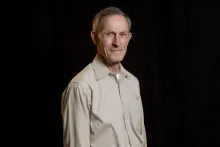
David Mills was born near Wallace, North Carolina, in 1939, where he grew up on a family farm. After high school he attended Ambassador College in Pasadena, California, and he graduated in 1962.
Since that time he has served as a minister of the Church in Washington, Florida, North Carolina, South Carolina, Oregon, West Virginia, and Virginia. He and his wife, Sandy, have been married since 1965 and they now live in Georgia.
David retired from the full-time ministry in 2015.
