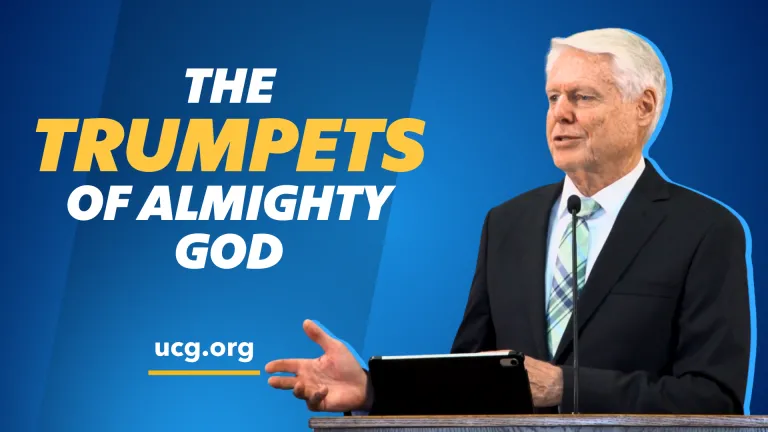


Paul Moody
This transcript was generated by AI and may contain errors. It is provided to assist those who may not be able to listen to the message.
Now, Brother Naz has already been mentioned. Today is the Feast of Trumpets. It's the fourth in a series of seven holy days which God has established to outline his plan of salvation for all of mankind. We've sung about it today. We've talked about it in our conversations. We've planned for it. We heard about it in the first message. This day of a Trumpet is essentially a turning point in human history because it portrays the end of the governments of man, of mankind's way of doing things, and it portrays the establishment of the kingdom of God. A whole new system, a whole new way, under the rulership of Jesus Christ, of this world will function.
And so what I'd like to do today is begin by walking through an overview of the prophetic events leading up to Trumpets to help us to understand why it is that God must, in fact, intervene in the affairs of this world. And then from that point, what I'd like to do is transition into what Trumpets should mean to each of us personally as we live this holy day now.
The book of Revelation contains an end-time sequence of events that is revealed primarily through seven seals. And the Bible shows that there are seven successive seals that are opened one by one by the Lamb, that of course being Jesus Christ. And you can find the opening of each of those successive seals contained within Revelation chapter 6 and running through chapter 8. The first five seals of the book of Revelation describe conditions that have existed in one form or another on this world since the time of Jesus Christ. And yet what we see is that they will intensify dramatically as the end of the age approaches.
Together, these events sort of stack one on top of the other, build into a climax to the point then where God the Father and Jesus Christ say, now it is the time. It's time to intervene. It's time to change the system that currently exists. It's time to establish the kingdom of God. Now the sixth and seven seals which follow then show God's response as he then intervenes directly into the affairs of man. So I'd like to begin by turning to the book of Revelation chapter 6 and at least walk through in a brief overview these seals as they lead up to the day of the Lord.
Revelation chapter 6, we'll begin in verse 1. Revelation 6, 1, it says, now I saw when the lamb opened one of the seals, and I heard one of the four living creatures saying with a voice like thunder, come and see. He says, and I looked and behold a white horse, and he who sat on it had a bow, and a crown was given to him, and he went out conquering and to conquer.
So this first seal of revelation is religious deception, and we might also call it false religion, and it's symbolized by the white horse. Of course, brethren, we understand when Jesus Christ returns as King of Kings and Lord of Lords, he will be riding upon a white horse. This white horse is a counterfeit. Again, it's false religious deception. It's false religion. Jesus Christ said in Matthew 24 that many would come in his name, saying, I am the Christ.
And that could manifest itself in different ways. It could mean there could be individuals that present themselves and say, here I am. I'm the one you've been looking for. I'm the Christ. But it could also mean that a false gospel of the Christ could go out in terms of a false message of who he was saying, this is what he represents. This is who he is. This is the Christ. So again, this could manifest itself in a couple of different ways.
Now, if you take the seven seals of revelation and you lay them alongside Jesus Christ's words in Matthew chapter 24, you can follow their progression to the fulfillment of the Olivet Prophecy. I very much appreciate Mr. Hirsch going to Matthew 24 today. That was actually a big favor. I figured I did not have time to do so. So keep his words in the back of your mind as we walk through the seals of revelation.
Again, they lay side by side with the words of Jesus Christ in Matthew 24. I do want to remind us as we go through that the first five seals predate the onset of the day of the Lord. And they lay out for us justification as to God's intervention into the affairs of mankind. So as we carry on, let's look at the second seal, Revelation chapter 6 and verse 3. It says, when he opened the second seal, I heard the second living creature saying, come and see.
And another horse, fiery red, went out and was granted to the one who sat on it to take peace from the earth, and that people should kill one another, and there was given to him a great sword. So the second seal is war, again, symbolized by the fiery red horse. Rather than there has always been war, and yet again it will increase dramatically, intensify, as the time the end approaches. Carrying on in verse 5, then he opened the third seal, and I heard the third living creature saying, come and see.
And I looked and behold a black horse, and he who sat on it had a pair of scales in his hand. And I heard a voice in the midst of the four living creatures saying, a quart of wheat for a denarius and three quarts of barley for a denarius, and do not harm the oil and the wine.
So the third seal here that is opened is famine, and famine is something that is often the consequence of war. Again, as we walk through, we'll see that these stacked one on top of the other. Continuing on, Revelation 6 and verse 7, then he opened the fourth seal, and I heard the voice of the four living creatures saying, come and see. And so I looked and behold a pale horse, and the name of him who sat on it was Death, and Hades, the grave, followed with him.
And power was given to them over a force of the earth to kill with the sword, with hunger, with death, and by the beasts of the earth. And so the fourth seal that we have here is pestilence, and it's essentially the mounting toll that is taking place as a result of the three previous seals. It's disease, it's epidemics, it's death, again, a result of war and pestilence. And as those things take place, brethren, it's symbolized here by the pale horse. Now, when you study into the first four seals of Revelation, also known as the Four Horsemen of the Apocalypse, and you find out and understand what the full effect of these things are, as they're added one to another, as they are brought forth at the end of the age in their full effect, what you realize is that one-fourth of the earth's population is killed, again, through false teaching of religion.
That brings about warfare, that brings about famine, that brings about pestilence. One-fourth of the earth's population, clearly, that has not taken place as of yet. The complete fulfillment of these things are still yet future. And I think sometimes, brethren, though, we ask ourselves, because we look around, we see the hurricanes, we see the earthquakes, we see the wars and the rumors of wars, and we wonder, well, is the day of the Lord just right around the corner?
And I would say the answer is no. You know, a lot of things Scripture shows have to happen before that event takes place. In fact, the things I've described to you precede the Great Tribulation, which the majority of which precedes the day of the Lord. So it's not tomorrow that the day of the Lord will take place, but again, these events do, in fact, build to the culmination of that great day. Again, in the parallel account of Matthew 24 and verse 8, Jesus Christ said, these things are the beginning of sorrows.
He says they're just the beginning. It's quite sobering, and as dramatic as it is, he says there is yet more to come. Revelation chapter 6 verse 9 says, When he opened the fifth seal, I saw under the altar the souls of those who had been slain for the word of God and for the testimony which they held. And they cried with a loud voice, saying, How long, O Lord, holy and true, until you judge and avenge our blood on those who dwell on the earth.
Then a white robe was given to each of them, and it was said that they should rest a little while longer. You know, it's not that these saints are alive and they're crying out to God, or somehow their spirit is alive and crying out to God, but God remembers them. It's as if their memory is crying out to him how much longer. And they were given, again, a white robe to each of them. It was said to them that they should rest a little while longer until both the number of their fellow servants and the brethren who would be killed as they were were completed.
So again, the message is it is not yet time for the judgment of God. Now, the fifth seal is religious persecution and tribulation on the people of God. And again, it's existed since the time of Jesus Christ in one form or another, but the intensity now of what we call the great tribulation at the end of the age, a period of time which will last for three and a half years, that is what this seal is describing.
The time in which the people of God, both the spiritual nation of Israel as well as descendants of Jacob around this world, will be the target of persecution and great tribulation. And the Bible describes it as the time of Jacob's trouble. Now, if we carry on, chapter 6 and verse 12, it says, And I looked, and when he opened the sixth seal, and behold, there was a great earthquake, the sun became black as sackcloth of hair, and the moon became like blood, and the stars of heaven fell to the earth as a fig tree drops its late figs, when it is shaken by a mighty wind.
Then the sky receded as a scroll, when it is rolled up, and every mountain and island was moved out of its place. And the kings of the earth, the great men, the rich men, the commanders, the mighty men, the slave then, every free man, hid themselves in the caves and in the rocks of the mountains, and said to the mountains and the rocks, Fall on us, and hide us from the face of him who sits on the throne, as God the Father, and from the wrath of the Lamb, Jesus Christ.
They're both referenced here as now beginning their event of participating in this day. Verse 17, For great is the day of his wrath has come, that great day has come, and who is able to stand? And so again, the sixth seal is essentially heavenly signs. They announce God's judgment is about to begin. Up to this point, Satan's wrath has been ongoing, brethren. He has acted as the prince of the power of the air.
He has influenced the minds and the hearts of mankind in rebellion to God. But the point comes when God says enough. The time for intervention takes place. Now, the sixth seal introduces this major transition, but is not actually the day of the Lord itself. I'd like to quote for you. Don't turn there because we'll continue in Revelation, but I like to quote Joel chapter 2 verse 30 and 31. It says, I will show wonders in the heavens and in the earth, blood and fire and pillars of smoke.
The sun shall be turned into darkness, the moon into blood, before the combing of the great and awesome day of the Lord. Again, these events that occur before, but just prior to the day of the Lord. Chapter 7 is essentially an inset chapter. It describes the accounting of the 144,000. So let's go to chapter 8 for this final seal. Revelation chapter 8 and verse 1.
It says, when he opened the seventh seal, there was silence in heaven for about half an hour. And I saw the seven angels who stand before God, and to them was given the seven trumpets. Then another angel, having a golden censer, came and stood at the altar. He was given much incense that he should offer with it the prayers of all the saints upon the altar which was before the throne. Verse 4 says, and the smoke of the incense with the prayers of the saints ascended before God from the angel's hand. Then the angel took the censer, filled it with fire from the altar, threw it to the earth, and there were noises, thunderings, lightnings, and an earthquake. So the seven angels who had the seven trumpets prepared themselves to sound. So here we have the opening of the seventh and final seal which ushers in the day of the Lord. The day of Lord is actually a period of time of, it would appear to be, one year which overlaps the final year of the three and a half years of great tribulation. The seventh seal includes the seven plagues announced by the seven angels that blow the trumpet, again one after another as those trumpets blow, those plagues are released. God's judgment is wrath is poured out on the earth. The seventh trumpet then unleashes the seven bowls of wrath. The final seven plagues, the final seven elements of God's judgment, again poured out on mankind. That seventh trumpet also introduces for us the triumphant return of Jesus Christ as well as the timing of the resurrection of the saints. And so, brethren, that's essentially a brief overview leading up to the day of the Lord and the order and the timing of God's intervention. Rather than going through necessarily the chapters that cover the seven trumpet plagues and all their subsequent events, I'd like to kind of change gears a little bit and basically pull out principles that you and I should recognize from Scripture as it pertains to this day, principles that apply directly to our life now. Because as people call of God in walking through this Holy Day plan, brethren, we're to be living these holy days now. These days are not just future. The day of trumpets we should not think of as just simply something physical that happens in the future. It will take place such as that, yes, but God has called us to live these days now and to apply the spiritual principles of these days in our life now. So again, we're going to pull some principles from the day of trumpets. We're going to see how they portray themselves in spiritual parallel in our lives today. I can't cover them all, but I would like to look at four of them for the remainder of the message today. Four parallels of the day of trumpets to our spiritual life today. And as we do so, I'll pull out scriptures that are relevant to the fulfillment of this day. So the first spiritual parallel to trumpets I'd like to consider, rather, is the call to repentance. The call to repentance. The trumpets which sound on this day are in part a call to mankind to repent. Let's begin by turning to Joel chapter 2. Joel 2.
Sometimes Joel gets lost here among the minor prophets, but it is quite an important and prophetic book to the end of the age.
Daniel, Hosea, Joel. Joel chapter 2, and beginning in verse 1, says, Blow the trumpet in Zion. Sound an alarm in my holy mountain. Let all the inhabitants of the land tremble for the day of the Lord is coming, for it is at hand.
So the day of darkness and gloominess, the day of clouds and thick darkness, like the morning clouds spread over the mountains, a people come great and strong, like of whom has never been the like, nor will there be any such after them for many successive generations. Joel here is prophesying about the day of the Lord following what was a great natural disaster in the land of Judah itself. Essentially, a massive locust plague had swept through the land and devoured the land, and as you can kind of imagine what locusts do as they move through in this swarm, it is green before them, and yet in their wake is devastation.
Virtually everything is demolished. So this great locust plague has just swept through the nation of Judah, and Joel uses that disaster as the backdrop to proclaim this prophecy about the coming day of the Lord. And he essentially says, if you think this is bad, it pales in comparison to yet what is coming.
Verse 3 carries on, it says, a fire devours before them, and behind them a flame burns. The land is like the garden of Eden before them, and behind them a desolate wilderness. Surely nothing shall escape them. Again, you can see the imagery of the locust plague that he's inserting here into this prophecy, looking forward once again to the day of the Lord. Verse 4, their appearance is like the appearance of horses, and like Swiss steeds, so they run. With a noise like chariots over mountaintops they leap, like the noise of flaming fire that devours the stubble, like a strong people set in battle array. Before them the people rise in pain, all faces are drained of color.
They run like mighty men, they climb the wall like men of war. Everyone marches in formation, and they do not break ranks. They do not push one another. Everyone marches in his own column, though they lunge between the weapons, they are not cut down. They run to and fro in the city, they run on the wall, they climb into the houses, they enter at the windows like a thief. Verse 10 says, the earthquakes before them and the heavens tremble, the sun and the moon grow dark, and the stars diminish their brightness. The Lord gives voice before his army, for his camp is very great, for strong is the one who executes his word, for the day of the Lord is great and very terrible, who can endure it?
Of course, the answer, brethren, would be nobody would even want to try to endure it, apart from God's hand of protection. Now, as the chapter carries on, it actually transitions into what would be required in order to endure. And the topic is repentance. Verse 12, now therefore says the Lord, turn to me with all your heart, with fasting, with weeping, and with mourning. So rend your hearts and not your garments. Return to the Lord your God, for he is gracious and merciful. Slow to anger and of great kindness and to relent from doing harm.
Who knows if he will turn and relent and leave a blessing behind him, a grain offering and a drink offering for the Lord your God. So there's parallel here again to the day of Joel, this locust plague. This actually would appear to be parallel to an invasion that is forthcoming towards their nation, but also it points to the day of the Lord, the end of the age. And again, verse 1 said, to blow the trumpet in Zion, sound an alarm in my holy mount mountain.
The trumpet, brethren, is a warning of events that are about to occur, but the alarm also indicates something else, is a call to repentance. It's a call to repentance. All throughout the day of the Lord, God desires mankind to turn from their evil ways, to turn from their rebellion and the rejection of him. That is what repentance is. By definition, it is a turning and going in a different direction. God desires mankind to turn. Of course, he knows they will not. Their heart appears to be set by and large. Most will not turn, but God offers the opportunity, and the trumpet blasts serve as a warning to wake up and repent. Let's notice Revelation chapter 9 in this regard.
Revelation 9, we'll begin in verse 20.
This takes place after the blowing of the sixth trumpet, and before the blowing of the seventh and final trumpet. By this time, much of the earth's environment has been devastated by a number of plagues. One-third of mankind has just been killed in what would appear to have been a massive world war. So let's look. Notice what God has to say in light of these things. Again, Revelation 9 and verse 20.
It says, but the rest of mankind who were not killed by these plagues did not repent of the works of their hands, that they should not worship demons and idols of gold, idols of silver and brass, stone and wood, which can neither see nor hear nor walk. And they did not repent of their murders or their sorceries or their sexual immoralities or of their thefts. Again, there's a hardness of heart among mankind that they are set in their ways now. They will not turn. They will not yield, although God gives them opportunity. Brethren, the Feast of Trumpets here that we're observing today gives us opportunity. It sounds a warning alarm amongst us as the people of God. We're given the opportunity to catch a glimpse into these things, have understanding what it is that God desires from His people and to respond now.
That, of course, requires humility. That requires submitting ourselves to God, yielding ourselves to Him, being pliable and workable, being that clay in God's hands as He desires to form us and fashion us. God says in Ezekiel 18, verse 32, He says, I take no pleasure in the death of one who dies, therefore turn and live. That's a plea of God. He says turn and live, repent, turn aside, change your ways, submit to me. That's what God desires for all of mankind. Ultimately, surely, that's what He desires for the people of God today in this age who would hear such things. Brethren, can we hear the trumpet? Can we hear it blowing in our midst on this day?
Maybe more importantly, the question would be, will we heed its call?
Will we heed its call? For those of us, once again, who have knowledge of the Holy Days, we understand repentance is not just a momentary thing that we do before our baptism, but it is a way of life. We're lit to live in a repentant, humble spirit before God each and every day, submitting to Him, being willing to acknowledge correction that we need to instill in our lives through His Word and be willing to change. Repentance, again, includes an attitude of humility. Let's look at Zephaniah chapter 2.
Zephaniah 2, again, another book of prophecy at the end of the age.
Zephaniah chapter 2, and beginning in verse 1, the message here is, gather yourselves together. Yes, gather together, O undesirable nation, before the decree is issued, or the day passes like chaff, before the Lord's fierce anger comes upon you, before the day of the Lord's anger comes upon you. Again, the day of the Lord will come, but the message here is, before it comes, repent. Change. Surely, God desires that for all of mankind. He desires it for His people. Verse 3 says, seek the Lord, all you meek of the earth, who have upheld His justice. Seek righteousness. Where does righteousness come from? Well, only God and Jesus Christ are truly righteous by God's Spirit, by seeking Him. That is how we seek righteousness. It says, seek righteousness, seek humility, only through that heart will we come before God, truly seeking what He has to offer us. It may be that you will be hidden in the day of the Lord's anger. So again, seeking this right relationship with God, yielding ourselves to Him, is paramount to our spiritual focus. As the fulfillment of this day approaches, surely this is the relationship you and I must be invested in. But as we understand these days today, this is a relationship we build now. Again, trumpets of revelation in part are a call to repentance for all who would hear. Brethren, you and I hear. I pray that we do. The second spiritual parallel in trumpets I'd like to consider is the call unto judgment. Each successive trumpet blast is a call unto judgment. The Apostle John refers to the day of the Lord as the day of judgment. When each of those seven trumpets blast, they proclaim God's judgment over the whole earth. They proclaim His unwillingness to any longer put up with the devices of Satan the devil and his influence, the rebellion and rejection of mankind of the ways of God. God's wrath and judgment is poured out with each trumpet culminating with the greatest level of judgment at the seventh trumpet. Let's go back to the book of Joel once again, chapter 3.
Joel chapter 3 and verse 1.
Continuing with Joel's prophecy of the day of the Lord. Chapter 3 and verse 1 says, Behold in those days, and at that time, when I bring back the captives of Judah in Jerusalem, I will also gather all nations and bring them down to the valley of Jehoshaphat, and I will enter into judgment with them there. On account of my people, my heritage Israel, whom they have scattered among the nations, they have also divided up my land. So again, as mankind refuses to submit to God, they've been given the warning. By the first six trumpets, they've refused to submit. He will enter into judgment with them here now in a very decisive way. Let's go to verse 9, still in Joel 3. Proclaim this among the nations. Prepare for war. It says, Wake up the mighty men, let all the men of war draw near, let them come up. Beat your plowshares into swords, your pruning hooks into spears. Let the weak say, I am strong. Assemble and come all you nations, and gather together all around, cause your mighty ones to go down there, O Lord. Verse 12, let the nations be wakened, and come up to the valley of Jehoshaphat, for there I will sit to judge all the surrounding nations. Put in the sickle, for the harvest is ripe. Come, go down, for the wine press is full. The vats overflow, for their wickedness is great. Multitudes, multitudes in the valley of decision, says for the day of the Lord is near, in the valley of decision. Brethren, we need to understand that God takes no pleasure in the death of the wicked, but there comes a point if they will not turn, if they will not repent before God and submit themselves to Him, it is more merciful for them to face God in resurrection, than to continue on in their evil ways. God says, if you will not turn, I will enter into judgment with you. So as we understand the prophecy, the nations will be gathered together, the great battle of Armageddon, and they will be destroyed. And the fulfillment of that we find in Revelation chapter 14. So let's go there. Revelation 14 verse 17 Again, the fulfillment of these things. Revelation chapter 14 verse 17. Then another angel came out of the temple, which is in heaven. He also having a sharp sickle. Another angel came from the altar, who had power over fire, and he cried out with a loud cry to him who had the sharp sickle, saying, Thrust in your sharp sickle and gather the clusters of the vine of the earth, for her grapes are fully ripe. You'll notice the parallel to Joel, the imagery here of bringing the grapes now and gathering them together. They're gathering together in rebellion here against God.
Verse 19 says, So the angel thrust his sickle into the earth and gathered the vine of the earth, threw it into the great wine press of the wrath of God. And the wine press was trampled outside the city, and blood came out of the wine press up to the horse's bridles for 1,600 furlongs. That wine press was trampled outside the city, just as, you know, one would trample a vat full of grapes. And it says, The blood flowed out up to the horse's bridles for 184 miles.
Judgment of God. Revelation 19 and verse 11 shows us who executes this judgment. Revelation chapter 19 verse 11.
Now I saw heaven open and behold the white horse. And he who sat on him was called faithful and true, and in righteousness he judges and makes war. This is none other than Jesus Christ coming to execute judgment on behalf of his father. Verse 12. His eyes were like a flame of fire, and on his head were many crowns, and he had the name written that no one knew except himself. He was clothed with a robe dipped in blood, and his name is called the Word of God. No question as to who this is. Verse 14. In the armies, in heaven clothed in fine linen, white and clean, followed him on white horses. And out of his mouth goes a sharp sword that with it he should strike the nations, and he himself will rule them with a rod of iron. He himself treads the winepress of the fierceness of the wrath of Almighty God. And he has on his robe and honest thigh a name written, King of Kings and Lord of Lords. President Jesus Christ returns as King of Kings and Lord of Lords. He tramples that winepress. He brings the nations into subjection as they are gathered for this final battle.
Again, God is a God of mercy. God takes no pleasure in the death of the wicked. He desires they would turn and repent. God loves the people of the earth. He created them for the purpose of being a part of his family to establish a relationship with him. And God has a plan. He has a plan to carry that out with these individuals at a particular set of time, yet in the future. But there comes a point where evil on the earth, driven by Satan the devil, is so embedded and is so ingrained into the hearts of mankind that they will not turn in repentance to God. They will not relent from their evil. Therefore, God, in his righteous judgment and in his justice, enters into judgment with them. What Scripture shows us ultimately is good will triumph over evil by the hand of God the Father and Jesus Christ. So what should this portrayal of trumpet judgment mean for us today? When we consider the judgment at the end of the age, we hear the trumpet, we hear the call to judgment as it's portrayed in Scripture. What does that mean to us as the church of God today? Let's go to 1 Peter chapter 4.
1 Peter 4. I want to pick it up in verse 4.
1 Peter 4, breaking into the middle of a context here. Peter says, In regard to these, they think it's strange that you do not run with them in the same flood of dissipation, speaking evil of you. You know, brethren, when we come out of this world and we submit ourselves to God, there's going to be a change in how we live, how we act, and those around us are going to say, well, you're not the person you used to be. Well, what's changed? Verse 5 says, They will give an account to him who is ready to judge the living and the dead. For this reason the gospel was preached also to those who are dead, that they might be judged according to men in the flesh, but live according to God in the Spirit. But the end of all things is at hand, therefore be serious and watchful in your prayers. And above all things have fervent love for one another, for love will cover a multitude of sins. Let's go to verse 17 now. In verse 4, verse 17, Peter says, For the time has come for judgment to begin at the house of God. He says, And if it begins with us first, what will be the end of those who do not obey the gospel? Now, if the righteous one is scarcely saved, where will the ungodly and the sinner appear? Therefore, let those who suffer according to the will of God commit their souls to him in doing good as to a faithful creator. Peter said the time has come for judgment to begin at the house of God. Brethren, can we hear that trumpet? Can we hear its call? Again, are we heeding its sound? Those of us who have come to the house of God, who have been called by him, who have received the Holy Spirit of God are under judgment now. And you know what our judgment is of a different sort than those that we see portrayed in the book of Revelation? Our judgment is unto salvation, is unto eternal life in the kingdom of God. The Church is under judgment now as to how we are living in our response to God. A relationship to him, a relationship to one another, as was mentioned in the sermonette today. We're being judged on those things. God is watching, and we are held accountable. This day of trumpets should be an annual warning call to the Church of God to awaken spiritually, to draw close to God and one another, to obey God, come in obedience to him, and to redeem the time. Because as Paul said, the days are evil. So we need to take the opportunity God has given us today to grow in that relationship, to repent and yield before him, and to live life in a way that is according to the standard that our elder brother Jesus Christ set as he walked the earth. Again, the time has come for judgment to begin at the house of God. 2 Peter chapter 3 continues with this thought.
2 Peter chapter 3 and verse 7, and you're breaking into the middle of the context here. 2 Peter 3 and verse 7, it says, But the heavens and the earth, which are now preserved by the same word, are reserved for fire until the day of judgment and perdition of ungodly men. But, beloved, do not forget this one thing, that with the Lord one day is as a thousand years and a thousand years as one day. The Lord is not slack concerning his promise as some count slackness, but is long suffering towards us, not willing that any should perish, but that all should come to repentance. That is God's desire. He's not willing that any should perish. Of course, man has to make their choice, but it's God's will and God's desire that every single human being would be offered the opportunity to respond to him, to have a relationship with him, to come under the sacrifice of Jesus Christ. Again, God's not willing that any should perish, but each makes their choice. Verse 10, it says, But the day of the Lord will come as a thief in the night, in which the heavens will pass away with a great noise, and the elements will melt with fervent heat. Both the earth and the works that are in it will be burned up. Therefore, and when you see therefore, it means in light of these things, therefore, since all these things will be dissolved, what manner of persons ought you to be in holy conduct and godliness? Looking for and hastening the coming of the day of God, because of which the heavens will be dissolved, being on fire, and the elements will melt with fervent heat. Peter says, Nevertheless, we, according to his promise, look for a new heavens and a new earth in which righteousness dwells. Therefore, beloved, looking forward to these things, be diligent to be found by him in peace without spot in blameless. So, brethren, when the final judgment is made about you and I, this is how we should appear before God in peace without spot in blameless. This concept of being under judgment now is a fearful thing, and we should consider it such. But, brethren, it is also a blessing. It's a blessing to be under the judgment of God today for what it means for you and I to be firstfruits, reigning alongside Jesus Christ as the bride of Christ in the kingdom of God. Again, to be under judgment today is a fearful thing, but it is also a blessing. Time has come for judgment to begin at the house of God. Can we hear the trumpet? Will we heed its call?
Third spiritual parallel to the day of trumpets I'd like to consider is that of rulership and authority. Rulership and authority. And this aspect is tied directly into the seventh trumpet. Let's go to book of Revelation time chapter 11.
Revelation 11, beginning in verse 15, again, rulership and authority. Revelation 11 verse 15, then the seventh angel founded, and there were loud voices in heaven, saying, the kingdoms of this world have become the kingdoms of our Lord and of His Christ, and He shall reign forever and ever. And the 24 elders who sat before God on their thrones fell on their faces and worshiped God, saying, we give you thanks, O Lord God Almighty, the one who is, who was, and who is to come, because you have taken your great power and reign. At the seventh trumpet, the proclamation is made that this world is coming under the direct authority and dominion of the kingdom of God. No longer is mankind simply running the shell. This world is coming under the authority of the kingdom of God. From that point on, the government to man are put on notice that they will be brought into the subject to the governmental authority of God the Father and Jesus Christ. Again, under the reign of the kingdom of God. Brethren, what about us? I think we understand the parallel. You and I have been called to live our lives today under the reign of the kingdom of God. Let's notice Philippians chapter 3.
Where's the Apostle Paul?
Philippians 3 beginning in verse 20.
Here Paul says...
I'm sorry, wrong book.
Philippians chapter 3 verse 20. Paul says, Paul says, What that means, brethren, is that in a nutshell the kingdom of God reigns supreme in our life. When your citizenship is in heaven, it means that is the highest authority in your life. God the Father and Jesus Christ is who you submit your life to under that governing authority. Yes, we have citizenship in a physical country, and yes, it has laws and standards that we abide by, but only as long as they are not in conflict with the laws and the standards of the kingdom of God. That is our highest calling. Again, that's the highest governing authority in our life, and it is to that kingdom that we owe our allegiance. You don't have to turn there, but in Colossians 1 13 it says that...
So what God has done for us through the blood of Jesus Christ has redeemed us from slavery to the kingdom of darkness, and that's a counterfeit kingdom. That's the kingdom ruled over by Satan the devil, and he bought us back through the blood of Jesus Christ from that kingdom, and he's established us under the rulership and the authority of his son in his incoming kingdom. He's delivered us from the power of darkness and conveyed us into the kingdom of the son of his love. Again, that kingdom's not literally here yet. It's not literally ruling over the entire earth, but brethren, the kingdom of God reigns in our life, and it's to that kingdom we are subject, and it's to the glory of that kingdom that we live. The day of trumpets should be a reminder to us of who it is that we submit our life to in the kingdom that we represent. We must never lose focus of those things. The final spiritual parallel to trumpets I would like to consider today is the call to assembly. Again, the focus here pertains to the seventh trumpet. In ancient Israel, trumpets were important, and they used trumpets for a number of things. Trumpets were blown in Israel for the movement of the camps. They were blown in Israel for the pronouncement of the holy days, the new moon. And also, trumpets of the shofar was blown in Israel to call the nation to assembly.
So, brethren, just as the trumpet called Israel to assembly, the trumpet of God will call the saints to assembly at the end of the age. I just want to look at one scripture referencing the resurrection. Let's go to 1 Thessalonians chapter 4.
Again, the call to assembly. 1 Thessalonians chapter 4, beginning in verse 13.
Here Paul said, but I do not want you to be ignorant, brethren, concerning those who have fallen asleep, lest you sorrow as others who have no hope. Doesn't mean we don't sorrow when we lose a friend or family member or brother or sister in Christ. We do sorrow, but it is not a sorrow of a hopeless sorrow because we understand God's plan and that there is hope and that there is a future. So don't sorrow as others who have no hope. Verse 14, for if we believe that Jesus died and rose again, even so God will bring with him those who sleep in Jesus. For this we say to you by the word of the Lord, that we who are alive and remain until the coming of the Lord will be by no means precede those who are asleep. For the Lord himself will descend from heaven with a shout, with the voice of an archangel, and with the trumpet of God, and the dead in Christ will rise first. Then we who are alive and remain shall be caught up together with them in the clouds to meet the Lord in the air, and thus we shall always be with the Lord. Paul says, therefore comfort one another with these words. The sounding of the trumpet of God is a call to assembly. 1 Corinthians chapter 15 says it is the last trumpet. It is the seventh trumpet. That's the return of Jesus Christ. At the resurrection of the first fruits, they will be assembled together alongside the very presence of Jesus Christ. And, brethren, the knowledge of that, as Paul says, take comfort in these words. Again, ancient Israel was assembled by the trumpet. The saints at the end of the age will be assembled by the trumpet. What about you and I?
What about you and I? The day of trumpet should be a reminder to us in the church that we are called to assembly. In fact, as the church of God, brethren, we are an assembly. We're not just assembled together. Scripture refers to us as the assembly. Let's go to Hebrews chapter 12.
Hebrews 12 reinforces this point. Hebrews chapter 12.
Let's pick it up in verse 18.
Hebrews 12, 18 says, For you have not come to the mountain that may be touched and burned with fire, and to the blackness and darkness and tempest, and the sound of the trumpet and the voice of words, so that those who heard it begged, that the words should not be spoken to them anymore. This is referencing the children of Israel assembled at Mount Sinai in the presence of God. Verse 20 says, For they could not endure what was commanded, and if so much as a beast touches the mountain, it shall be stoned or shot through with an arrow. And so terrifying was the sight that Moses said, I am exceedingly afraid and trembling. He says, You've not come to that mountain. All right? You've come to something different. Verse 22, But you have come to Mount Zion, to the city of the living God, to the heavenly Jerusalem, to an innumerable company of angels, to the general assembly and church of the firstborn, who are registered in heaven to God, the judge of all, to the spirits of just men made perfect, to Jesus the mediator of the new covenant, and to the blood of sprinkling that speaks better things than that of Abel. Brethren, we have all four elements of this relationship we've covered today right here in this passage. There's repentance and reconciliation. There is God as our judge. There is submission to His kingdom. And there's the assembly. And they all apply to us. The scripture said, You have come to Mount Zion. It is spiritual Zion which is being referenced here. Zion, in part, is the church. Zion is the place of God's dwelling, the place that He loves. And spiritual Zion, in part, is the church. What was it that Joel said in Joel chapter 2? He said, Blow the trumpet in Zion and sound the alarm in my holy mountain.
Brethren, can we hear the trumpet? Can we hear the call? Are we responding? Again, verse 23 here says that we have come to the general assembly and church of the firstborn.
As a church of God, we are an assembly. We are the assembly that God Himself and His Son Jesus Christ have put together. And we assemble before them. The Greek word translated church in our Bibles is the word ecclesia. And essentially means an assembly or those called out to assemble. That's literally what the word means. We've been called out of this world. We've been called to assemble as the people of God. And as the assembly, guess what we must do? We must assemble. Imagine that. As the assembly, we must assemble. Not just simply for the sake of gathering together in one room, but for the sake of edifying one another, building one another up as God desires. Day of Trumpets is a reminder that the assembly is to be one in God and Christ. At the resurrection of the saints, they rise together, do they not? They are not divided. They don't come up in the resurrection and say, oh, well, I'm with United. Who are you with? We've got to figure out who goes first here. That's not even there. It is the assembly, the body of Christ, the called of God. Brethren, let each of us be sure on an individual basis that we're doing all we can to contribute to the strength and to the unity of the assembly. And again, I'm not just talking corporate lines, okay? I'm talking about the body of Jesus Christ, the Church of God. Let each of us work together in a manner that glorifies God and the work that he is doing within each and every one of us. Final Scripture, Hebrews chapter 10. Let's wrap it up here. Hebrews 10 and beginning in verse 23.
Hebrews chapter 10 verse 23.
Here says, Let us hold fast the confession of our hope without wavering, for he who is promised is faithful. And let us consider one another in order to stir up love and good works, not forsaking the assembling of ourselves together as is the manner of some, but exhorting one another and so much more as you see the day approaching. President, the fulfillment of this day of Trumpets is approaching. It is a blessing that God has set this time apart for us as his people that we can gather together, that we can see what his word says, we can learn the many lessons, and we can be reminded of the significance of these things. Trumpets carries a significant meaning for the future of all mankind. But again, it's not simply distant. Trumpets carries a significant meaning and purpose for you and I as well today, as the Church of God, as we live these days. God's plan does not end with Trumpets, fortunately. It is simply a step in God's overall plan for all of mankind. I was talking to Darla this week, a couple days ago, and I said, you know, I really struggled to put a Trumpet sermon together that is not just sort of dark and gloom and just, you know, all the negative things that we might would think about this day. I said, I struggled with that, not to come across as a negative message. And you know what she said? She said, for her, Trumpets is encouraging because the darkest hour comes just before the dawn. The darkest hour comes just before the dawn. Brethren, as we prepare for the holy days which lie yet ahead, let us keep our vision focused on the dawn. Keep our vision on the light of what God the Father and Jesus Christ have in store, not only for us, but for all of mankind who will come to submit their lives under the reign of the kingdom of God.

Paul serves as Pastor for the United Church of God congregations in Spokane, Kennewick and Kettle Falls, Washington, and Lewiston, Idaho.
Paul grew up in the Church of God from a young age. He attended Ambassador College in Big Sandy, Texas from 1991-93. He and his wife, Darla, were married in 1994 and have two children, all residing in Spokane.
After college, Paul started a landscape maintenance business, which he and Darla ran for 22 years. He served as the Assistant Pastor of his current congregations for six years before becoming the Pastor in January of 2018.
Paul’s hobbies include backpacking, camping and social events with his family and friends. He assists Darla in her business of raising and training Icelandic horses at their ranch. Mowing the field on his tractor is a favorite pastime.
Paul also serves as Senior Pastor for the English-speaking congregations in West Africa, making 3-4 trips a year to visit brethren in Nigeria and Ghana.
