

Rick Shabi
This transcript was generated by AI and may contain errors. It is provided to assist those who may not be able to listen to the message.
Well, now for the last seven days we have been, of course, observing the Feast of Unleavened Bread. And, you know, you stop and think about it. Passover the Days of Unleavened Bread. Events occurred at that particular time, this time of the year, during the Passover of Unleavened Bread. The most dramatic events in history occurred at two times during this exact period of time. Of course, one was in the Old Testament when on the night of the Passover the death angel passed over the homes of the Israelites who had the blood of the Passover lamb on their doorposts.
Then, on the following night, the night, the beginning of the first day of Unleavened Bread, God then began delivering Israel out of Egypt, leading them in a pillar of fire by night, in a pillar of cloud by day, as it tells us in Exodus 13, verse 21. But, you know, I thought, well, that would be pretty easy. If you had that, you saw that power and the glory and that pillar of fire and pillar of cloud, and you knew God was there, that knew the power of God was there, you would think it would be pretty easy to follow that pillar and that cloud.
Well, if we thought that would be wrong, it wasn't easy for the Israelites to follow that pillar of fire and pillar of cloud, even though they knew God and the power of God and the glory of God was there. Why not? It still required a great deal of faith. Why? Because it didn't lead them in the direction they expected to go. They're here in Canaan's up here to the northeast. They thought they're going to go to the northeast to land at Canaan.
That's the promised land they were given. But instead, that pillar of cloud and pillar of fire had turned and went southeast. And they said, why is it leading us southeast? We can't be going that way. There's no way out that way. We can't get out of Egypt by going southeast, but that's the direction God led them. So the expected became the unexpected, and then the unexpected became the impossible because God led them into a trap with no way out.
No way of escape to accept by the power of God. That was the only way out. He led them to the shore of the Red Sea and says there were mountains to the south of them and north of them, mountains on both sides. And then God purposely hardened Pharaoh's heart so he changed his mind and took his army and he pursued after them, and he caught up with them just as they were hemmed in there at the Red Sea. And in fact, to protect them, it says God had to move that pillar of fire and pillar of cloud behind Israel to stand between the Israelites and Pharaoh and his army.
And then he had to miraculously open the Red Sea and stand between Israel and Pharaoh and his army while they crossed safely over, and then God let them pursue. But as Exodus 14 verses 1-3 tells us, they became bewildered by the land and the wilderness had closed them in so there was no way of escape except by the power of God and faith in the power of God.
And then God opened the Red Sea. Traditionally, we felt that happen on this very last day of unleavened bread. His when Israel was on the other side, God removed that barrier and Pharaoh and his hosts pursued them into the Red Sea and then God brought the Red Sea crashing down on them and all of Pharaoh and all of his hosts were drowned in the Red Sea. As it tells us in Exodus 14 verses 19-30.
Now think about how dramatic it would have been to actually live that week at that time. Well, up until about 2,000 years ago, that was the most dramatic eight days in the history of mankind. See, Israel was delivered physically, but now we have to be delivered spiritually. And that spiritual deliverance, our deliverance, would require a far more dramatic passover in days of unleavened bread than what occurred back at the time of Moses. It would require the most dramatic period of time in the history of mankind. And that's what I want to take a look at today.
I want to look at the very dramatic events that occurred on the passover in days of unleavened bread back in that year that Christ died to become the Passover Lamb. And what happened during that week after Christ died? He was dead there for three days and three nights, before being resurrected, three days and three nights later after he was entombed. And then the events that happened after that, maybe the most dramatic event of all time that happened when Christ suddenly appeared in that room with his disciples of nowhere and they realized that he's alive.
And that's my title for today's sermon. My title is, He's Alive. He's Alive. Now first, before going into the events that occurred at the time Christ died, I want to ask this...we all know the answer to this question, but I want to ask it and read the scripture that shows it. Who was it that actually led Israel out of Egypt, physically, back at the time of Moses, in that pillar of cloud and pillar of fire?
Well, the answer is given to us by the Apostle Paul in 1 Corinthians 10. Let's turn there first. 1 Corinthians 10, beginning in verse 1, Paul writes, it says, Moreover brethren, I do not want you to be unaware that all of our fathers were under the cloud, that cloud that the glory of God was in, that God was in as he was leading them by day. And they all passed through the sea, through the Red Sea. And they were all baptized into Moses in the cloud and in the sea.
That was a type of baptism. That was a new commitment to a new way of life. The past was gone. It was buried. They left the past. They were going to become a new nation devoted to God and make a new covenant with God, to be God's special holy people. But their past life being no way to go back. It was a new commitment to a new way of life, to become a new creation, basically a new nation of God's people. So it was a type of baptism. And then verse 3 says, They all ate the same spiritual food and they all drank the same spiritual drink.
For they drank of that spiritual rock that followed them. They had to go back and separate them from Pharaoh and his host and protect them while they crossed over the Red Sea. And this is in that rock was Christ. So it was Christ who stood between Pharaoh and the Israelites in the pillar of cloud as they passed through the Red Sea. It was Christ who back at that time delivered them physically, who delivered them from certain physical death, the hands of Pharaoh and his army.
But it's going to require a far more dramatic week than that week and far more dramatic events to deliver the people of God from spiritual death as Christ has delivered us. So now then, let's look at the very dramatic events which occurred in the New Testament during the Passover and Days of Unleavened Red at the time Christ died. See, what happened during the Passover and the Days of Unleavened Red in the New Testament at the time Christ died? Well, to dramatize the reality of that event and to go through that, I want to go through it by just looking at one individual to experience those dramatic events.
We're going to look at it just through the eyes of the Apostle Peter. Let's begin by going to Matthew 4, where Peter is called. Peter is very interesting of disciple, interesting Apostle, because he had a great deal of self-confidence, a great deal of zeal and enthusiasm. But this goes back to his calling here when God called in Matthew 4 beginning in verse 17, very beginning of Christ's earthly three and a half year ministry. It says, from that time Jesus began to preach and say, Repent, for the kingdom of heaven is at hand.
And Jesus walking by the sea, the Sea of Galilee, saw two brothers, Simon called Peter, and Andrew his brother, casting a net into the sea. For they were fishermen. Now, when you understand, read between the lines here, I'm sure this is not the first contact they had with Christ.
Christ had been praying about who to select for his disciples, and I think they had some knowledge of him. Otherwise, they wouldn't have read what we do in the next verse, because he said to them, verse 19, Follow me, and I will make you fishers of men. And then verse 20 says, They immediately let their nets and followed him.
Obviously, I think they must have known who he was and had some mickling to that, had some contact with him, if you read between the lines. But this shows in that Peter became one of Christ's original twelve disciples to be trained by Jesus Christ himself for three and a half years. He'd have a very intimate relationship with Christ for three and a half years. And Peter had a great deal of self-confidence at the beginning.
And he wanted to follow Christ, and he was determined to follow Christ wherever he was, wherever he went, even when Christ walked on water. Let's turn then and read that in Matthew, chapter 14. Matthew, chapter 14. Let's begin in verse 22 of Matthew 14.
Immediately, Jesus made his disciples go into the boat and go before him to the other side. Well, he set the multitudes away. And when he had set the multitudes away, he went up on the mountain by himself to pray. Now, when even was come, he was alone there. But the disciples are in the boat out there on the Sea of Galilee, and all of a sudden the wind comes up. The storm starts coming up. But the boat was now in the middle of the sea, tossed by the waves. But the wind was contrary. The storm was coming. So now, on the fourth watch of the night, Jesus went to them, walking on the sea. And when the disciples saw him walking on the sea, they were troubled, saying, well, it's the Spirit. And they cried out for fear. But immediately, Jesus spoke to them, saying, Be of good cheer, just I. You don't have to be afraid. You don't have to be afraid.
And guess what? The disciples decided, hey, you know, if Christ can walk on the water, I should be able to go there, too. Peter. A lot of confidence. He was determined to follow Christ wherever he was. Verse 28 says that, and Peter answered him and said, well, Lord, if it is you, command me to come to you on the water. And he said, come up. Come on, you walk on the water. Come up to me. And when Peter came out on the boat, he walked on the water to go to Jesus. Amazing. He was looking at Jesus Christ, and he had faith and confidence at that point. But it was human faith. It was human confidence. But he just started walking on the water. But then all of a sudden, he'd think, wait a minute, I can't walk on water. And look at this storm. The waves are getting worse. The wind's contrary. And he lost his focus. Verse 30, when he saw that the wind was boisterous, he became afraid. And then he began to sink. And he cried out, saying, Lord, save me. You know, if you're focused on what you should be focused on, you're not afraid. But when you start looking at the situation, circumstances, turmoil all around you, all of a sudden you can lose your focus, spiritual focus, and you begin to size things up from a human perspective. And all of a sudden, you begin to sink spiritually. That happens to all of us. He said, Lord, save me. And immediately Jesus stretched out his hand and caught him and said to him, well, owe you of little faith. Why did you doubt? Why did you doubt? He got his mind on the physical instead of the spiritual. When you do that, you begin to doubt.
But Peter had a lot of self-confidence, but it was not yet mixed with unwavering faith.
That would just have to be developed. His self-confidence was high, but his faith at that time was very weak. He still lived a lot more by sight than he did by faith.
And when he focused on the storm and the turmoil all around him, he began to sink. The same can happen to us today. That has happened to a lot of God's people today, spiritually speaking.
Now, Peter also had confidence that Christ was who he claimed to be. Let's read that in Matthew 16, just in chapter 2 over. Matthew 16, beginning in verse 13, he says, When Jesus came into the region of Caesarea of Philippi, he asked his disciples, and he said, Well, who do man say that I, the Son of Man, am?
And they said, Well, some say you're John the Baptist. Some say you're Elijah. Others say you're Jeremiah, one of the other prophets. So then he said to them, But who do you say that I am to his disciples? Guess who was the first one to pipe out an answer with a great deal of confidence? Peter, verse 16. And Simon Peter answered and said, Well, you are the Christ, the Son of the living God.
He knew Christ's laws. And Christ answered back and said, Verse 17, Blessed are you, Simon Bar-Jonah. For flesh and blood has not revealed this to you, but my Father who is in heaven. Who is in heaven.
So Peter had confidence that Christ was the Son of the living God.
But it was based more on personal confidence than on unwavering faith.
Because Peter at this point did not believe that Christ was ever going to be put to death. He had no concept that Christ was going to have to suffer. What if he's going to have to suffer and be put to death by crucifixion? He had no idea that. Let's go to Matthew, excuse me, let's continue here in Matthew 16, Verse 21.
From that time Jesus began to show his disciples that he must go to Jerusalem and suffer many things from the elders and chief priests and scribes. And he must be killed and then be raised the third day.
Now when he said that, he started saying that, well, who tries to rebuke him and correct him? Say, No, it's never going to happen to you.
Verse 22. So Peter took him aside and began to rebuke him, saying, far be it from you, Lord, this is never going to happen to you. In fact, what I'll do, I'll see to it that it never happens to you. Peter had a great deal of confidence.
He said, well, God's never going to allow you to be put to death. That would never happen. What was Christ's response to Peter's review? Verse 23. He turned and said to Peter, Get behind me, Satan. You're an offense to me, for you are not mindful of things of God, but of the things of men. Boy, what a blow to Peter's confidence.
You're not mindful of the things of God, but of things of men.
You know, that's happened to a lot of God's people over the years. They became more mindful of things of men than the things of God. That's sadly even happened to some ministers. See, Peter didn't understand what this meant, what Christ said here. He didn't understand that, but he was about to find out.
Because then came the evening of the Passover.
The evening that we begin the most dramatic events and the most dramatic week that would ever occur in the history of mankind.
And as we know, Christ, during that supper we had with his disciples on that evening, during supper he gird himself and took a towel and began to wash the feet of his disciples.
And when he came to Peter, Peter with a great deal of confidence said, you shall never wash my feet.
John 13, verse 8.
And Christ responded by saying, if I do not wash you, you have no part with me.
So Peter then said, well, Lord, then not my feet, but also my hands in my head. Wash me all over then. He was extremely enthusiastic.
He wanted to follow Christ wherever he went, but he had no idea where Christ was going to be going that evening and that next day.
See, Peter had a great deal of zeal and enthusiasm wanting to follow Christ.
He had a great deal of self-confidence.
But he's about to find out that self-confidence can't lift you very high. It can't take you very far.
Christ then instituted the bread and wine, symbolic of the new covenant Passover, symbolic of Christ's body and Christ's blood, symbolic of his suffering and his death that he would have to undergo that very day and that next day. Let's go to Matthew 26.
Pick it up there. Matthew 26 beginning in verse 30.
When they sung of him, they went out to the Mount of Olives. Then Jesus said to them, verse 31, All of you will be made to stumble because of me this night. For it is written, I will strike the shepherd, and the sheep of the flock will be scattered.
But then Peter, guess who responds to that? Peter. And Peter then responded with a great deal of self-confidence by saying, verse 33, Even if all are made to stumble because of you, I will never stumble. He will never be made to stumble. Not me. He had tremendous self-confidence. Peter wasn't going to stumble. But Christ knew better. He knew that Peter's self-confidence couldn't carry him very far. Christ knew that Peter's self-confidence was about to be shattered and put to the ultimate test. And he was going to be found wanting when it came to this test that Peter's going to have to be put through here. He was about, Peter was about to find out that self-confidence mixed with circumstance and speculation can't carry you very far. Now, Christ already knew that. Verse 34 of Matthew 26. Jesus said to him, said to Peter, Assuredly I say to you, Peter, that this very night before the rooster crows, you will not only deny me, you will deny me three times. But Peter didn't believe him. Still full of self-confidence, Peter then replied, verse 35, even if I have to die with you, I will not deny you.
Peter didn't believe him. He didn't believe that would ever happen. He would ever deny Christ, let alone deny him three times. But Peter had no idea in the world what he was about to witness.
With his very eyes. He had no idea how his confidence in his human faith and his human determination would be tested that very night and next day and the next three days.
He had no idea how much he would be found wanting when it came to faith and the right kind of confidence and determination that we have to have to follow Christ. Matthew 26, verse 48. Now his betrayer had given them a sign saying, referring to Jesus Ascariot, whomever I kiss, he is the one, sees him.
Because that was that evening, that Passover evening on Mount of Olives, late that evening, probably close to midnight. He immediately went up to Jesus and said, greetings, Rabbi, and he kissed him. But Jesus said to him, verse 50, But Jesus said to him, verse 50, Friend, why have you come? Then they came and laid hands on Jesus and took him.
What happened next? Verse 51. And then suddenly one of those who are with Jesus, one of his disciples, stretched out his hand and drew his sword, instruct the servant of the high priest and cut off his ear. Now who do you suppose had the self-confidence and determination and the zeal to do that?
None other than the Apostle Peter, John 18, verse 10.
See, Peter at this point had the confidence and determination to take matters into his own hands. I'm not going to allow them to arrest you.
I'm not going to let them take you.
He was going to take matter into his own hands.
Yeah, think about that. How many of God's people have done that today?
Or tried that? And sadly, how many of God's ministers have done that today? Taken matters into their own hands because things didn't work out the way they wanted or thought they should.
Matthew 26, verse 52.
But Jesus said to him, Put your sword in his place, Peter, for all who will take the sword will perish by the sword. Or do you not think, he tells Peter, that I cannot now pray to my Father, and he will provide me with more than 12 legions of angels?
Don't you believe that God has the power to work out any problem?
If we don't take things into our hands, God can work it out. But he may not work it out the way we think it should work out. God does not see as man sees. And then he adds, verse 54, Christ did. How then could the Scriptures be fulfilled, as it must happen thus?
But Peter still could not believe that Christ would be arrested and be put to death. He couldn't believe that. Matthew 26, verse 55. In that hour Jesus said to the multitudes, Have you come out as against a robber with swords and clubs to take me? I sit daily with you, teaching the temple, and he didn't seize me then.
But all this was done that the Scriptures of the prophets might be fulfilled. And then all the disciples forsook him and fled, including Peter.
Verse 57. And those who had laid hold on Jesus led him away to Caiaphas, the high priest, where the scribes and the elders were assembled.
But Peter followed him away. He was off at a distance. He was afraid. Now he didn't know what was happening. He was extremely afraid, but he wanted to find out what was going to happen. So he stood off at a distance, watching all these events unfold and what was going to happen to Christ.
Peter followed him at a distance to the high priest's courtyard. And when he went in and sat with the servants to see the end, he went in, Peter did, and sat with the servants so he could see it through to the end. So he's watching all these things from a distance, dropping down to verse 16-7.
And Peter's witnessing all of this from a distance. Then they spit on the face of Jesus. Then they spit on his face and they beat him. And another struck him with the palms of their hands and saying, prophesy to us, Christ, who is this who struck you? You know, you imagine what going through Peter's mind. Peter's mind. He says, why is God allowing this to happen? How could this be happening?
This wasn't supposed to end.
He thought Christ was going to reach you in the kingdom of God.
So there's Peter, verse 69. Now Peter sat outside in the courtyard, watching all these things. And a servant girl came up to him saying, well, you also were with Jesus of Galilee. I remember I saw you with him.
But Peter was very afraid and he said, and he denied it. Verse 70, he denied him before them and saying, I don't know what you're saying. I don't know what you're talking about. I don't know this man. I wasn't with him. You've got to be mistaken. Verse 71, we've gone out to the gateway. Another girl saw him and said to those who were there, this fellow was also with Jesus of Nazareth. Referring to Peter. But again, Peter denied with a note, I do not know the man.
Verse 73, a little later, those who stood by came up and said to Peter, surely you also are one of them, for your speech betrays you.
Verse 74, and then Peter began to curse and swear, undoubtedly in a very loud voice, as he's, and I'm dull, like Christ heard this. I know he heard it. We'll see that in a little bit later.
And he began to curse and swear, saying, I do not know the man.
Immediately, the rooster crowed.
See, suddenly, Peter's self-confidence was completely shattered.
Verse 75, and Peter remembered the word of Jesus, who had said to him, before the rooster crows, you'll deny me three times. Can you imagine the feeling in Peter's heart? His self-confidence was gone. Now it's completely shattered.
Chapter 27, verse 35.
Then they crucified him, and divided his garments, casting lots, that it might be fulfilled, which was spoken by the prophet. They divided my garments among them, and for my clothing they cast lots.
Peter's still somewhere in the distance, watching all this and wondering, you know, what's going to happen next? When has God been intervened? Stop this.
Verse 46. About the ninth hour, Jesus cried out with a loud voice, saying, Eli, Eli, Llamas, Abbaktini, that is, my God, my God, why have you forsaken me? The very thought that was going through Peter's mind. Why has God forsaken him? If he's the Son of God, why has God, his Father, forsaken him? Then, verse 50. And Jesus cried out with a loud voice, and yielded up his spirit. He died.
Peter, with his own eyes, saw Christ die.
Something he never thought could ever happen.
He then saw his body being taken down, wrapped in linen, to then be taken away, to be entombed.
Verse 57 of Matthew 27.
And when evening had come, there came a rich man from Marimathea, called Joseph, or named Joseph, whomself had also become a disciple of Jesus.
This man went to Pilate, and asked for the body of Jesus. Then Pilate commanded the body to be given to him.
And when Joseph had taken the body, wrapped it in a clean linen cloth, and laid it in his new tomb, which he had hewn out of the rock, and he rolled a large stone against the door of the tomb and departed. And Mary Magdalene was there, and the other Mary, sitting opposite the tomb.
Now, we can only try to imagine the thoughts that went through Peter's mind over the following three days and three nights, as he tried to figure out what in the world happened, how could this have happened? How could he be dead?
You know, those next three nights for Peter, and David were on very, very restless nights, as Peter would have wondered, maybe, will they come after me next? Because they know I was one of his disciples. Will they come after me next?
Then, very early in the morning, on the fourth day of Unleavened Bread, which was on the first day of the week, the drama and mystery greatly intensified. Let's go to Luke, or excuse me, not Luke, but go to the Book of John. Let's go to John, chapter 20.
John 20. We'll begin in verse 1 of John 20.
Now, on the first day of the week, Mary Magdalene went to the tomb early, while it was still dark.
And she saw that the stone had been taken away from the tomb.
So then she ran and came to Simon Peter and to the other disciple, whom Jesus loved and said to them, they have taken away the Lord out of the tomb. And we do not know where they've laid Him. We don't know where He's gone.
Peter therefore went out and the other disciple, and they were going to the tomb. So they both ran together, and the other disciple outran Peter and came to the tomb first.
And he, stooping down and looking in, saw the linen clothes lying there, that he didn't go in. But then Simon Peter came, following him, and went into the tomb, and he saw the linen clothes lying there. And the handkerchief that had been around his head, around Christ's head, not lying with the linen clothes, but folded together in a place by itself. And then the other disciple, who came to the tomb first, went in also, and he saw and believed. Now, the other disciple would have been the Apostle John, the author of this particular Gospel.
But to Peter, all this was still a great mystery. This day, this fourth day of Unleavened Bread, would turn out to be the most dramatic day in the history of mankind.
A number of years ago, a man by the name of Don Francisco, wrote and recorded a song to depict these dramatic events.
It's titled, He's Alive.
Now, because of copyright laws, it cannot be recorded as part of a sermon. If I can quote some of the lyrics, I check with Peter at any piece, you can quote the lyrics, just don't play the song to what's recorded as part of the sermon.
I can play it apart from the sermon, as long as it's not recorded.
But for those who are not here, and I hear this later, you may actually go, you can go to a Google search and put down, He's Alive, done by Don Francisco, and YouTube sites will come up where you can listen to that song and hear it on YouTube.
So it can be heard and viewed on YouTube.
Now, we just read how Mary Magdalene discovered the stone was rolled away from the tomb where Christ's body had been laid, and that his body wasn't there.
Then she ran to tell Peter and John, who then followed him to the empty tomb. In this song, He's Alive is written from the viewpoint of the Apostle Peter.
I'm going to quote some of the lyrics starting at the time just before Peter heard Mary knocking at the door to come and tell him that she discovered that the rock had been rolled away and his body wasn't there. So here's some of the songs, the lyrics of this song, He's Alive written by Don Francisco and recorded by Don Francisco.
Just before the sunrise, I heard something at the wall.
The gate began to rattle, a voice began to call. I hurried to the window and looked down into the street, expecting swords and torches in the sound of soldiers' feet.
There was no one there but Mary, so I went down to let her in.
John stood there beside me, as she told us where she'd been. She said, they moved him in the night and none of us knows where.
The stone had been rolled away.
Now his body isn't there.
We both went toward the garden and John ran on ahead. And we found the stone an empty tomb, just the way that Mary said. But the winding sheet they'd wrapped him in was just an empty shell.
And how and where they've taken him was more than I could tell.
Well, something strange had happened there, but just what I did not know.
John believed a miracle, but I just turned to go.
Circumstances, speculation, couldn't lift me very high, because I'd seen them crucify him, and then I saw him die.
Back inside the room again, the guilt and anguish came. Everything I promised him just added to my shame.
When at last there came the choices, I denied I knew his name.
Even if he was alive, it wouldn't be the same.
You know, Peter denied Christ's name three times, and then the rooster crowed.
But Luke records something else. At that precise time that Peter denied him the third time, at the time the rooster crowed, he was watching Christ off in the distance. At that very moment, Christ turned, and his eyes met Peter's eyes.
Luke 22, 61 tells us that at the moment of Peter's third denial, the Lord turned and looked at Peter, and Peter saw it. Can you imagine that?
Which is why Don Francisco added the lyrics, even if he was alive, it wouldn't be the same. Because Peter had to be thinking, you know, how could I ever face him again?
With all this guilt and shame, how could I face him after having denied him to his face three times?
Even if he was alive, it wouldn't be the same.
After what I did, Peter must have been thinking, how could I ever be forgiven?
Have any of us ever thought that?
I think it's back to a question Peter asked Christ just before all these events, began to unfold. Let's go back to Matthew 18.
Because he had to be thinking, how could I ever be forgiven after what I've done?
Matthew 18, verse 21.
Then Peter came to him and said, Lord, how often shall my brother sin against me, and I forgive him? Up to seven times? Jesus said to him, I do not say to you up to seven times, but up to 70 times seven. So Christ here, in essence, is basically telling Peter to never limit God's forgiveness.
Don't ever put a limit on God's forgiveness.
No matter how much shame and guilt we may feel.
Christ didn't illustrate that with a parable, which illustrates that even if we owe a debt that is impossible for us to repay, if our attitude is right, God will have compassion on us and forgive us all of our debts, thus removing the shame and guilt.
And Peter's about to experience that firsthand.
I don't want to read what I think, when you think about it and put yourself in this particular spot, if you could have been there.
I want to read what I think is maybe the most dramatic event ever witnessed in the most dramatic Scripture in the entirety of the Bible.
And as I read this Scripture, try to imagine what it would have been like to have been there with the disciples at this precise moment.
That Scripture is in John 20.
John 20, verse 19.
Then the same day at evening, being the first day of the week, when the doors were shut, where the disciples were assembled, for fear of the Jews, Jesus came and stood in the midst of them and said to them, peace be with you.
Now the doors were shut. And then suddenly, out of the blue, Christ just appears out of nowhere, right there in the midst of them, and He says, peace be with you.
Now think about that. For the last three or four days, they've been in tremendous turmoil with a great deal of fear and uncertainty.
They all felt a great deal of shame and guilt.
How could they ever face Him again after what they'd done? Because they'd all forsaken Him.
How could they ever be forgiven?
How could they ever again be at peace with themselves? And then suddenly, out of nowhere, Christ appears in their midst and says, peace be with you. Be at peace.
Be at peace with yourselves.
Have peace of mind.
I'm alive, and you're forgiven.
Don Francisco in his song, he's alive, he captures that moment with these lyrics.
But suddenly, the air was filling up and the air was filled with strange and sweet perfume.
Light that came from everywhere draws shadows from the room. Jesus stood before me with His arms held open wide. I fell down on my knees and just clung to Him and cried. He raised me to my feet and as I looked into His eyes, love was shining out from Him like sunlight from the sky. Guilt in my confusion disappeared in sweet release, and every fear I'd ever felt just melted into peace.
He's alive.
He's alive.
He's alive, and I'm forgiven. Heaven's gates are open wide.
He's alive.
One final point.
Why is Him being alive so important? And how does all this tie into the meaning of these days of un-umbread that we're observing, just finishing observing?
Paul answers those questions for us. First in Romans 5.
So first turn to Romans 5.
Beginning verse 6 of Romans 5, where the apostle Paul wrote, For when we were still without strength in due time, Christ died for the ungodly.
For scarcely for a righteous man will one die. Yet perhaps for a good man, someone would even dare to die.
Verse 8, But God demonstrates His own love toward us, and that while we were still sinners, Christ died for us. Much more than having now been justified by His blood, we shall be saved from wrath through Him. For if when we're enemies, we're reconciled to God through the death of His Son, much more haven't been reconciled, we shall be saved by His life.
See, we aren't saved by Christ's death.
We are justified and made right before God and reconciled back to God by Christ's death.
We shall be saved by His life.
How are we saved by His life? And how is that tied to the meaning of the days of the unbred? Paul also answers that, for us, in Galatians 2. Let's turn to Galatians 2 and verse 20.
Galatians 2, verse 20, where the Apostle Paul writes, I have been crucified with Christ, so it is no longer I who live, but Christ lives in me, and the life which I now live in the flesh, I live by faith in the Son of God, who loved me and gave Himself for me.
See, we are saved by Christ's life, by the fact that He's alive. And even more than that, we are saved by Christ living in us.
Paul said, it's no longer I who live, but Christ lives in me. Paul then added this, and I'll just read it in Colossians 1.27, where he said, Christ in you, the hope of glory.
See, that's what the unbred is all about. That's what we have been in the bed for seven days. That's what it's all about. It's all about being saved by Christ's life. Because it must no longer be I who live, but Christ who lives in me. Christ in you, as Paul wrote, the hope of glory.
We should be saved because He's alive.
Because He's alive, and I'm forgiven.
And heaven's gates are open wide. Or as we might more properly put it, He's alive and I'm forgiven because the gates now to God the Father in heaven, and access to God the Father in heaven, is now available to us.
He's alive and I'm forgiven because the kingdom gates are open wide. The gates to the access to the kingdom of God are now open wide.
So I now want to conclude.
After I conclude, I want to have the song played by Don Francisco, the song, He's Alive.
Again, this particular song is on an album. It's a 2CD album, which is entitled, I Can Only Imagine. It's actually a 2CD set and it has 22 songs by different artists on it. And the very last song of the 2nd CD, Track 11 of the 2nd CD, is this song written and recorded by Don Francisco entitled, He's Alive.
It's not going to be recorded.
Not be part of the sermon.
But the album is still available. I hope I can only imagine. And also you can listen to it on YouTube. But never forget that He's alive and unforgiven, and that we shall be saved by His life, by His life in us, that we shall be saved because He's alive.
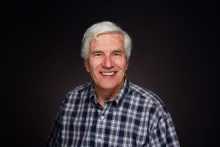
Steve Shafer was born and raised in Seattle. He graduated from Queen Anne High School in 1959 and later graduated from Ambassador College, Big Sandy, Texas in 1967, receiving a degree in Theology. He has been an ordained Elder of the Church of God for 34 years and has pastored congregations in Michigan and Washington State. He and his wife Evelyn have been married for over 48 years and have three children and ten grandchildren.
