
The Holy Spirit Empowers the Christian to Make Real, Dynamic Spiritual Change!
Given on
Given in
Downloads
Downloads
To download a file, right-click (or long press) a link above and choose Save As.
The Feast of Pentecost is a very encouraging Holy Day. It demonstrates that real change is possible no matter where we are starting in the process. To illustrate this point, we will look at the life of Saul of Tarsus (pre-conversion without the Holy Spirit) and The Apostle Paul (after conversion and receiving the Holy Spirit).
Transcript
This transcript was generated by AI and may contain errors. It is provided to assist those who may not be able to listen to the message.
You know, brethren, as we look at this day of Pentecost, we think about God's plans in general. God's Holy Days have meaning that are built one upon another. They are interlocking meaning in nature. Together, they progressively reveal how God works humanity. And today, we're living in some very uncertain times. Things are uncertain in terms of the COVID-19 disease. People are wondering about whether they do this or that or the other. Will they be in a situation where they are in danger, their health is in danger, their life is in danger? People are finding that their businesses are in danger. A number of major companies have filed for bankruptcy.
You know, we see there's uncertainty in terms of what we should be doing socially, whether we, you know, the social distancing is proper or the wearing of masks is proper. What the scientists are telling us, there's uncertainty there. Some would say we need to do this. Others would say no, we don't.
It goes back and forth. But one thing that is certain is the plan of God. One thing that is certain is the Word of God. And certainly, our God and His ways stand firm. This Day of Pentecost teaches us some vital lessons. But let's get our bearings here for a moment and take a look at the first two steps of God's plan of salvation before we start talking about this third step.
And the first step of God's master plan of salvation, we've got the Passover. In the Passover, we see that we have new life for the sacrifice of Jesus Christ. No matter what you've done in your life, no matter how many times you've sinned, how bad the sin has been, how deep it's been, and so on, if you are truly genuinely repentant and you accept the sacrifice of Jesus Christ, your sins are forgiven you. And so you have a reset, so to speak, in terms of your walk with God.
I'll turn to Romans 6 and verse 4. There's a number of scriptures I want to read today. You don't need to turn to this one. I'll read it for you. Romans 6 and verse 4, regarding our new life through Christ, it says, Therefore we were buried with him through baptism into death, that just as Christ was raised from the dead by the glory of the Father, even so we also should walk in newness of life. Newness of life.
This is encouraging. You know, we've got a beautiful, here in the Chicago area, we've got a beautiful day outside. Sunny, nice temperatures. I'm looking for it after the service is over today. My wife and I are going to go for a nice walk. Just a beautiful day. And yet, when you think about the plan of God, it is so very beautiful and so very meaningful. So the first step of God's master plan is to pass over.
The second step in God's master plan of salvation are days of Unleavened Bread, to show how we are to live our new life in Christ. How we're to live that new life in Christ. You know, scientists, archaeologists, various disciplines, they strive to find meaning in this and that or the other. They can search the earth in old ruins. They may be looking to outer space and wonder what is the purpose of mankind on earth. And yet, therefore, they want to find out how should we live on earth.
And yet, during the days of Unleavened Bread, God has shown us how to live this new life in Christ. How to live this new life in Christ. We are to get sin out and bring God's righteousness in. Very beautiful. Let's turn to 1 Peter, or I'll read it for you, 1 Peter 2, verse 24. 1 Peter 2, 24, who himself bore our sins in his own body on a tree, that we, having died to sins, might live for righteousness.
Might live for righteousness. What is righteousness? Righteousness, as it says in Psalm 119, 172, is all of God's commandments. And as we're going to see, as we take a look into the day of Pentecost today, the Feast of Pentecost, this is one of the great gifts that God has given humanity on this day. The giving of his law. So we can understand how we are to live our new life in Christ. Now, the third step in God's Master Plan of Salvation is found here today of Pentecost, the Feast of Pentecost.
Here on Pentecost, God gives us the power that we need to live our new life in Christ. The power we need. Sometimes we feel so powerless as individuals. I'll be reading a little bit later about the Apostle Paul and how he felt sometimes so powerfully powerless. He said, oh, wretched man that I am. And yet we have God's Holy Spirit. Paul had God's Holy Spirit.
We'll talk a good bit about him as the sermon progresses. Regarding this third step in God's Master Plan, let's take a look at 2 Timothy chapter 1 and verse 7.
2 Timothy chapter 1 and verse 7. Again, I'll read this for you.
For God has not given us a spirit of fear, but of power and of love and of a sound mind.
Brethren, my theme for today is this. If you're taking notes, you want to write a sentence down, this would be the sentence to write down. If you get nothing else in today's sermon, please write this down.
The Holy Spirit empowers the Christian to make real dynamic spiritual change. This is to me incredibly encouraging. You and I don't have to feel that we are bogged down in failure, that we are powerless in Satan's world. We are not powerless. We don't have to feel bogged down. We are powerless in Satan's world. We are powerless in Satan's world. We are powerless in Satan's world. We are not powerless. We don't have to feel bogged down. We've got the Holy Spirit of God, and we've got the great gift of God's law to tell us how to live in that spirit to empower us to live, to empower us to make real dynamic spiritual change. We're going to see that as we take a closer look at the life of the Apostle Paul. We take a look at Saul of Tarsus on the one side, the unconverted man who had such zeal, but misguided zeal. Then we're going to take a look after he is converted, after he receives God's Holy Spirit and becomes the Apostle of God. A tremendous difference. And, brethren, I want us to think about the fact that right now you might be thinking about the various failings you've got in life, the things you've not been able to overcome. And yet, you can overcome with God's help. Now, that doesn't mean we're all going to be apostles. We're all going to be mighty men like Paul, but we can overcome. In this day, pictures, the ability of us to overcome with God's help, with the Holy Spirit. Excuse me. Now, earlier today, Mr. Duran talked about the scripture there in Deuteronomy talking about the three different times of the year where we've got the Holy Days, and this is certainly one of them. So, I won't go through that at this point. But let's take a look at what God gave to the church in the wilderness. While celebrating this festival, many Jewish people recall one of the greatest events in the history of their nation, the history of their people, God's revealing of His law on Mount Sinai. And what a tremendous blessing it is that God gave us His Ten Commandments. The Bible refers to the Ten Commandments as the royal law.
Why is it a royal law? It's a royal law because it comes from the sovereign of the universe. It's the way the greatest being who ever was, is, or will be lives His life. And He's taken and written that down in 10 principles to cover every aspect of life. Now, of course, the Bible goes through and gives us more definition, more filling out of the skeleton, so to speak. But those Ten Commandments are so basic and so beautiful. They're called the royal law. They're also called the law of liberty. Why are they called the law of liberty? Because we are liberated from the laws Satan would have us live by, we're liberated from the kind of society Satan would want us to be a part of, we're liberated from death to life. But then the commandments are relevant today because they are designed to protect us. They're designed to protect our families and our communities. They're designed to help us along with God's Holy Spirit to transform the way we think as to what is right, what is wrong, how we are to live our lives. Let's notice, and I would like you to turn to this. Deuteronomy chapter 4, starting here in verse 1, I believe Mr. Bradford referred to this yesterday in his sermon. Let's take a look at how the great God how the great God inspired this section of scripture to be written and the beauty that we have here and the positive nature of God's law. You know, people want to talk about throwing God's law out, doing away with God's law. It's a beautiful law. It's a powerful law. We don't want to do away with it. We want to embrace it and make it a keystone of our lives. Deuteronomy chapter 4, verse 1. Now, O Israel, listen to the statutes and the judgments which I teach you to observe, that you may live real life, abundant life, that you may live and go on and possess the land which the Lord God of your fathers gives you. You shall not add a word which I command you, don't take from it, that you may keep the commandments of the Lord your God which I command you. You know, those who are followers of the great God, God says, I give you my law. You don't touch that. You don't need to touch it. You don't need to besmirch it with human hands. You keep this unadulterated law. You keep this as a pure law. It's my law. Verse 5. Surely I've taught you statutes and judgments just as the Lord God commanded me that you should act according to them in the land which you go into possess. Therefore, be careful to observe them, for this is your wisdom, your understanding in the sight of the peoples who will hear all these statutes and say, surely this great nation is a wise and understanding people. God realizes that in this world, it's a crazy world because it's ruled by a spiritually crazy being, Satan the devil.
And with God's law, we have got true spiritual wisdom. We've got true spiritual understanding in a crazy world. Verse 7. For what great nation is there that has God so near to it as the Lord our God is to us? For whatever reason we may call upon Him. Now, this is written to a bunch of unconverted Israelites, and yet when we think about this as converted Christians today, we think about how we have God near to us. And again, brethren, part of the thinking behind this message today is, I know we feel weak at times. I know we feel as failure. Sometimes we view as failure. Sometimes we view ourselves in that light. And yet, we realize also that God is only, for us as Christians, as converted Christians, God is only a prayer away. His power is there to touch us and to move us, to inspire us, to encourage us, to strengthen us. And it says there, we can ask upon Him for that. Verse 8. And what great nation is there that has such statutes and righteous judgments, as in all His law, which I set before you this day, only take heed to yourself and diligently keep yourself. Be diligent. Brethren, we want to make sure during these times of uncertainty, and times will become even more uncertain as we head toward the end of the age. We need to be diligent. We need to take a look at who we are, where we are, in relation to where God wants us to be. Take heed to yourself and diligently keep yourself, lest you forget the things your eyes have seen, lest they depart from your heart all the days of your life, and teach them to your children and grandchildren.
Brethren, God's laws are multi-generational. They are good for all time. They are pure. They are wonderful. But it's not something that is good today and gone tomorrow. We are to teach our children, our grandchildren, our great-grands, and so on and so forth, because of the beauty of this law. Yes, there are only ten commandments. Just ten, and yet all these commandments touch on every aspect of human life. Of course, God gives us His word to fill out more of the detail.
You know, brethren, when you think about law, think about comparing these ten commandments to the laws we have the mankind has had over the millennia. Think about mankind's laws that may contradict one another. Certainly, they went contrary to God's law. God's law is for man and helps man enjoy life, the abundant life. But man's laws, again, can go contrary. Laws like the LGBT laws, law like the road versus way law. These are laws that do not stand the test of time. These are not God's laws. These are not helpful. These don't give us the kind of life that we want. So today, we're living in a time where it's almost like the times of the judges, isn't it? We have presidential decrees or directives. We've got governor's directives. We've got state and local directives. Many of them seem to contradict one another. They make for unhappy living. They make the scientists give us fact that other scientists would doubt.
Excuse me. Yet, this feast of Pentecost pictures a time that God gave us his royal law of liberty. A law that helps us to be able to live our lives in tremendous tranquility.
Now, I may mention earlier in a sermon that today the Feast of Pentecost pictures twin blessings.
In the Old Testament, we have the giving of the Ten Commandments, the receiving of God's law.
In the New Testament, in Acts 2, we see the giving of God's Holy Spirit for those who are going to be a part of his called-out one. That's where I want the major focus of today's message.
We're going to be going overtime today, so you can appreciate the fact that we'll be closing closer to 3.30, but the giving of God's Holy Spirit. Let's take a look at Acts 2. I'm not going to read the whole section here. We believe this took place in 31 AD. In June of 31 AD.
I'm going my memory here, but I think it was June 17th, 31 AD. Acts 2, starting here in verse 1, When the day of Pentecost had fully come, they were all with one accord in one place, and suddenly there came a sound from heaven as a rushing mighty wind, and it filled the whole house where they were sitting. Then there appeared to them divided tongues of fire, and one set upon each of them, and they were filled with the Holy Spirit and began to speak with other tongues as the Spirit gave them utterance. So men from around the region, different nations, they came together on the Holy Day. They came together in one accord in the unity that God wants to see with his people. God made sure that they realized this wasn't just any Pentecost. There was this hound from heaven. There was the rushing mighty wind. There were the tongues of fire, and then they all began to be filled with God's Holy Spirit. Tremendous happening here.
A tremendous blessing. Now, in the Scriptures, the Holy Spirit is talked about as a spirit, as the power of God. In your notes, you might want to jot down Micah chapter 3 and verse 8. Let me read that for you. Micah chapter 3 and verse 8. But truly of, I am full of the power of the Spirit of the Lord, and of justice and might, declared to Jacob his transgression and to Israel his sin.
He said, I am full of the power of the Spirit. Micah did. Luke writes, in Luke chapter 4 and verse 14, again, I'll read these to you. Then Jesus returned in the power of the Spirit to Galilee.
And news of him went out throughout the surrounding region.
Acts chapter 1 verse 8, after the resurrection of Jesus Christ. But you shall receive power, and the Holy Spirit has come upon you. You shall be witnesses to me in Jerusalem and all Judea and Samaria and to the end of the earth. That promises to us today, you shall receive power. So this Feast of Pentecost pictures God giving us his royal law of liberty and the power to keep it. The power to understand it and to keep it. The power that God wants us to have so we can keep God's laws he intended us to keep his law. But let's go back to something I said earlier.
Too many of us, probably all of us, to be honest about it, but all of us have a view of ourselves, much like we see the Apostle Paul saying in Romans chapter 7. Let's turn there, because there's two or three verses here I'd like to key in on. Romans chapter 7.
Romans chapter 7 verses 18, 19, and 24. Romans chapter 7 verse 18. Paul, who had been converted at this point for decades, Paul says, for I know that in me that is in my flesh nothing good dwells. For to will is present with me, but how to perform what is good I do not find. Verse 19, for the good that I will to do, I do not do, but the evil I would not do, that I practice. That sounds familiar to anybody?
Have you thought that about yourself in times gone by? I certainly have. I know you have as well. Verse 24, O wretched man that I am, who will deliver me from this body of death?
Brethren, this day of Pentecost, you and I can rejoice, because we don't have to settle for weakness. We don't have to be bogged down by our failings. We don't have to view ourselves through the eye of our failings. We can this day remember and realize that God has given us his spirit of power, where you and I can make real, dynamic, spiritual change. We can overcome. We can have dramatic change, not just teeny-tiny little changes. We want those too. Early on in our Christian walk of God, we make significant changes in our life, because in some cases, if you weren't born into the faith, you had to learn about the Sabbath and the Holy Days. These are major changes in your life. But then, as you go on in your walk of God, you're making the fine-tuned changes.
Those are wonderful, and those are good. We certainly don't want to make it sound like those aren't important. They are. I want to take a look now and compare the life of the Apostle Paul after his conversion to Saul of Tarsus, same guy known by a different name, Saul of Tarsus, before his conversion. We want to take a look at the unconverted man, note the incoming of God's Holy Spirit, and see what happened after that. Then take that information and realize that God is no respecter of persons. What God did was Saul of Tarsus, who we better know as the Apostle Paul. Those same things can happen in our lives as well.
Let's take a look at that now as we notice the Scripture.
Let's turn to Philippians chapter 3. Philippians chapter 3. Now, here in Philippians chapter 3, we see the Apostle Paul speaking. But the Apostle Paul here in this section of Scripture, chapter 3 verses 4, 5, and 6. In these three verses, the Apostle Paul is reminiscing about Saul of Tarsus. He's reminiscing about what his life was like prior to his conversion. He was reminiscing about what it was like prior to his receiving God's Holy Spirit. So let's view these three verses in that light. Philippians chapter 3 verse 4. Though I also might have confidence in the flesh, if anyone else thinks he may have confidence in the flesh, I more so.
How's that for thinking highly about yourself? Verse 5. Circumcise the eighth day of the stock of Israel with a tribe of Benjamin, a Hebrew of the Hebrews concerning the law of Pharisee, concerning zeal persecuting the church, concerning the righteousness which of the law blameless. The Apostle Paul was reflecting on the mindset of Saul of Tarsus. Now, let's break this down a little bit because as we take a look at where he was prior to conversion and we see what he became after conversion, we see the beauty of this day. We see the power of this day. It says there in verse 4, if anyone with confidence in the flesh thinks he may have confidence in the flesh, I more so. So here's how he viewed himself. But he came to see certain points. He came to see that he was spiritually deceived at that point in his life. He was like what John said about the Laodiceans. Saul of Tarsus thought he was this great man. Now, Saul of Tarsus believed in the God of Israel. Saul of Tarsus believed in the Ten Commandments.
Saul of Tarsus had a zeal for God. Now, we're going to see where that zeal was misguided.
We're going to see where he didn't fully understand the truth that was before him regarding the first coming of Jesus Christ. So he was spiritually deceived. He was judgmental.
As I go through this, brethren, even though we're talking about Saul of Tarsus, the unconverted man, we're looking at raw human nature. Do you and I have raw human nature? Yes, we're converted, but has human nature fled us? Has it gone on vacation someplace? Is it down in Cancun? No. Saul was judgmental, much like the story of Luke chapter 18, the Pharisee and a tax collector. The Pharisee said, well, I'm not like this guy over here. I'm much better than that.
He was prejudiced in the way he looked at the teachings of the scriptures. He was arrogant, wasn't he? And yet we're going to see down the road for this arrogant Saul of Tarsus, after the coming of God's Holy Spirit, wrote, let nothing be done through selfish ambition or conceit, but in lowliness of mind that he just deemed others better than himself.
Brethren, that took God's Holy Spirit to go from how Saul viewed himself to what he wrote in chapter 2. Going on, Paul talked about how he was circumcised the eighth day. Well, that wasn't a decision he made. That was a decision his parents made. So basically, when he's talking about there, he had believing parents. And that's a wonderful thing. That's a beautiful thing. We don't want to poo-poo that at all. But again, his frame of reference was not accurate, was not where it should be. Yes, we want to have believing parents. We want parents that are faithful and true to God and zealous and a tremendous example. But he was looking too much at he had arrived because of his parents. None of us arrived because of our parents.
We arrived because, yes, our parents teach us, but we arrived because we decide we're going to obey God. And we have an individual relationship with the great God. And we accept Jesus Christ as our personal Savior. Great that our family's in the church, but we have to make those decisions on our own and own those decisions. We don't want to be just because we have a culture in our home that we kind of coast. There was a being once called Lucifer. He had a tremendous fellowship, tremendous creator, parent, if you will. And yet, he went astray, didn't he? In a society where there was no sin, you had the beings we knew as God the Father and Jesus Christ and the holy righteous angels, not a sin. Lucifer may have been a valuable archangel for eons of time for all we know. And yet, he made a wrong choice. Saul of Tarsus made some wrong choices. He later said here, and it's talking about Philippians chapter 3, Saul talking about his life, that he was of the stock of Israel. He was a tribe of Benjamin. So basically he's saying there, I came from the right nation, and not only the right nation, I came from the right tribe in that nation. The tribe that spawned King Saul, our very first king. So what is he talking about there?
Saul of Tarsus was too concerned about social status. Social status. But later on, when he's converted, entered the Holy Spirit, he writes, well, there's neither Jew nor Greek, there's neither slave nor free, there's neither male nor female, for you are all one in Christ Jesus. If you are Christ, then you're Abraham's seed, and it errs according to the promise.
Go to Galatians chapter 3, verses 28 and 29. So we see the power of God's Spirit. We see Saul of Tarsus. We see the Apostle Paul. And the transition is the receipt of God's Holy Spirit of power. He calls himself a Hebrew of the Hebrews. He called himself that because back in his day, the people of God were a conquered, and they were scattered throughout the Roman Empire. Every Jew didn't fully embrace their background. But Paul said his family did. His family embraced their background. They didn't walk away from it because it was socially maybe unacceptable in the area they lived. They embraced the fact that they were Hebrews, and he embraced the fact he was a Hebrew of the Hebrews.
So he was kind of prideful in the sense of his cultural background. Now, there's nothing wrong with having a right kind of pride in our cultural background, but again, Paul took it to an extreme. What does it say in Luke chapter 14, verse 26? I'll read this for you. Luke chapter 14, verse 26. If anyone comes to me and does not hate his father and mother, his wife and children, his brother and sister, just in his own life also, he can't be my disciple.
God has got to be number one, not our heritage. God has to be number one.
He said, considering the Pharisees—or considering the law—he was a Pharisee. It's interesting, the Pharisees looked down on others. They were a prejudiced group of people. Have you ever found prejudice in the church? I have. I have heard some people in God's church say—people who were baptized, whether they were converted or not, God knows. But I've heard some pretty awful things said from people in the church from time to time. Now, this is not a majority discussion by any means. The comment here and there, once in a great while, but still, still, people can be prejudiced. They can look down on others. The word Pharisee means separated one. Paul thought he was part of the elite. I'd like to read you from the Jewish New Testament commentary. I quote, Indeed, he was no ordinary—talking about Saul of Tarsus—indeed, he was no ordinary Pharisee who was trained at the feet of Gamaliel in every detail of the Torah of our forefathers, Gamaliel being the outstanding teacher among the Pharisees of that time. Mororah wrote Saul, Since I was more of a zealot for the traditions handed down by my forefathers than most Jews of my age, I advanced in traditional Judaism more rapidly than they did. So he was an elitist, climbing the ladder, and felt that he had arrived.
He goes on to say, Concerning zeal, persecuting the church. I'll cover that a little bit later on in the sermon. Lastly, he says, Concerning righteousness, which is the law of blameless.
Again, he felt he had arrived. Revelation 3, verse 17, comes to mind when I think about that section of what the apostle Paul was writing about himself, looking back at his earlier life. Revelation 3, verse 17, Because you say I am rich, and have become wealthy, and have need of nothing, and do not know that you are wretched, miserable, poor, blind, and naked. That's Revelation 3, verse 17. That's where Saul of Tarsus was. Now, enter the Holy Spirit, and you see a whole different fellow, a whole different man.
He was able to make real, dynamic, spiritual change.
Brethren, you can think about your life. I can think about mine. You and I can think about our weaknesses, our failures. And again, if we're not careful, we can become blue or depressed, thinking that this is always the way it's going to be.
And yet, when you look at what happened in Saul of Tarsus' life after his conversion, and what happened as he began to use that power and how he overcame, this day should be such an encouragement for us that we can have a reset, a reset with God's help. We're not going to pull ourselves up by our own bootstraps.
We need the help that God can give us with his Holy Spirit. Now, we read a little bit there talking about the Apostle Paul thinking back about his life prior to conversion. Let's take a look now. Let's read the rest of that section of Philippians 3, where the Apostle Paul talks about where he is now, after the coming of God's Holy Spirit.
Philippians 3, verse 7. Notice a change in his life's perspective. Notice a change in his life's orientation. A change in his life's goals, all brought about by the power of God's Holy Spirit.
Philippians 3, verse 7. But what things were gained to me, these things I counted lost for Christ.
Yet indeed I count all things lost for the excellence of the knowledge of Christ Jesus, my Lord, whom I have suffered the loss of all things and count them as rubbish that I might gain in Christ. This from the same man who is trying to stamp out Christianity. And now all he wants is Christ, the power of the Holy Spirit. Verse 9. And be found in him, not having my own righteousness, which is from the law, but that which is through faith in Christ, the righteousness which is from God by faith, that I might know him and the power of his resurrection and the fellowship of his sufferings being conformed to his death. Notice the orientation. The orientation of wanting to be at one with Christ, not stamping out Christ, not persecuting those who are followers of Christ. No, not at all. Verse 13. Dropping down chapter 3 verse 13. For ever I do not count myself to have apprehended. This is a lot different than the man we saw before conversion, isn't it? I do not count myself to have apprehended, but one thing I do, forgetting those things which are behind, pause. It's so easy for us to not forget those things that are behind, and to be shackled to a guilty past, to be shackled to failure after failure, with the thought that we can never overcome. That's not the way the converted Paul looked at it.
Paul said, forgetting those things which are behind. Oh, we learn lessons. We want to learn the lessons, but we want to be to repent, be forgiven, and move on. Forgetting those things which are behind and reaching forward to those things which are ahead. I press toward the goal.
Notice his life's goals have changed. I press toward the goal for the prize of the upward call of God in Christ Jesus. Therefore, let us as many as are mature have this mind, not a carnal mind, Christ's mind. Let us have this mind, and if anything you think otherwise, God will reveal this evenness to you. What mind? Let's look at that a little more closely. Let's go back one chapter to Philippians chapter 2, reading verses 3 through 5. Philippians chapter 2 verses 3 through 5. Let nothing be done through selfish ambition or conceit. Now that phrase describes Saul of Tarsus, selfish ambition and conceit. But now we see the converted apostle Paul. But in lowliness of mind, let each esteem others better than himself.
Better than himself. Whereas before he was talking about how he was better than anybody else.
He outclassed his competition, those of his age, his peers. Verse 4, let each of you look out not only for his own interest, but also for the interests of others.
Let this mind be in you, which is also in Christ Jesus, the mind of dynamic spiritual change.
First Corinthians chapter 15 and verse 9. Let's turn there. First Corinthians chapter 15 and verse 9.
For I am the least of the apostles, who am not worthy to be called an apostle, because I persecuted the church of God. Notice how his view of himself has changed. His view of himself has changed because of the indwelling of God's Holy Spirit that came on this day on Pentecost about 2,000 years ago. And certainly we want to read Romans chapter 12. Let's turn there. Romans chapter 12 verses 1 and 2. Romans chapter 12 verses 1 and 2.
Look at the mindset, the reset of his mind here while writing the book of Romans.
A mind that is reset through the power of God's Holy Spirit. So rather than the Holy Spirit gives us power over our ego. That's in a nutshell, this portion of the sermon, that's what I wanted to talk about. How God's Holy Spirit gives us power over our ego, over what we think about ourselves. Going from being a person who's just full of ego to a person, and I don't have this in my notes, where it's intimated that Paul said he would give his spiritual life for his fellow Israelites. Now that's a tremendous humbling of self and love for others. And that comes only from God's Holy Spirit.
One of the things that Paul wrote about in great detail in 1 Corinthians chapter 13, and we're not going to turn there, but he wrote about love. He wrote about love, and certainly when we're thinking about love, that is one of the tremendous characteristics of God and the God family. But now let's again take a look at Saul of Tarsus versus the Apostle Paul. Saul of Tarsus, the unconverted zealot, who believed in God, believed in the law of God, and so on, but misguided.
And we'll take a look at what happens when the Holy Spirit entered his life, and he became a disciple and an apostle of God. Let's go to Acts chapter 3, or excuse me, Acts chapter 8 verses 1 through 3.
Acts chapter 8 verses 1 through 3.
Here we're going to see the danger of religious zeal without God's Holy Spirit. The danger of religious zeal without God's Holy Spirit. Misplaced, misguided, religious zeal. Acts chapter 8 verse 1.
Now Saul was consenting to his death. At that time, a great persecution arose against the church, which was at Jerusalem, and they were all scattered throughout the regions of Judea and Samaria except the apostles. And development carried Stephen to his burial and made great lamentation over him. As for Saul, he made havoc of the church, entering every house and dragging off men and women committing in the prison. Notice the phraseology. He made havoc of the church, dragging off not just the men, but the women as well. Saul of Tarsus was not a loving individual, was he? He had a great deal of misplaced, misguided, religious zeal. We don't want any of that. We'll come to see that Paul, after the receipt of God's Holy Spirit, is much different. Much different. Let's turn to 2 Corinthians chapter 11. 2 Corinthians chapter 11.
Here we see tremendous godly zeal, properly empowered by God's Spirit.
2 Corinthians chapter 11 verses 23 and following.
2 Corinthians chapter 11 verse 23. Are they ministers of Christ? I speak as a fool. I am more. In laborers, more abundant. In stripes above measure. In prisons, more frequently. In deaths, often. Help me pause here. We can take a look at this and say, well, he's just that same arrogant fellow talking about all he ever did. No. What we have here is God inspiring the Apostle Paul to write about a man who had godly zeal. A man who overcame hardships. A man who overcame privation. A man who overcame discomfort and pain. A man who overcame fear. A man who overcame persecution. Who overcame physical weaknesses. Mental exhaustion.
Brother, these are things you and I want to overcome. And as Paul overcame those with the help of God's Holy Spirit, as he found a reorientation in his life, as opposed to dragging people off and wanting to make havoc of the church, we see this man going through these things to build up the body of Christ. And that's because he had the indwelling of God's Holy Spirit, a spirit that makes real, dynamic spiritual change.
Verse 24. 2 Corinthians 11 verse 24. From the Jews, five times I received stripes minus one. Three times I was beaten with rods. Once I was stoned. Three times I was shipwrecked. A night and a day I've been in the deep. In journeys, often, in perils of waters and robbers and my own countrymen, in perils of the Gentiles, in perils of the city, perils of wilderness and the sea, among false brethren. In weariness and toil, in sleeplessness often, in hunger and thirst, in fastings often, in cold and nakedness. Besides the other things, what comes upon me daily? My deep concern for all the churches.
This is a man converted by God. This is a man empowered by that Holy Spirit that we celebrate today. When you and I think about our weaknesses and what we can't do, or what we've not been able to do, brethren, let us think about what we can do with God's help. Again, God is no respecter of persons. God loves you every bit as much as he loved Saul of Tarsus and called him and knocked him down and gave him the Holy Spirit. You and I, we've got God's Holy Spirit. The question for you and I is, what are we going to do with it? How yielded are we going to be? How much are we going to allow God to perform his life, Christ's life, in ours? That's the question only you and I can ask ourselves. It's a question we should pose every year at Passover. Let's continue on with our story.
Here we're going to take a look at Saul of Tarsus, a man who was filled—again, this is the man who, as a converted Christian, wrote the Love Chapter. But let's take a look at Saul of Tarsus, the unconverted man without God's Holy Spirit. And let's take a look at a man who was filled with anger and rage, a man that was filled with the spirit of murder.
Acts chapter 9 and verse 1. Acts chapter 9 and verse 1.
Then Saul, still breathing threats and murder against the disciples of the Lord, went to the high priest. Notice, breathing threats and murder. Not the kind of guy we want to invite to a dinner party, you know? You know, we don't want to want to cross this guy. Breathing threats and murder.
God inspired it to say just that. Turn now, if you would, to Acts chapter 26 and verse 11.
Acts chapter 26 and verse 11.
Acts chapter 26 and verse 11.
Acts 26 and verse 11. And I punish them often in every synagogue and compel them to blaspheme, being exceedingly enraged against them. I persecute them even to foreign cities.
So here you've got a man of tremendously misguided zeal, judgmental in his arrogance, and notice he was exceedingly enraged. He was breathing threats and murder. He was exceedingly enraged. That's Saul of Tarsus prior to the coming of God's Holy Spirit in his life. But now let's take a look at the converted man. A man who, because of God's Holy Spirit, found real, dynamic, spiritual change as a result of God's Holy Spirit, this period of power. Let's take a look at 1 Thessalonians chapter 2 verses 7 and 8.
1 Thessalonians chapter 2 verses 7 and 8.
Every word here inspired by God. Every word true. Every word meaningful. Every word encouraging for us. When we think about the man who breathed the threats and murder, who was exceedingly enraged, you have an added, do you have an anger issue? I've had anger issues in the past. Notice what can happen to an individual who's got anger issues when God's Holy Spirit is applied.
1 Thessalonians chapter 2 verses 7 and 8. But we were gentle among you, just as a nursing mother cherishes her own children. So, affectionately longing for you, we were well pleased to impart to you not only the gospel of God, but also our own lives, because you have become dear to us.
Wow! What a change! Do we want a wild change in our life? You bet you we want a wild change in our life. You can think about areas in your life. I can think about areas in mine.
And that wild change should come about because of the Holy Spirit that we have in us. Look at the words there, how he was gentle, how he was nursing, as a mother cherishes her own children. Affectionately longing. People have become dear to him. These are the people that years before, he would have tried to murder. The difference. God's Holy Spirit of power. God's Holy Spirit of power.
One last section here. Let's take a look at Acts 9, verses 1 and 2.
Here we see Saul of Tarsus seeking letters to stamp out God's church. He was a man on a mission.
He was going to obliterate the church of God because he didn't believe in what this Jesus of Nazareth was pushing. He was prejudiced. He was arrogant. He knew what was right.
Acts 9, verses 1 and 2. Then Saul, still breathing threats and murder against the disciples of the Lord, went to the high priest and asked letters from him to the synagogue of Damascus, so that if he found any who were of the way, whether men or women, he might bring them bound to Jerusalem like a conquering general. Put them in chains. Lead him through the streets. Bring him to Jerusalem. But notice, verse 2, it says, Saul of Tarsus asked for letters, so he might destroy the church of God. Reverend, how many of us, all of us, I'm sure, all of us, I'm sure, have found so much encouragement. We've been so well educated by the letters of the Apostle Paul.
At one point in his life, when he was unconverted, he sought letters to destroy people. But after his conversion, he wrote letters to edify people, to bring people up to where God wanted them to be. He wrote the book of Romans. He wrote the book of 1st and 2nd Corinthians. He wrote Galatians and Ephesians and Philippians. He wrote Colossians and 1st and 2nd Thessalonians. He wrote 1st and 2nd Timothy and Titus and Philemon. He wrote Hebrews. At least, most people believe he wrote Hebrews. He did all of that to encourage, to build up, the church of God. And he had that frame of mind, that reset, because of the Holy Spirit of God that was in him. Let's turn to 1st Timothy chapter 3 and verse 15. 1st Timothy chapter 3 and verse 15.
But if I am delayed, I write. Notice he's writing. He's not looking for letters to destroy people. He's writing people here. But if I am delayed, I write, so that you may know how you ought to conduct yourself in the house of God, which is the church of the living God, the pillar, and the ground of the truth. Brethren, each of God's annual Holy Days are rich and deep in meaning.
They give us tremendous hope in our walk with God. The Passover shows our new life in Christ.
The Days of Unleavened Bread shows how we can properly live that new life in Christ.
This Day of Pentecost pictures how God gives us the power to successfully live our new life in Christ, that we're empowered. Today we've taken a look. Today we've documented how we can have real, dynamic, spiritual change in our life as a result of God's Holy Spirit.
We saw in the life of Saul of Tarsus as he became the Apostle Paul after conversion, how he had misguided human zeal, and how that zeal became directed and guided by God's Holy Spirit. We saw him go from being a persecutor to a disciple and an apostle. We saw him having a spirit of murder to having a spirit of love. We saw him having self-confidence to having God confidence. We saw him having a human goal, a human orientation, to having God's will-be-done goal and orientation. From a man who wanted to destroy the church of God, let us read two final scriptures. 1 Thessalonians 2, verses 19 and 20. 1 Thessalonians 2, verses 19 and 20.
Here's the Apostle Paul speaking to his beloved brethren, something I've used many times as I've moved from church area to church area as I say goodbye to a church. 1 Thessalonians 2, verses 19 and 20. For what is our hope or joy or crown of rejoicing? Is it not even you in the presence of our Lord Jesus Christ at his coming? For you are our glory and joy. You talk about a change of life. You talk about a change of heart, all because of the Holy Spirit of God. Brethren, armed with this information as a testimony to us, what's holding you and I back from real, dynamic spiritual change?
I've got to answer that in my mind, realizing what's holding me back? Me. I hold myself back. God's not holding me back. God is there. Christ is there, cheering me on. The angels are wanting all of us to move forward. We've got the law of God, the beautiful law of God that tells us how to live, and we've got his Spirit that empowers us to live that way. The Holy Spirit empowers the Christian to make real, dynamic, spiritual change. Brethren, the choice is ours. The choice is ours.
Choose life.
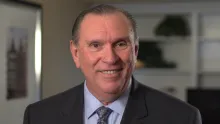
Randy D’Alessandro served as pastor for the United Church of God congregations in Chicago, Illinois, and Beloit, Wisconsin, from 2016-2021. Randy previously served in Raleigh, North Carolina (1984-1989); Cookeville, Tennessee (1989-1993); Parkersburg, West Virginia (1993-1997); Ann Arbor and Detroit, Michigan (1997-2016).
Randy first heard of the church when he was 15 years old and wanted to attend services immediately but was not allowed to by his parents. He quit the high school football and basketball teams in order to properly keep the Sabbath. From the time that Randy first learned of the Holy Days, he kept them at home until he was accepted to Ambassador College in Pasadena, California in 1970.
Randy and his wife, Mary, graduated from Ambassador College with BA degrees in Theology. Randy was ordained an elder in September 1979.
playlist
Related Sermons
